Epithelium & Glands
 Call Kai
 Learn
Learn Practice Test
 Spaced Repetition
 Match
Match Flashcards
 Knowt Play
1/153

There's no tags or description
Looks like no tags are added yet.
Name | Mastery | Learn | Test | Matching | Spaced | Call with Kai |
|---|
No analytics yet
Send a link to your students to track their progress
154 Terms
What are the four main tissue types?
Nerve
Connective tissue
Epithelium
Muscle
*Use the acronym NCEM
What is unique about connective tissue compared to other tissue types?
Connective tissue consists of extracellular matrix + cells
What is epithelium?
Sheets of cells that line the external and internal surfaces of the body
What are two key characteristics of epithelium?
Avascular
Polarized
What does "avascular" mean for epithelium, and what is its implication?
Separated from other tissues by basement membrane
No blood supply
Implication: Relies on diffusion for nutrients and waste removal
What does "polarized" mean for epithelial cells?
Top of cell is different from bottom
Divided into three domains: apical, lateral, and basal
To help remember the key characteristics and structure of epithelium, you can use the acronym "SLAVE":
S - Sheets of cells
L - Line surfaces
A - Avascular
V - Polarized
E - External and internal
Name the three domains of polarized epithelial cells (Think "LAB")
L - Lateral (sides)
A - Apical (top)
B - Basal (bottom)
What are the five main functions of epithelium?
S - Sensation (receptors)
P - Protection (barrier)
A - Absorption
T - Transport (permeability)
S - Secretion
*Think "SPATS"
How does epithelium provide protection?
Acts as a barrier
What aspect of epithelium allows for sensation?
Presence of receptors
How does epithelium facilitate transport?
Through its permeability
What are the three types of simple epithelium?
Squamous
Cuboidal
Columnar
How many cell layers does simple epithelium have?
One layer
Describe simple squamous epithelium
Polygonal cells
Flattened shape
Flat nuclei
Describe simple cuboidal epithelium
Cells as tall as they are wide
Circular nuclei
Describe simple columnar epithelium
Cells taller than they are wide
Long nuclei
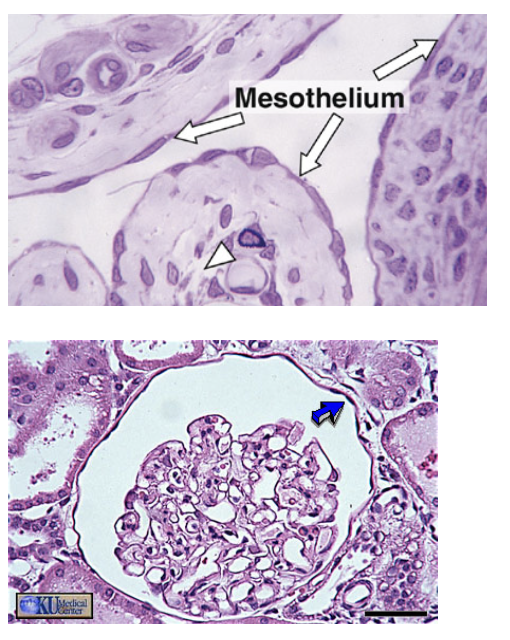
What is the basic structure of Simple Squamous Epithelium?
Single layer of flat cells
Cells resemble fried eggs when viewed from the top
Each cell contains a single nucleus
What are the main functions of Simple Squamous Epithelium?
Lines blood vessels and body cavities
Regulates passage of substances into underlying tissue
In which body cavities is Simple Squamous Epithelium found?
Pericardial cavity
Pleural cavity
Peritoneal cavity
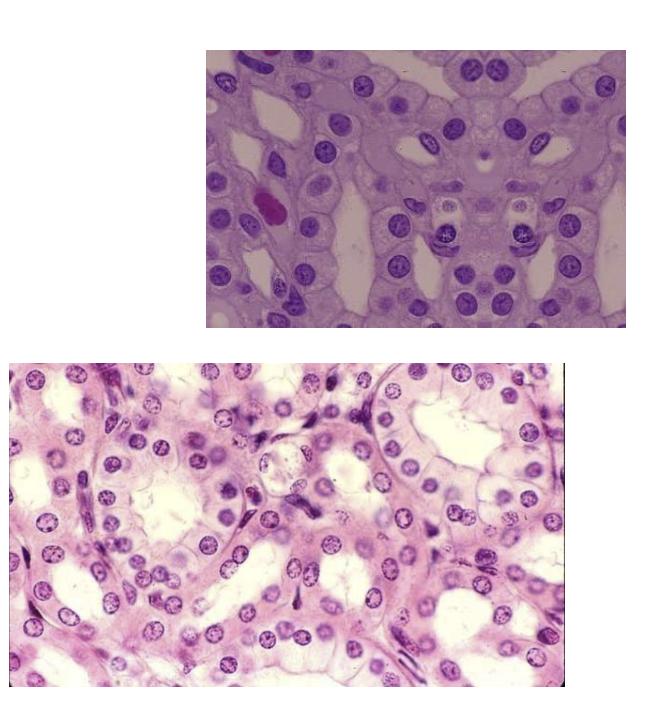
What is the basic structure of Simple Cuboidal Epithelium?
Consists of a single layer of cube-shaped cells
Cells are arranged like a row of dice
What type of tissue commonly contains Simple Cuboidal Epithelium?
Glandular (secreting) tissue
What might the cube shape of Simple Cuboidal Epithelium cells suggest about their function?
The cube shape may provide more internal space for organelles involved in secretion or absorption processes
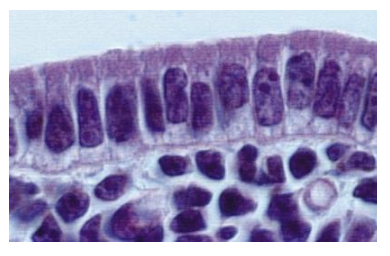
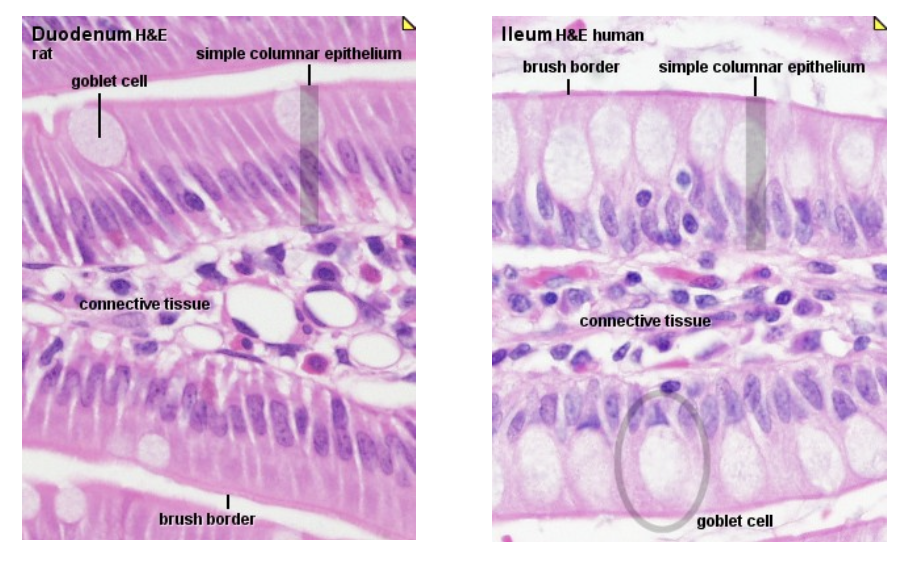
What is the basic structure of Simple Columnar Epithelium?
Consists of a single layer of cells
Cells resemble a row of pillars
Each cell is tall and columnar-shaped
What is a characteristic feature of the nucleus in Simple Columnar Epithelial cells?
The nucleus may be elongated
How do the cells in Simple Columnar Epithelium relate to each other?
The cells form a single row where neighboring cells attach to each other
Define Stratified Epithelium.
Epithelium made up of more than one layer of cells
Describe the cell arrangement in Stratified Squamous Epithelium.
Consists of multiple layers of cells
Cells closest to the free surface are very flat
Arrangement resembles a tall pile of very flat cookies
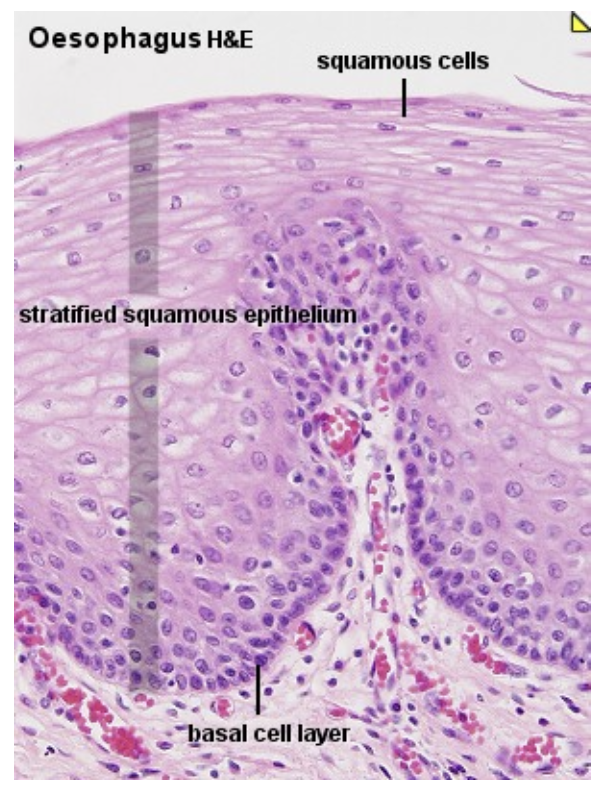
What are the two main types of Stratified Squamous Epithelium?
a. Keratinized
b. Non-keratinized
List the characteristics of Keratinized Stratified Squamous Epithelium.
Has dark bands
Contains dead cells in the outermost layer
Example: skin
List the characteristics of Non-keratinized Stratified Squamous Epithelium.
Contains nucleated cells throughout all layers
Tends to be protective
Cells remain alive in all layers
Define Stratified Cuboidal Epithelium.
Composed of multiple layers of cells
Only the most superficial layer is made up of cuboidal cells
The other layers can be other types of cells
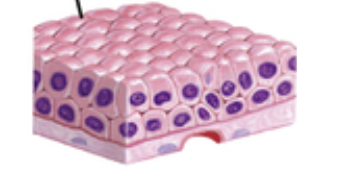
In Stratified Cuboidal Epithelium, what shape are the cells in the superficial layer?
Cuboidal (cube-shaped)
Define Stratified Columnar Epithelium.
Composed of column-shaped cells arranged in multiple layers
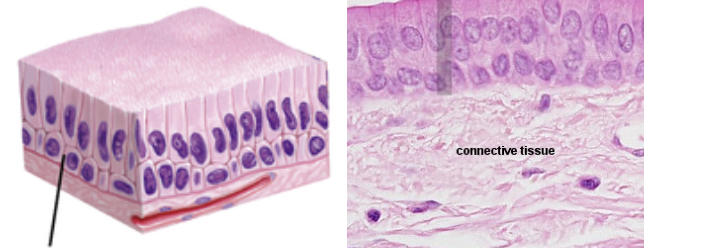
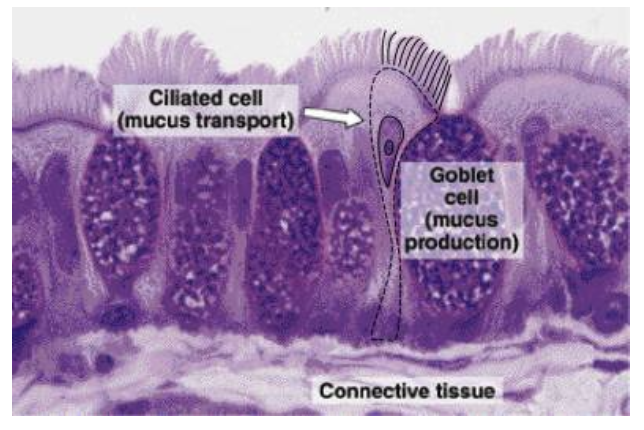
What is Pseudostratified Columnar Epithelium?
A type of epithelium that appears stratified but is actually a single layer where:
All cells contact the basement membrane
Not all cells reach the surface
Has a lot of cilia
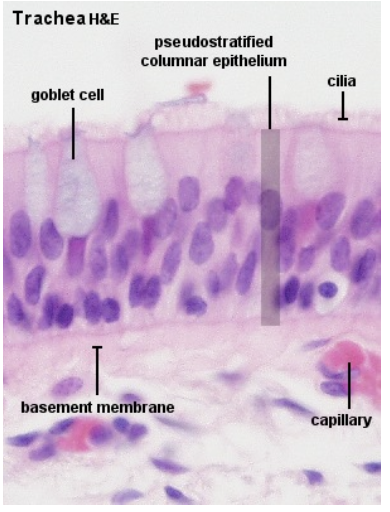
Where is Pseudostratified Columnar Epithelium commonly found?
It lines the upper respiratory tract
What are two surface features of Pseudostratified Columnar Epithelium in the respiratory tract?
Cilia
Mucus
What is Transitional Epithelium (Urothelium)?
Made up of several layers of cells that become flattened when stretched
Lines most of the urinary tract
Allows the bladder to expand
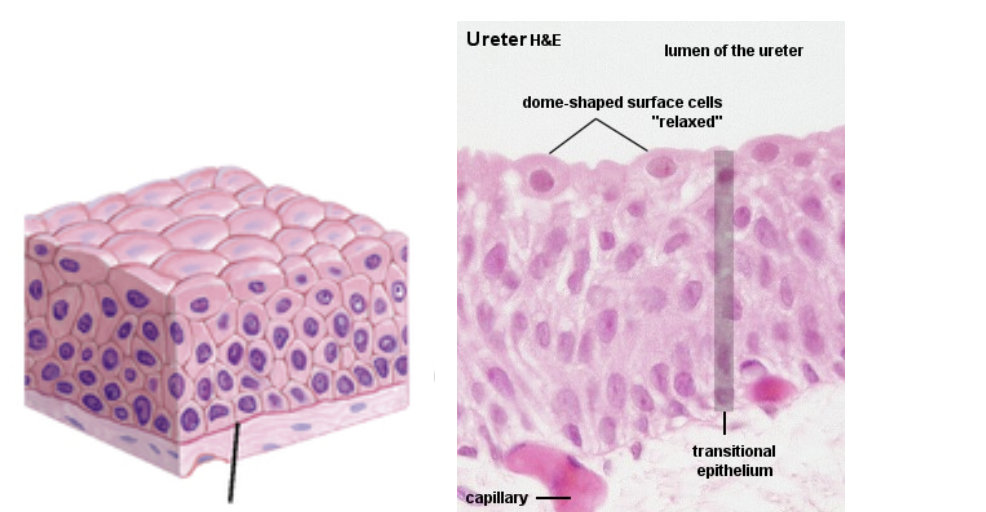
Where is Transitional Epithelium (Urothelium) found?
It lines most of the urinary tract
Why is the ability of Transitional Epithelium to flatten when stretched important?
It allows the bladder to accommodate varying volumes of urine without damage to the epithelial lining
What is Complex (Seminiferous) Epithelium?
Epithelium found in the testes, physically divided into two compartments
Into what two compartments is the Complex (Seminiferous) Epithelium divided?
Basal and apical compartments
What structure divides the basal and apical compartments in Complex (Seminiferous) Epithelium?
The blood-testis barrier / Sertoli cell epithelial barrier
Where is Complex (Seminiferous) Epithelium found?
In the testes
What is the significance of the blood-testis barrier in Complex (Seminiferous) Epithelium?
It separates the basal and apical compartments, providing a specialized environment for different stages of sperm development
What is the apical domain of an epithelial cell?
The part of the cell facing towards the lumen or outside
List four types of epithelial specializations found in the apical domain.
Microvilli
Stereocilia
Cilia
Flagella
Describe the structure of microvilli.
Can be striated or brush border
Filled with actin
Attached to terminal web
Covered with glycocalyx made of glycoproteins
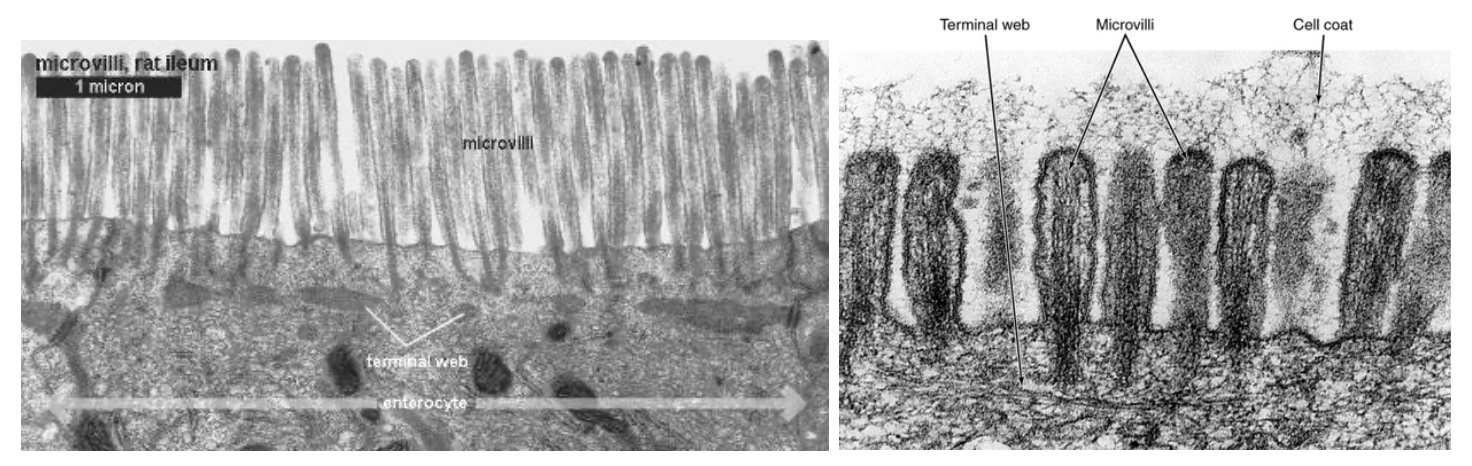
What is the main function of microvilli?
They increase surface area
What is the composition of the glycocalyx on microvilli?
Made of glycoproteins – glycosylated with small branched carbohydrate side chains
Are microvilli motile?
No, they are non-motile
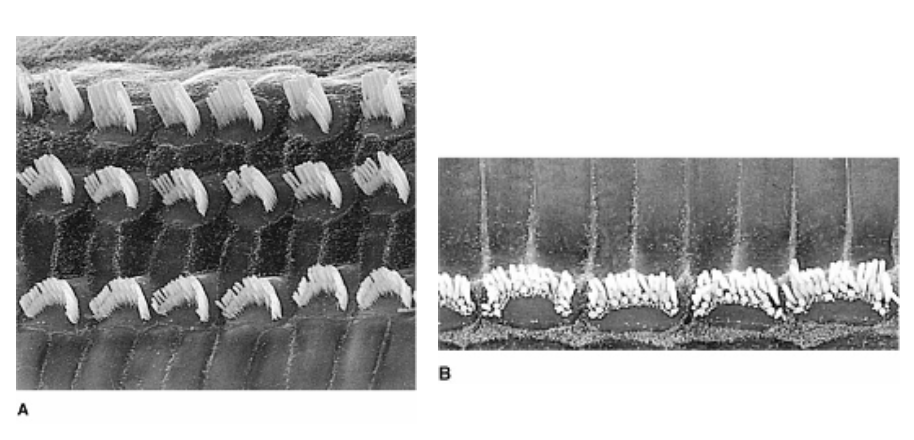
How do stereocilia differ from microvilli?
Stereocilia are long microvilli
What is the main function of stereocilia?
They increase surface area
Are stereocilia motile?
No, they are non-motile
Describe the internal structure of cilia.
Microtubule filled
Axoneme structure: 9 doublets + 2 singlets
What proteins are associated with cilia?
Nexin
Dynein
What structure does a cilium attach to at its base?
It attaches to a basal body (9 triplets + 0)
Are cilia motile?
Yes, cilia are motile
What is the main structural difference between microvilli and cilia?
Microvilli are filled with actin, while cilia are filled with microtubules
What is the role of dynein in cilia?
Dynein is a motor protein that enables the movement of cilia
Where are flagella commonly found in human cells?
In spermatozoa (sperm cells)
Compare the structure of a flagellum to that of a cilium.
They have a similar internal structure (9+2 axoneme), but flagella are typically longer than cilia
What is the main function of flagella in spermatozoa?
To provide motility, allowing the sperm to swim towards the egg
Are flagella motile?
Yes, flagella are motile
What is the lateral domain of an epithelial cell?
The part of the cell that is on the sides, adjacent to neighboring cells
What is the general term for the specialized junctions in the lateral domain?
Junctional Complexes (also known as terminal bars)
What are the Junctional Complexes in the lateral domain?
Tight Junctions
Adherent Junctions
Desmosomes
Gap Junctions
What type of junction is described as an "occluding junction"?
Tight junctions (zonula occludentes)
Describe the distribution of tight junctions around the cell.
They surround the whole cell in a "quilted" pattern
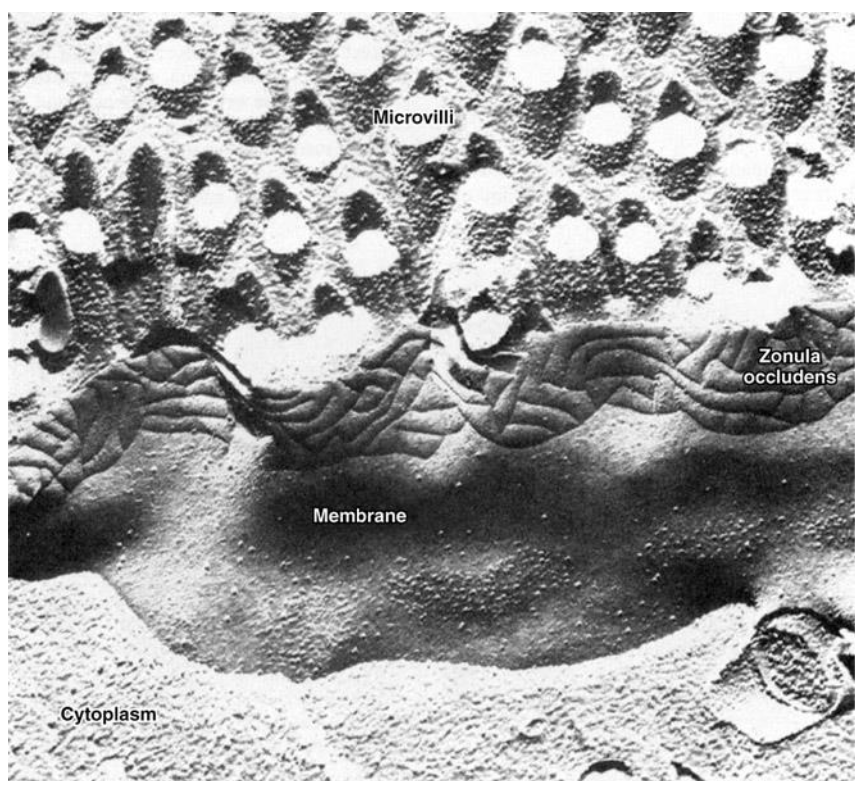
Name two types of proteins involved in tight junctions.
Occludins and ZO (Zonula Occludens) proteins
What is one function of tight junctions regarding plasma membrane proteins?
They block the movement of plasma membrane proteins
*Helps maintain cell polarity by keeping different proteins in the apical and basolateral domains separate
How do tight junctions affect the movement of hydrophilic compounds between cells?
They prevent the movement of hydrophilic compounds between cells
*They create a selective barrier
Why are tight junctions called "occluding" junctions?
Because they occlude (block) the space between cells, preventing the passage of substances
How does the "quilted" pattern of tight junctions contribute to their function?
It creates a continuous seal around the cell, effectively separating the apical and basolateral domains
What is the Latin term for adherent junctions?
Zonula adherentes
Describe the distribution of adherent junctions around the cell.
They surround the whole cell in a "belt-like" manner
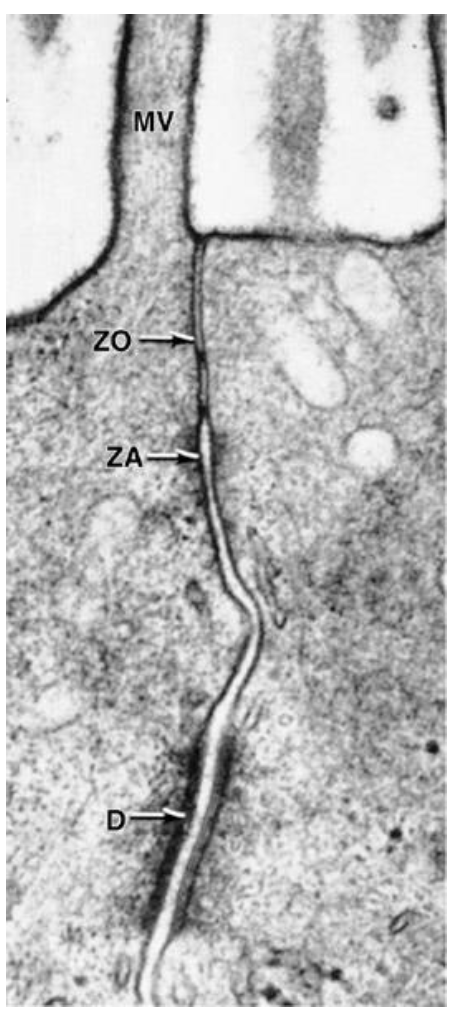
List four proteins involved in adherent junctions.
Cadherins
Catenins
Vinculin
Actinin
What cellular structures do adherent junctions connect between adjacent cells?
Actin filaments
What is the specialized form of adherent junction found in cardiac cells?
Fascia adherens
What is the main function of adherent junctions?
They connect actin filaments in adjacent cells, providing mechanical strength to the epithelium
Why might cardiac cells need a specialized form of adherent junction (fascia adherens)?
Cardiac cells need very strong mechanical connections to withstand the constant contractions of the heart
What are desmosomes also known as?
Macula adherentes
Describe the distribution pattern of desmosomes in epithelial cells
Randomly distributed "spot welds"
What are the main components involved in desmosomes?
Attachment plaques, desmoplankins, and cadherins
What cellular structures do desmosomes connect between adjacent cells?
Intermediate filaments
What is the main function of desmosomes?
To provide strong adhesion between adjacent cells
In which types of tissue are desmosomes particularly important?
Tissues that experience mechanical stress, such as skin and heart muscle
What is another name for gap junctions?
Nexus
How are gap junctions distributed in the cell membrane?
Randomly distributed "communication sites"
What are the building blocks of gap junctions?
Connexins
How many connexins make up a connexon?
Six
What is the size of the pores formed by gap junctions?
2 nm wide
What is the molecular weight limit for molecules that can pass through gap junctions?
Less than 1000 MW
What is the primary function of gap junctions?
Intercellular communication
What are the five main structures/features of the basal domain in epithelial cells?
Hemidesmosomes
Focal adhesions
Basal infoldings
Basement membrane
Basal lamina
What is the colloquial term used to describe hemidesmosomes in relation to the basement membrane?
Basement membrane "spot welds"
What are the three main components involved in hemidesmosome structure and function?
Attachment plaque, intermediate filaments, and integrins
What do hemidesmosomes connect to the basement membrane?
Intermediate filaments
What is the main function of focal adhesions in the basal domain?
They serve as actin attachment points
Which protein is involved in both hemidesmosomes and focal adhesions?
Integrins