Tipos de textos IB spanish
 Call Kai
 Learn
Learn Practice Test
 Spaced Repetition
 Match
Match Flashcards
1/14

There's no tags or description
Looks like no tags are added yet.
Name | Mastery | Learn | Test | Matching | Spaced | Call with Kai |
|---|
No analytics yet
Send a link to your students to track their progress
15 Terms
Un folleto
2nd person verbs
Info on price, place, times etc
Imperative/infinitive verbs
Titled sections for different content
Slogans
Contact details
Un correo electrónico
Can be formal (usted) or informal (tú)
Write to (para): and from (de):
Subject
Date. inc day and hour
Initial greeting + final sign off
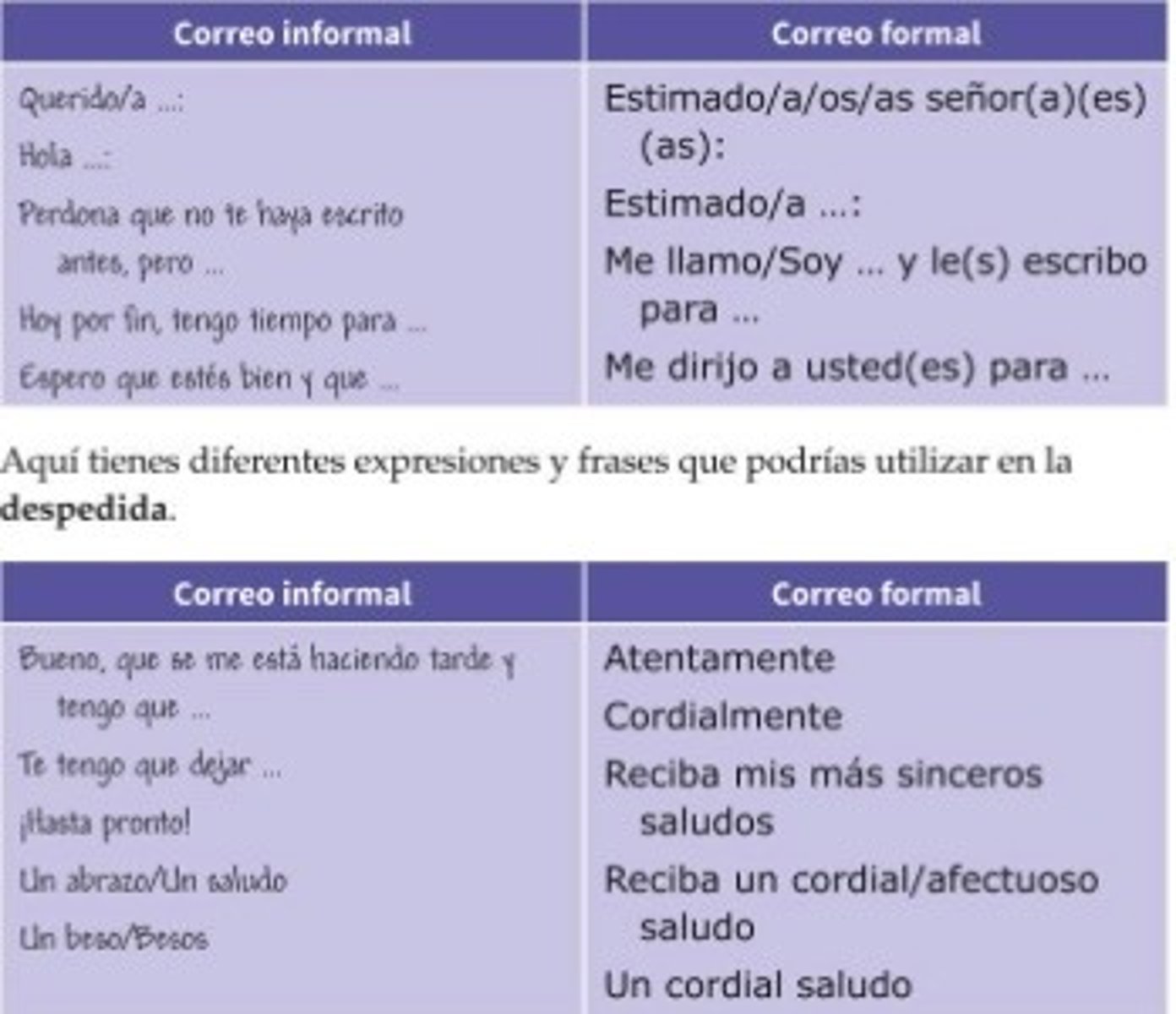
Email informal greetings
Querido/a...
Hoy por fin, tengo tiempo para
Perdona que no haya escrito antes, pero...
Email informal sign-offs
Un abrazo/saludo/beso
Bueno, que se me está haciendo tarde y tengo que...
Entrada de diario
Fecha, saludo inicial y despedida final
Subjective - always explain how things made you feel
Rhetorical questions
Una reseña (review)
Recommend something seen/read/heard
Include: name of author/artist, tale of work, biographical info on artist.
Review work and important info on work. Reference previous works by the author/artist
Un ensayo/ una redacción (essay)
Title summarising theme and contents of essay
Divide into intro, body and conclusion
Analyse the theme
Neutral register with objective of informing
Can have photos
Discurso/conferencia (speech)
Introduce self and purpose, present theme
Subjunctive language
Be convincing
Adress public directly e.g 'como ustedes saben'
Can be formal (ustedes) or informal (vosotros)
Final sign-off
Una entrevista (interview)
Write exact words of interview.
Date, title and opening line (aim of interview) e.g 'esta noche tenemos con nosotros [] o hablamos a él/ella durante una reciente visita'
Greeting to public and name of journalist/interviewer
Introduction, body and close
Divide question and answer in different paragraphs
Use words other than decir e.g affirmer. recalcar, expresser, commentary, manifestar
Include date of interview and photos
Title like 'Entrevista a ...'
Can be tá or used
Use 'P:' for pregunta and 'R' for respuesta
Un articulo
Title showing theme of article
Subtitle/below showing important dates that compliment the title
Photographs to illustrate content
Paragraphs to present story in structured parts
Figures and dates
Quotes for most important info
Carta formal
Formal language, neutral and careful style. Distant respectful relationship to recipient
Data of receiver, then sender and date
Saludo como 'Estimado Señor/Señora'
Start by explaining email e.g 'Por la presente, me gustaría solicitar (ask for)/discutir'
Well defined paragraphs
Sign-off like 'Atentamente (yours sincerely), [sender's name]'
Signature with first + last name
Carta informal
Informal close language. Abbreviations, emotions and exclamations.
Date (no adresses)
Greeting like 'hola' or 'Querida:' (comma is anglicism)
Have question to show interest in recipient e.g '¿Qué tal? Espero que todo vaya bien'
Include ideas, feelings and thought about personal and professional life
Sign off like 'un abrazo/besos y abrazos' and first name
Blog
Title
Date and author's name
Related photos
Generally informal, familiar tone
Short anecdote and author's opinion
Links to external pages
Carta al director
Presents an opinion
Calls attention to a problem and gives request to the comunty
Protests/ brings issue to public interest
Un informe (report)
Argumentative/ demonstrativive
Shows information ahout results of investigation
Concrete, objective langage
Normally third person
Diagrams/graphs/images/tables/extracts/summary (resumen)
Intro, body conclusion
Often includes biography and photo of author