integument System
 Call Kai
 Learn
Learn Practice Test
 Spaced Repetition
 Match
Match Flashcards
 Knowt Play
1/39

Name | Mastery | Learn | Test | Matching | Spaced | Call with Kai | Chat |
|---|
No analytics yet
Send a link to your students to track their progress
40 Terms
The integumentary system consists of the

What is the integumentary system primary funtion
Protection, cushioning, thermal insulation, moisture loss prevention (water barrier), and sensory reception.

How many layers are in the integument system?
The integumentary system has 3 layers: The epidermis, dermis, and the hypodermis
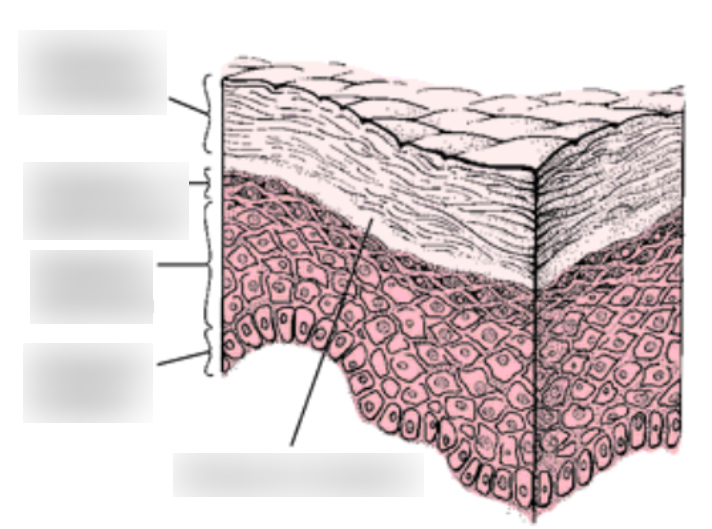
The epidermis can be divided into how many layers
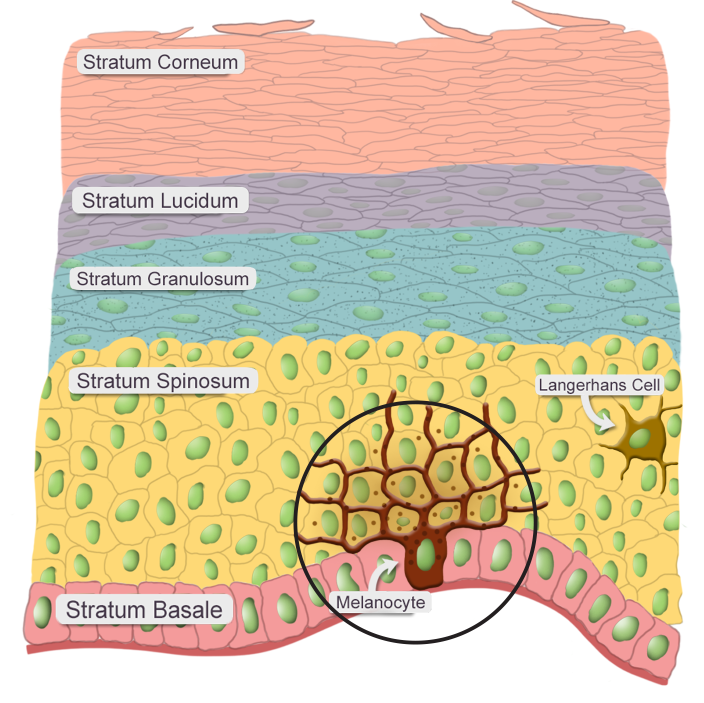
Five layers: Stratum Corne, Stratum Lucidum, Granulosum, Stratum spinosum, Stratum Basale
(This is from the top layer to the deepest layer)
Which Parts of your body has 5 stratus/ stratum
palms, and plantar (soles)
The rest of your body would have
4
Stratum Cornium
Outermost layer/ Superficial layer (this stratum has around 26- 30 layers and is the visible layer)
What is next from the stratum cornium ?
Stratum Lucidum (has 3-5 layers)
From the stratum Lucidum is the ______________.
Stratum granulosum (has 3-5 layers of flat dying cells)
Deep to the stratum granulosum is the
Stratum spinosum (has 5-10 layers) (Langerhans cells= protector start process of repair)
After the stratum spinosum is the
Stratum basal (basement membrane and is closest to the dermis)
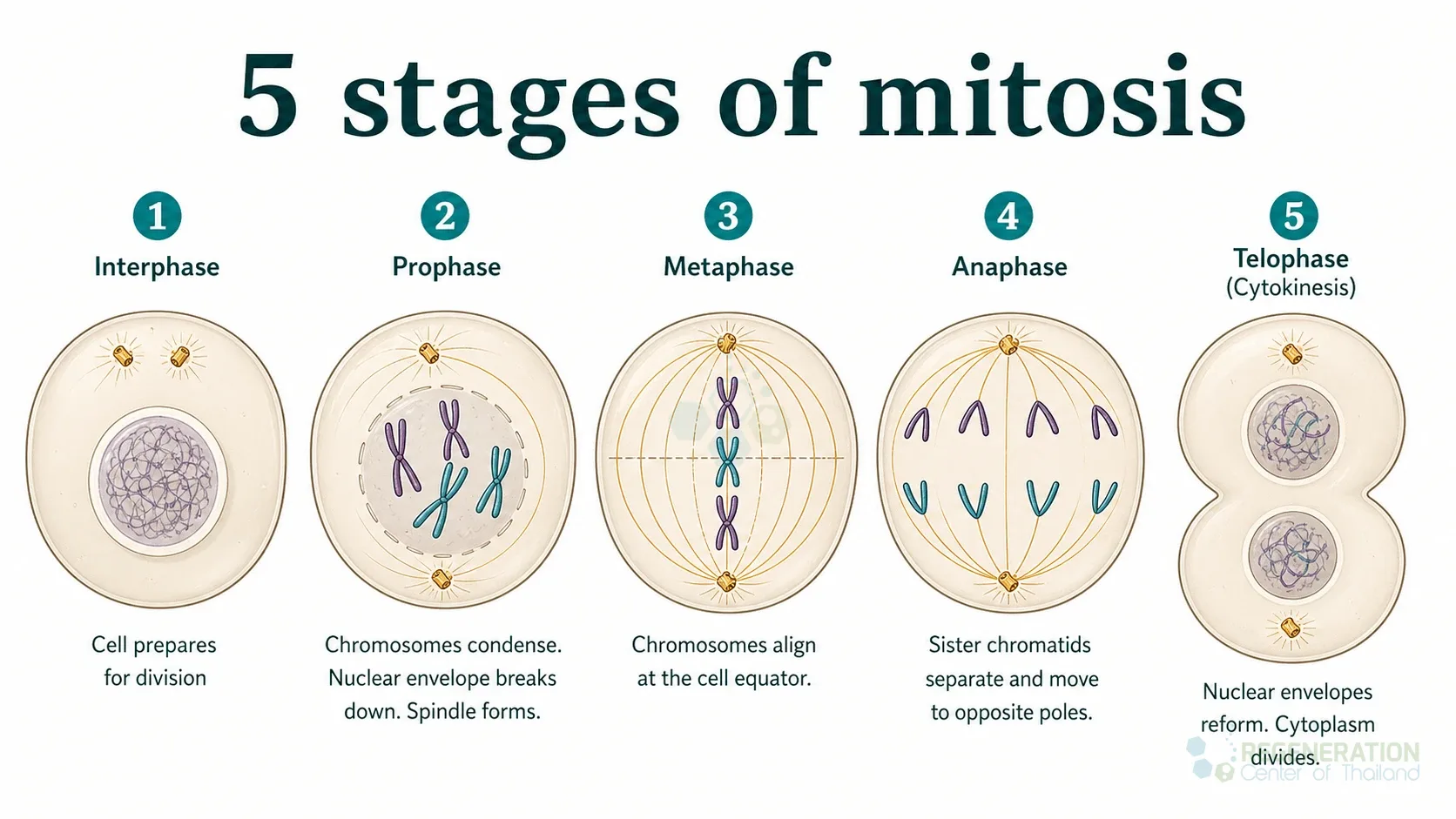
Which layer undergoes mitosis and has Melanocytes
The stratum basel
Which layers are found producing protein known as desmozomes that unite the cells together
Stratum spinosum
Which layer is the layer where has the most production of keratin( which is the protein that goes and give the cell strength, water resistance, but also means death)
Stratum granulosis
When we talk about the skin cells they are also called the _____ ___.
Caratino sites
What kind of epithelial tissue do we find in these carotino sites
Keratinized, stratified (mean multiple levels), squamous, and ethelial
Which skin layer is avascular (meaning no blood vessel in this skin layer)
The epidermis
What is the name of the upper most layer of the dermis
Papillary dermis
What is the name of the upper most receptor of the dermis
Meissner/ Messiers- Located in upper papillary dermis; detect light touch.
What is the name of the lowest most receptor of the dermis
Pacinian Corpuscles: Located deep in reticular dermis; detect deep pressure and vibration.
Merkel Cells & Free Nerve Endings
Located near basal/papillary border; detect touch, pain, and temperature.
Arrector Pili Muscle
Involuntary smooth muscle connecting hair follicles to papillary dermis. Contracts from cold or fear to form "goosebumps."
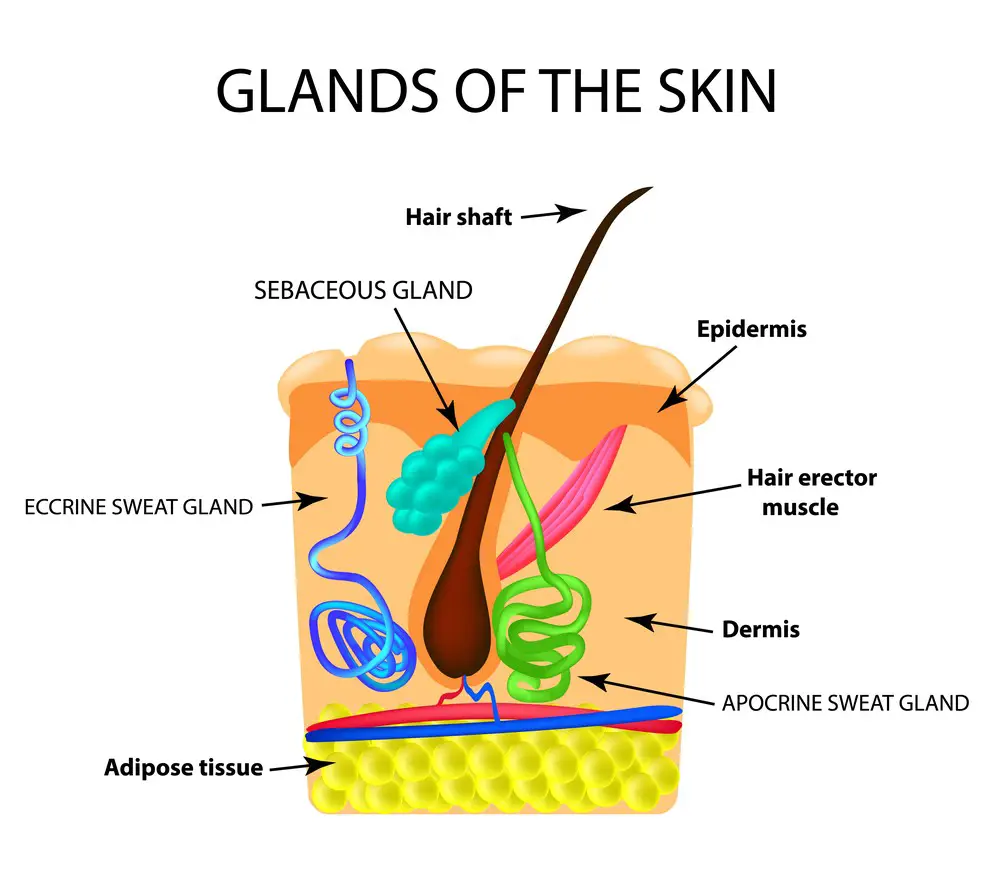
Sebaceous(type of Gland)
This product oil found in the hair follicles, this Prevents dryness, repels water, lubricates skin/hair.
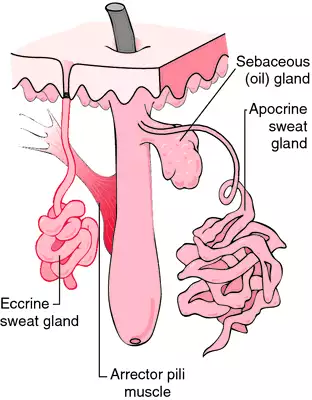
Eccrine (Merocrine)
This is our sweat glands located in skin pores to cool you down

Apocrine Sweat Glands
produce thicker sweat in your armpits and groin starting at puberty (causes body odor when bacteria break it down).
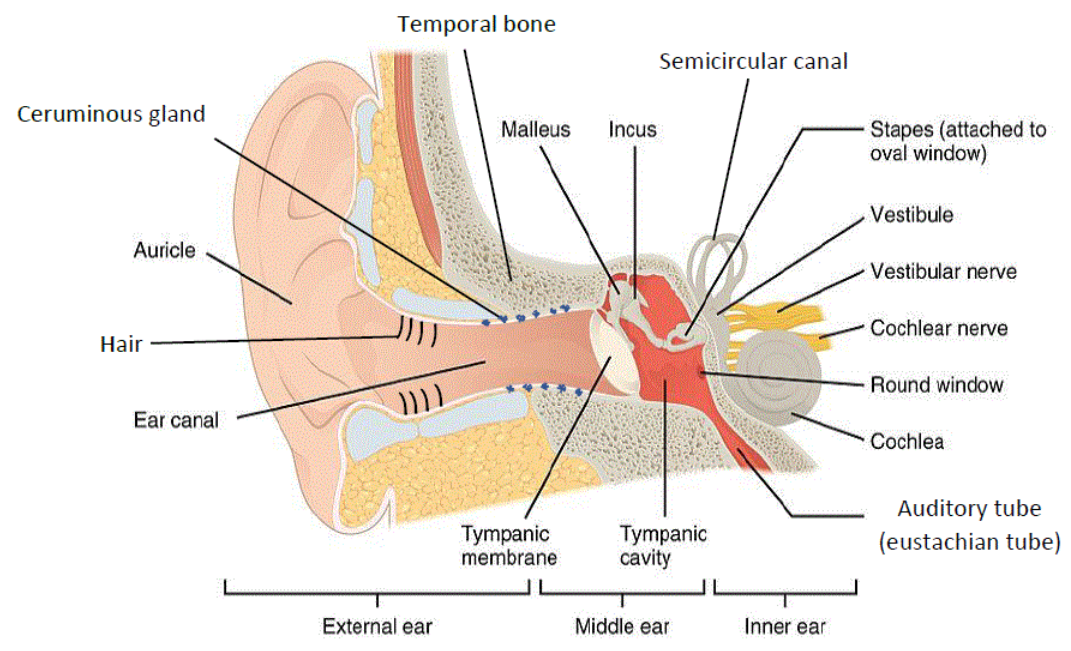
Ceruminous (Earwax)
External ear canal, this traps debris and repels water
Hair and Nails
Are made up with dead epidermal cells packed with keratin. Hardness depends on keratin concentration.
Hair Regions: Root:
Deep growing/keratinizing portion within follicle.
Hair Regions: Shaft:
Dead, keratinized section extending past skin surface.

Hair starts growing at ____ _____.
Hair matrix

Nails start growing at ____ _____.
Nail matrix
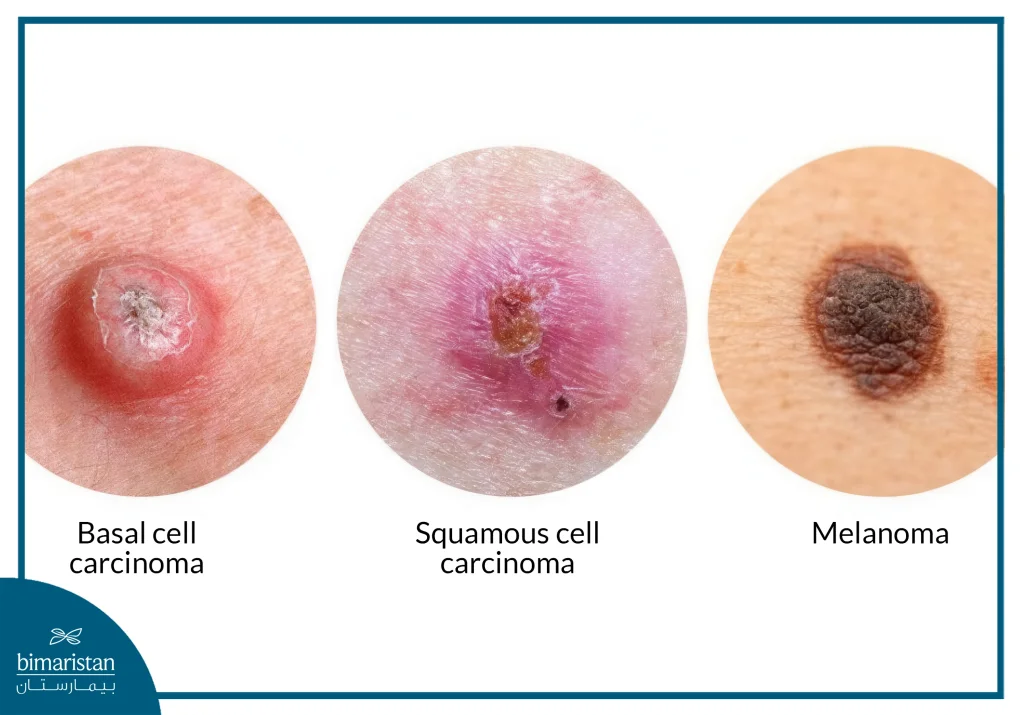
These are types of
Skin Cancers
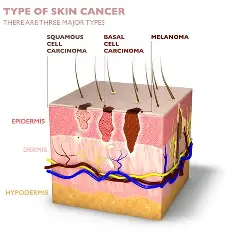
Basal Cell Carcinoma
Found in the Stratum Basale- Most common; least dangerous (metastasis rate <1%).
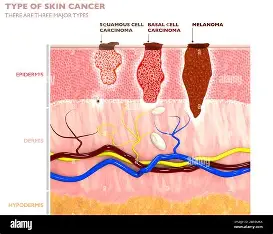
Squamous Cell Carcinoma
Found in Stratum spinosum keratinocytes-2nd most common; moderate metastasis risk (~2–3%).
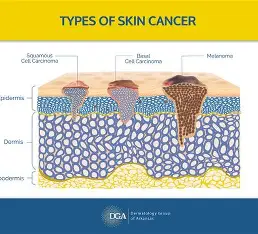
Melanoma
Found in the passing Stratum Basale melanocytes to the deep parts dermis- Highly aggressive; high risk of metastasis. Can occur anywhere (including subungual/under nails).
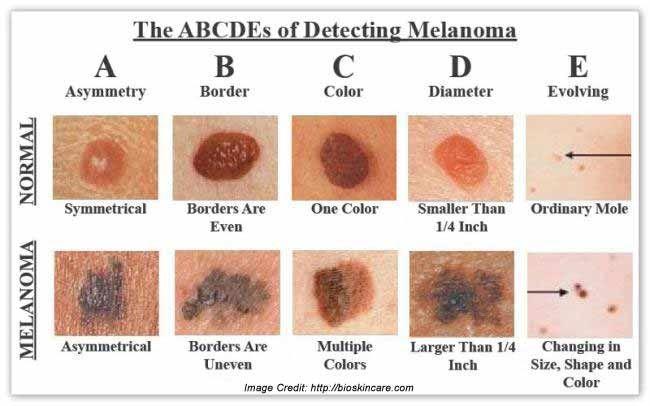
The ABCDE Melanoma Screening Criteria
A – Asymmetry: Non-matching halves.
B – Border: Irregular, jagged, or notched edges.
C – Color: Mixed shades (brown, black, blue, red, white).
D – Diameter: >6mm (approx. pencil eraser size).
E – Evolving: Changes over time in size, shape, or shade.
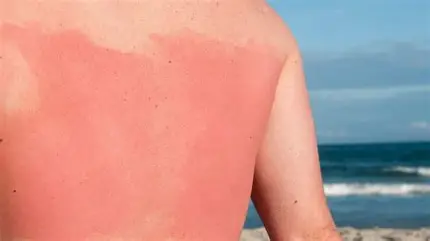
Classification this burn is a
1st-Degree (Superficial): Epidermis only. Redness, dry, minor pain (e.g., standard sunburn).
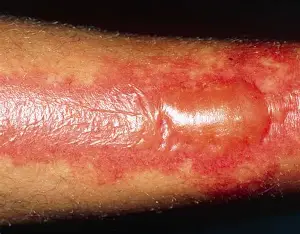
Classification this burn is a
2nd-Degree (Partial-Thickness): Epidermis + Dermis. Pain, severe redness, and blistering.
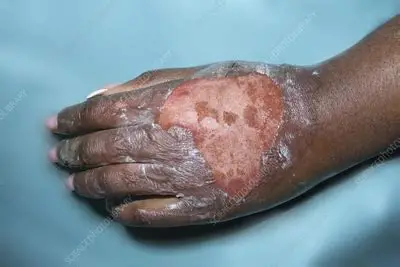
Classification this burn is a
3rd-Degree (Full-Thickness): Complete destruction of epidermis, dermis, and subcutaneous tissues. Charred or leathery appearance; initially painless due to destroyed sensory nerves.
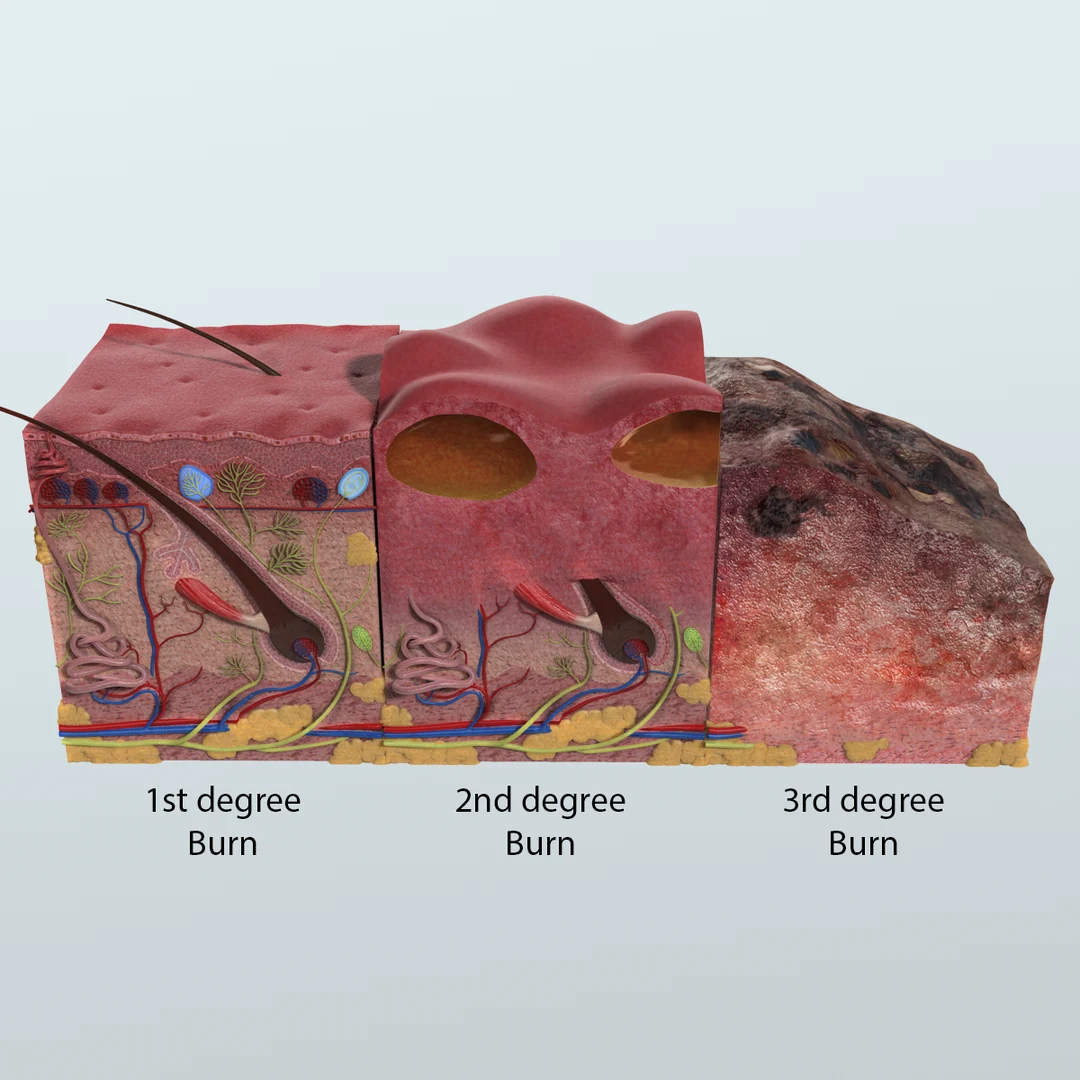
Classification of Burns