Ch. 19 LEC - Blood Vessels
 Call Kai
 Learn
Learn Practice Test
 Spaced Repetition
 Match
Match Flashcards
 Knowt Play
1/102

Earn XP
Description and Tags
Lecture Exam 2
Name | Mastery | Learn | Test | Matching | Spaced | Call with Kai | Chat |
|---|
No analytics yet
Send a link to your students to track their progress
103 Terms
define “blood vessels”
blood delivery system that begins and ends at the heart
define artery
blood vessel that carries blood away from the heart
define vein
blood vessel that carries blood toward the heart
define capillary
blood vessel that contact tissue cells and directly serve cellular needs
name the layers that make up arteries and veins from deep to superficial
tunica interna
tunica media
tunica externa
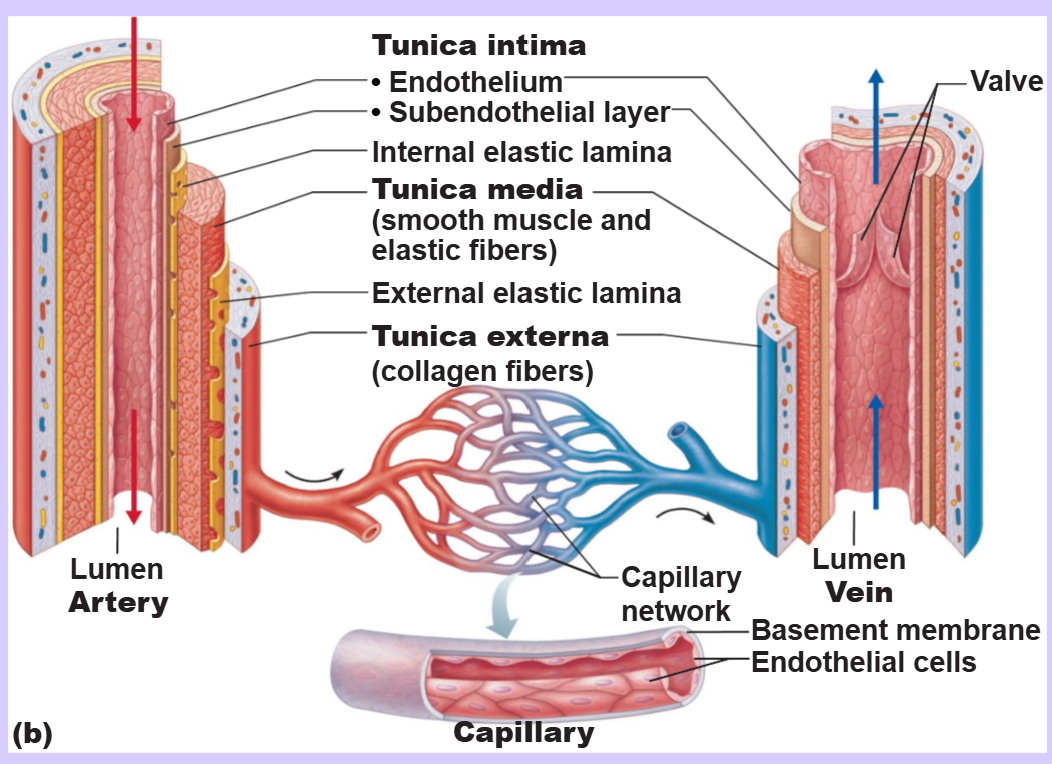
define lumen
central blood-containing space surrounded by tunics
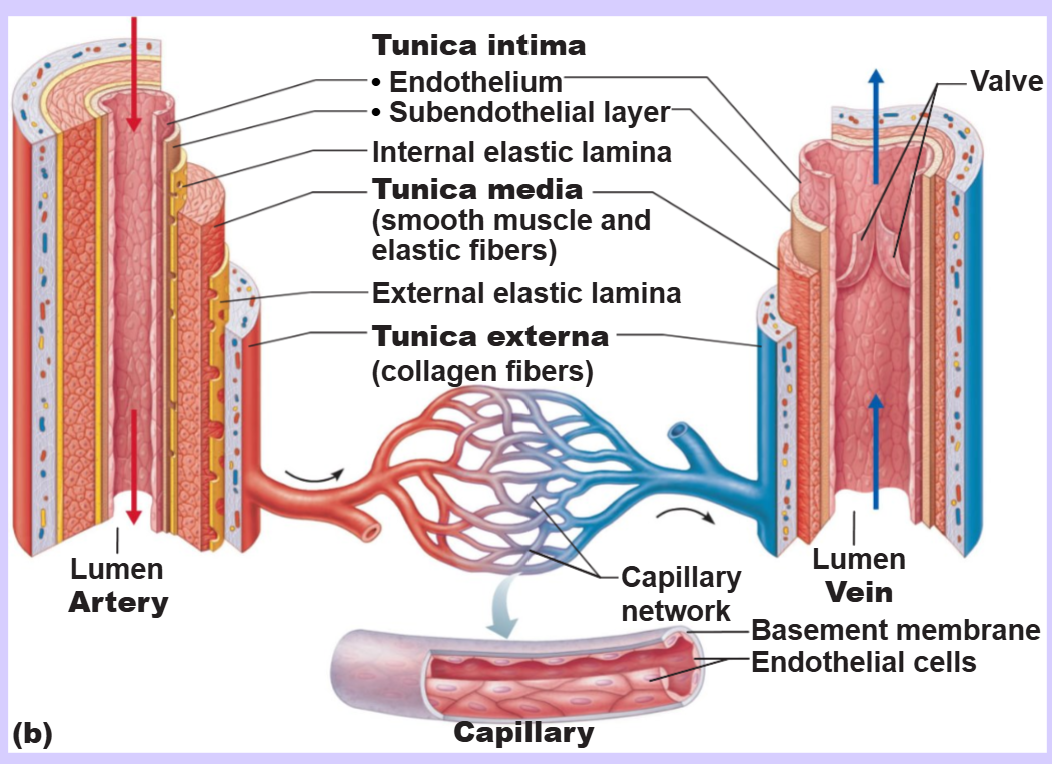
what are capillaries composed of?
endothelium with sparse basal lamina
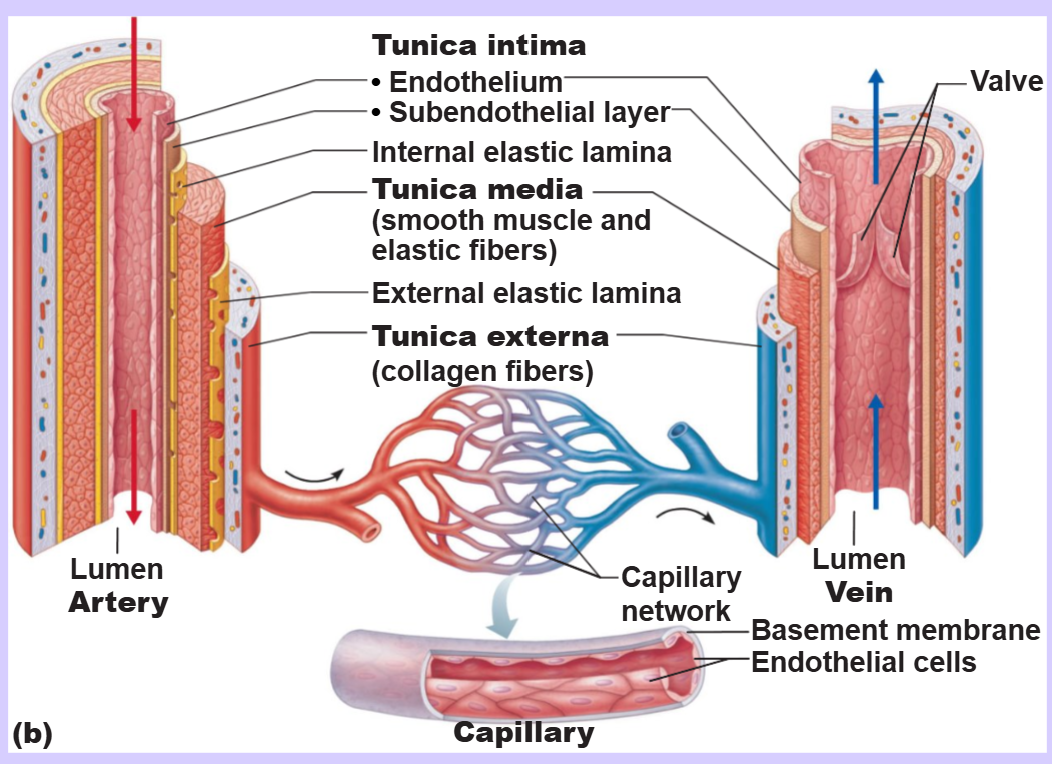
what is the function of the tunica interna?
to line the lumen of all vessels with a frictionless surface for blood flow
what is the function of the tunica media?
to control vasoconstriction/vasodilation of vessels (innervated by sympathetic nervous system)
what is the function of the tunica externa?
to protect and reinforce vessels with collagen fibers
define “vasa vasorum (vessels of the vessels)”
a network of microvessels that supply blood and nutrients to the external tissues of large arteries and veins
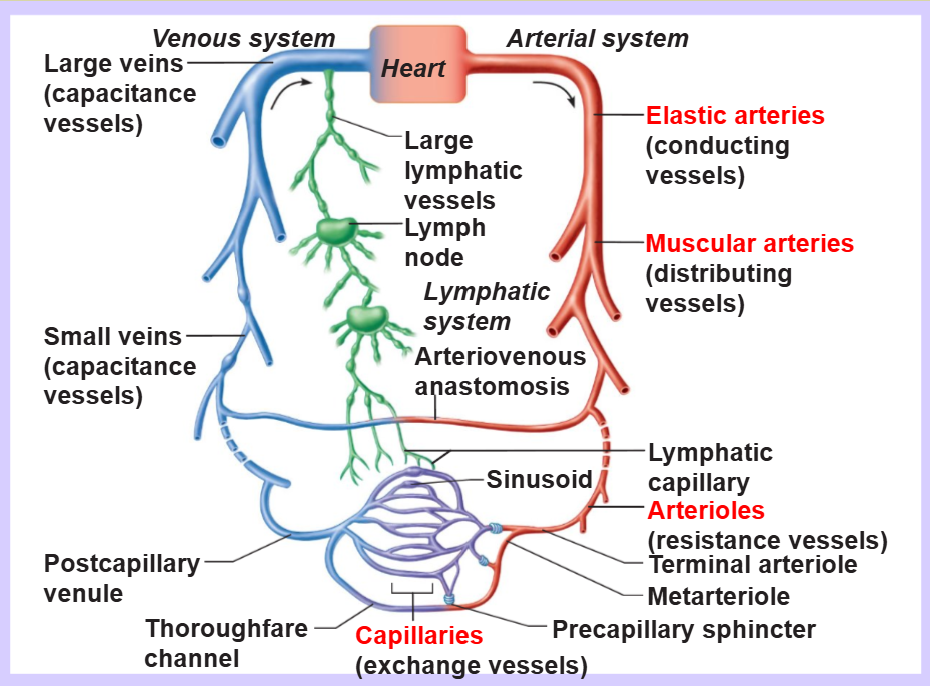
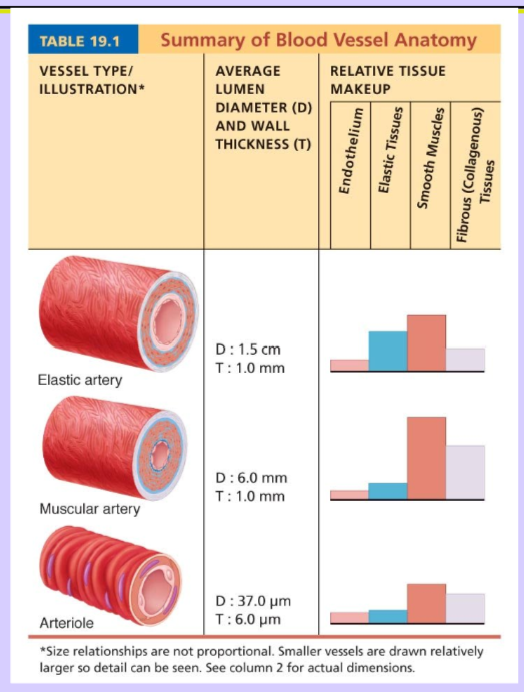
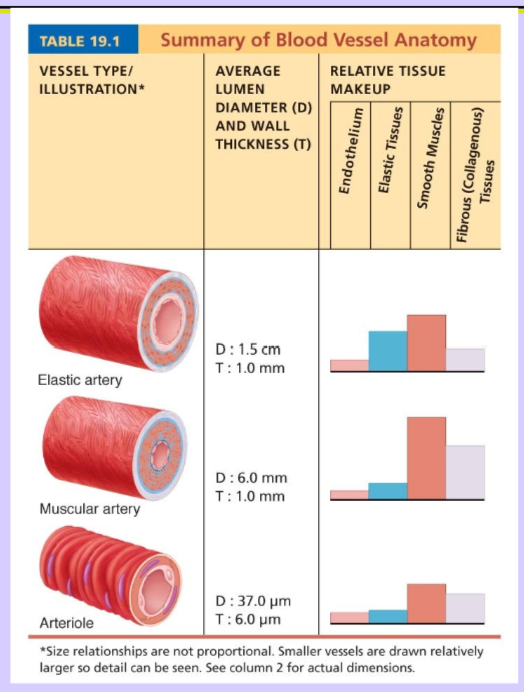
name the types of arteries from largest diameter to smallest
elastic artery
muscular artery
arteriole
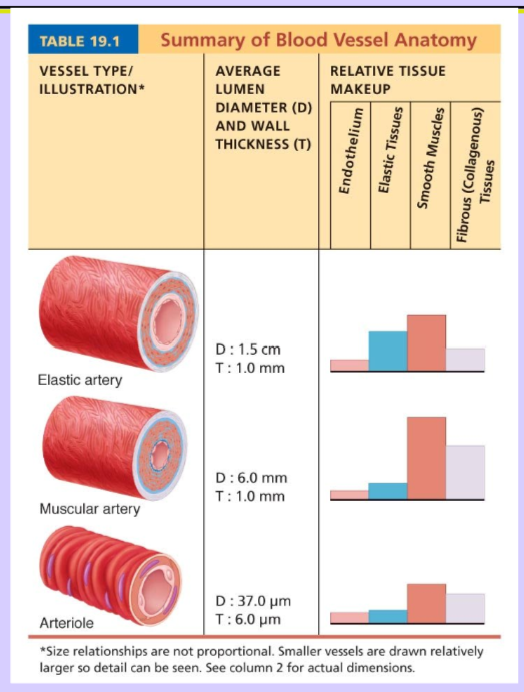
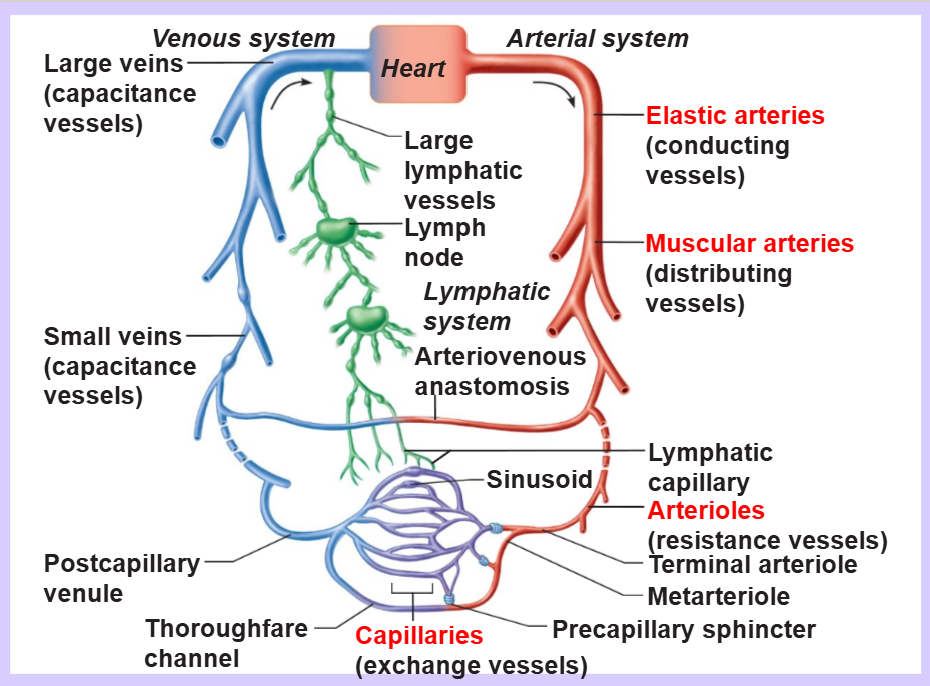
name the type of artery that fits this description:
thick-walled arteries near the heart (can withstand high pressure)
e.g., aorta and its major branches
large lumen (to lower pressure)
contains elastin in all 3 tunics
acts as pressure reservoirs (i.e., can expand and recoil as blood is ejected from the heart)
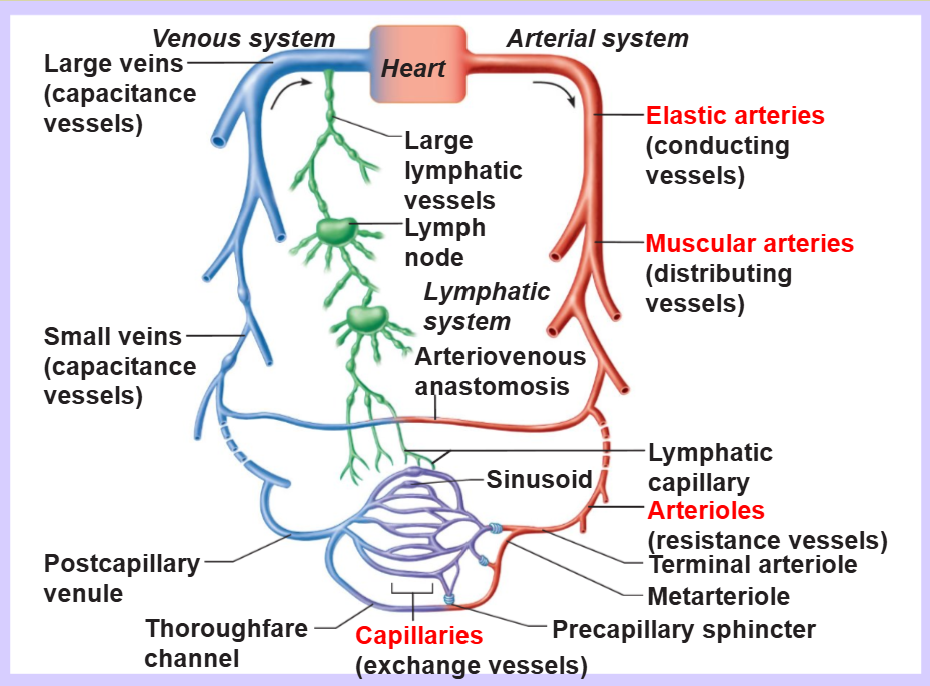
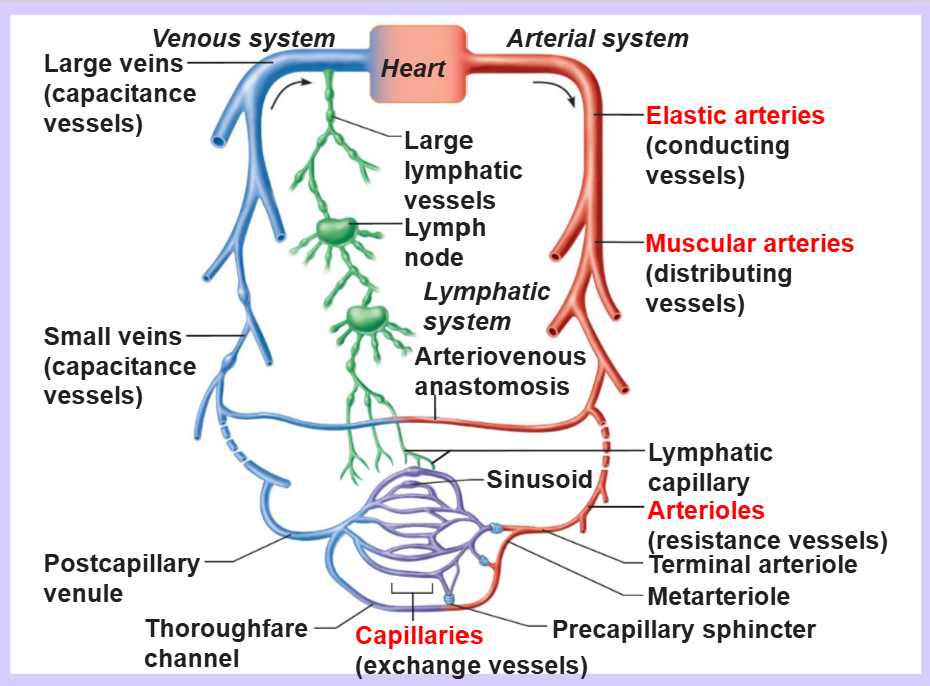
elastic (conducting) artery
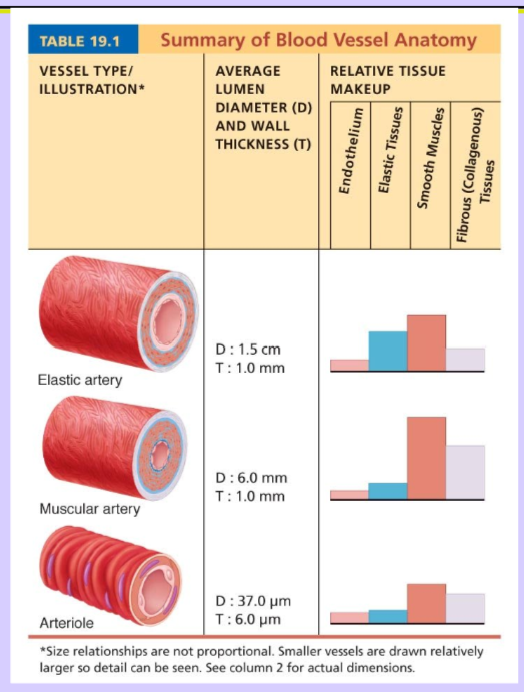
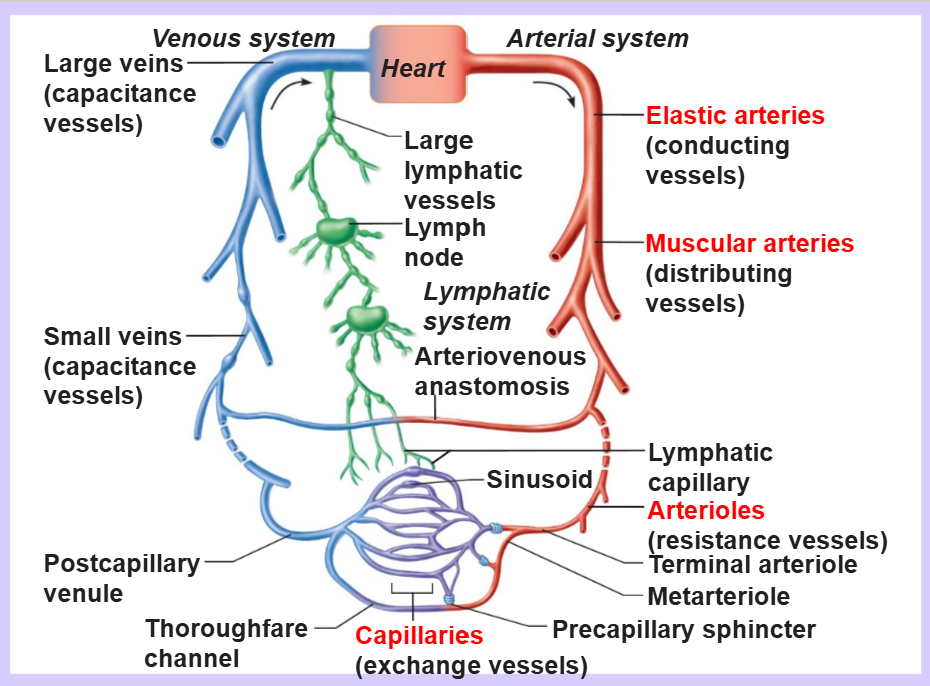
name the type of artery that fits this description:
distal to elastic arteries
deliver blood to body organs
thick tunica media with more smooth muscle
active in vasoconstriction
muscular (distributing) arteries
name the type of artery that fits this description:
smallest artery
leads to capillary beds
controls flow into capillary beds via vasodilation and vasoconstriction
arterioles
name the blood vessel that fits this description:
microscopic blood vessel
structure: 1 wall of thin tunica interna (1 cell thick)
pericytes help stabilize their walls and control permeability
small size = 1 RBC passes at a time
present in all tissue except for cartilage, epithelia,, cornea, and lens of eye
FUNCTION: exchange gases, nutrients, waste, hormones, etc.
capillary
name the 3 structural types of capillary and examples of organs they are present in
continuous capillaries — muscle, nervous system
fenestrated capillaries — liver, kidney, spleen
sinusoidal capillaries — red bone marrow
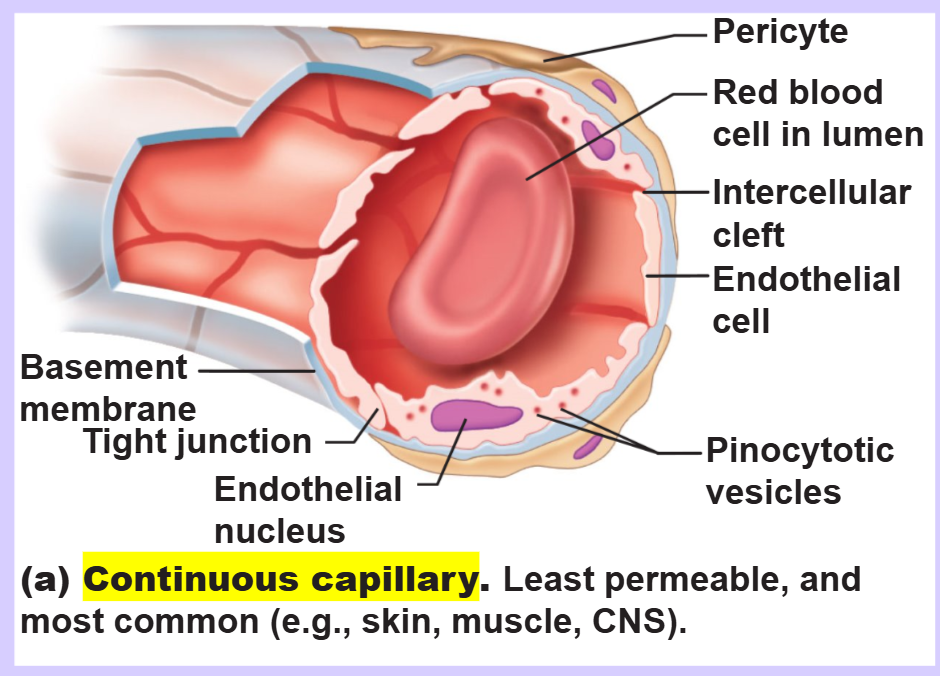
name the type of capillary that fits this description:
abundant in skin and muscles
these capillaries form the blood-brain barrier
continuous capillaries
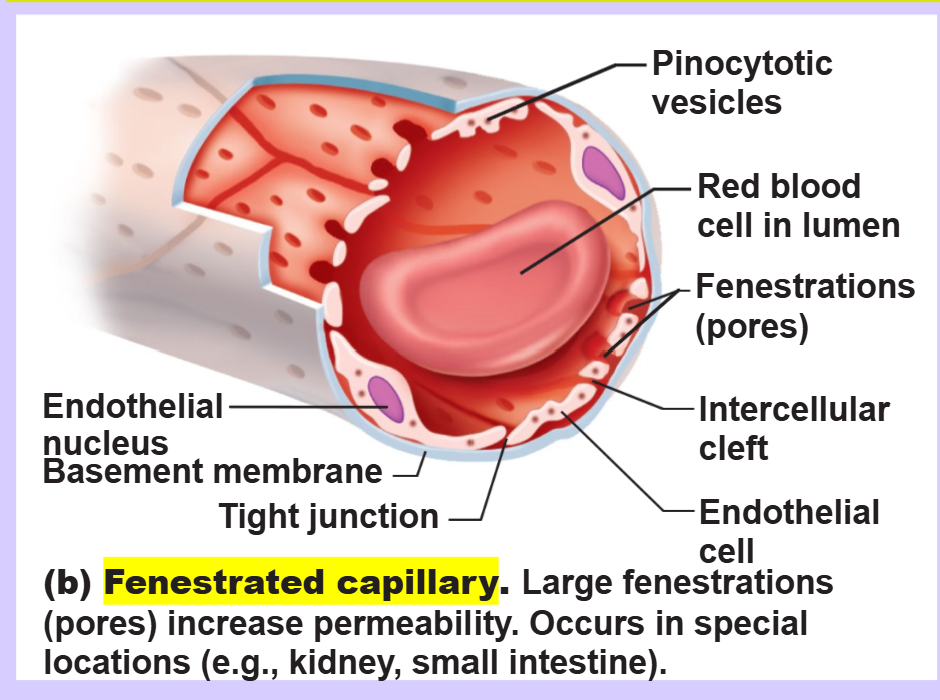
name the type of capillary that fits this description:
some endothelial cells contain pores
more permeable than continuous capillaries
function in absorption or filtrate formation (e.g., small intestine, endocrine glands, kidneys)
fenestrated capillaries
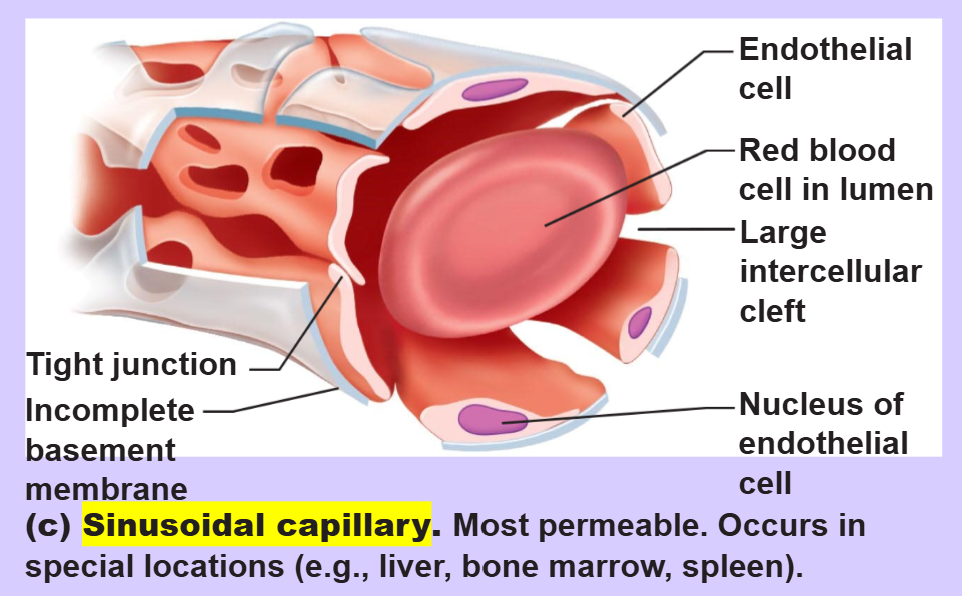
name the type of capillary that fits this description:
fewer tight junctions, larger intercellular clefts, large lumens — most permeable
usually fenestrated (has pores)
allows large molecules and blood cells to pass between blood and surrounding tissues
found in liver, bone marrow, spleen
sinusoidal capillary
define “precapillary sphincter”
the cuff of smooth muscle that surrounds each true capillary; regulates blood flow into capillary
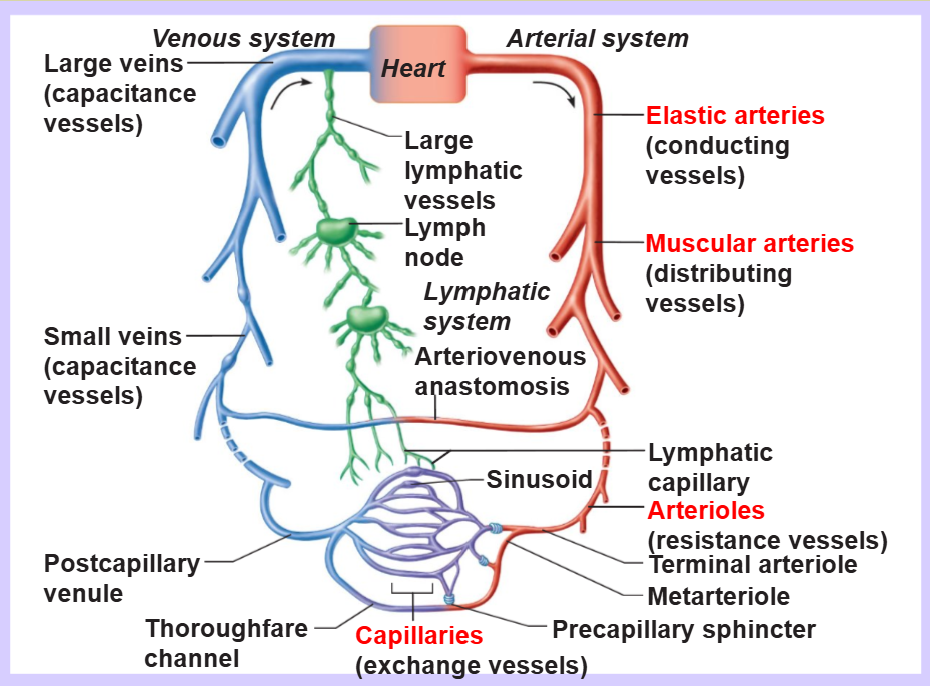
what are venules?
blood vessel part of the venous system that is formed when capillary beds unite; allows fluids and WBCs to pass from the bloodstream to tissues
what are postcapillary venules?
small venules composed of endothelium and a few pericytes
true/false: large venules have one or two layers of smooth muscle (tunica media)
true
[ARTERIES/VEINS] are formed when venules converge
veins
veins are also known as [NAME] or blood reservoirs that contain [NUMBER]% of the blood supply
capacitance vessels, 65
true/false: arteries have much lower blood pressure and thinner walls than veins
false — veins have much lower blood pressure and thinner walls than arteries
identify the special adaptations veins have to ensure blood returns to the heart (2 possible answers)
large-diameter lumens: little flow resistance
valves: prevent backflow
what are venous sinuses?
specialized, flattened veins with extremely thin walls (e.g., coronary sinus of the heart)
what are vascular anastomoses
merging blood vessels that provide alternate pathways (collateral channels) for blood to reach a target region
define “blood flow”
the actual volume of blood flowing through a vessel, an organ, or the entire circulation in a given period (mL/min); equivalent to cardiac output (CO) (if considering the entire vascular system)
define “blood pressure (BP)”
force per unit area exerted on the wall of a blood vessel by its contained blood (mmHg)
define (peripheral) resistance
opposition to flow
identify the sources of resistance
blood viscosity
total blood vessel length
blood vessel diameter
if blood viscosity [DECREASES/INCREASES], resistance increases
increases
if total blood vessel length [DECREASES/INCREASES], resistance increases
increases
if blood vessel diameter [DECREASES/INCREASES], resistance increases
decreases
true/false: abrupt changes in diameter or fatty plaques from atherosclerosis (i.e., hardening of arteries) increase blood flow resistance
true
what is the equation that relates blood flow (F), blood pressure (P), and resistance (R) to one another?
F = delta P / R
if blood pressure increases, blood flow [SLOWS DOWN/SPEEDS UP]
speeds up
if resistance increases, blood flow [DECREASES/INCREASES]
decreases
systemic blood pressure is highest in the [LOCATION] and 0 mmHg in the [LOCATION]
aorta, right atrium
what 2 things does arterial blood pressure reveal about the arteries close to the heart?
the arteries’ elasticity (compliance or distensibility)
the amount of blood forced into them at any given time
define “systolic pressure”
pressure exerted on atrial walls during ventricular contraction
define “diastolic pressure”
the lowest level of arterial pressure
define “mean arterial pressure (MAP)”
pressure that propels the blood to the tissues (average blood pressure in an individual)
list the factors aiding venous return
respiratory pump:
pressure change created during breathing
moves blood towards the heart by squeezing abdominal veins as thoracic veins expand
muscular pump:
contraction of skeletal muscles bring blood towards the heart
vasoconstriction of veins under sympathetic control
one-way valves
list the factors influencing blood pressure
cardiac output (CO)
peripheral resistance (PR)
blood volume
if cardiac output increases, blood pressure [DECREASES/INCREASES]
increases
if peripheral resistance increases, blood pressure [DECREASES/INCREASES]
increases
if blood volume increases, blood pressure [DECREASES/INCREASES]
increases
identify the equation that relates blood pressure (BP), cardiac output (CO), and peripheral resistance (PR)
BP = CO * PR
resting heart rate is controlled by [NEUROLOGICAL STRUCTURE]
the cardioinhibitory center of the medulla oblongata via the vagus nerve
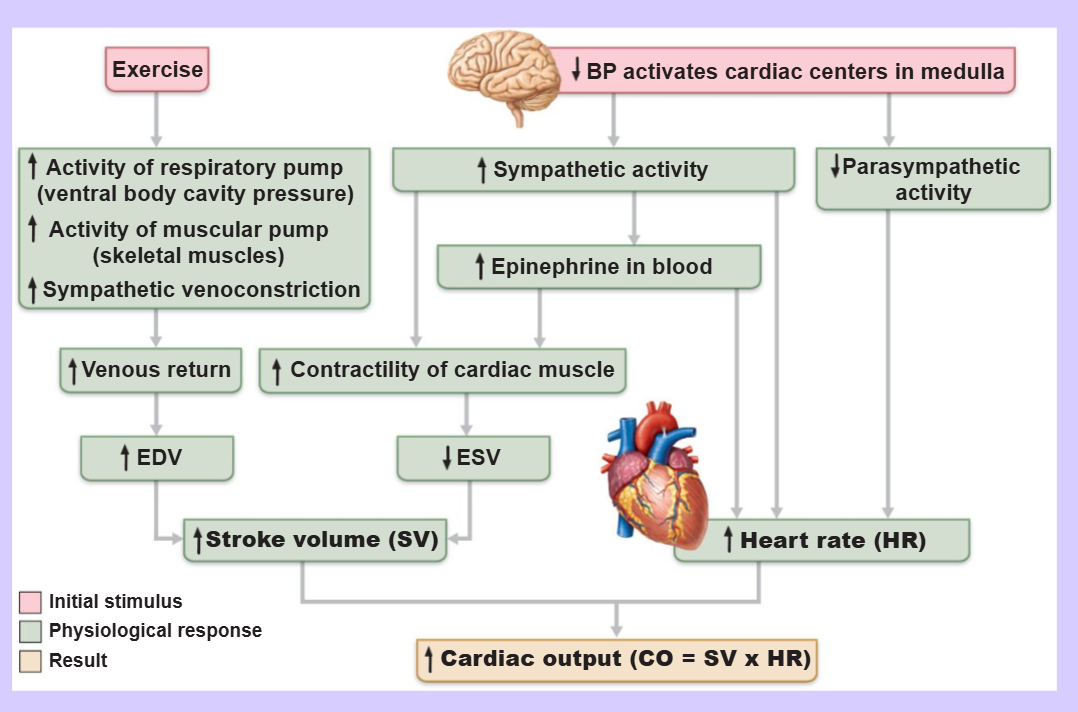
under stress, increased heart rate and stroke volume is controlled by [NEUROLOGICAL STRUCTURE]
the cardioacceleratory center of the medulla oblongata
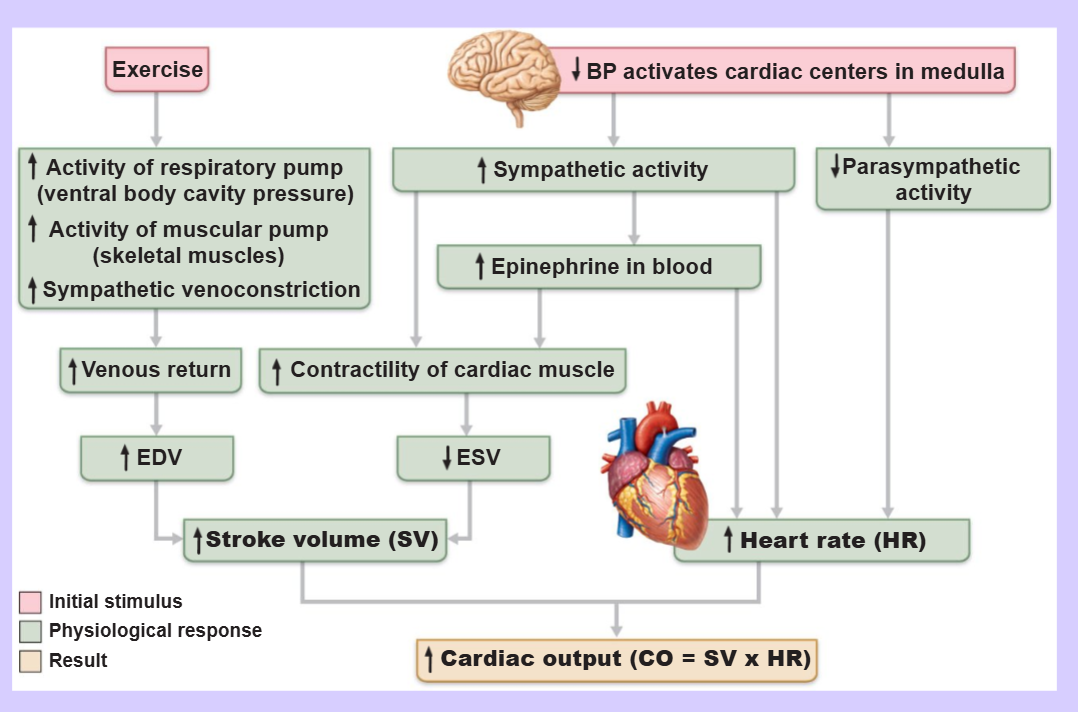
the [KIDNEY/NERVOUS SYSTEM AND HORMONES] alter peripheral resistance, which is a [SHORT-TERM/LONG-TERM] solution to counteract fluctuations in blood pressure
nervous system and hormones, short-term
the [KIDNEY/NERVOUS SYSTEM AND HORMONES] alter blood volume, which is a [SHORT-TERM/LONG-TERM] solution to counteract fluctuations in blood pressure
kidney, long-term
define “cardiovascular center”
part of the medulla oblongata; consists of the vasomotor center and the cardiac centers that integrate blood pressure control by altering cardiac output and blood vessel diameter
define “vasomotor center”
a group of neurons in the brain’s medulla oblongata that oversees changes in blood vessel diameter
increased sympathetic activity causes:
[VASOCONSTRICTION/VASODILATION] and [DECLINE/RISE] in blood pressure
decreased sympathetic activity causes:
blood pressure to [DECLINE/RISE]
vasoconstriction, rise, decline
blood pressure is regulated by chemoreceptors sensitive to [ELEMENT] and [COMPOUND]
oxygen, carbon dioxide
where are prominent BP-regulatory chemoreceptors found?
the carotid and aortic bodies
list the chemicals that increase blood pressure via vasoconstriction
adrenal medulla hormones (epinephrine and norepinephrine)
antidiuretic hormone (ADH)
angiotensin II
list the chemicals that decrease blood pressure
atrial natriuretic peptide (ANP)
nitric oxide (NO)
inflammatory chemicals (histamine)
alcohol
how do the adrenal medulla hormones (epinephrine and norepinephrine) increase blood pressure?
cause vasoconstriction and increase cardiac output
how does ADH increase blood pressure?
cause intense vasoconstriction in cases of extremely low BP
how does Angiotensin II increase blood pressure?
kidney release of renin generates this chemical, causing vasoconstriction
how does atrial natriuretic peptide (ANP) decrease blood pressure?
cause blood volume and pressure to decline by inhibiting aldosterone
how does nitric oxide (NO) decrease blood pressure?
cause brief but potent vasodilation
how do inflammatory chemicals (histamine) decrease blood pressure?
cause vasodilation
how does alcohol decrease blood pressure?
inhibition of ADH
what organ of the body controls blood pressure long-term by altering blood volume?
the kidneys
the [HEART/KIDNEY] act directly and indirectly to maintain long-term blood pressure:
direct renal mechanism alters [BLOOD VOLUME/DIAMETER OF BLOOD VESSELS]
indirect renal mechanism involves the [NAME] mechanism
kidney, blood volume, renin-angiotensin
direct renal mechanism to alter long-term blood pressure:
increased BP or blood volume causes the [KIDNEY/LIVER] to eliminate [LESS/MORE] urine, thus [DECREASING/INCREASING] BP
decreased BP or blood volume causes the [KIDNEY/LIVER] to conserve water, and BP [DECREASES/INCREASES]
kidney, more, decreasing, kidney, increases
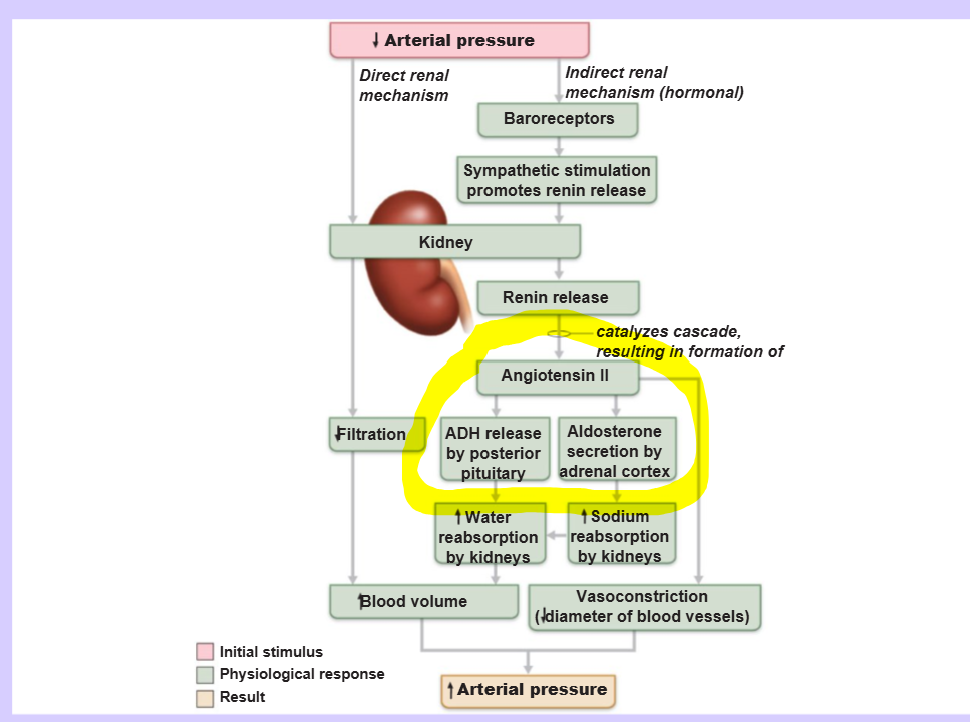
indirect renal-angiotensin mechanism to alter long-term blood pressure:
[LOW/HIGH] arterial BP → release of renin
renin → production of [CHEMICAL]
[CHEMICAL] is a potent vasoconstrictor and causes aldosterone and ADH release from other endocrine glands
aldosterone → renal reabsorption of [ELEMENT] and [LOW/HIGH] urine formation
low, angiotensin II, angiotensin II, Na+, low
what are the main measurements that asses the efficiency of the blood circulation?
pulse and blood pressure
define “vital signs”
pulse, blood pressure, respiratory rate, body temperature
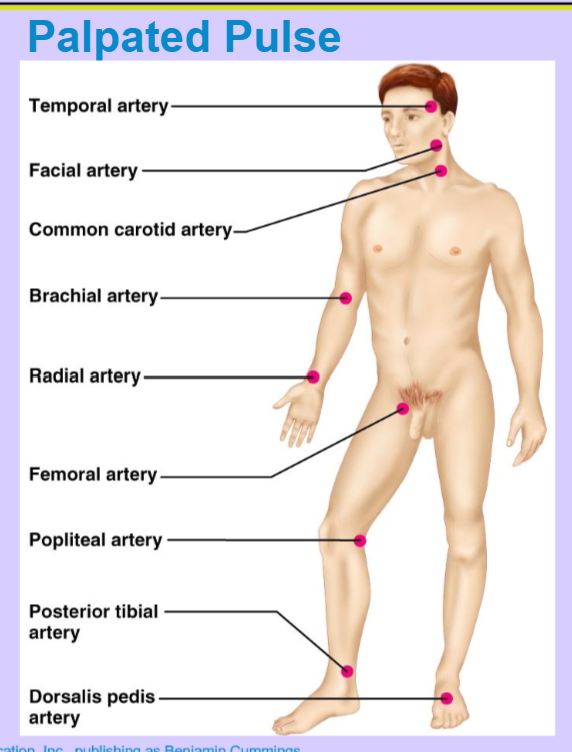
define pulse
pressure wave caused by the expansion and recoil of elastic arteries
define sphygmomanometer
a blood pressure monitor consisting of an inflatable arm cuff, an inflation bulb, and pressure gauge
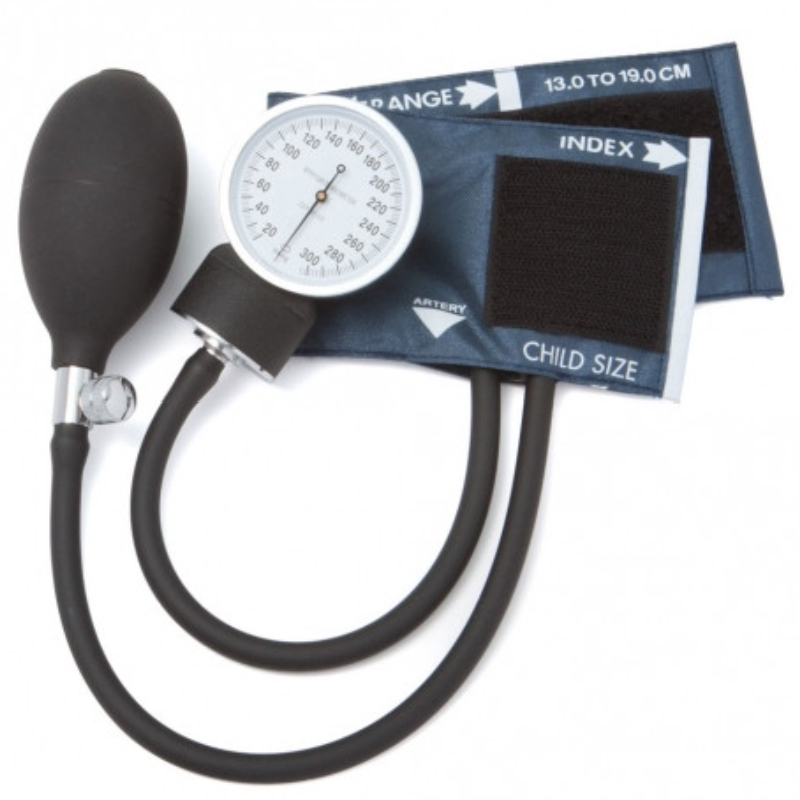
measuring blood pressure with a sphygmomanometer:
the first sound heard is recorded as the [SYSTOLIC/DIASTOLIC] pressure (normally [NUMBER RANGE] mmHg)
the pressure when sound disappears is recorded as the [SYSTOLIC/DIASTOLIC] pressure (normally [NUMBER RANGE] mmHg)
systolic, 110-140, diastolic, 70-80
define hypotension
low blood pressure; systolic pressure below 100 mmHg
name the condition that is characterized by temporary low BP and dizziness when suddenly rising from a sitting or reclining position
orthostatic hypotension
name the condition that is caused by poor nutrition and is a warning sign for Addison’s disease (adrenal insufficiency) or hypothyroidism
chronic hypotension
name the condition that is an important sign of circulatory shock
acute hypotension
define hypertension
high blood pressure; sustained elevated arterial pressure of 140/90 or higher
prolonged [DISEASE] is a major cause of heart failure, vascular disease, renal failure, and stroke
hypertension
[PRIMARY/SECONDARY] hypertension:
90% of hypertensive conditions
risk factors: heredity, diet, obesity, age, stress, diabetes mellitus, smoking
primary
[PRIMARY/SECONDARY] hypertension:
less common
due to identifiable disorders: kidney disease, arteriosclerosis, and endocrine disorders (e.g., hyperthyroidism and Cushing’s syndrome (hyperadrenalism))
secondary
define autoregulation
automatic adjustment of blood flow to each tissue in proportion to its requirements at any given point in time
define angiogenesis
the formation of new blood vessels from pre-existing ones; occurs when short-term autoregulation cannot meet tissue nutrient requirements
what occurs during angiogenesis?
the number of vessels to a region increases
existing vessels enlarge
create a short flowchart to show the blood flow’s skeletal muscle regulation
physical activity → vasodilation → increased muscle blood flow
blood flow: brain
blood flow to the brain is constant because neurons are intolerant to [CONDITION]
metabolic controls
decline in pH and rise in carbon dioxide cause [VASOCONSTRICTION/VASODILATION]
myogenic controls
decrease in [NAME] (MAP) cause cerebral vessels to [CONSTRICT/DILATE]
increases in MAP cause cerebral vessels to [CONSTRICT/DILATE]
ischemia, vasodilation, mean arterial pressure, dilate, constrict
MAP below [NUMBER] mmHg can cause syncope (fainting)
60
MAP above [NUMBER] mmHg can result in cerebral edema
160
what are the functions of blood flowing near the skin?
supplies nutrients to cells in response to oxygen need
helps maintain body temperature
provides a blood reservoir
blood flow: heart
during strenuous exercise
[NAME] vessels dilate in response to local accumulation of vasodilators
blood flow may [DECREASE/INCREASE] 3 to 4 times
coronary, increase
define “circulatory shock”
any condition in which
blood vessels are inadequately filled
blood cannot circulate normally
results in inadequate blood flow to meet tissue needs
identify the type of circulatory shock that results from large-scale blood loss
hypovolemic shock
identify the type of circulatory shock that is characterized by poor circulation resulting from extreme vasodilation (e.g., anaphylactic shock from a systemic allergic reaction)
vascular shock
identify the type of circulatory shock that is characterized by the heart being unable to sustain adequate circulation (e.g., myocardial damage due to heart attack/infarcts)
cardiogenic shock