Week 6_Class 1_Engaging in Cross-Border Collaborationn
 Call Kai
 Learn
Learn Practice Test
 Spaced Repetition
 Match
Match Flashcards
 Knowt Play
1/28

There's no tags or description
Looks like no tags are added yet.
Name | Mastery | Learn | Test | Matching | Spaced | Call with Kai | Chat |
|---|
No analytics yet
Send a link to your students to track their progress
29 Terms
What is a strategic Alliance? (3)
•A formal and mutually agreed commercial collaboration between companies.
•The partners pool, exchange or integrate specific business resources.
•Yet they remain separate businesses, making alliances distinct from mergers and acquisitions
Key Motivators for alliance formation (5)
Technology exchange - Necessary technology, resources, capabilities, and R&D firms need to compete is beyond their scope. Need to collaborate is intensified by short product life cycles
Global competition - Firms need to collaborate to compete in global economy
Industry convergence - Industries are converging and require cross-industry alliances Strategic alliances as a way to develop complex and interdisciplinary skills
Economies of scale and reduction of risk - Pool resources and concentrate activities to increase the scale of activities. Risk diversification through multiple partnerships
Alliances as an alternative to mergers - Countries preclude foreign ownership in some industries
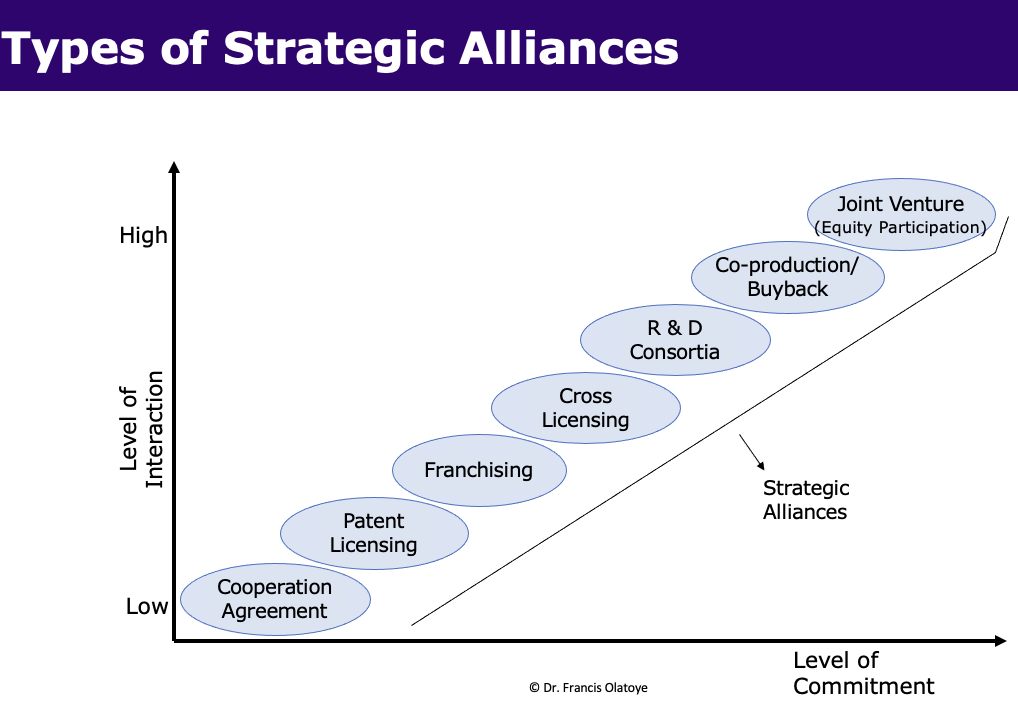
Types of Strategic Alliances (7)
Cooperation Agreement
Patent Licensing
Franchising
Cross Licensing
R&D Consortia
Co-production Buyback
Joint Venture (Equity Participation)
Considerations about Equity Joint Ventures (3)
Partner Fit
Control (Dominant / 50/50 )
State-Owned Companies as Partners
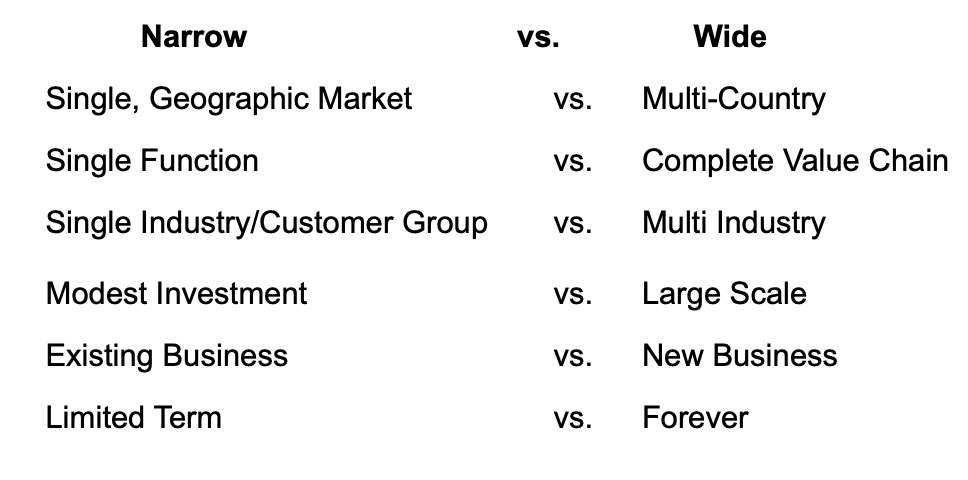
Scope
Equity Joint Ventures: Scope
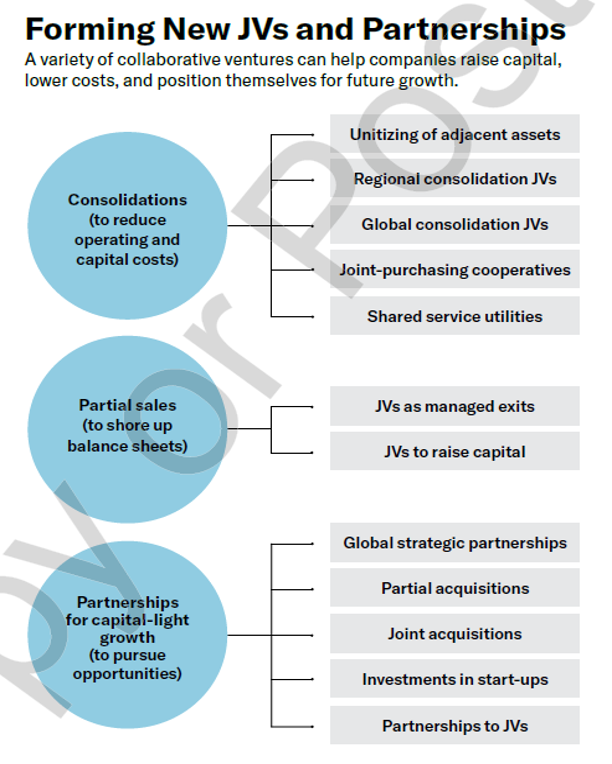
Joint Ventures and Partnerships in a Downturn:
Benefits of existing JVs at the time of crisis (3)
Raising capital in unconventional ways
•Secure low- or interest-free loans or capital from their cash-rich owners
Reducing costs through synergies
•Cut costs by consolidating or otherwise optimizing activities and assets with their owners (e.g., joint purchases, integrate their supply chains, …)
Regearing financial ratios
•Increase external borrowing, especially if the entity is underleveraged
•Repatriate excess cash to fund other, pressing corporate needs
Joint Ventures and Partnerships in a Downturn:
Alliance formation in a downturn
Risks of competitive collaboration (Coopetition)
•Benefits from the collaboration might be asymmetrical
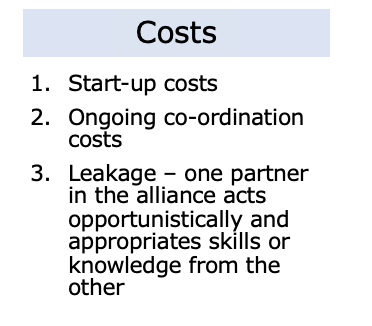
•Appropriation of the partners knowledge and skills, while carefully protecting their own assets
•Explicit (‘easy’ to absorb and replicate) knowledge versus tacit (difficult to understand and learn) knowledge.
•One partner can develop a competitive edge over the other and erode the other’s competitive position
•Successful partnerships will lead to the strengthening of a competitor and collaborating with a competitor might be the precursor to a takeover by one of the firm.
Building and managing collaborative ventures: Pre-alliance tasks (5)
Partner Selection
Escalating commitment
Alliance of scope
Managing the boundary
Managing Knowledge Flows
Providing Strategic direction
Building and managing collaborative ventures: Pre-alliance tasks - Partner selection (4)
•Analysis of importance and complementarity of assets and capabilities of potential partners (physical assets, less tangible assets, and organizational capabilities).
•Availability of information might hinder analysis.
•Barriers of cultural and physical distance.
•Estimation of future development of partners; analyze the durability of complementarity.
Building and managing collaborative ventures: Pre-alliance tasks - Partner selection, MITIGATION (3)
•Assess partners willingness to invest resources.
•Ensure clear understanding of goals of a potential project.
•Monitor partnerships continuously.
Building and managing collaborative ventures: Pre-alliance tasks - Escalating commitment (2)
•Unrealistic expectations and wrong choices.
•Managers’ personal enthusiasm can cause an unrealistic assessment of the benefits and consequences of a partnership.
Building and managing collaborative ventures: Pre-alliance tasks - Escalating commitment - Mitigation strategies
•Operational managers who will be involved in implementation should be part of the pre-decision negotiation process – an alliance committee is needed.
Building and managing collaborative ventures: Pre-alliance tasks - Alliance of scope (2)
•Define a simple and focused scope for the partnership.
•Keep complexity as low as possible.
Building and managing collaborative ventures: Pre-alliance tasks - Alliance of scope - mITIGATION
Expand the scope of an alliance gradually as partners develop a better understanding and trust
Building and managing collaborative ventures:
Post-alliance tasks - Managing the boundary MEANS..
•Management through simple governance mechanisms such as joint committees, or by creating a separate legal entity, depends on the scope of the alliance.
Building and managing collaborative ventures:
Post-alliance tasks - Managing knowledge flows
•Ensure full exploitation of learning potential.
•Prevent the outflow of information or knowledge that should not be shared
•Ensure that gatekeepers transfer relevant information to other parts of the organization (the right managers must be at the interface).
Building and managing collaborative ventures:
Post-alliance tasks - Providing strategic direction
•Equal distribution of decision-making power can hinder effective management.
•Integrative equality: Clear leadership in each task and each partner takes the responsibility for different tasks.
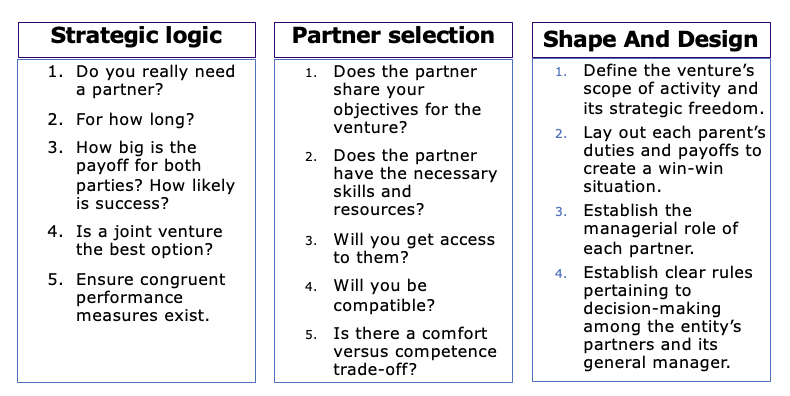
Building and managing collaborative ventures: JV Checklist
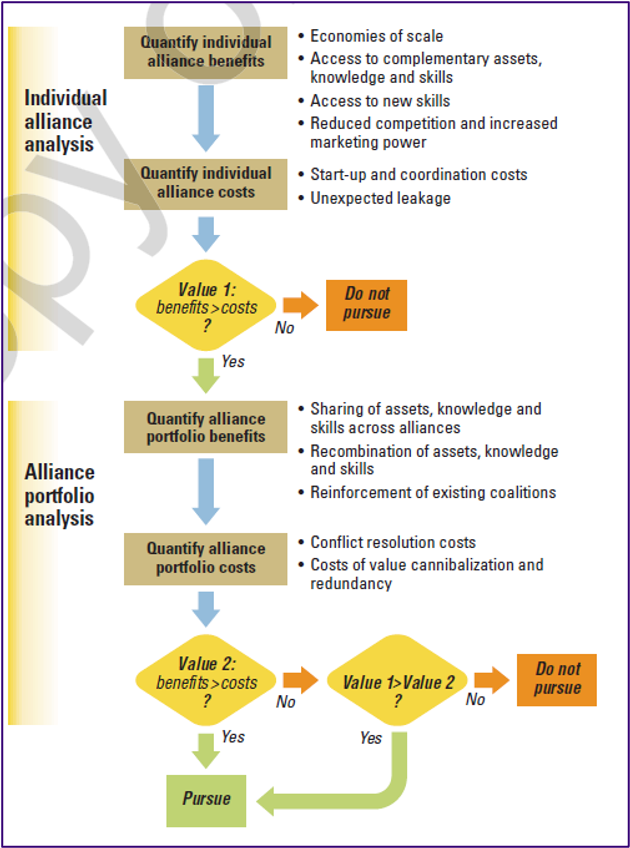
•[…] an alliance opportunity that promises to create value from a stand-alone perspective may not necessarily be value-creating from an alliance portfolio perspective. The formation of the new alliance may even be an overall value-destroying move.”
Quote about do alliances work?
How to Make International Alliances Work (5)
•Focus on how to work together → build trust
•Develop the right metrics
•Embrace and leverage differences
•Encourage collaborative behavior
•Manage internal stakeholders
How can companies form strategic alliances that create value on a stand-alone basis and at the alliance portfolio level? (3 Things to Consider)
•an alliance business case framework that takes into account costs and benefits on the individual level as well as the alliance portfolio level of analysis,
•an integrated and codified decision process involving managers on the business as well as the corporate levels,
•clearly defined roles and responsibilities for all actors involved in decision making.
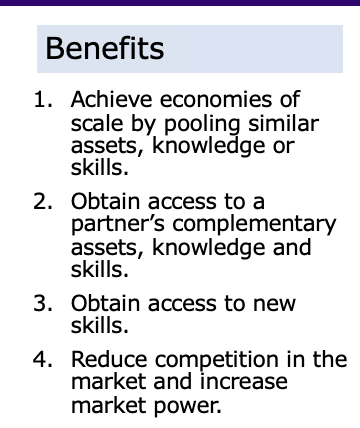
Engage in cost-benefit analyses at two levels:
1.Individual Alliance level: Does the new alliance…
…achieve economies of scale by pooling similar assets, knowledge or skills?
…secure access to a partner’s complementary assets, knowledge and skills?.....provide access to new skills?
…reduce competition in the market and increase market power?
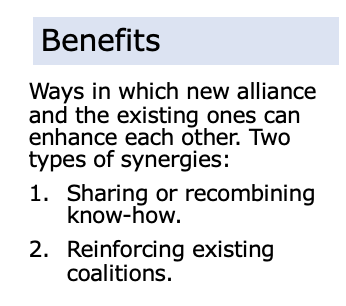
2.Portfolio-level: Does the new alliance….
…create an opportunity to share or recombine know-how in the portfolio?
…reinforce existing coalitions?benefits: Individual Alliance
Benefits: Individual Alliance (4)
Cons Individual Alliance (3)
Alliance Assessment Decision Process
Benefits: Alliance Portfolio
Cons : Alliance Portfolio
1.Conflict resolution among existing alliances.
2.Dissolution costs if conflicts with existing alliances are not resolved.
3.Redundancy and value cannibalization as a result of a new alliance.