Session 4.1: Overview of the Upper Limb & Pectoral Region
 Call Kai
 Learn
Learn Practice Test
 Spaced Repetition
 Match
Match Flashcards
 Knowt Play
1/95

There's no tags or description
Looks like no tags are added yet.
Name | Mastery | Learn | Test | Matching | Spaced | Call with Kai | Chat |
|---|
No analytics yet
Send a link to your students to track their progress
96 Terms
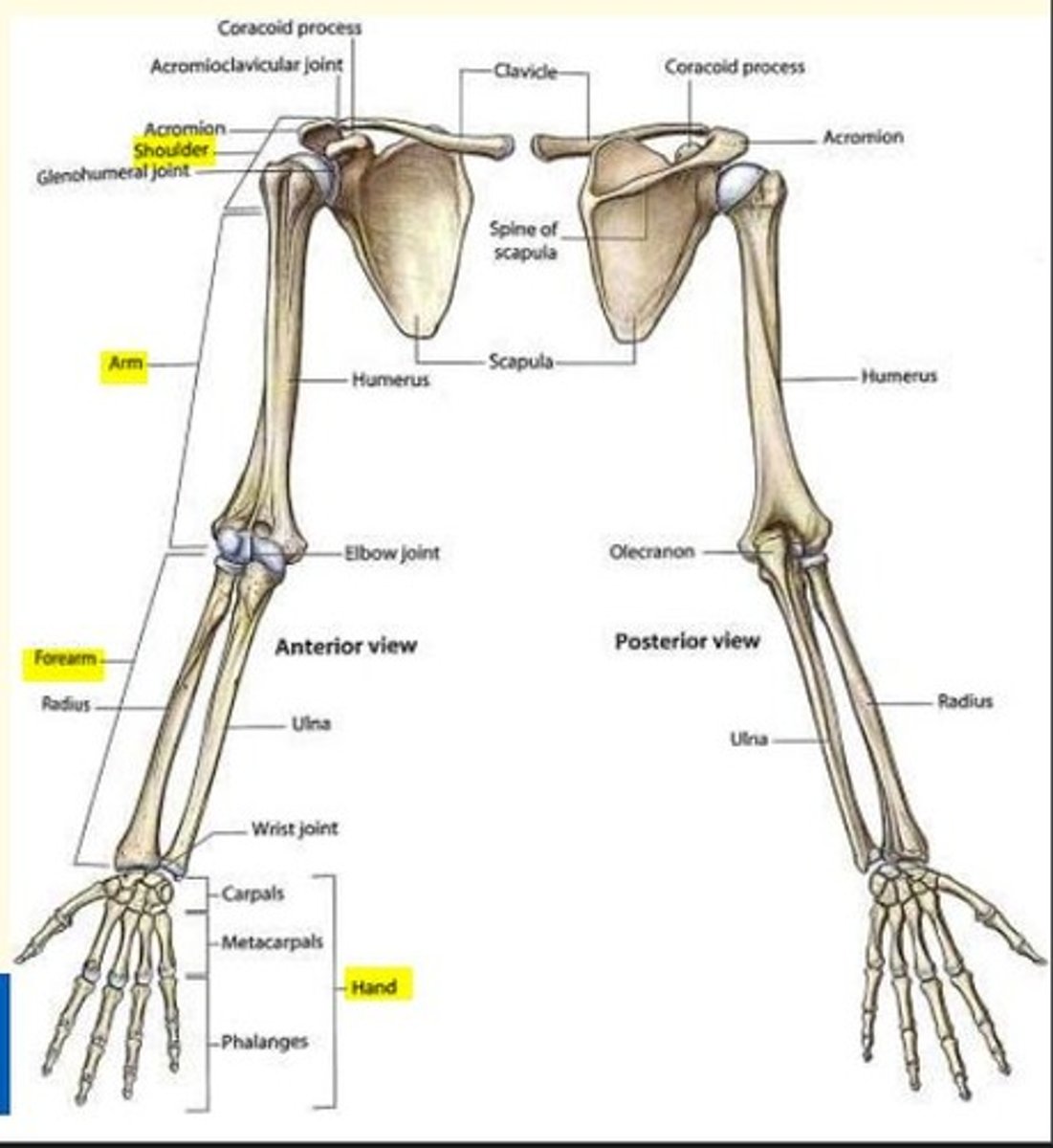
The upper limb is divided into four major segments. What are they?
- Shoulder
- Arm
- Forearm
- Hand
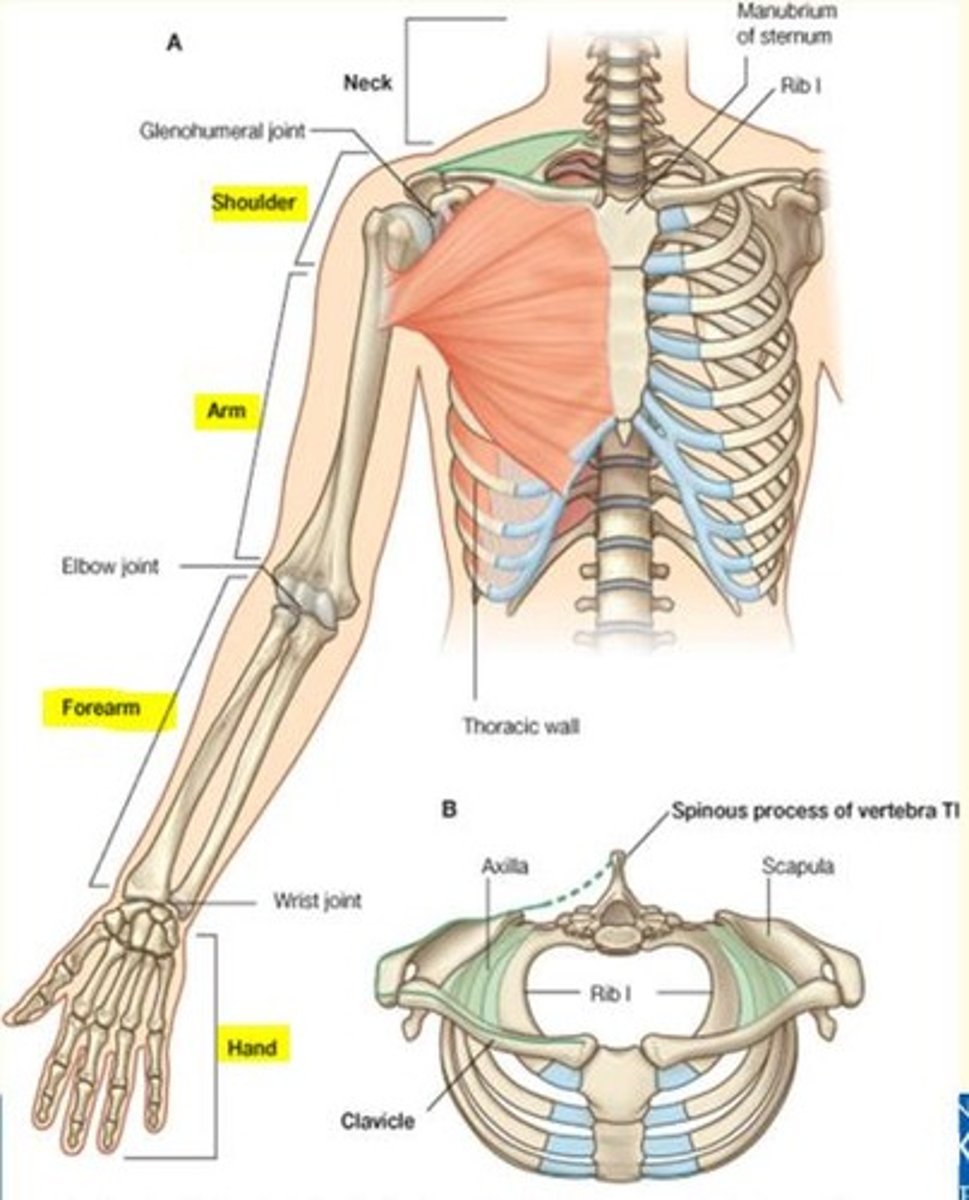
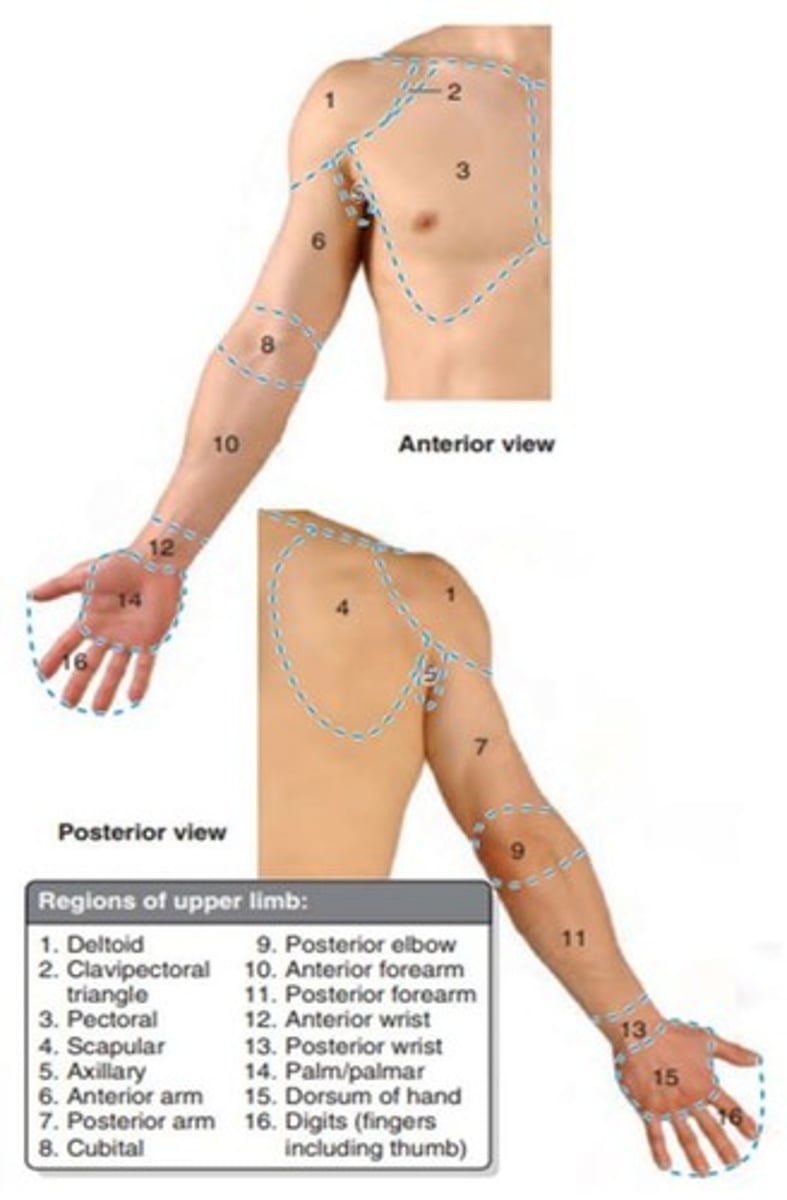
These segments of the upper limb can be further subdivided into regions for precision.
What are the main regions of the upper limb?
Regions of Transition of Upper Limb
What is the region of transition here?
Axilla
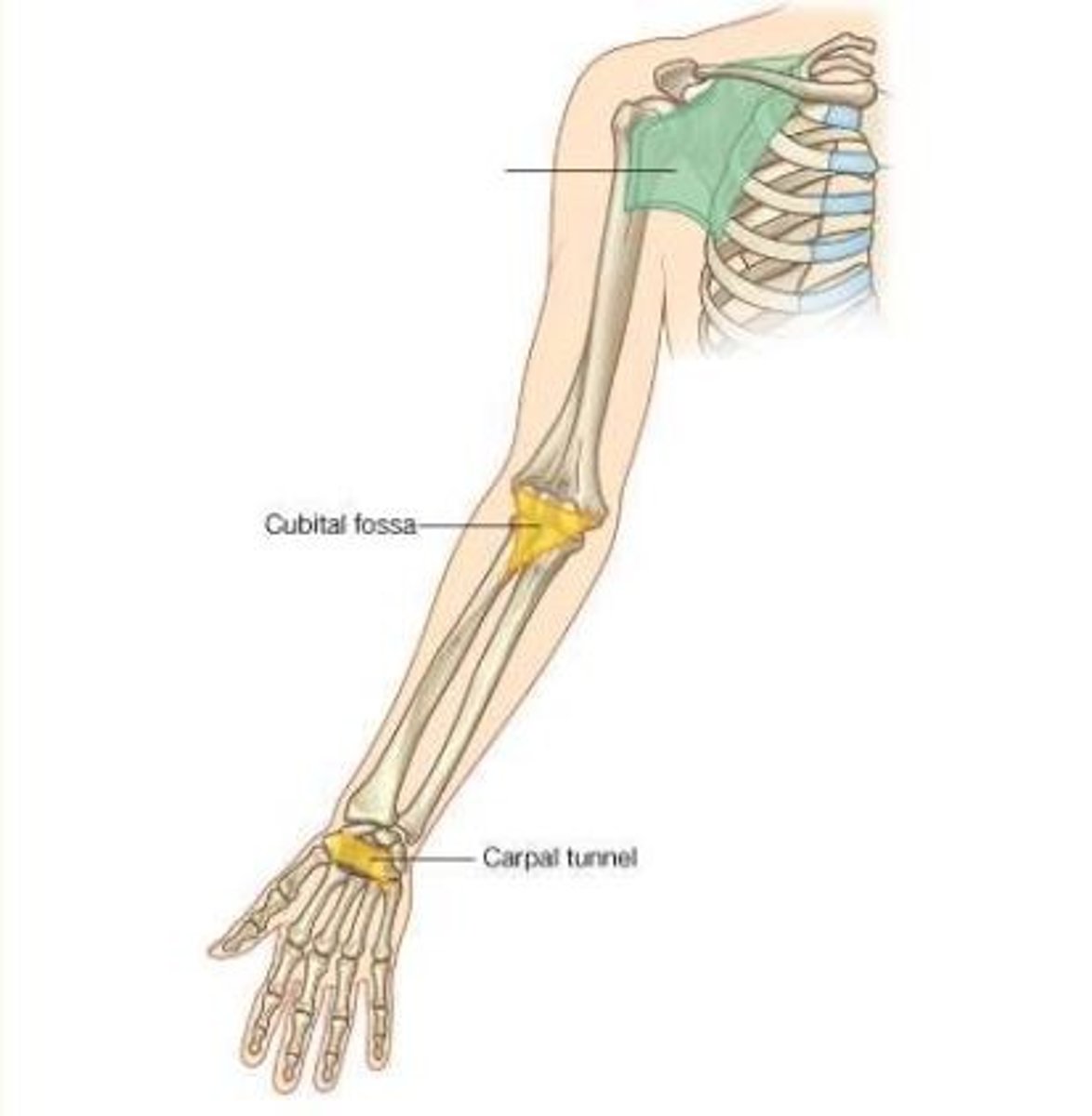
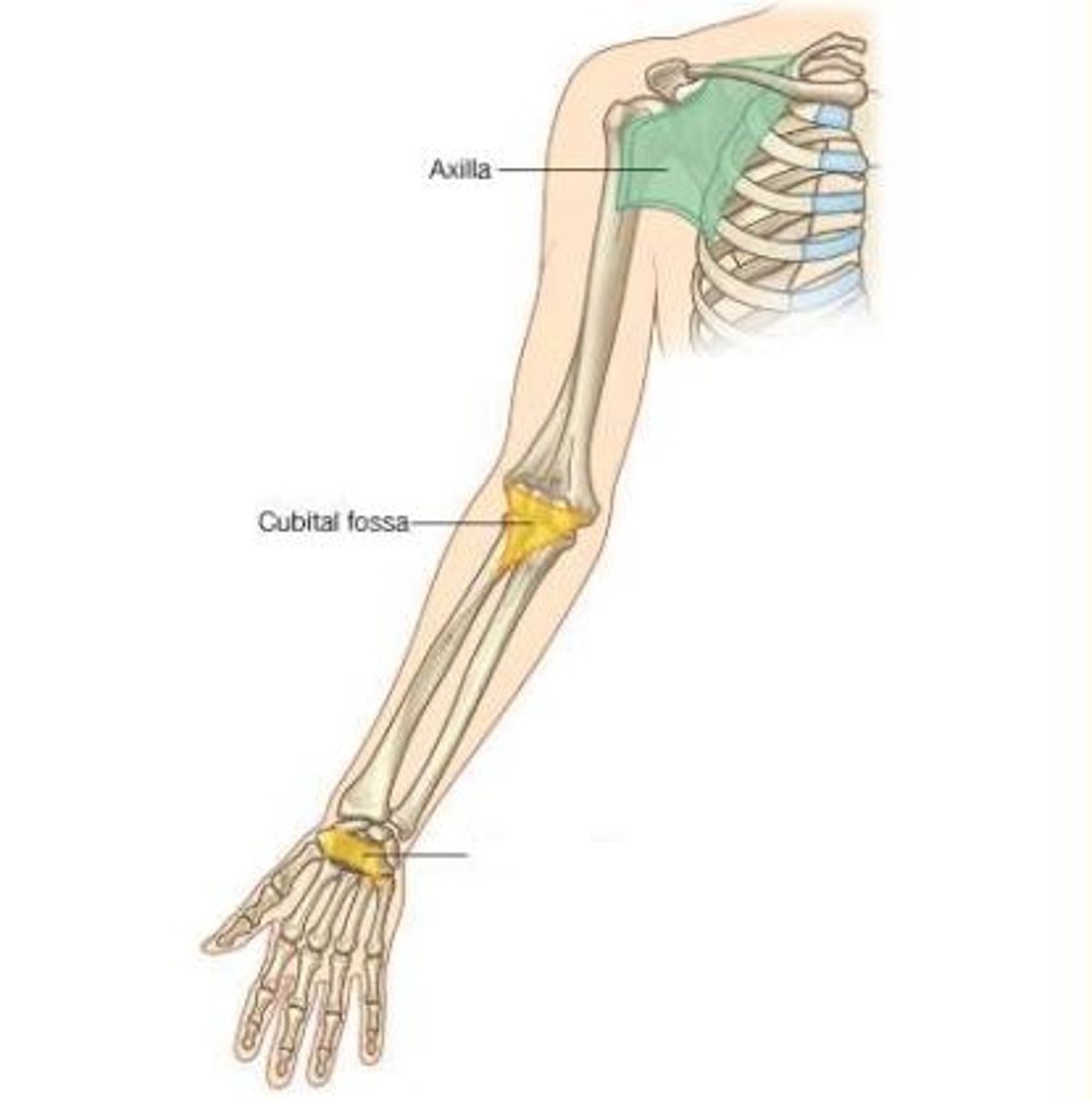
Regions of Transition of Upper Limb
What is the region of transition here?
Cubital fossa
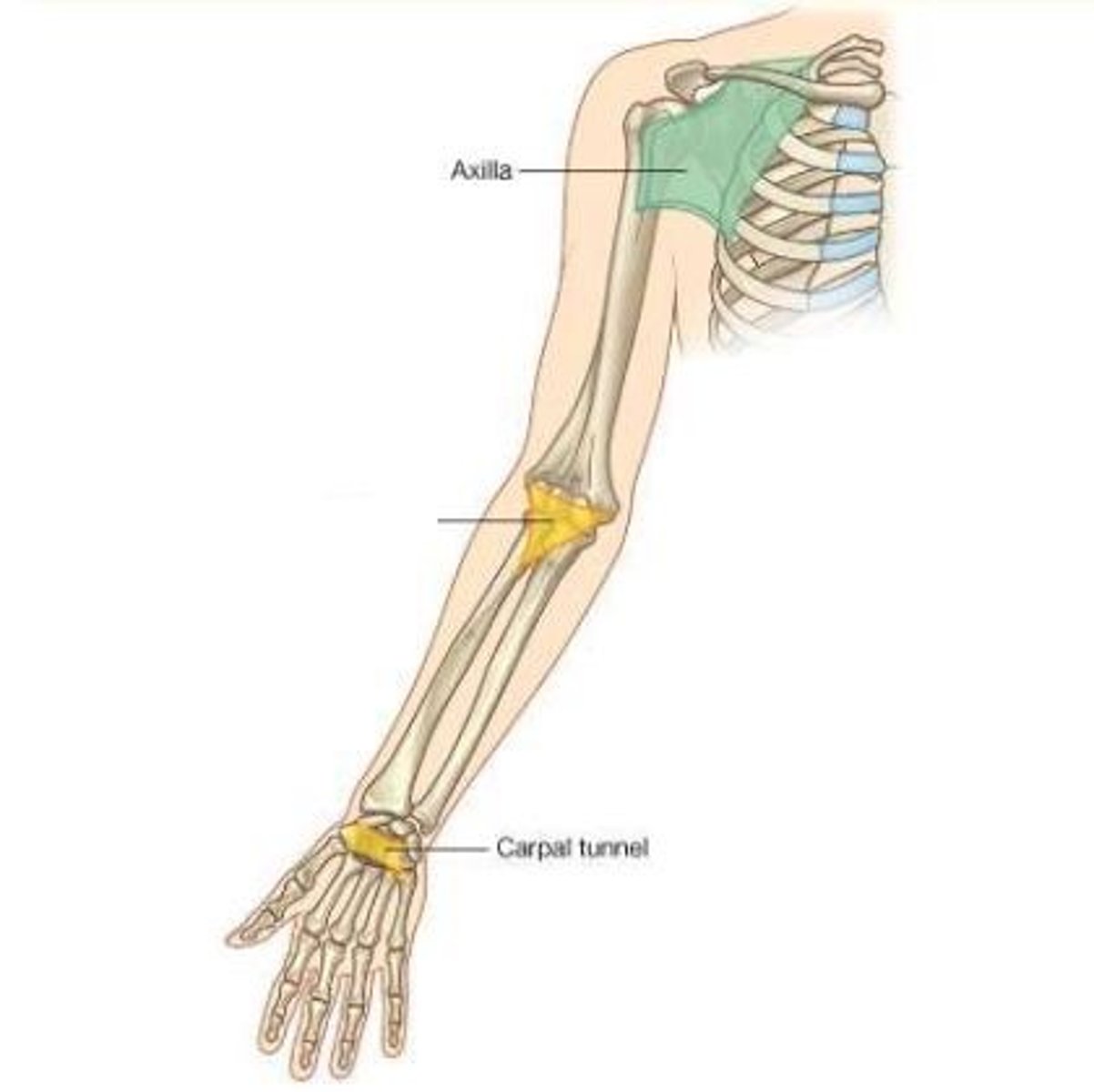
Regions of Transition of Upper Limb
What is the region of transition here?
Carpal tunnel
Movements of the Upper Limb
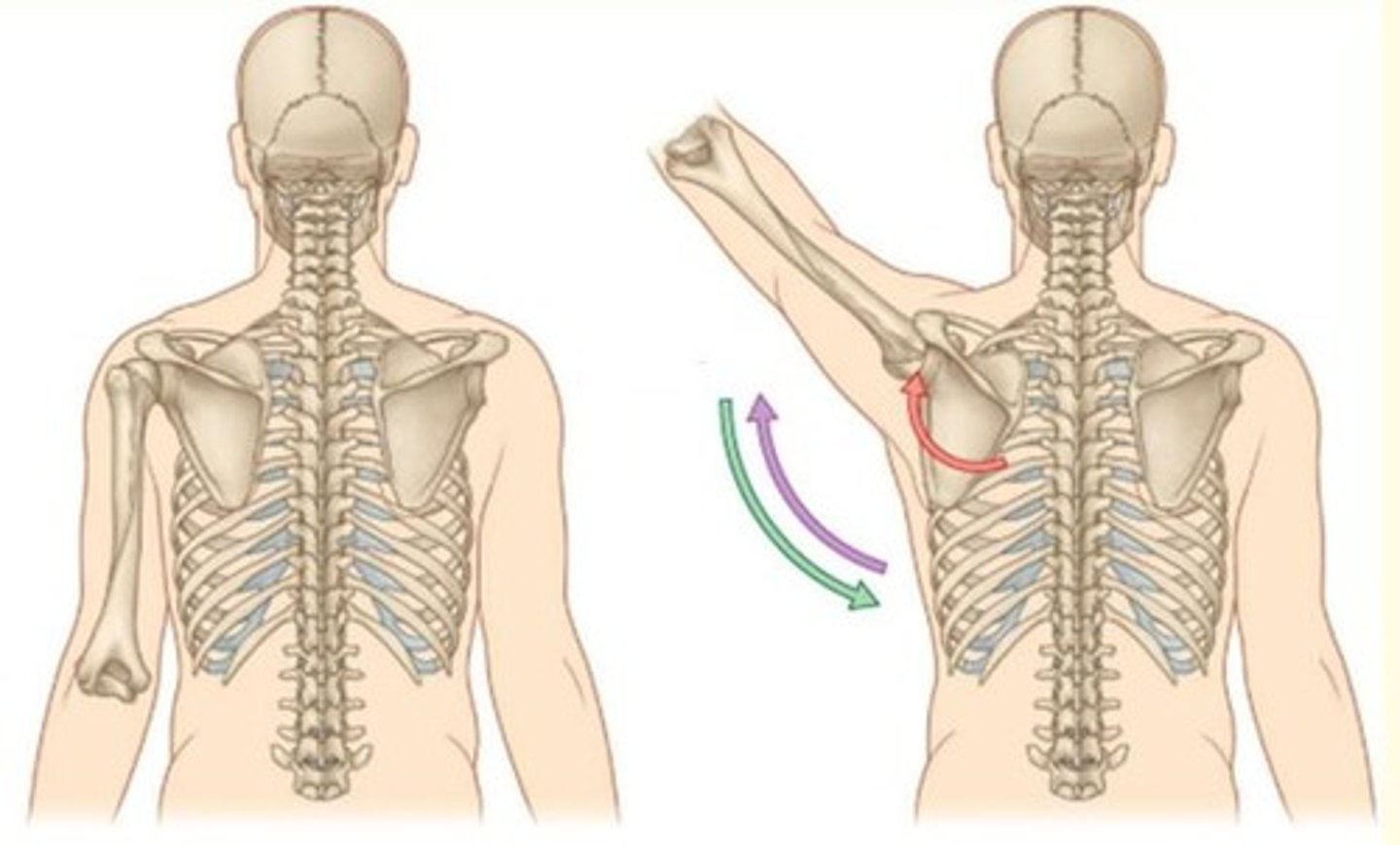
What movement is this?
Abduction (away from midline)
Adduction (towards midline)
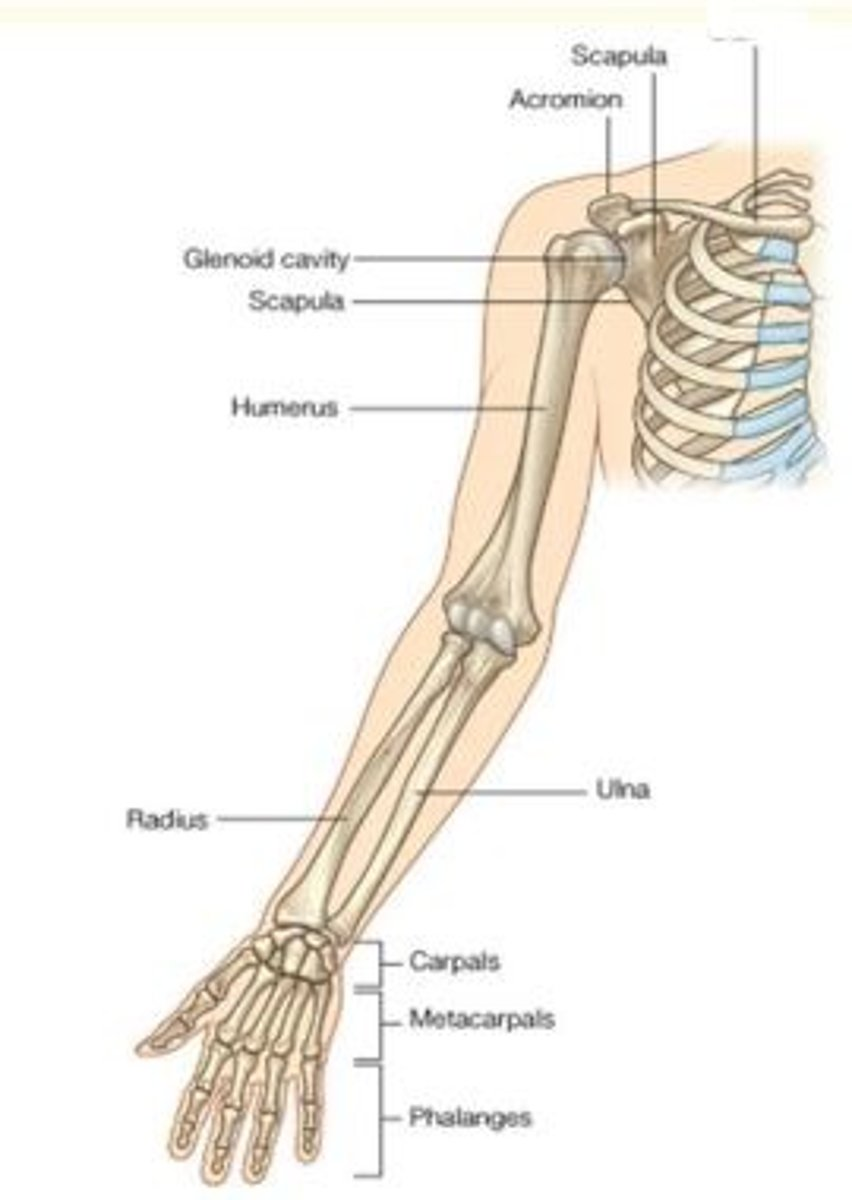
What bone is highlighted here?
Clavicle
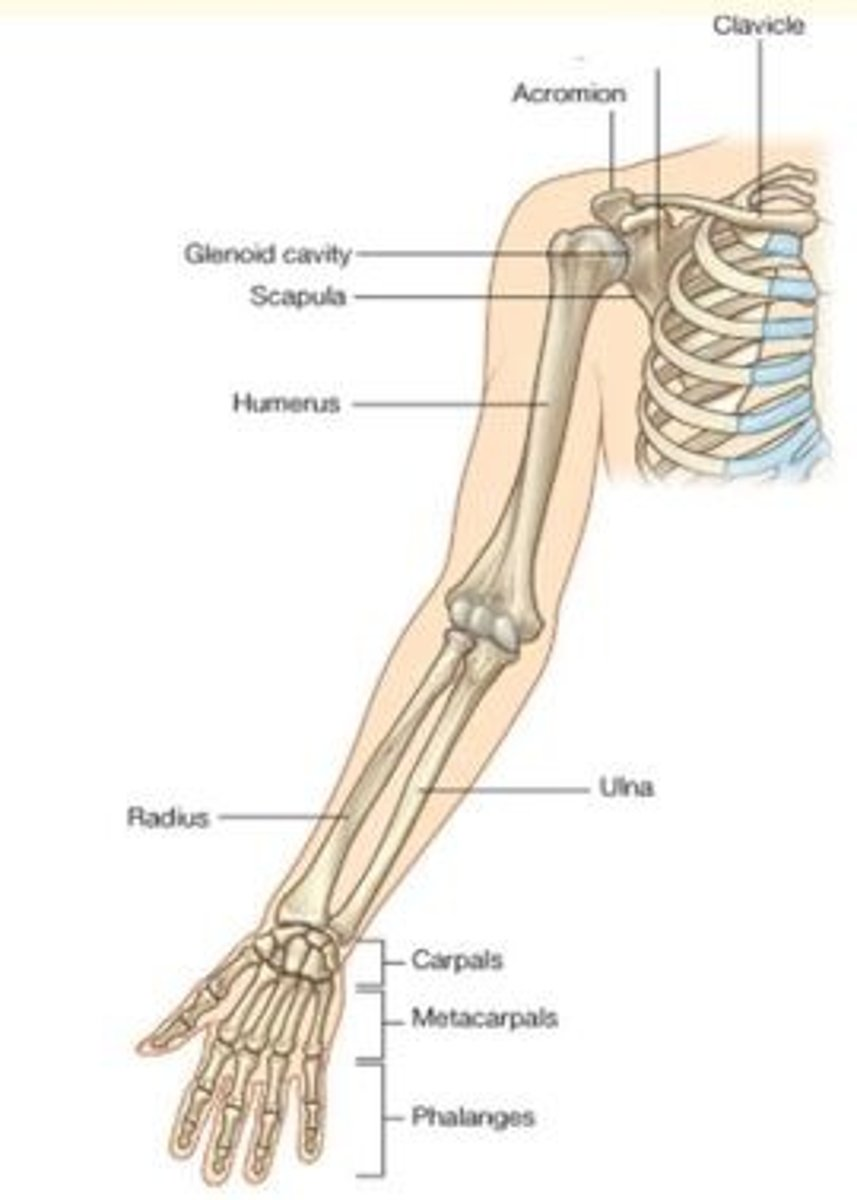
What bone is highlighted here?
Scapula
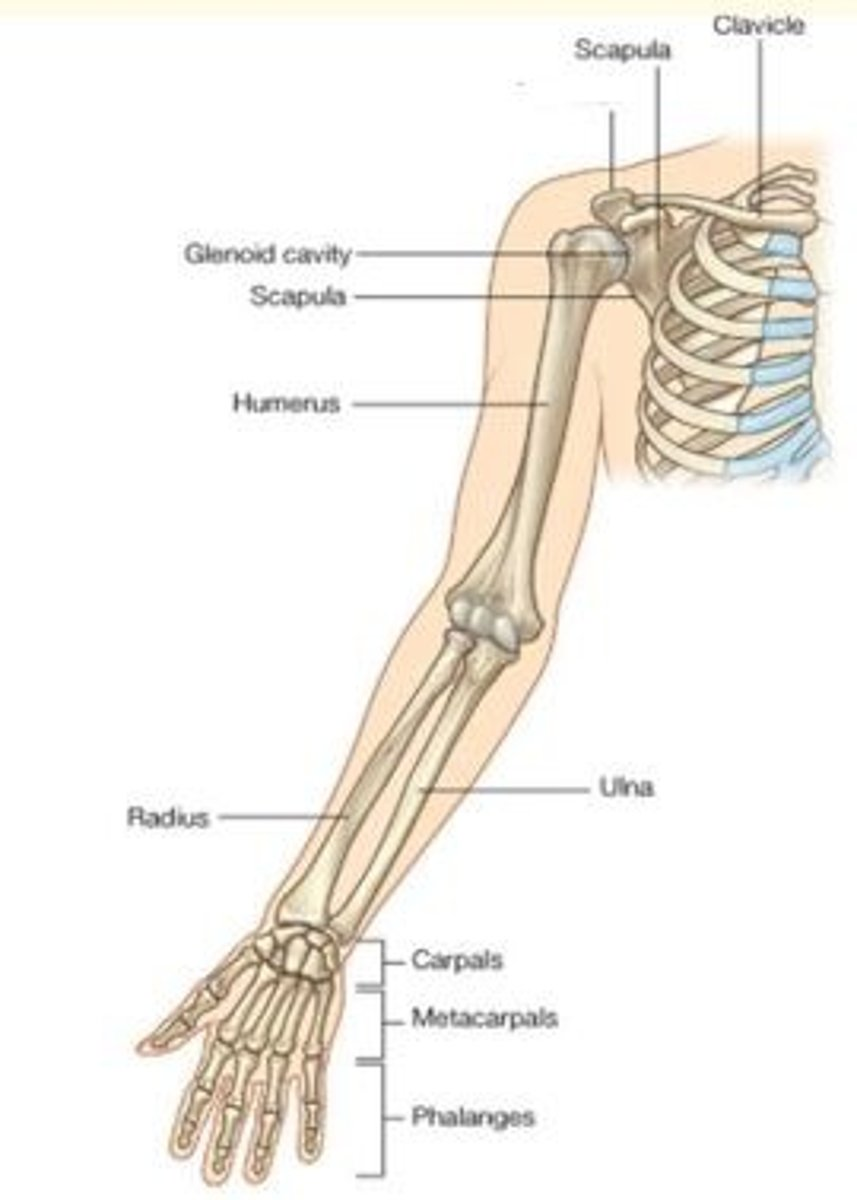
What is highlighted here?
Acromion
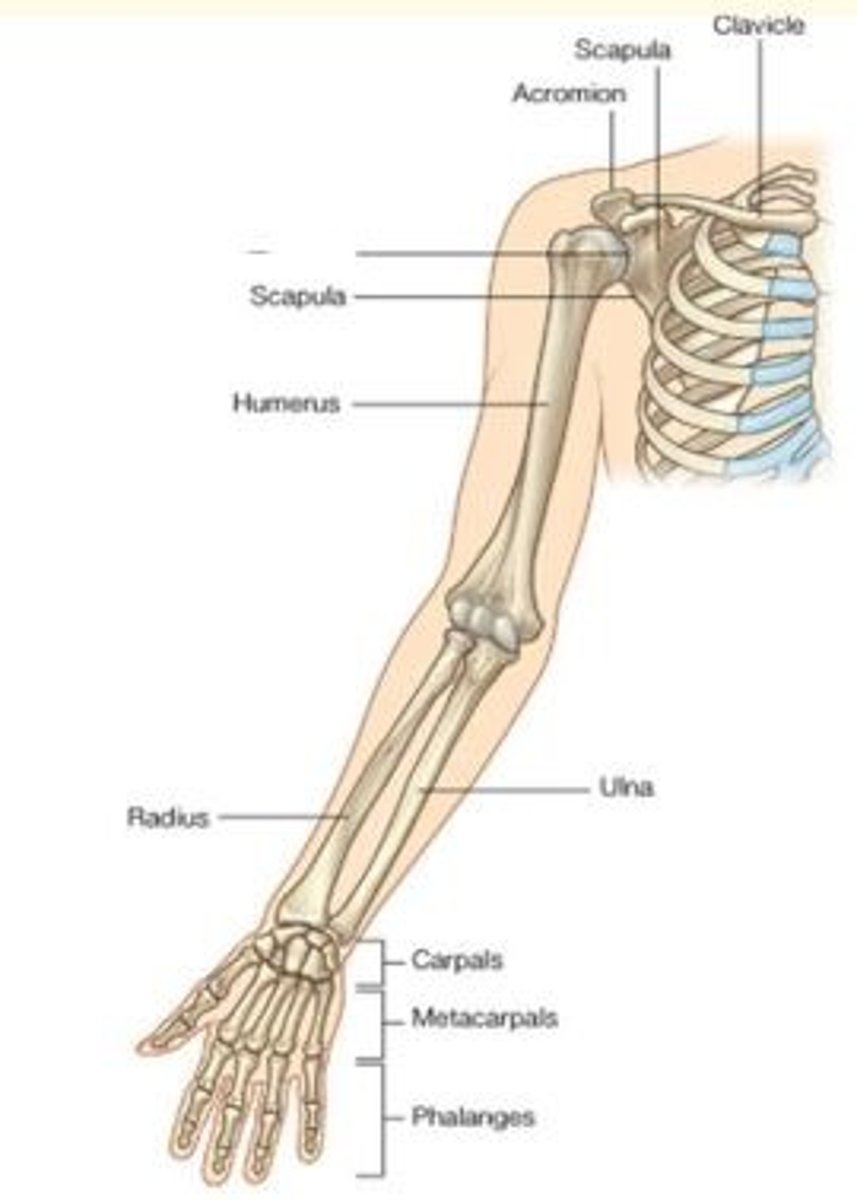
What is highlighted here?
Glenoid cavity
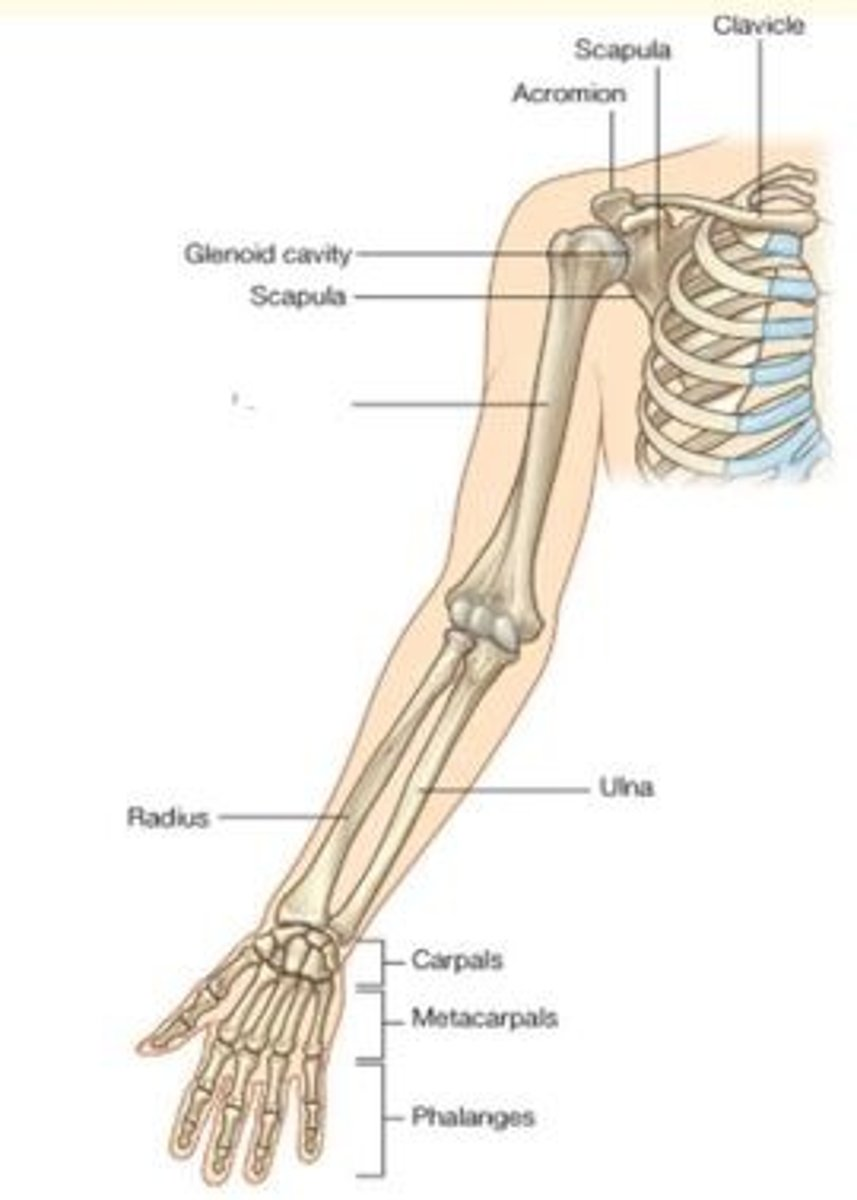
What bone is highlighted here?
Humerus
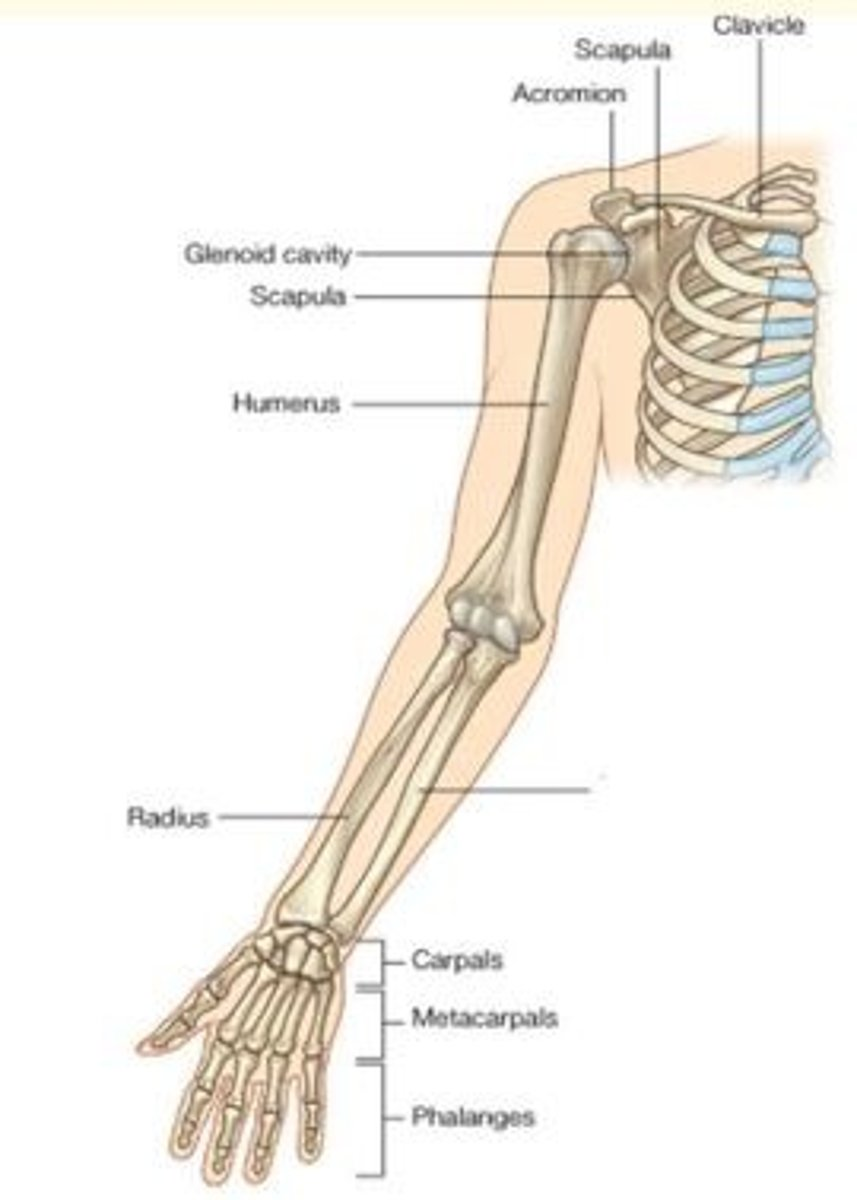
What bone is highlighted here?
Ulna
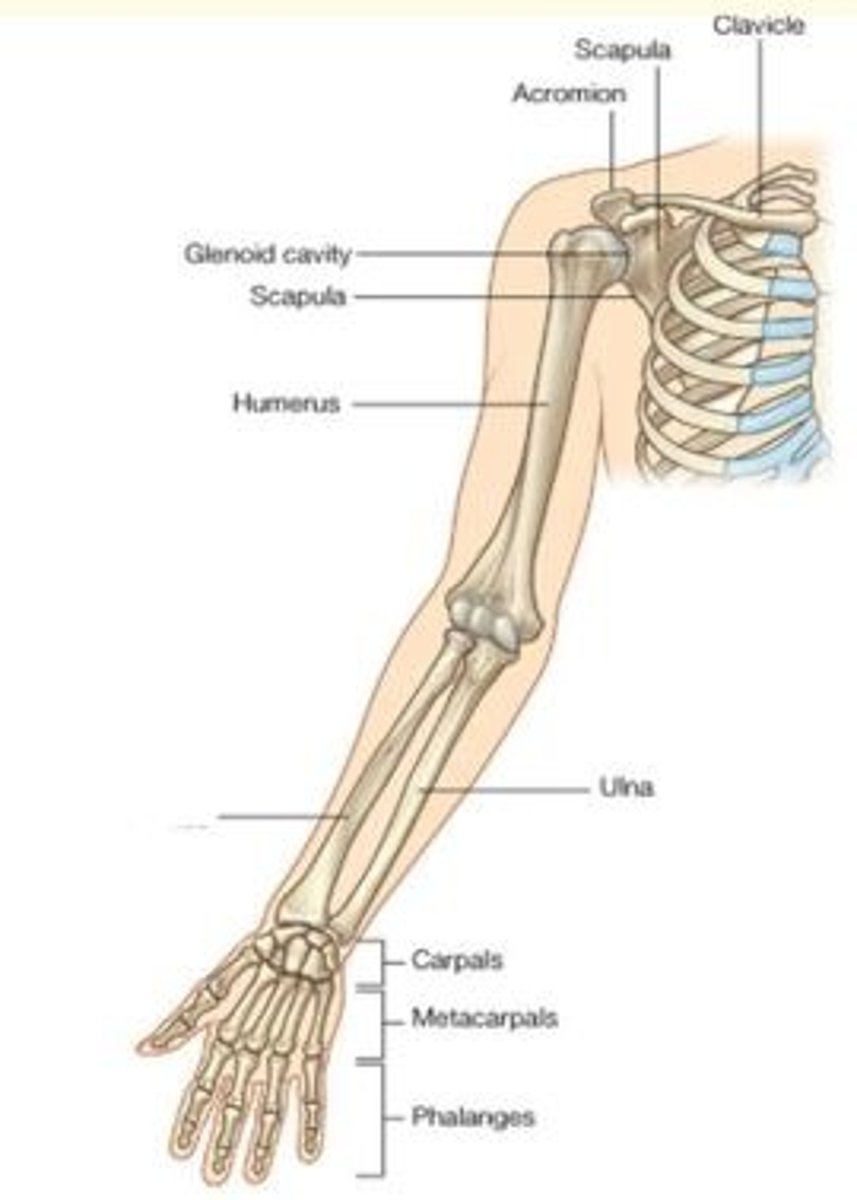
Whbat bone is highlighted here?
Radius
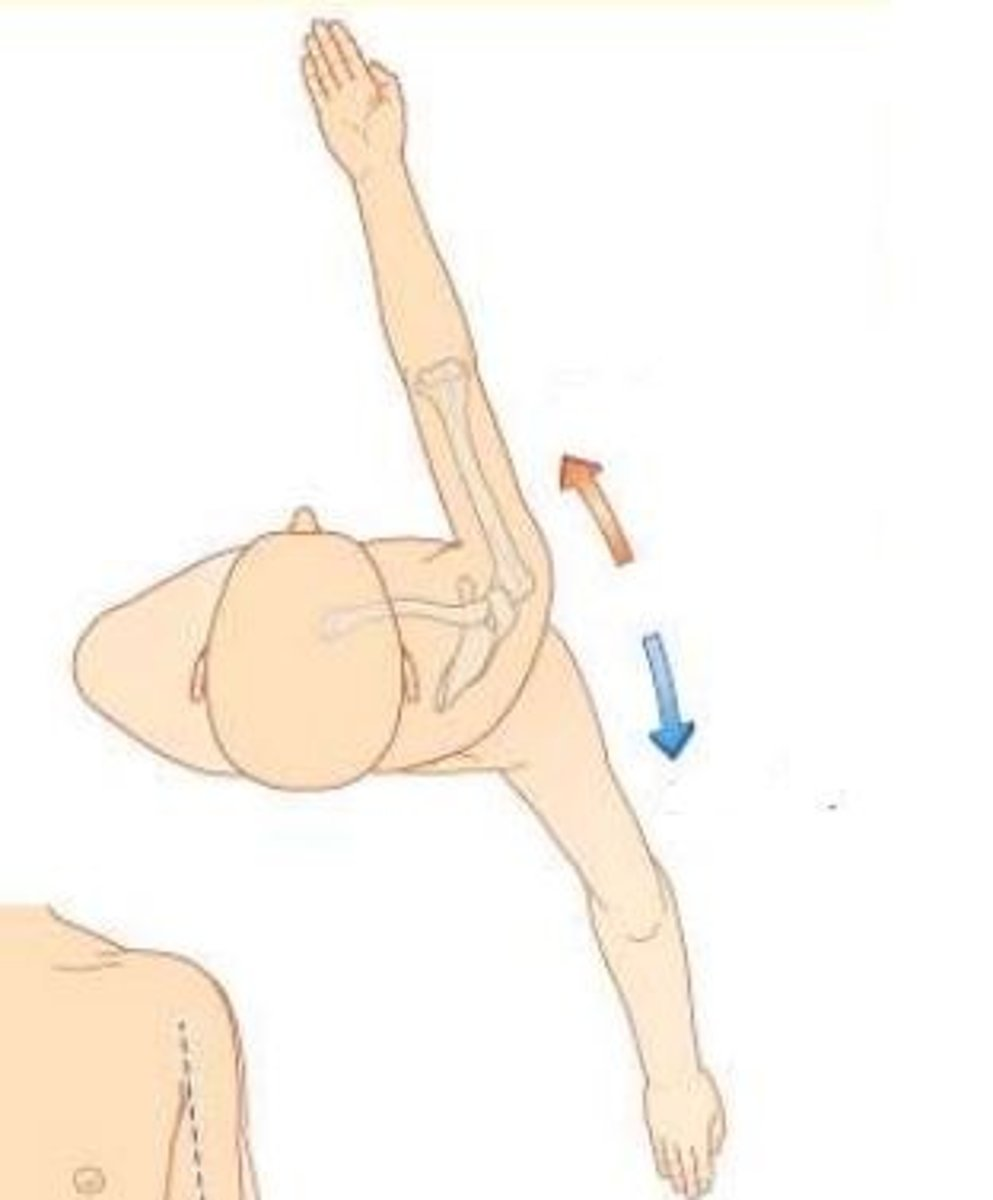
Movements of the Upper Limb
What movement is this?
Flexion (red arrow)
Extension (blue arrow)
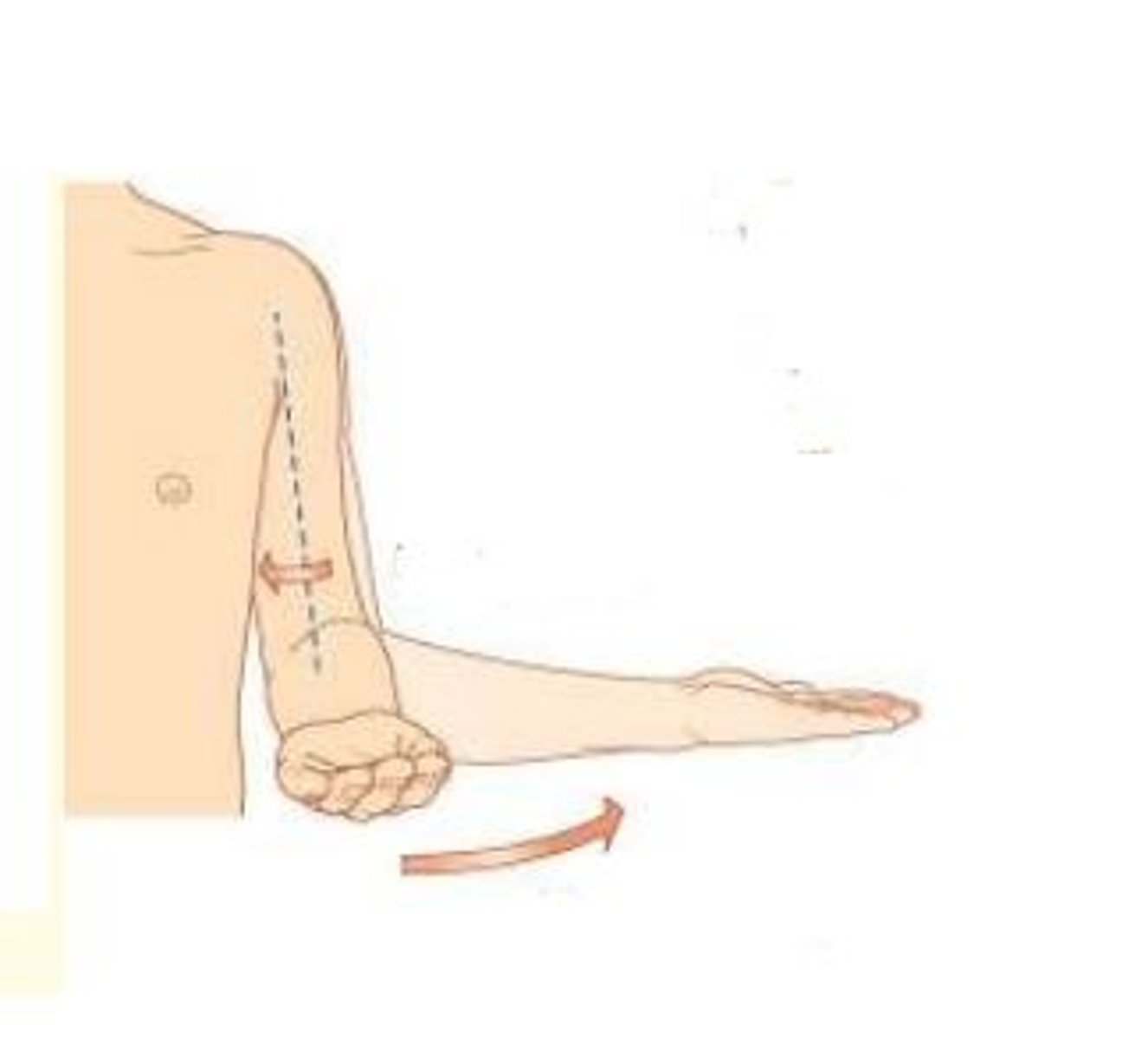
Movements of the Upper Limb
What movement is this?
Medial rotation (towards midline)
Lateral rotation (away from midline)
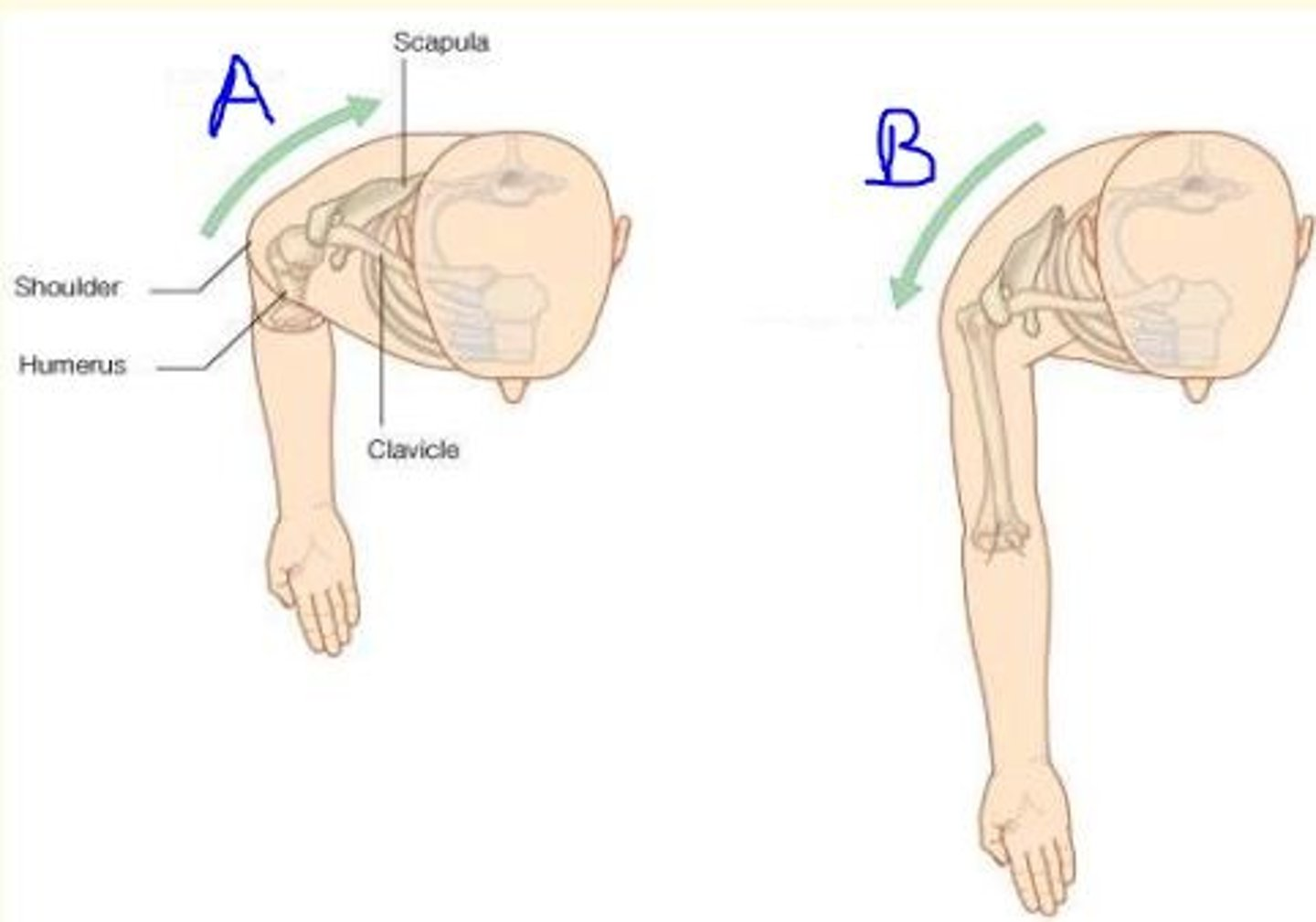
Movements of the Upper Limb
What movement is this?
A = Retraction
B = Protraction
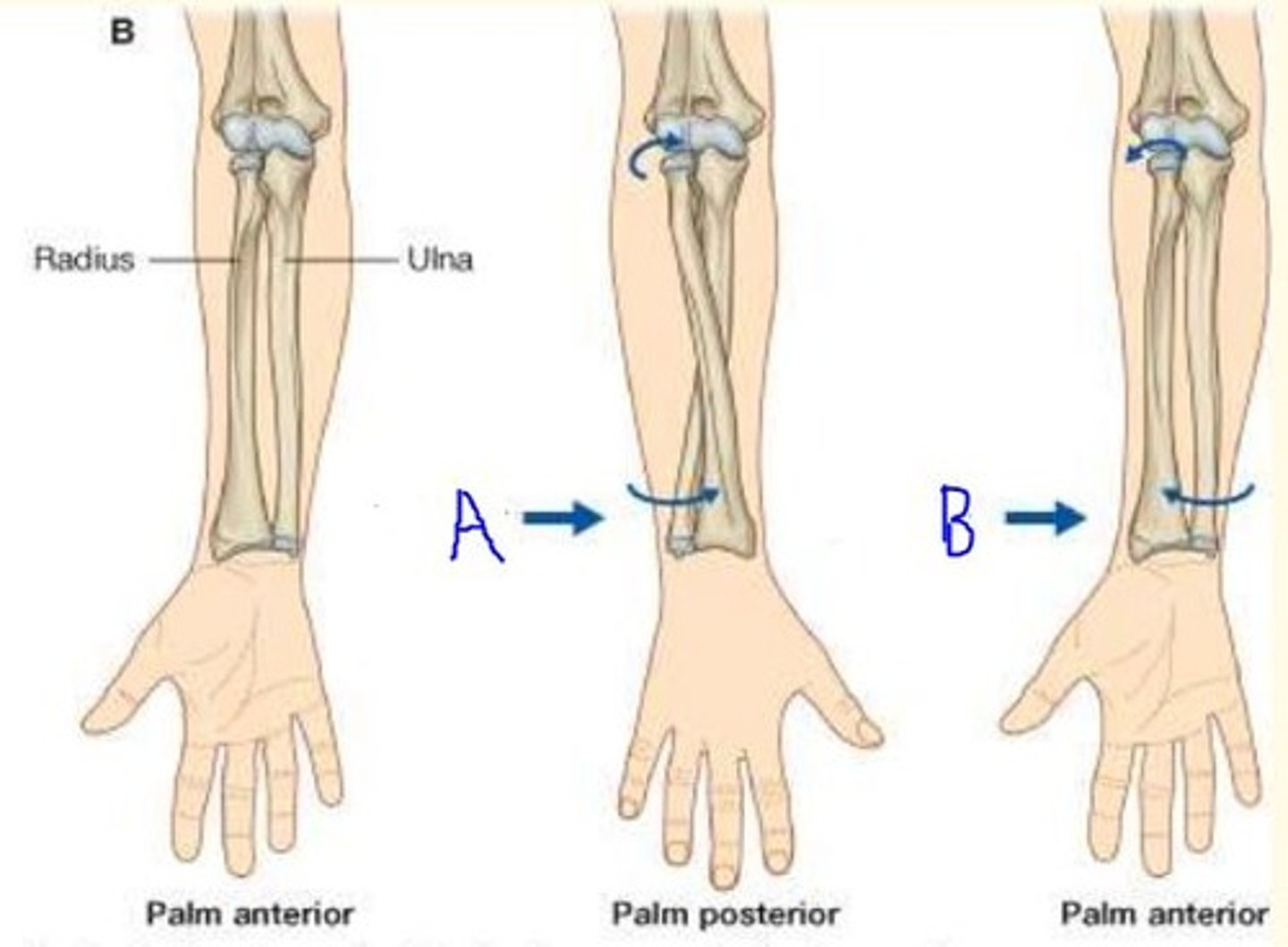
Movements of the Upper Limb
What movement is this?
A = Pronation
B = Supination
Movements of the Upper Limb
What movement is this?
Orange arrow = Flexion
Blue arrow = Extension
Movements of the Upper Limb
What movement is this?
Purple arrow = Abduction
Green arrow = Adduction
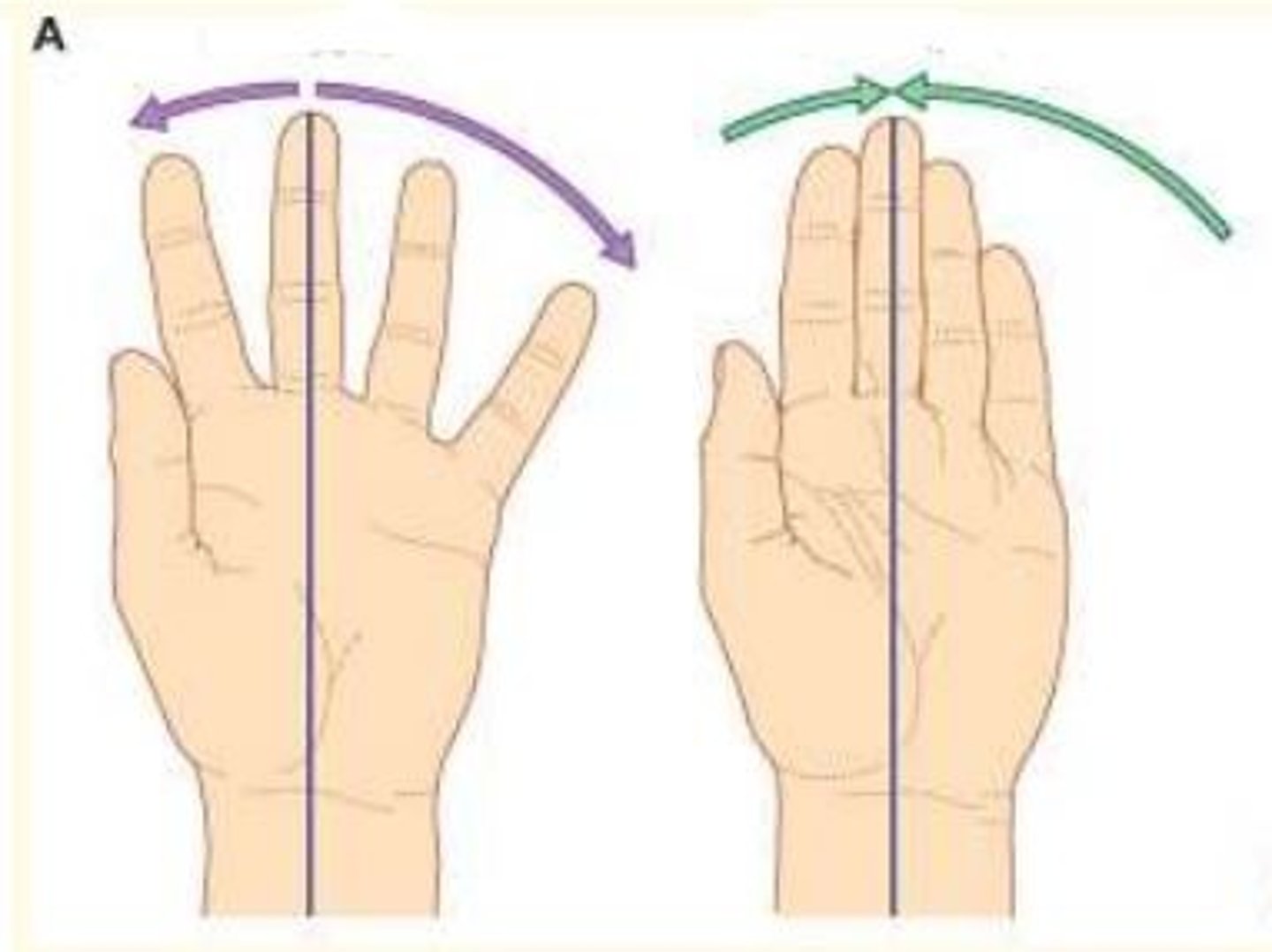
Movements of the Upper Limb
What movement is this?
Blue arrow = Extension
Orange arrow = Flexion
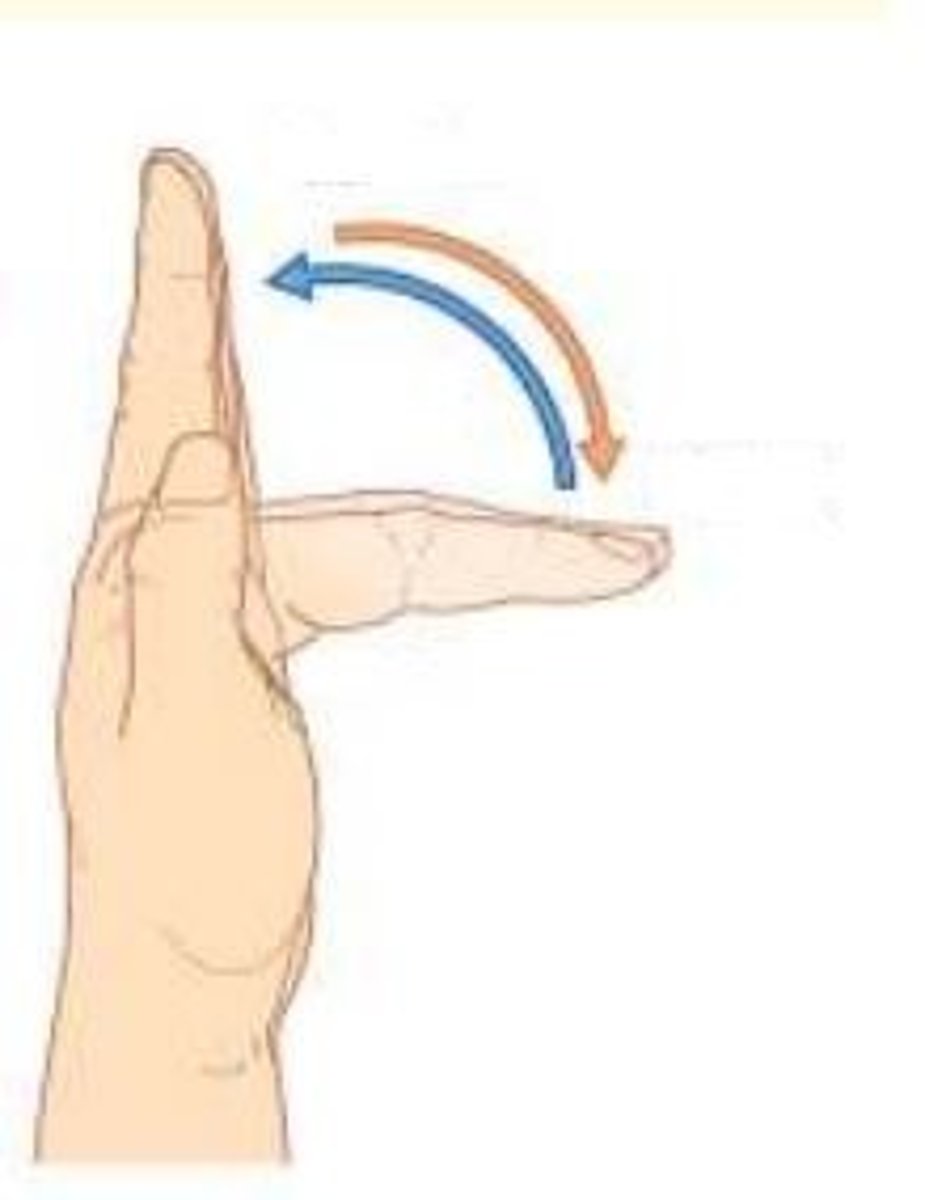
Movements of the Upper Limb
What movement is this?
Blue arrow = Extension
Orange arrow = Flexion
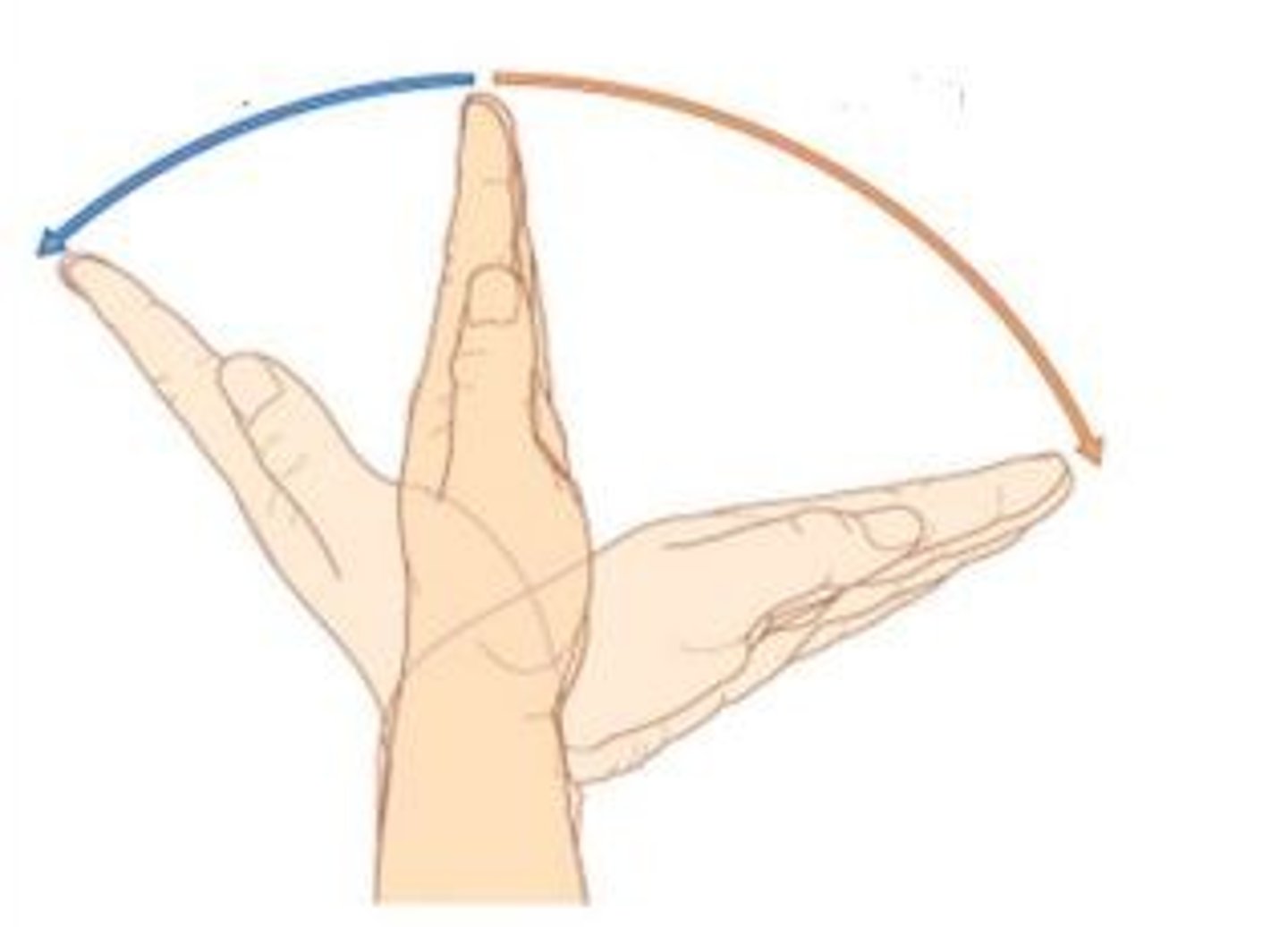
Movements of the Upper Limb
Movements of the thumb
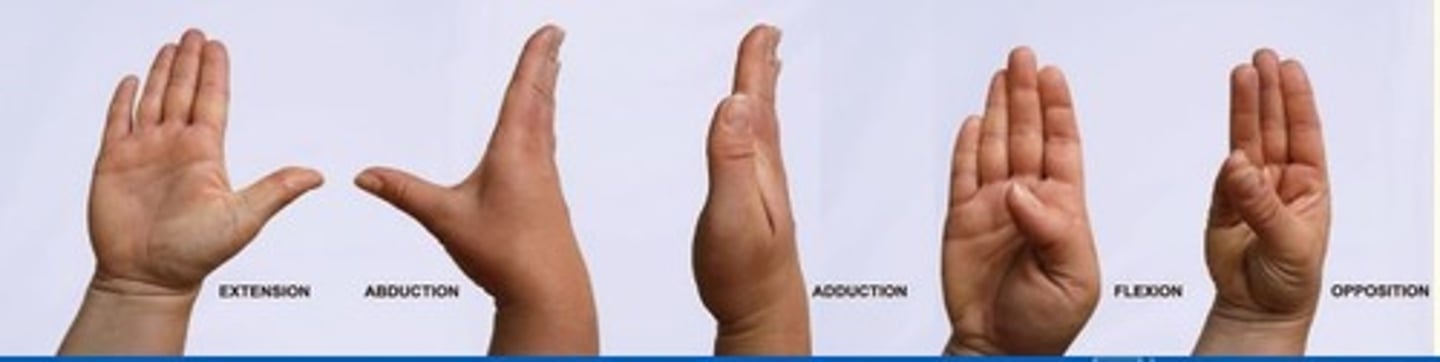
What types of muscles can be mainly found in the anterior section of the upper limb?
Anterior = mostly flexor
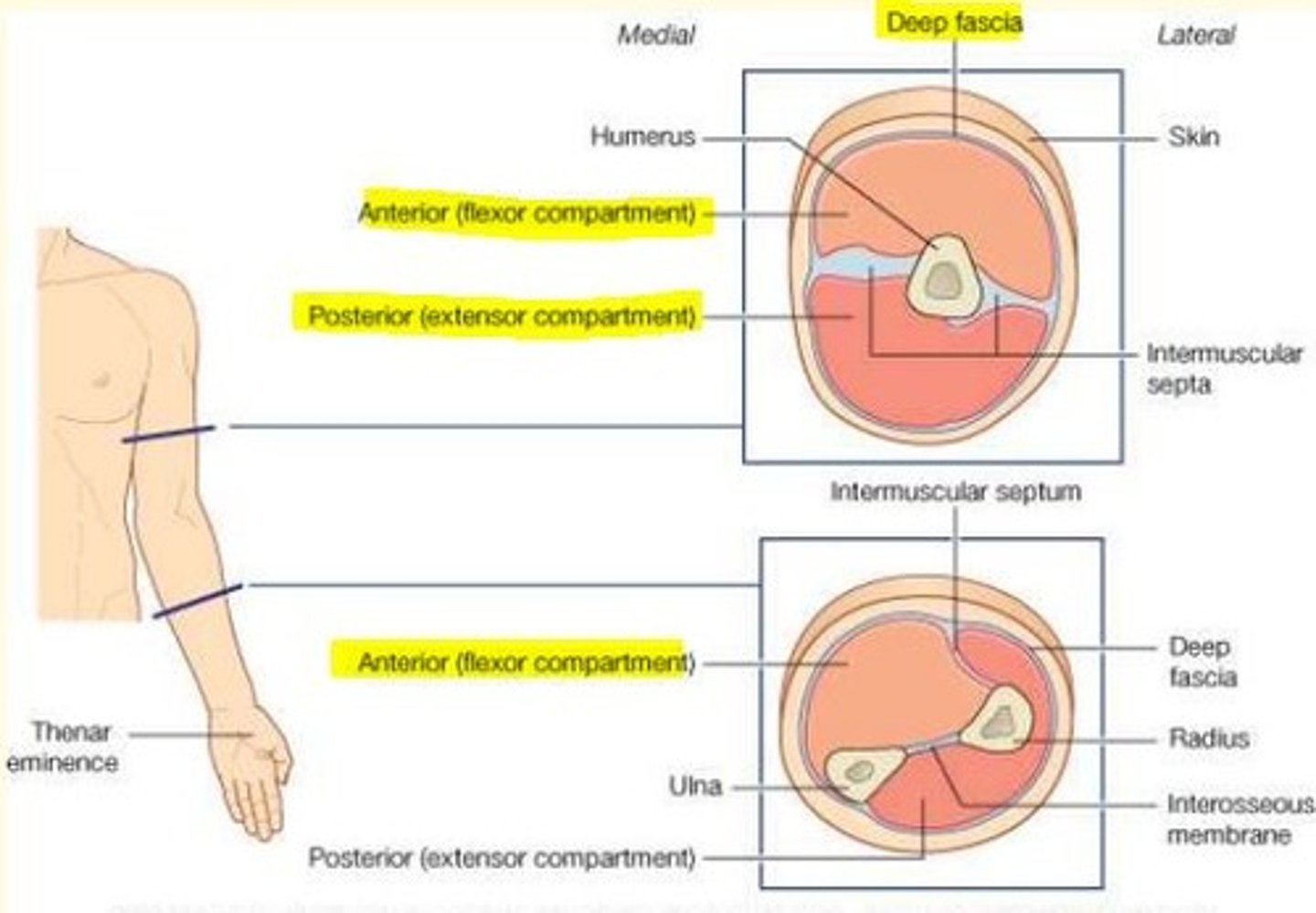
What types of muscles can be mainly found in the posterior section of the upper limb?
Posterior = mostly extensor
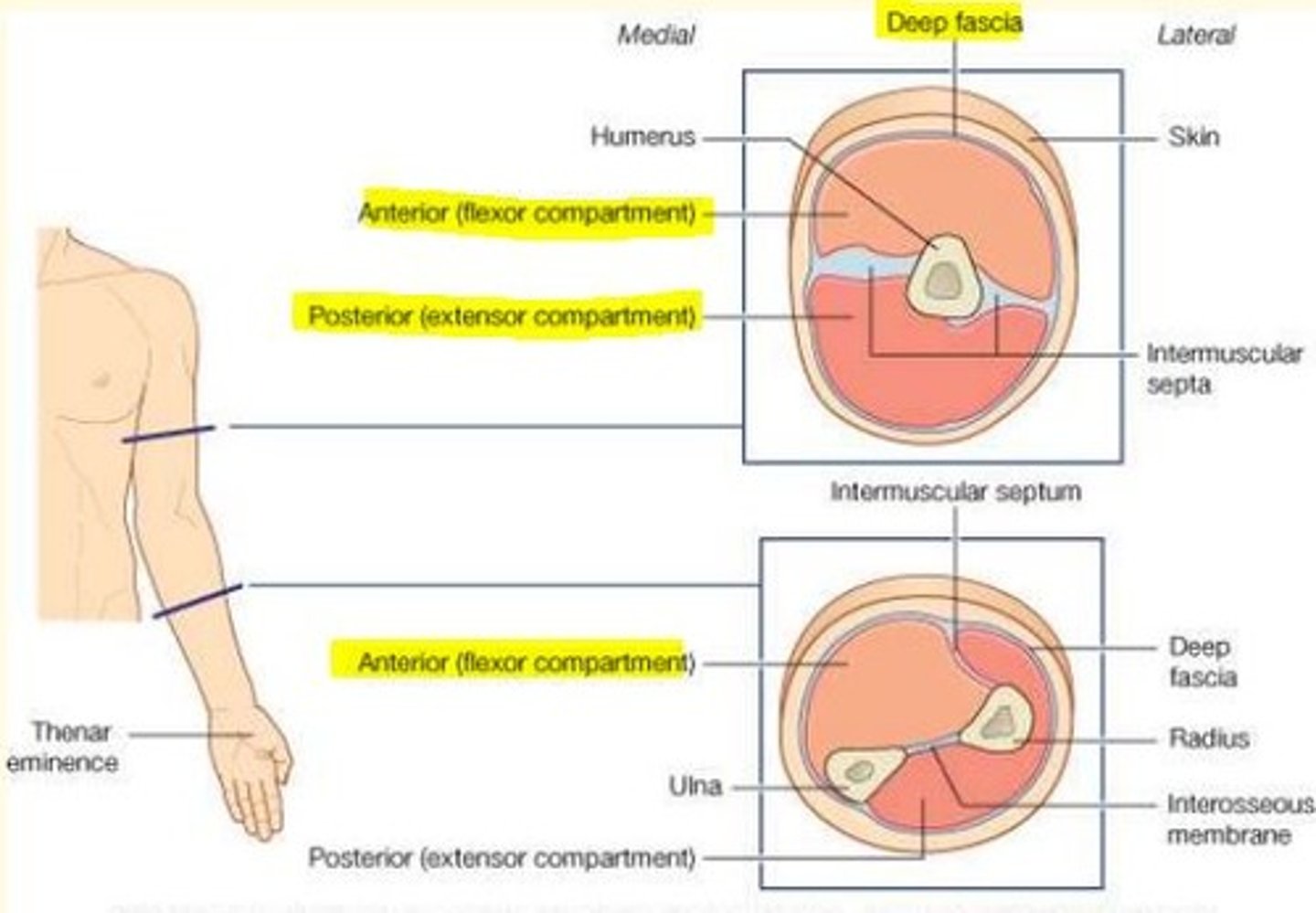
The ___ ___ encloses the muscles of the upper limb.
The deep fascia encloses the muscles of the upper limb.
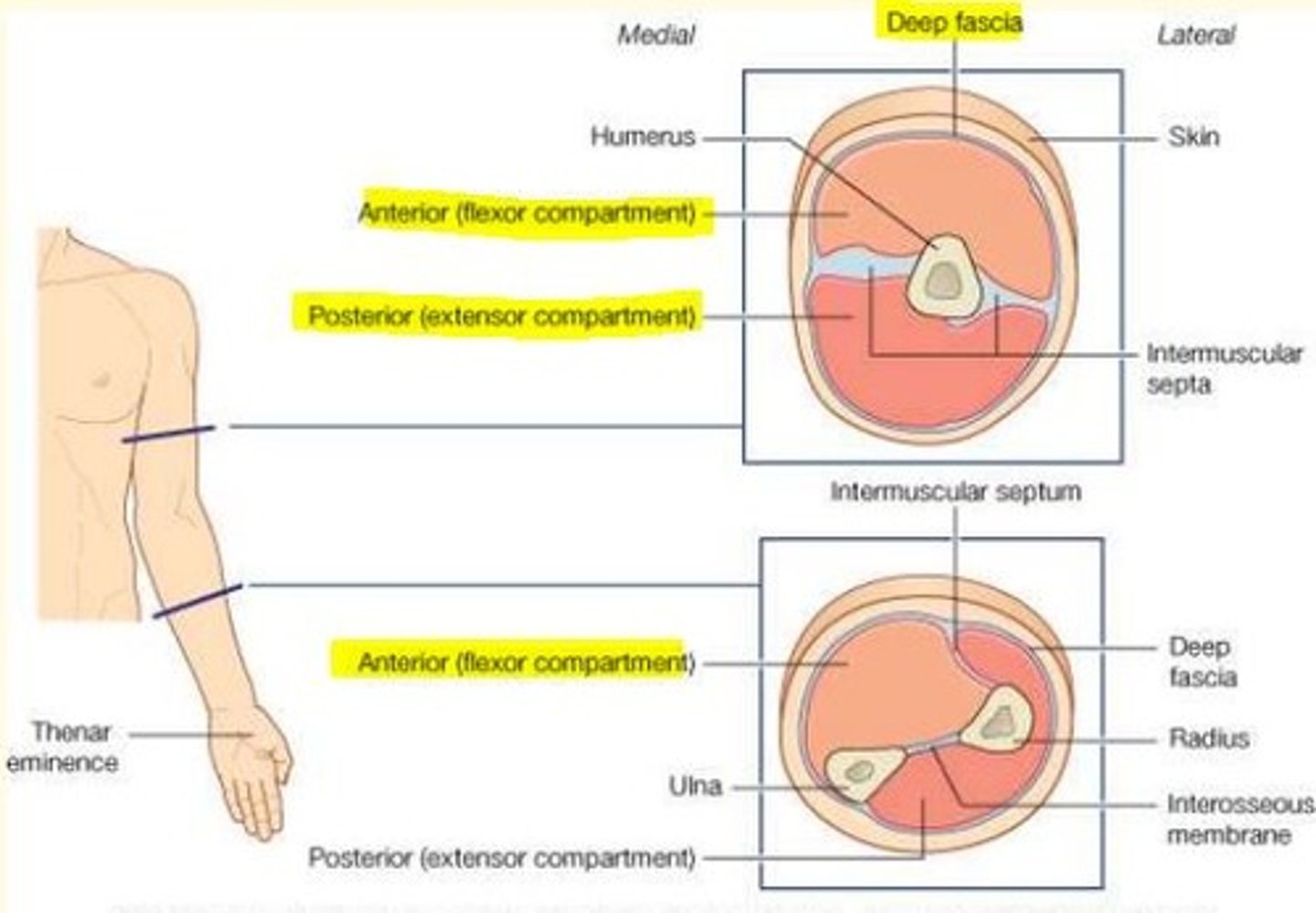
The ___ ___ arise from the deep fascia and separate the upper limb into discrete compartments.
Anterior → mainly flexor
Posterior → mainly extensor
The intermuscular septa arise from the deep fascia and separate the upper limb into discrete compartments.
Anterior → mainly flexor
Posterior → mainly extensor
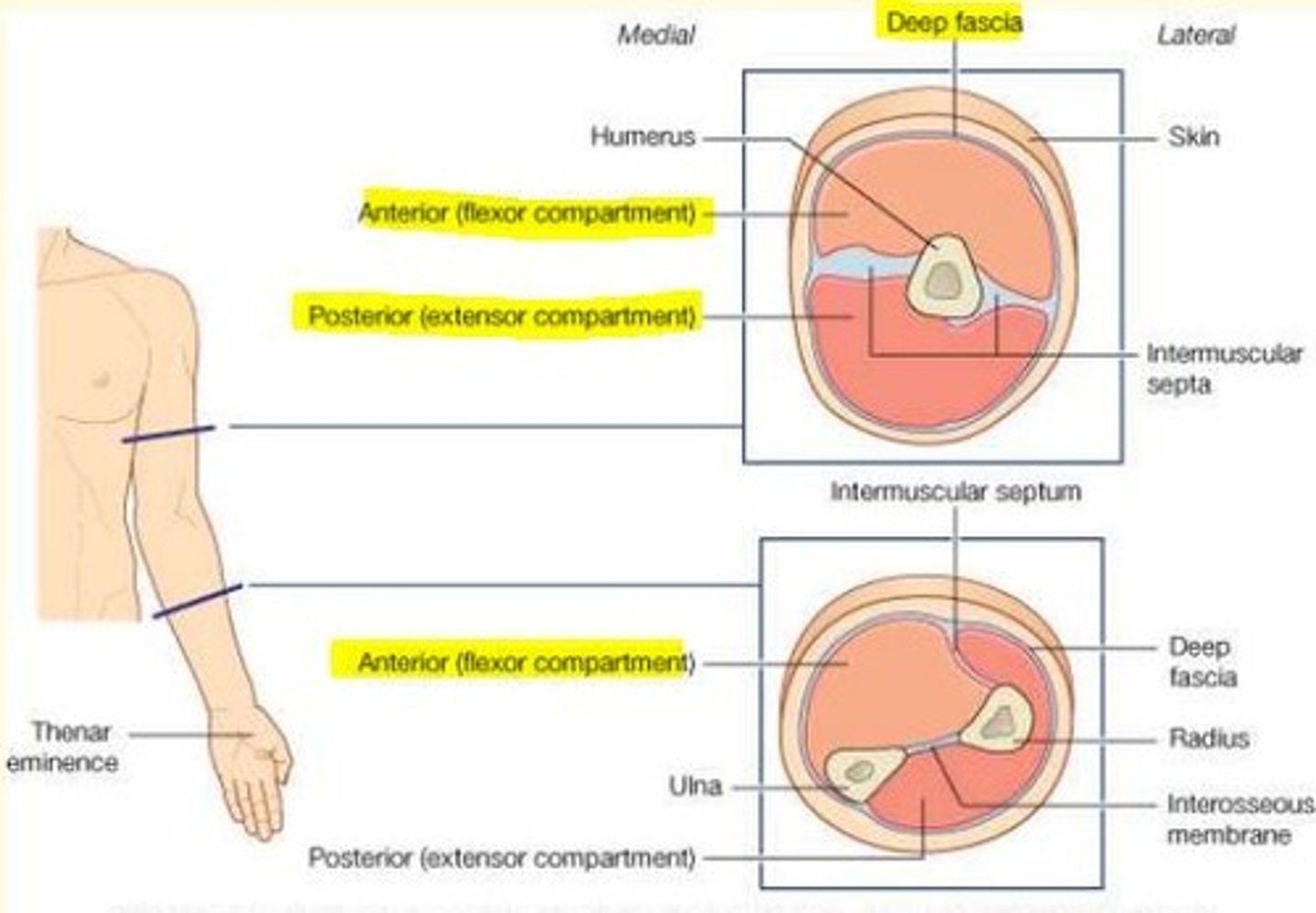
Fascial planes
Potential spaces used by surgeons to separate deep structures
Does deep fascia allow for expansion?
No
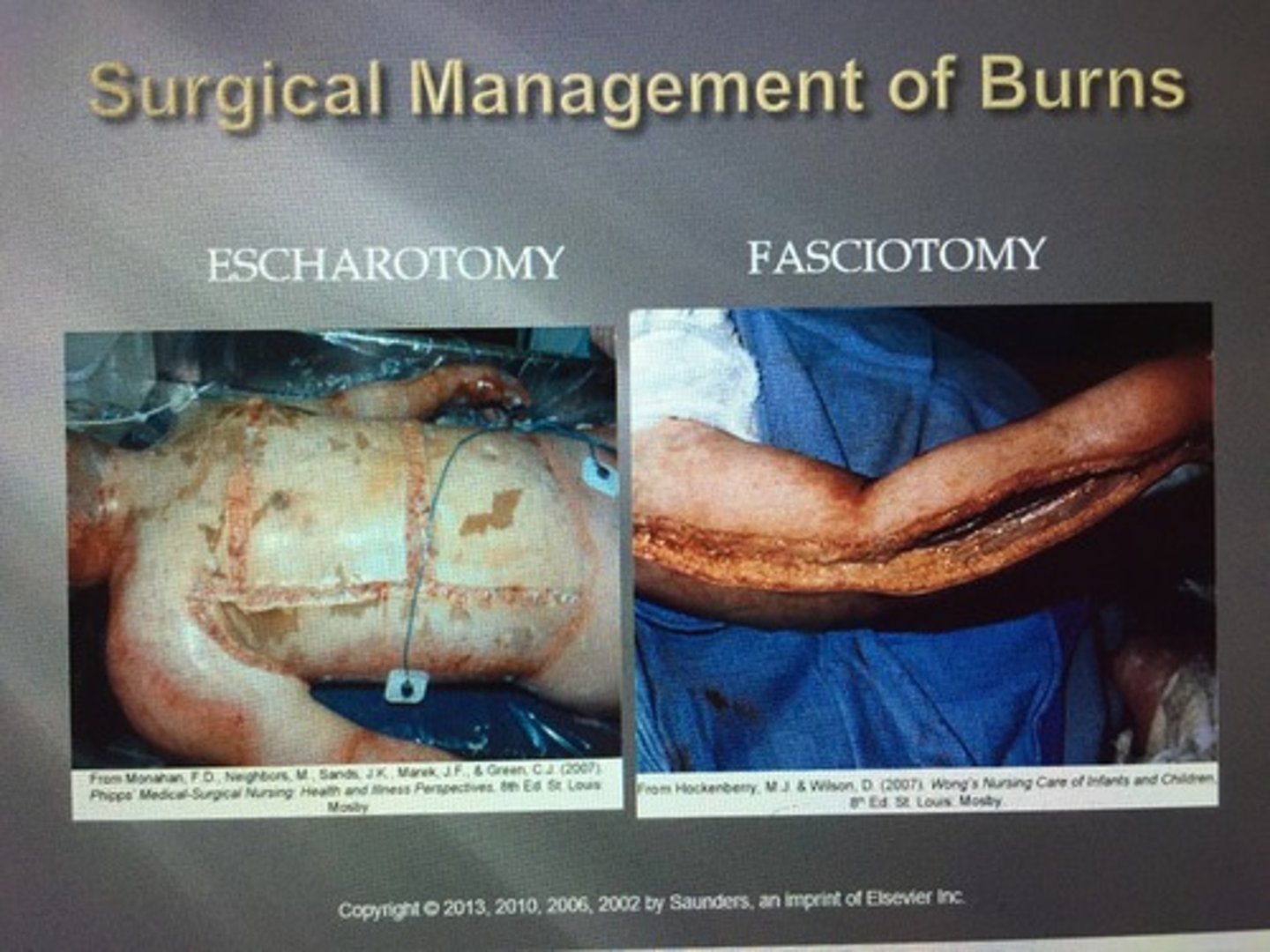
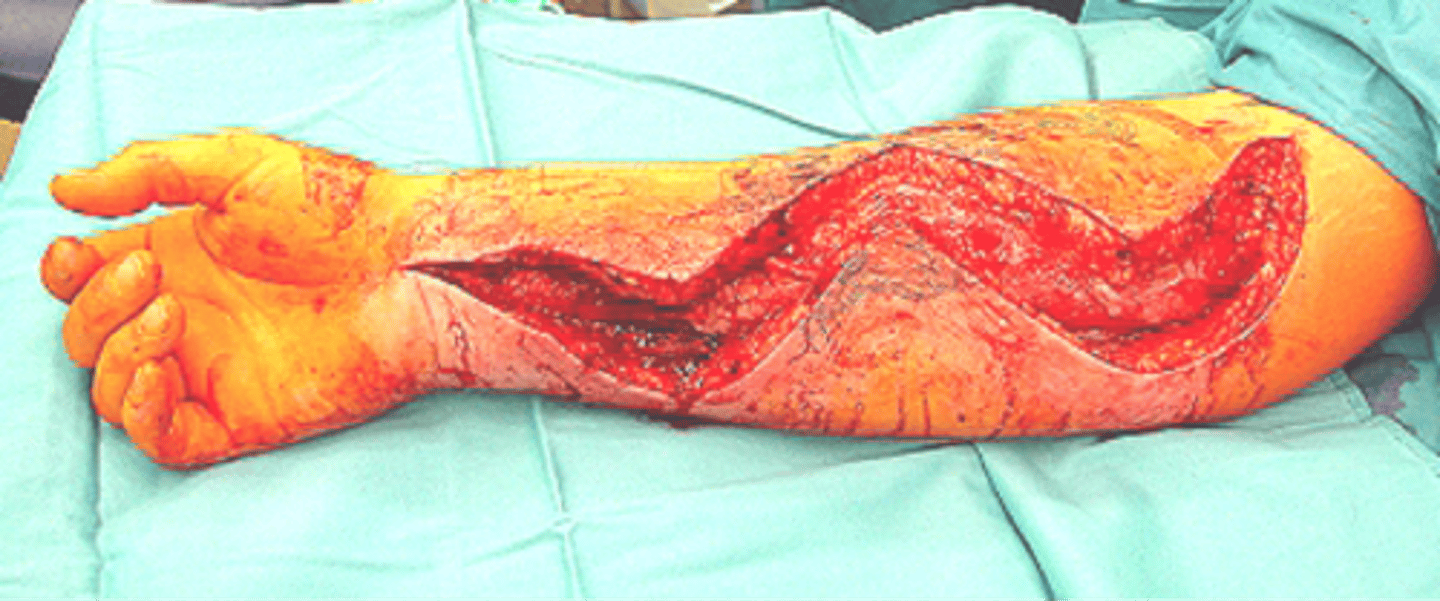
Escharotomy
An incision made into the necrotic tissue resulting from a severe burn.
Full thickness incision through eschar, exposing subcutaneous fat.
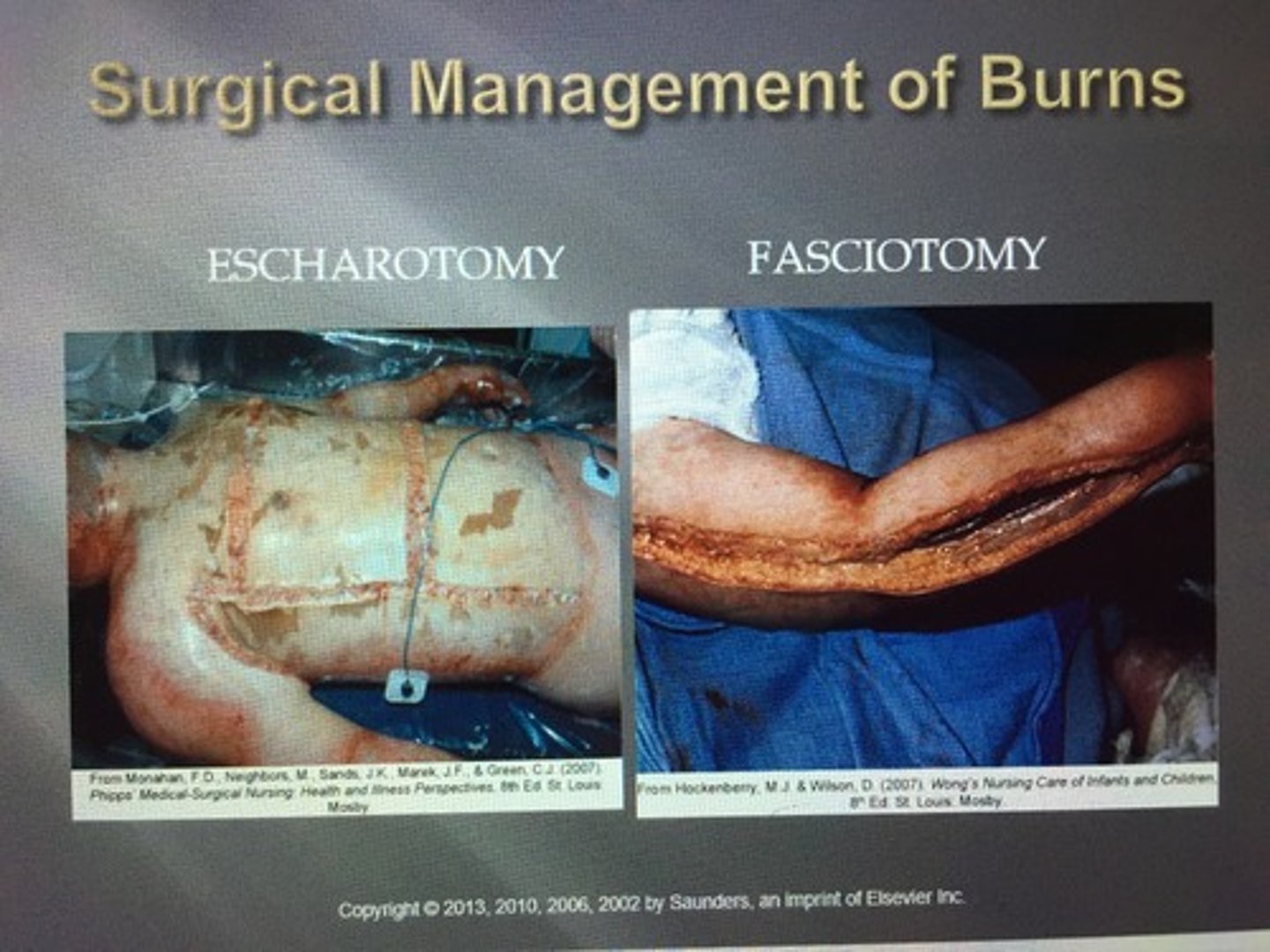
Fasciotomy
A surgical incision through the fascia to relieve tension or pressure.
Incision through skin, fat and muscle fascia, exposing the underlying muscle compartment.
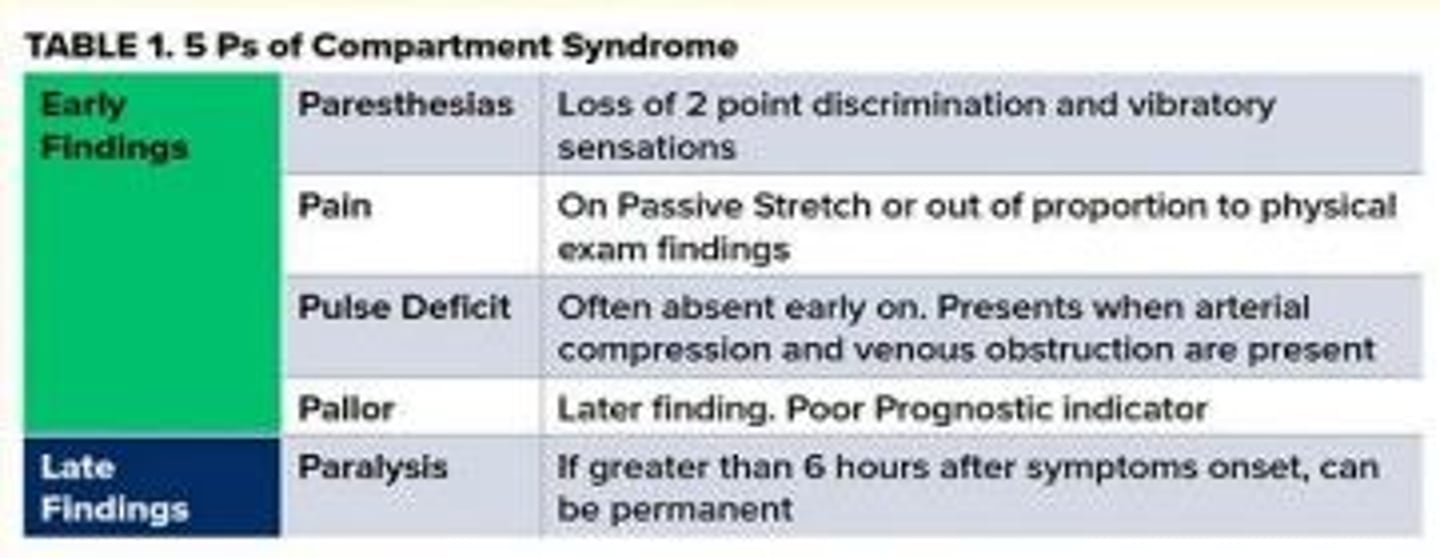
Compartment syndrome
Swelling in a confined anatomical space that produces dangerous pressure; may comprise blood supply leading to ischemia.
This can lead to...
- Temporary/permanent damage to muscles/nerves
Give an example of an acute cause of compartment syndrome
Fracture
Give an example of a chronic cause of compartment syndrome
Exercise
Symptoms of compartment syndrome
Early Findings
Paresthesias
Pain
Pulse deficit
Pallor
Late Findings
Paralysis
Treatment for compartment syndrome
Fasciotomy (fascial release)
Osteology of the upper limb
- Shoulder girdle (scapula & clavicle)
- Arm
- Forearm (radius - lateral & ulna - medial)
- Hand
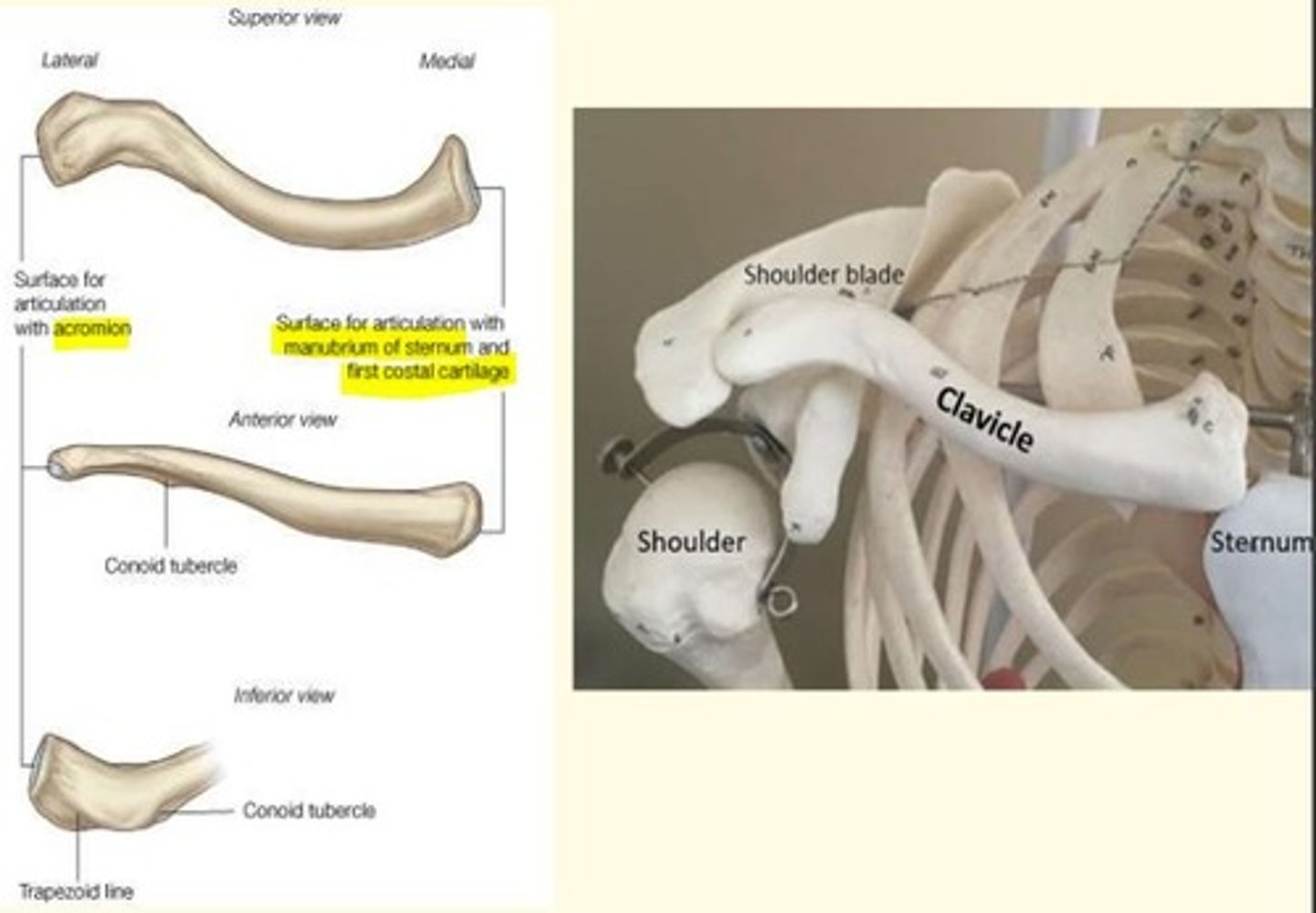
Clavicle
Collar bone
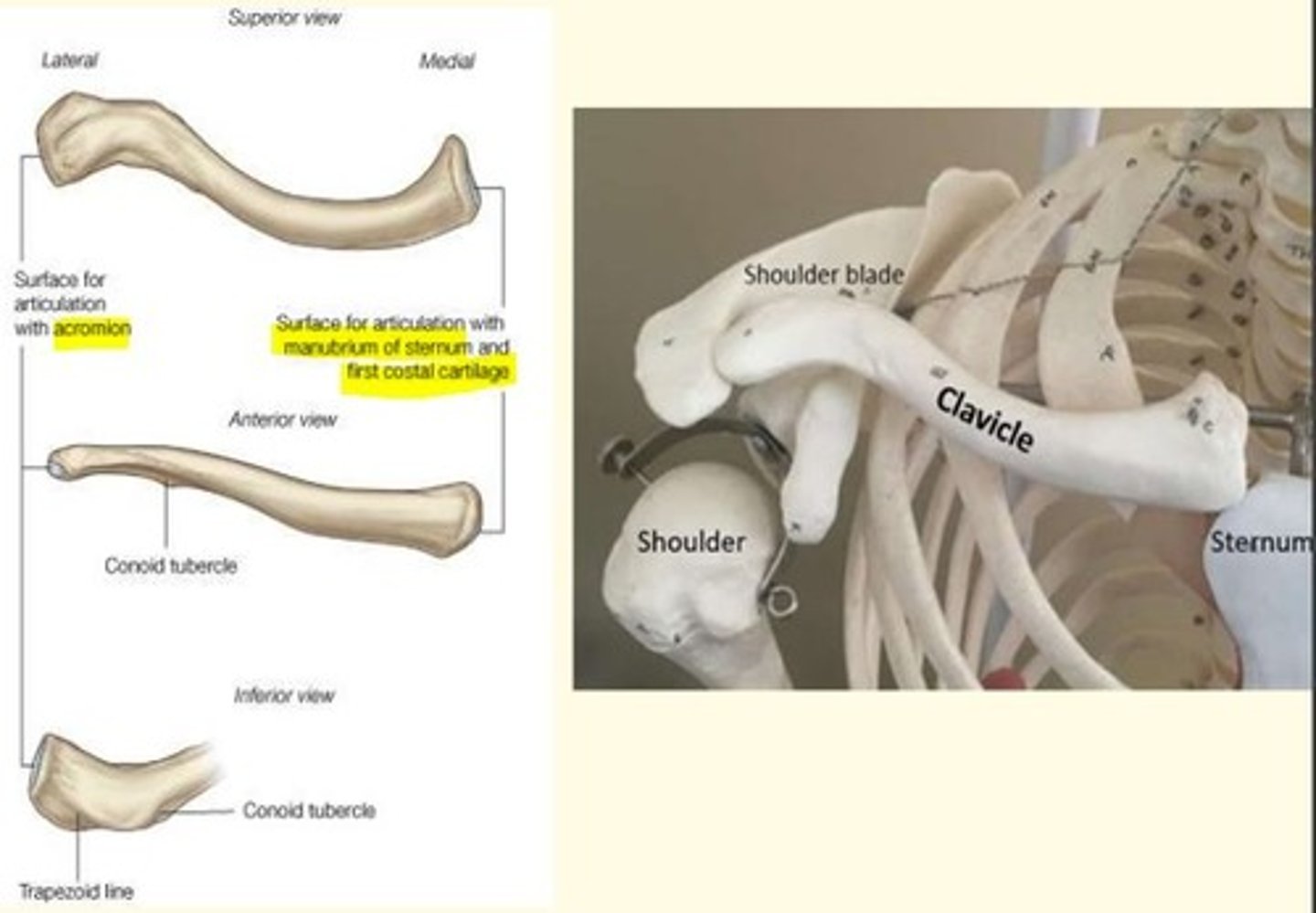
The clavicle articulates with the ____ and ___ costal cartilage medially.
The clavicle articulates with the ____ ____ of the ____ laterally.
The clavicle articulates with the STERNUM and 1ST costal cartilage medially.
The clavicle articulates with the ACROMION PROCESS of the STERNUM laterally.
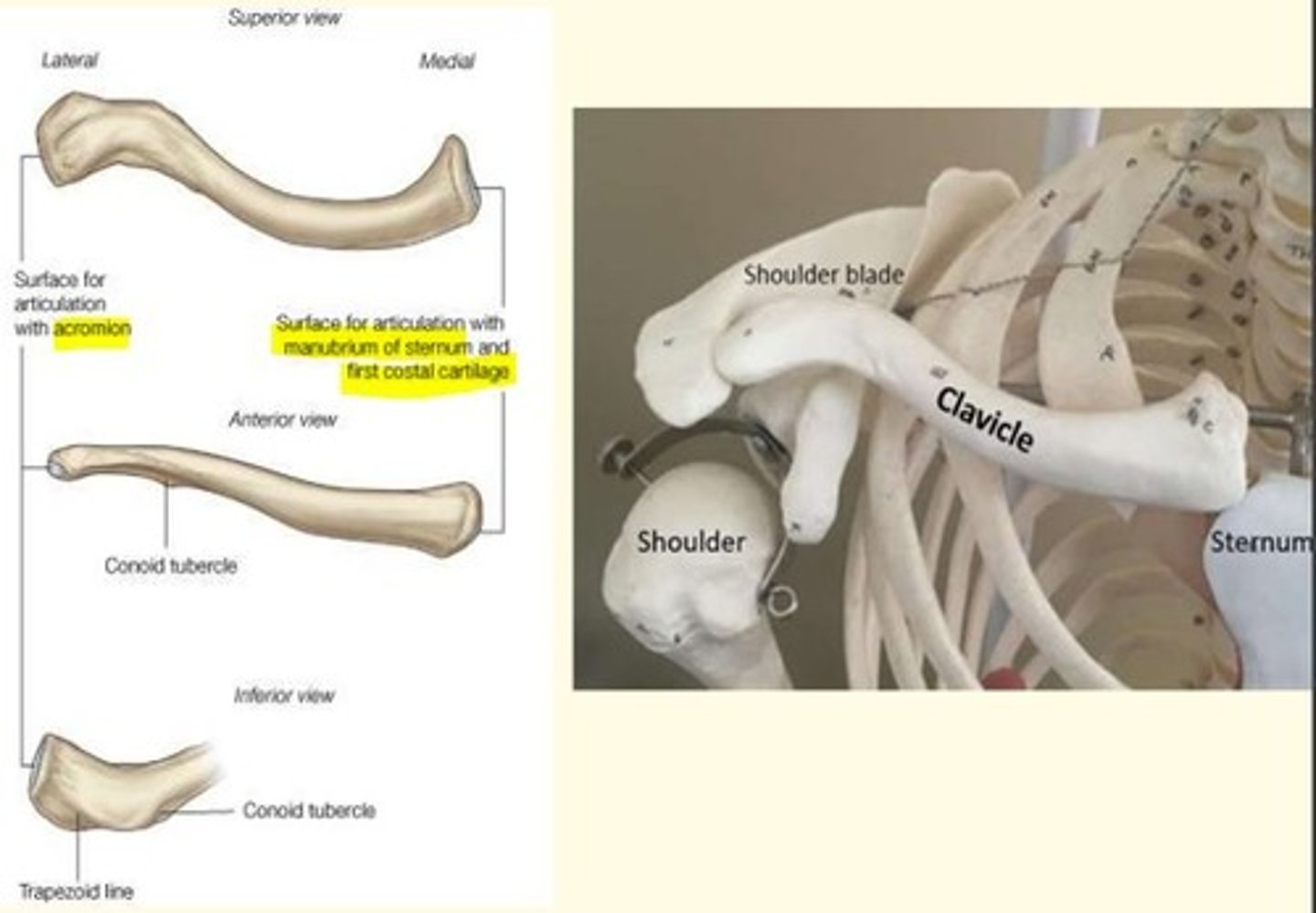
Clavicle function
Transmits mechanical force from the upper limb to the trunk. Transmits force to axial skeleton.
Clavicle acts as a strut that keeps the limb away from the trunk so that it has maximum freedom of movement.
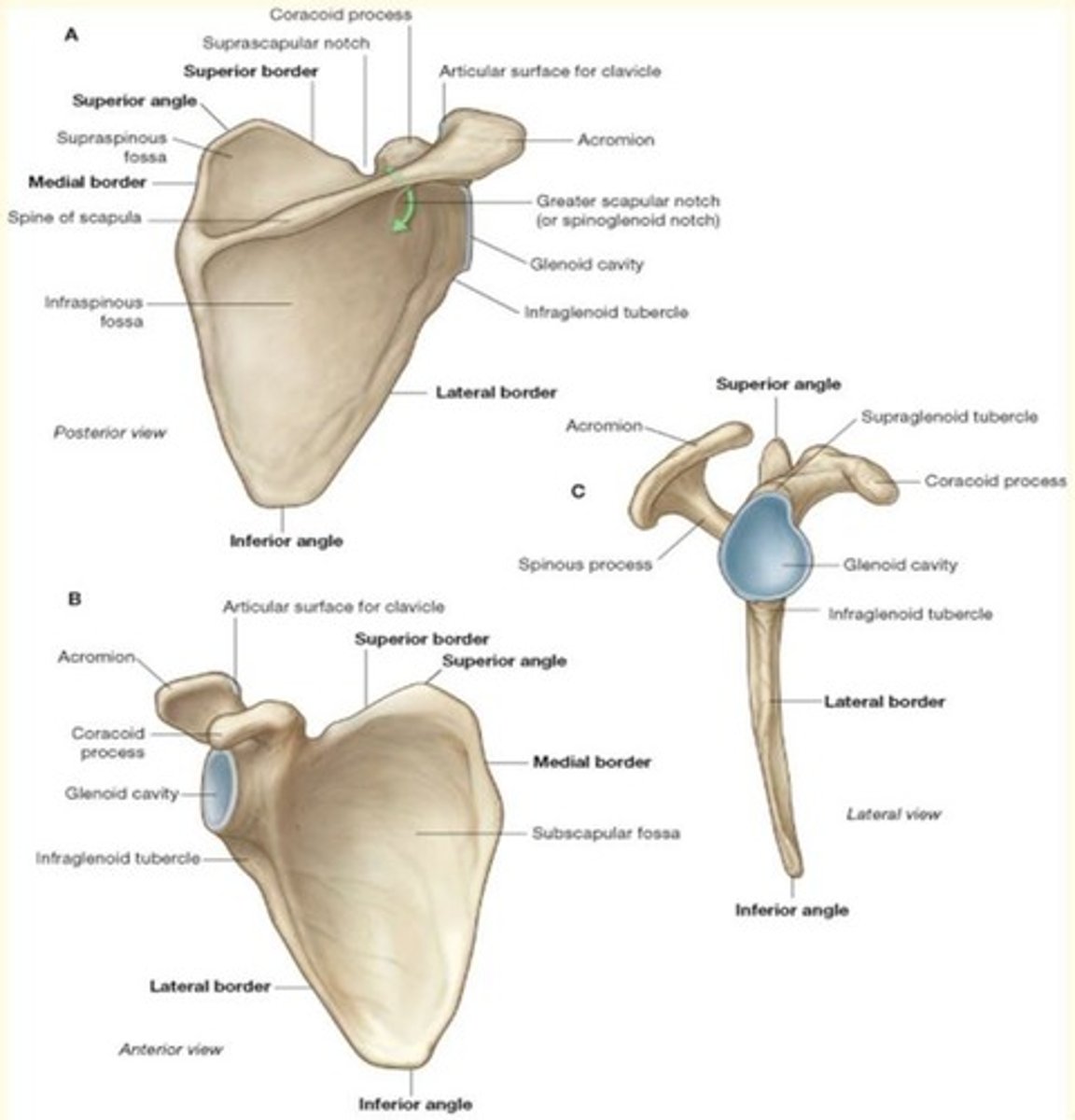
The scapula
Shoulder blade
The humerus
Upper arm bone
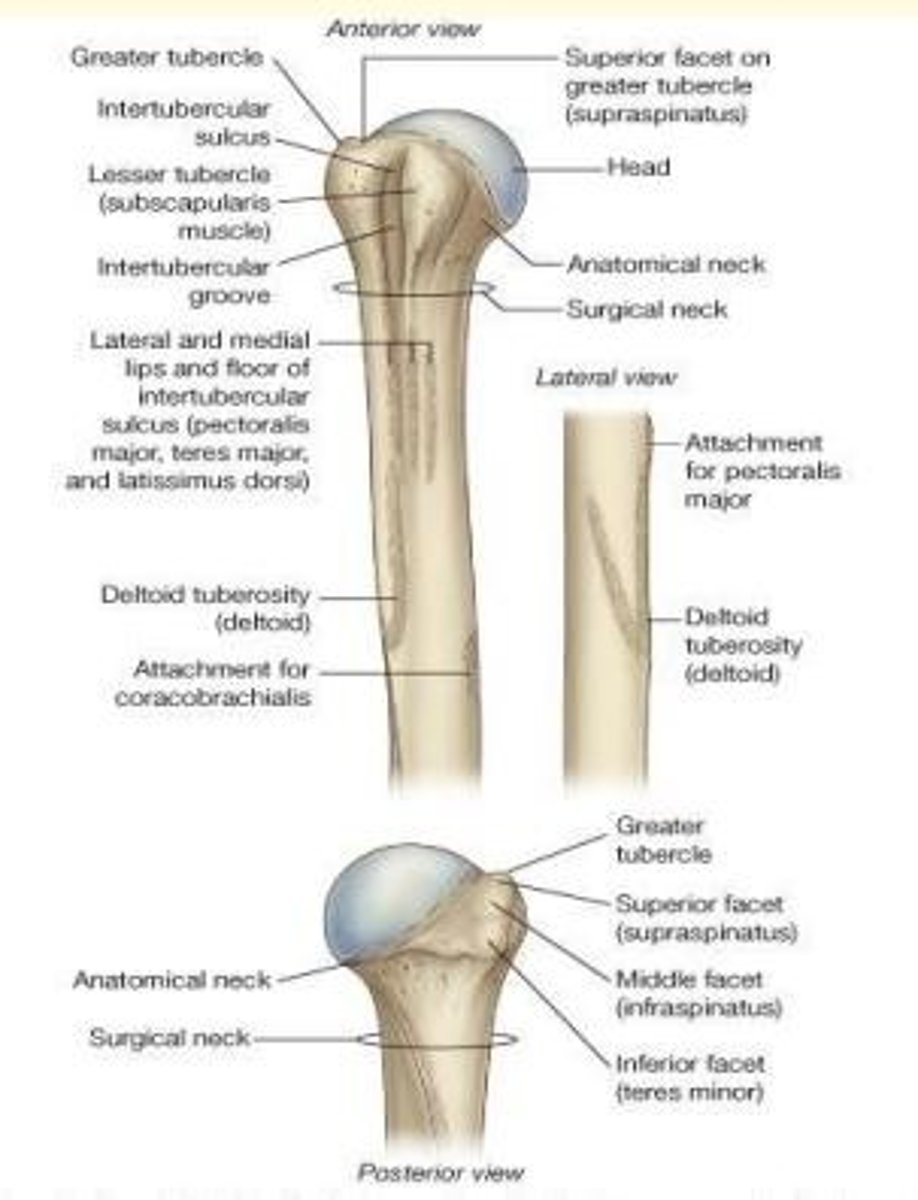
What is this labelled area of the scapula & humerus area?
Coracoid process
Palpable below the lateral clavicle
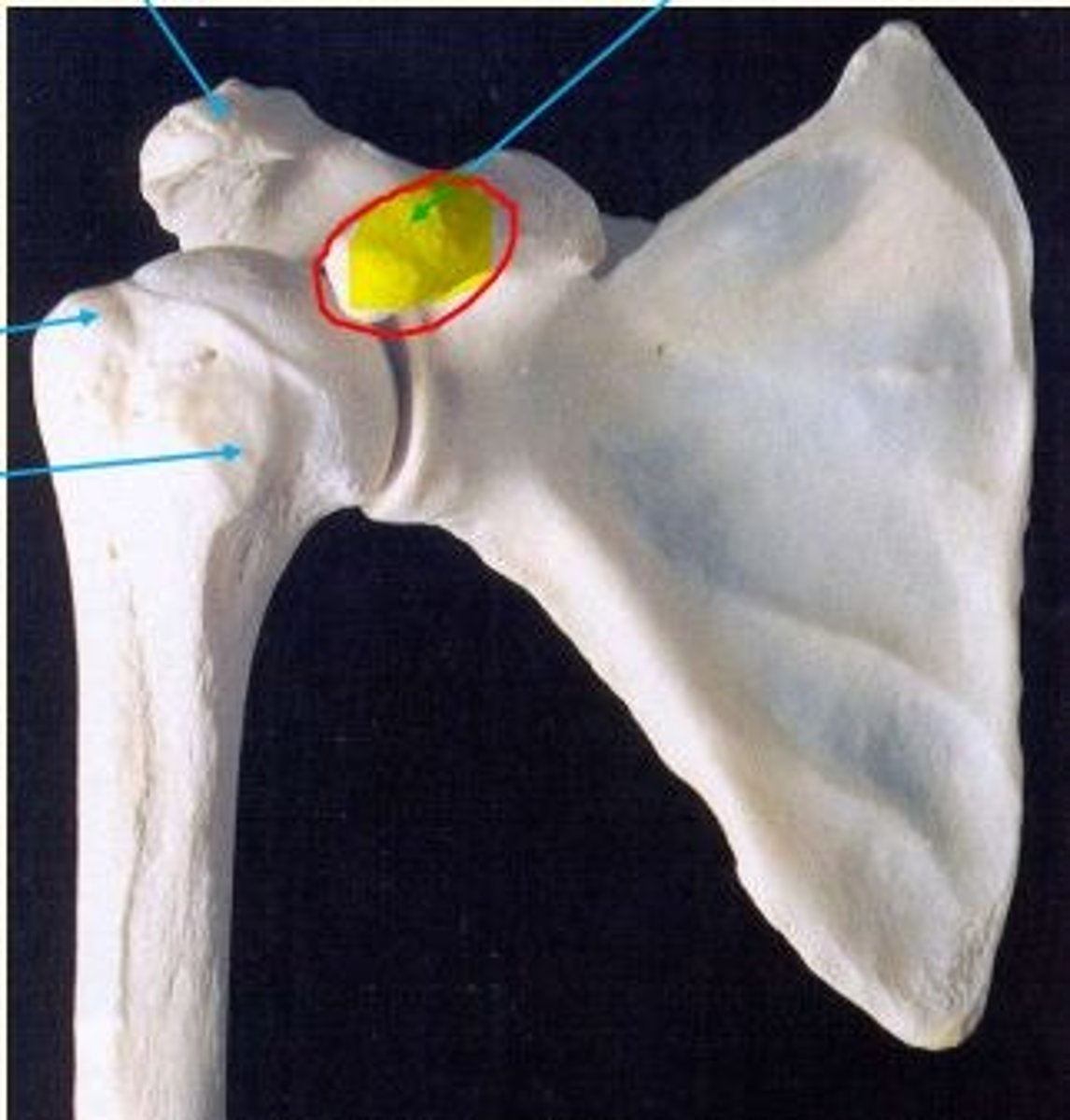
What is this labelled area of the scapula & humerus area?
Acromion
Palpable bony shelf above the shoulder
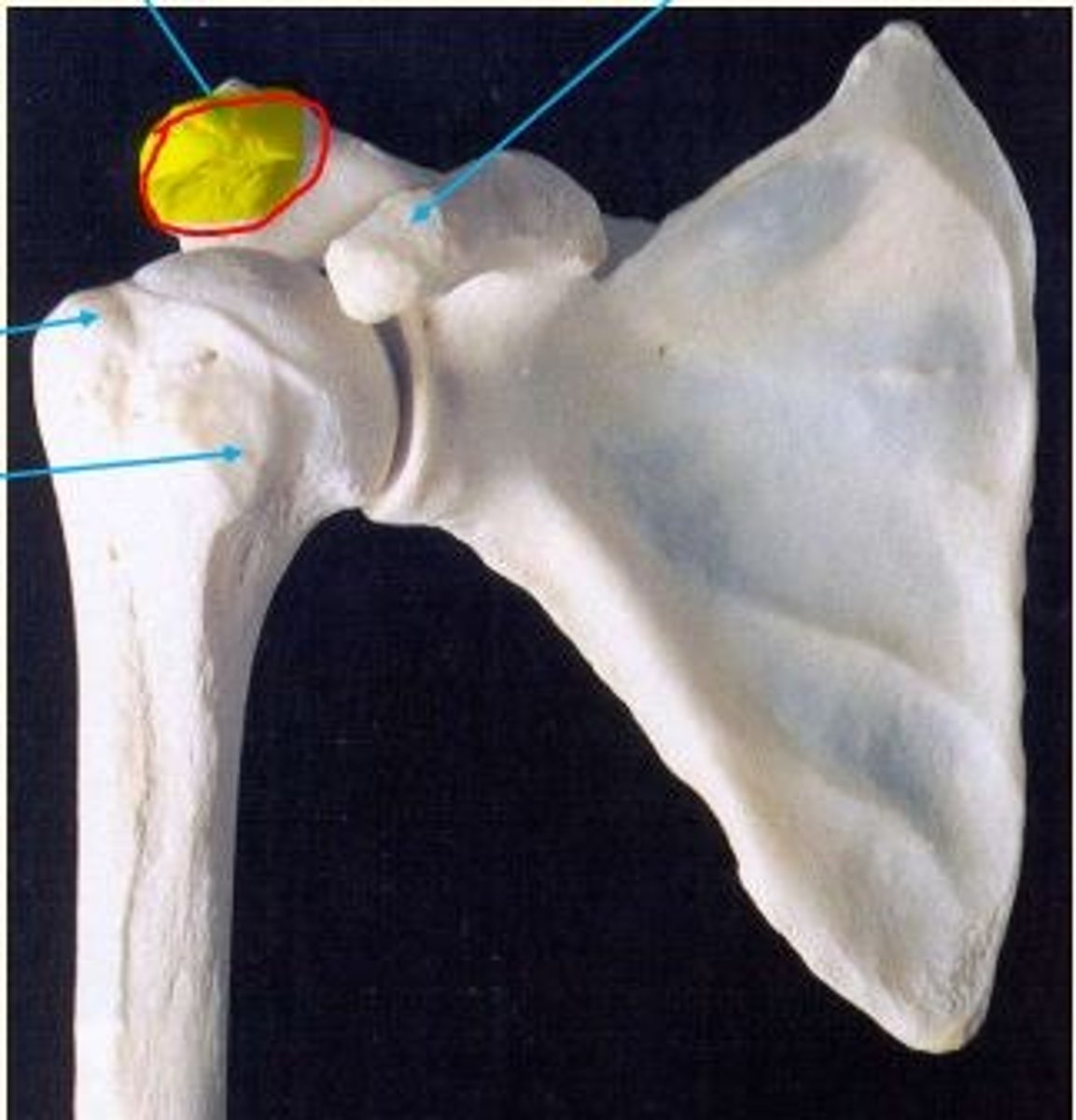
What is this labelled area of the scapula & humerus area?
Greater tubercle
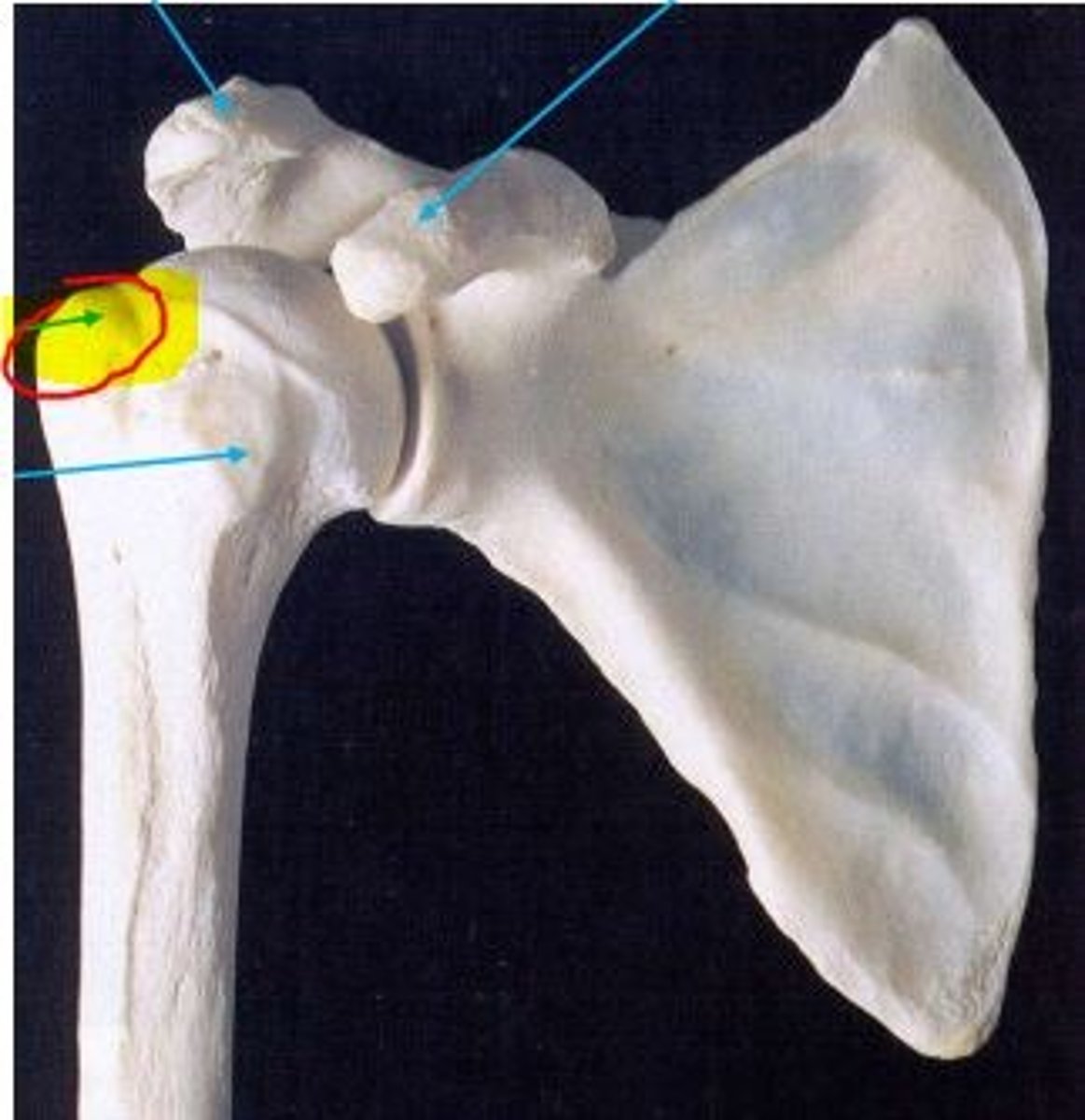
What is this labelled area of the scapula & humerus area?
Lesser tubercle
Attachment points for rotator cuff muscles, injury to which causes pain & tenderness
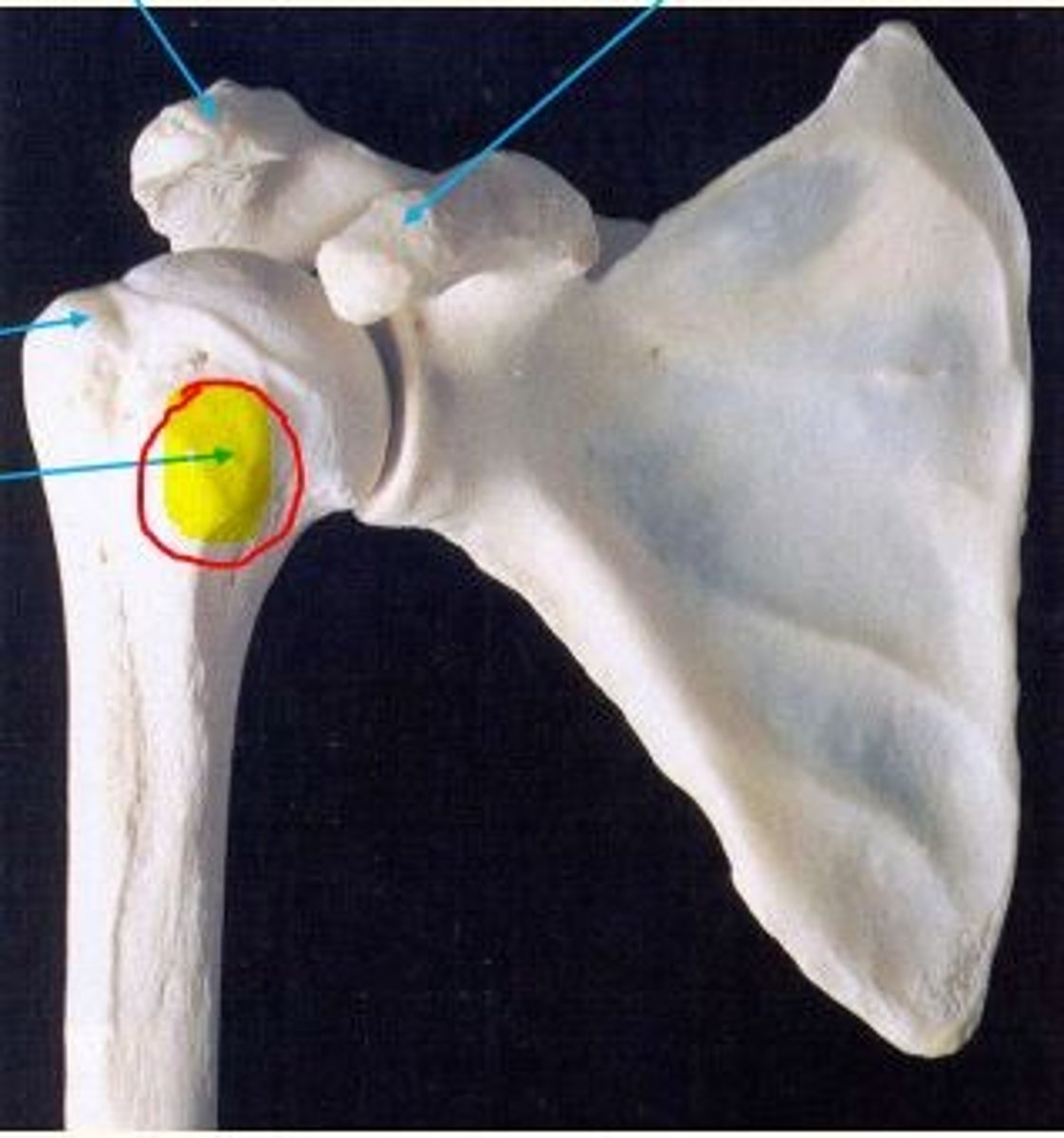
What is this labelled area of the scapula & humerus area?
Acromion
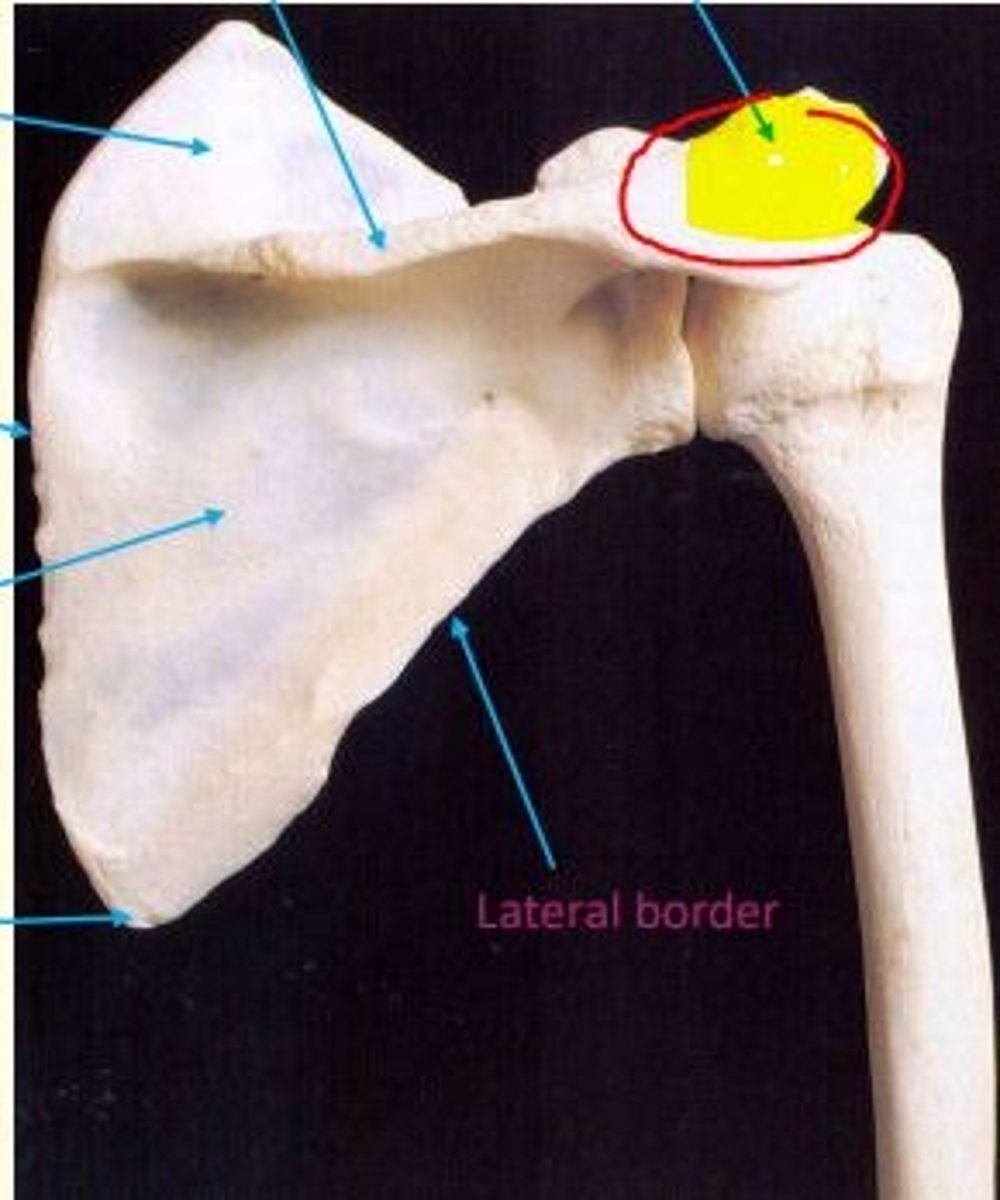
What is this labelled area of the scapula & humerus area?
Spine of the scapula
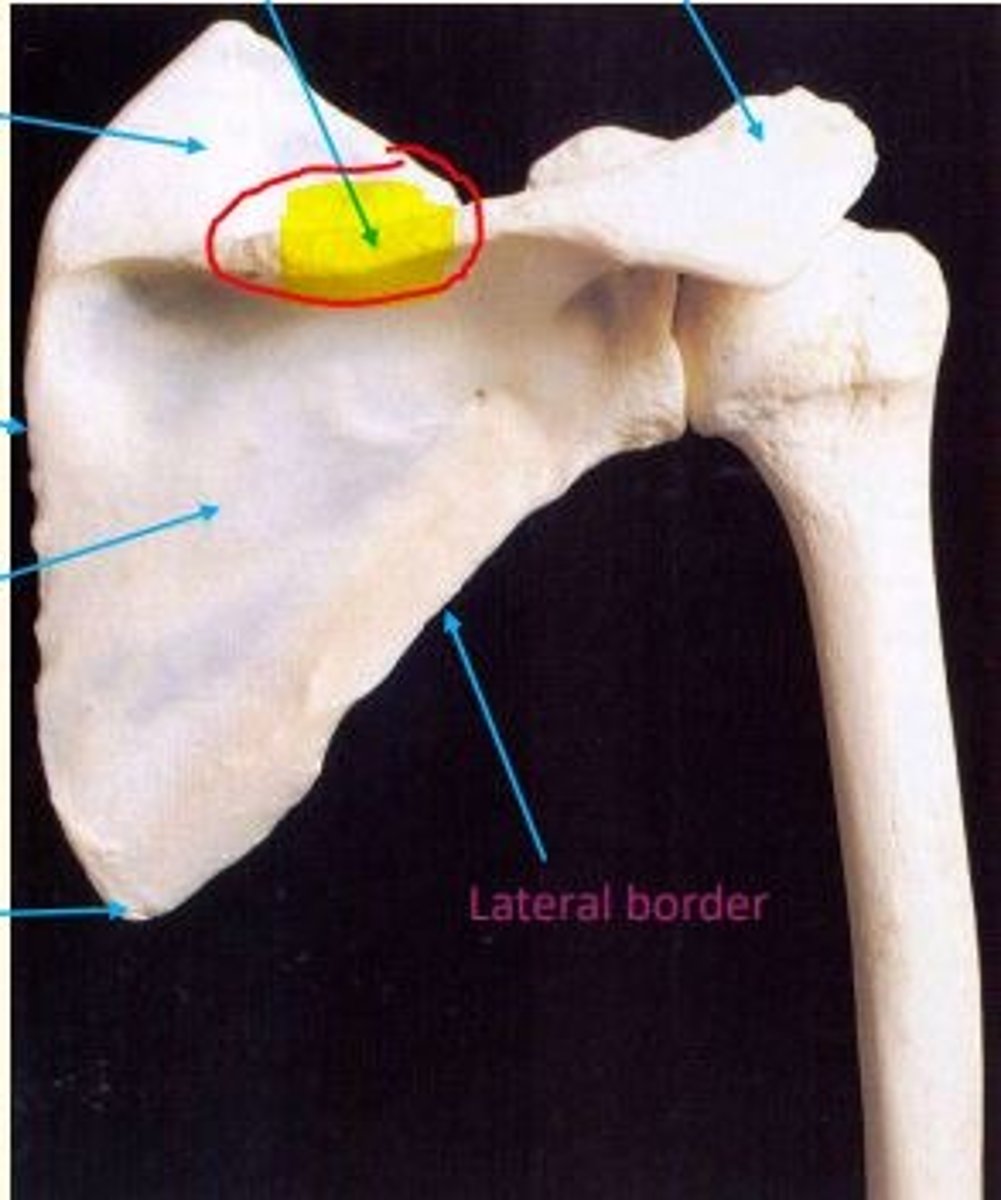
What is this labelled area of the scapula & humerus area?
Supraspinous fossa
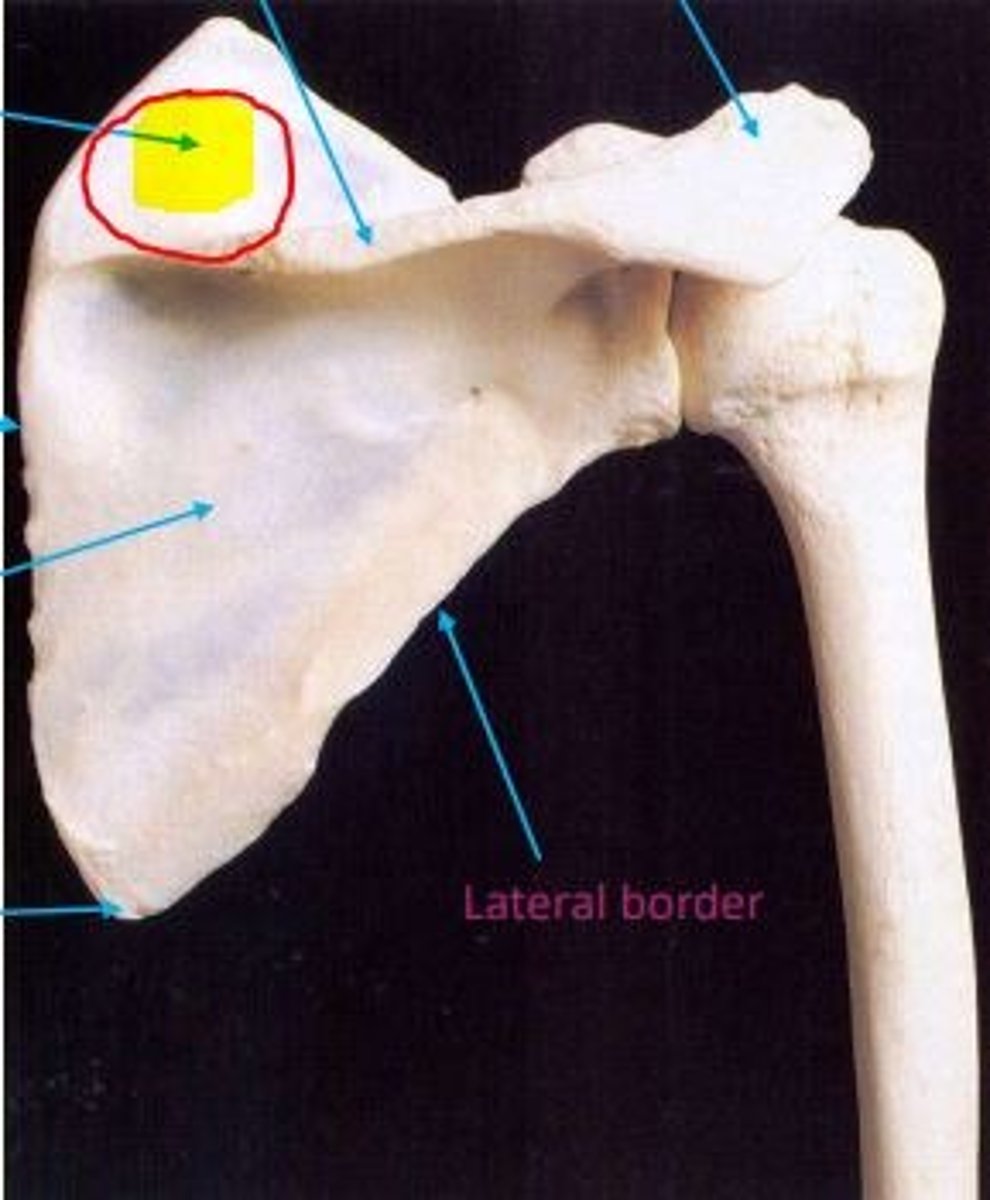
What is this labelled area of the scapula & humerus area?
Infraspinous fossa
Infraspinatus muscle attachment point
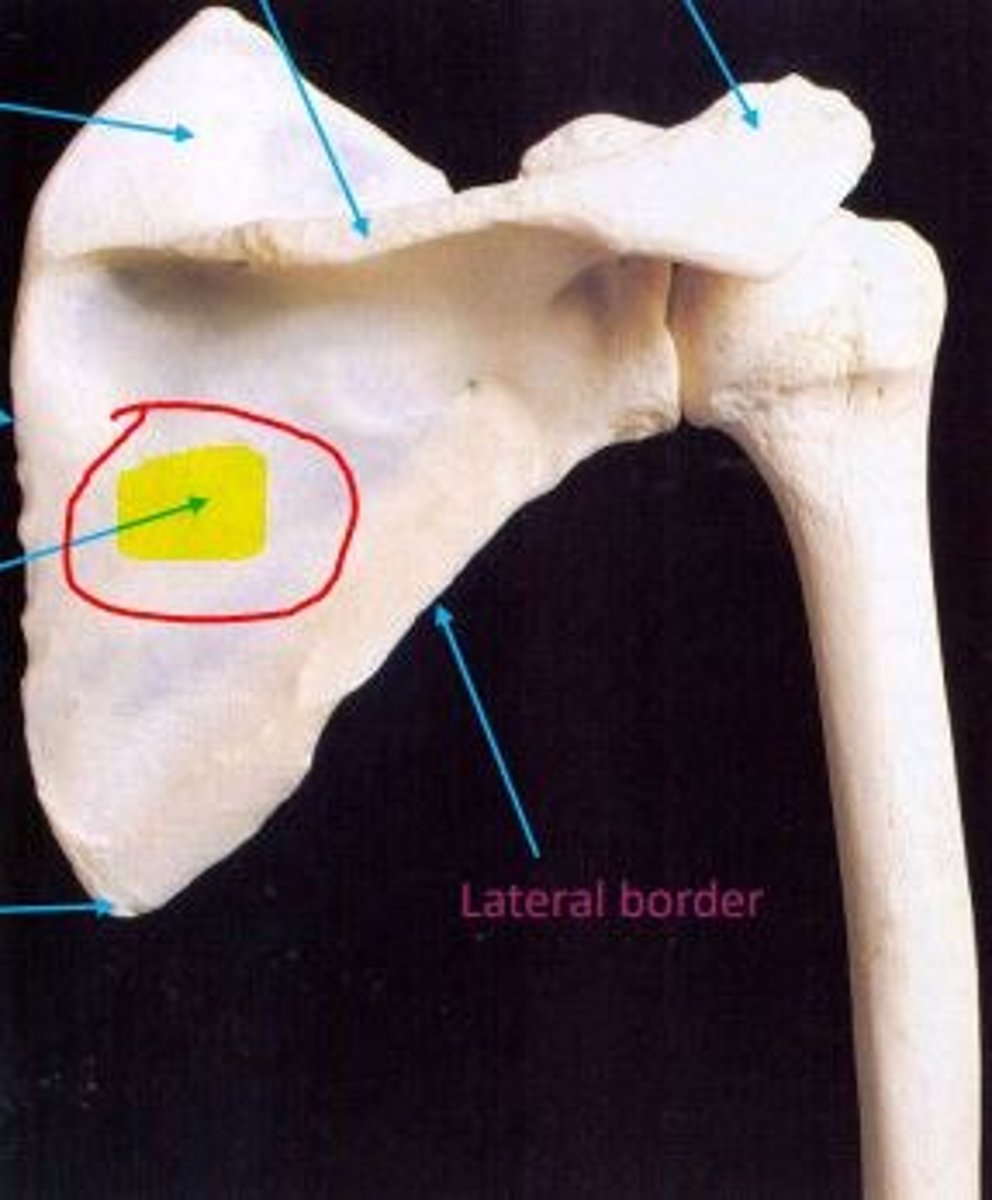
What joint is highlighted here?
Acromioclavicular (AC) joint
- Joint line passes from anterior to posterior
- Dislocation can result in shoulder separation & visible deformity
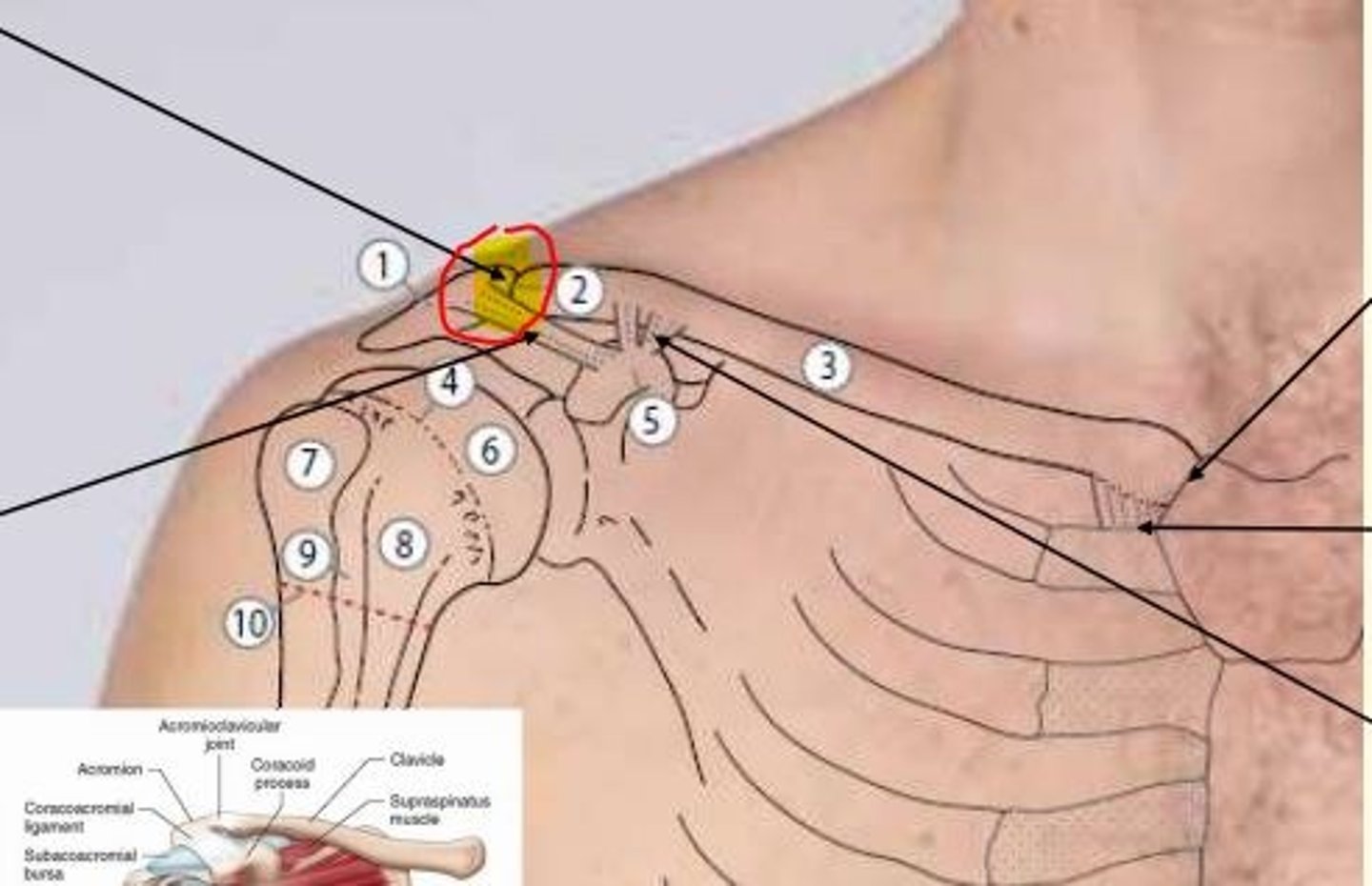
What joint is highlighted here?
Sternoclavicular joint
- Only joint between the upper limb and axial skeleton
- Supported by the costoclavicular ligaments
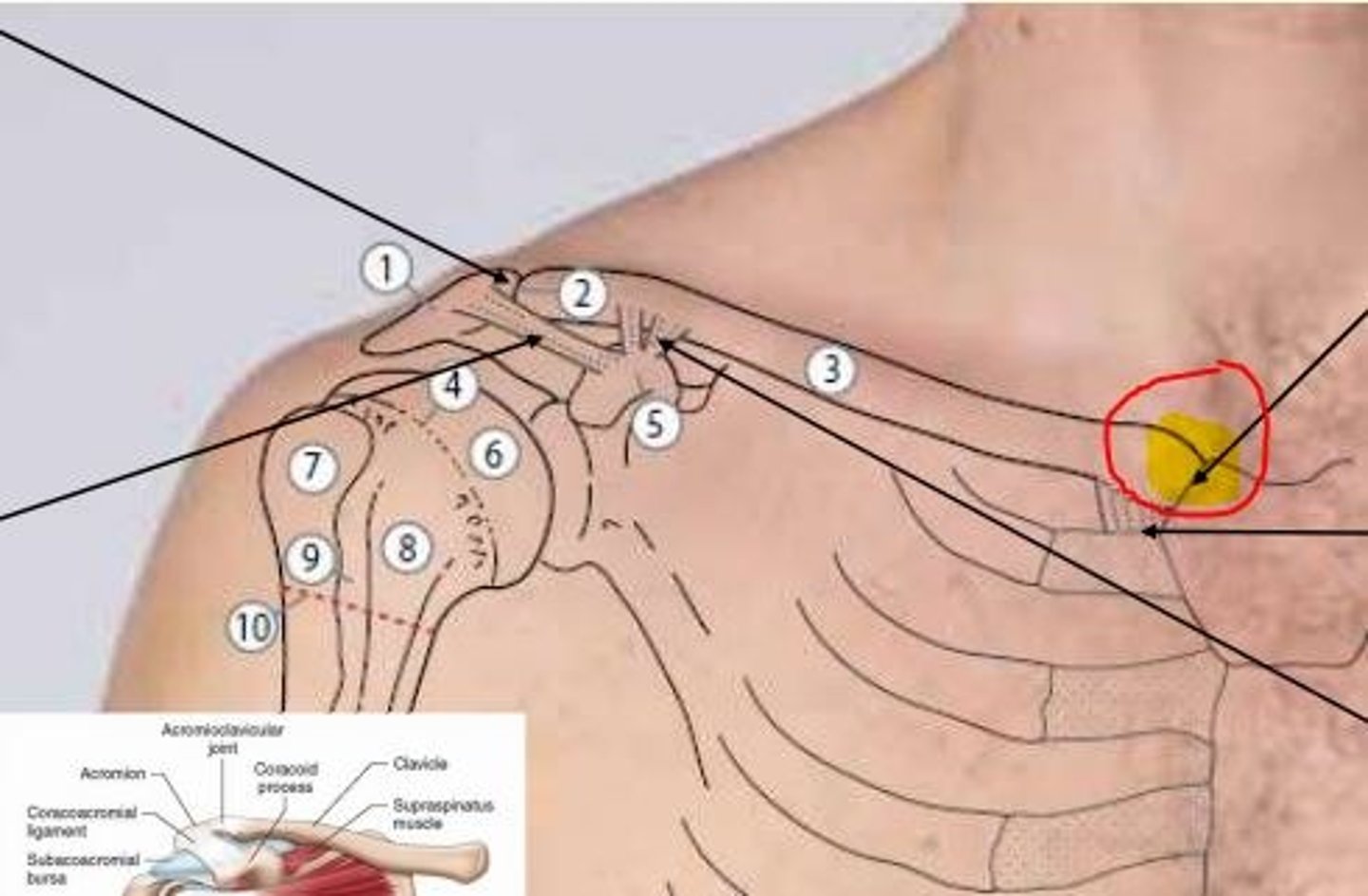
What ligament is highlighted here?
Coracoacromial ligament
- Supports shoulder joint superiorly
- Can be ruptured by superiorly directed forces
- Can impinge on supraspinatus/subacromial bursa
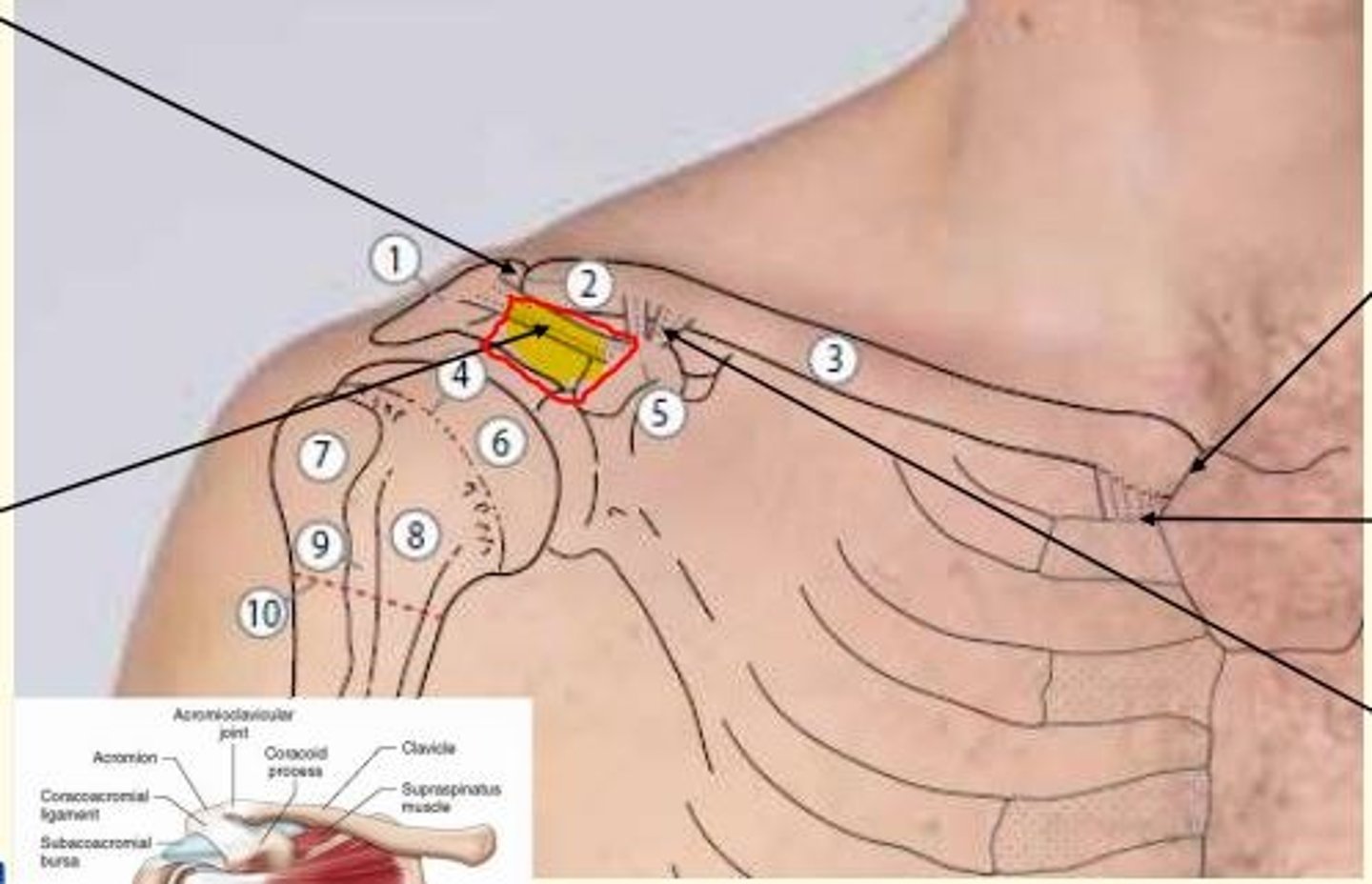
What ligament is highlighted here?
Coracoclavicular ligament
Can be torn by AC (acromioclavicular) joint dislocation
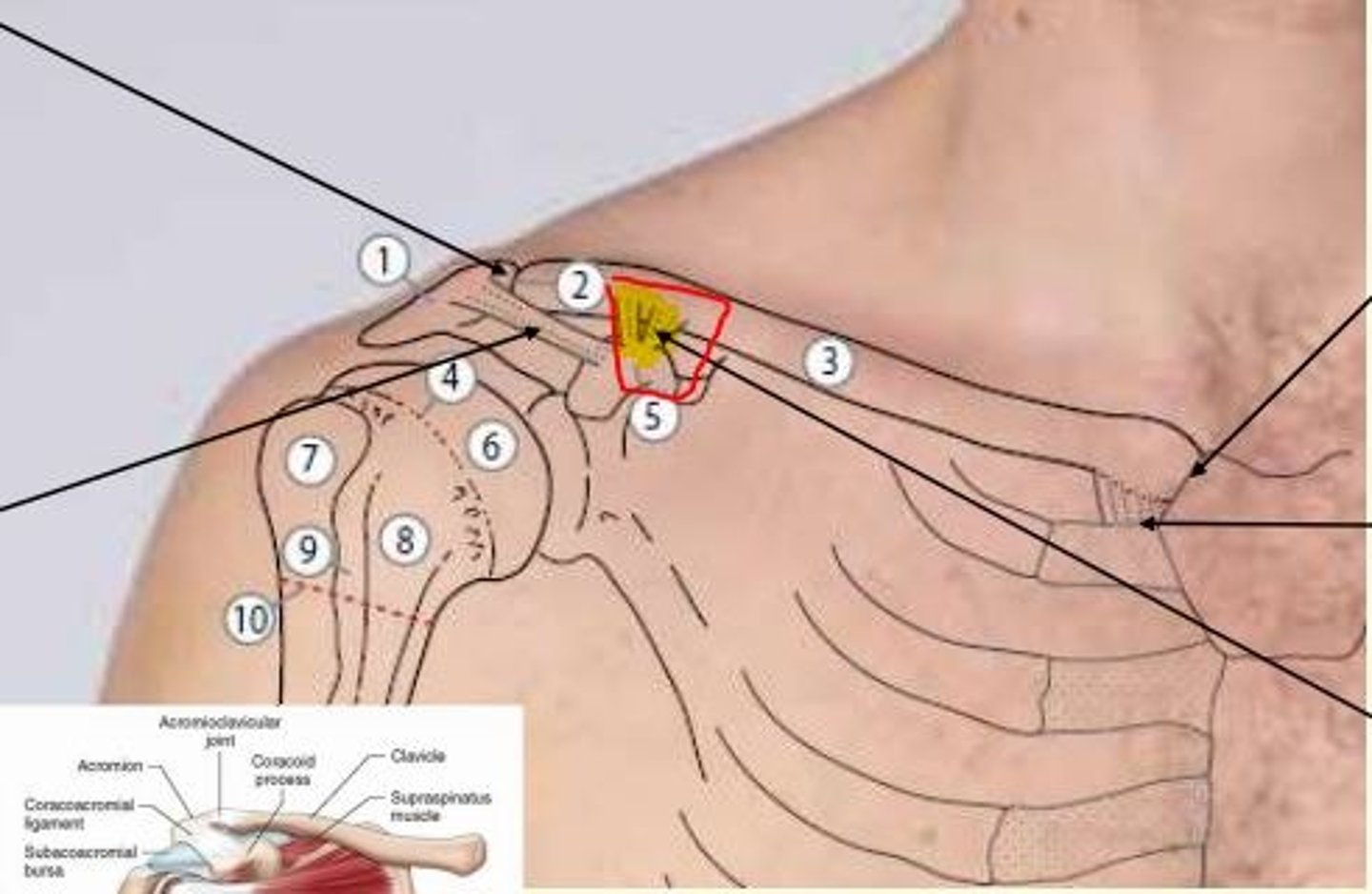
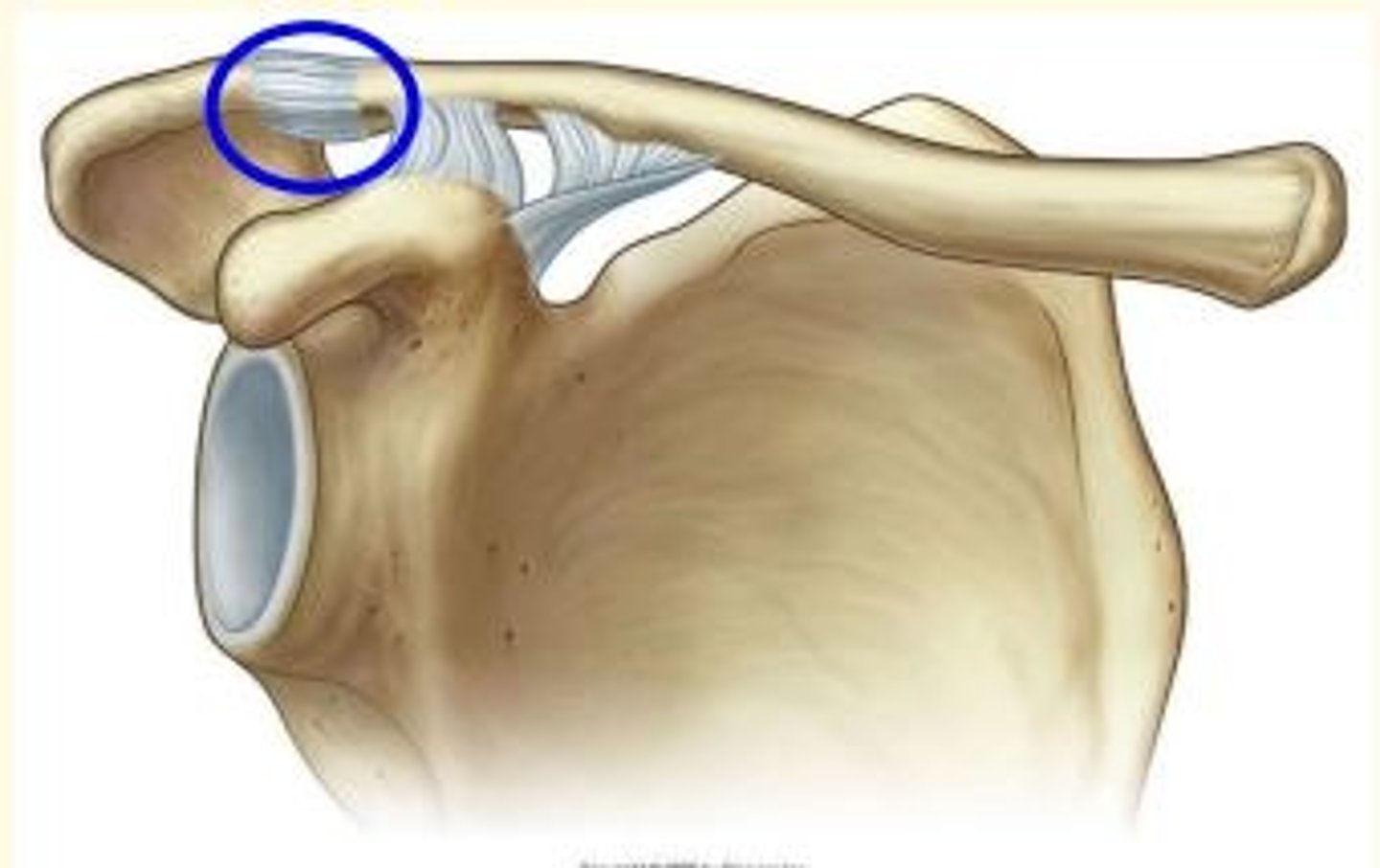
What joint is this?
Acromioclavicular (AC) joint
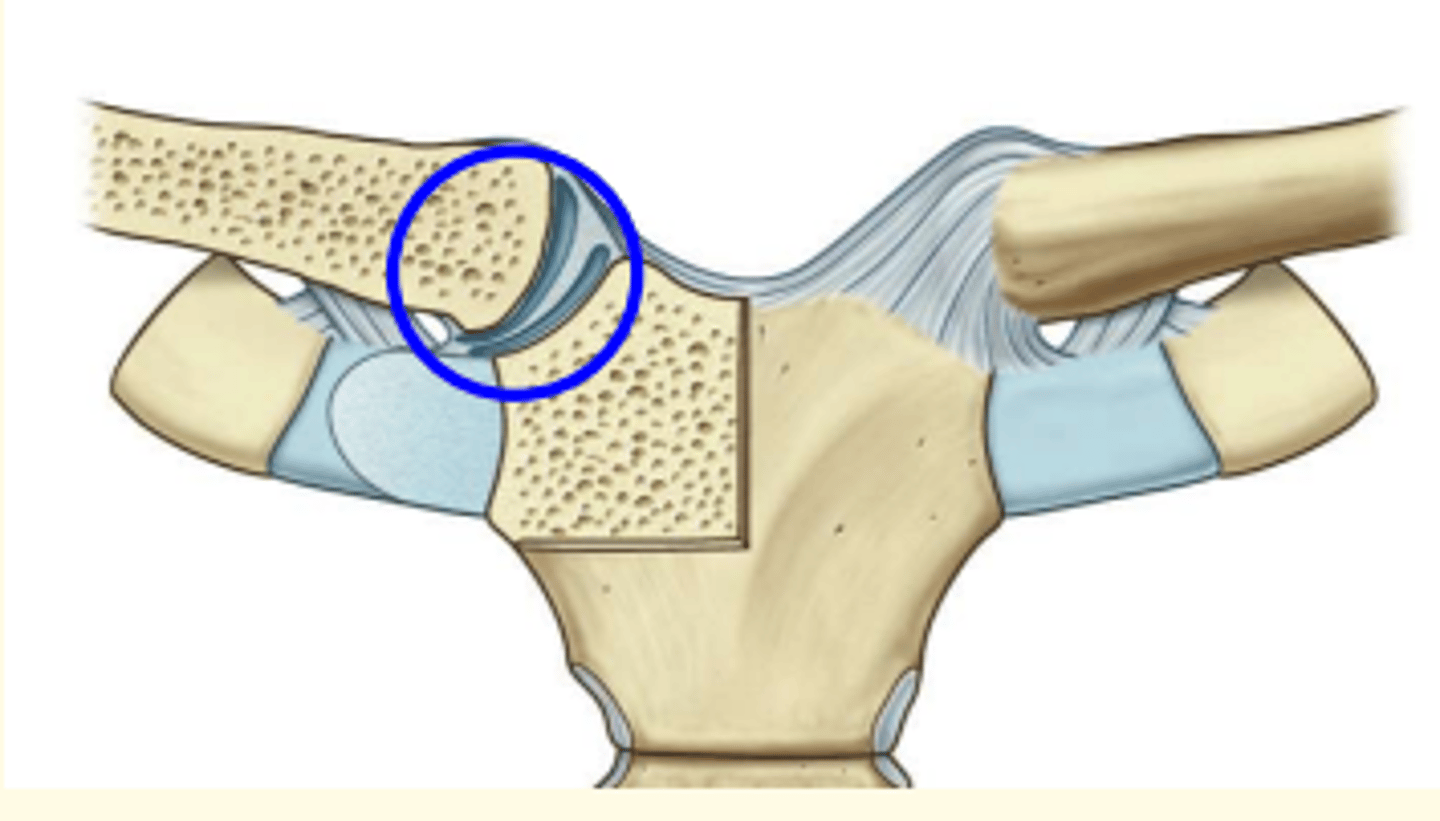
What joint is this?
Sternoclavicular joint
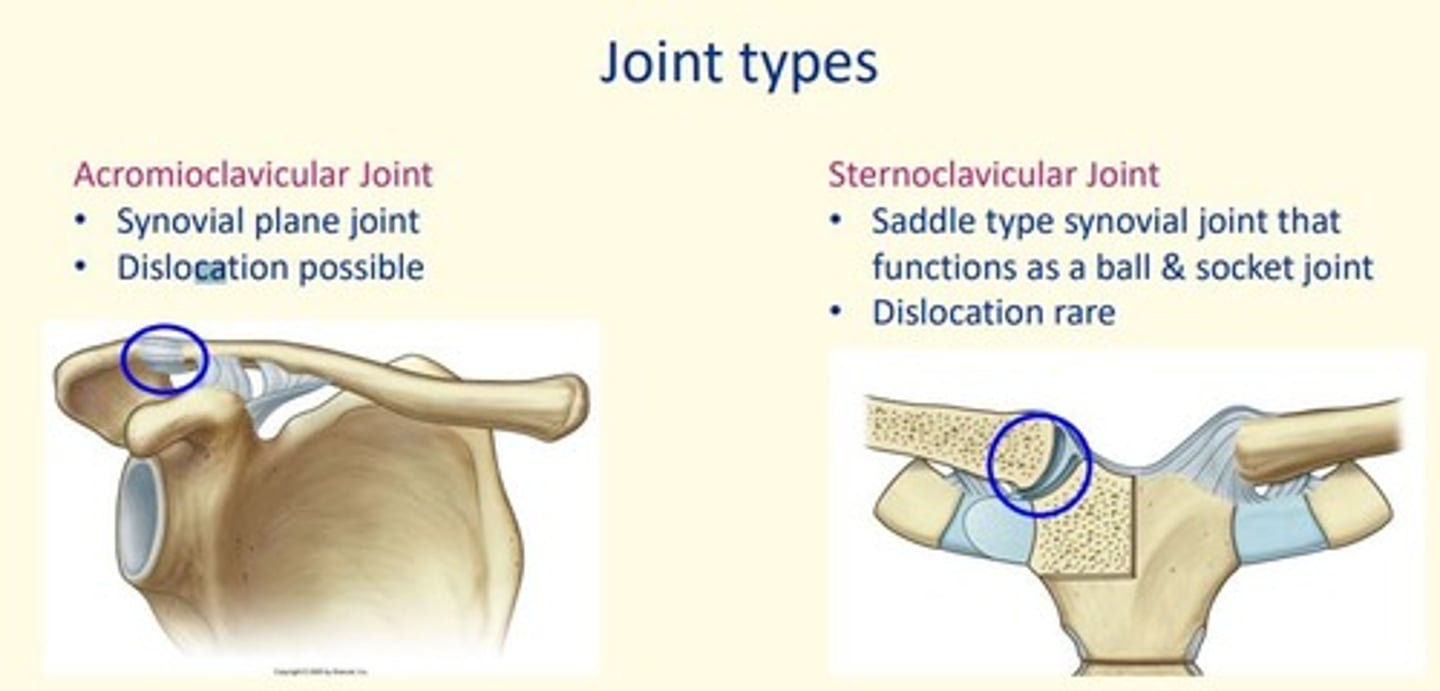
What type of joint is the acromioclavicular (AC) joint?
Synovial plane joint
Dislocation is possible
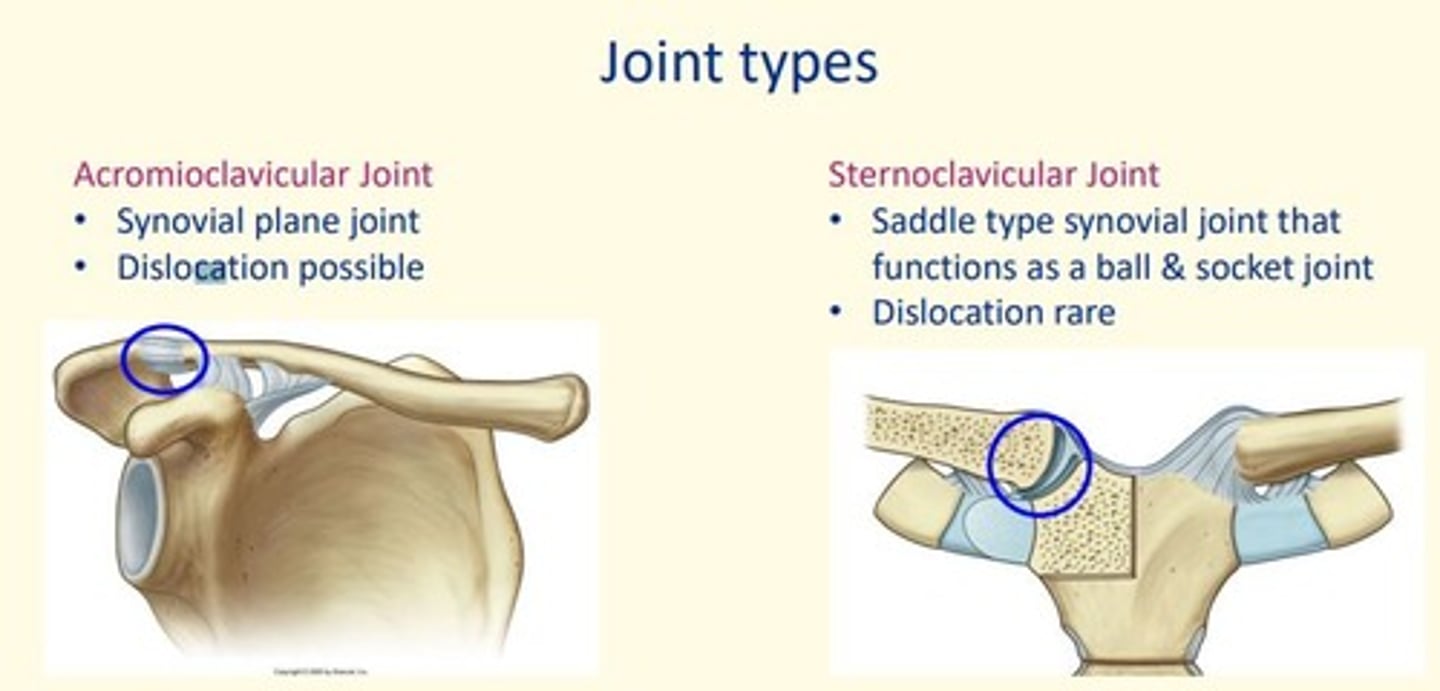
What type of joint is the sternoclavicular joint?
Saddle type synovial joint that functions as a ball & socket
Dislocation is rare
Acromioclavicular (AC) joint dislocation can lead to rupture of the ___ ligaments
Acromioclavicular (AC) joint dislocation can lead to rupture of the coracoclavicular ligaments
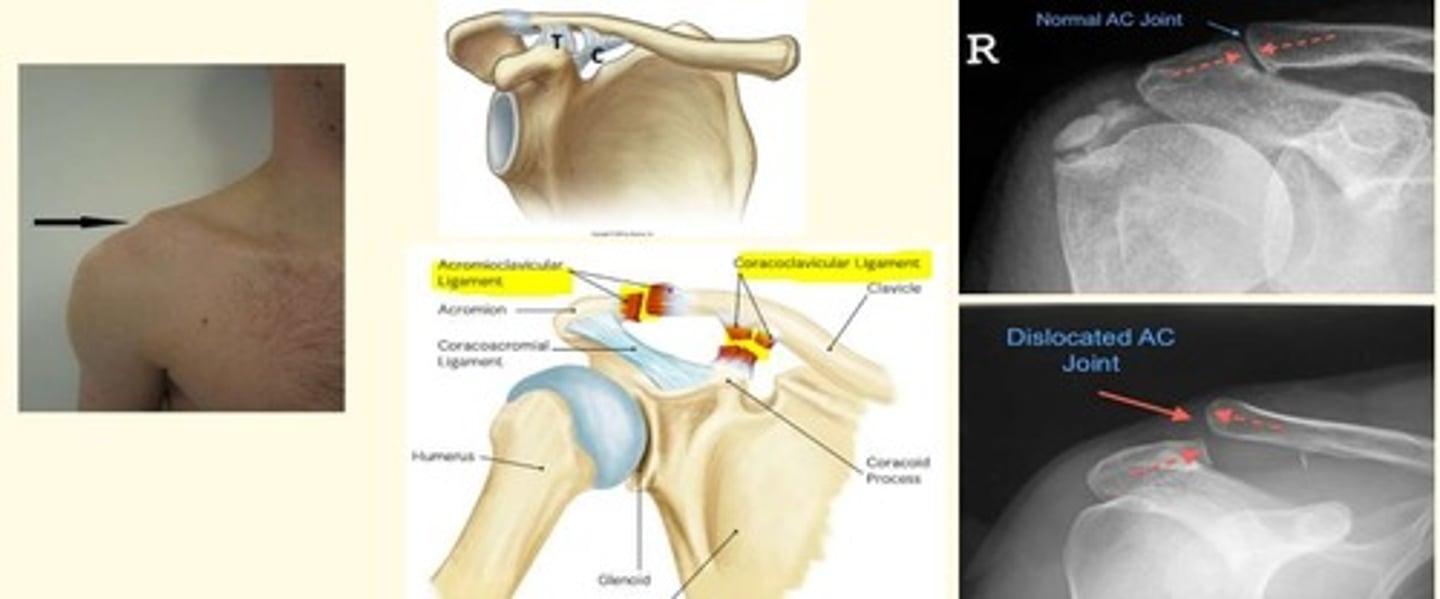
Clavicular fractures are most likely in what 1/3 of the clavicle?
Middle 1/3 > Lateral 1/3 > Medial 1/3
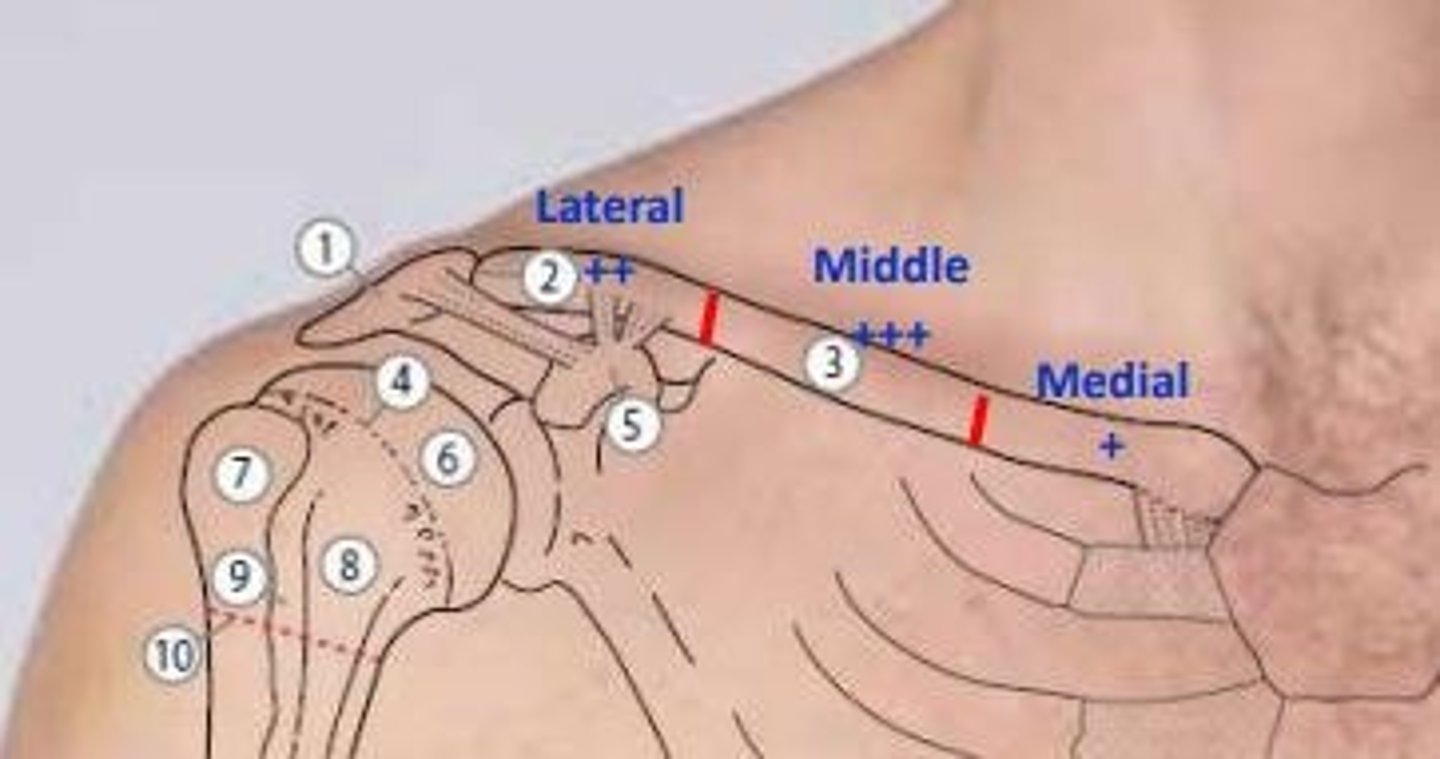
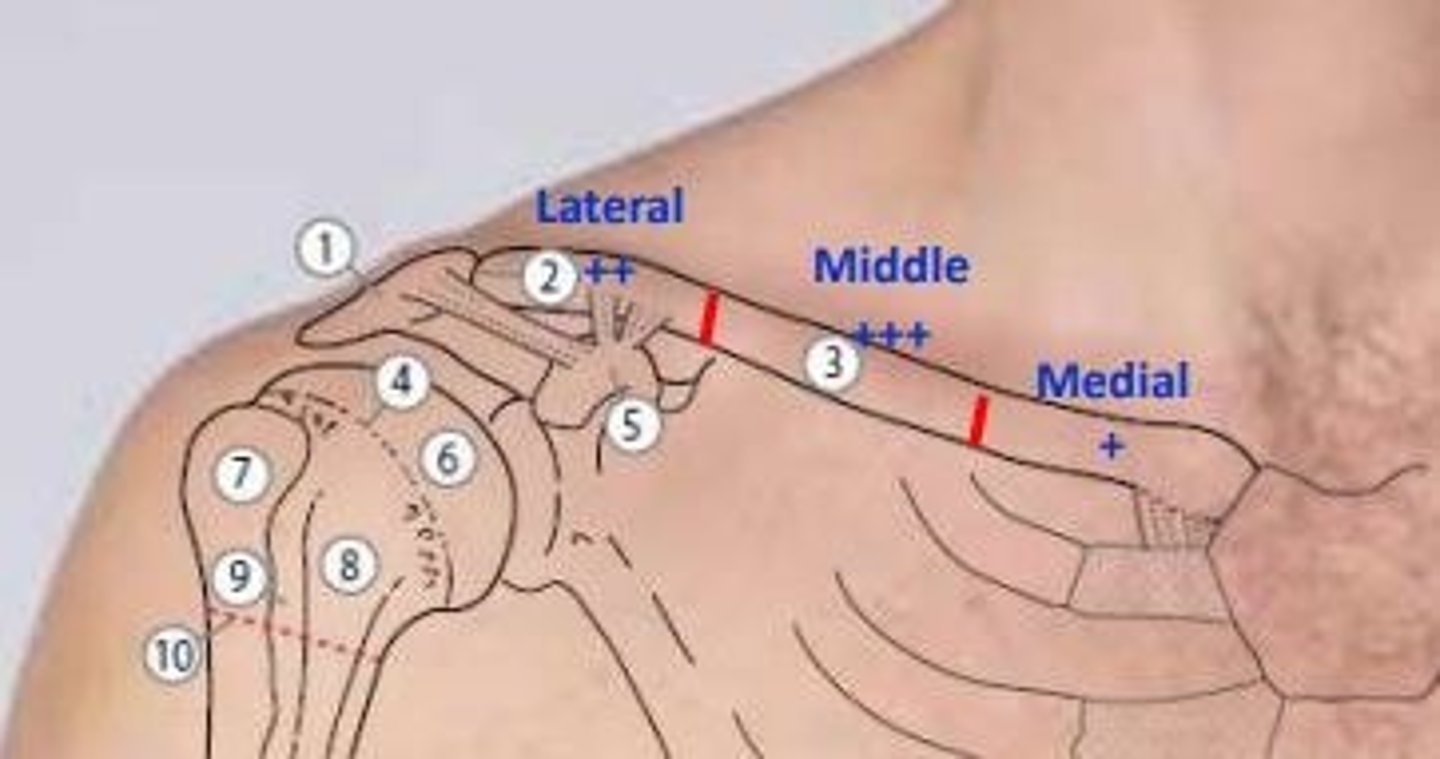
The weakest point of the clavicle is what junction?
The weakest point of the clavicle is the junction between the middle and lateral thirds of the clavicle
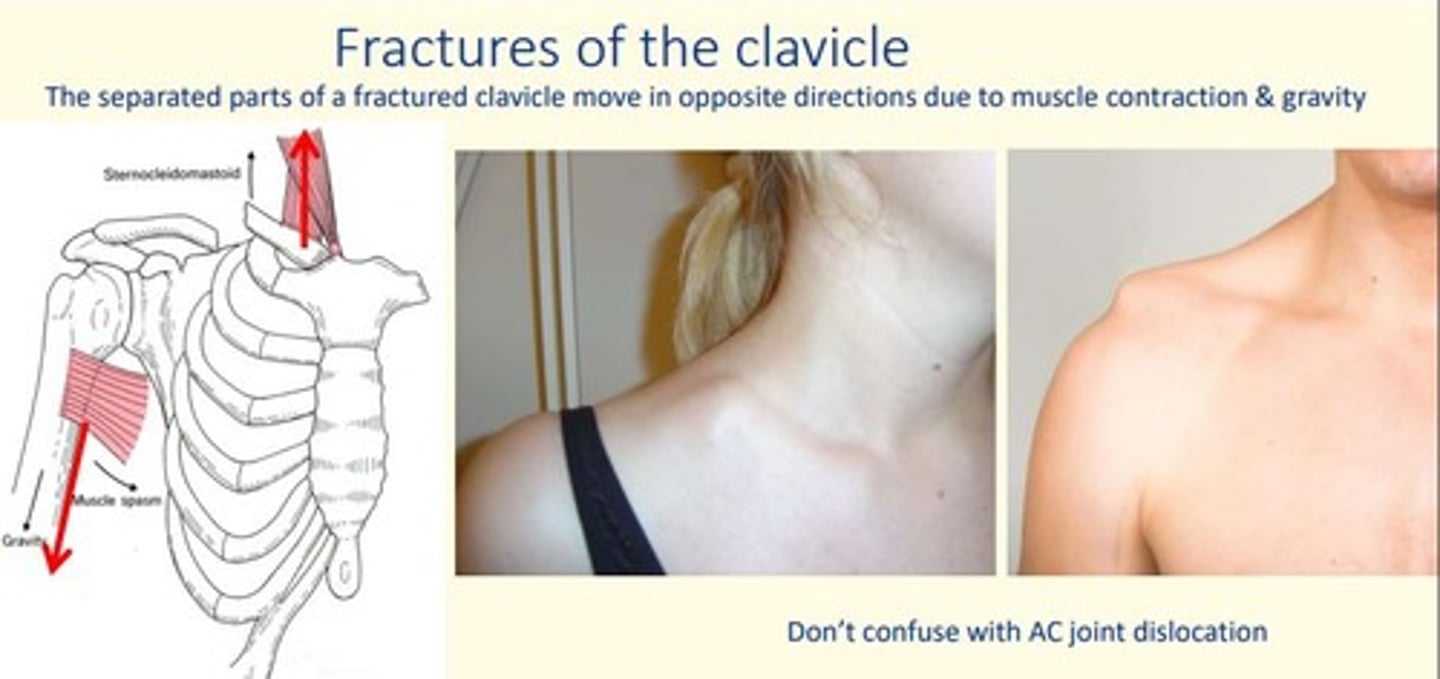
Risk of a clavicular fracture can occur from what type of fall?
Fall onto the outstretched limb or onto the lateral shoulder
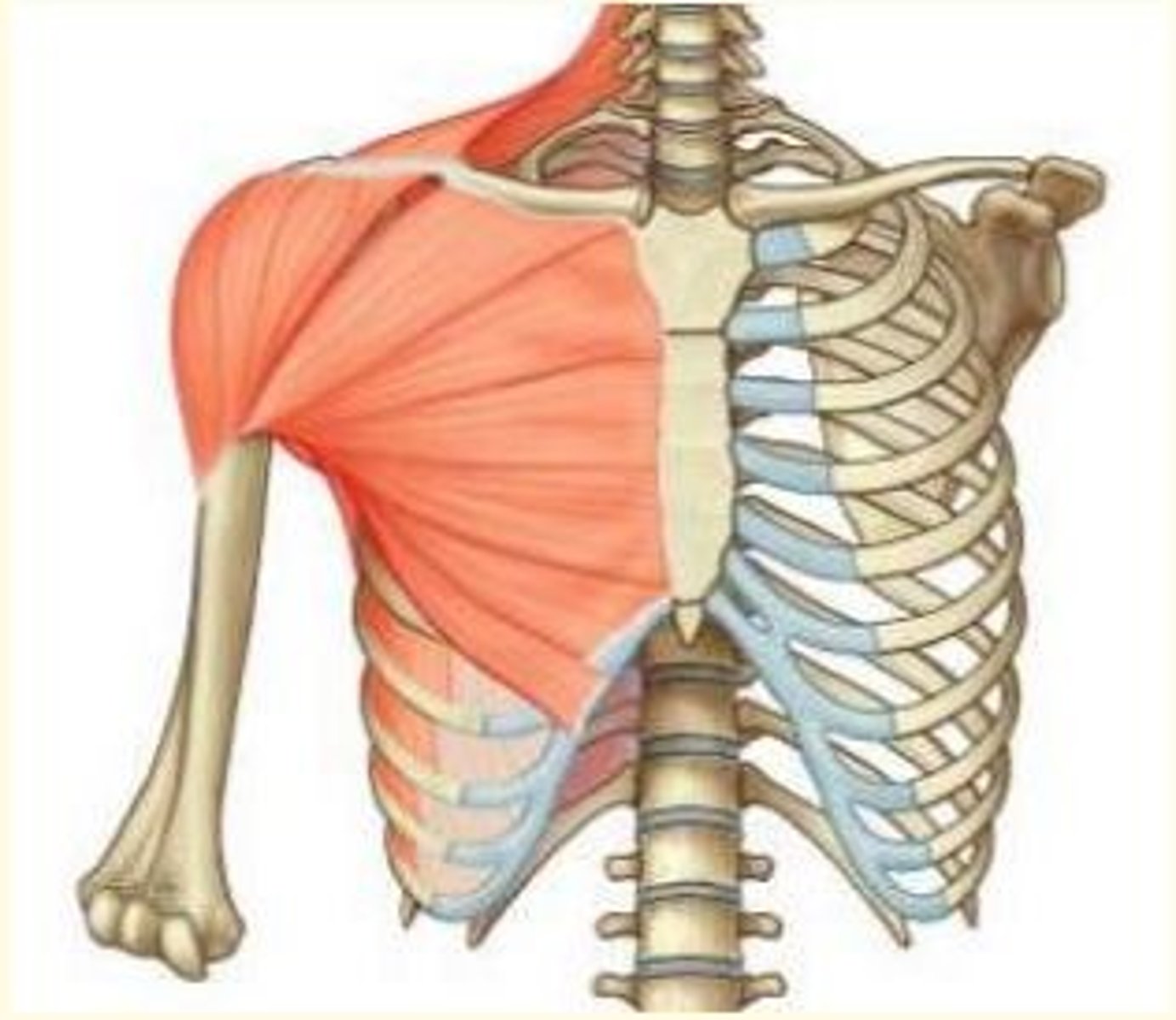
Pectoral girdle muscles - which muscle is shown here?
Pectoralis major
- Adducts & medially rotates shoulder
- Accessory breathing muscle
- Innervated by medial & lateral pectoral nerve
- Attaches to clavicle, sternum & adjacent costal cartilages and lateral lip of intertubercular groove (humerus)
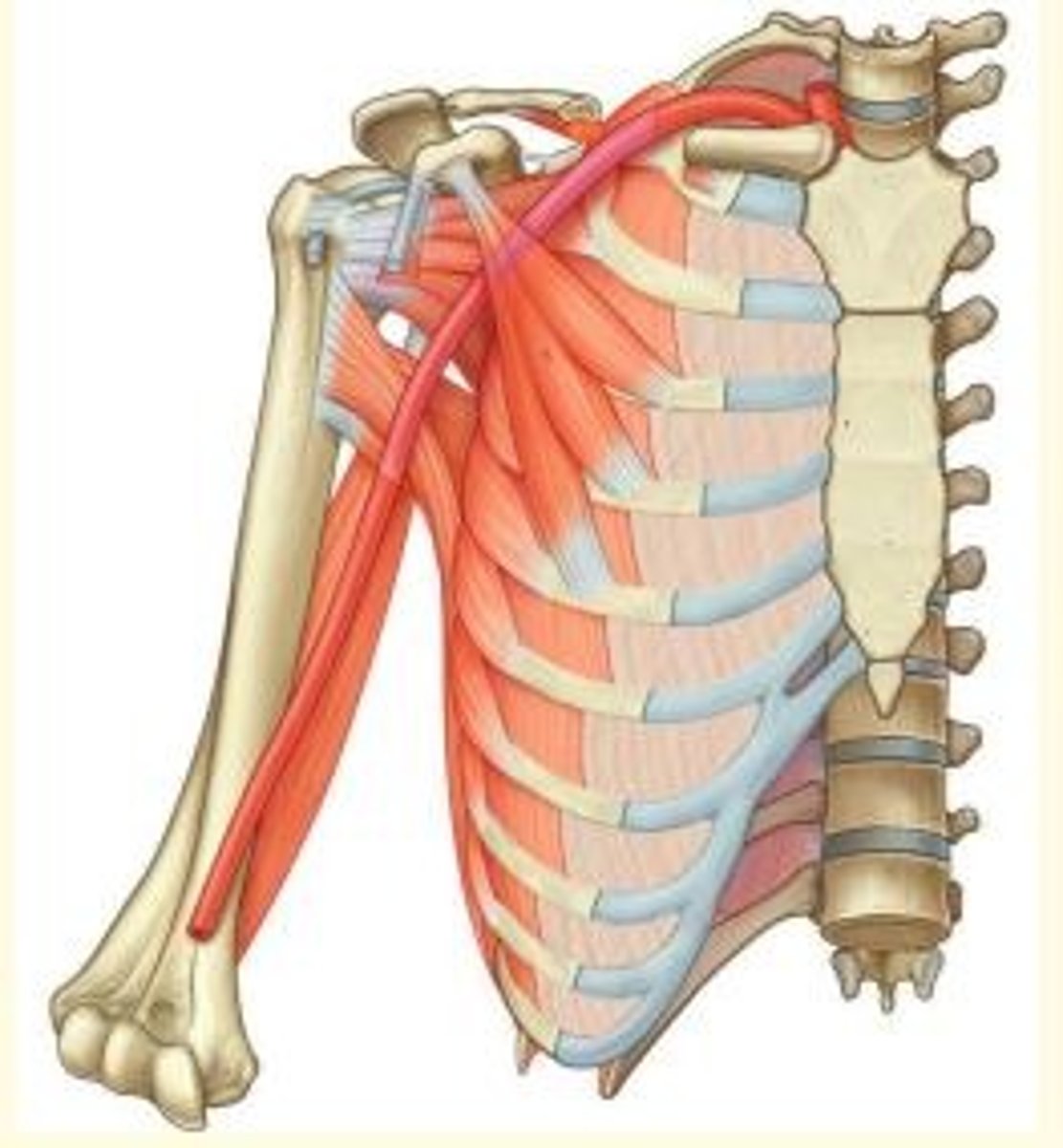
Pectoral girdle muscles - which muscle is shown here?
Pectoralis minor
- Depresses & protracts scapula
- Divides axillary artery into 3 parts
- Innervated by medial pectoral nerve
- Attaches to ribs 3-5 and coracoid process
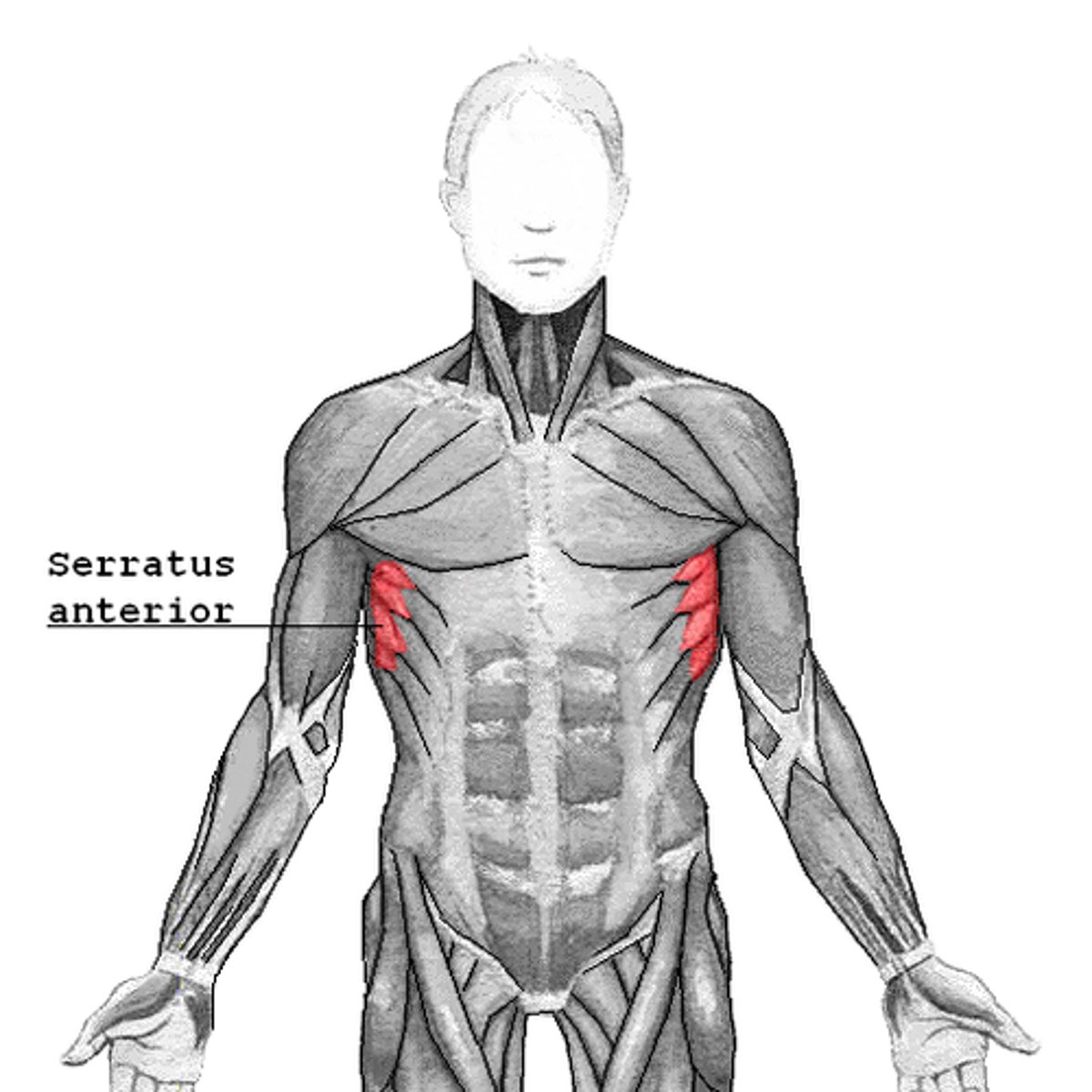
Pectoral girdle muscles - which muscle is shown here?
Serratus anterior
- Protracts scapula & holds it close to thoracic wall
- Attaches to ribs 1-8 anteriorly & medial scapula border
- Innervated by long thoracic nerve
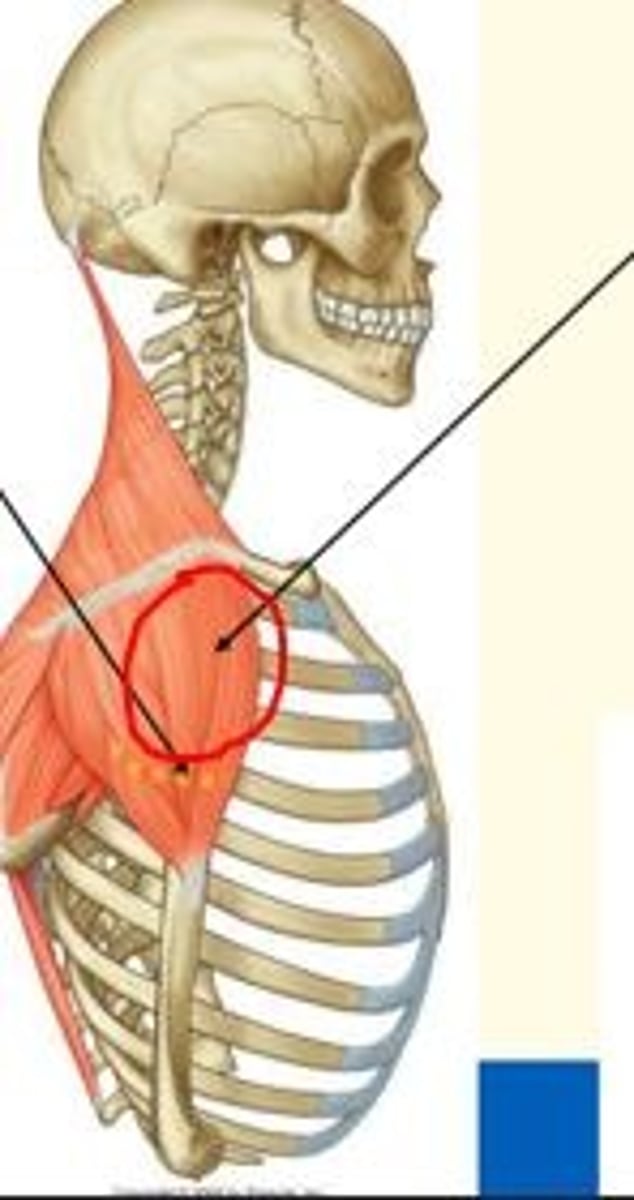
Pectoral girdle muscles - which muscle is shown here?
Deltoid muscle
- Brings about all shoulder movement except adduction
- Innervated by axillary nerve
- Attaches to lateral clavicle, acromion, scapula spine & humerus
Causes of deltoid muscle damage?
- Shoulder dislocation
- Surgical neck of humerus fracture
- Intramuscular injection
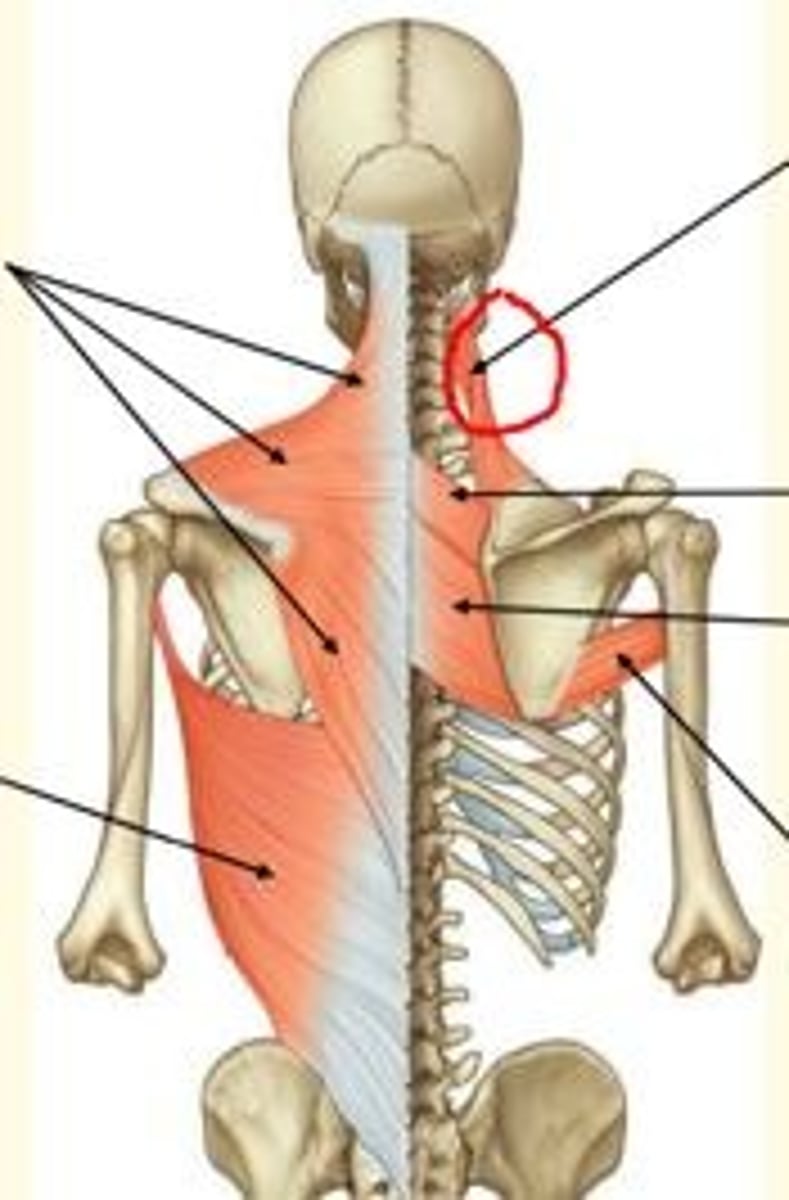
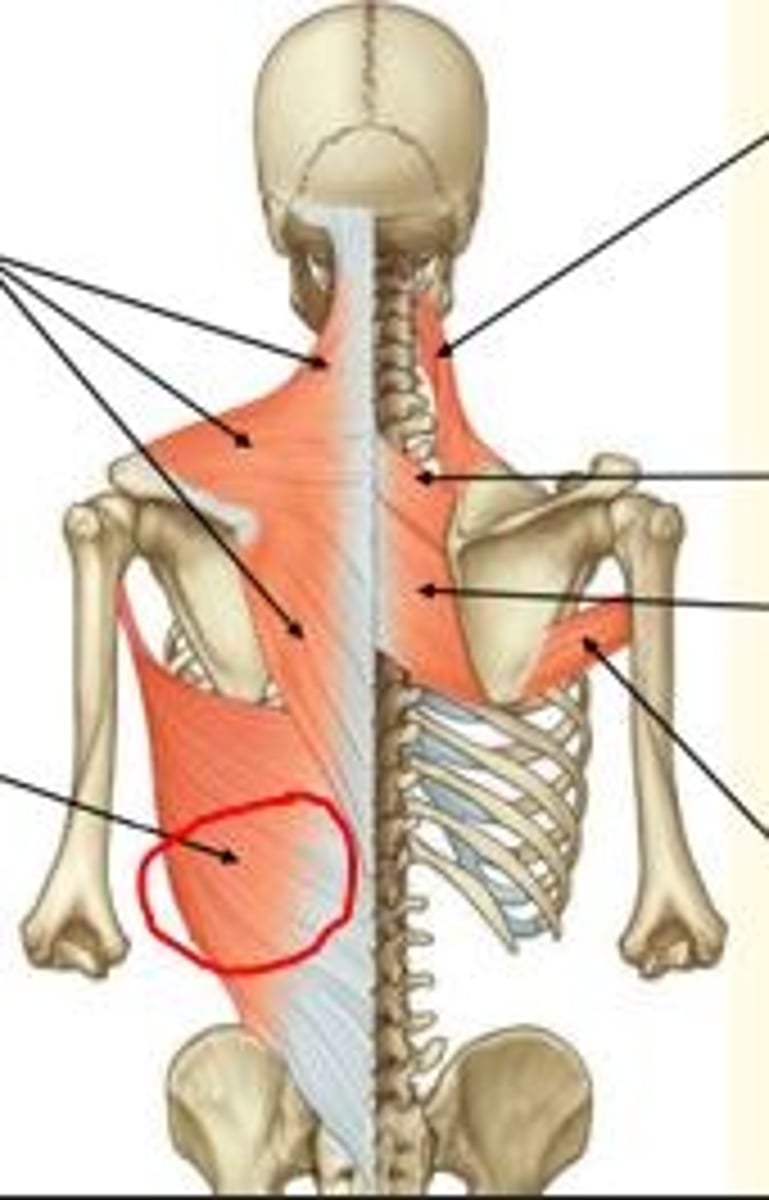
Name the circled pectoral girdle muscle
Levator Scapulae
- Elevates & rotates scpula
- Innervated by dorsal scapula nerve & C3-4
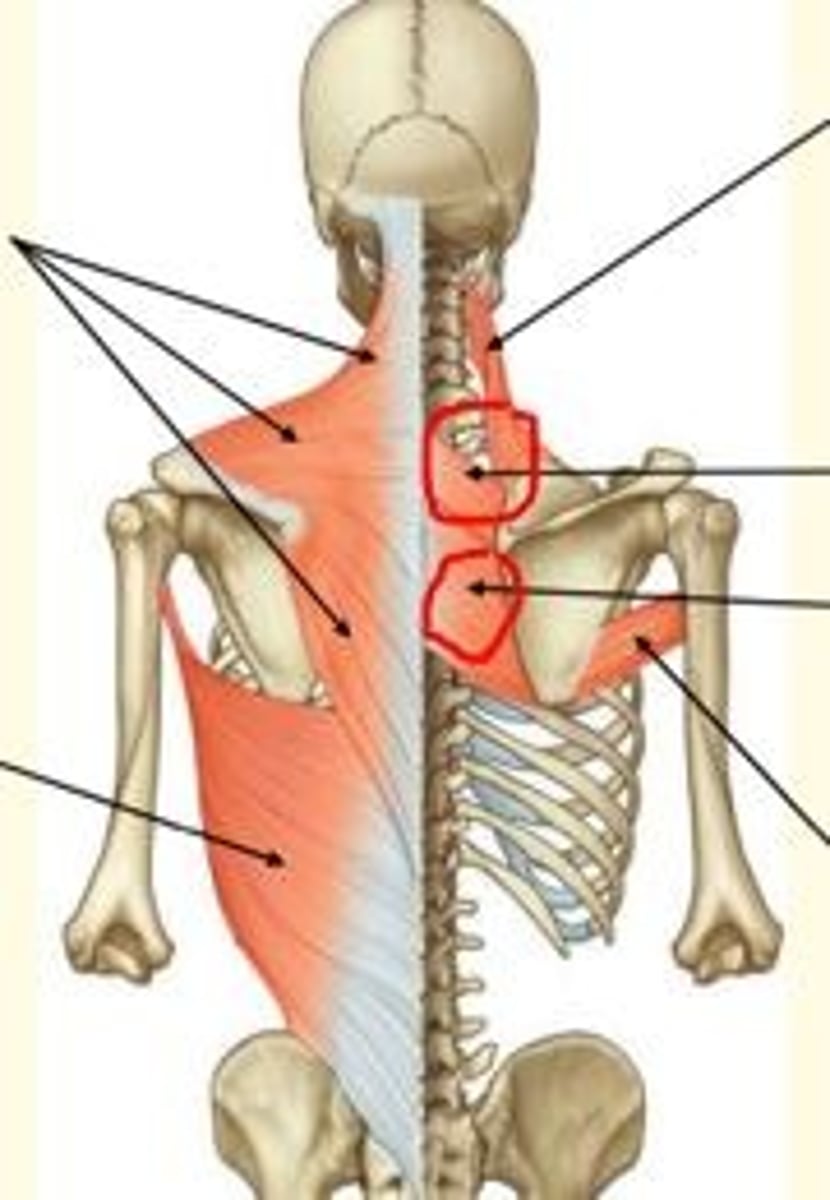
Name the circled pectoral girdle muscle
Rhomboids (rhomboid minor and rhomboid major)
- Retract and fix position of scapula
- Innervated by dorsal scapula nerve
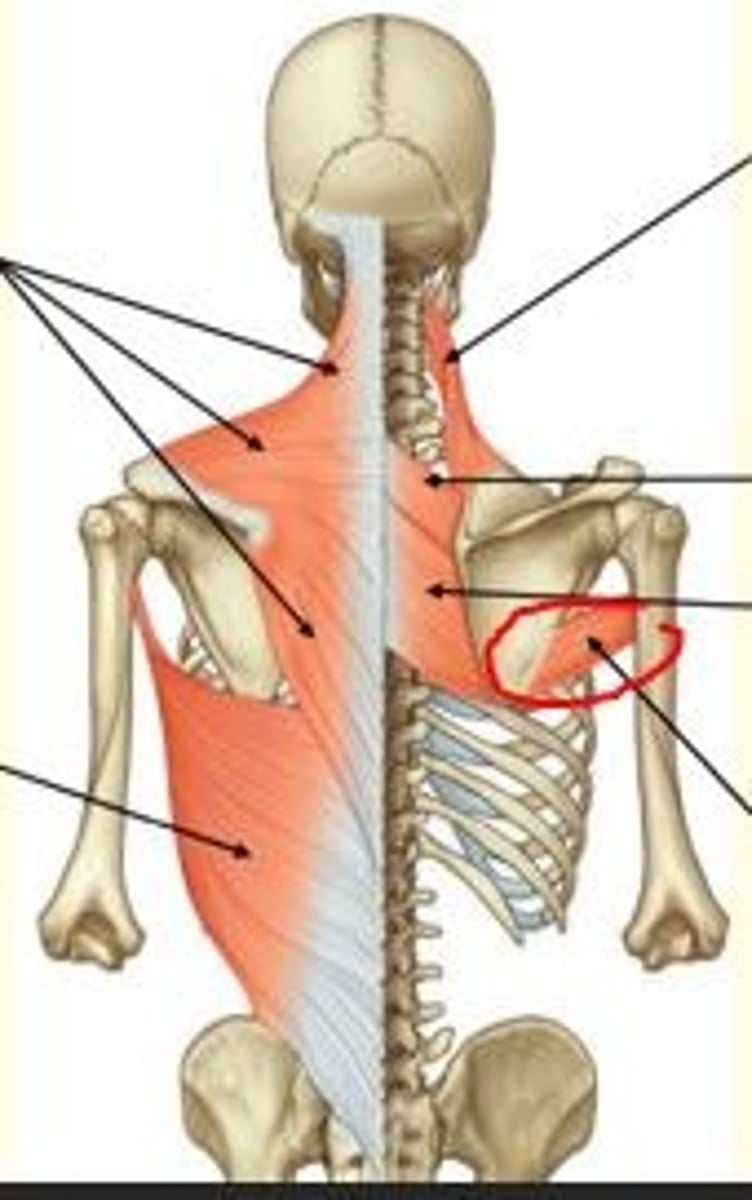
Name the circled pectoral girdle muscle
Teres major
- Adduction & medial rotation of humerus
- Innervated by lower subscapular nerve
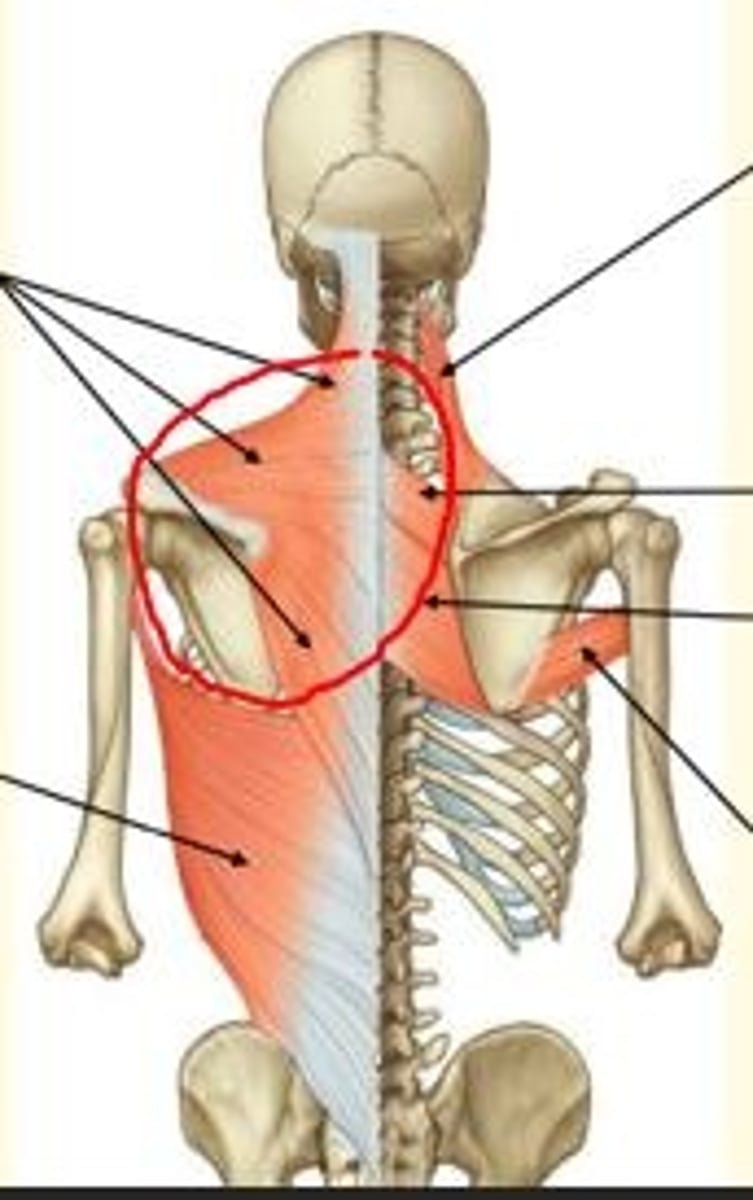
Name the circled pectoral girdle muscle
Trapezius
- Elevates, retracts & depresses scapula
- Innervated by accessory nerve (CN XI)
Name the circled pectoral girdle muscle
Latissimus Dorsi
- Extends, adducts & medially rotates humerus
- Can raise trunk to arm e.g., dips/climbing
- Innervated by thoracodorsal nerve
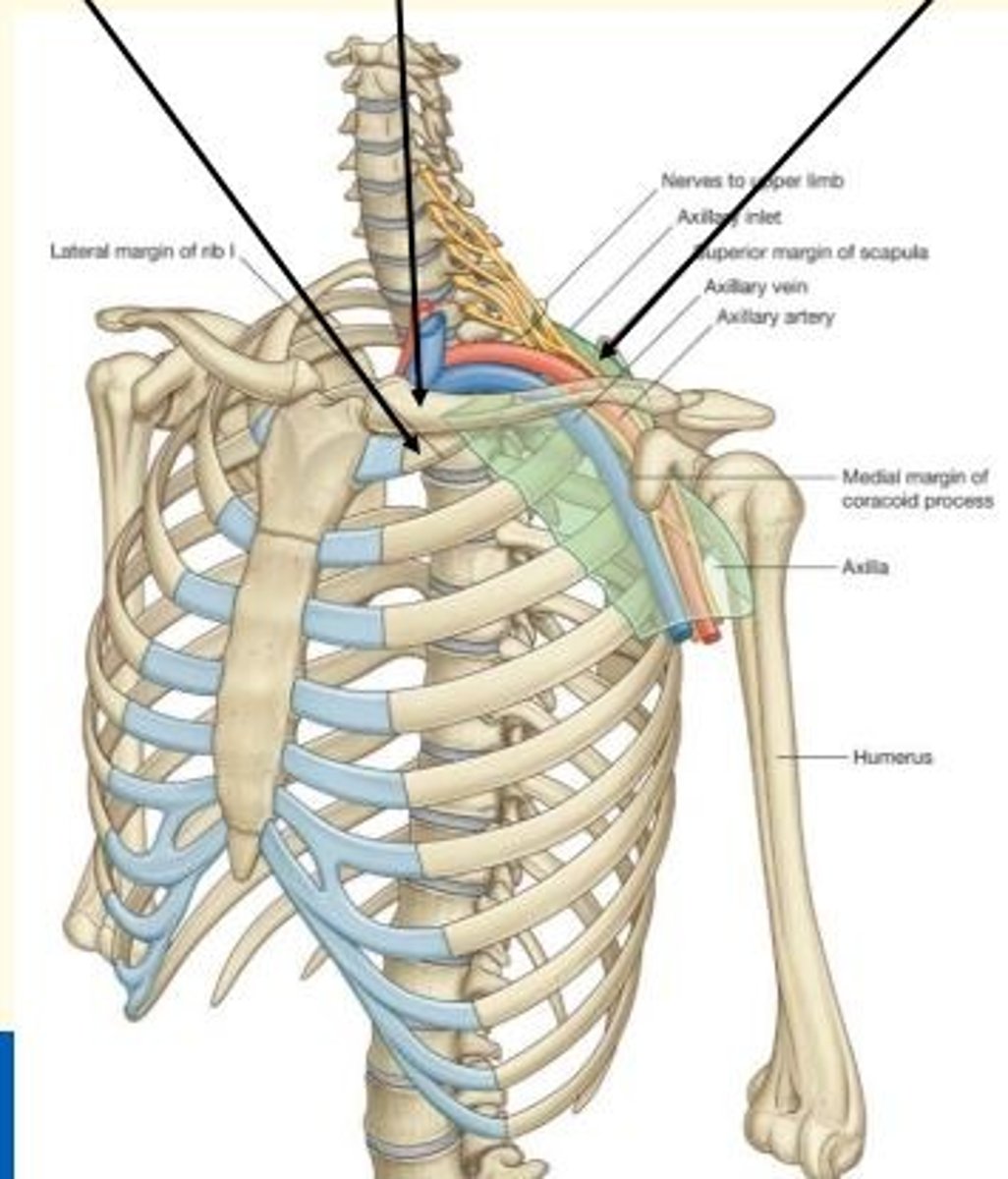
The major artery, vein & nerves of the upper limb pass between the thorax and limb by travelling via which structures?
- Over rib 1
- Under clavicle
- Through the axillary inlet
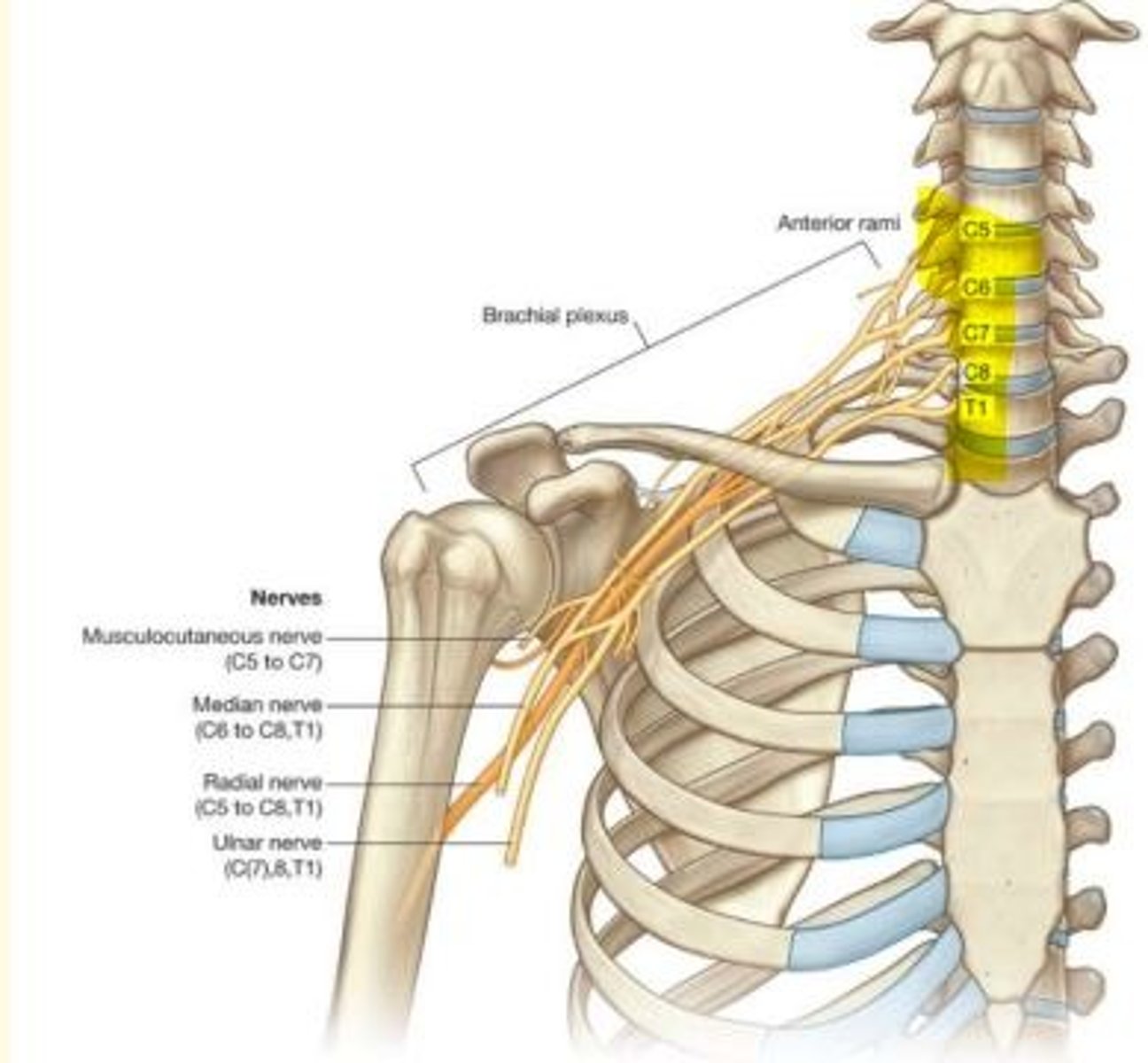
The upper limb is almost entirely innervated by the nerves of the ___ plexus
The upper limb is almost entirely innervated by the nerves of the brachial plexus
- Formation of brachial plexus begins in the neck
- Moves into the axilla, arm, forearm and hand
- Plexus originates from cervical & thoracic spinal cord levels = C5, C6, C7, C8 and T1
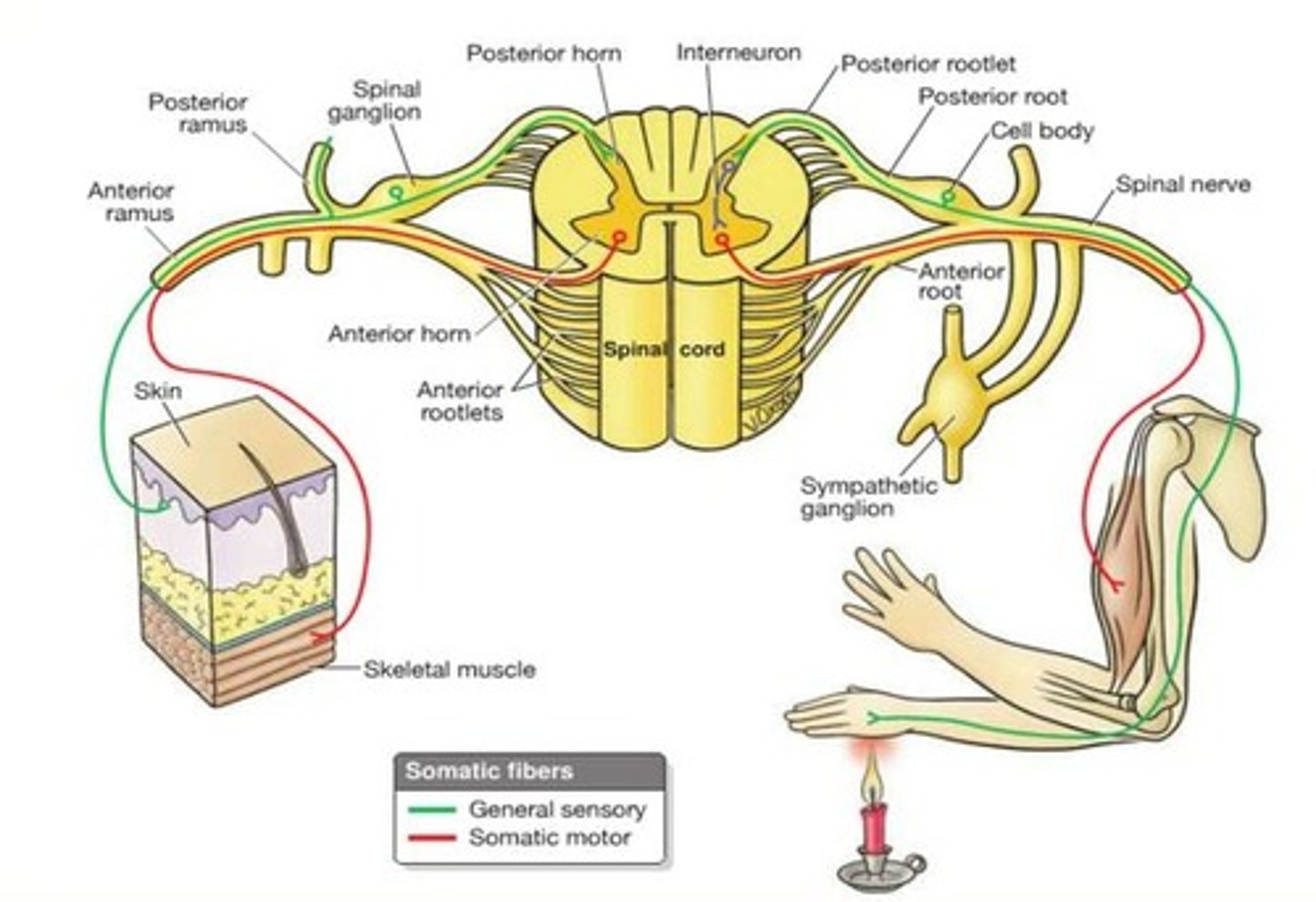
Spinal nerve basics
What are the main nerves of the upper limb?
musculocutaneous, median, radial, ulnar, axillary
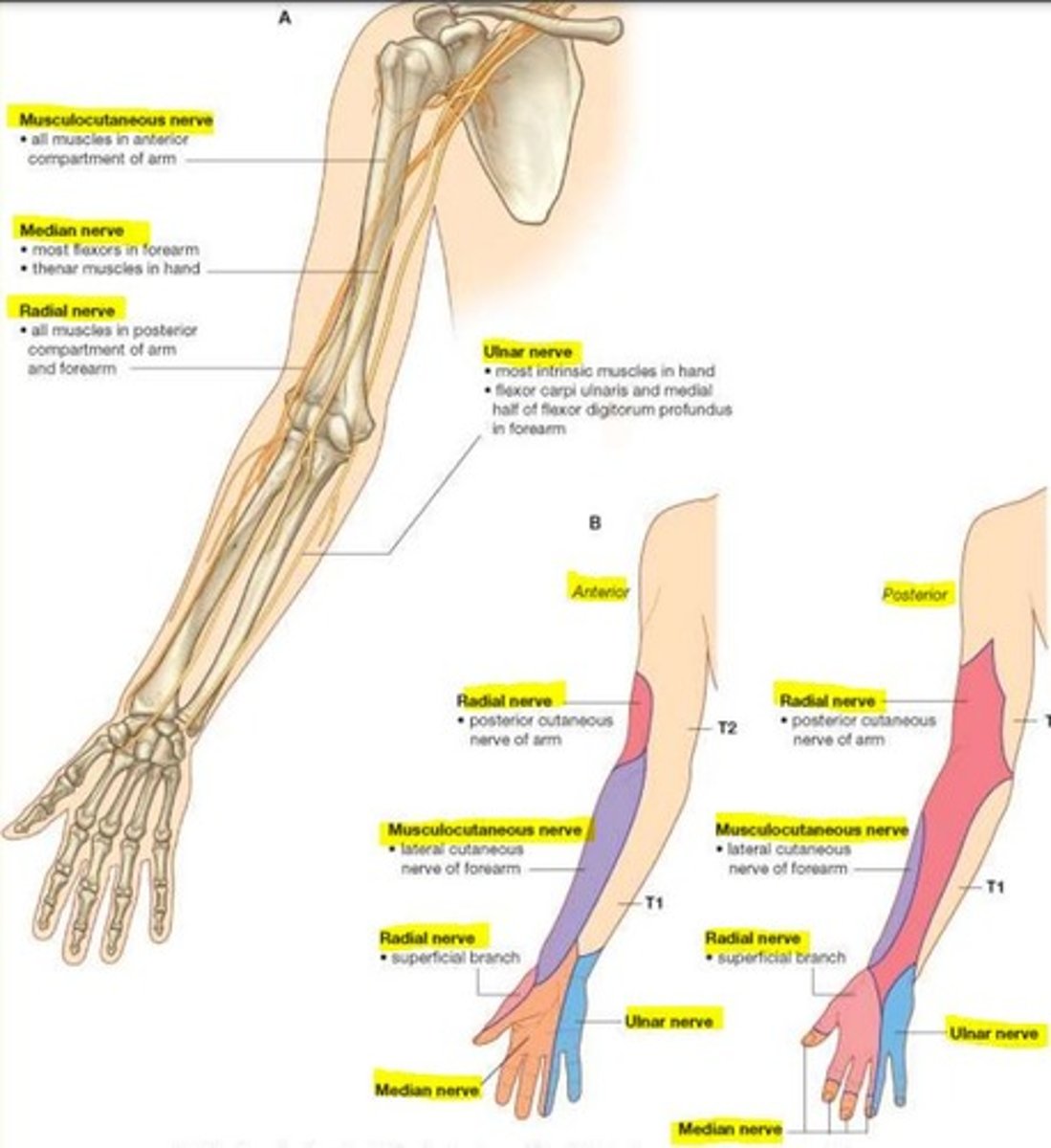
Blood supply to the upper limb
Subclavian, axillary, brachial, radial and ulnar
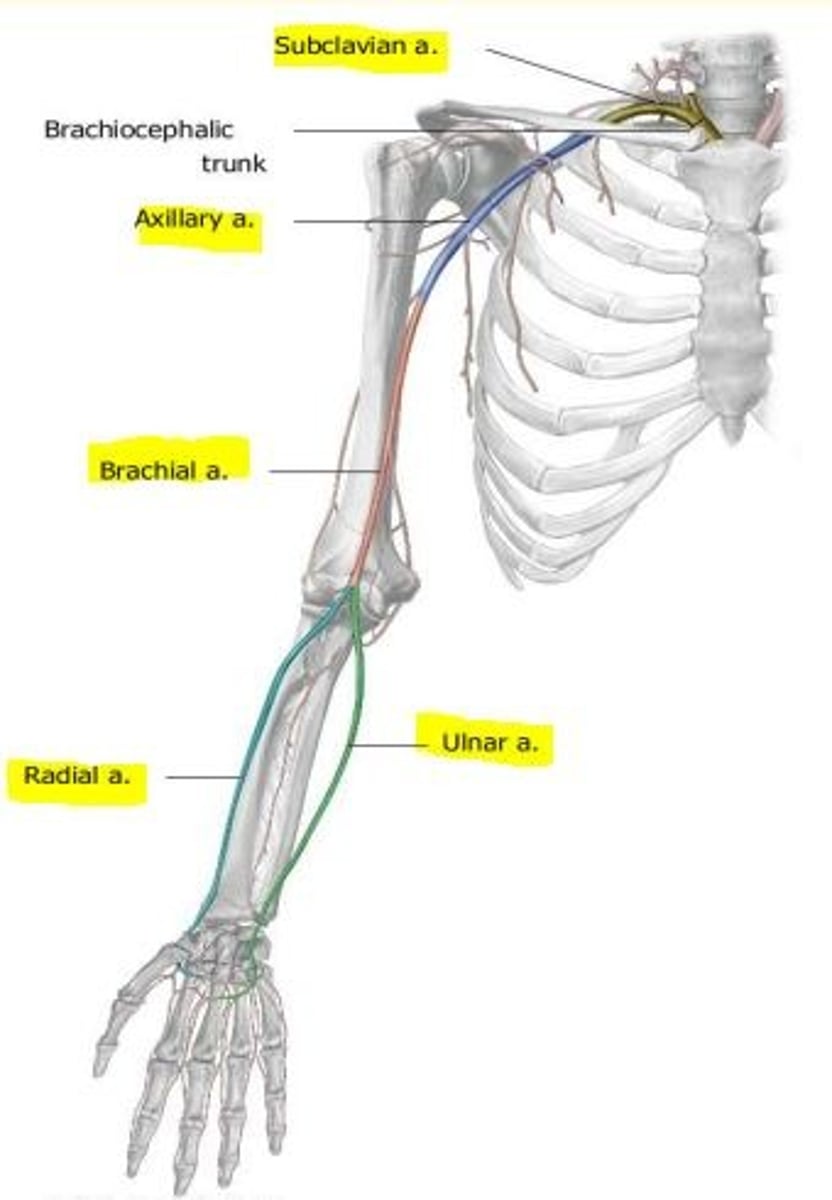
Deep veins of the upper limb
Brachial, axillary, subclavian
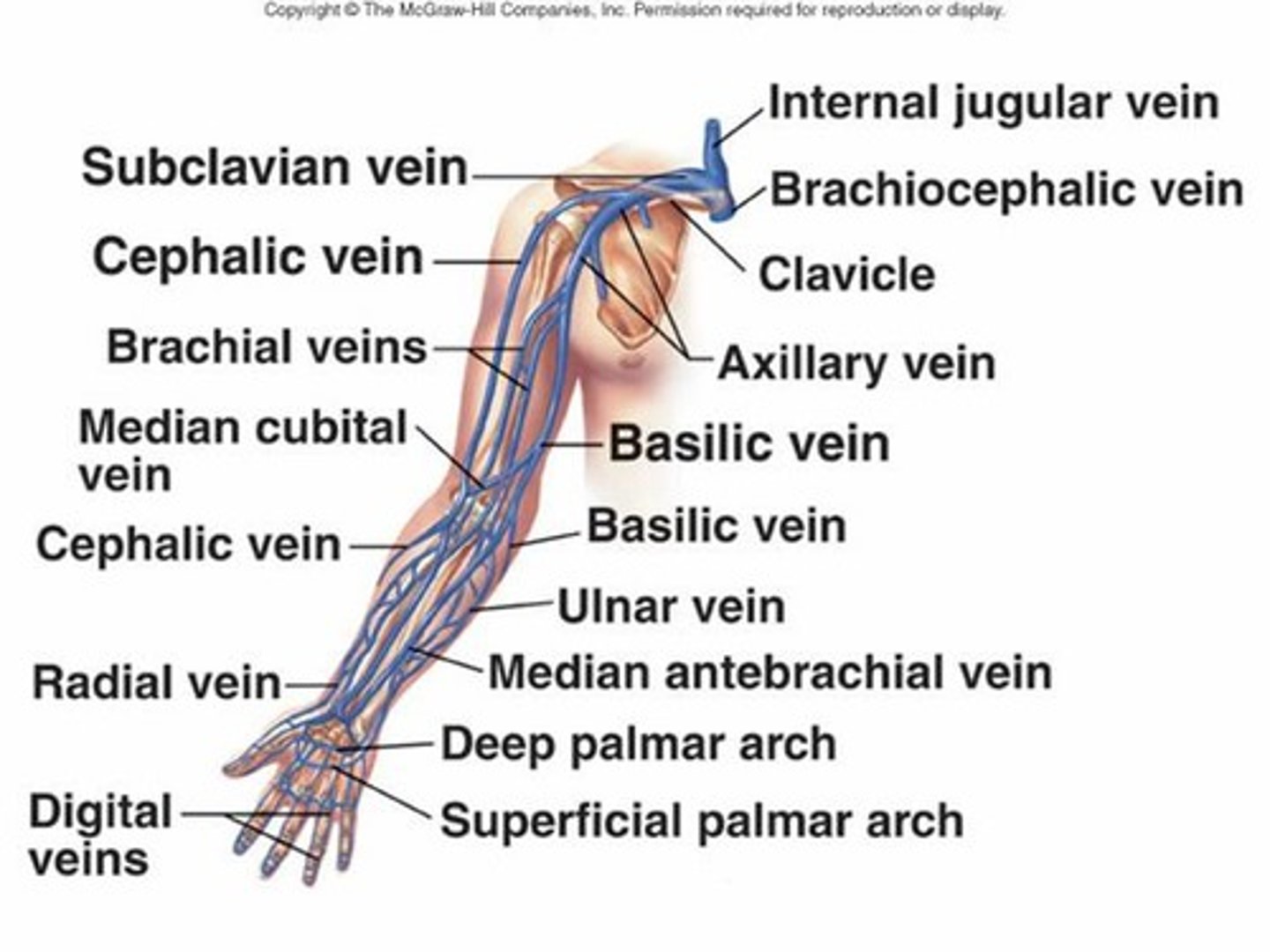
Superficial veins of the upper limb
Basilic vein, median cubital vein, cephalic vein, venous palmar arch
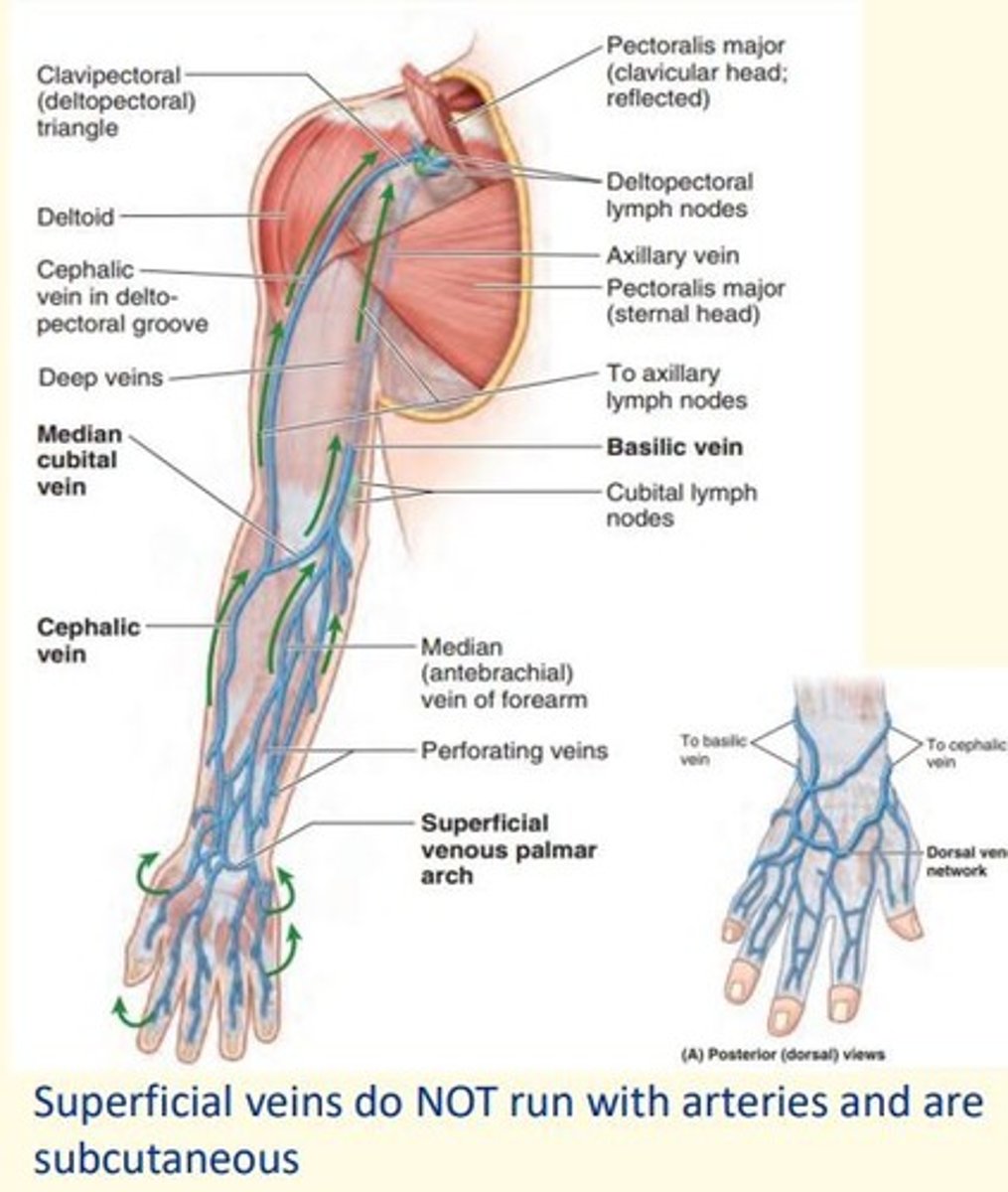
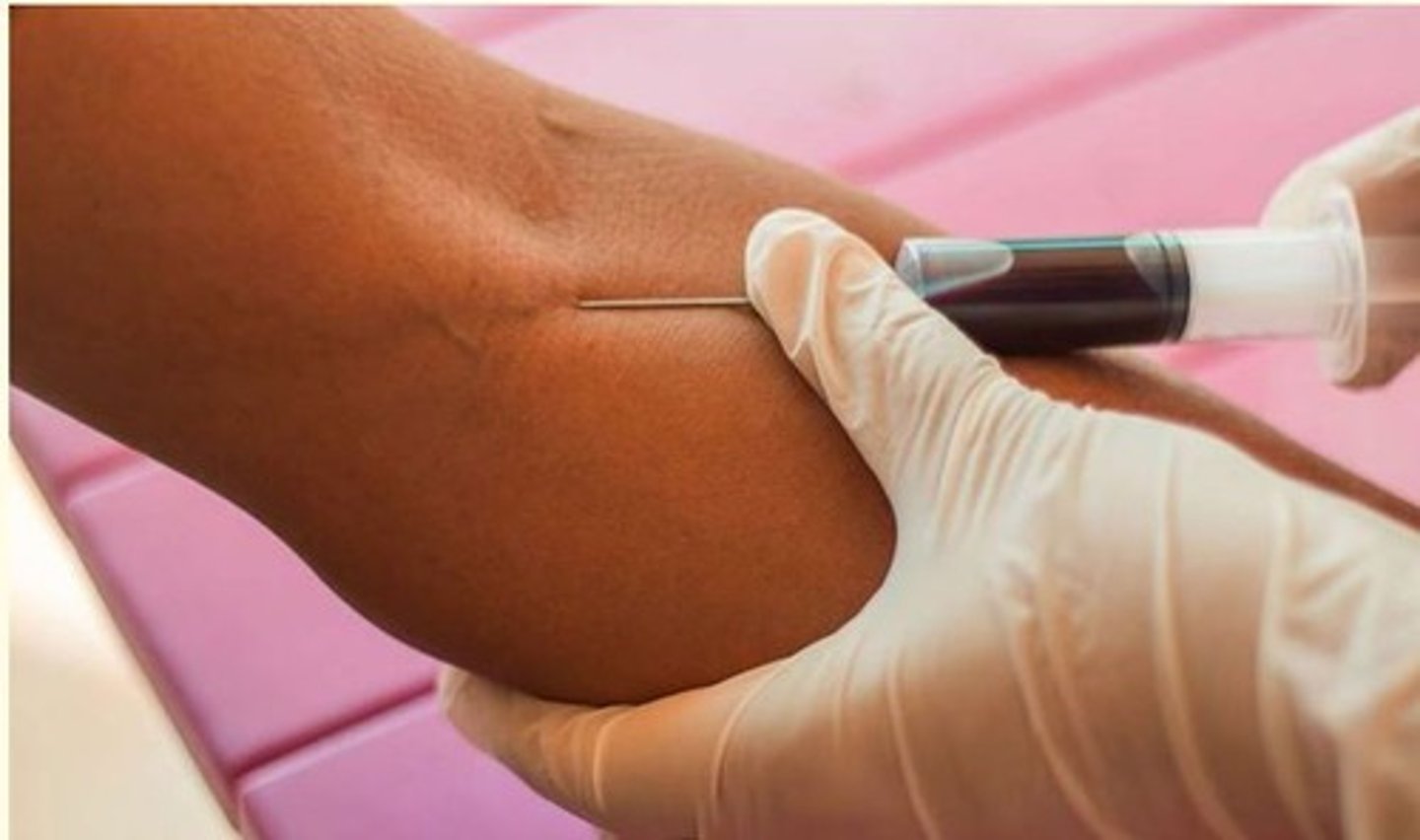
Superficial veins of the upper limb (e.g., cephalic) are clinically important and used for what?
- Venipuncture
- Blood transfusion
- Cardiac catheterization
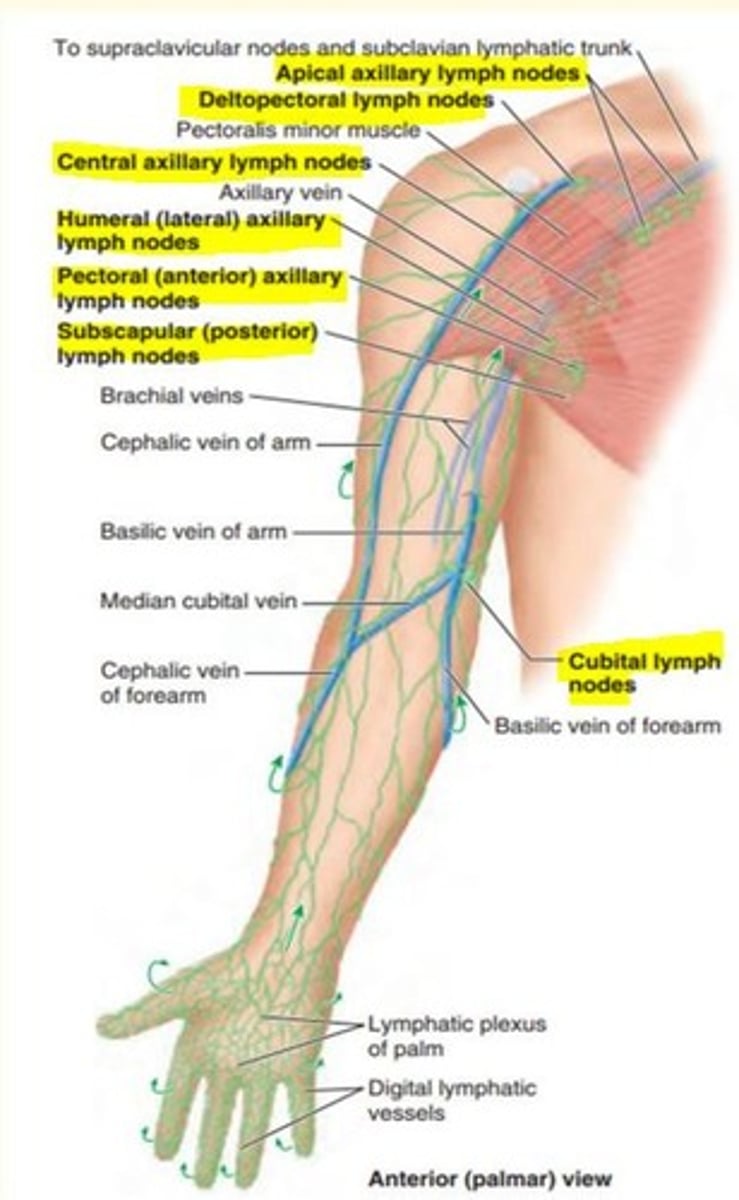
Lymphatic drainage of the upper limb
Lymph drains into superficial and deep lymph nodes associated with superficial and deep veins
- Eventually they drain to axillary lymph nodes which drain to subclavian trunk (empties into R/L lymphatic ducts)
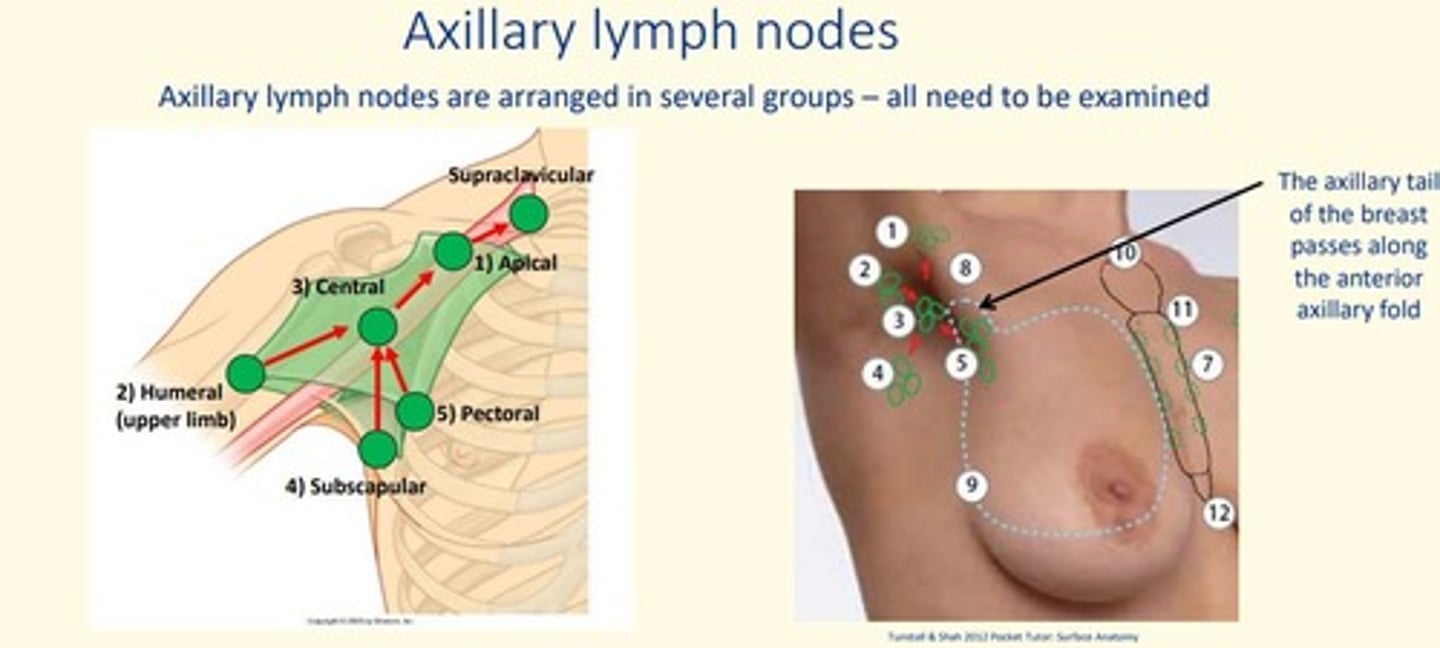
- Axillary lymph nodes also receive superficial lymph nodes of the anterior thoracic wall and upper quadrant of anterior abdominal wall
Lymph nodes
Bean shaped nodular aggregates of lymphoid tissue which act as filters with immune function.
Located along lymphatic vessels throughout the body & filters for lymph before it rejoins the venous bloodstream.
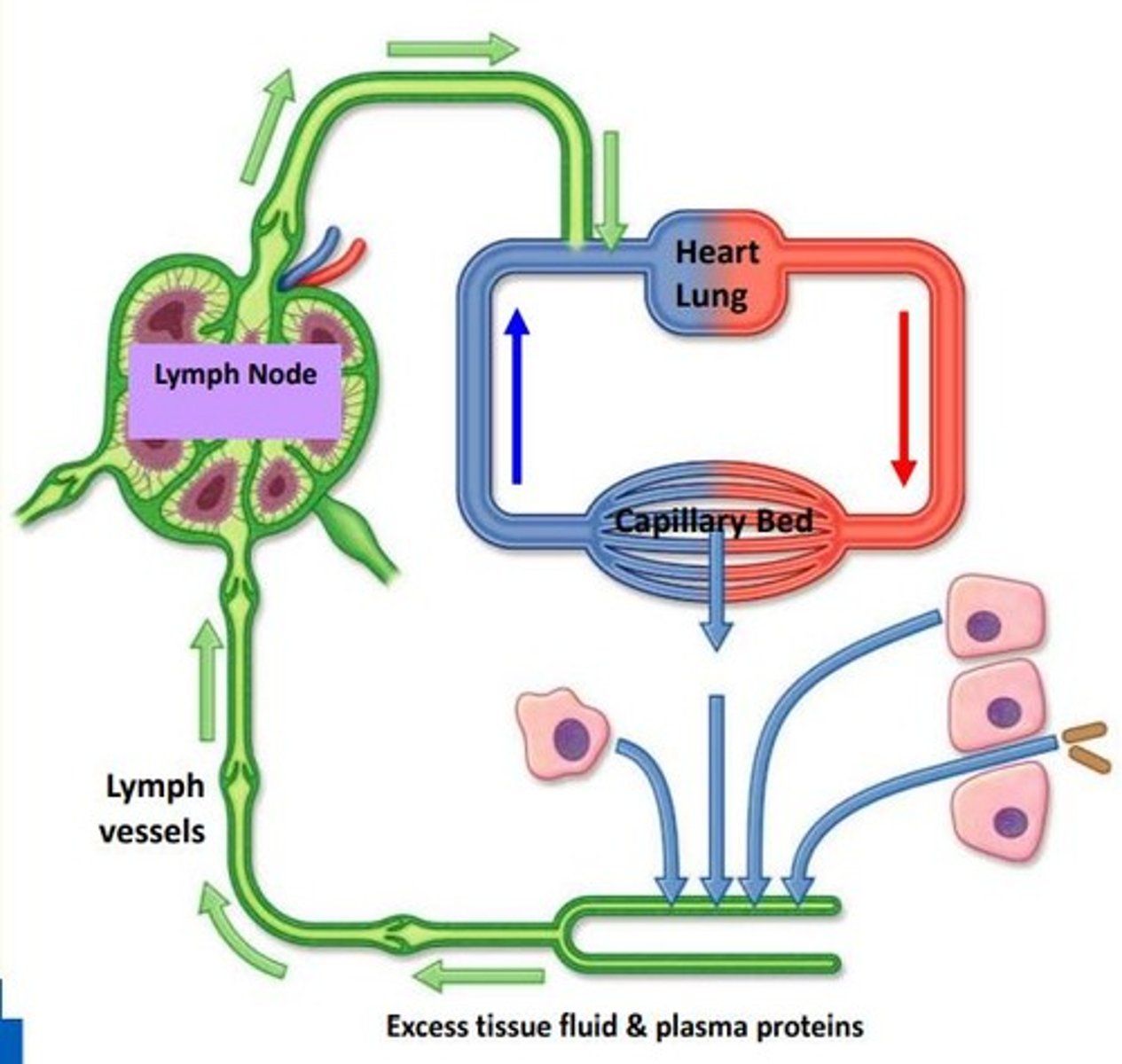
Lymph
Tissue fluid & plasma proteins
Lymphoid tissue
Forms aggregations at body entrances e.g., tonsils, adenoids
Axillary lymph nodes
Concentrated in armpit, receive lymph from upper limb and female breast
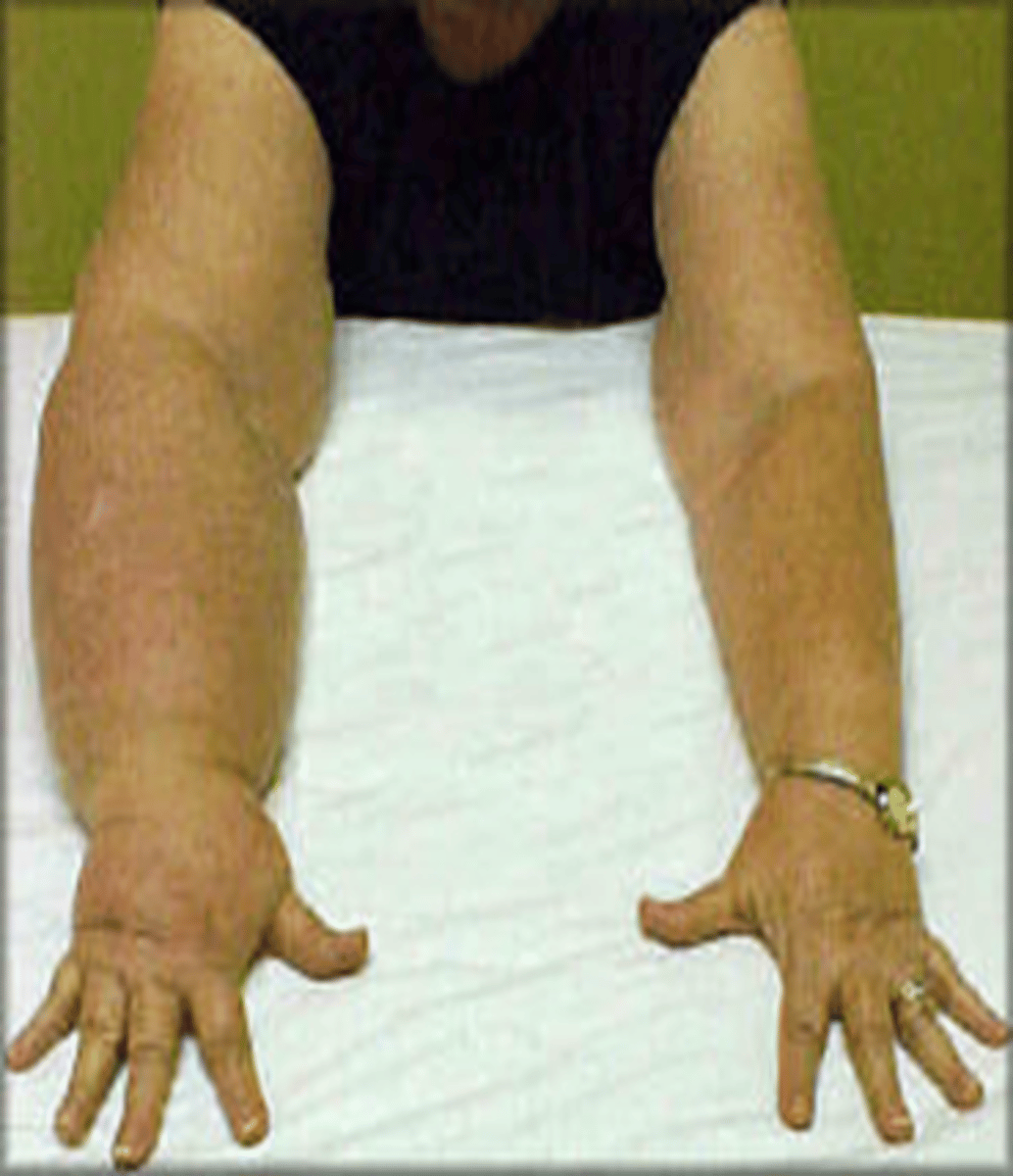
Lymphoedema
Abnormal collection of protein-rich fluid in the intrstitium due to obstruction of lymphatic drainage, resulting in painful swelling.
Primary causes (genetics)
Secondary causes (surgery, radiotherapy or infection)
Removal of nodes can lead to lymphoedema of a limb
Describe how the clavicle plays a role in weight transmission and explain the site where the clavicle is typically fractured & why?
- Clavicle acts as a strut
- Main bone that links appendicular to axial skeleton
- Main bone to transmit entire weight of upper limb to axial skeleton
Typically fractures occur at junction of medial 2/3 to later 1/3. This is because the curvature changes and thus forces impact more at this point, causing fractures here.
The part of the clavicle that articulates with the manubrium is the...
a) Acromial end
b) Sternal end
c) Shaft
d) Coracoid process
b) Sternal end
Regarding scapula; the part/feature that lies between the spine and superior border of the scapula is the...
a) Glenoid cavity
b) Superior angle
c) Suprascapular notch
d) Supraspinous fossa
d) Supraspinous fossa
The three muscles have their origin at the coracoid process are...
a) Long head of biceps, coracobrachialis, pec minor
b) Short head of biceps, pec minor, corachobrachialis
c) Short head of biceps, long head of biceps, corachobrachialis
d) Corachobrachialis, pec major, short head of biceps
b) Short head of biceps, pec minor, corachobrachialis
The structure that is an extension of the spine of the scapula is called...
a) Glenoid cavity
b) Coracoid process
c) Supraglenoid tubercle
d) Acromion process
d) Acromion process
The short, hook-like bony process of the scapula that is palpable in living subject just below the lateral third of clavicular shaft is called...
a) Glenoid fossa
b) Acromial process
c) Coracoid process
d) Suprasternal notch
c) Coracoid process
A 54 year old lady is diagnosed with cancer in her right breast. She undergoes staging and it is found that the breast tumour has invaded locally into the muscle below, as well as having positive lymph nodes.
Which muscle will the tumour have first invaded into?
Pectoralis major
Where is the most common site for a clavicular fracture to occur?
Middle third of the clavicle
What artery passes behind the middle of the clavicle and becomes named something different once crossing rib 1?
Subclavian artery
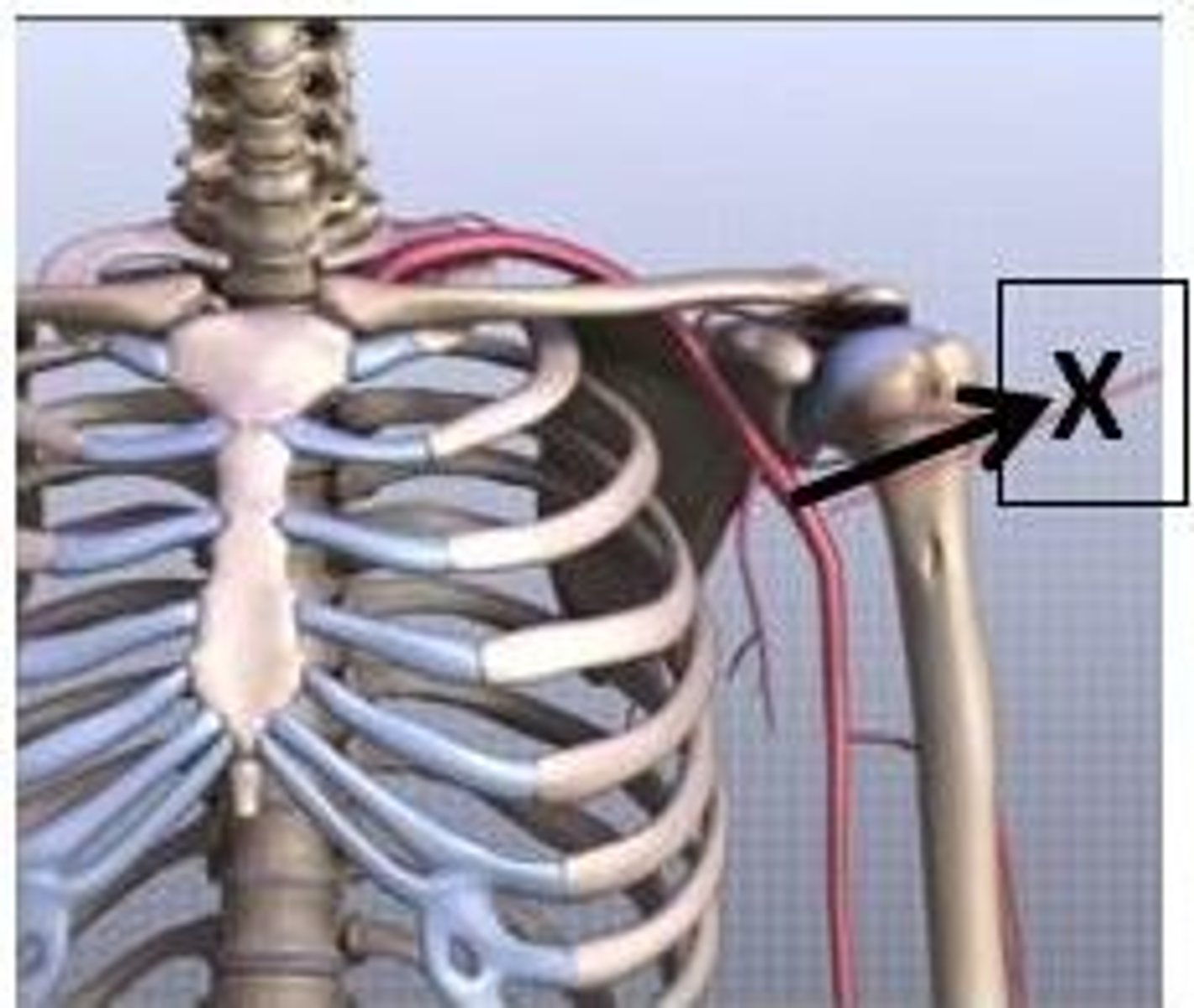
a) Identify the artery labelled X
b) Name the site at which the clavicle typically fractures
a) Axillary artery
b) Junction of its two curves (medial 2/3 & lateral 1/3)
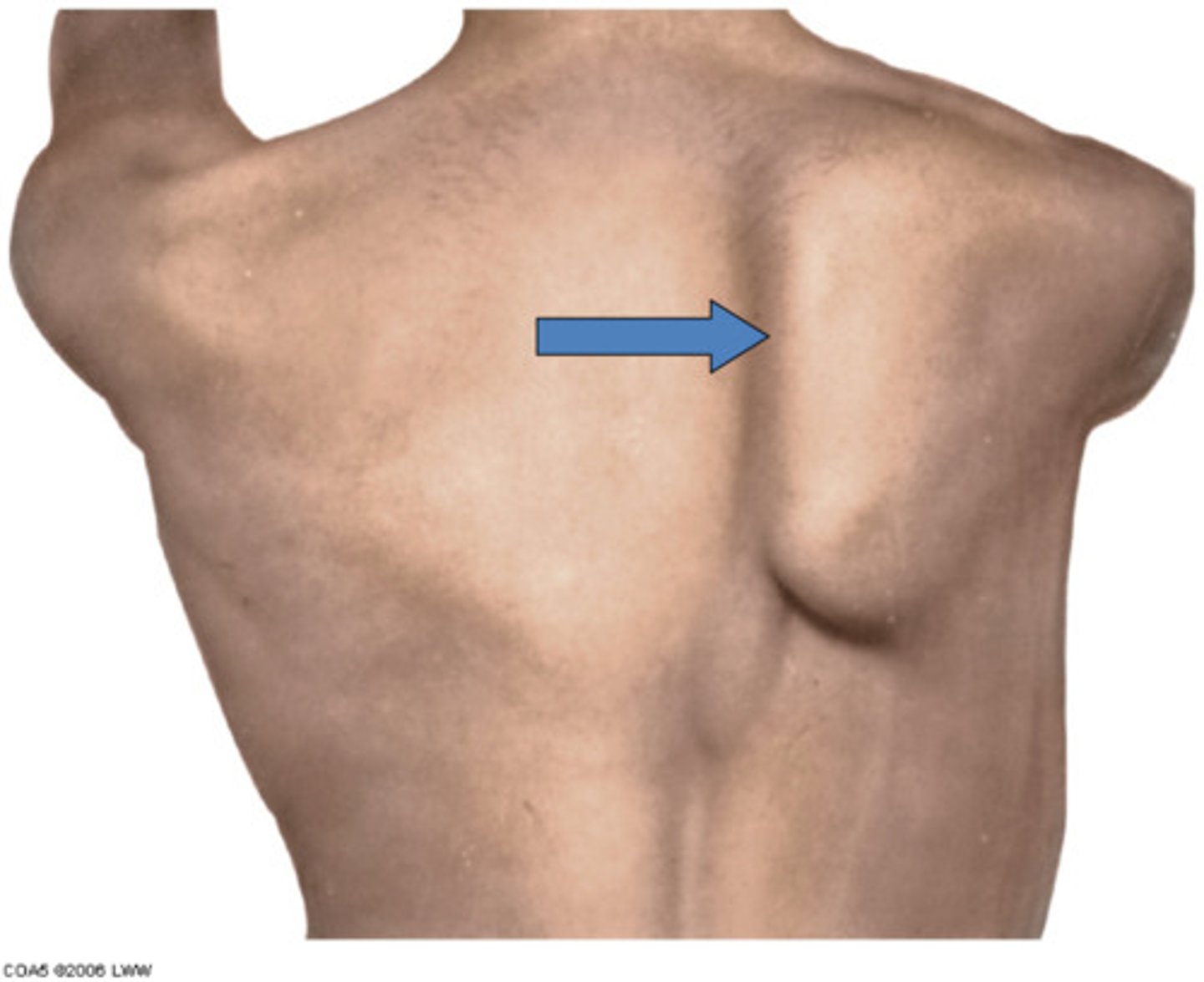
Damage to the long thoracic nerve (which innervates serratus anterior) in breast surgery with axillary node clearance leads to what observable sign?
Scapula winging