Anatomy - Unit 1, Region 3, Kaltura 2
 Call Kai
 Learn
Learn Practice Test
 Spaced Repetition
 Match
Match Flashcards
 Knowt Play
1/15

Earn XP
Description and Tags
Autonomic Nervous System Anatomy (GVE/GVA nerves)
Name | Mastery | Learn | Test | Matching | Spaced | Call with Kai | Chat |
|---|
No analytics yet
Send a link to your students to track their progress
16 Terms
CNS
brain and spinal cord
PNS
all the neurons that live outside of the CNS and their axons
includes neurons in the retina, skin, muscles, dorsal root ganglia, and autonomic ganglia (sympathetic and parasympathetic)
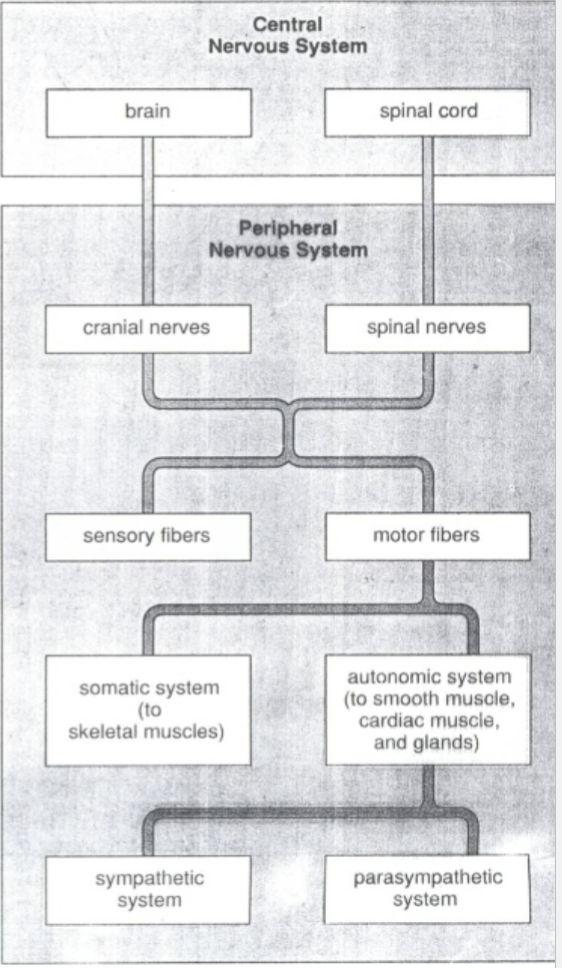
explain the systems or neurons between the PNS and CNS
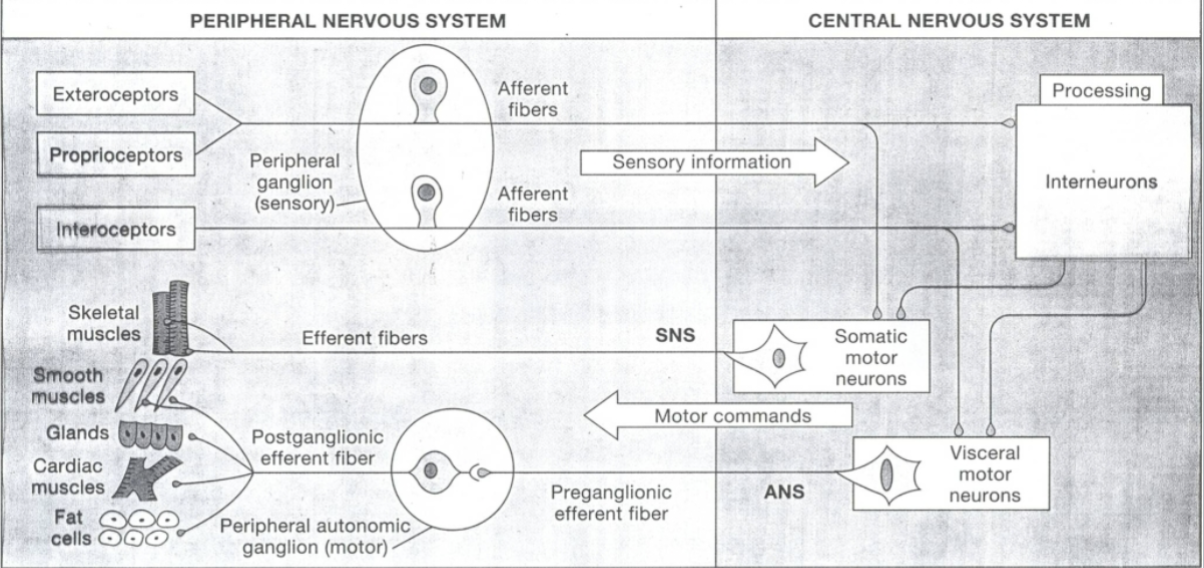
Exteroceptors (PNS)
detect things outside the body (touch, temperature, pain, pressure)
send info through afferent fibers (info TO the CNS)
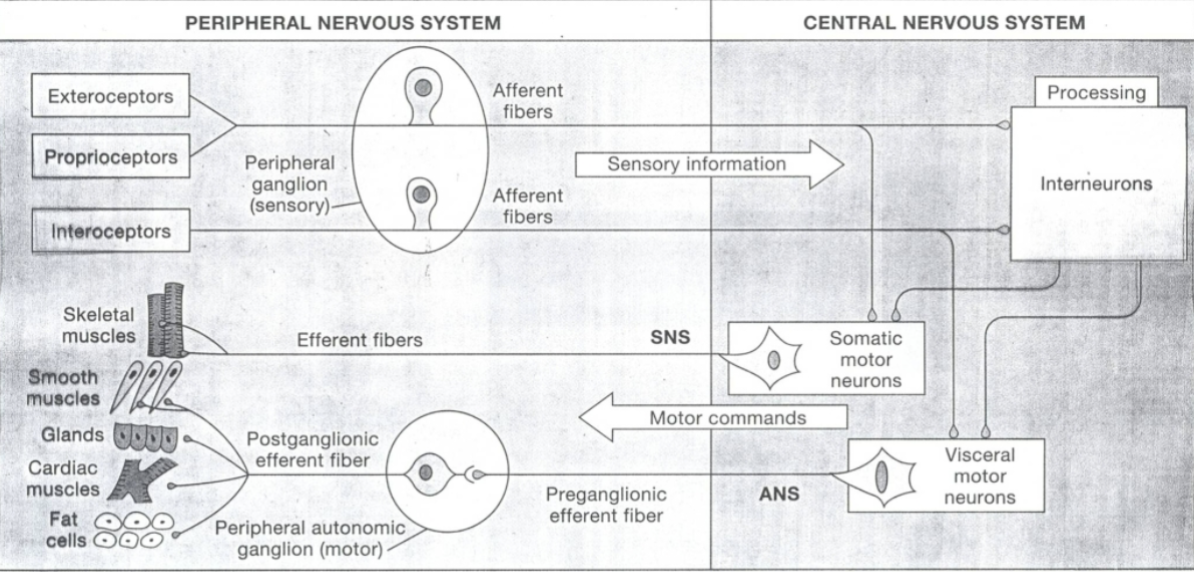
Proprioceptors (PNS)
detect body position and movement (muscle stretch, joint position, where limbs are in space)
send info through afferent fibers (info TO the CNS)

Interoceptors (PNS)
detect conditions inside the body (blood pressure, organ stretch, blood chemistry, internal temperature)
send info through afferent fibers (info TO the CNS)

interneurons (CNS)
processing sensory information, connect that to motor responses, determine what should occur

efferent fibers
neurons leaving the brain, divided into somatic nervous system (SNS) and autonomic nervous system (ANS)
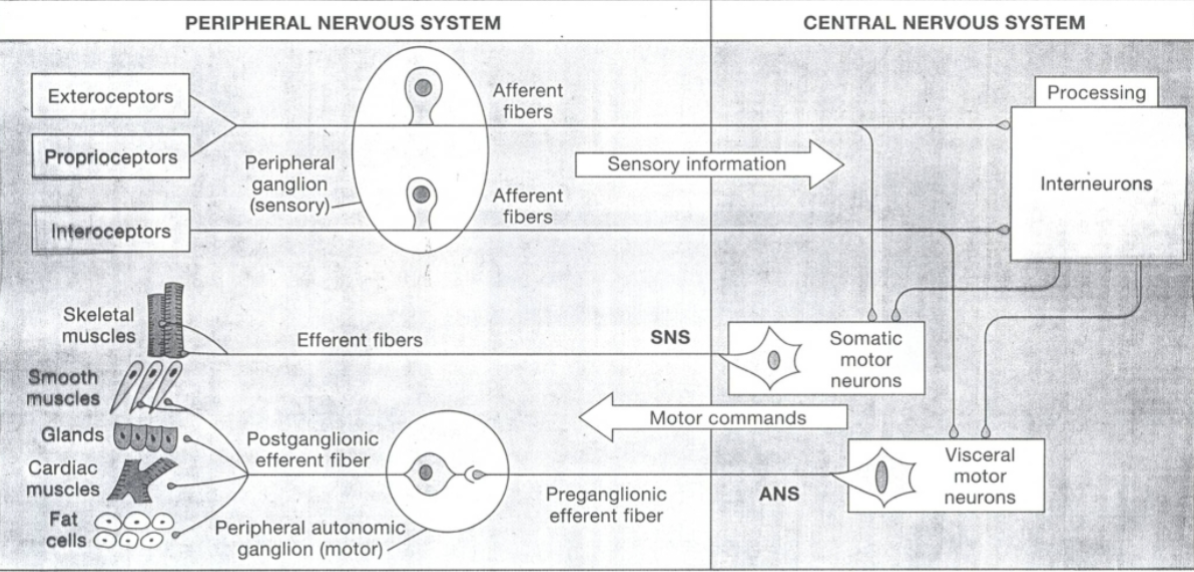
Somatic Nervous System (SNS)
controls skeletal muscles, voluntary movement
uses somatic motor nerves
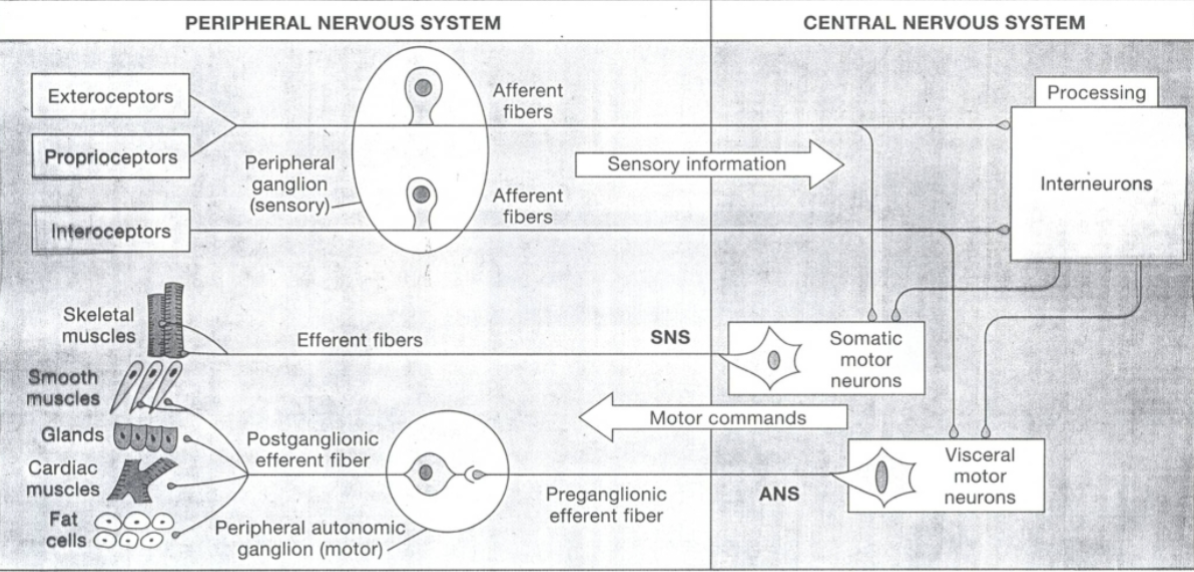
Autonomic Nervous System (ANS)
controls automatic things rather than voluntary, ex: smooth muscle, cardiac muscle, glands, fat cells
has 2 neurons!!!! (pre and postganglionic neuron)
uses visceral (afferent and efferent) nerves

Peripheral ganglia
collection of neuron cell bodies in the PNS

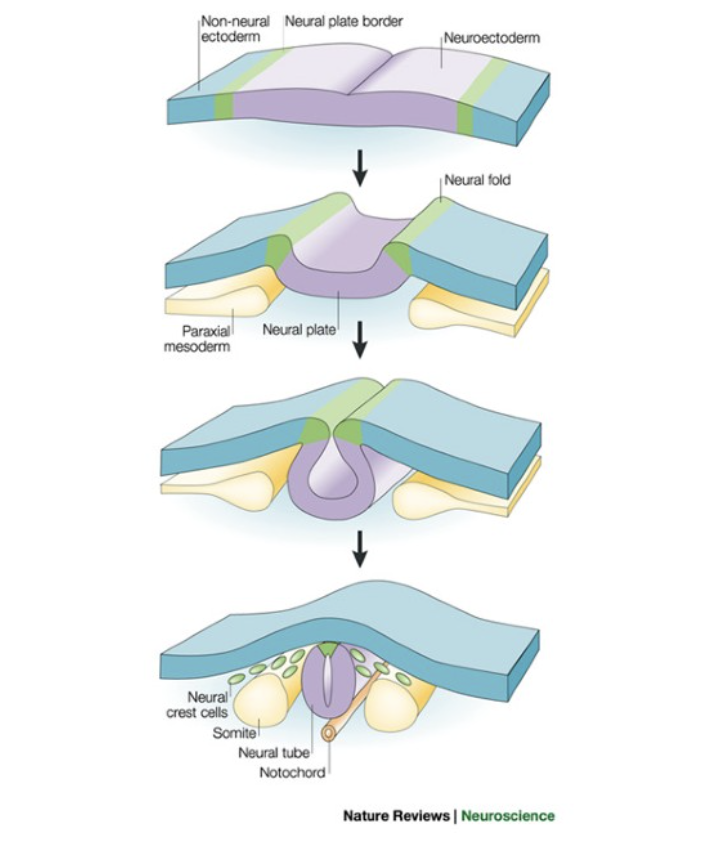
neural crest cells
fold underneath epidermis, form most of peripheral nervous system (mostly autonomic nervous system)
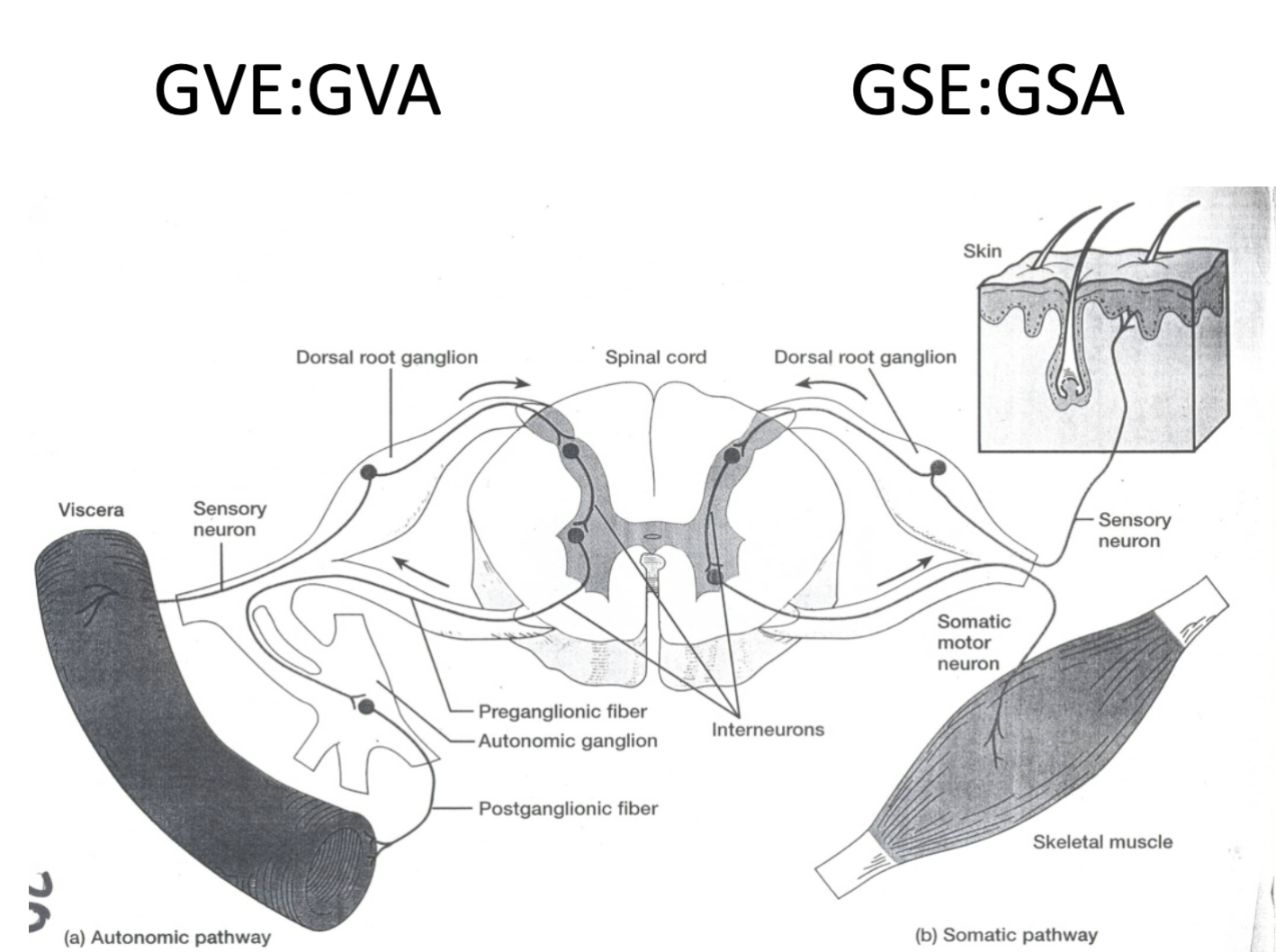
general visceral efferent (GVE) fibers
motor nerve fibers of autonomic nervous system, sneds signals to smooth/cardiac muscle, and glands


general visceral afferent (GVA) fibers
sensory nerve fibers that carry signals from internal organs, gland, and blood vessels to central nervous system

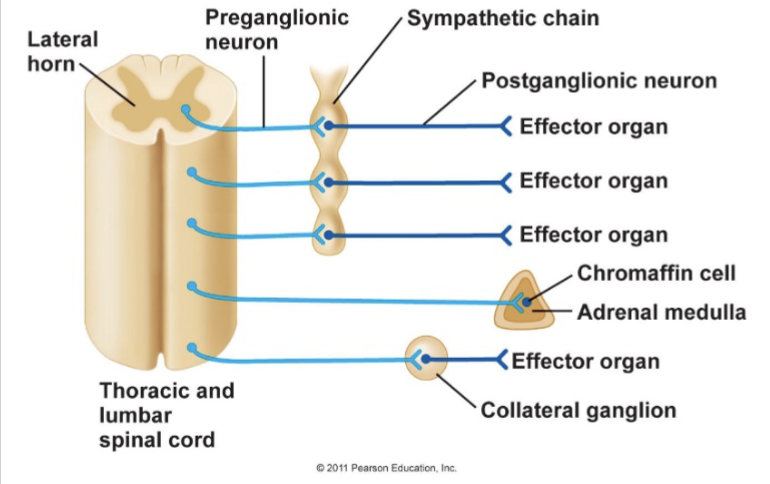
sympathetic nerves
short pre-ganglionic neuron, long post-ganglionic neuron
triggers fight or flight, very active and fast in organs, agonist
arrive from T1-L2 of spinal cord, have 4 different pathway options (see whiteboard diagram aka parts with ganglia on image)
parasympathetic nerves
long pre-ganglionic neuron, short post-ganglionic neuron
down regulates organ, antagonist (keeps our body regulated)
