CELL THEORY
 Call Kai
 Learn
Learn Practice Test
 Spaced Repetition
 Match
Match Flashcards
 Knowt Play
1/31

There's no tags or description
Looks like no tags are added yet.
Name | Mastery | Learn | Test | Matching | Spaced | Call with Kai | Chat |
|---|
No analytics yet
Send a link to your students to track their progress
32 Terms
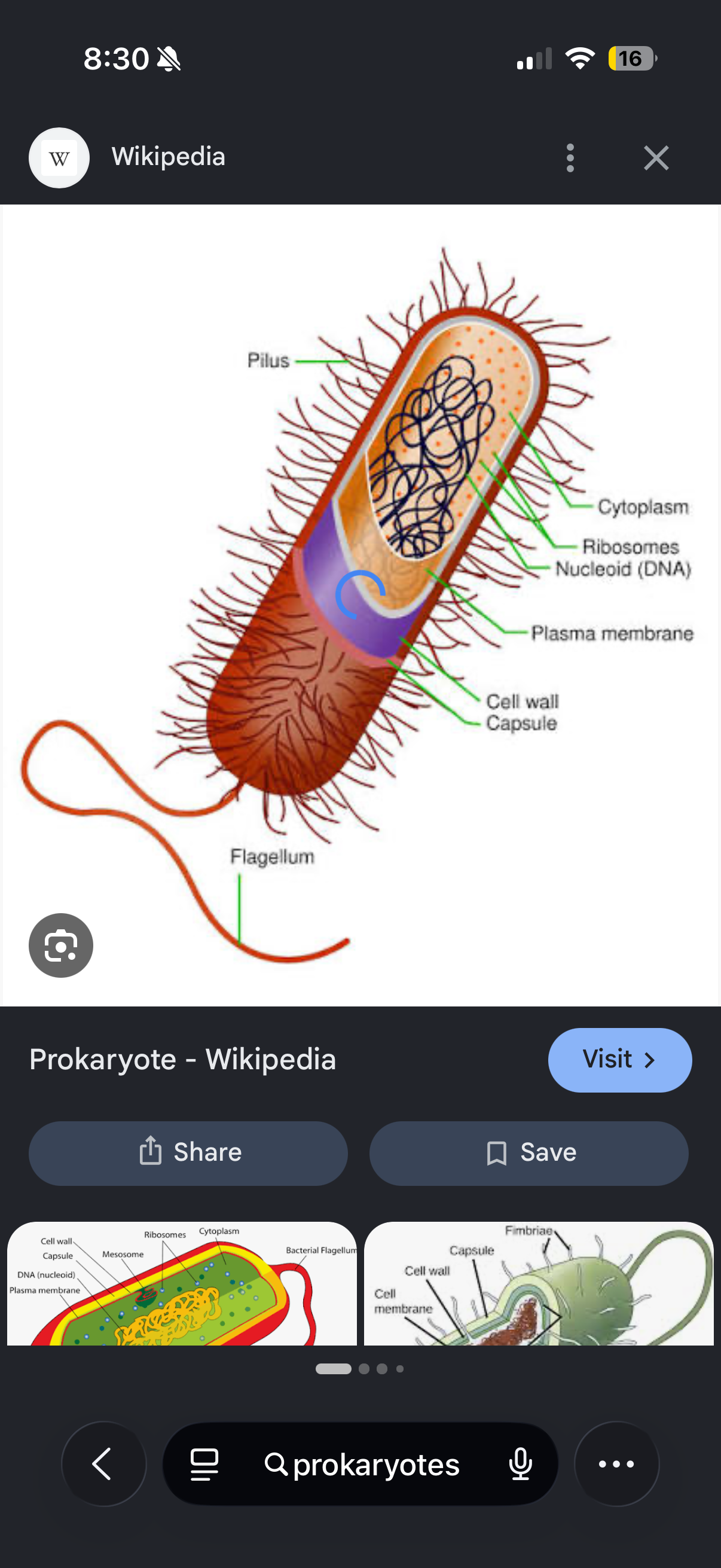
Prokaryotes
no membrane n membrane organelles
Cells reproduce through binary fission
Found in unicellular organisms
DNA is naked
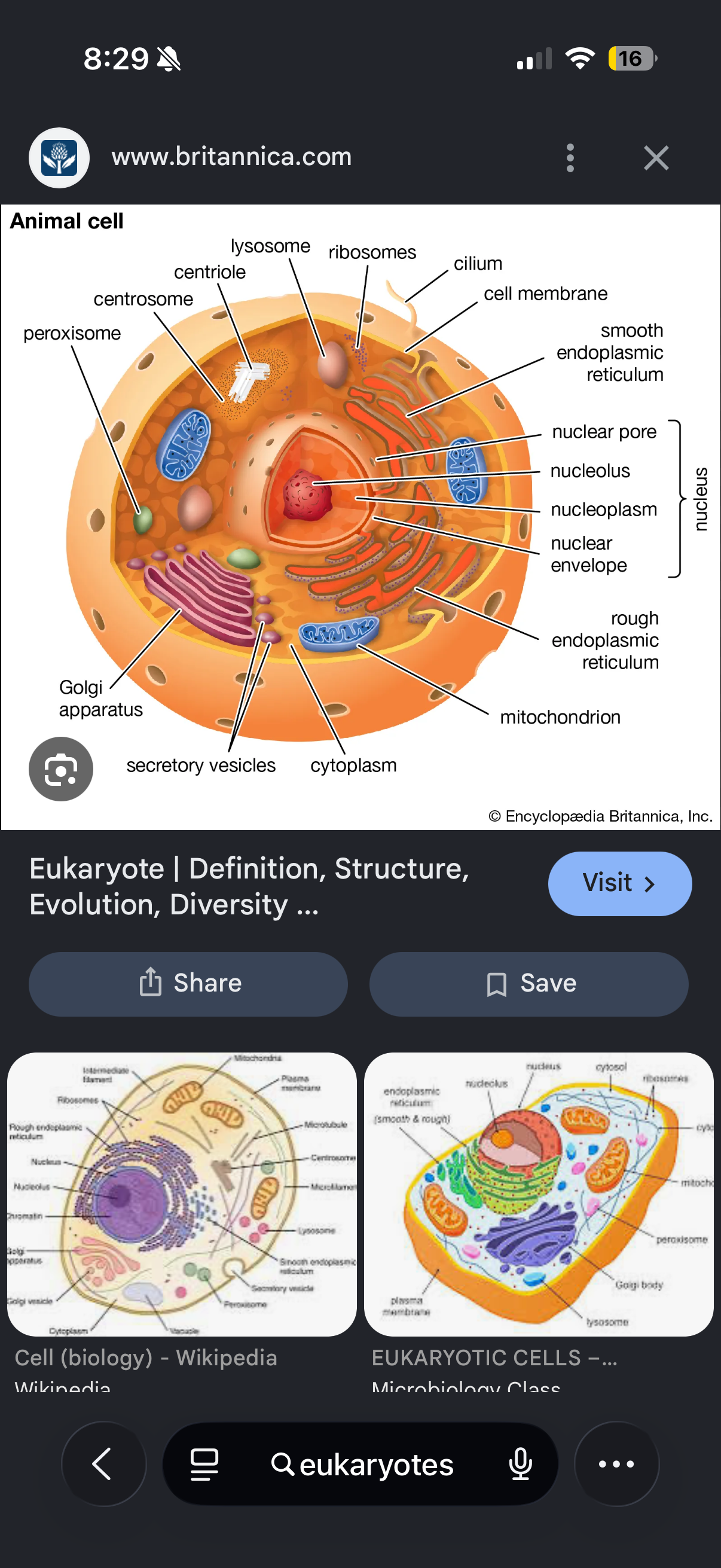
Eukaryotes
found in both uni and multi cellular organisms
Have membrane n membrane organelles
Cells reproduce through mitosis and meiosis
No nucleus
Nucleus
control centre of DNA
Contains DNA
Cell membrane
Controls what enters and leaves the cell
Cell theory
found in all living organisms
Cells come from pre existing cells
Are the basic unit of life
Cytoplasm
Jelly like fluid where organelles are found and chem reactions occur
Ribosomes
make protein
What structures are found in both plant and animal cells
Cell membrane
Cytoplasm
Nucleus
Mitochondria
Ribosomes
What structures are found only in plant cells?
Cell wall
Chloroplasts
Large central vacuole
What is the function of the cell wall
Provides:
support protection and maintains the cells shape
Why don’t animal cells have chloroplasts?
Don’t preform photosynthesis and obtain energy by eating food
Why don’t animals have a cell wall?
Need flexibility for movement and different shapes
Cell transport
The movement of substances in and out of the cell through the cell membrane
What is diffusion
Movement of molecules from an area of high concentration to low concentration
What is osmosis?
Movement of water across membrane from high water concentration to low water concentration
What is active transport
movement of substance using ATP from low to high concentration
What type of transport requires ATP?
Active transport
Which type of transport moves from high concentration to low concentration?
Passive transport (diffusion and osmosis)
What does concentration gradient mean?
Difference in concentration of a substance between two areas
What is a selectively permeable membrane?
A membrane that allows some substances to pass through but block others
Which transport process only moves water?
Osmosis
During diffusion which directions to molecules move?
From high concentration to low
During active transport which direction do molecules move?
From low to high concentration using ATP
Mitochondria
Power house of the cell
Preforms aerobic respiration
Glucose to ATP
How do plants and animals obtain their enegry?
Plants: autotroph (make their own food) photosynthesis produce glucose and the mitochondria breaks that down into energy
Animals: heterotroph (meaning they have to eat their food)
Photosynthesis
Uses the sun to produce glucose and that’s broken down into ATP by the mitochondria
Vacuoles in plants
Have a single membrane
Fills up space
Can also have digestive functions similar to lysosomes
Stores nutrients
Provides space for waste
Function of the cell wall
support and protection
Compare diffusion, osmosis, passive transport and active transport
Diffusion - moves molecules from high to low
Osmosis- moves water from high to low concentration
Passive transport moves molecules from high concentration to low
Active transport uses ATP and moves molecules from low to high
Lysosome
Found in animals break down bio molecules
Involved in secretion, plasma membrane repair cell signalling and energy metabolism