microbiology lecture exam 1
 Call Kai
 Learn
Learn Practice Test
 Spaced Repetition
 Match
Match Flashcards
 Knowt Play
1/185

There's no tags or description
Looks like no tags are added yet.
Name | Mastery | Learn | Test | Matching | Spaced | Call with Kai | Chat |
|---|
No analytics yet
Send a link to your students to track their progress
186 Terms
Basic shape of all living things
Spherical, cubical & cylindrical
Characteristics of all living things
Internal content - cytoplasm, surrounded by a membrane
DNA (chromosome(s)), ribosomes, metabolic capabilities
Types of cells
Eukaryotic and prokaryotic
Types of eukaryotic cells
Animals, plants, fungi and protist
Types of prokaryotic cells
Bacteria and archaea
Characteristics of eukaryotes
Contain membrane bound organelles
double membrane bound nucleus with DNA
Organized
Characteristics of prokaryotic cells
No nucleus or membrane bound organelles
Unorganized
what are characteristics of life?
reproduction
growth and development
metabolism
movement and irritability
cell support, protection, and storage mechanisms
transport of nutrients and waste
what is a genome?
composed of DNA in chromosomes
what are the different flagellar arrangements?
monotrichous
lophotrichous
amphitrichous
perittrichous

Monotrichous
Single flagellum at one end opl

lophotrichous
small bunches emerging from the same site

amphitrichous
flagella at both ends of cell

peritrichous
flagella dispersed over surface of cell
flagellar responses
chemotaxis
photo taxis
chemotaxis
chemical stimuli ; positive and negative
phototaxis
light stimuli

movement of flagella clockwise results in…
tumbles
movement of flagella counterclockwise results in..
Run


what does fimbriae look like?
fine, proteinaceous, hairlike bristles emerging from the cell surface
function of fimbriae
Adhesion which can lead to infection
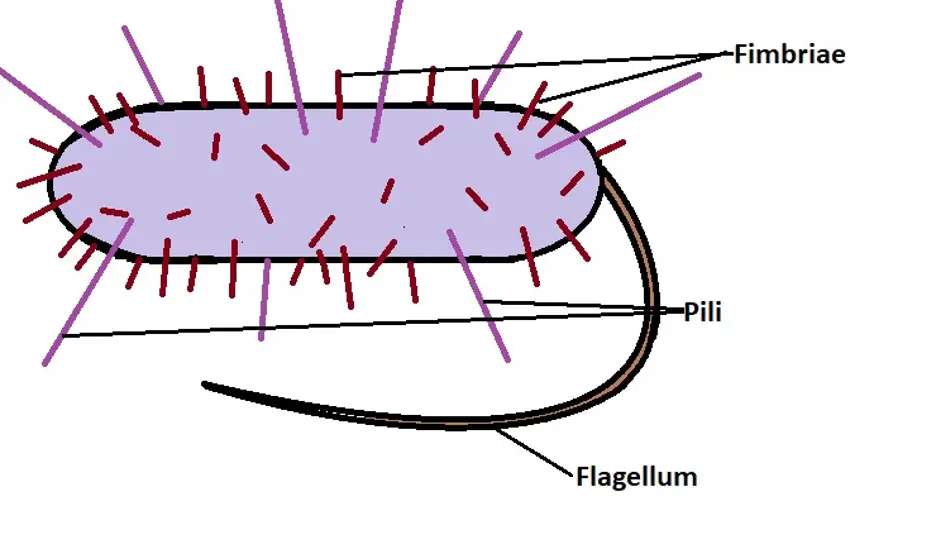
what does pili look like?
rigid hollow tubular structure made of pilin protein
what is the function of Pili?
conjugation- joining of DNA for partial transfer of DNA
Is pili found in gram negative or gram positive bacteria?
Gram negative
what is glycocalyx?
coating of molecules external to the cell wall made of sugars and proteins
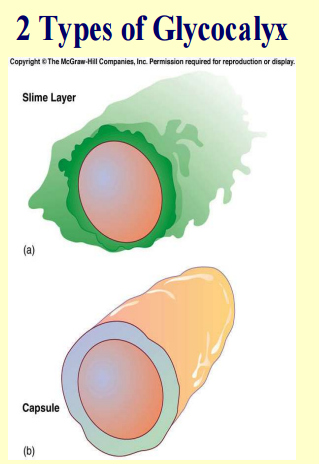
types of glycocalyx
slime layer - loosely organized and attached
capsule- highly organized, tightly attached
functions of glycocalyx
protect from dehydration and nutrient loss
contributes to pathogenicity by preventing white blood cells from destroying them via phagocytosis
attachment - which allows formation of biofilms
what is the cell envelope?
external covering outside of the cytoplasm
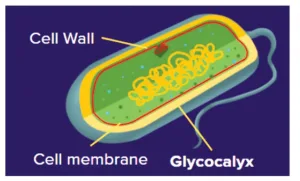
what is the cell envelope composed of?
cell wall and cell membrane
function of cell envelope
maintains cell integrity
Cell envelope in gram positive bacteria
thick cell wall composed of peptidoglycll eean and cell membrane
cell envelope in gram negative bacteria
outer cell membrane, thin peptidoglycan layer and cell membrane
what does the structure of the cell wall determine?
cell shape and prevents lysis due to the changing osmotic pressure
alternate word for cell wall?
peptidoglycan
what is a peptidoglycan?
unique macromolecule found only in bacteria and is composed of long chains of sugar (glycan) cross linked with peptide fragments
gram positive cell wall include which two acids?
Teichoic acid and lipoteichoic acid
what is the function of Teichoic acid and lipoteichoic acid?
cell wall maintaince
enlargement during cell division
move cations across the cell envelope
stimulate specific immune response
periplasmic space in gram positive
thin w
what is per plasmic space?
space between the cell and membrane and cell wall
periplasmic space in gram negative
there’s 2 and in between them is a peptidoglycan
what does a gram negative cell wall look like?
outer membrane, periplasmic space, peptidoglycan, periplasmic space, cell membrane
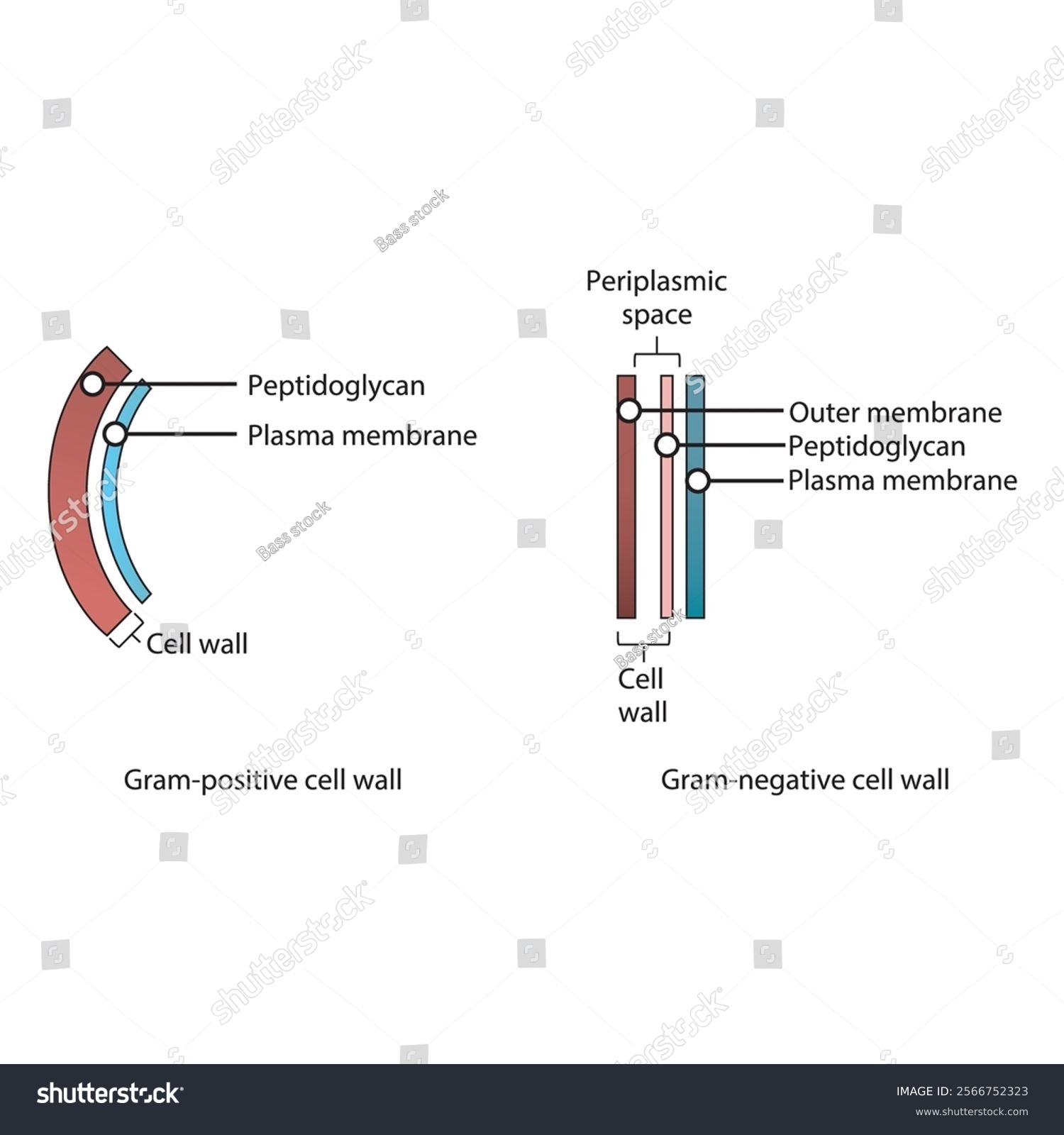
what does the outer membrane of a gram negative bacteria contain?
lipopolysaccharides (LPS) (ONLY IN GRAM NEGATIVE)
function of lipopolysaccharides
may act as receptors and block immune response
Porin
found in lipopolysaccharides in the upper layer
regulate molecules entering and leaving cell
lipid portion in lipopolysaccharides
act as an endotoxin that may become toxin when released during infection
gram postive characteristics
one major layer
overall thicker
NO outer membrane
periplasmic space is narrow
more penetrable to molecules
chemical composition of gram positive bacteria
peptidoglycan
teiichoic acid
lipoteichoic acid
mycotic acids and polysaccharides
characteristics of gram negative bacteria
2 major layers
thin membrane
has an outer membrane
extensive periplasmic space
less penetrable to molecules
chemical composition of gram negative bacteria
lipopolysaccharide
lipoprotein
peptidoglycan
porin proteins
what is the purpose of a gram stain
help us distinguish between gram negative and gram positive bacteria
helps us classify bacteria
aids in diagnosing infection and treatment
what does gram positive retain or lose and how does it stain?
retains crystal violet and stains purple
what does gram negative retain or lose and how does it stain?
loses crystal violet and stains red from safranin
why does the crystal violet wash out in gram negative bacteria?
because peptidoglycan is thin therefore it washes out and gram positive stains purple
what stain is used to classify non typical cell walls?
acid- fast stain
examples of nontypical cell walls
mycobacterium and nocardia
examples of bacteria with no cell walls
mycoplasma
what are bacterias with no cell wall stabilized by?
sterols
bacteria with no cell wall are…
pleomorphic
what is a fluid mosaic model?
phospholipid bilayer with embedded proteins
what are the functions of the cell membrane?
interaction with the environment
providing site for energy reactions, nutrient processing and synthesis
passage of nutrients into the cell and discharge of wastes
cell membrane is selectively permeable
what is a chromosome?
single, circular, double stranded DNA molecule that contains all the genetic information required by a cell
what are plasmids?
free small circular, double stranded DNA
not essential to bacterial to bacterial growth and metabolism
what are plasmids used for?
genetic engineering - readilyy manipulated and transferred from cell to cell hew
where are plasmids found?
found in some bacteria but not all and can be in the nuceloid region or free floating
what are ribosomes made of?
60% ribosomal RNA and 40% protein
where are ribosomes found?
in all cells
what is the function of a ribosome?
protein synthesis
how do ribosomes differ in prokaryotic vs eukaryotic?
size and number od proteins
what are inclusion and granules
intracellular storage bodies
can vary in size, number and content
they are used when environmental sources are depleted
cytoskeleton
made up of actin filament
posses internal network of protein polymers that are closely associated with the cell wall
how are endospores produced?
produced by G+ genera
what are its two phase life cycle?
vegetative (metabolically actively and growing) and endospore (capable of high resistance and very long term survival
what is sporulation?
formation of endospores
withstands extremes in heat, drying, freezing, radiation and chemicals
cannot reproduce
what is germination?
return to vegetative growth
vegetative to spore (conditions are bad)
sporulation
spore to vegetative (conditions are good)
germination
what are endospores?
dehydrated cells that are metabolically inactive with thick coat/cuticle
how old are the oldest spores?
250 million
endospores condition (what kill them and what doesn’t)
are resistant to cleaning methods and boiling but pressurized steam at 120 degrees celsius for 20-30mins will destroy them.
what are the different shapes of bacteria?
Coccus, Bacillus and Spirillum
other types of bacillus
coccobacillus and vibrio

other types of spirillum
spirochete - spring like
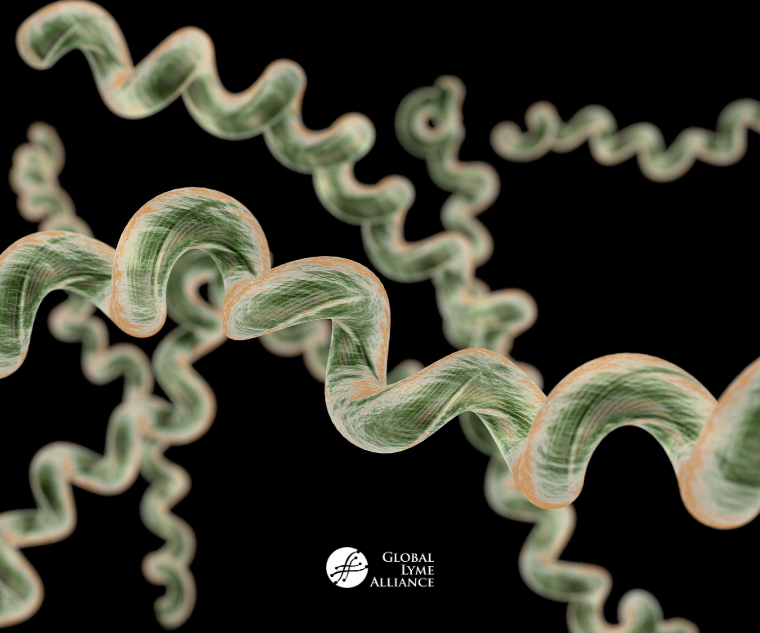
what is pleomorphism?
variation in cell shape and size within one species ex. mycoplasma
arrangement of cocci
singles
diplococci - in pairs
tetrads - groups of 4
irregular clusters
chains
cubical packets
arrangement of bacilli
diplobacilli
chains
palisades - raw shaped bacteria that line like a picket fence
domain Archaea
adapted to extreme habitats and modes of nutrition
domain bacteria
phylum proteobacteria - gram negative cell walls
phylum firmicutes - mainly gram positive
phylum actinobacteria - gram positive
what are the three types of species
bacteria, archaea and eukaraya
what is the endosymbiotic theory?
eukaryotes come from prokaryotes that engulfed each other eventually evolving together until they are no longer separated
nucleus development and membrane folding
engulfment
symbiosis - temporary
coevolution - permanent
modern eukaryotes with organelles that have function
when did eukaryotes first appear?
2 billion years ago
different types of eukaryotes
Fungi, algae, protozoa and parasitic worms
what is fungi
harmless heterotrophic saprobes (living organisms) that live off dead plants and animals
some are parasites living on tissues of other organisms but are not obligate ( made to bind)
very widespread in many habitats
define mycoses
fungal infections
common fungal infections
athletes foot & ring worm
candidiasis
aspergillosis
blastomycosis
valley fever/ Coccidioidomycosis
histoplasmosis
Athletes foot and ring worm
caused by trichophyton mentagrophytes
candidiasis
caused by Candida albicans
vaginal yeast infection
oral thrush
Aspergillosis
cause by Aspergillus
respiratory infection & allergy to spores
blastomycosis
caused by blastomyces
respiratory infection from Ohio or Mississippi River resulting in flue like symptoms and fungal spores
Valley fever/ Coccidioidomycosis
caused by coccidioides
respiratory infection with flu like symptoms& rash in southern western US
Histoplasmosis
caused by histoplasma
respiratory infection from soil that contains large amount of bird or bat droppings