ECG

0.0(0)
Studied by 0 people
call kaiCall Kai
Locked
learnLearn
examPractice Test
spaced repetitionSpaced Repetition
heart puzzleMatch
flashcardsFlashcards
GameKnowt Play
Card Sorting

1/16

encourage image

There's no tags or description

Looks like no tags are added yet.

Last updated 1:36 AM on 9/9/26
Name
Mastery
Learn
Test
Matching
Spaced
Call with Kai
Chat

No analytics yet

Send a link to your students to track their progress

17 Terms

1
New cards

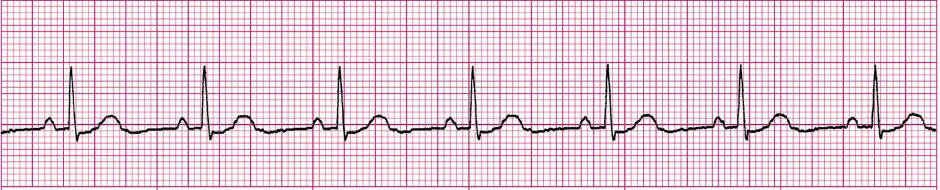
sinus rhythm

knowt flashcard image
2
New cards

sinus bradycardia

  • SA node fires at less than 60 bpm

  • Stable tx

    • Oxygen

    • Meds/monitor pt

    • Consider pacing later 

  • Unstable tx

    • Oxygen

    • Meds

    • Prepare for temporary pacing (pads)

  • Meds: atropine 1 mg q 3-5 min (3 mg max)

    • You only tx if symptomatic (dizzy, lightheaded, blurry vision, syncope, hotn, pallor, cold clammy skin)


<ul><li><p><span style="background-color: transparent;">SA node fires at less than 60 bpm</span></p></li><li><p><span style="background-color: transparent;">Stable tx</span></p><ul><li><p><span style="background-color: transparent;">Oxygen</span></p></li><li><p><span style="background-color: transparent;">Meds/monitor pt</span></p></li><li><p><span style="background-color: transparent;">Consider pacing later&nbsp;</span></p></li></ul></li><li><p><span style="background-color: transparent;">Unstable tx</span></p><ul><li><p><span style="background-color: transparent;">Oxygen</span></p></li><li><p><span style="background-color: transparent;">Meds</span></p></li><li><p><span style="background-color: transparent;">Prepare for temporary pacing (pads)</span></p></li></ul></li><li><p><span style="background-color: transparent;">Meds: atropine 1 mg q 3-5 min (3 mg max)</span></p><ul><li><p><span style="background-color: transparent;">You only tx if symptomatic (dizzy, lightheaded, blurry vision, syncope, hotn, pallor, cold clammy skin)</span></p></li></ul></li></ul><p></p>
3
New cards

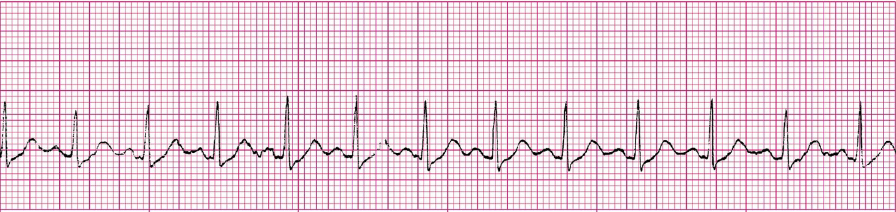
sinus tachycardia

  • SA nodes fire at greater than 100 bpm

  • Tx

    • ID cause

    • May use beta blockers

  • Unstable

    • Immediate synchronized cardioversion


<ul><li><p><span style="background-color: transparent;">SA nodes fire at greater than 100 bpm</span></p></li><li><p><span style="background-color: transparent;">Tx</span></p><ul><li><p><span style="background-color: transparent;">ID cause</span></p></li><li><p><span style="background-color: transparent;">May use beta blockers</span></p></li></ul></li><li><p><span style="background-color: transparent;">Unstable</span></p><ul><li><p><span style="background-color: transparent;">Immediate synchronized cardioversion</span></p></li></ul></li></ul><p></p>
4
New cards

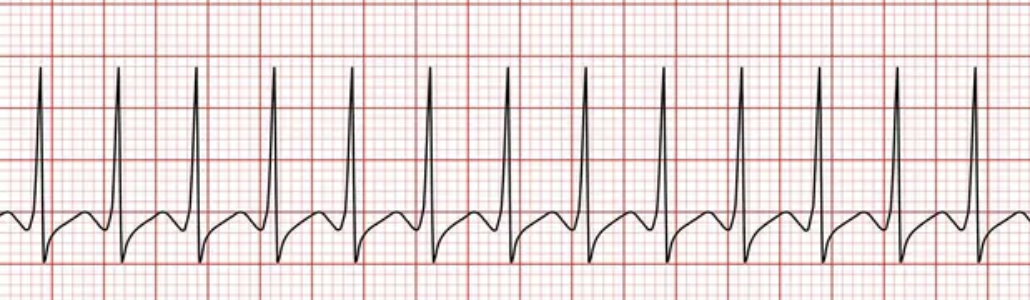
supraventricular tachycardia (SVT)

  • Abruptly starts and stops

  • Abnormal or hidden P wave (too fast to see)

  • Meds and perform diagnostic measures

  • Vagal stimulation

  • Adenosine (acts on receptors in the cardiac AV node, so push fast)

  • Synchronized cardioversion


<ul><li><p><span style="background-color: transparent;">Abruptly starts and stops</span></p></li><li><p><span style="background-color: transparent;">Abnormal or hidden P wave (too fast to see)</span></p></li><li><p><span style="background-color: transparent;">Meds and perform diagnostic measures</span></p></li><li><p><span style="background-color: transparent;">Vagal stimulation</span></p></li><li><p><span style="background-color: transparent;">Adenosine (acts on receptors in the cardiac AV node, so push fast)</span></p></li><li><p><span style="background-color: transparent;">Synchronized cardioversion</span></p></li></ul><p></p>
5
New cards

atrial fibrillation

  • Atria fire rapidly from multiple foci (total disorganization)

  • Irregularly irregular appearance of P waves (no sinus rhythm)

  • Symptomatic symptoms: palpitations, hotn, weakness, dizziness, SOB, angina

  • Tx

    • Rate control

      • Goal is <100 bpm

      • CCB, B blockers, dig

      • Cardioversion

    • Prevent embolic events

      • Anticoagulation

    • Conversion to sinus rhythm


<ul><li><p><span style="background-color: transparent;">Atria fire rapidly from multiple foci (total disorganization)</span></p></li><li><p><span style="background-color: transparent;">Irregularly irregular appearance of P waves (no sinus rhythm)</span></p></li><li><p><span style="background-color: transparent;">Symptomatic symptoms: palpitations, hotn, weakness, dizziness, SOB, angina</span></p></li><li><p><span style="background-color: transparent;">Tx</span></p><ul><li><p><span style="background-color: transparent;">Rate control</span></p><ul><li><p><span style="background-color: transparent;">Goal is &lt;100 bpm</span></p></li><li><p><span style="background-color: transparent;">CCB, B blockers, dig</span></p></li><li><p><span style="background-color: transparent;">Cardioversion</span></p></li></ul></li><li><p><span style="background-color: transparent;">Prevent embolic events</span></p><ul><li><p><span style="background-color: transparent;">Anticoagulation</span></p></li></ul></li><li><p><span style="background-color: transparent;">Conversion to sinus rhythm</span></p></li></ul></li></ul><p></p>
6
New cards

atrial flutter

  • No sinus rhythm

  • “Saw tooth” pattern to P waves

  • Tx (almost the same as a-fib)

    • Rate control

      • Goal is <100 bpm

      • Amiodarone

      • Cardioversion

    • Prevent embolic events

      • Anticoagulation

    • Conversion to sinus rhythm


<ul><li><p><span style="background-color: transparent;">No sinus rhythm</span></p></li><li><p><span style="background-color: transparent;">“Saw tooth” pattern to P waves</span></p></li><li><p><span style="background-color: transparent;">Tx (almost the same as a-fib)</span></p><ul><li><p><span style="background-color: transparent;">Rate control</span></p><ul><li><p><span style="background-color: transparent;">Goal is &lt;100 bpm</span></p></li><li><p><span style="background-color: transparent;">Amiodarone</span></p></li><li><p><span style="background-color: transparent;">Cardioversion</span></p></li></ul></li><li><p><span style="background-color: transparent;">Prevent embolic events</span></p><ul><li><p><span style="background-color: transparent;">Anticoagulation</span></p></li></ul></li><li><p><span style="background-color: transparent;">Conversion to sinus rhythm</span></p></li></ul></li></ul><p></p>
7
New cards

junctional rhythm

  • Failure of SA node (no sinus rhythm)

  • Ventricle (AV) node takes over as primary pacemaker

  • Intrinsic rate of 40-60 bpm

  • P wave is abnormal, inverted, or hidden

  • Tx

    • Determine cause

    • Avoid electricity


<ul><li><p><span style="background-color: transparent;">Failure of SA node (no sinus rhythm)</span></p></li><li><p><span style="background-color: transparent;">Ventricle (AV) node takes over as primary pacemaker</span></p></li><li><p><span style="background-color: transparent;">Intrinsic rate of 40-60 bpm</span></p></li><li><p><span style="background-color: transparent;">P wave is abnormal, inverted, or hidden</span></p></li><li><p><span style="background-color: transparent;">Tx</span></p><ul><li><p><span style="background-color: transparent;">Determine cause</span></p></li><li><p><span style="background-color: transparent;">Avoid electricity</span></p></li></ul></li></ul><p></p>
8
New cards

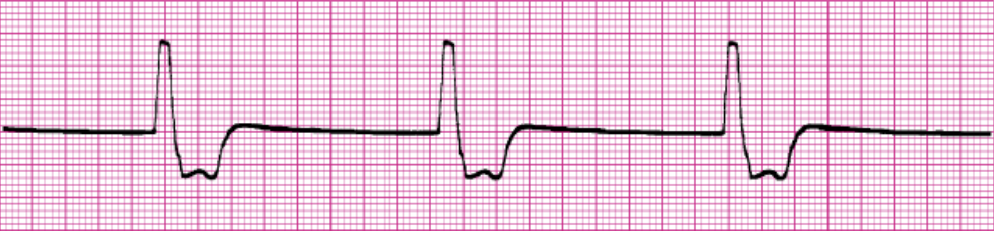
idioventricular rhythm (ventricular escape)

  • Happens after junctional rhythm

  • Failure of SA and node

  • Intrinsic rate of 20-40 bpm

  • Absent P waves

  • Wide QRS

  • Tx

    • Determine cause

    • No electricity 

    • Pacemaker placement


<ul><li><p><span style="background-color: transparent;">Happens after junctional rhythm</span></p></li><li><p><span style="background-color: transparent;">Failure of SA and node</span></p></li><li><p><span style="background-color: transparent;">Intrinsic rate of 20-40 bpm</span></p></li><li><p><span style="background-color: transparent;">Absent P waves</span></p></li><li><p><span>Wide QRS</span></p></li><li><p><span style="background-color: transparent;">Tx</span></p><ul><li><p><span style="background-color: transparent;">Determine cause</span></p></li><li><p><span style="background-color: transparent;">No electricity&nbsp;</span></p></li><li><p><span style="background-color: transparent;">Pacemaker placement</span></p></li></ul></li></ul><p></p>
9
New cards

first degree block

  • Normal sinus rhythm

  • Result PR >0.20

  • Asymptomatic, so no tx


<ul><li><p><span style="background-color: transparent;">Normal sinus rhythm</span></p></li><li><p><span style="background-color: transparent;">Result PR &gt;0.20</span></p></li><li><p><span style="background-color: transparent;">Asymptomatic, so no tx</span></p></li></ul><p></p>
10
New cards

second degree type I block

  • AV node is getting tired, holds the impulse for longer and longer until there is no AV conduction

  • Longer, longer, longer, drop

  • Lengthening PR interval until QRS dropped

  • If symptomatic: atropine, pacer, dopamine (same tx as bradycardia)


<ul><li><p><span style="background-color: transparent;">AV node is getting tired, holds the impulse for longer and longer until there is no AV conduction</span></p></li><li><p><span style="background-color: transparent;">Longer, longer, longer, drop</span></p></li><li><p><span style="background-color: transparent;">Lengthening PR interval until QRS dropped</span></p></li><li><p><span style="background-color: transparent;">If symptomatic: atropine, pacer, dopamine (same tx as bradycardia)</span></p></li></ul><p></p>
11
New cards

second degree type II block

  • Rhythm appears normal until there is a P wave with no QRS

  • PR is fixed (may be normal or long)

  • Symptomatic: atropine, pacer, dopamine (same as type I)


<ul><li><p><span style="background-color: transparent;">Rhythm appears normal until there is a P wave with no QRS</span></p></li><li><p><span style="background-color: transparent;">PR is fixed (may be normal or long)</span></p></li><li><p><span style="background-color: transparent;">Symptomatic: atropine, pacer, dopamine (same as type I)</span></p></li></ul><p></p>
12
New cards

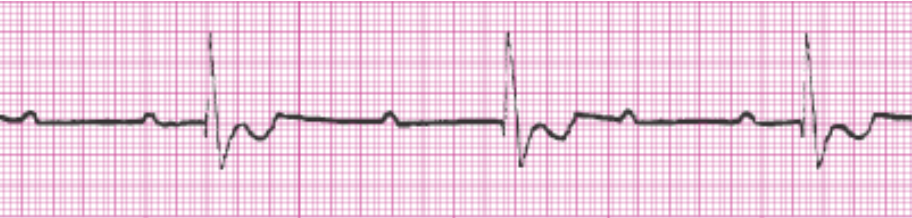
third degree block

  • Atria and ventricles are working independently

  • SA node fires at a constant rate (60-100)

  • Ventricles don't receive impulse so AV junction takes over and fires impulses (15-60)

  • P-P is regular and QRS-QRS is regular, no correlation

  • Tx if symptomatic: pacer, dopamine

    • Atropine does not work because the SA node does not talk to the AV node

<ul><li><p><span style="background-color: transparent;">Atria and ventricles are working independently</span></p></li><li><p><span style="background-color: transparent;">SA node fires at a constant rate (60-100)</span></p></li><li><p><span style="background-color: transparent;">Ventricles don't receive impulse so AV junction takes over and fires impulses (15-60)</span></p></li><li><p><span style="background-color: transparent;">P-P is regular and QRS-QRS is regular, no correlation</span></p></li><li><p><span style="background-color: transparent;">Tx if symptomatic: pacer, dopamine</span></p><ul><li><p><span style="background-color: transparent;">Atropine does not work because the SA node does not talk to the AV node</span></p></li></ul></li></ul><p></p>
13
New cards

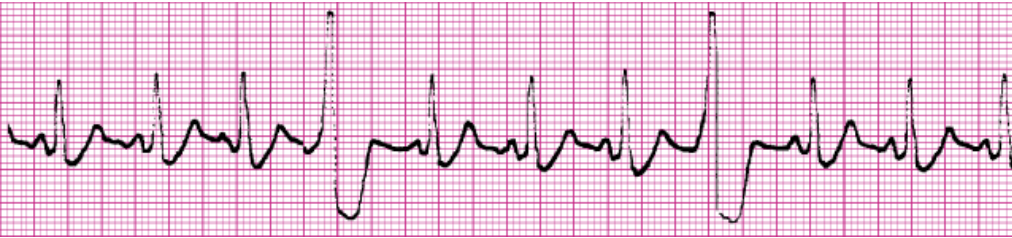
premature ventricular complexes

  • Single irritable focus within the ventricles that fires prematurely to initiate an ectopic beat

  • Regular rhythm with one early beat

  • P waves present except for the early beat

  • Normal QRS except an early beat will be >0.12 seconds

  • Consider lidocaine or procainamide

  • R on T phenomenon

    • PVC lands directly on the T wave during the hearts vulnerable phase

  • Tx is amiodarone or lidocaine bolus then drip

<ul><li><p><span style="background-color: transparent;">Single irritable focus within the ventricles that fires prematurely to initiate an ectopic beat</span></p></li><li><p><span style="background-color: transparent;">Regular rhythm with one early beat</span></p></li><li><p><span style="background-color: transparent;">P waves present except for the early beat</span></p></li><li><p><span style="background-color: transparent;">Normal QRS except an early beat will be &gt;0.12 seconds</span></p></li><li><p><span style="background-color: transparent;">Consider lidocaine or procainamide</span></p></li><li><p><span style="background-color: transparent;">R on T phenomenon</span></p><ul><li><p><span style="background-color: transparent;">PVC lands directly on the T wave during the hearts vulnerable phase</span></p></li></ul></li><li><p><span style="background-color: transparent;">Tx is amiodarone or lidocaine bolus then drip</span></p></li></ul><p></p>
14
New cards

ventricular fibrillation

  • Chaotic firing within the ventricles (electrical problem)

  • No QRS, P waves, or rate

  • No cardiac output, pulse, CO

  • Tx

    • Begin CPR, defibrillate as soon as possible

    • Epinephrine 1 mg 1 3-5 min


<ul><li><p><span style="background-color: transparent;">Chaotic firing within the ventricles (electrical problem)</span></p></li><li><p><span style="background-color: transparent;">No QRS, P waves, or rate</span></p></li><li><p><span style="background-color: transparent;">No cardiac output, pulse, CO</span></p></li><li><p><span style="background-color: transparent;">Tx</span></p><ul><li><p><span style="background-color: transparent;">Begin CPR, defibrillate as soon as possible</span></p></li><li><p><span style="background-color: transparent;">Epinephrine 1 mg 1 3-5 min</span></p></li></ul></li></ul><p></p>
15
New cards

pulseless ventricular tachycardia

  • Ectopic ventricular site takes over as pacer

  • Fires at a rapid rate >100 bpm

  • QRS >0.12 sec

  • Can have a pulse or be pulseless

  • Tx

    • Check pulse

    • If pulse present, prepare for sedation and cardioversion

    • If no pulse present

      • CPR and immediate defibrillation

      • Epinephrine 1 mg q 3-5 min

      • Additional shocks prn immediately followed by CPR

    • Lidocaine, amiodarone 


<ul><li><p><span style="background-color: transparent;">Ectopic ventricular site takes over as pacer</span></p></li><li><p><span style="background-color: transparent;">Fires at a rapid rate &gt;100 bpm</span></p></li><li><p><span style="background-color: transparent;">QRS &gt;0.12 sec</span></p></li><li><p><span style="background-color: transparent;">Can have a pulse or be pulseless</span></p></li><li><p><span style="background-color: transparent;">Tx</span></p><ul><li><p><span style="background-color: transparent;">Check pulse</span></p></li><li><p><span style="background-color: transparent;">If pulse present, prepare for sedation and cardioversion</span></p></li><li><p><span style="background-color: transparent;">If no pulse present</span></p><ul><li><p><span style="background-color: transparent;">CPR and immediate defibrillation</span></p></li><li><p><span style="background-color: transparent;">Epinephrine 1 mg q 3-5 min</span></p></li><li><p><span style="background-color: transparent;">Additional shocks prn immediately followed by CPR</span></p></li></ul></li><li><p><span style="background-color: transparent;">Lidocaine, amiodarone&nbsp;</span></p></li></ul></li></ul><p></p>
16
New cards

pulseless electrical activity (PEA)

  • Electrical activity on the monitor

  • No palpable pulse

  • Electricity is working, but the heart is not pumping

  • Tx

    • CPR

    • Identify and tx cause

    • DO NOT defibrillate


<ul><li><p><span style="background-color: transparent;">Electrical activity on the monitor</span></p></li><li><p><span style="background-color: transparent;">No palpable pulse</span></p></li><li><p><span style="background-color: transparent;">Electricity is working, but the heart is not pumping</span></p></li><li><p><span style="background-color: transparent;">Tx</span></p><ul><li><p><span style="background-color: transparent;">CPR</span></p></li><li><p><span style="background-color: transparent;">Identify and tx cause</span></p></li><li><p><span style="background-color: transparent;">DO NOT defibrillate</span></p></li></ul></li></ul><p></p>
17
New cards

asystole

  • Total absence of ventricular electrical activity

  • Pumping problem

  • Pt is unresponsive, apneic, and pulseless

  • Tx

    • Immediate CPR 

    • Identify cause

    • DO NOT defibrillate

    • Epi


<ul><li><p><span style="background-color: transparent;">Total absence of ventricular electrical activity</span></p></li><li><p><span style="background-color: transparent;">Pumping problem</span></p></li><li><p><span style="background-color: transparent;">Pt is unresponsive, apneic, and pulseless</span></p></li><li><p><span style="background-color: transparent;">Tx</span></p><ul><li><p><span style="background-color: transparent;">Immediate CPR&nbsp;</span></p></li><li><p><span style="background-color: transparent;">Identify cause</span></p></li><li><p><span style="background-color: transparent;">DO NOT defibrillate</span></p></li><li><p><span style="background-color: transparent;">Epi</span></p></li></ul></li></ul><p></p>