Justin Sung Learning
 Call Kai
 Learn
Learn Practice Test
 Spaced Repetition
 Match
Match Flashcards
 Knowt Play
1/34

There's no tags or description
Looks like no tags are added yet.
Name | Mastery | Learn | Test | Matching | Spaced | Call with Kai | Chat |
|---|
No analytics yet
Send a link to your students to track their progress
35 Terms
What are the spacing for alpha helix
every 4 amino acids there is a h bond formed, if you make a cycle, there are 4 animo acids which are there

When delta g is less than 0, what is this called
exergonic
What is the relationship between the reactions changing leading to equilibrium and delta G
As the reaction creates more product (assuming that there is little product and a lot of reactant) leading to more product. So as there becomes more product formed, then delta g becomes more negative. Until it reaches 0 and the rate of converstion of the reactnats and the proudcts are the same, net change is 0.
What is the connection between steady state and the formation of michealis menten curve
Since there is an equal rate of ES formation and an equal rate of consumption, this leads to the initial velocity being constant when measuring the product formation vs time. since the velocity is constant you can actually plot that on the micaleus menten curve.
What happens to Km in competitive inhibition
Lower apparent affinity: Because the inhibitor fights for the same space, the enzyme appears to have a lower affinity for the substrate. [1, 2]
What happens to Km in non-competitive inhibition
In non-competitive inhibition, the inhibitor binds to the enzyme at a different site rather than the active site but slows down the rate at which the reaction occurs. The enzyme will bind to the substrate with the same affintiy, it just won't be as effective of an enzyme.
Does Saturated have double bonds
no
Does unSaturated have double bonds
Yes - think of foods,
What are some examples of integral proteins and what are their functions. What is the role of peripheral proteins
Integral proteins - channel and carrier. Carrier are for large molecules and channel is for ions. They are inside the membrance and thus the parts which have to be inside the membrane have to be nonpolar R groups. Peripheral proteins just recieve and do siglaning.
What are the properties of leaflets and what do they do
Length more length more van del wals more tight and less lateral movement - monkeys tail
One saturated and one unsatruated cis - slime molding balance of rigidity and aso lateral movemnet
What are the important mechanisms for direct active transport
Na binding to the carrier protein causes an conformational change which causes phospoholation (creating a phosphate in the products) and then the Na+ goes outside. Then while the protein is curved outward K+ binds to it causing dephospoholation and then K goes in and then we are back to nromal state. 3na+ go out and 2 K+ goes in
What are the important mechanisms for indirect active transport
Na+ going into the cell with the gradietn, bidns to the curved outward protein and then glucose also binds, then the protein conformationally changes to let glucose in and then hte 2na+ in, but then the Na+ goes out.
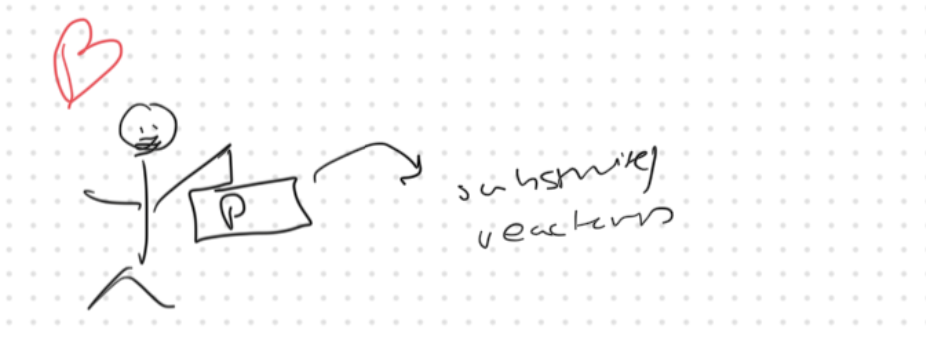
Kinases
kind man giving phosphate to subratere - catalyze transfer of phosphate from ATP to a substrate
Phosphatases
catalyze removal of a phosphate from a substrate
Carboxylases
catalyze addition of a carboxyl group to a substrate
Decarboxylases
catalyze removal of a carboxyl group from a
substrate
Hydrogenases
hydrogen generde being reduced in a pot which is cooking - catalyze the reduction of a substrat

Dehydrogenases
catalyze the oxidation of a substrate
Isomerases
think isomer - catalyze the structural rearrangement of a molecule
CATABOLISM
Breaking down molecules - think of cannobolism
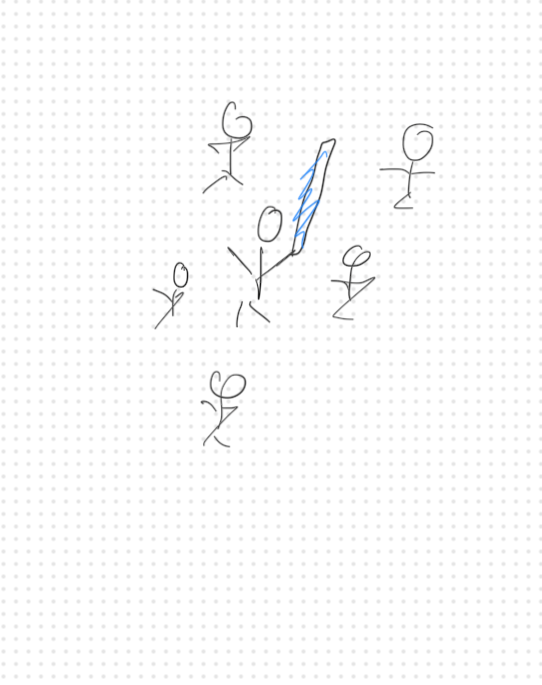
Where is the matrix and what happens in the matrix and what happens in the intermembrane space
Matrix tranformers optimuus prime being in the middle of all the transfomrers tall and proud
Matrix where all the main ATP is produced 32 molecules of ATP
Intermebrance space is where there is hella H+, there is H+ in the inner membrane being pumped into the intermembrane space
How is gyclosis negative regulated
Citrate and ATP produced during the krebs cycle uses negative feedback, this is useful because when you have too much ATP being produced you are creating a surplus which may not be necessary
How much net ATP is procuded in aeorobic respiration from 1 glucose
38 theoretically from 1 glucose
Explain what is happening with the phophates in gyclosis
you have glucose which gets phospholyated (from ATP going into ADP), and then that shi happens again later. Then it gets split into 2 and then Posphates get attached to each of the 2 and then NADH gets made, and then we harvest all the Pi and make ATP. H2o is made at the end as well.
Whats going on w acetyl coa
2 Pyruvates comes in and get oxidized - then aycl co a comes in and attaches
Whats happening in the krebs cycle
initally citrate gets formed adn then it gets decarobxilayed, forms Co2, and then also forms NADH - energy released from COOH getting removed causes enough to reduce NAD+. then ATP gets formed, then the molecule gets reduced and then NADH and FADH2 starts forming
What is the order of the photosystems, what does each do.
first 2 and then 1. Photosystem 1 pumps H+ across the membrane. Photosystem 2 makes NADPH.
Location for photosythesis light reactions
Stroma → H⁺ pumped into lumen → H⁺ flows back to stroma → ATP made in stroma
Lumen - inside the thylakoid membrane, H+ charging a lumos wand spell

ETC location
Matrix → H⁺ pumped into intermembrane space → H⁺ flows back to matrix → ATP made in matrix
Where does the calvin cycle happen
Same place as where ATP is produced, in the stroma, so still inside the chloroplast, just outside the thylakoid lumen
How many CO2, how many ATP, how many NADPH, how many G3P, how many rubiscos, are there in 1 cycle of dark cycle.
3 Co2, 3 Rubisco, 9 ATP total (6 during reduction phase), 5 G3P used to remake rubisco, 1 net G3P to make glucose.
How many NADH does glycosis produce, how many water does
2
How many NADH CO2 and FADH2 does krebs cycle produce
3 nadh 2 co2 and 1 fadh2
How many H+ does NADH and FADH2 pump How many atp is made per turn of hte atp synthas
10
6
3 ATP
FOr 1 glucose molecule what is happening, how many ADP and Pi are there to make how many ATp
