Basic Care and Comfort Quiz 1
 Call Kai
 Learn
Learn Practice Test
 Spaced Repetition
 Match
Match Flashcards
 Knowt Play
1/42

There's no tags or description
Looks like no tags are added yet.
Name | Mastery | Learn | Test | Matching | Spaced | Call with Kai | Chat |
|---|
No analytics yet
Send a link to your students to track their progress
43 Terms
A nurse reviewing the dietary requirements for his assigned clients. A full liquid diet is appropriate for which of the following clients? (Select all that apply).
A.
A client who has a wired jaw due to a motor vehicle crash
B.
A client who is 48 hours postoperative following temporomandibular joint repair
C.
A client who has difficulty chewing following oral surgery
D.
A client who has hypercholesterolemia due to coronary artery disease
E.
A client who is scheduled for a colonoscopy on the next morning
Correct Answers:
A.
A client who has a wired jaw due to a motor vehicle crash
B.
A client who is 48 hours postoperative following temporomandibular joint repair
C.
A client who has difficulty chewing following oral surgery
A full liquid diet is appropriate for clients who have undergone oral surgery, with a wired jaw, after some gastrointestinal procedures, and for clients with difficulty chewing. A full liquid diet provides oral fluids and nutrients and allows the healing of any oropharyngeal lesions. It may be indicated as a client transitions to a regular diet after gastrointestinal surgery.
Incorrect Answers:D. This client's history does not indicate a need for a full liquid diet. This client might be prescribed a low-fat, low-sodium diet.
E. A client who is scheduled for a colonoscopy should receive a clear liquid, rather than a full liquid, diet.
Vital Concept:A full liquid diet contains all of the foods permitted with clear liquids and the addition of milk, milkshakes, and oral supplements. Full liquids include any food or fluid that is liquid at room temperature. It offers more variety than a clear liquid diet and provides needed nutrition and calories. A full liquid diet typically provides 45 grams of protein and 1350-1500 calories daily. It includes ice cream, strained creamy soups, tea, juice, gelatin, milkshakes, pudding, and popsicles. A full liquid diet can also be a part of the client's transition to a regular diet after gastrointestinal surgery.
A nurse is caring for a client with constipation who has a prescription for an enema. Which of the following types of enema is correctly paired with its description or characteristic?
A.
Soapsuds enema: An enema that is not irritating to the bowel
B.
Oil-retention enema: An enema that delivers a medication into the lower gastrointestinal system
C.
Tap water enema: The only enema that can be repeated as often as necessary to achieve desired results
D.
Normal saline enema: The safest type of enema because it has the same osmotic pressure as the body
Correct Answer: D.
Normal saline enema: The safest type of enema because it has the same osmotic pressure as the body
The normal saline enema is the safest type of enema because normal saline has the same osmotic pressure as the body. Soapsuds are irritating to the bowel, in fact, it is this irritation that promotes bowel peristalsis and defecation. Medicated enemas, not oil-retention enemas, deliver medications. Oil-retention enemas simply lubricate the stool, rectum, and colon in order to ease the passage of stool; and a tap water enema cannot be repeated because it may lead to water intoxication or toxicity.
Incorrect Answers:
A. A soapsuds enema may be irritating to the gastrointestinal tract and is used to promote defecation and peristalsis.
B. An oil-retention enema is typically not used to instill medication into the gastrointestinal tract; instead, it lubricates the stool, rectum, and colon.
C. A tap water enema cannot be repeated often because it can lead to increased absorption of water into the gastrointestinal tract.
Vital Concept:
Cleansing enemas stimulate peristalsis and defecation through irrigation and distention of the colon and rectum. Types of cleaning enemas include soapsud enemas, saline enemas, and tap water enemas. Oil retention enemas relieve constipation by lubricating the intestine and rectum and softening the feces.
References:
Potter, P. A., Perry, A. G., Stockert, P., & Hall, A. (2017). Fundamentals of nursing (9th ed.). St. Louis, MO: Elsevier.
A nurse is reviewing the medical records of a client who takes herbal supplements for migraine headaches. The nurse should identify that which of the following herbal supplements is used prophylactically for migraine headaches?
A.
Echinacea
B.
Feverfew
C.
Saw palmetto
D.
Valerian
Correct Answer: B.
Feverfew
The nurse should identify that feverfew is administered to prevent migraine headaches, arthritis, and to stimulate digestion. Feverfew has no effect if administered after a migraine headache has begun.
Incorrect Answers:A. The nurse should identify that Echinacea stimulates the immune system and increases wound healing. The active ingredients in Echinacea can result in antiviral, anti-inflammatory, and immunostimulant effects.
C. The nurse should identify that saw palmetto is used as an anti-inflammatory and to treat prostate hyperplasia.
D. The nurse should identify that valerian lowers blood pressure, helps to treat menstrual cramps, and acts as a sedative or tranquilizer.
Vital Concept:
Clinical screening is a vital aspect for a nurse to assess when collecting a medical history from a client. The nurse should evaluate if the client takes herbal supplements and should compare them with the medications the client is taken to determine if there are any potential interactions and possible adverse effects that could occur when they are taken with the client's prescribed medications. Some herbal supplements can increase anticoagulant effects, while others may interact with caffeine products, and antianxiety medication.
References:
Berman, A., Snyder, S., & Frandsen, G. (2016). Kozier & Erb’s fundamentals of nursing: Concepts, process, and practice (10th ed.). Upper Saddle River, NJ: Prentice-Hall., p. 299akcd (PC);
Burchum 2016, p. 1322a, 1323k, 1326c, 1328d
A nurse is caring for a child with developmental dysplasia of the hip. Which of the following is the primary intervention for this child?
A.
Flexion of the hip
B.
Extension of the hip
C.
Adduction of the hip
D.
Abduction of the hip
Correct Answer: D.
Abduction of the hip
Abduction will enable the head of the femur to fit into the acetabulum, thereby correcting the dysplasia.
Incorrect Answers:
A. Flexion of the hip will not correct the dysplasia; the child needs abduction of the hip.
B. Extension of the hip will not correct the dysplasia; the child needs abduction of the hip.
C. Adduction of the hip will not correct the dysplasia and will only keep the head of the femur outside of the joint; the child needs abduction of the hip.
Vital Concept:
The hip joint, a ball and socket joint, has not formed properly in children with developmental dysplasia of the hip (DDH). The acetabulum is shallow, resulting in looseness of the femoral head. DDH is most often present at birth, but it may also develop during a child's first year of life. Babies whose legs are swaddled tightly with the hips and knees straight are at higher risk for developing DDH after birth. Parents should be advised on how to swaddle their infants safely and to understand that when done improperly, swaddling may result in problems like DDH.
A nurse is caring for a client who reports nausea and vomiting 36 hr following abdominal surgery. Which of the following actions should the nurse take first?
A.
Assess the client's bowel sounds.
B.
Administer antiemetic medication.
C.
Start the client's prescribed IV fluids.
D.
Insert a nasogastric tube to suction.
Correct Answer: A.
Assess the client's bowel sounds.
Using the nursing process, the first action the nurse should take is to assess the client's bowel sounds to detect if bowel sounds are present.
Incorrect Answers:B. Administering an antiemetic medication can alleviate nausea and vomiting, but it is not the first action that the nurse should take.
C. Starting prescribed IV fluids will prevent dehydration, but it is not the first action the nurse should take.
D. Inserting a nasogastric tube to suction can alleviate nausea and vomiting, but it is not the first action the nurse should take.
Vital Concept:
Nausea and vomiting is a common occurrence following abdominal surgery. Peristalsis becomes decreased following any procedure that uses general anesthesia. The nurse should assess the client's bowel sounds to determine the return of normal peristalsis and also note if the client reports a return of flatus.
A nurse is instructing a client with COPD about measures to conserve energy. Which of the following will the nurse advise the client to do when lifting heavy items?
A.
Lift while inhaling through an open mouth
B.
Lift while exhaling through pursed lips
C.
Lift the item after exhaling but before inhaling
D.
Lift while taking a deep breath and holding it
Correct Answer: B.
Lift while exhaling through pursed lips
Exhaling requires less energy than inhaling. Therefore, lifting while exhaling saves energy and reduces perceived dyspnea. Pursing lips prolongs exhalation and provides the client with more control over breathing. Lifting after exhaling but before inhaling is similar to lifting with the breath held. This should not be recommended because it is similar to the Valsalva maneuver, which can stimulate cardiac arrhythmias.
Vital Concept:
Clients with COPD can conserve energy by balancing rest and activity; by planning ahead; simplifying daily tasks; asking for help; and by maintaining good posture for breathing.
References:
Black, J.M. & Hawks, J.H. (2009). Medical-Surgical Nursing: Clinical Management for Positive Outcomes (8th ed.). Philadelphia: Elsevier/Saunders.
Nettina SM. Lippincott Manual of Nursing Practice 10th Edition. LWW 2013.
Hinkle JL, Cheever KH. Brunner & Suddarth's Textbook of Medical-Surgical Nursing 14th, 2-Volume Edition. LWW 2017.
McCance KL, Huethe SE. Pathophysiology: The Biologic Basis for Disease in Adults and Children, 7th Edition. Mosby 2014.
Grossman S, Porth CM. Porth's Pathophysiology: Concepts of Altered Health States, 9th Edition. LWW 2013.
Skidmore-Roth L. Mosby's 2018 Nursing Drug Reference, 31st Edition. Mosby 2017.
A nurse is caring for an elderly client who is hospitalized after a femur fracture. Which measure should the nurse routinely encourage in a bedridden client to prevent atelectasis?
A.
Rotate from side to side in bed every 2 hours
B.
Turn, cough, and deep breathe every hour
C.
Drink at least 1,000 mL of fluid per day
D.
Lie in the Trendelenburg position for 20 minutes once a day
Correct Answer: B.
Turn, cough, and deep breathe every hour
The client should be encouraged to turn, cough, and deep breathe every hour to avoid the collapse of the alveoli that may result from decreased use while bedridden.
Incorrect Answers:A. Rotating from side to side while in bed may prevent pressure on the skin and wounds, but does not have much of an effect on preventing atelectasis.
C. This does not necessarily prevent atelectasis; the client should drink more than 1,000 mL daily anyway, regardless of mobility status, unless he is on a fluid-restricted diet.
D. Lying in the Trendelenburg position would have no effect on preventing atelectasis.
Vital Concept:
Causes of atelectasis include hypoventilation, abdominal compression of the lungs, and airway obstruction. Nonpharmacologic therapies are useful to prevent atelectasis in clients with limited mobility or weakness. These therapies are targeted at improving cough and clearance of secretions from airways and include chest physiotherapy, postural drainage, chest wall percussion and vibration, and a forced expiration technique known as huffing. The nurse can evaluate the efficacy of therapy by assessing characteristics of the client's sputum, including volume, weight, and viscosity. When atelectasis develops, the underlying cause must be determined and treated.
References:
Black, J.M. & Hawks, J.H. (2009). Medical-Surgical Nursing: Clinical Management for Positive Outcomes (8th ed.). Philadelphia: Elsevier/Saunders.
Nettina SM. Lippincott Manual of Nursing Practice 10th Edition. LWW 2013.
Hinkle JL, Cheever KH. Brunner & Suddarth's Textbook of Medical-Surgical Nursing 14th, 2-Volume Edition. LWW 2017.
McCance KL, Huethe SE. Pathophysiology: The Biologic Basis for Disease in Adults and Children, 7th Edition. Mosby 2014.
Grossman S, Porth CM. Porth's Pathophysiology: Concepts of Altered Health States, 9th Edition. LWW 2013.
Skidmore-Roth L. Mosby's 2018 Nursing Drug Reference, 31st Edition. Mosby 2017.
A female client with a body mass index (BMI) of 31 tells the nurse she has decided to fast for 1 week on water and cabbage soup to get a quick start on a weight loss program. When responding to the client, the nurse stresses which of the following?
A.
Fasting reduces hunger over time.
B.
Fasting uses fat preferentially.
C.
Fasting provides initial weight loss primarily due to loss of fluids.
D.
A week-long fast is unlikely to cause significant health problems.
Correct Answer: C.
Fasting provides initial weight loss primarily due to loss of fluids.
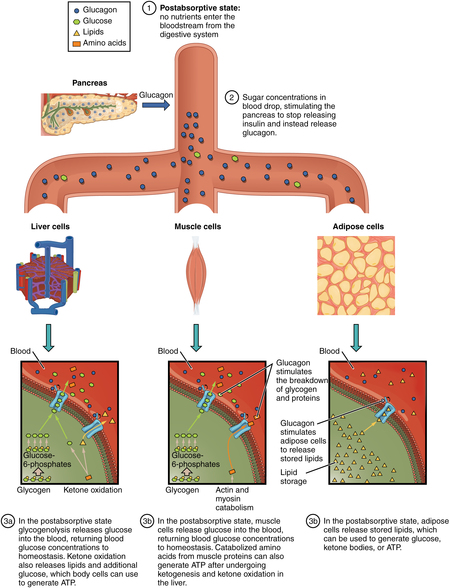
Initial weight loss during a fast is the result of fluid loss. This occurs largely because of the degradation of glycogen stores in the liver to use for energy. The process of glycogen metabolism results in the release of water and fluid loss. During a fast, the body shifts from the use of dietary intake as an energy source to glycogenolysis, which refers to the breakdown of glycogen stores in the liver. Catabolism occurring during a fast refers to lipolysis and muscle breakdown for conversion of amino acids to glucose.
The figure below shows a fasting state and its effects of liver cells, muscle cells, and adipose cells.
Incorrect Answers:A. Although fasting suppresses hormones that increase appetite, they return when normal diet resumes.
B. During a fast, the body enters a starvation mode and uses protein, fat, and glycogen (stored carbohydrate) as energy sources.
D. After only 1-2 days, the fasting individual will be at risk of health problems that include fluid loss, depletion of nutrients, increased stress, slowed metabolism, and symptoms of dizziness, muscle weakness, headaches, and fatigue.
Vital Concept:With inadequate nutritional intake on a diet or fast, the liver will degrade glycogen stores to provide glucose for cellular metabolism. This is known as glycogenolysis. The breakdown of glycogen to glucose results in release of water, which is eliminated through the kidney. Loss of water results in weight loss in the initial phases of a fast or strict diet. After glycogen stores are depleted, the body breaks down fats and muscle, converting amino acid to glucose for cellular energy.
A male client is admitted with a sickle cell pain crisis and prescribed morphine sulfate 2 mg IV push every 4 hours as needed. The client is on the phone with a friend and appears to be comfortable but tells the nurse he has “severe pain that is 10/10.” Which of the following interventions is most appropriate for the nurse?
A.
Contact the healthcare provider to change the prescription to meperidine.
B.
Contact the healthcare provider to request a prescription for patient-controlled analgesia with a higher dose of morphine.
C.
Contact the healthcare provider to request a prescription for a non-opioid analgesic.
D.
Contact the healthcare provider to request a consultation with an addiction specialist.
Correct Answer: B.
Contact the healthcare provider to request a prescription for patient-controlled analgesia with a higher dose of morphine.
Individuals with sickle cell anemia and frequent pain crises may be undertreated over time because they are mistakenly identified as having drug abuse issues or addiction. Vasoocclusive crises can result in severe pain and over time, and an individual repeatedly treated for vasoocclusive crises will develop tolerance to the analgesic effects of opioid pain medication. Research has demonstrated that the risk of substance abuse among clients with sickle cell disease is the same as in the general population.
The nurse should know that the client’s self-report of pain is a reliable indicator and should take appropriate action to inform the healthcare provider of the client’s needs. External cues should not be used to judge a client’s pain level. In clients with chronic or recurrent pain, self-distraction measures often help the client to cope.
Incorrect Answers:
A. Meperidine (Demerol) should not be given to clients with a sickle cell crisis since it forms a toxic metabolite (normeperidine), and effects range from tremors to seizures.
C. Severe pain typically requires an opioid analgesic. Non-opioid analgesics are usually ineffective in this case.
D. This response is unwarranted. Individuals with frequent sickle cell pain crises may be undertreated when their tolerance and/or coping skills are misinterpreted as addiction or drug-seeking behavior.
Vital Concept:
A client's self report of pain is the most reliable indicator of the severity of pain. The absence of physiological signs does not reliably distinguish absence of pain. Absence of external cues does not reliably identify absence of pain, as some clients may be able to distract themselves or may have other coping mechanisms.
A nurse is caring for a postoperative client who is having difficulty sleeping at night. Which of the following actions should the nurse take?
A.
Avoid administration of analgesics within two hours of bedtime.
B.
Adjust the client's room temperature to provide a cold environment.
C.
Keep a clear pathway around the client's bed to avoid accidental movement of client's bed
D.
Turn out all of the lights, including pathway lights, in the client's room.
Correct Answer: C.
Keep a clear pathway around the client's bed to avoid accidental movement of client's bed
Keeping a clear pathway around the client's bed will ensure that no one who enters the client's room will bump into the bed and awaken the client during the night.
Incorrect Answers:
A. The nurse should administer required analgesics to the client 30 min prior to bedtime to ensure the client's comfort during the early phase of sleep.
B. The nurse should adjust the room temperature to provide an environment that is comfortable for the client. Most clients cannot sleep if they are cold. The nurse should provide interventions to help the client keep warm during the night.
D. While overhead and bright lights should be turned out, the nurse should ensure that there is a night-light or bathroom light left on. This will provide for safety in the case that the client needs to get up during the night.
Vital Concept:
Other interventions that can help clients to rest better at night include the following: closing windows to block outside lighting, using a flashlight during night-time assessments rather than turning on overhead lights, closing the door to the client's room, wearing rubber-soled shoes, and ensuring staff conversations are kept at a low level.
A nurse is caring for a client with truncal obesity who has been taking corticosteroids for many years for the treatment of rheumatoid arthritis. The client has undergone abdominal surgery and has a risk for poor wound healing. Which of the following measures may reduce the risk of wound dehiscence in this client? (Select all that apply)?
A.
Using an abdominal binder
B.
Instructing the client to hold a pillow or folded blanket against the abdomen when coughing
C.
Using a stool softener such as docusate
D.
Discontinuing prednisone while the client’s wound is healing
E.
Increasing carbohydrates in the client’s diet
Correct Answers:
A.
Using an abdominal binder
B.
Instructing the client to hold a pillow or folded blanket against the abdomen when coughing
C.
Using a stool softener such as docusate
Poor wound healing may lead to dehiscence of a surgical wound, which refers to the failure of the wound edges to approximate, or separation of the skin and tissue layers, which may be partial or complete. Conditions that increase the risk of dehiscence include obesity, advanced age, infection, steroid use, smoking, impaired circulation, and impaired tissue oxygenation. Other conditions that can result in dehiscence are mechanical stresses on the wound from defecation, vomiting, and coughing. Interventions to reduce the risk of dehiscence in a surgical wound include use of an abdominal binder to support the incision and reduce mechanical stress on the wound while encouraging hemostasis; use of a stool softener to prevent straining, which may occur with constipation due to opioid pain medications or immobility during the post-operative period; use of an antiemetic to prevent vomiting, which can also cause mechanical stress on the wound; promotion of adequate intake of protein and calories to meet the increased metabolic needs in the post-operative period; use of splinting with a pillow or folded blanket held against the abdomen when coughing to decrease the strain on the wound; and, in individuals who are at risk for hyperglycemia, tight glycemic control.
A client tells a nurse that her pain is nagging, dull, and intense. This client is describing which characteristic of pain?
A.
Measure
B.
Associated manifestations
C.
Quality
D.
Severity
Correct Answer: C.
Quality
The client is describing the quality of pain, which refers to how the pain feels to the client. There are many different ways to describe the feeling of pain, and some of the more common expressions are typical of certain types of pain, such as the burning or “pin and needle” sensation associated with neuropathic pain. When asking a client about the quality of their pain, the nurse should give several examples when asking what the pain feels like. Those examples include may include words like throbbing, sharp, and heavy. A complete and accurate pain assessment should be performed and documented by the nurse. The acronym "PQRST" can be helpful to ensure thorough assessment and documentation:
P: Provocative and palliative factors
Q: Quality of pain
R: Region and radiation
S: Severity
T: Timing: onset duration, and frequency
Incorrect Answers:
A. The measure of pain includes strength, severity, or intensity and can be described by the client with a number rating scale or a visual analog scale, with questions that ask the client to describe “What is the worst and the best that your pain has been?”
B. Symptoms associated with pain include anxiety, depression, fatigue, or nausea.
D. Severity refers to a measure of pain.
Vital Concept:
A thorough description of pain includes a description of quality, severity, location and any radiation; timing, including duration, onset, and frequency; and palliative or provocative factors. When asking the client to describe the quality of pain, the nurse should provide several descriptions as an example. Quality of pain refers to the client's description of the way the pain feels.
When assessing a client with renal colic who complains of inadequate analgesia, the nurse knows the most accurate assessment of the severity of the client’s pain is obtained by asking about which of the following?
A.
Presence of nausea
B.
Duration of episode
C.
Whether pain is sharp or dull
D.
Pain rating on a scale of 0 to 10 (where 10 is the worst pain the client has experienced)
Correct Answer: D.
Pain rating on a scale of 0 to 10 (where 10 is the worst pain the client has experienced)
The "PQRST" acronym provides a systematic method of documenting pain symptoms:
P: Palliative or provoking factors
Q: Quality of pain
R: Region and radiation of pain
S: Severity
T: Timing: frequency, duration
Severity describes the intensity or strength of pain experienced by the client. It can be reported by the client using a standardized visual analog scales or pain rating scale. Use of a pain rating tool allows the nurse to document severity of pain in a standardized manner that is easily interpreted by others.
Incorrect Answers:
A. The presence of associated manifestations of pain is part of the focused assessment but does not measure severity or intensity of pain.
B. Duration, time of onset, and whether the pain is intermittent or continuous are factors assessed about the timing of pain.
C. Descriptions such as sharp, dull, stabbing, burning, or throbbing are all qualities of pain and do not help a nurse with assessing the severity of pain.
Vital Concept:
The "PQRST" acronym can be used to ensure systematic evaluation of pain. Qualities of pain that describe severity include intensity and strength of pain. Pain scales, including visual analog scales and pain rating scales, are instruments used to describe and document pain severity.
Discharge teaching for a client with newly diagnosed sickle cell disease should begin:
A.
At admission
B.
At discharge
C.
The day following admission
D.
At the first appointment following discharge
Correct Answer: A.
At admission
All discharge teaching should begin at the time of admission. Hospital stays are extremely short and it is critical that the nurse use every opportunity to teach the client and family.
Incorrect Answers:
B. Waiting until discharge or after will potentially not allow the client to get all the information necessary.
C. If the nurse waits until the day following admission to begin teaching, the client may very well be close to discharge and an entire day of “teaching time” will have been lost.
D. Waiting until discharge or after will not allow the client to get all the information needed.
Vital Concept:
It can be challenging for clients to understand and remember all discharge instructions. The client or family members may be anxious to leave, with physical or emotional discomfort at the time of discharge, making it less likely that they will be interested in discharge instructions. Some clients have low literacy or health literacy skills that increase the difficulty of understanding instructions at the time of discharge. Presenting discharge instructions early and reinforcing the teaching during the hospital stay and at discharge can provide an opportunity for better learning.
References:
Black, J.M. & Hawks, J.H. (2009). Medical-Surgical Nursing: Clinical Management for Positive Outcomes (8th ed.). Philadelphia: Elsevier/Saunders.
Nettina SM. Lippincott Manual of Nursing Practice 10th Edition. LWW 2013.
Hinkle JL, Cheever KH. Brunner & Suddarth's Textbook of Medical-Surgical Nursing 14th, 2-Volume Edition. LWW 2017.
McCance KL, Huethe SE. Pathophysiology: The Biologic Basis for Disease in Adults and Children, 7th Edition. Mosby 2014.
Grossman S, Porth CM. Porth's Pathophysiology: Concepts of Altered Health States, 9th Edition. LWW 2013.
Skidmore-Roth L. Mosby's 2018 Nursing Drug Reference, 31st Edition. Mosby 2017.
A client has just returned from surgery after below-the-knee amputation. The client has an immediate postoperative prosthesis (IPOP) in place. What is the purpose of an IPOP?
A.
It prevents development of a blood clot in the leg after surgery
B.
It increases the adjustment period so the client is not rushed.
C.
It prevents infection in the stump incision
D.
It promotes body image after surgery
Correct Answer: D.
It promotes body image after surgery
An IPOP is used immediately following surgery to promote body image in a client who has just had an amputation. The IPOP also facilitates early ambulation and prevents swelling of the stump.
A nurse notes a suspected deep tissue injury on a client’s sacrum. Which intervention is most appropriate at this stage of pressure ulcer?
A.
Keep the skin dry and support the client’s nutrition and hydration
B.
Maintain a moist healing environment
C.
Provide an occlusive dressing as ordered
D.
Administer topical antibiotics to the site
Correct Answer: A.
Keep the skin dry and support the client’s nutrition and hydration
A deep tissue injury does not involve skin breakdown but instead involves an injury deep under the skin. At this stage, the nurse should keep the skin dry and support the client’s nutrition and hydration to avoid skin breakdown.
Incorrect Answers:B. A moist healing environment is not necessary with a deep tissue injury; the nurse should keep the skin clean and dry.
C. An occlusive dressing is not necessary; a deep tissue injury does not involve a surface wound.
D. Topical antibiotics on the skin site are not useful; a deep tissue injury does not involve a surface wound.
Vital Concept:
Suspected deep tissue injury (DTI) is characterized as a purple or maroon area of discolored, intact skin or blood-filled blister due to damage of underlying soft tissue from pressure and/or shear injury. The injury may initially begin as tissue that is painful, firm, mushy, boggy, warmer or cooler when compared to adjacent tissue. This type of injury may be difficult to detect in clients with dark skin tones. The lesion may progress from a thin blister over dark wound bed that becomes covered with a thin eschar. This injury can progress rapidly, with layers of tissue destruction, even with optimal treatment.
A nurse is caring for a client who is postoperative and requires a clear liquid diet. Which of the following items should the nurse include on the client's meal tray?
A.
Lemon sherbet
B.
Plain yogurt
C.
Cranberry juice
D.
Fat-free milk
Correct Answer: C.
Cranberry juice
Cranberry juice is an acceptable selection for a clear liquid diet, along with apple juice and grape juice. Other foods and beverages included in this diet are water, coffee and tea without any milk or cream, gelatin, popsicle, bouillon, broth, and carbonated beverages.
Incorrect Answers:A. Lemon sherbet is an acceptable selection for a full liquid diet, not a clear liquid diet.
B. Plain yogurt is an acceptable selection for a full liquid diet, not a clear liquid diet.
D. Fat-free milk is an acceptable selection for a full liquid diet, not a clear liquid diet.
Vital Concept:
A clear liquid diet includes food and beverage items that are clear but not necessarily colorless. A clear liquid diet is a short-term measure to provide fluids and carbohydrates that will help prevent dehydration and to stimulate the gastrointestinal system to resume its usual functions. A full liquid diet is the next step in diet progression.
A nurse is teaching a client who has hearing loss about hearing aid care. Which of the following instructions should the nurse include in the teaching?
A.
Change the batteries if there is a constant whistling sound.
B.
Remove detachable earmolds from the receiver and clean with soap and water.
C.
Store extra hearing aid batteries in the refrigerator.
D.
Clean the ear canal daily with a cotton applicator before inserting hearing aids.
Correct Answer: B.
Remove detachable earmolds from the receiver and clean with soap and water.
The nurse should instruct the client to remove detachable earmolds from the receiver and clean them with soap and water, not alcohol, because alcohol can damage the earmolds.
Incorrect Answers:
A. The nurse should instruct the client that a constant whistling sound indicates that the batteries are functioning. If whistling or squealing sounds occur, the client should turn the volume down, check that the earmold is correctly attached to the receiver, and then reinsert the earmold.
C. The nurse should instruct the client to store extra hearing aid batteries in a secure dry place and replace the batteries when needed. When replacing batteries, the client should be sure that the negative and positive signs on the battery match those signs on the hearing aid.
D. The nurse should instruct the client to never insert a cotton applicator, toothpick, or bobby pins into the ear canal to remove cerumen. The client should use a softening agent or perform irrigation to remove cerumen.
Vital Concept:
The client who has a new hearing aid can take weeks to months to adjust to the hearing aid. The client might feel that sounds are too shrill and can hear high-frequency sounds that they had not heard for a long time. Hearing aids are measures to assist the client to hear sound better and are not a cure for hearing loss. The client should lengthen the wearing time each day until the client has adjusted to wearing the hearing aid for a full day.
Which of the following clients should not be considered to use anti-embolism stockings? (Select all that apply.)
A.
A client with pulmonary edema due to heart failure
B.
A client with necrotic limb tissue in the lower leg
C.
A client with a deformity of the lower leg
D.
A post operative hip replacement client
E.
A client with diabetes
Correct Answers:
A.
A client with pulmonary edema due to heart failure
B.
A client with necrotic limb tissue in the lower leg
C.
A client with a deformity of the lower leg
Elastic compression (anti-embolism) stockings are designed to improve circulation by promoting venous return and preventing blood clots, such as a deep vein thrombosis. Anti-embolism stockings are often applied after surgical procedures during times when a client is immobile and at greater risk of venous stasis. There are some situations, however, when anti-embolism stockings should not be used. For instance, a client with severe heart disease who has developed pulmonary edema, a person with necrotic tissue in the lower extremities, or someone with a severe deformity of the lower leg would not be candidates for anti-embolism stockings.
Incorrect Answers:D. A post operative hip replacement client is a high risk for a thrombus and should have stockings placed.
E. A client with diabetes. There is no reason a diabetic client cannot wear antiembolism stockings.
Vital Concept:Anti-embolism stockings (thromboembolism deterrent or TED hose) reduce the risk of thromboembolism if correctly applied and worn until discharge or full mobility. They should not be rolled down. The heel patch should be placed on the heel and the toe at the toe hole, with the thigh gusset at the thigh. If not worn properly, they may promote formation of venous thromboembolism and cause skin breakdown.
A nurse is admitting a client admitted from the post-anesthesia care unit after a modified radical mastectomy. The nurse knows to place the client's bed in which of the following positions?
A.
Supine, supporting the arm on the affected side with pillows
B.
Semi-Fowler’s position, supporting the arm on the affected side with pillows
C.
Supine with the arm on the affected side resting on the bed
D.
High-Fowler’s position, with the arm on the affected side resting on the bed
Next
Correct Answer: B.
Semi-Fowler’s position, supporting the arm on the affected side with pillows
After a mastectomy, the placement of the client's bed in the semi-Fowler’s position (sitting up at around 30-45 degrees, but not as high as 90 degrees which is Full/High Fowler's) with pillows to elevate and support the arm and hand will promote drainage and prevent pooling of lymphatic and venous drainage. Initiation of a gradual return to movement of the arm should begin immediately with bending and flexion of the fingers on the affected side, gradually increasing arm movement over the course of several days. Rehabilitation of the affected arm should begin gradually with a progression of exercises that are designed to return the full range of motion within 4-6 weeks post-op.
A nurse is caring for a client with continuous bladder irrigation. She notes that the input has been 2000 mL and the output has been 500 mL. Which nursing action is most appropriate?
A. Document the intake and output in the client’s chart
B. Ask the client how much he has had to drink during the day
C. Check to ensure that the input valve is open
D. Stop the irrigation and check the client
Correct Answer: D.
Stop the irrigation and check the client
A client who receives continuous bladder irrigation should have the same amount of fluid going in as the volume out. If there is a large difference between intake and output of the irrigation fluid, there may be a problem with an obstruction, clots, or with the client’s bladder. The nurse must stop the irrigation and determine the reason for low output before bladder damage occurs.
Incorrect Answers:A. The client is having significantly less output than input; with a continuous bladder irrigation, this is a sign of a problem. The nurse needs to investigate the reason for the discrepancy.
B. Oral intake from the client should not have much impact on this difference in intake and output; the nurse needs to assess output anyway, not intake.
C. The problem is with output from the client; checking the input valve will not solve the problem.
Vital Concept:
Clot retention causes catheter blockage during continuous bladder irrigation after prostatectomy. Blockage is associated with suprapubic distention, severe discomfort in the lower abdomen and passing of fluid around the catheter. Other symptom include lack of urine output, and vasovagal symptoms that include sweating, tachycardia, hypotension, rectal urgency.The irrigation should be discontinued immediately if the catheter becomes blocked,, to prevent further bladder filling and client discomfort.
A nurse is providing information about bladder training for a client with urge incontinence. Which of the following client outcomes is expected as a result of bladder training?
A.
The client will comply with their am and hs diuretic therapy
B.
The client will avoid the use of the Valsalva maneuver
C.
The client will avoid the use of the Kegel maneuver
D.
The client will void q 2 hours when prompted
Correct Answer: D.
The client will void q 2 hours when prompted
“The client will void q 2 hours when prompted” is an appropriate expected outcome for a client who is undergoing bladder training for urinary urge incontinence. Other aspects of bladder training include the use of Kegel exercises to strengthen the pelvic floor muscles so urinary control can be better achieved. Diuretics should be taken in the morning and not at the hour of sleep (hs); the Valsalva maneuver is performed during defecation and not urination.
Incorrect Answers:A. While it is important for the client to comply with diuretic therapy, this type of medication is typically not administered at bedtime.
B. The Valsalva maneuver is performed with bowel training and not urge incontinence management; this answer does not apply.
C. The client should perform Kegel exercises during urge incontinence management, not avoid these exercises.
Vital Concept:
Bladder training is a behavioral technique used to improve client bladder control in urge incontinence by initially encouraging urination at intervals of 30 minutes, while the client is instructed to ignore any urge to void before the appointed time. As the client becomes accustomed to the remaining continent for short intervals, the time intervals are increased by 15 minutes at a time, which gradually increases the functional bladder capacity. The nurse teaches the client distraction techniques and relaxation techniques and provides positive reinforcement. Other interventions used in the treatment of urge incontinence include habit training, electrical stimulation, and exercise training.
The nurse uses Montgomery straps primarily to achieve which of the following outcomes?
A.
The client is free from falls
B.
The client is free of bruises
C.
The client is free from skin breakdown
D.
The client is free from wandering
Correct Answer: C.
The client is free from skin breakdown
Montgomery straps are primarily used for dressing changes to avoid skin breakdown from removing and reapplying tape.
Incorrect Answers:A. Montgomery straps do not protect the client from falls.
B. Montgomery straps do not protect the client from bruising.
D. Montgomery straps are not used to keep clients from wandering.
Vital Concept:
Montgomery straps are wide strips of tape with holes and laces that secure dressings when placed on opposite wound edges and tied. They are used for clients with tape allergies and for those who require frequent dressing changes, which may lead to skin breakdown from frequent removal of tape; Two sides are adhered to either side of healthy skin of wound, then laced over to close the wound.
A nurse is caring for a client who has a new prescription for continuous enteral feeding through an open system. Which of the following actions should the nurse take?
A.
Reconstitute the formula with tap water.
B.
Replace the bag and tubing every 24 hr.
C.
Administer 100 mL of formula per hour.
D.
Give the initial feeding over 15 min.
Correct Answer: B.
Replace the bag and tubing every 24 hr.
The nurse should replace the bag and tubing of an open system every 24 hr to reduce the risk for bacterial growth. It is safe to hang closed systems for 24 to 48 hr.
Incorrect Answers:A. The nurse should reconstitute the formula with sterile water to reduce the risk for bacterial growth.
C. The nurse should begin continuous enteral feedings at a rate of no faster than 60 mL/hr. A common initial rate is 10 to 20 mL/hr, especially if there is a high risk for reflux or aspiration. If the client tolerates this feeding rate, the nurse can increase it by 20 mL/hr until reaching the rate the provider prescribed.
D. Continuous feedings are ongoing, generally over 24 hr each day, though some clients receive feedings over 8 to 12 hr each day. The nurse should administer the feedings at an hourly rate with an infusion pump, not over a 15-min period.
Vital Concept:
Continuous enteral feedings require an infusion pump. The formula can be in an open system, for which the nurse prepares the formula and pours it into a bag, or a closed, prefilled, ready-to-hang system that requires no special preparation. Open systems have a greater risk for bacterial contamination, and nurses should adhere to principles of medical asepsis when handling them.
A nurse is caring for a client who has undergone chest surgery. Which of the following rehabilitative measures should the nurse stress to prevent shoulder ankylosis?
A.
Turn from side to side
B.
Raise and lower the head
C.
Raise the arm on the affected side over the head
D.
Flex and extend the elbow on the affected side
Correct Answer: C.
Raise the arm on the affected side over the head
A client who has undergone chest surgery should be taught to raise the arm on the affected side over the head to help prevent shoulder ankylosis.
Incorrect Answers:A., B., D. Turning from side to side, raising and lowering the head, and flexing and extending the elbow on the affected side do not exercise the shoulder joint.
Vital Concept:
Ankylosis refers to joint stiffness caused by abnormal adhesion and rigidity. Ankylosis may result from injury or disease. Measures to reduce the risk of ankylosis of the joint include non-jarring physical exercise of the joint, which can simple range of motion exercises or swimming.
The nurse is caring for an unresponsive client suspected of having uncal herniation after traumatic brain injury. Which of the following does the nurse understand is an early sign of uncal herniation?
A.
Respiratory depression
B.
Ipsilateral pupillary dilation
C.
Flapping tremors
D.
Ecchymosis of the extremities
Correct Answer: B.
Ipsilateral pupillary dilation
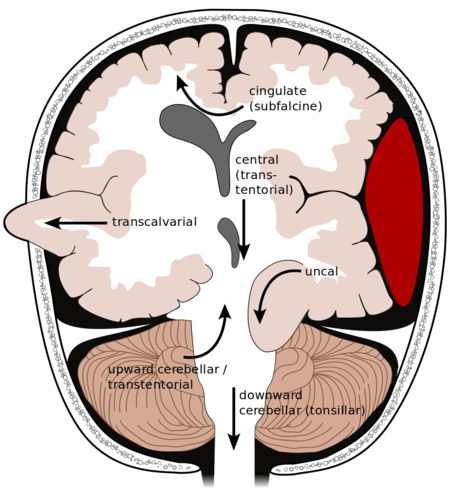
Brain herniation is characterized by displacement of the brain structures due to increased ICP (intracranial pressure). Ipsilateral pupillary dilation is an early sign of uncal herniation that occurs as a result of compression of the third cranial nerve. It is accompanied by a decreased level of consciousness.
Incorrect Answers:A. Tonsillar herniation is characterized by respiratory depression.
C. Flapping tremors are not a symptom of a brain herniation.
D. Ecchymosis of the extremities are not a symptom of brain herniation.
Vital Concept:
Increased intracranial pressure can result from cerebral edema, stroke, tumor, infection, or hematoma. When the compensatory mechanisms of the brain fail, herniation occurs. Uncal brain herniation results in pressure on the third cranial nerve, causing pupillary dilation and lack of response to light. It is accompanied by decreased level of consciousness.
A client is struggling with urge incontinence. What should the nurse suggest? (Select all that apply.)
A.
Decrease fluid intake to reduce elimination
B.
Avoid drinking a lot of fluid in the daytime
C.
Wear clothing that is easy to remove before using the toilet
D.
Prepare for the placement of an indwelling catheter
E.
Practice Kegel exercises to strengthen the pelvic floor muscles
Correct Answers:
C.
Wear clothing that is easy to remove before using the toilet
E.
Practice Kegel exercises to strengthen the pelvic floor muscles
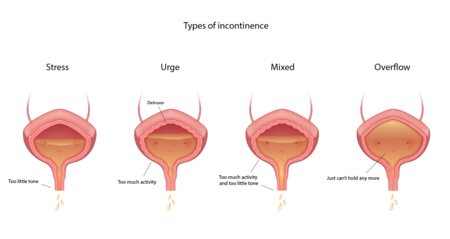
Urge incontinence occurs when a person has a sudden, strong need to urinate that he or she cannot control. The bladder may have spasms that cause it to leak urine. While working with a client who has urge incontinence, the nurse should encourage the client to avoid drinking a lot of fluid before bed to reduce nighttime awakenings and to wear clothing that is easy to remove when the need to void arises. Practicing Kegel exercises may also strengthen the pelvic floor muscles and can help the situation. The nurse should not suggest that the client reduce fluid intake to diminish the need to void; the client needs to continue drinking a normal amount of fluid to avoid becoming dehydrated.
Vital Concept:Urge incontinence refers to an "overactive bladder." The client will have inability to postpone voiding after experiencing urinary urgency. The causes of urge incontinence include damage to nerves that serve the bladder. Signs and symptoms include nocturia, with large amounts of urine when voiding. Treatments include biofeedback, Kegel exercises, and anticholinergic medication. Tofranil is a tricyclic antidepressant sometimes prescribed at bedtime to treat urge incontinence.
When a nurse is providing postmortem care for a client who had been terminally ill and died after a week-long hospitalization, which of the following should the nurse consider when preparing the client’s body for removal to a funeral home (select all that apply)?
A.
Remove tubes, lines, and dressings as per policy
B.
Remove any dentures
C.
Call the medical examiner to perform an autopsy
D.
Change client linens
E.
Do not allow family members to assist, as it may increase stress
A.
Remove tubes, lines, and dressings as per policy
D.
Change client linens
Care of a client's corpse, also known as postmortem care, should be conducted with respect in a dignified fashion. Family should have opportunities to participate and to introduce specific religious and cultural rituals appropriate to the client and the family or friends. Standard precautions should be observed after death. The primary tasks of postmortem care include:
• Close client’s eyes gently
• Remove tubes, lines, and dressings, according to the facility’s policy. If an organ harvest or autopsy is pending, leave them in place.
• Straighten the body position and wash the body carefully, as bruising can occur readily after circulation has stopped.
• Dentures should be replaced if they have been removed. If not, leave them in place. This will maintain the shape of the face in rigor mortis. To keep the jaw closed, a towel can be folded under the client’s chin. The patient’s mouth should be closed.
• A perineal pad can be placed to absorb leaked stool or urine since the sphincters are now relaxed.
• A pillow should be placed under the client’s head to prevent damage, pooling, and discoloration of the face from blood.
• All soiled linen and equipment should be removed from the room.
• The belongings of the client should be placed in a bag, labeled, and given to a family member or sent with the body.
Incorrect Answers:B. If dentures are in place, they should remain in place to improve facial alignment`. If dentures have been removed, they should be placed in the mouth for support of the facial space when rigor mortis begins.
C. This terminally ill client was expected to die, so a report to the medical examiner or autopsy is not required.
E. The family should be allowed to participate if desired, particularly when there are religious or cultural practices associated with this transition.
Which of the following prescribed medications does the hospice nurse understand is indicated for treatment of a “death rattle” that is distressing family members of a client who is actively dying?
A.
Morphine
B.
Fentanyl patch
C.
Lorazepam
D.
Scopolamine patch
Correct Answer: D.
Scopolamine patch
The “death rattle” is a rattling sound caused by an actively dying person’s inability to move secretions during breathing. This sound can be very upsetting to the family of the dying individual. Excess secretions can be managed with anticholinergic medications that dry up secretions in the airway and oropharynx. Anticholinergic medications used in hospice for this purpose include scopolamine patches and sublingual atropine drops.
Incorrect Answers:A. Morphine is an opioid analgesic that is used to relieve terminal dyspnea and to reduce pain in a dying client. It does not have any effect on the secretions causing the “death rattle.”
B. Fentanyl is an opioid analgesic typically used to treat severe pain in cancer clients.
C. Lorazepam is a benzodiazepine used to treat anxiety and terminal agitation in dying clients, but it is not useful for relief of the “death rattle.”
Vital Concept:Towards the final days of life, metabolism slows as bodily functions deteriorate. Respiratory manifestations of impending death include increased respiratory rate, inability to clear secretions, and Cheyne-Stokes respirations, an abnormal pattern of alternating periods of apnea with periods of rapid, deep breathing. Use of an anticholinergic agent like scopalamine or atropine can dry up excess secretions during active dying.
A nurse is providing instructions to a student nurse about administering an intermittent enteral feeding. Which of the following statements indicates understanding of this teaching? (Select all that apply.)
A.
Fill the feeding bag with enough formula to last 24 hr.
B.
Change administration set every six hours.
C.
Leave unused portions of formula at the bedside.
D.
Label the unused portion of the formula.
E.
Elevate the head of the client's bed for 15 min after administration.
Correct Answers:
B.
Change administration set every six hours.
D.
Label the unused portion of the formula.
Feeding equipment, such as the bag holding the formula, should be discarded every 6 hours to prevent bacterial contamination. Extension tubing should be changed every 24 hours.
The unused portion of the formula should be labeled with the time and date the formula was opened and the client's name and room number.
Incorrect Answers:A. Intermittent feedings are administered four to six times a day in equal portions, with each feeding lasting 30 to 45 min.
C. The unused portion of formula should be refrigerated up to 24 hr to prevent bacterial contamination.
E. The nurse should elevate the head of the client's bed for 30 to 60 min following administration to prevent aspiration.
Vital Concept:Intermittent tube feedings are generally administered 4 to 6 times a day, with each feeding infusing 30 to 45 min. The feedings can be infused without a pump as long as care is taken to monitor carefully. Gastric residuals should be measured before each feeding is started.
A nurse is providing home care for a toddler with multiple developmental disabilities who rarely goes outdoors because of photosensitivity. Which nutritional deficit is this client most likely to have?
A.
Vitamin C deficiency
B.
Vitamin D deficiency
C.
Magnesium deficiency
D.
Vitamin B deficiency
Correct Answer: B.
Vitamin D deficiency
Toddlers and young children who stay indoors by choice to play video games or watch television or because of a medical problem such as photosensitivity are at risk for developing a vitamin D deficiency. Vitamin D is synthesized with sunlight, therefore, the lack of sunshine depletes the body’s vitamin D. Vitamins C, B, and magnesium are not depleted by the absence of sunshine.
Incorrect Answers:A. This client is not at risk of vitamin C deficiency by staying indoors.
C. This client is most likely not at risk of magnesium deficiency if dietary intake is normal. Magnesium is not impacted by going outdoors.
D. This client would not develop a vitamin B deficiency by staying indoors.
Vital Concept:Side effects of vitamin D deficiency include muscle aches and weakness, periodontitis, and "light-headedness"; rickets, a pediatric disorder that results in delayed growth and deformity of long bones; osteomalacia, a bone-thinning disorder in adults characterized by proximal muscle weakness and bone fragility; osteoporosis, characterized by reduced bone mineral density and increased bone fragility; increased risk of fracture
The nurse is caring for a client with a new plaster cast on his left arm. Which of the following will the nurse NOT include in teaching this client about cast care?
A.
Keep the arm below the level of your heart
B.
Keep the cast dry
C.
Do not insert anything into the cast
D.
Exercise your joints above and below the cast every day
Correct Answer: A.
Keep the arm below the level of your heart
With a newly applied cast, it is important to keep the arm ABOVE the level of the heart to prevent pooling of blood with consequent swelling and pain in the arm and hand. A plaster cast will disintegrate if it gets wet. Putting anything in the cast (for example, to scratch itchy skin) may cause pressure points and skin disruption. Either of these can lead to infection under the cast. Exercising the joints above and below the cast will help prevent muscle atrophy.
Incorrect Answers:
B. The plaster cast should be kept dry to maintain the integrity of the cast.
C. The client should not slide anything under the cast, which could cause skin injury or breakdown underneath; this could further lead to skin infection.
D. Over time, the cast can reduce muscle function of the affected area; however, exercising and moving the joints above and below the cast can prevent muscle atrophy in these areas.
Vital Concept:
Casts and splints support and protect injured bones and soft tissue while healing occurs and can be made of plaster or fiberglass The nurse should instruct the client to elevate.the injured arm or leg for the first 24 to 72 hours. The client should prop the injured arm or leg up above the heart by putting it on pillows or some other support. If the splint or cast is on the leg, the client will have to recline to allow the flow of lymph and blood to drain to the heart. The client should also exercise the uninjured fingers/toes and joins gently and often. to prevent stiffness. Ice can be applied in a plastic bag or ice pack and wrapped around the splint or cast.
Compartment syndrome is a serious complication of a cast or fracture. The nurse must advise the client to report Increased pain or tightness in the cast that may be the result of swelling; numbness and tingling in the hand or foot that may be caused by increased pressure on the nerves; burning and stinging; or excessive swelling below the cast. These signs of increased pressure within the muscular compartments of the arm or leg must be evaluated urgently to avoid permanent damage, including loss of function. The image below depicts swelling compartment syndrome.
A nurse is assessing a client who is caring for a new artificial eye. Which of the following client actions indicates an understanding of the proper use of the prosthesis?
A.
The client cleans the eye socket by rinsing it out with a bulb syringe.
B.
One method for removing an artificial eye is to use a medicine-dropper bulb to create a suction effect. The client can also retract the lower eyelid and exert slight pressure just below the eye.
C.
The client should store the artificial eye in a labeled plastic bag to keep it dry between wearings.
D.
The client cleans the prosthesis with water and hydrogen peroxide.
Correct Answer: B.
One method for removing an artificial eye is to use a medicine-dropper bulb to create a suction effect. The client can also retract the lower eyelid and exert slight pressure just below the eye.
One method for removing an artificial eye is to use a medicine-dropper bulb to create a suction effect. The client can also retract the lower eyelid and exert slight pressure just below the eye.
Incorrect Answers:A. The client should clean the edges of the eye socket and surrounding tissues using a soft piece of gauze moistened in clean tap water or 0.9% sodium chloride.
C. The client should store the artificial eye in a labeled container that contains tap water, contact lens solution, or 0.9% sodium chloride when not wearing the prosthesis.
D. The client should clean the artificial eye, which will generally be made of plastic or glass, with warm 0.9% sodium chloride.
Vital Concept:The nurse should be able to assist a client who has a prosthetic eye by assisting with removal, reinsertion, and cleansing of the prosthesis and eye socket as well as with storage of the artificial eye when not in use.
A nurse is developing a plan of care for a client who is scheduled for genetic testing for suspected cancer. Which of the following actions should the nurse take?
A.
Verify there is a signed informed consent form.
B.
Withhold all oral medications prior to the procedure.
C.
Verify the prescription for a tumor marker assay.
D.
Ensure the client is placed in a side-lying position after testing.
Correct Answer: A.
Verify there is a signed informed consent form.
Informed consent should be obtained prior to genetic testing.
Incorrect Answers:B. Medication does not affect the results of genetic testing.
C. A tumor marker assay is a laboratory test to identify the presence of specific body proteins in blood, body secretions, and tissue. It is not a component of genetic testing.
D. Genetic testing involves the collection of blood or saliva. Recovery positioning is not required following testing.
Vital Concept:
Signed informed consent must be obtained prior to any surgical or nonsurgical procedures. The provider should explain the procedure and answer any questions the client might have. The nurse's responsibility is to ensure that the client has been provided with clear explanations and teaching.
A nurse is preparing to apply thigh-length antiembolic stockings to a client. Which of the following actions should the nurse plan to take?
A.
Measure the length of both legs from the tip of the great toe to the widest part of the thigh.
B.
Measure the circumference of each thigh at a point 7.6 cm (3 in) above the knee cap.
C.
Select a stocking size that is one size larger than the client's measurements indicate.
D.
Apply the stockings first thing in the morning before the client gets out of bed.
Correct Answer: D.
Apply the stockings first thing in the morning before the client gets out of bed.
The nurse should apply the antiembolic stockings first thing in the morning and, if possible, before the client gets out of bed. When the legs are in a dependent position, such as in a standing or sitting position, the veins can become distended resulting in edema. The stockings should be applied before this occurs.
Incorrect Answers:A. For thigh-length antiembolic stockings, the nurse should measure both legs from the heel to the gluteal fold.
B. For thigh-length antiembolic stockings, the nurse should measure both thighs at the widest point of the thigh.
C. The nurse should compare the client's measurements to the size chart and select the correct size stocking. Stockings that are too large will not apply adequate pressure to the legs and will not facilitate venous return.
Vital Concept:
The nurse should be able to complete proper measurements, select the correct stockings size, and apply antiembolic stockings to a client. Antiembolic stockings are applied for the following purposes:
• To facilitate venous return from the lower extremities
• To prevent venous stasis and deep vein thrombosis (DVT)
• To reduce peripheral edema
A nurse is caring for a client with a newly diagnosed hiatal hernia. Which of the following nursing interventions would MOST likely promote self-care behaviors in a client with a hiatal hernia?
A.
Introduce the client to others who are successfully managing their care
B.
Include the client’s daughter so that she can help with the teaching plan
C.
Ask the client to identify other situations in which the client has made changes in habits that have promoted or improved health.
D.
Provide reassurance that the client will be able to implement all aspects of the plan successfully
Correct Answer: C.
Ask the client to identify other situations in which the client has made changes in habits that have promoted or improved health.
Self-responsibility is the key to individual health maintenance. Using examples of situations in which the client demonstrated self-responsibility can be reinforcing and supporting.
Incorrect Answers:
A. and B. Meeting other people who are managing their care and involving family can be helpful, but individual motivation is more important.
D. Reassurance can be helpful but is less important than individualization of care.
Vital Concept:
Strategies to promote self-care include showing concern for the client; emphasizing client ownership of health; partnering with clients to set goals and create strategies to change behaviors and solve problems; identifying small interim goals; and scheduling frequent follow-up with the client.
A nurse is caring for a client with reduced mobility who has rheumatoid arthritis. To help prevent hip flexion deformities associated with rheumatoid arthritis; the nurse should help the client assume which of the following positions in bed several times a day?
A.
Prone
B.
Very low Fowler’s
C.
Modified Trendelenburg
D.
Side-lying
Correct Answer: A.
Prone
To help prevent flexion deformities, a client should lie in the prone position in bed for about ½ hour several times a day. This will help to keep the hips and knees in an extended position.
Incorrect Answers:
B. Low Fowler’s position will not necessarily help to prevent hip flexion deformities, as the client’s hips are still slightly flexed in this position.
C. The modified Trendelenburg position would not impact hip flexion deformities.
D. The side-lying position will not help to prevent hip flexion deformities, as the client’s hips may be flexed in this position.
Vital Concept:
The prone position is the only fully extended position and can be used to extend the hip several times a day to prevent flexion deformity in the immobile client.
A nurse is providing care for a client who has dysphagia and requires liquids with honey‑like thickness. Which of the following foods can the client consume without adding a thickening agent?
A.
Ice cream
B.
Yogurt
C.
Buttermilk
D.
Cream of chicken soup
Correct Answer: B.
Yogurt
The nurse should identify yogurt as a honey‑like liquid, because it can be eaten with a spoon but not sipped with a straw. The consistency of the prescribed diet usually follows the recommendations of a speech pathologist who has performed a swallowing evaluation. Changes can be made if the client's ability to swallow improves or lessens.
Incorrect Answers:A. Ice cream has a thinner consistency than honey. It liquefies quickly in the mouth. Consumption of ice cream can place this client at risk for aspiration.
C. The nurse should identify buttermilk as a nectar‑like liquid that can place the client at risk for aspiration.
D. The nurse should identify cream of chicken soup as a nectar‑like liquid that can place the client at risk for aspiration. The level of the liquid prescribed follows the recommendations of a speech-language pathologist following a swallowing evaluation. Changes might be made if the client's ability to swallow improves or lessens.
Vital Concept:The National Dysphagia Diet was developed on a national level by a group of health care professionals. The diet consists of four liquid consistencies and three levels of solid textures. Thin liquids are substances the liquify quickly in the mouth. Liquids that have been thickened to honey consistency flow off a spoon in a ribbon, just like actual honey. Other liquids may have been thickened to a consistency that coats and drips off a spoon, similar to unset gelatin; or thickened to a consistency like pudding, that remains on the spoon in a soft mass.
Which factor is most likely a risk associated with developing urinary incontinence?
A.
Insomnia
B.
History of multiple pregnancies
C.
Gastroesophageal reflux disease
D.
Orthostatic hypotension
Correct Answer: B.
History of multiple pregnancies
A client who has been pregnant multiple times would be more likely to have weakening of the pelvic floor muscles, which would contribute to urinary incontinence.
Incorrect Answers:A. Insomnia is typically not related to an increased risk of urinary incontinence.
C. Gastroesophageal reflux disease does not impact the urinary system. Constipation or fecal impaction can increase the risk for urinary incontinence.
D. Orthostatic hypotension may be a factor in some people who are immobile and who may have urinary incontinence, but it is not a cause of development of the condition.
Vital Concept:
Stress urinary incontinence (UI) is defined as an involuntary loss of urine associated with activities that increase intra-abdominal pressure. Urge UI is characterized by involuntary urine loss associated with urinary urgency. UI may be the result of mixed stress and urge incontinence. A client with an overactive bladder may complain of urinary urgency, with or without UI.
A nurse is performing a full bed bath for a client who is immobile. Which of the following actions should the nurse take? (Select all that apply.)
A.
Offer the client a bedpan before the bath.
B.
Wash the client's face last.
C.
Keep the bath water temperature between 43° C (109.4° F) and 46° C (114.8° F).
D.
Shave the client's facial hair in the direction of the hair growth.
E.
Wash the client's extremities by moving from the proximal end to the distal end.
Correct Answers:
A.
Offer the client a bedpan before the bath.
C.
Keep the bath water temperature between 43° C (109.4° F) and 46° C (114.8° F).
D.
Shave the client's facial hair in the direction of the hair growth.
Warm water can trigger the need to urinate, so the nurse should address toileting needs before beginning the bath to improve the client's comfort during the procedure.
A temperature between 43° C (109.4° F) and 46° C (114.8° F) is generally comfortable for clients and prevents burns and chilling.
The nurse should shave the client's facial hair in the direction of hair growth to prevent discomfort and minor cuts.
Incorrect Answers:B. The nurse should begin with the cleanest area, the face, first and then work downward toward the rest of the body.
E. The nurse should wash the client's extremities from the distal end to the proximal end to stimulate venous return.
Vital Concept:
Bathing clients removes any accumulation of perspiration, dead skin cells, oil, and other debris. It also stimulates circulation and improves the client's comfort and well-being. Before bathing clients, it is essential for nurses to determine clients' ability, if any, to assist with their hygiene care.
A nurse is creating a plan of care for a female client who is experiencing urinary incontinence. Which of the following interventions should the nurse include?
A.
Wash the client's skin with antibacterial soap every 8 hr.
B.
Cleanse the client's labia minora before cleansing the labia majora.
C.
Apply a moisturizing skin barrier to the client's perineal area.
D.
Implement a toileting schedule for the client with 4 hr intervals.
Correct Answer: C.
Apply a moisturizing skin barrier to the client's perineal area.
The nurse should apply a moisturizing skin barrier to the client's perineal area, which can prevent urine from causing skin breakdown. The nurse should provide perineal care at the end of the client's bath and most importantly after each episode of incontinence using mild cleansers and applying a barrier cream to prevent the acidity of the urine from causing skin breakdown.
Incorrect Answers:A. The nurse should wash the client's skin with a mild cleanser, and rinse with warm water after each episode of incontinence, rather than every 8 hr. Using antibacterial soap can dry out the skin and cause irritation, which can lead to skin breakdown.
B. When providing skin care, the nurse should cleanse the perineal area from clean to dirty. Therefore, the nurse should first cleanse the labia majora followed by the labia minora. The labia minora is considered the less clean area as it tends to collect secretions, which can result in bacterial growth and skin breakdown.
D. The nurse should implement a toileting schedule with intervals of 2 to 3 hr. Waiting for 4 hr before toileting the client can result in incontinence.
Vital Concept:
Urinary incontinence refers to the involuntary loss of urine. There are many types of urinary incontinence. The most common forms are urge, urgency, or stress urinary incontinence. Over 70% of older adult clients who live in nursing homes experience urinary incontinence. Older adults experience problems with mobility and do not always have the dexterity to manage their clothing in time when they feel the urge to void. The nurse has the responsibility of checking clients who have urinary incontinence often so that urine does not stay on the skin and cause skin breakdown. If a client is experiencing a new onset of urinary incontinence, the nurse should implement a toileting schedule where the client is taken to the toilet every 2 to 3 hr.
A nurse is providing instructions concerning the proper use of crutches for a client who is non-weight-bearing for 4-6 weeks after an ankle injury. The nurse knows to provide instruction about which of the following crutch gaits?
A.
Any crutch gait that keeps weight off the affected side
B.
2-point gait
C.
3-point gait
D.
4-point gait
Next
Correct Answer: C.
3-point gait
The client can use the 3-point gait if able to bear all bodyweight on the unaffected leg. The weight is transferred between the 2 crutches and the unaffected leg. The nurse instructs the client to move the crutches (both) and the weaker leg forward and then to move the unaffected leg forward.
Incorrect Answers:A. Crutch gaits involve alternating body weight on 1 or both legs and crutches. The standard gaits are the swing–through, swing-to-gait, 2-point, 3-point, and 4-point. The optimal gait depends on the client's ability to take steps, bear weight, and maintain balance while standing on both legs or only 1 leg and the ability to hold the body erect.
B. The 2-point gait requires the client to move the left crutch and right foot forward together and then the right crutch and left foot forward together.
D. This is an easy gait but requires the client to bear weight on both legs.
Vital Concept:Crutch gaits involve transfer of body weight between one or both legs and the crutches. A client with an injury to a lower extremity can use a three-point gait with crutches if able to bear all body weight on the unaffected leg. A client must be able to bear weight on both legs in order to use a four-point crutch gait.
A nurse is caring for a client with hip pain related to rheumatoid arthritis. Which of the following choices of chairs by the client demonstrates understanding of appropriate self-care skills?
A.
Recliner chair with arms to support wrists and hands
B.
Couch with soft cushions to support thighs
C.
Straight backed chair with elevated seat
D.
Curved back rocking chair
Grade
Correct Answer: C.
Straight backed chair with elevated seat
It is important that clients with rheumatoid arthritis maintain proper posture and body alignment to support joints and decrease pain and stiffness.
Incorrect Answers:
A. A recliner may be difficult and painful for the client to get into and out of.
B. A couch with soft cushions may not provide enough support for a client with rheumatoid arthritis.
D. This type of chair may be difficult to get into, sit in, and get out of for the client.
Vital Concept:
Rheumatoid arthritis is a chronic autoimmune disorder that results in a systemic inflammatory response. RA is characterized by symmetrical joint pain and inflammation; subcutaneous nodules; and morning stiffness. Joint pain results from inflammation that results in increased synovial tissue and destruction of joint cartilage. Permanent damage can be avoided with aggressive, early treatment. Treatment includes nonsteroidal anti-inflammatory drugs (NSAIDs), corticosteroids, and disease-modifying antirheumatic drugs (DMARDs.)