Physics - 6.1 Distance, Speed, and Acceleration (copy)
 Call Kai
 Learn
Learn Practice Test
 Spaced Repetition
 Match
Match Flashcards
 Knowt Play
1/27

Earn XP
Description and Tags
Name | Mastery | Learn | Test | Matching | Spaced | Call with Kai | Chat |
|---|
No analytics yet
Send a link to your students to track their progress
28 Terms
What do scalar quantities have?
Magnitude (size) only.
What do vector quantities have?
Magnitude and direction.
Force is a _____ quantity?
Vector
How do you calculate the resultant force
Know the direction of the forces.
If its both left and right then takeaway
If the direction is the same add them together
What do scalar quantities not have?
A direction.
What type of quantity is speed?
What type of quantity is distance?
What type of quantity is displacement?
What type of quantity is velocity?
Speed = scalar
Distance = scalar
Displacement = vector
Velocity = vector
What’s the equation for speed?
Speed = Distance/Time
What is the equation for velocity
Velocity = Displacement/Time
What is displacement?
It is the distance moved in a straight line in a given direction from the starting point.
What is acceleration defined as?
change in velocity ÷ time
If the velocity of an object is decreasing, what will the acceleration be?
Negative.
What is acceleration measured in?
m/s²
What can a distance-time graph be used to explain?
The motion of an object and to calculate the speed of the object.
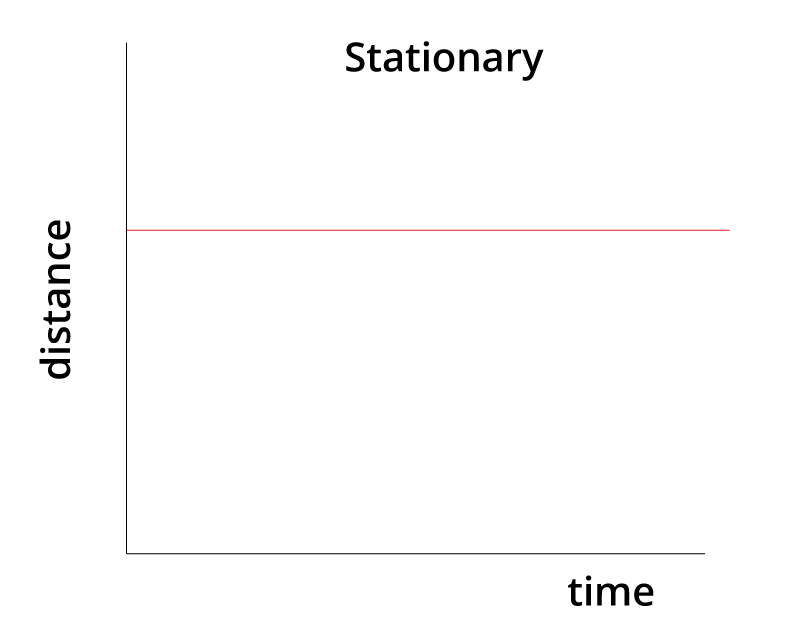
What is stationary on a distance time graph?
A straight line.
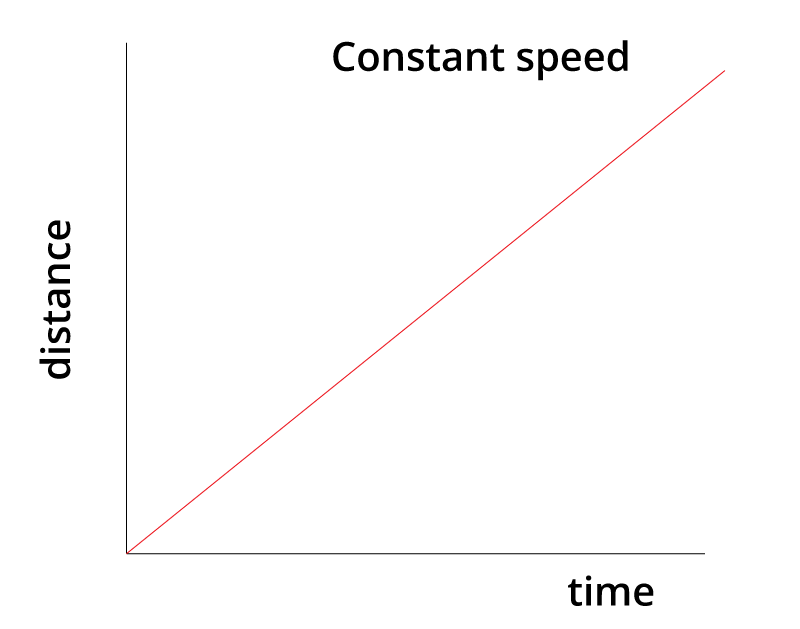
What is a constant speed on a distance time graph?
A diagonal straight line with constant gradient
What is the gradient on a distance-time graph equal to?
The speed of the object.
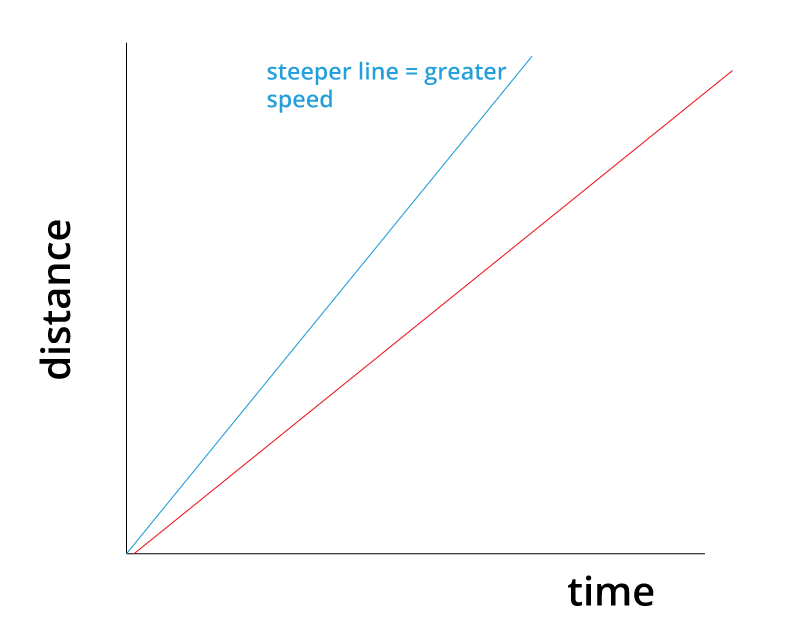
How do you show a greater speed on a distance-time graph?
A steeper line/gradient.
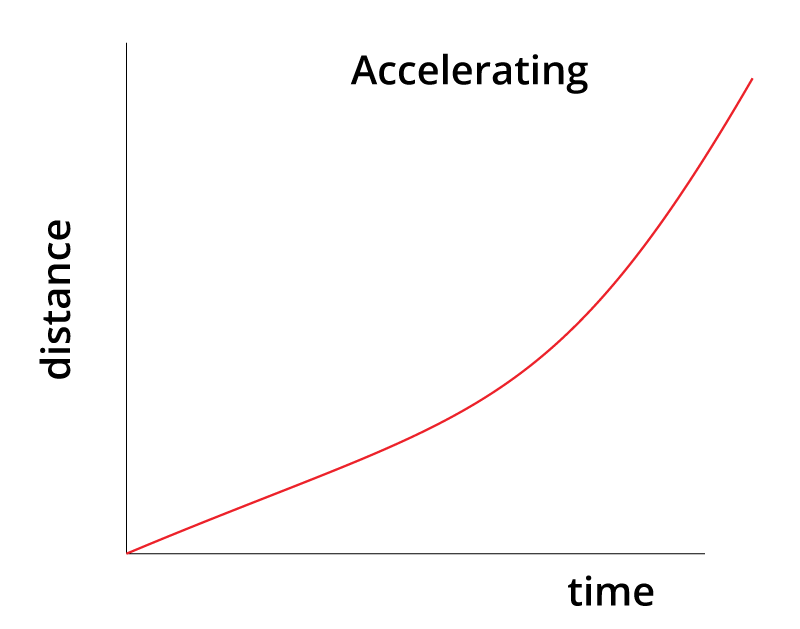
How do you show acceleration on a distance-time graph?
A curved upward line.
How do you find the mean speed on a distance-time graph?
Distance divided travelled by the time taken.
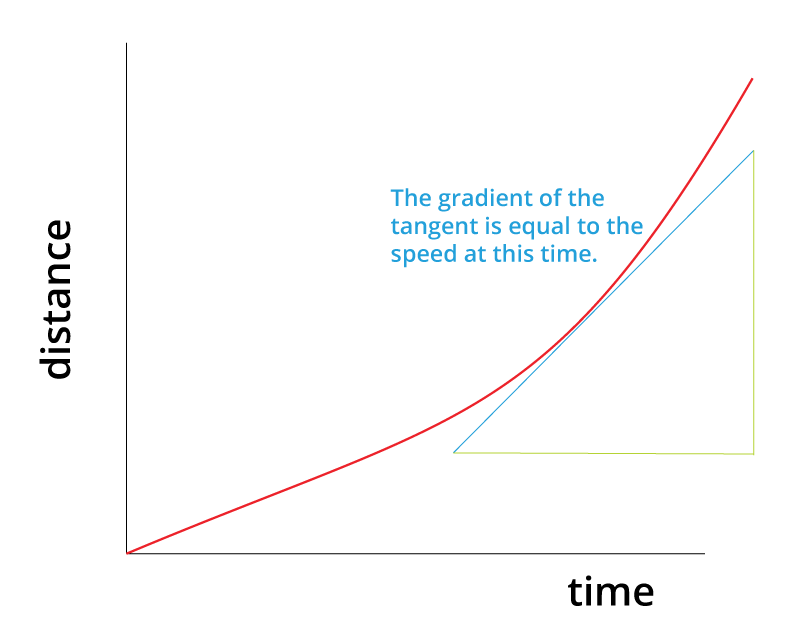
How do you find a speed at a given time on a distance-time graph?
The gradient of the line
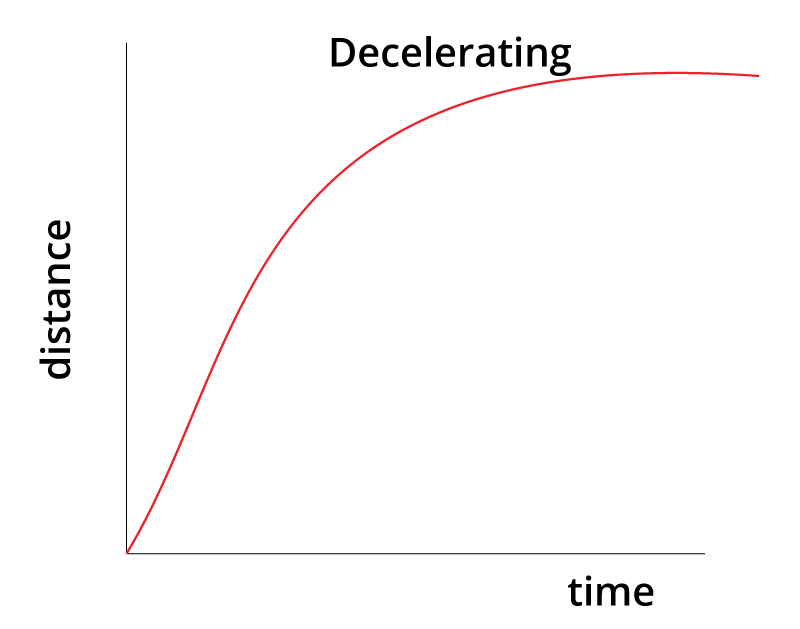
How do you show deceleration on a distance-time graph?
A curved line that is decreasing with time.
What can speed-time graphs be used to describe?
The motion of an object.
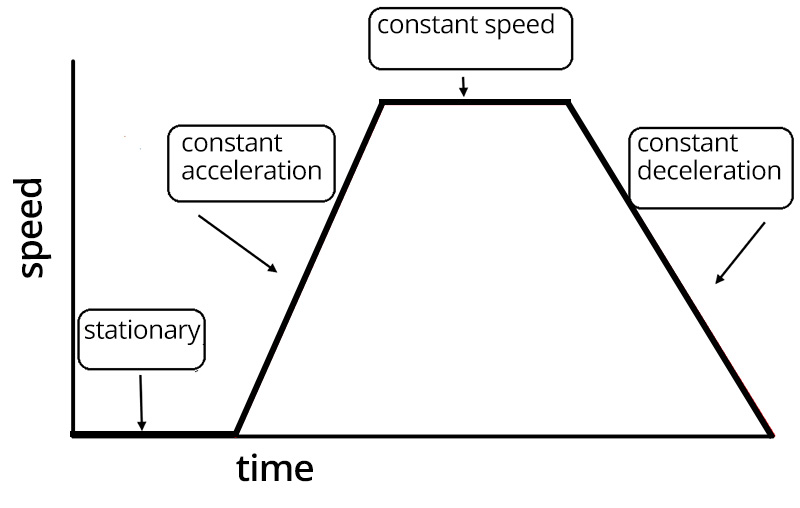
On a speed-time graph what does
A horistonal line
A sloping upwards line
A downward sloping line
represent?
Constant speed
Speed is increasing
Speed is decreasing
What can velocity-time graphs be used to describe?
Motion.
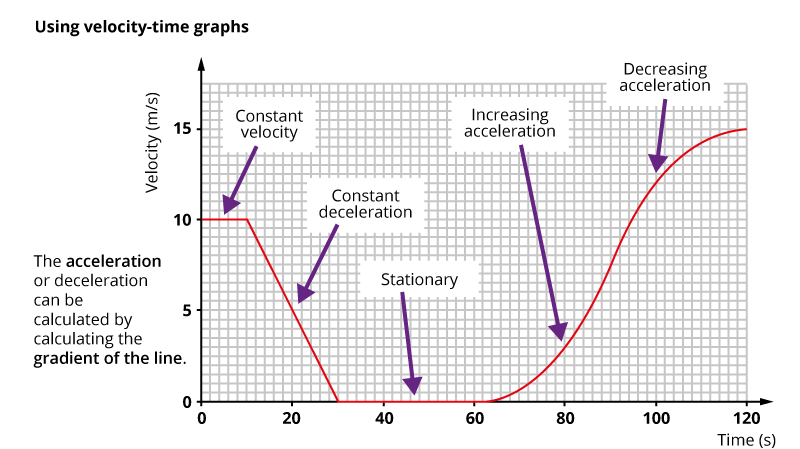
How can the acceleration be calculated in a velocity-time graph?
By calculating the gradient of the line.
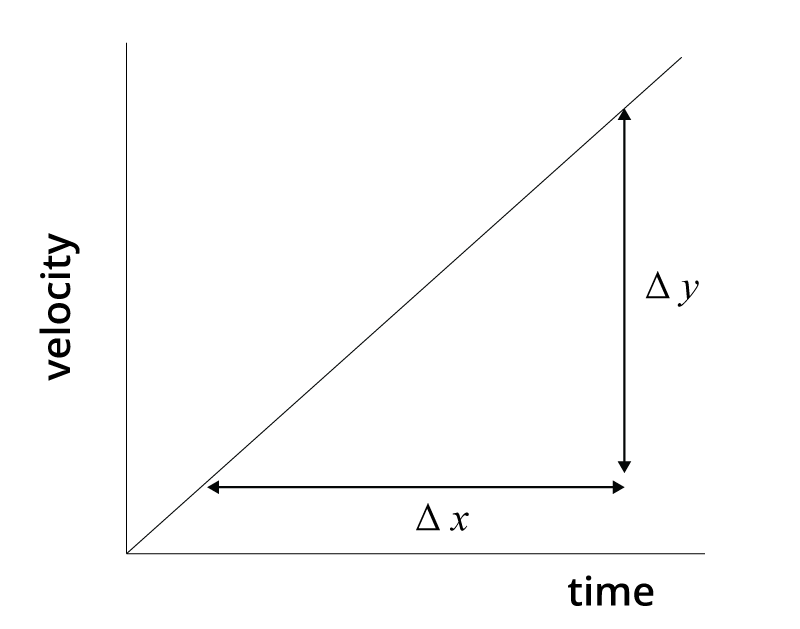
What happens with the gradient of a line as time goes on?
Increases with time, and so the acceleration is increasing.
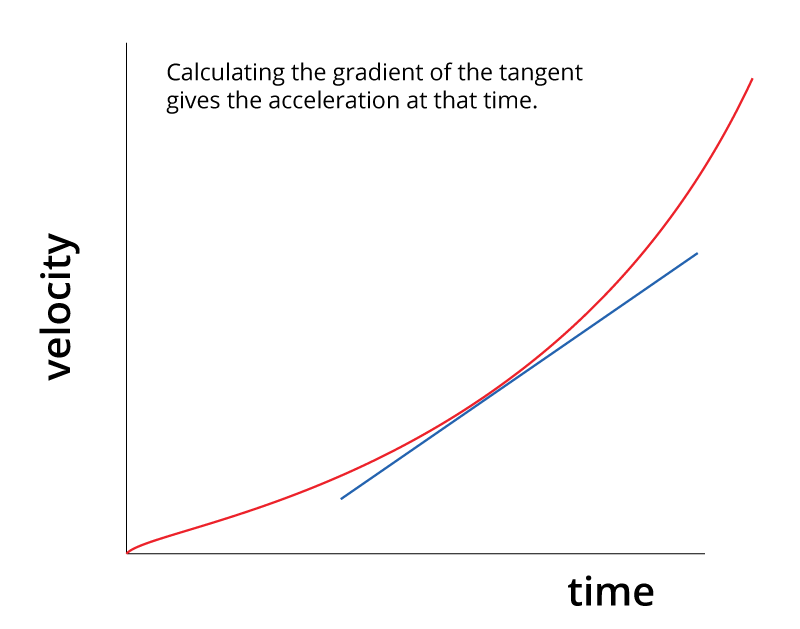
How do you find the acceleration at a given time in a velocity-time graph?
By drawing a tangent. The gradient of the tangent is equal to the acceleration at that point.
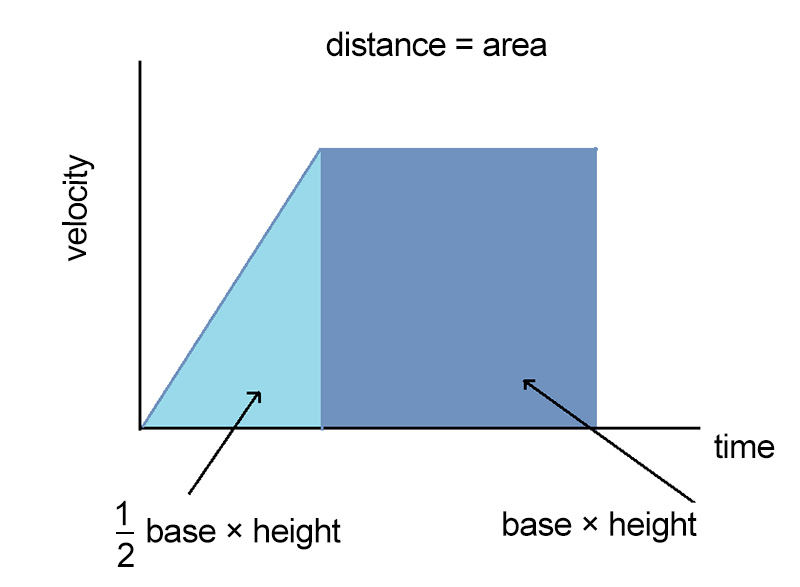
How do you find the distance travelled on a velocity-time graph?
By calculating the area underneath the graph.