Exam 1 Histology Pictures
 Call Kai
 Learn
Learn Practice Test
 Spaced Repetition
 Match
Match Flashcards
 Knowt Play
1/20

There's no tags or description
Looks like no tags are added yet.
Name | Mastery | Learn | Test | Matching | Spaced | Call with Kai | Chat |
|---|
No analytics yet
Send a link to your students to track their progress
21 Terms
Simple squamous epithelium
Description: single layer or flattened cells with disc-shaped central nuclei and sparse cytoplasm.Simple of the epithelia.
Functions: allows materials to pass by diffusion and filtration in sites where protection is not imp.
Location: kidney, air sacs lungs, lining of heart

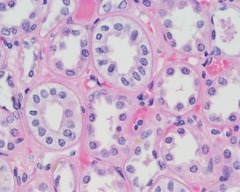
Simple cuboidal epithelium
Description: single layer of cubelike cells with large, spherical central nuclei
Function: secretion and absorption
Location: kidney tubules, ducts and secretory portions of small glands, ovary surface
simple columnar epithelium
Description: single layer of talls cells with round oval nuclei
Function: Absorption; secretion of mucus enzymes and other substances
Location: Digestive tract
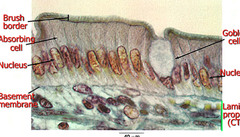
Pseudostratified columnar epithelium
Description: single layer of cells of differing heights, some not reaching the free surface.
Function: secrete substances, particularly mucus
Location: upper respiratory tracts, lines th trachea, sperm-carrying ducts.

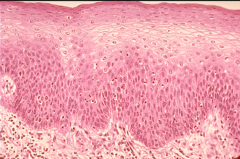
Stratified squamous epithelium
Description: thick membrane composed of several cell layers
Function: protects underlying tissues in areas subjected to abrasion
Location: esophagus, mouth and vagina.
Transitional epithelium
Description: basal cells cuboidal and columnar
Function: stretches readily,permits stored urine to distend urinary organ
Location: lines the ureters, bladder and part of the urethra

Connective tissue proper: loose connective tissue, areolar
Description: gel-like matrix with all three fiber types; fibroblast, macrophages,mast cells and some white cells.
Function: wraps and cushions organs
Location: under epithelia of body.

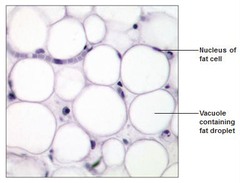
Connective tissue proper: loose connective tissue, adipose
Description: matrix as in areolar, but very sparse
Function: provides reserve food fuel
Location: under skin, around kidneys and eyeball, abdomen and breast
reticular
Description: loose network of reticular fibers in a gel-like ground substance
Function: fibers form a soft internal skeleton that supports other cells types including white blood cells, mast cells, and macrophages.

dense regular
Description: few elastic fibers
Function: attaches muscles to bones or to muscles
Location: tendons, most ligaments, aponeuroses

dense irregular
description: some elastic fibers
Function: withstands tension exerted in many directions
Location; organs and joints, dermis of skin, submucosa of digestive tract.

elastic
description: containing high portion of elastic fibers
Functions: allows tissue to recoil after stretching maintaining pulsatile flow of blood through arteries
Location: walls of large arteries.

Cartilage: hyaline
Function: supports and reinforces
Location: embryonic skeleton, costal cartilages of the ribs, trachea and larynx.
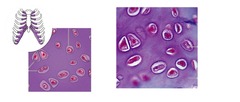
Cartilage: elastic
Function: Maintains the shape of a structure while allowing great flexibility
Location: support external ear

Cartilage: fibrocartiage
Function: tensile strength allows it to absorb compressive shock
Location: intervertebral discs, knee joint

other: bone (osseous tissue)
Function: supports and protects
Locations: bones

Connective tissue: Blood
function; transport respiratory gases, nutrients, wastes, and other substances.
Location: contained within blood vessels

skeletal muscle
Function: voluntary movement
Location: in skeletal muscles attached to bones or occasionally to skin

cardiac muscle
Function: as it contracts it propels blood into the circulation.
Location: the walls of the heart.

Smooth muscle
Function: propels substances or objects along internal passageways. (foodstuffs, urine, baby)
Location: mostly in the walls of hollow organs

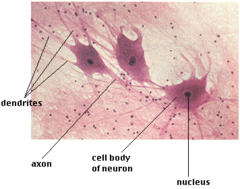
Nervous tissue
Function: Neurons transmit electrical signals form sensory receptors and to effectors
Location: brain, spinal cord and nerves