Integumentary System
 Call Kai
 Learn
Learn Practice Test
 Spaced Repetition
 Match
Match Flashcards
 Knowt Play
1/55

There's no tags or description
Looks like no tags are added yet.
Name | Mastery | Learn | Test | Matching | Spaced | Call with Kai | Chat |
|---|
No analytics yet
Send a link to your students to track their progress
56 Terms
integumentary system
Consists of the skin, mucous membranes, hair, and nail
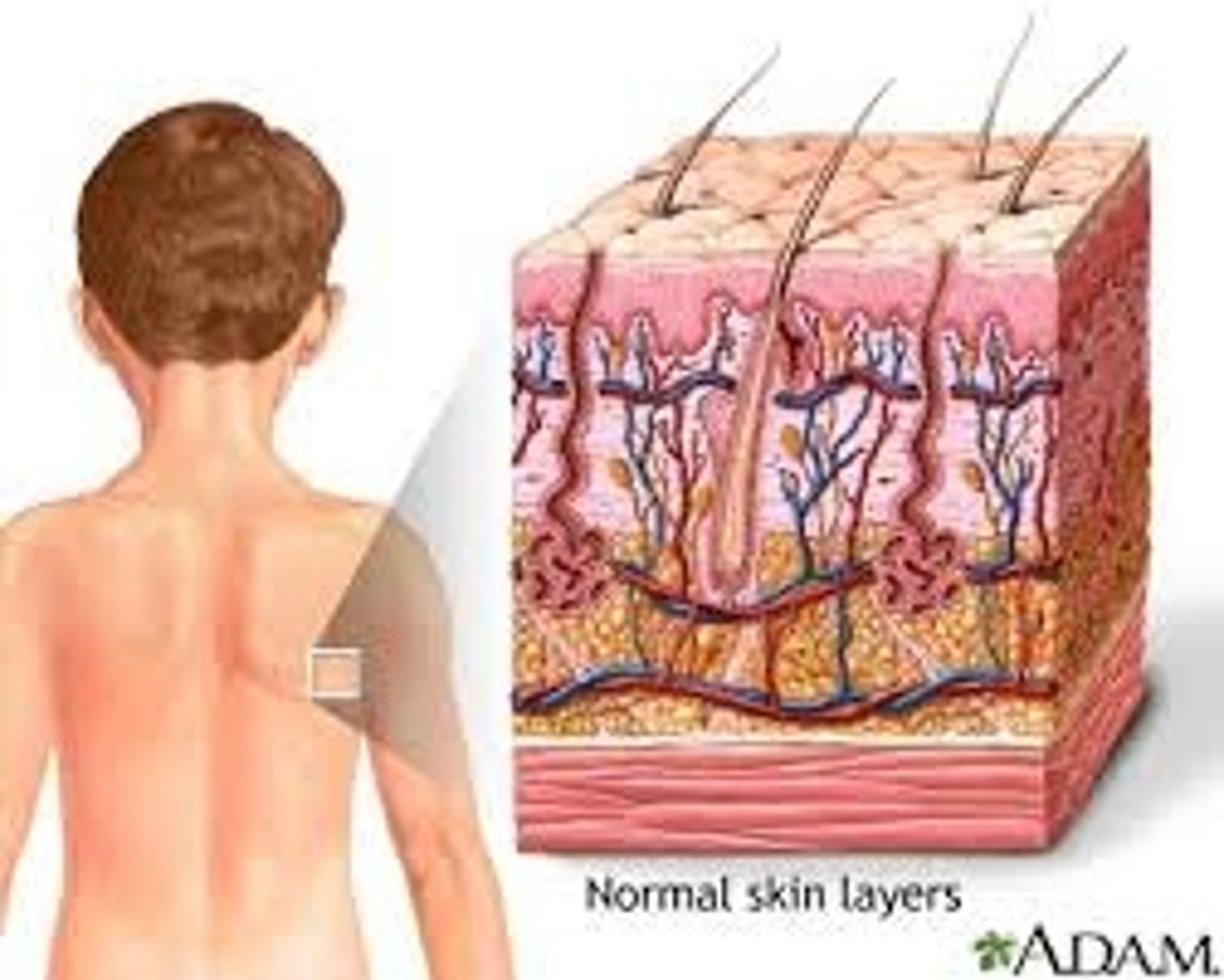
hypodermis
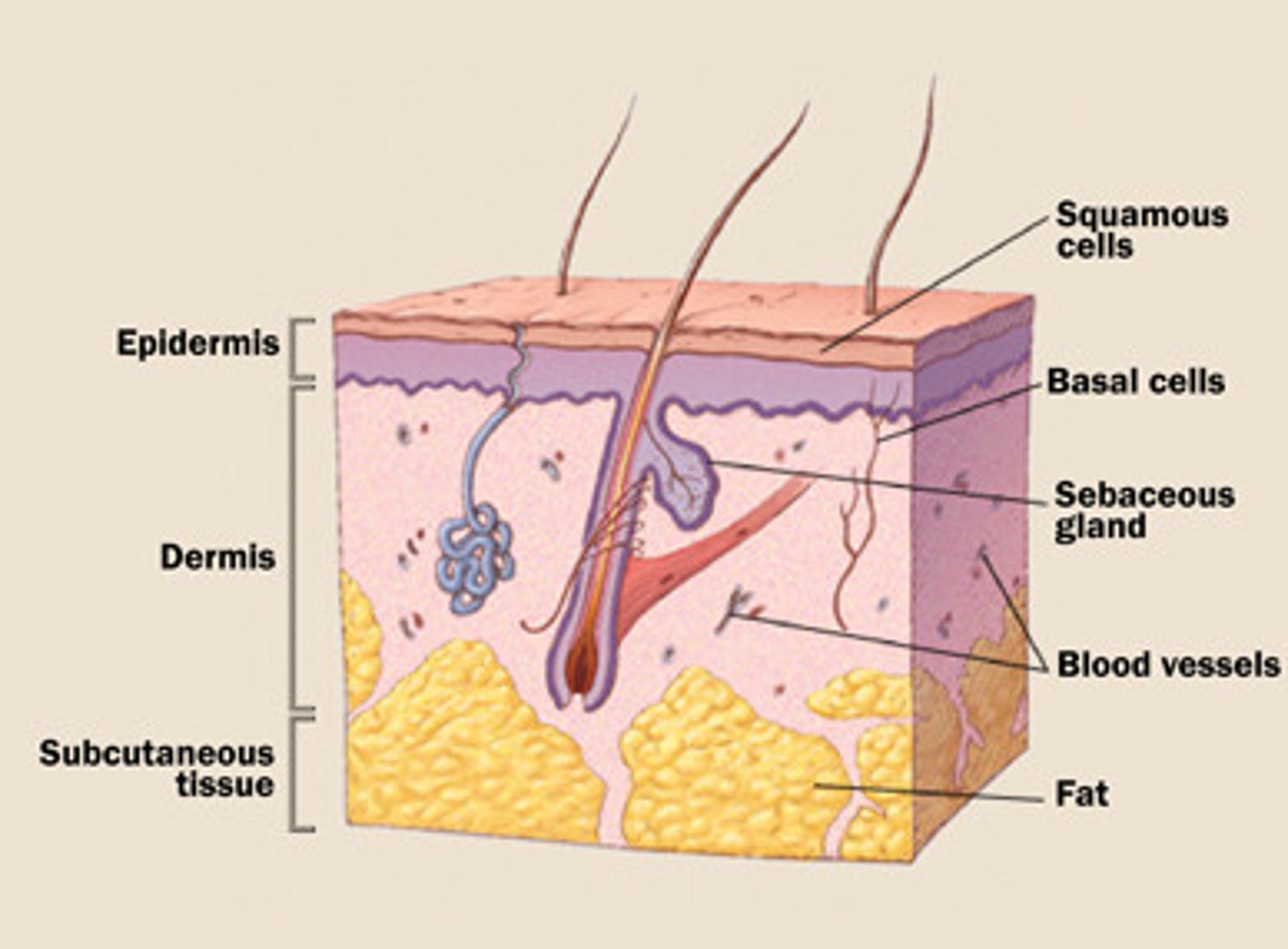
Also called a subcutaneous layer, this is a layer of fat is located under the dermis of the skin; helps to insulate the body and protects underlying muscles and blood vessels.
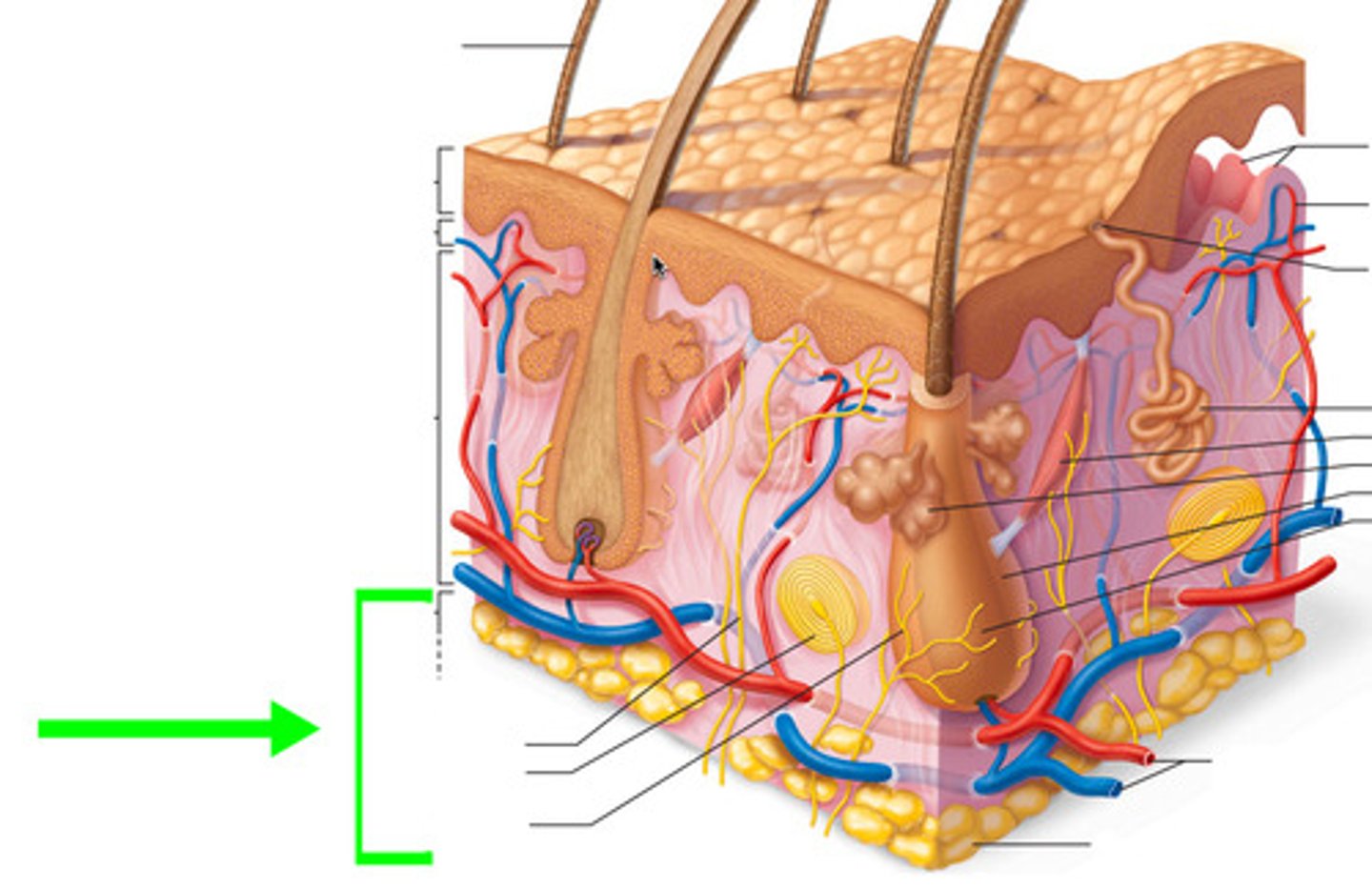
melanin
A pigment that gives the skin, hair and eyes color and helps protect the body from harmful UV radiation that causes skin cancer.
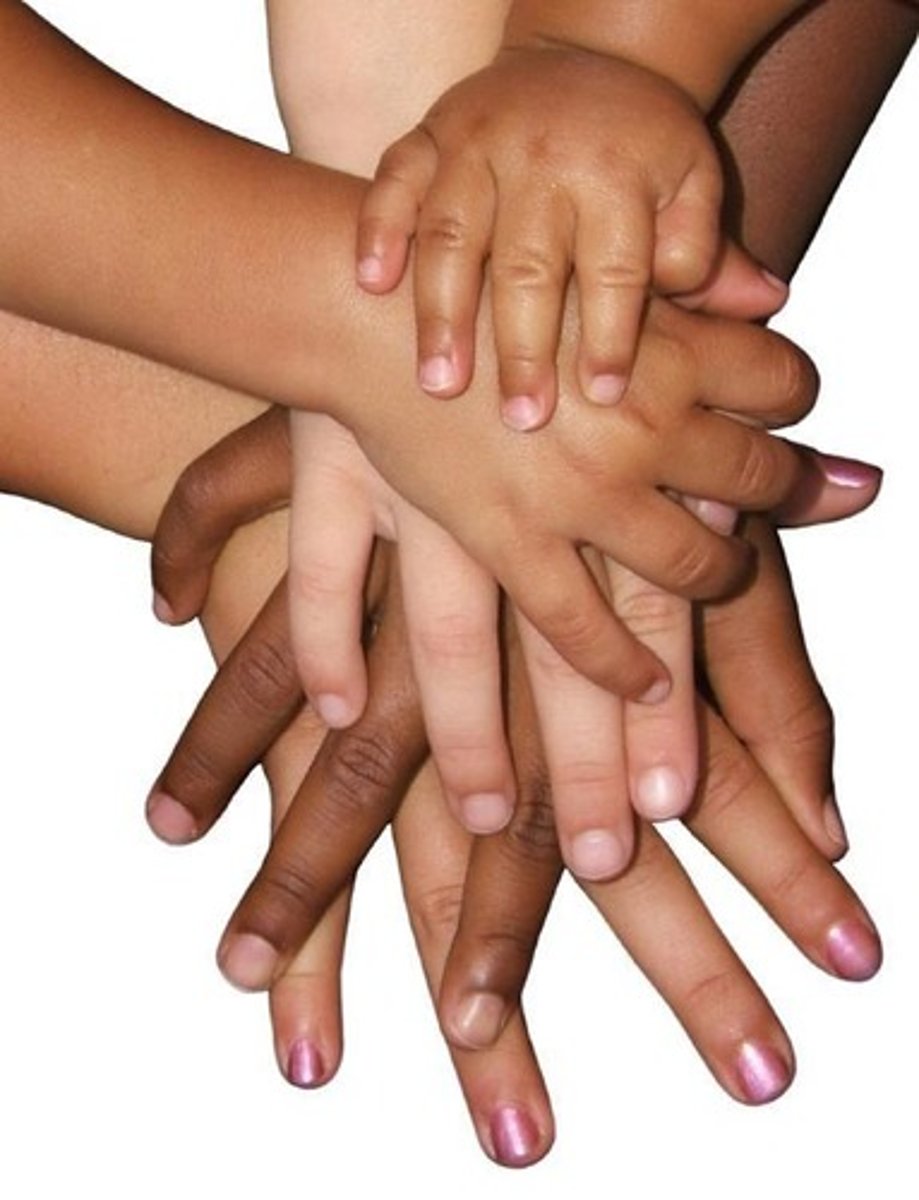
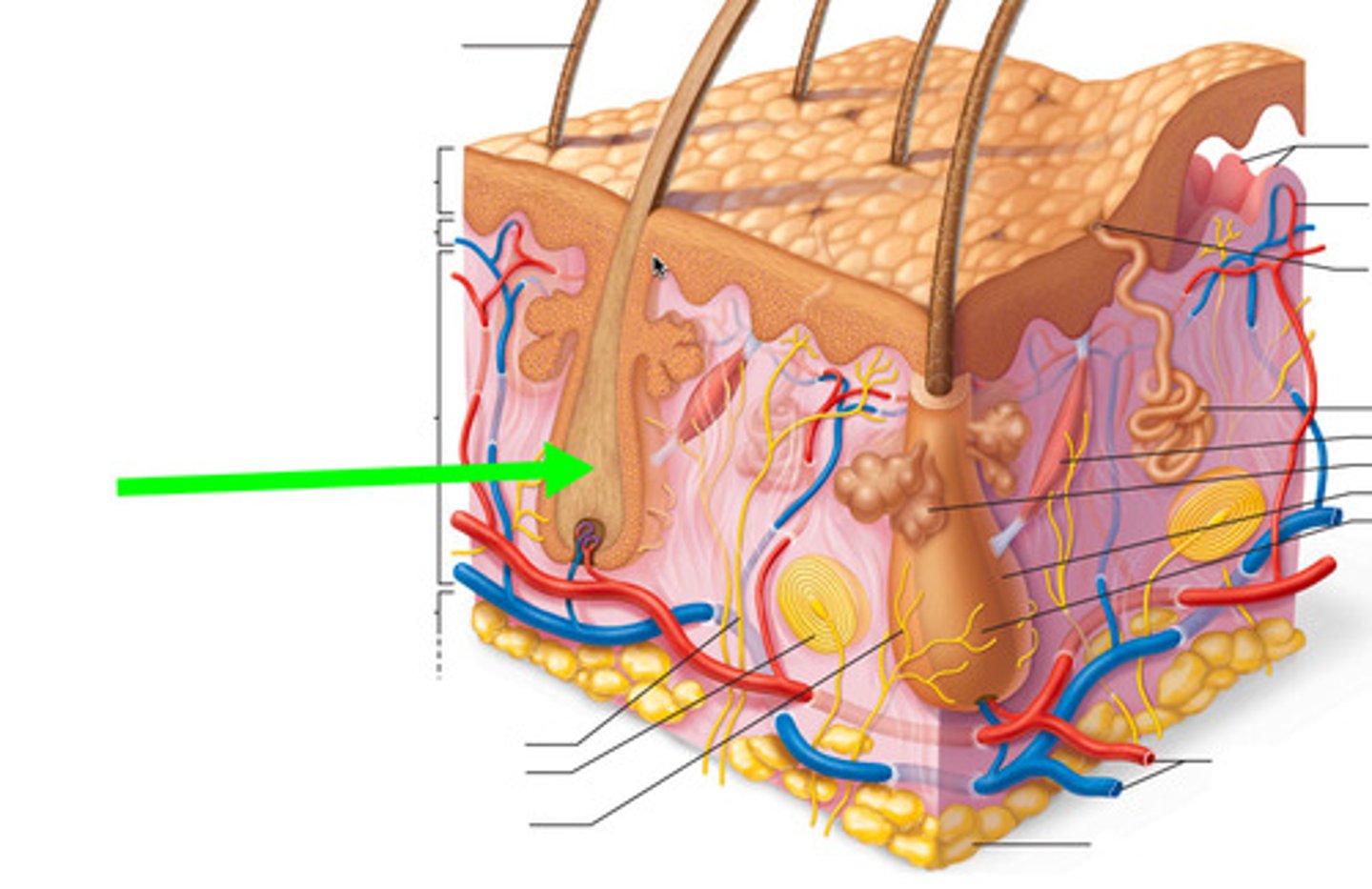
hair follicle
A small tubular cavity in skin containing the root of a hair and is attached to oil glands.
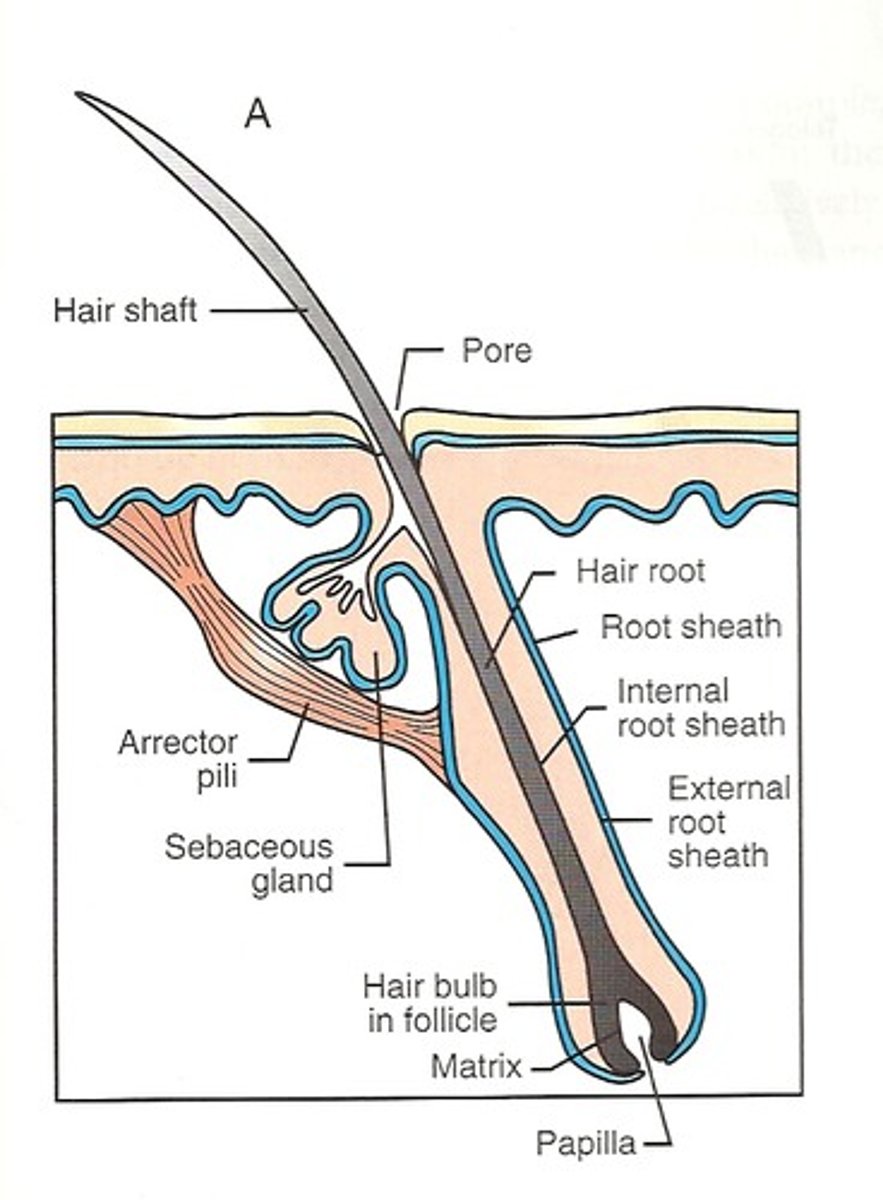
nail cuticle
Dead, colorless tissue attached to the natural nail plate.
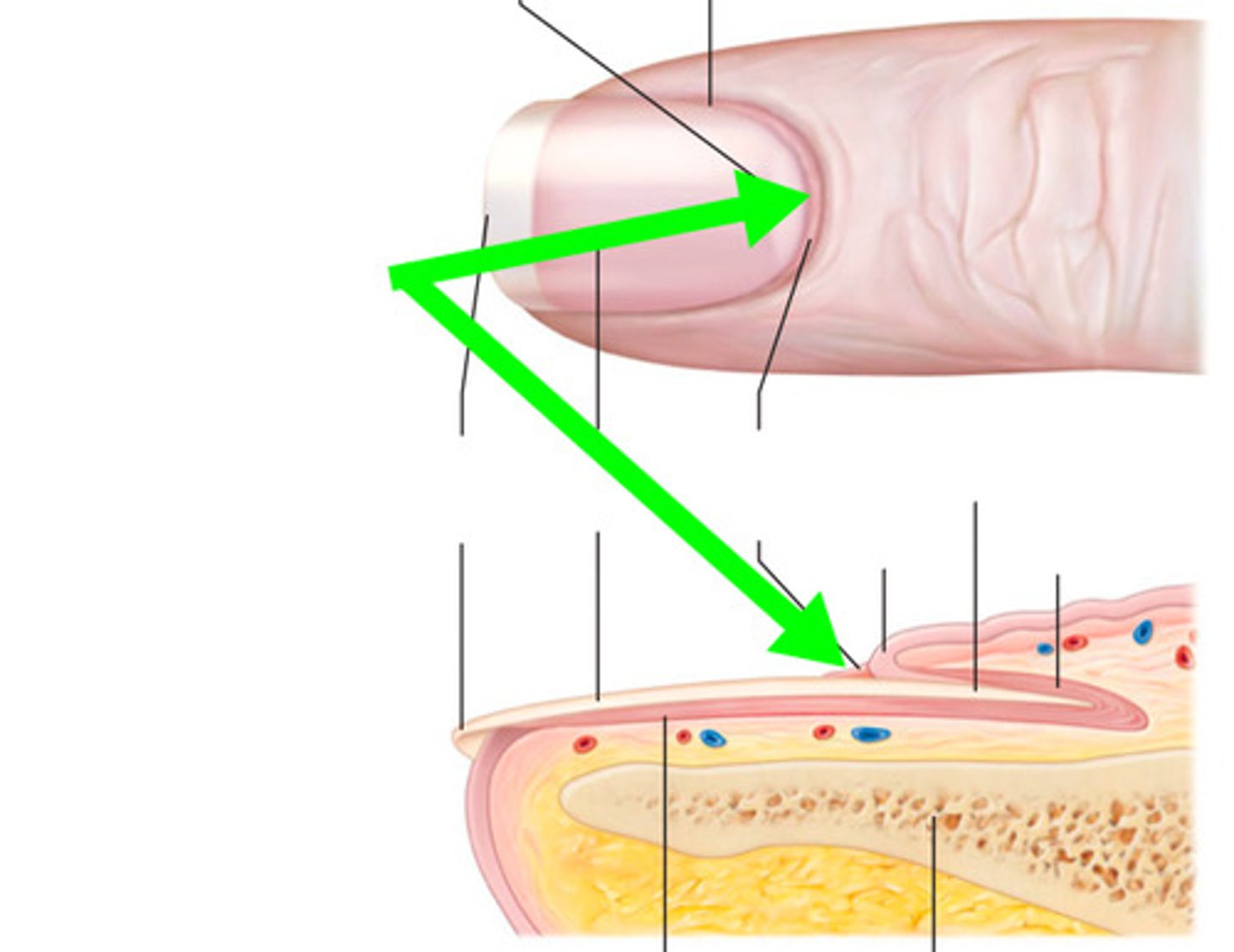
hair root
The part of the hair located below the surface of the epidermis.
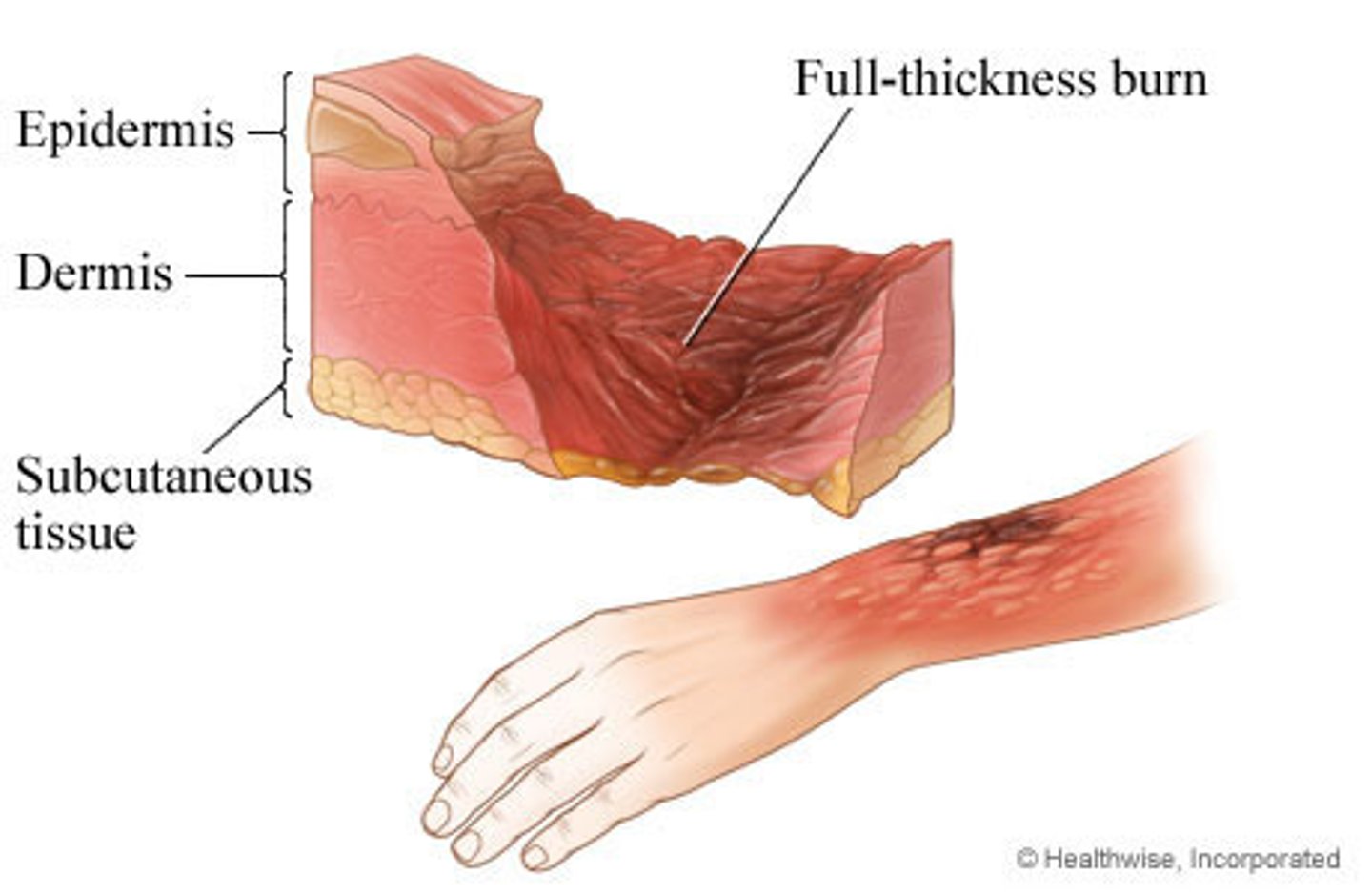
Ist degree burn
only epidermis affected; redness and pain; no blisters or swelling occurs
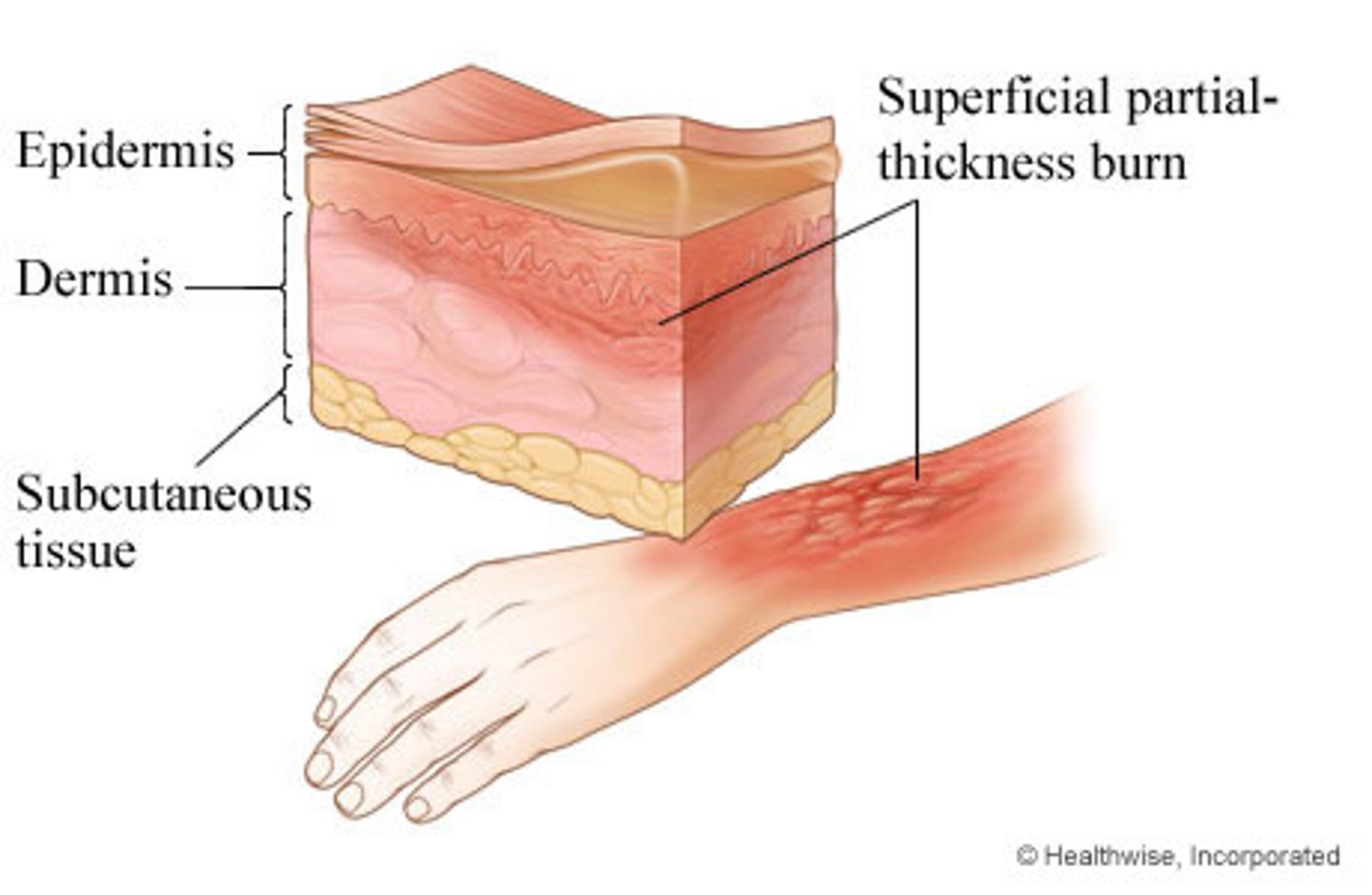
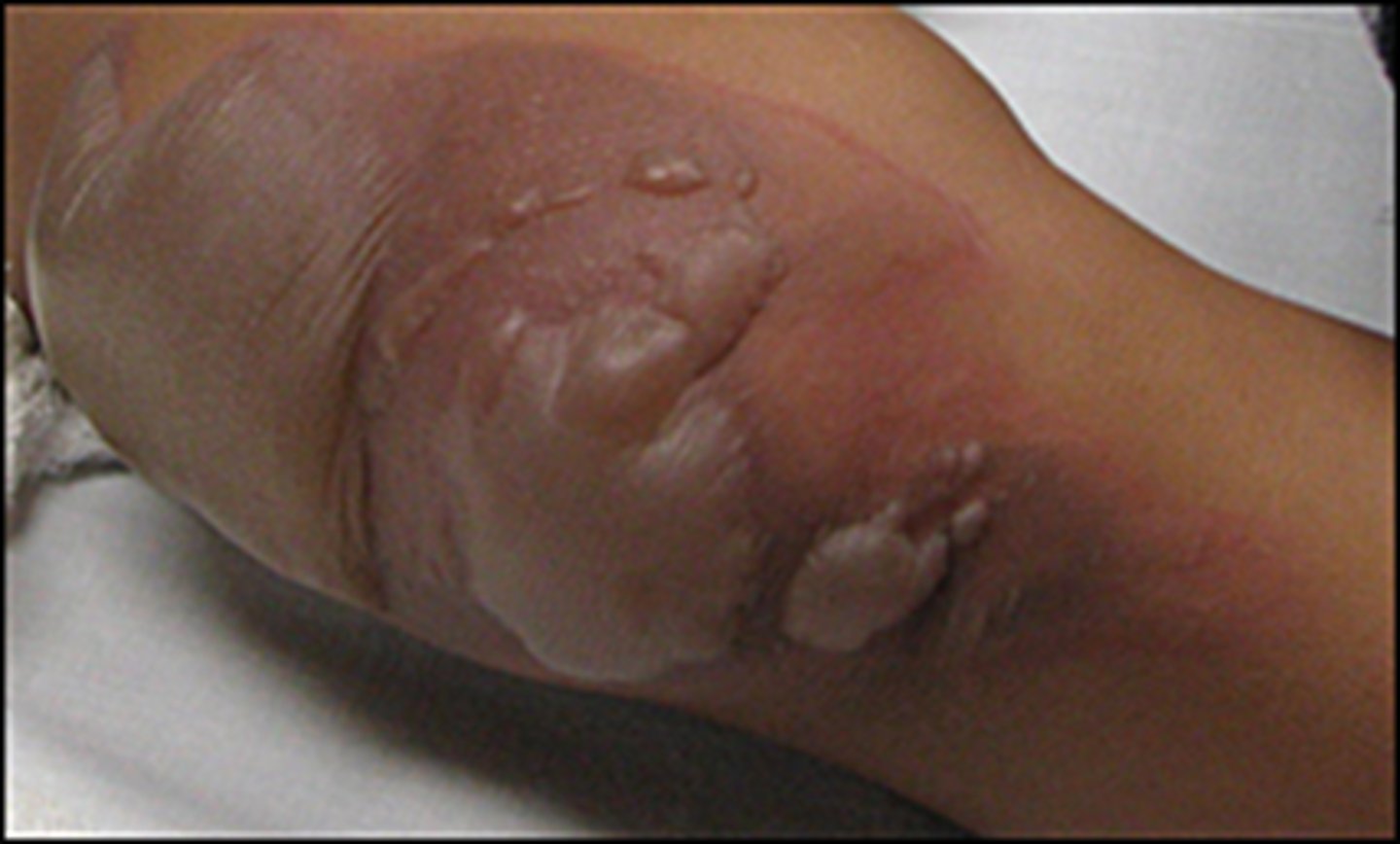
2nd degree burn
epidermis and upper dermis are damaged, skin is red with blisters
3rd degree Burn
thermal damage to all three layers of the skin, also cooks blood vessels, so it appears to be dry and leathery- color depends on agent
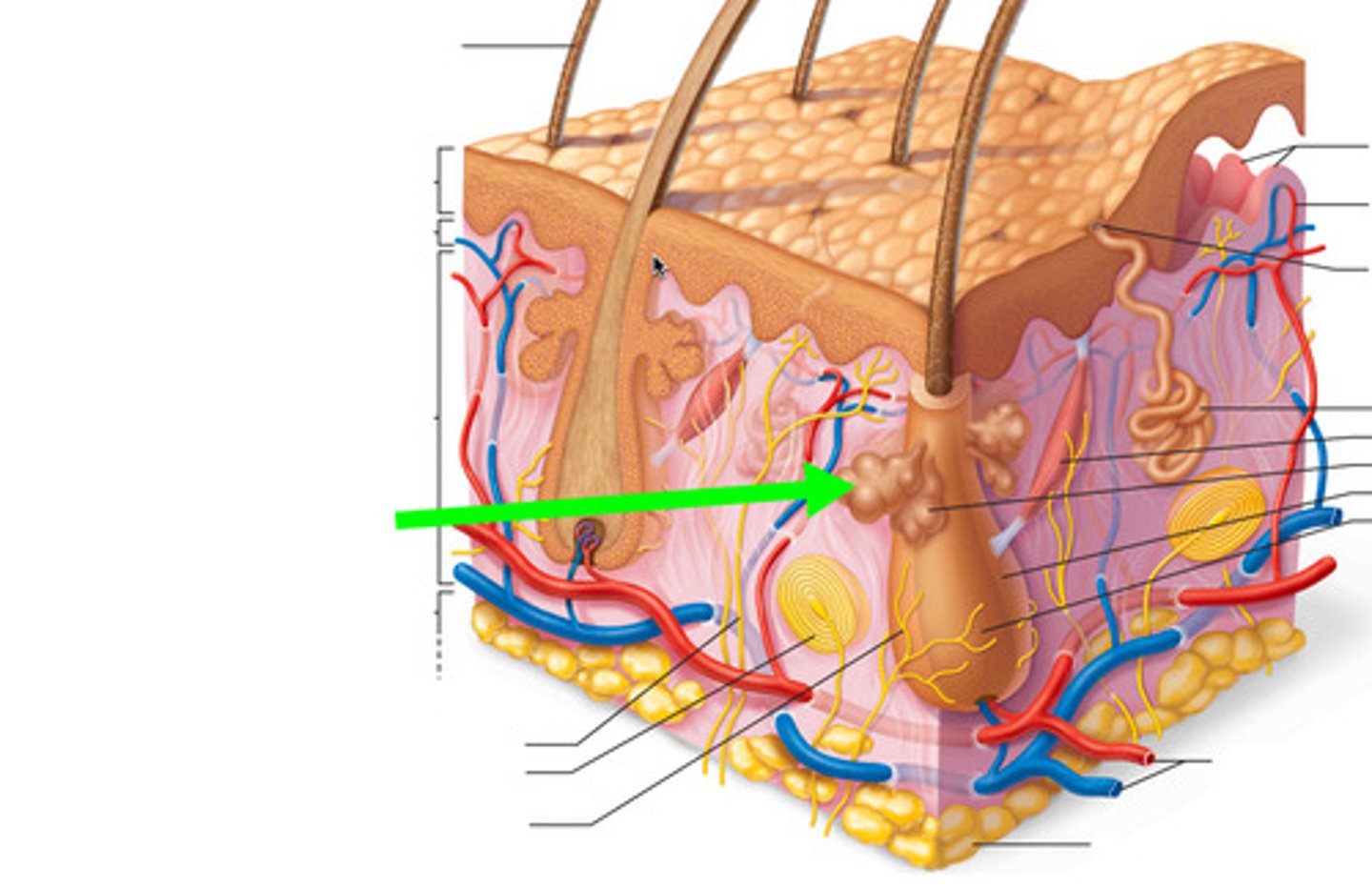
Sebaceous Glands
found in the dermis, secrete the oil sebum
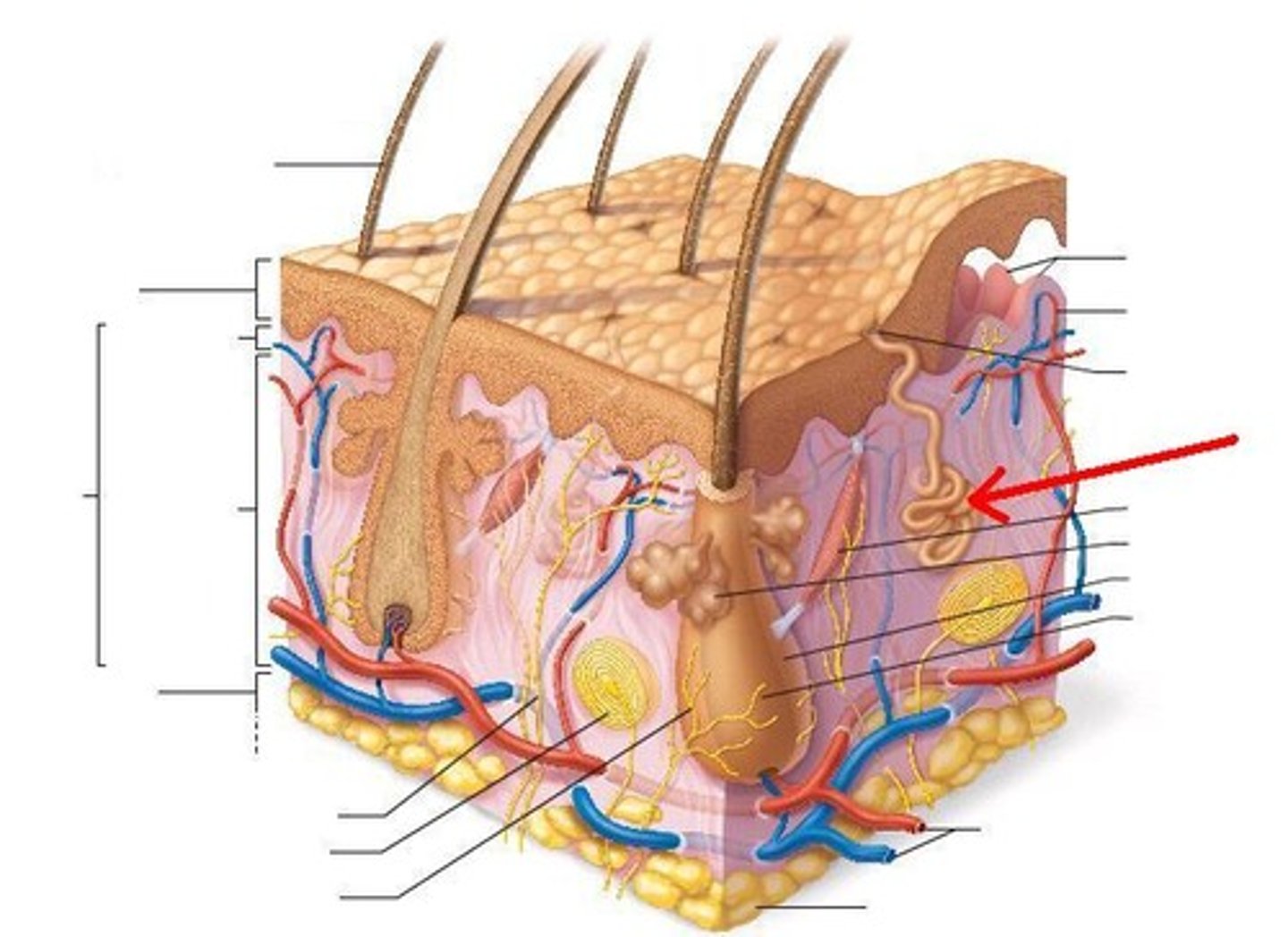
Sweat Glands
The glands that secrete sweat, located in the dermal layer of the skin, also known as sudoriferous glands
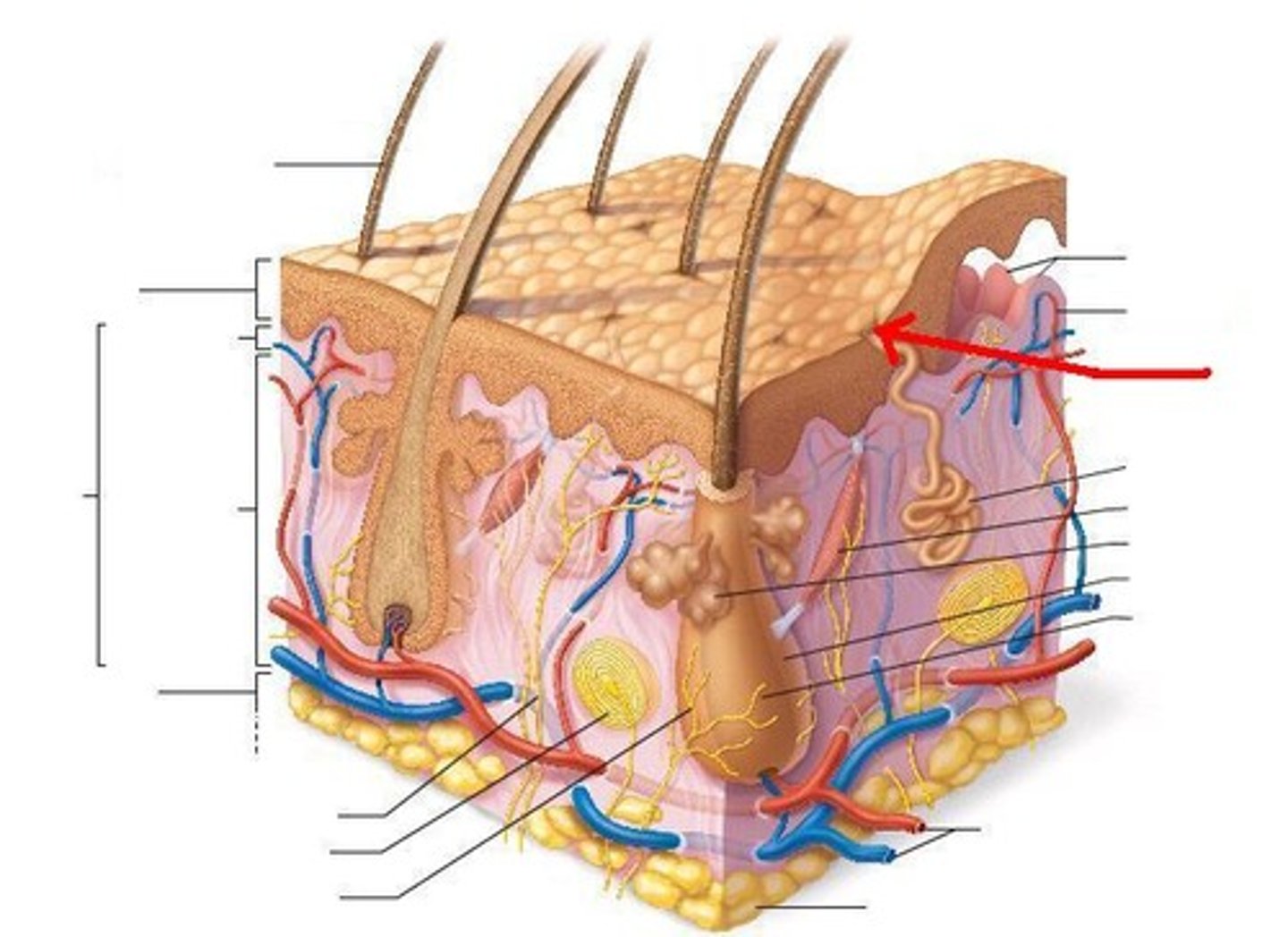
Pore
Made:Tiny openings on top of skin with sweat and oil glands
Function: Let sweat and oil come out of skin.
Arrector Pilli
small bands of smooth muscles that connect each side of the hair follicle to the dermal tissue, cause hair to stand on end when frightened or cold(goosebumps)
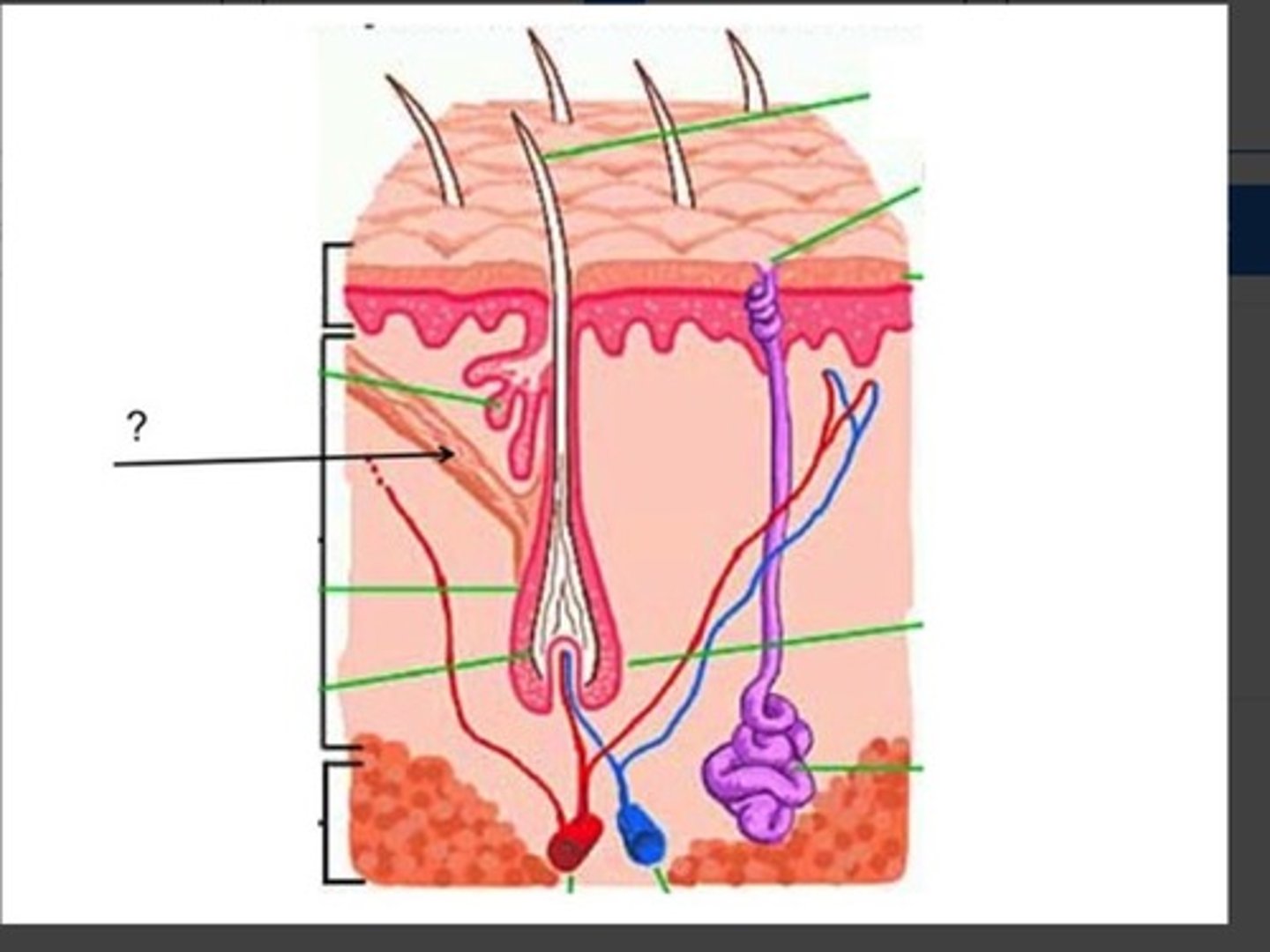
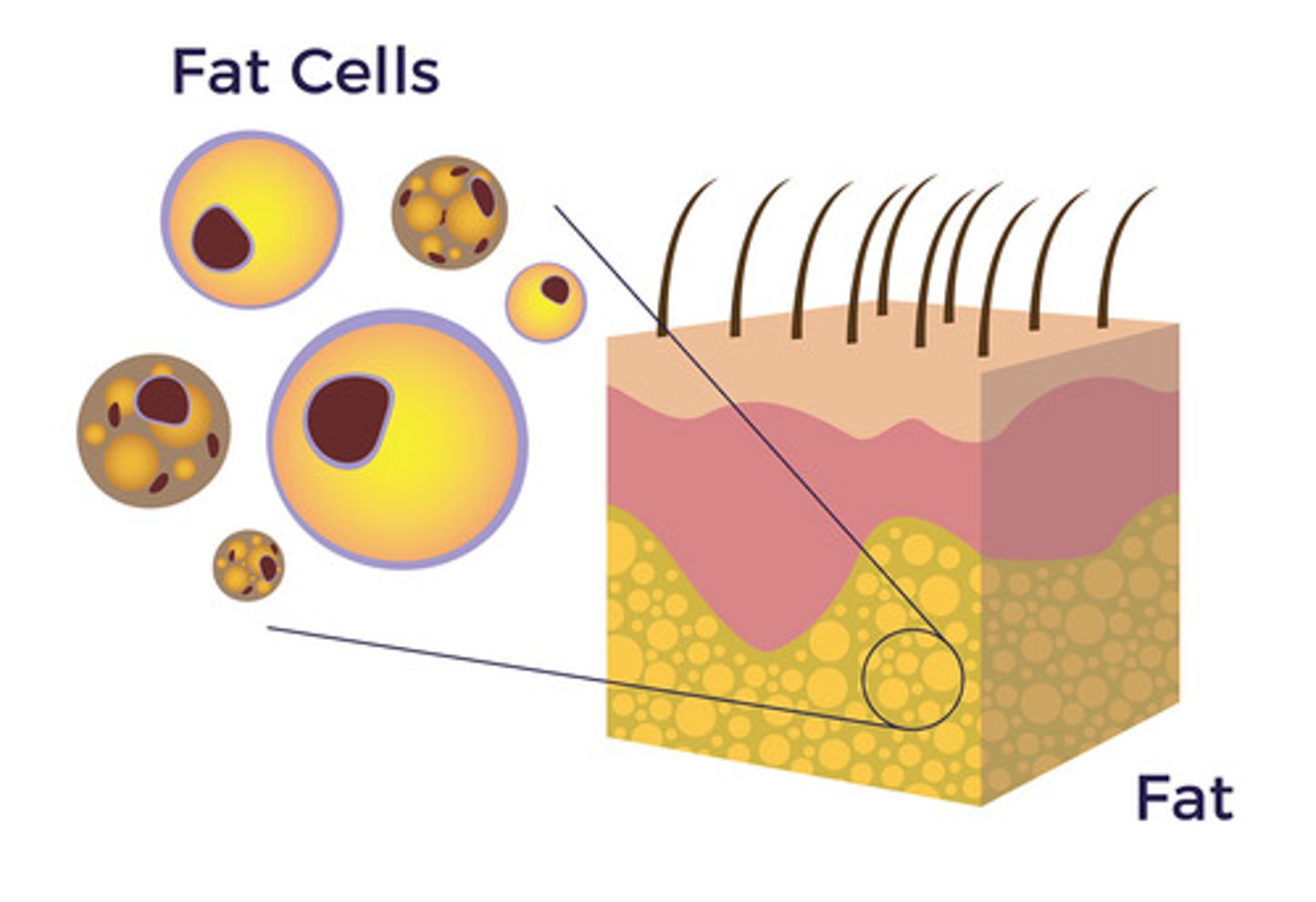
Adipose tissue (fat molecule)
Made:fat
Function:Insulate the body from heat and cold
provides padding
an energy storage area
acne
bacterial infection of sebaceous glands
subcutaneous layer
fat layer
Epidermis
Most superficial layer of skin. Replaced every 4-6 weeks
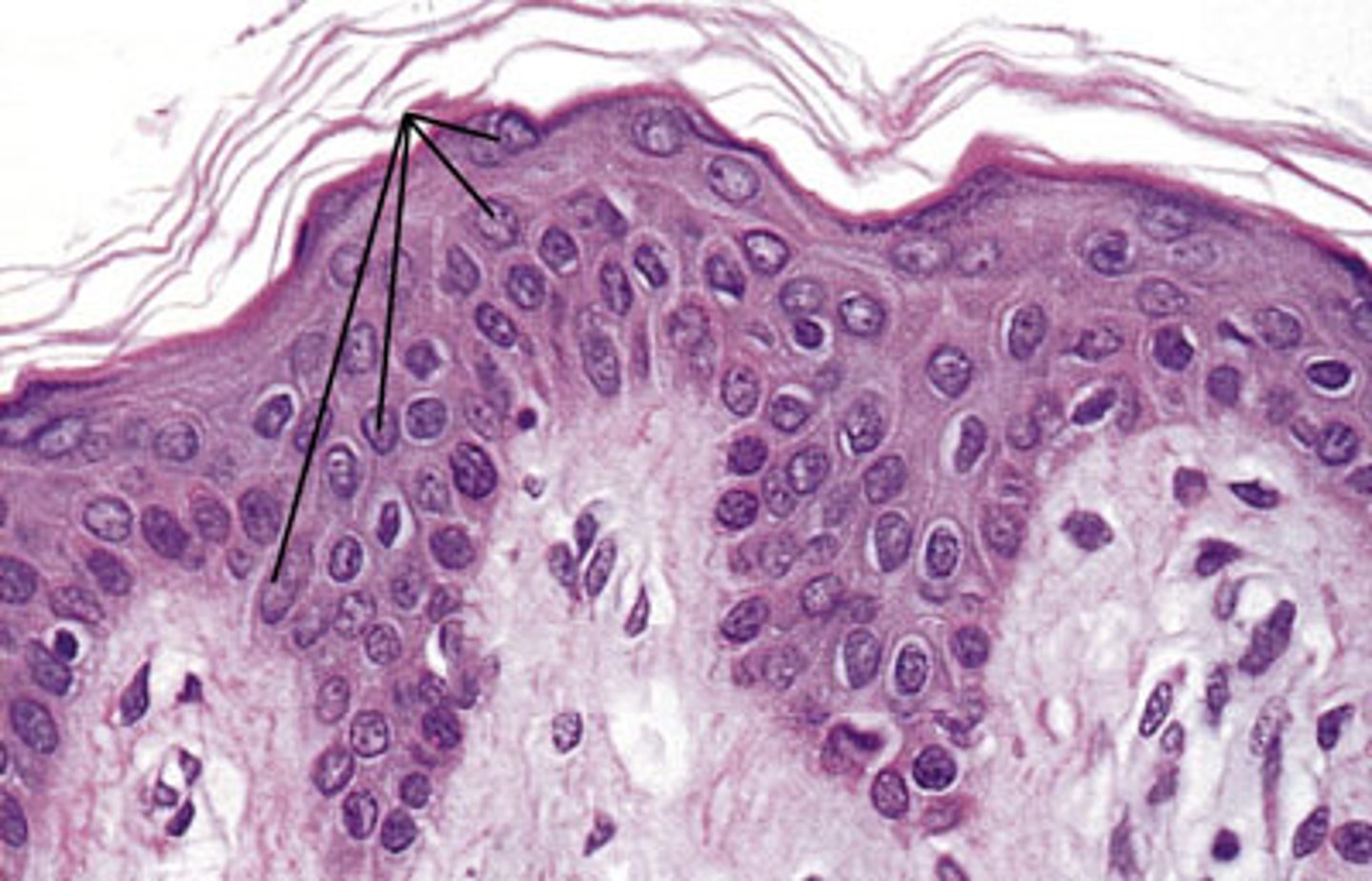
Keratinocytes
The most abundant epidermal cells, they function mainly to produce keratin.
Melanocytes
Spidery black cells that produce the brown-to-black pigment called melanin.
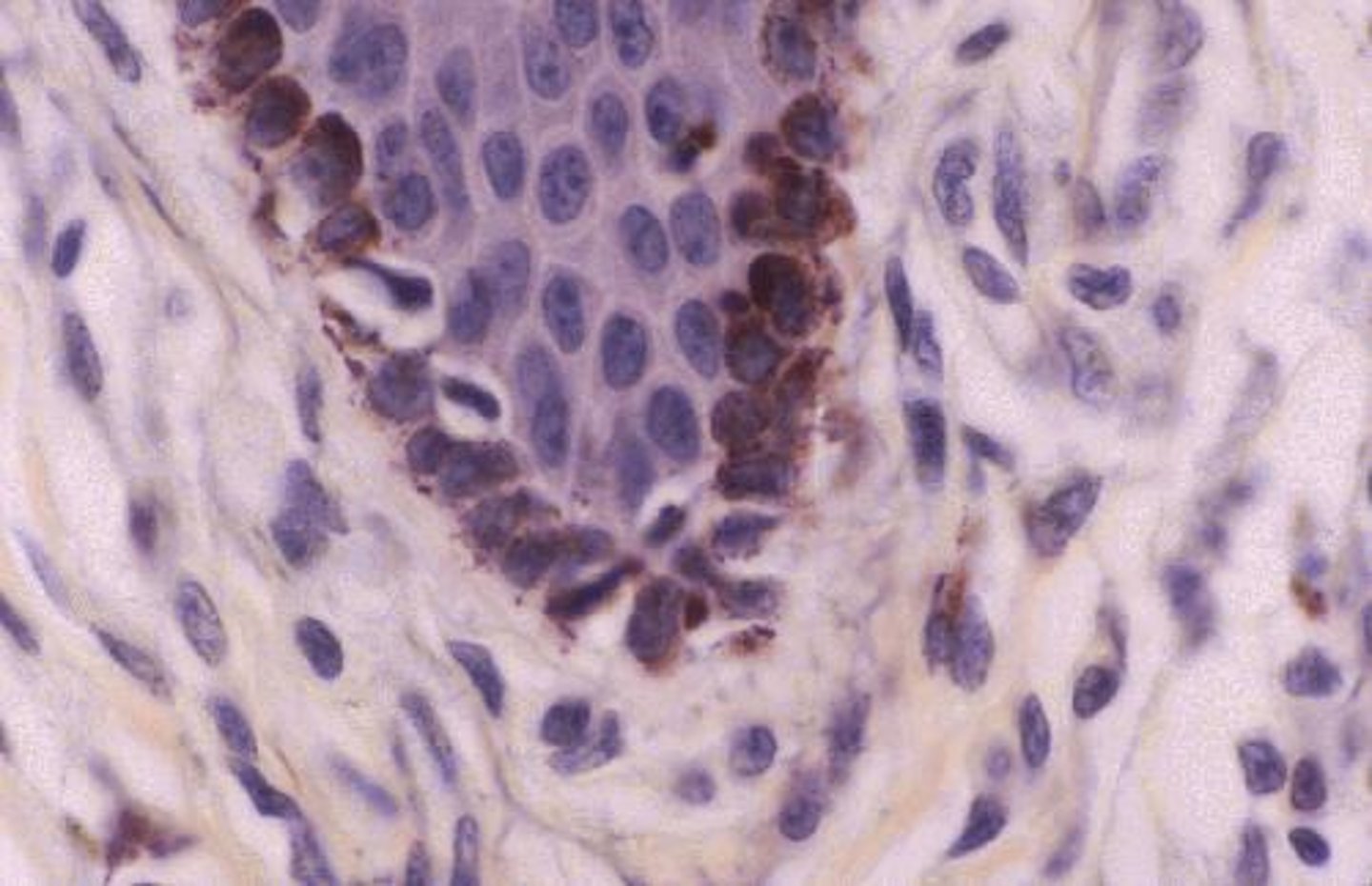
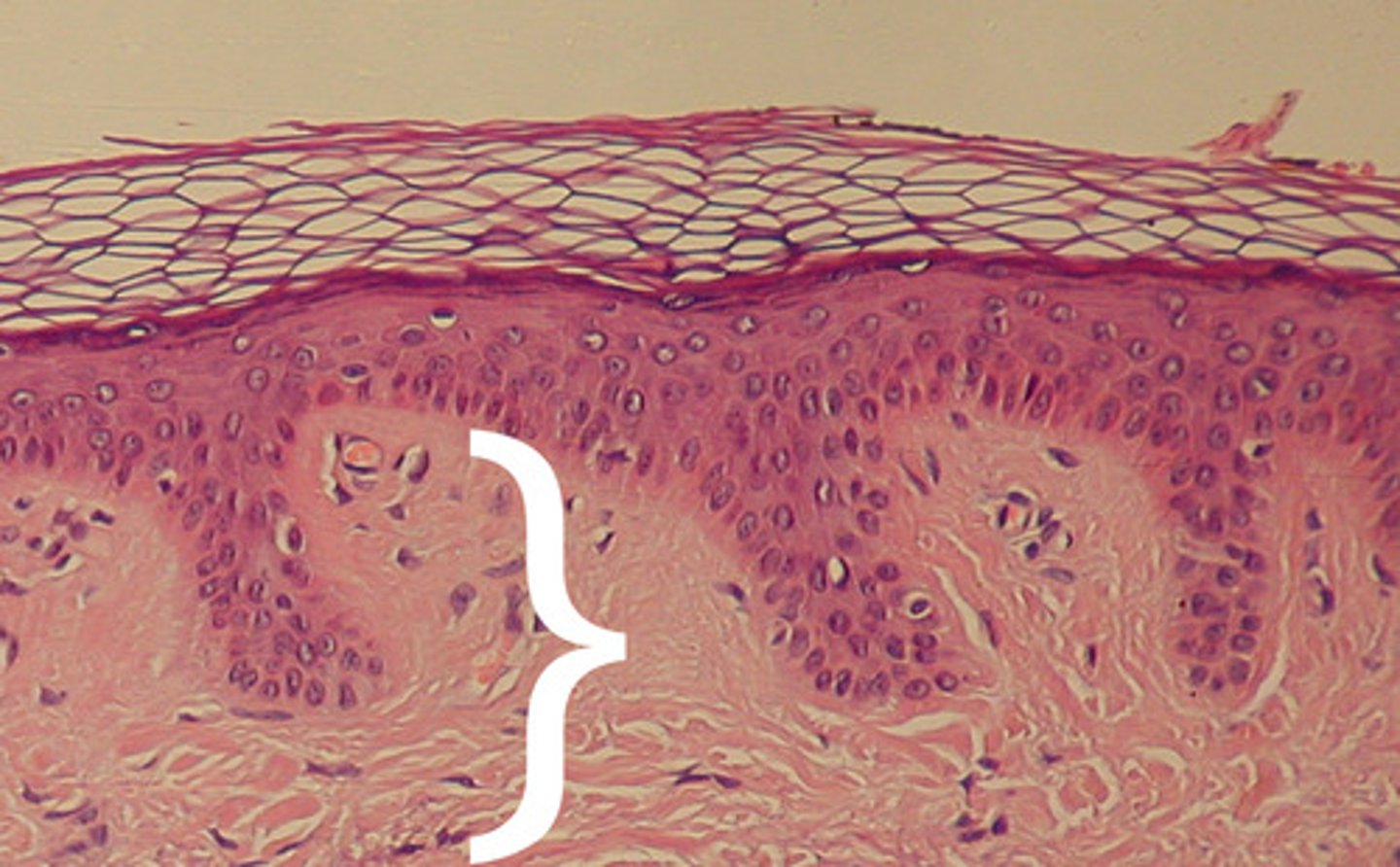
Dermis
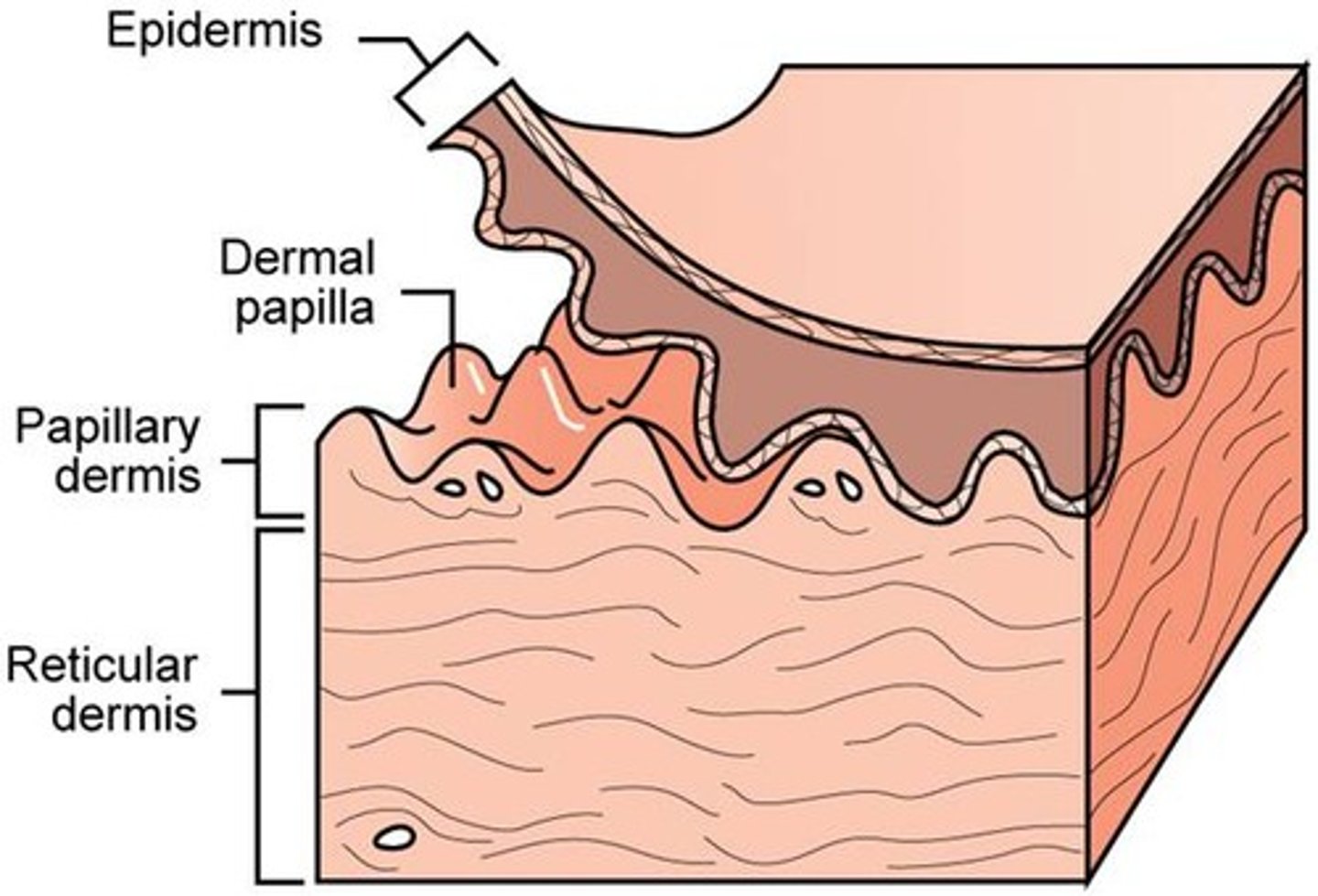
Dense, irregular connective tissue consisting of two regions - the papillary and the reticular areas.
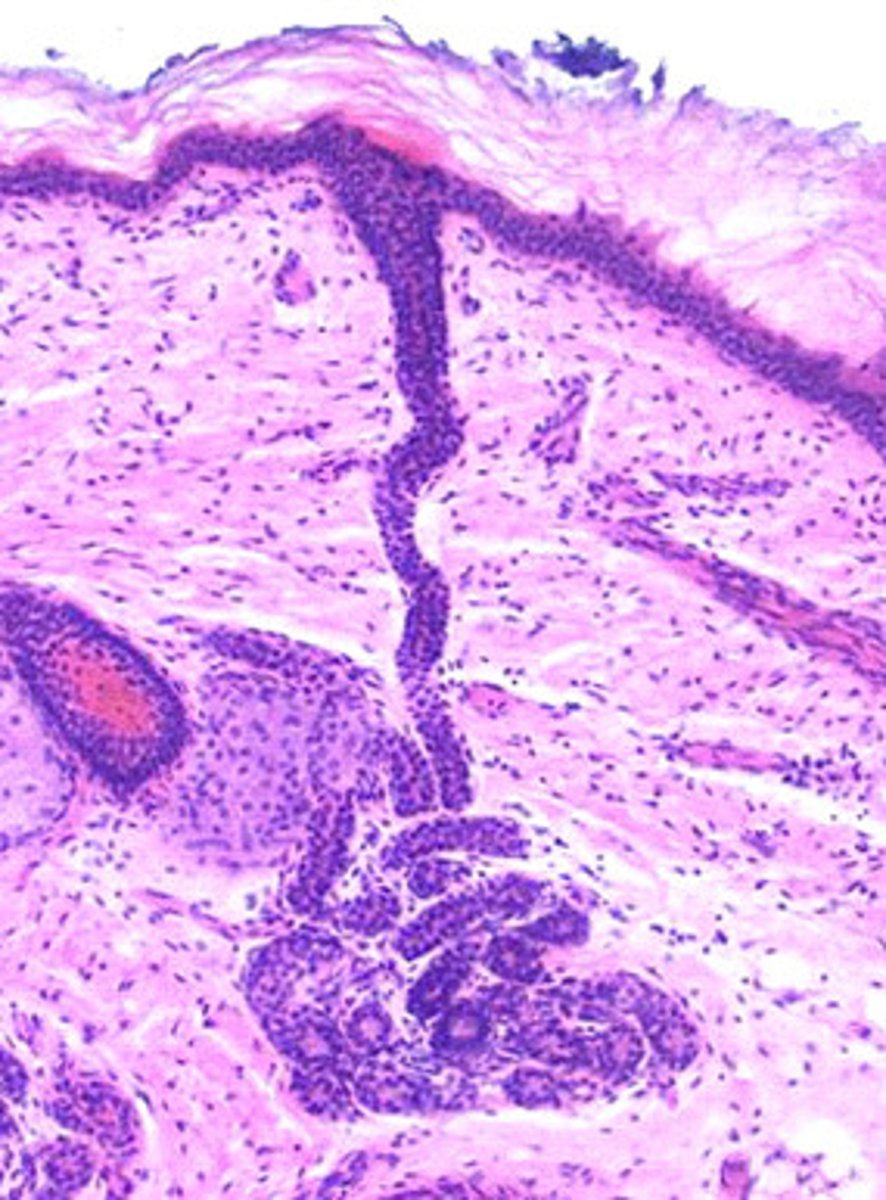
Sebum
The product of sebaceous glands. It is a mixture of oily substances and fragmented cells that acts as a lubricant to keep the skin soft and moist.
Eccrine Glands
These glands produce sweat. Regulate body temperature
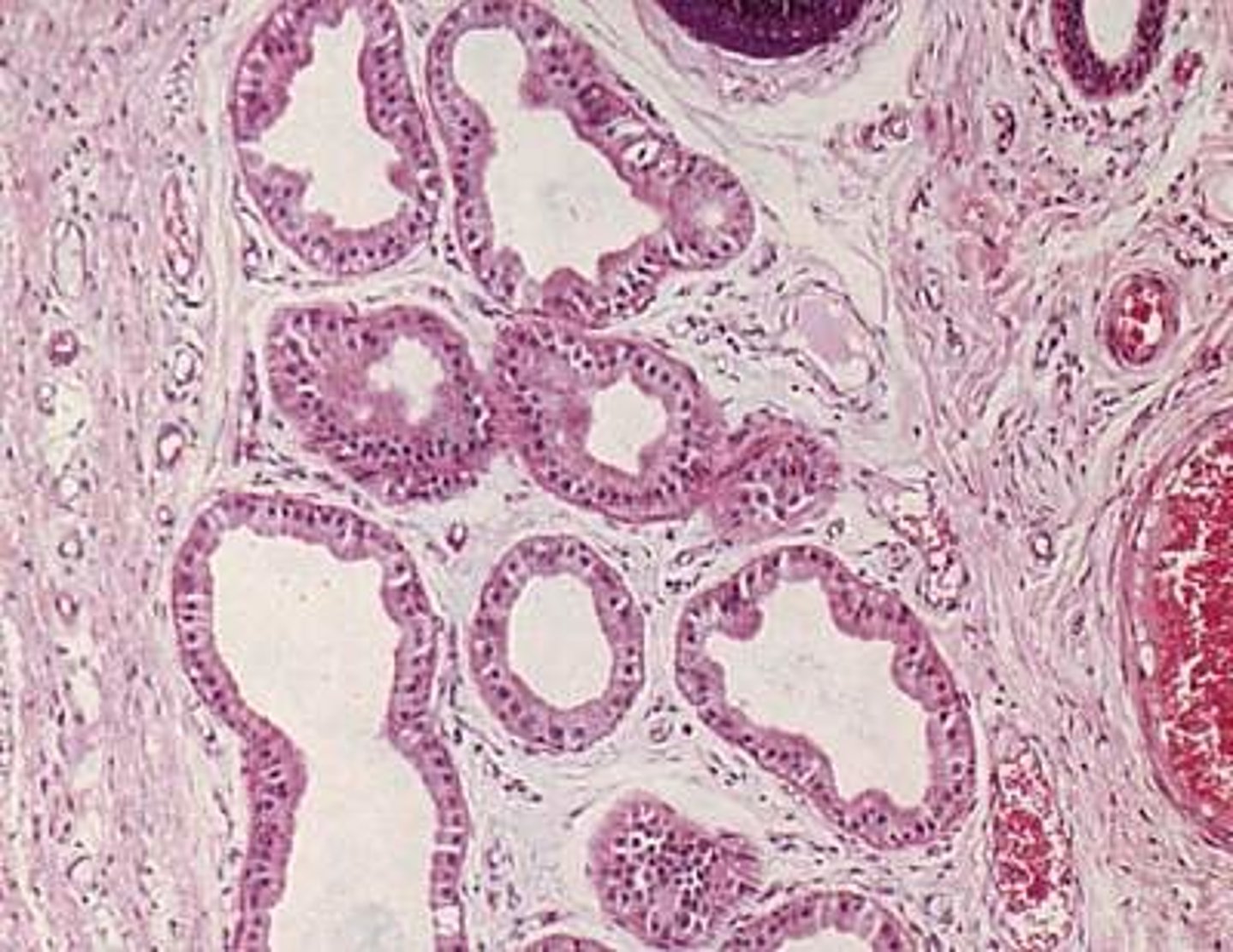
Apocrine Glands
Secrete milky protein that acts as a nutrient medium for the microorganisms found on the skin. Located in the axillary & genital regions
Keratin
Fibrous protein that is responsible for the strength and water resistance of the skin surface. Makes up hair and nails
Collagen
A protein that is a main constituent of connective tissue.
Melanin
A natural pigment that protects the cells in the skin and in deeper layers from the hazardous effects of UV radiation by absorbing sunlight.
Hair
Made of keratin. Protects scalp from light from sun
Nails
Grow from area of rapidly dividing cells known as nail roots.
Melanoma
Cancer of melanocytes, is the most dangerous skin cancer because it is highly metastatic and resistant to chemotherapy
PURPOSE of integumentary
-protects deeper tissues
-blocks UV
-prevents infection from entering body
-temperature regulation
-prevents dehydration
-makes Vitamin D from sunlight
-excrete wastes (sweating)
-sensory organ
dermis
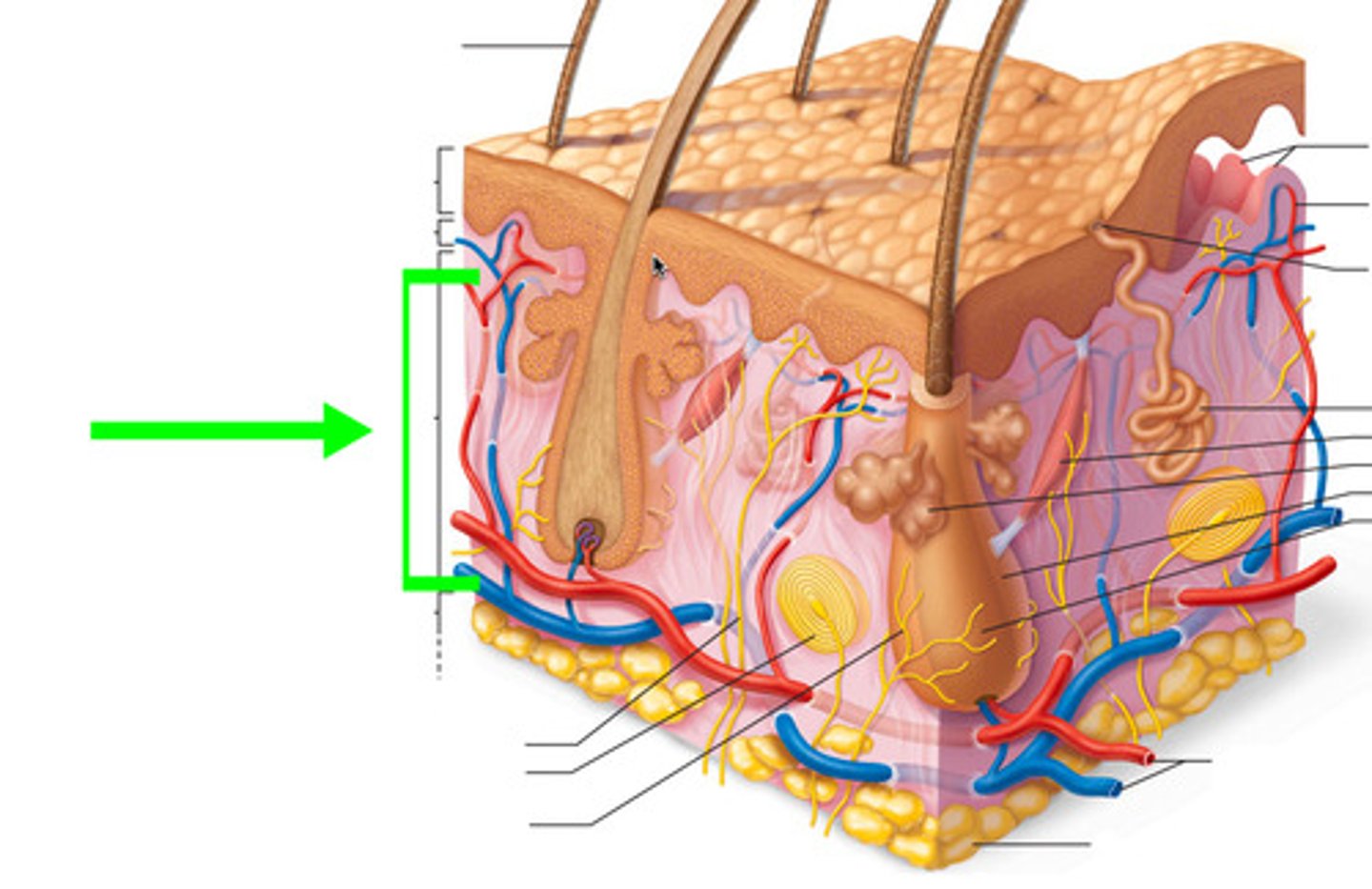
inner layer, contains major structures of skin: collagen, blood vessels, nerve endings, glands, sensory receptors, hair follicles
subcutaneous fat
adipose tissue, proves insulation for body
layers of skin
epidermis, dermis, hypodermis
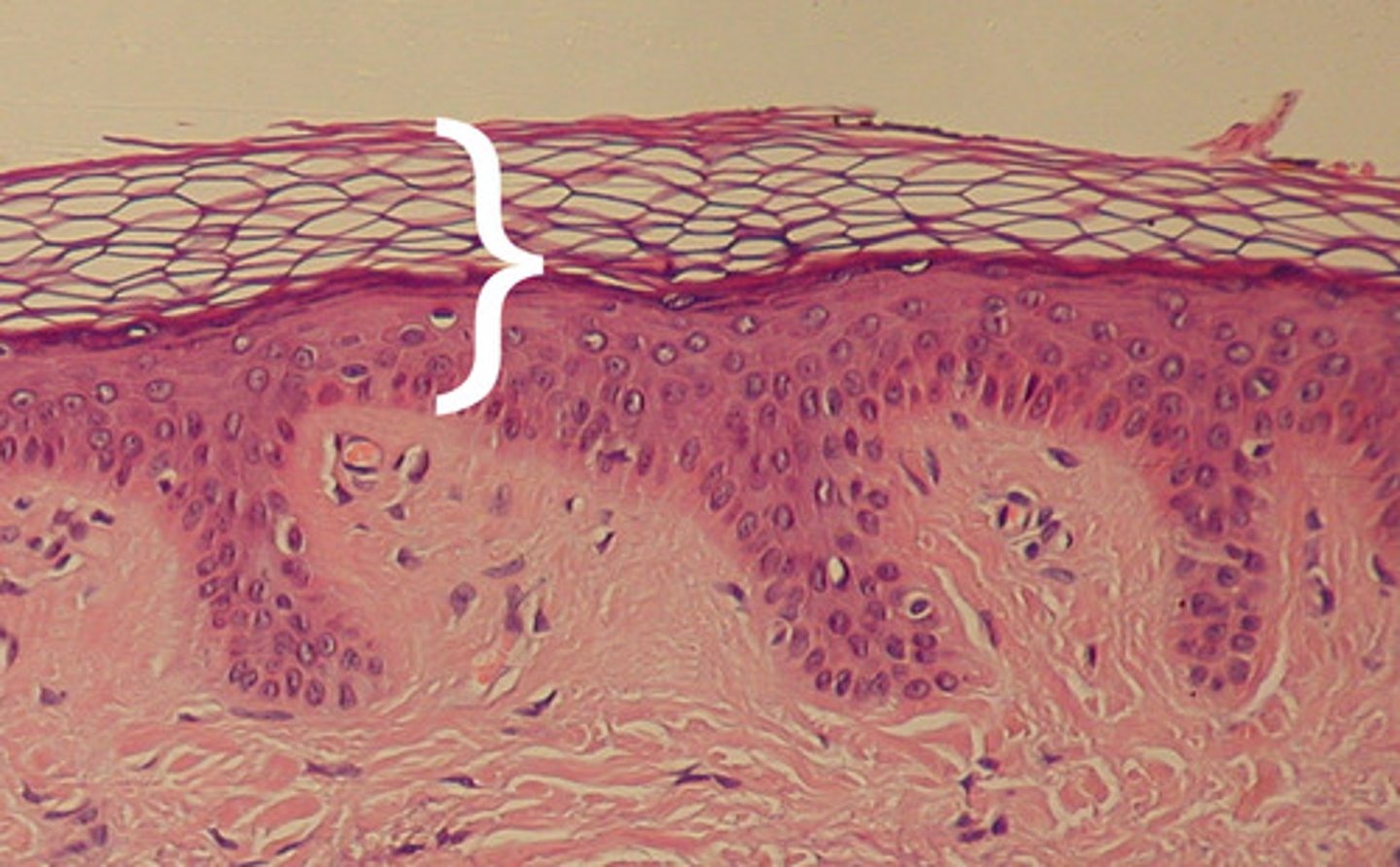
stratum corneum
the most superficial layer of the epidermis consisting of dead cells
stratum lucidum
a clear layer of the epidermis found only in the thick skin of the fingers, palms, and soles
stratum granulosum (granular layer)
3rd layer of the epidermis
stratum spinosum
spiny layer
stratum basale
the deepest layer of the epidermis consisting of stem cells capable of undergoing cell division to form new cells
jaundice
yellowing of the skin
dermal papillae
Found in the upper layers of the dermis, they create your fingerprint pattern
epithelial membranes
thin sheets of tissue lining the internal and external surfaces of the body
exocrine glands
Glands that secrete substances outward through a duct
papillary layer
Outermost layer of the dermis, directly underneath the epidermis; contains dermal papillae
reticular layer
Deeper layer of the dermis that supplies the skin with oxygen and nutrients; contains blood vessels and receptors
basal cell carcinoma
malignant tumor of the basal cell layer of the epidermis
The secretions of the eccrine glands are:
99% water, sodium chloride, and trace amounts of wastes, lactic acid, and vitamin C
vasodilation
widening of blood vessels
vasoconstriction
narrowing of blood vessels
negative feedback loop
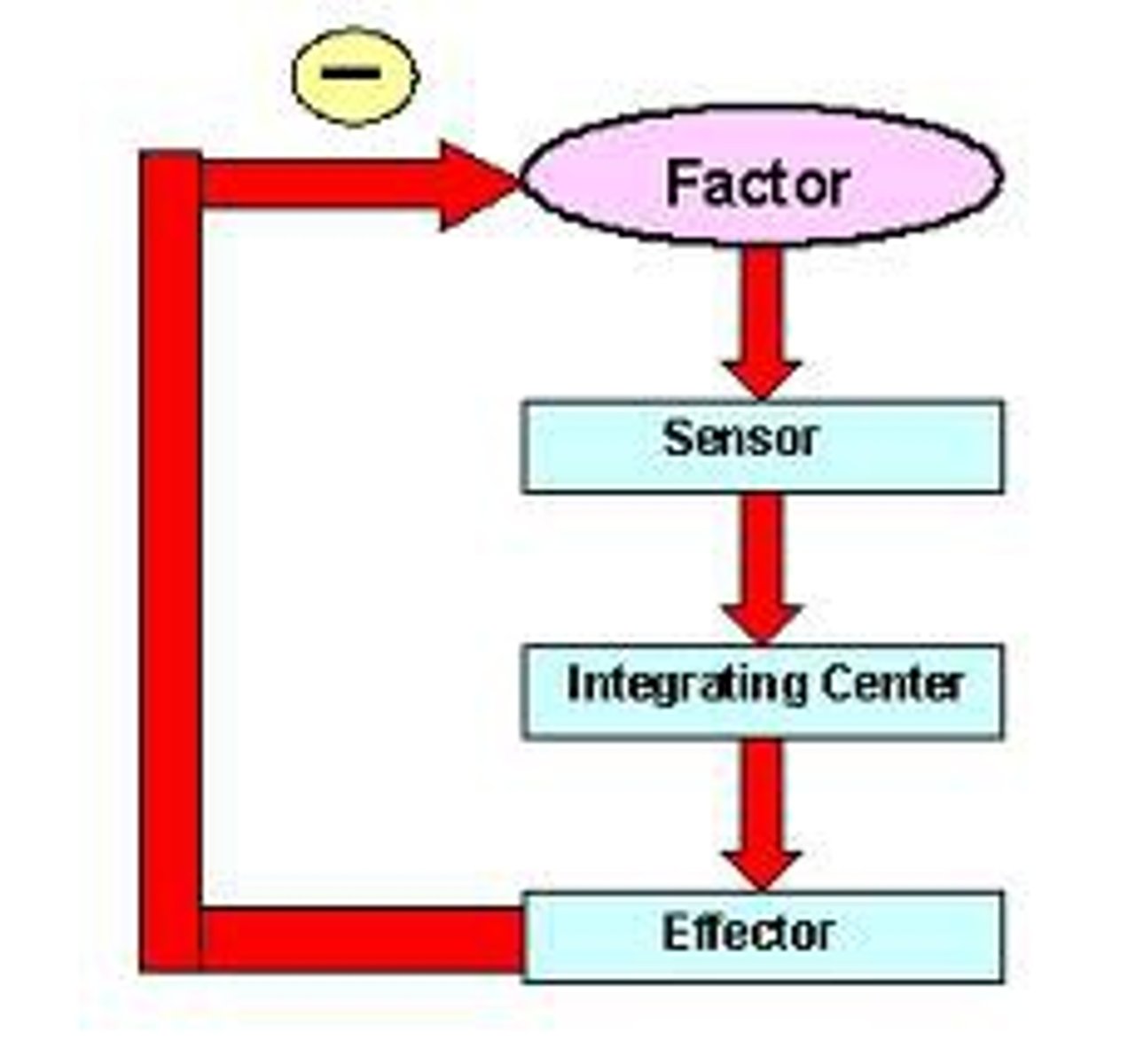
A feedback loop that causes a system to change in the opposite direction from which it is moving
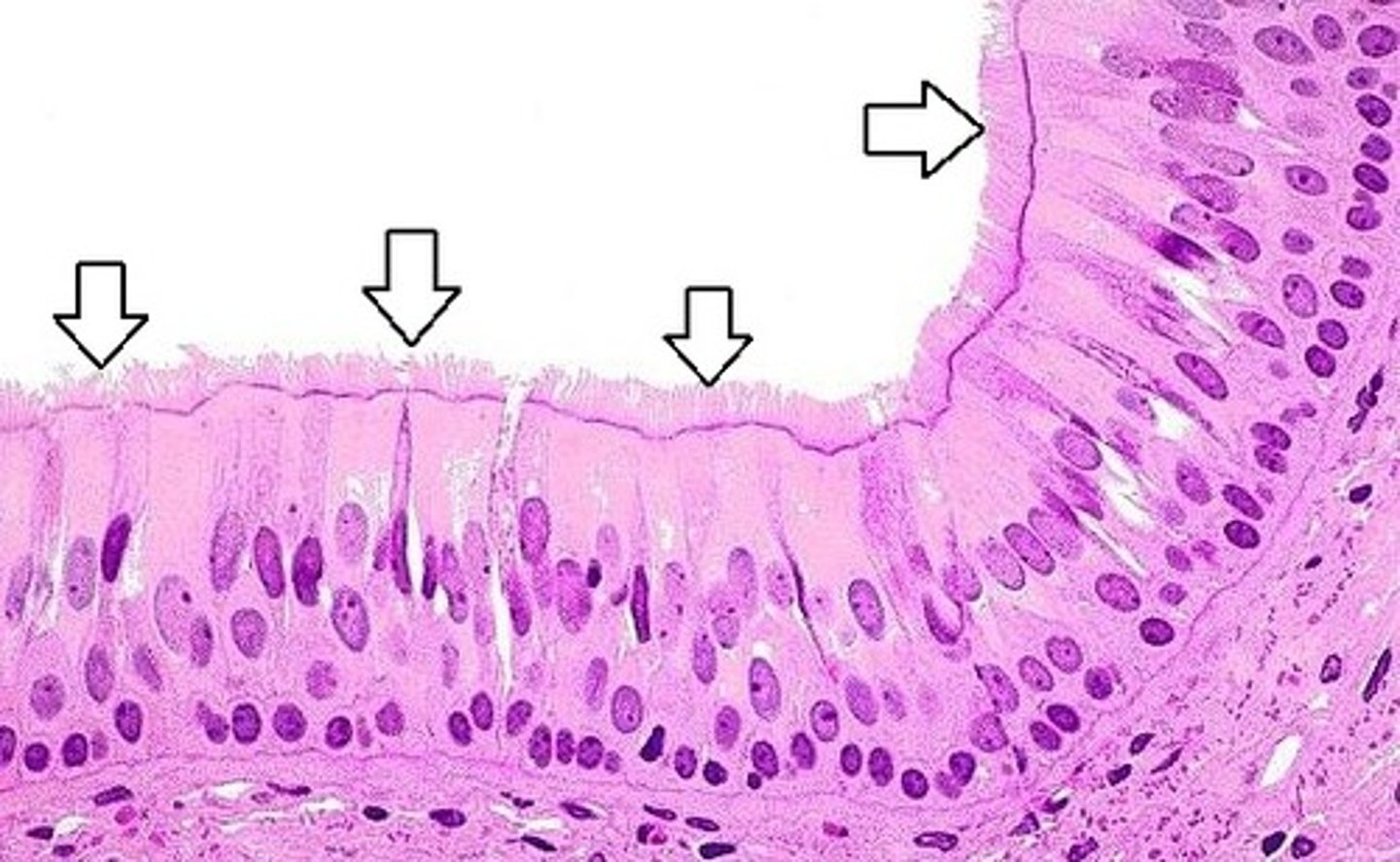
Cilia
The hairlike projections on the outside of cells that move in a wavelike manner
inflammation
a localized response to an injury or to the destruction of tissues
Sweat
Perspiration excreted by sweat glands through the skin; slightly acidic
Hypothermia
low body temperature; below 95 degrees
Hyperthermia
high body temperature, fever
Semipermeable
Only certain substances can pass through
barrier
something that blocks the way; an obstacle