orgo 2 exam 1
 Call Kai
 Learn
Learn Practice Test
 Spaced Repetition
 Match
Match Flashcards
 Knowt Play
1/32

There's no tags or description
Looks like no tags are added yet.
Name | Mastery | Learn | Test | Matching | Spaced | Call with Kai | Chat |
|---|
No analytics yet
Send a link to your students to track their progress
33 Terms
Williamson Ether Synthesis
Begin with alcohol, use base and alkyl halide
Only Sn2 (primary carbons)

W.E.S retrosynth
Try with cleaving all bonds next to O, and whichever mechanism isn’t on a primary carbon, it’s not right (sn2)
Base in W.E.S.
Used to deprot.
Nuc goes after E+
True
Ether Cleavage
Begins w ether
Uses HI or HBr
Ether attacks first, as I/Br are good L.G., and then they come back to attack

Thioethers
S is a good L.G.
Silyl Groups (OTIPS)
ONLY for alcohols
protects the less stable OH, can be removed with TBAF
Ex) 1. OTIPS 2. KOH 3. CH3CH2Br 4) TBAF
Epoxides
2 ways to make:
1) MCPBA
2) Halohydrin cyclization
MCPBA
Attacks more e- dense alkene (double bond)
Ex: two F’s near the double bond, they’re pulling all the e- away from double bond so that is LESS dense (would not attack)
Halohydrin cyclization
Same as W.E.S. But the alkyl halide is within the molecule itself
Acidic epoxide opening
Protonate
Expoxide does the attacking - attacks H
H2O, OH, etc attackers MOST substituted C
deprot
Basic Epoxide Opening
1) strong nuc does the attacking
2) attacks LEAST substituted C
3) protonate w H2O
Basic
Strong nuc
NaOH
Basic
CH3OH
Acidic
MgBR (grignards)
Basic/strong nuc
C-C
1200
C=C
1660
C_=C
2200
Conjugation
Lowers frequency
Isolated C=C
1640-1680
Conjugated C=C
1620-1640
Aromatic C=C
1600
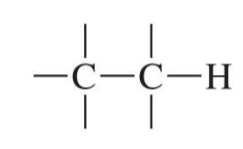
Sp3, 2800-3000

Sp2, 3000-3100

Sp, 3300, sharp
OH
3300, broad, rounded tip
R2NH
Secondary - 3300, broad with one sharp spike
RNH2
Primary, 3300, broad with two sharp spikes
R3N
Tertiary, no signal bc no H
C=O of ketones, aldehydes and Carboxylic acids
1710

Conjugated carbonyls
1700 ish