CHEM 1113 Quiz 1— Balancing, Stoichiometry, Atomic Structure & Bonding

0.0(0)
Studied by 0 people
call kaiCall Kai
Locked
learnLearn
examPractice Test
spaced repetitionSpaced Repetition
heart puzzleMatch
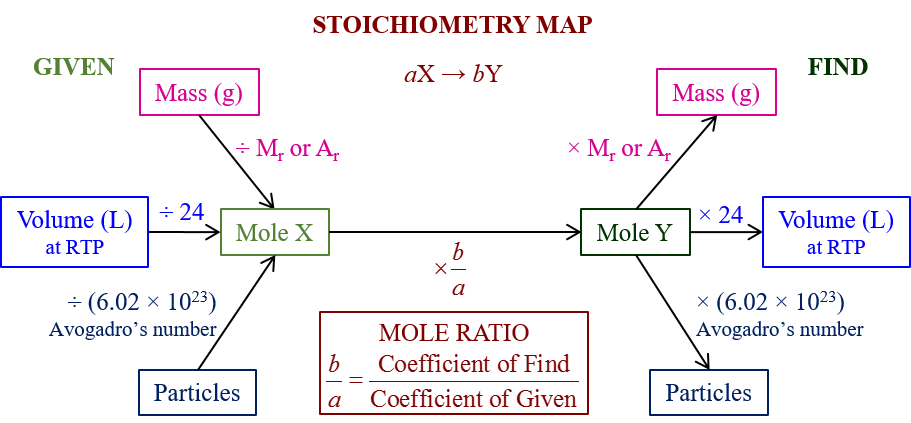
flashcardsFlashcards
GameKnowt Play
Card Sorting

1/36

flashcard set

Earn XP

Description and Tags

Quiz Overview Format: 3–4 multiple choice questions, 6 minutes total (~90 sec/question) Topics: Balancing reactions, stoichiometry, atomic structure, chemical bonding Style: Quick concept checks, not heavy math What to expect by topic: ⚖️ Balancing reactions — pick the correctly balanced equation 🧮 Stoichiometry — conversion setup (grams↔moles, mole ratios, limiting reagent), clean numbers ⚛️ Atomic structure — find atomic number, mass number, or isotopes from proton/neutron/electron counts 🔗 Bonding — classify ionic vs. covalent vs. polar covalent, predict ion charges Watch out for: Isotope vs. ion mix-ups Atomic number vs. mass number mix-ups

Last updated 5:10 AM on 9/1/26
Name
Mastery
Learn
Test
Matching
Spaced
Call with Kai
Chat

No analytics yet

Send a link to your students to track their progress

37 Terms

1
New cards
Reactant vs product
Reactants are on the left of the arrow, products are on the right
2
New cards

Law of conservation of mass (states 2 facts)

Mass and the number/type of atoms in reactants equals products, atoms are only rearranged
3
New cards
What can change in a reaction

The physical state of matter and how atoms are grouped together

4
New cards
Balancing an equation
Adjusting coefficients so each atom's count matches on both sides
5
New cards
Complete combustion

Hydrocarbon fuel + O2 reacts to make CO2 + H2O + energy

reaction exothermic

6
New cards
Avogadro's number
6.022x10^23 particles per mole
7
New cards
Mole

Unit containing 6.022x10^23 particles

8
New cards
Molar mass
Mass in grams of one mole of a substance, converts grams to moles
9
New cards
Grams to moles to particles pathway
Divide by molar mass to get moles, multiply by Avogadro's number to get particle count
10
New cards
Stoichiometric (mole) ratio
Ratio between reactants/products set by a balanced equation's coefficients
11
New cards
Limiting reagent
The reactant that runs out first and limits product formed
12
New cards
Excess reagent
The reactant left over after the reaction stops
13
New cards
Proton
Positively charged nucleus particle, mass about 1 amu
14
New cards
Neutron
Neutral (uncharged) nucleus particle, mass about 1 amu
15
New cards
Electron
Negatively charged particle around the nucleus, about 1800x lighter than a proton
16
New cards
Atomic number
Number of protons, defines the element
17
New cards
Mass number
Protons + neutrons, electrons too light to count
18
New cards
Neutral atom rule
Number of protons equals number of electrons
19
New cards
Isotope
Atoms of the same element with different numbers of neutrons
20
New cards
Average atomic mass
Weighted average of an element's isotopes based on % natural abundance
21
New cards
Valence electrons
Outermost-shell electrons, determine how an atom bonds
22
New cards
Core electrons
Inner-shell electrons, not involved in bonding
23
New cards
Atomic orbital shapes and order
s is a sphere, p is a dumbbell, d is four-lobed, energy order is s < p < d < f
24
New cards
Octet rule
Atoms are most stable with 8 valence electrons
25
New cards

Ionic bond

Bond formed by transferring an electron from a metal to a nonmetal
High melting point

Forms latices held together by strong electrostatic force

26
New cards
Coulomb's law
Opposite charges attract, like charges repel
27
New cards
Isoelectronic

Species of atoms with the same number of electrons (e.g. Na+ and Ne)

28
New cards
Ion charges from group number
Group 1 is +1, Group 2 is +2, Group 6 is -2, Group 7 is -1
29
New cards
Why ionic compounds have high melting points
Each ion is surrounded by many opposite-charge ions in a 3D lattice
30
New cards
Covalent bond
Bond formed when two atoms share electrons instead of transferring them
31
New cards
Bonding electrons vs lone pairs
Bonding electrons are shared and hold atoms together, lone pairs stay on one atom
32
New cards

Bond strength order

Triple bond > double bond > single bond

bonds weaken as atoms get bigger

33
New cards

Electronegativity

A measure of an atom's pull on shared electrons when bonded with another atom

34
New cards
Electronegativity trend
Increases left to right and bottom to top
35
New cards
Most electronegative element
Fluorine
36
New cards

How does electronegativity difference determine the type of chemical bond between atoms?

Small difference is nonpolar, medium is polar covalent, large is ionic

37
New cards
Polar covalent bond
Unequal electron sharing, creates partial positive and negative charges