9- ALDEHYDES & KETONES
 Call Kai
 Learn
Learn Practice Test
 Spaced Repetition
 Match
Match Flashcards
 Knowt Play
1/45

There's no tags or description
Looks like no tags are added yet.
Name | Mastery | Learn | Test | Matching | Spaced | Call with Kai | Chat |
|---|
No analytics yet
Send a link to your students to track their progress
46 Terms
c. -one
Suffix used for naming ketones
a. -al
b. -ol
c. -one
d. -yne
b. -al
Suffix used for naming aldehydes
a. -one
b. -al
c. -ol
d. -ene
b. Presence of the carbonyl oxygen
Property of aldehydes and ketones that makes them polar
a. Presence of the carbonyl carbon
b. Presence of the carbonyl oxygen
c. Presence of the hydroxyl group
d. Presence of the halogen substituent
d. Electron-poor carbonyl carbon = welcomes nucleophiles
Reactivity property of aldehydes and ketones describing their carbonyl carbon
a. Electron-rich carbonyl carbon = welcomes electrophiles
b. Electron-poor carbonyl carbon = welcomes electrophiles
c. Electron-rich carbonyl carbon = welcomes nucleophiles
d. Electron-poor carbonyl carbon = welcomes nucleophiles
a. Adduct
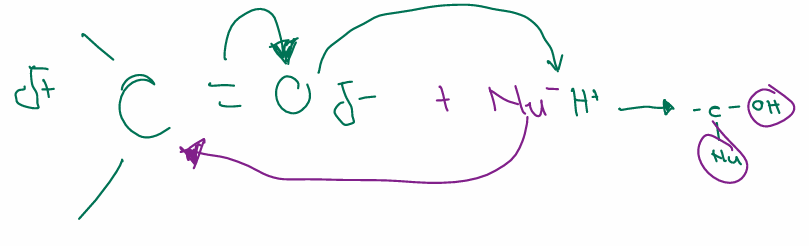
Term for the product of nucleophilic addition to aldehydes and ketones
a. Adduct
b. Enol
c. Alkoxide
d. Carbocation
c. Nucleophilic Addition
Common mechanism for reactions of aldehydes and ketones
a. Electrophilic Aromatic Substitution
b. Free Radical Substitution
c. Nucleophilic Addition
d. Electrophilic Addition
a. Ketones are internal; aldehydes are terminal
Structural difference between ketones and aldehydes in terms of position of the carbonyl group
a. Ketones are internal; aldehydes are terminal
b. Both are terminal
c. Both are internal
d. Ketones are terminal; aldehydes are internal
c. Aldehydes can be oxidized; ketones cannot
Property that distinguishes aldehydes from ketones in terms of oxidation
a. Ketones can be oxidized; aldehydes cannot
b. Both aldehydes and ketones can be oxidized
c. Aldehydes can be oxidized; ketones cannot
d. Neither aldehydes nor ketones can be oxidized
b. Fehling's Test and Tollens' Test
Tests used to differentiate aldehydes from ketones, both giving positive results with aldehydes only
a. Baeyer's Test and Lucas Test
b. Fehling's Test and Tollens' Test
c. Benedict's Test and Baeyer's Test
d. Tollens' Test and Lucas Test
c. Positive result
Result of Fehling's Test and Tollens' Test when performed on an aldehyde
a. Negative result
b. No reaction
c. Positive result
d. Precipitate dissolves
d. Negative result
Result of Fehling's Test and Tollens' Test when performed on a ketone
a. Positive result
b. Brown precipitate forms
c. Silver mirror forms
d. Negative result
b. Aldehydes are reducing agents; ketones are not reducing agents
Reason why aldehydes give positive Fehling's and Tollens' tests, but ketones do not
a. Aldehydes are internal; ketones are terminal
b. Aldehydes are reducing agents; ketones are not reducing agents
c. Aldehydes are non-polar; ketones are polar
d. Aldehydes welcome electrophiles; ketones do not
c. Nucleophilic Addition
Common mechanism for all standard reactions of aldehydes and ketones
a. Electrophilic Aromatic Substitution
b. Free Radical Substitution
c. Nucleophilic Addition
d. Electrophilic Addition
d. Addition of amines
Nucleophilic addition reaction of aldehydes and ketones whose product depends on whether a primary or secondary compound is used
a. Addition of HCN
b. Addition of alcohols
c. Hydration
d. Addition of amines
c. Nucleophilic Addition and Redox
Two categories of standard reactions of aldehydes and ketones
a. Nucleophilic Substitution and Elimination
b. Electrophilic Addition and Redox
c. Nucleophilic Addition and Redox
d. Free Radical Substitution and Redox
c. Hemiacetal/hemiketal formation
Nucleophilic addition reaction of aldehydes and ketones involving addition of alcohols
a. Cyanohydrin formation
b. Hydrate formation
c. Hemiacetal/hemiketal formation
d. Grignard reaction
a. Geminal diol
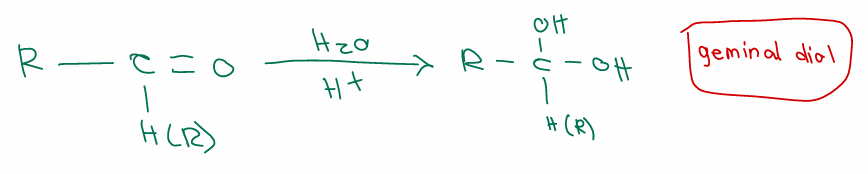
Product formed when an aldehyde or ketone undergoes Hydration (addition of H₂O, H⁺)
a. Geminal diol
b. Hemiacetal
c. Vicinal diol
d. Cyanohydrin
d. Geminal diol
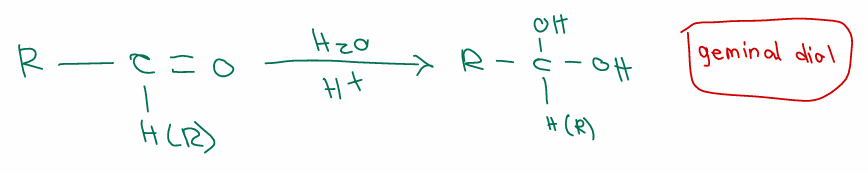
Term describing the diol product of Hydration of aldehydes and ketones where both OH groups are on the same carbon
a. Vicinal diol
b. Hemiketal
c. Hemiacetal
d. Geminal diol
b. RMgX
Formula and name of the Grignard Reagent
a. RLiX
b. RMgX
c. RAlX
d. RZnX
c. Creation of alcohol
Primary use of the Grignard Reagent (RMgX) in organic synthesis
a. Creation of esters
b. Creation of ethers
c. Creation of alcohol
d. Creation of aldehydes
c. R⁻ (carbanion)
Active nucleophilic species generated by the Grignard Reagent that attacks the carbonyl carbon
a. R⁺ (carbocation)
b. R· (radical)
c. R⁻ (carbanion)
d. RO⁻ (alkoxide)
c. Tertiary alcohol
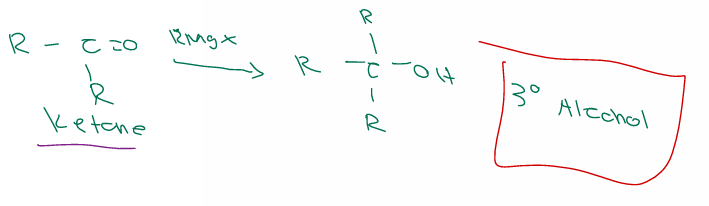
Product formed when a ketone reacts with Grignard Reagent (RMgX, H⁺)
a. Primary alcohol
b. Secondary alcohol
c. Tertiary alcohol
d. Geminal diol
d. Primary alcohol
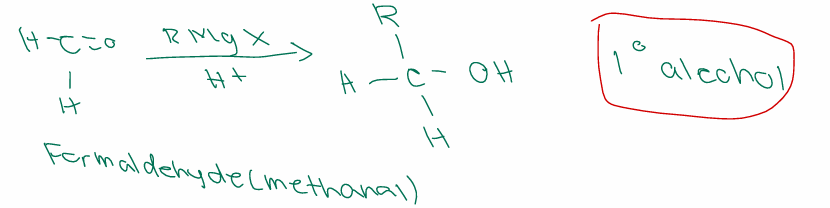
Product formed when formaldehyde (methanal) reacts with Grignard Reagent (RMgX, H⁺)
a. Tertiary alcohol
b. Secondary alcohol
c. Geminal diol
d. Primary alcohol
d. Secondary alcohol
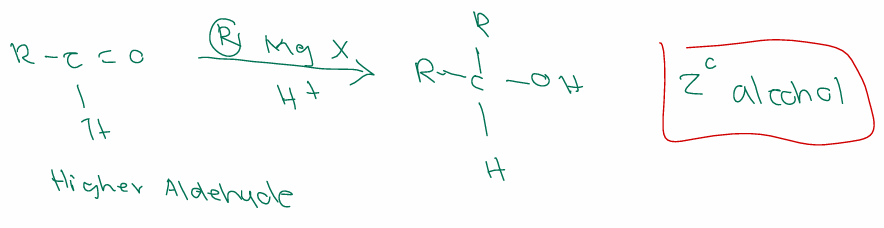
Product formed when a higher aldehyde reacts with Grignard Reagent (RMgX, H⁺)
a. Primary alcohol
b. Tertiary alcohol
c. Geminal diol
d. Secondary alcohol
c. Ketone → 3° alcohol; Formaldehyde → 1° alcohol; Higher aldehyde → 2° alcohol
Correct matching of carbonyl starting material with alcohol product in Grignard reactions
a. Ketone → 1° alcohol; Formaldehyde → 2° alcohol; Higher aldehyde → 3° alcohol
b. Ketone → 2° alcohol; Formaldehyde → 3° alcohol; Higher aldehyde → 1° alcohol
c. Ketone → 3° alcohol; Formaldehyde → 1° alcohol; Higher aldehyde → 2° alcohol
d. Ketone → 1° alcohol; Formaldehyde → 3° alcohol; Higher aldehyde → 2° alcohol
c. Cyanohydrin

Product formed when HCN undergoes nucleophilic addition to an aldehyde or ketone
a. Geminal diol
b. Imine
c. Cyanohydrin
d. Enamine
a. Amino acids
Cyanohydrin is a precursor for the synthesis of
a. Amino acids
b. Fatty acids
c. Nucleic acids
d. Carboxylic acids
b. Addition of HCN
Nucleophilic addition reaction of aldehydes and ketones that produces a precursor for amino acid synthesis
a. Hydration
b. Addition of HCN
c. Addition of Amine
d. Addition of alcohols
d. Carbinolamine
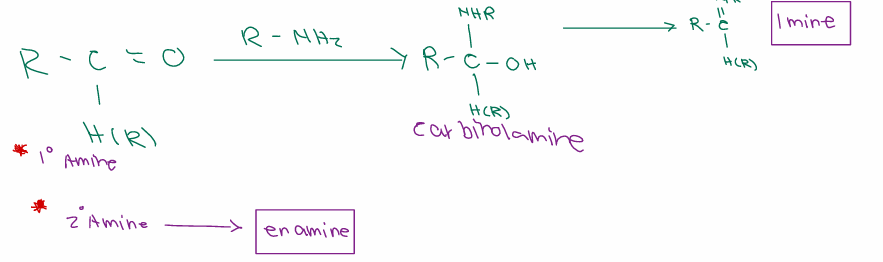
Intermediate formed when a primary amine reacts with an aldehyde or ketone before forming an imine
a. Enamine
b. Cyanohydrin
c. Hemiacetal
d. Carbinolamine
c. Carbinolamine → Imine
Correct sequence of products in the addition of a primary amine to an aldehyde or ketone
a. Carbinolamine → Enamine
b. Imine → Carbinolamine
c. Carbinolamine → Imine
d. Enamine → Imine
d. Secondary amine
Type of amine that reacts with aldehydes and ketones to produce an enamine
a. Primary amine
b. Tertiary amine
c. Quaternary amine
d. Secondary amine
d. Hemiacetal
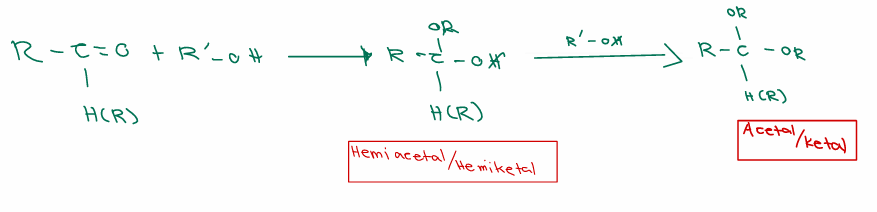
Product formed when one equivalent of ROH undergoes nucleophilic addition to an aldehyde
a. Acetal
b. Ketal
c. Cyanohydrin
d. Hemiacetal
c. Hemiketal
Product formed when one equivalent of ROH undergoes nucleophilic addition to a ketone
a. Hemiacetal
b. Acetal
c. Hemiketal
d. Enamine
c. Acetal
Product formed when a second equivalent of ROH (R'OH) reacts further with a hemiacetal
a. Hemiketal
b. Enamine
c. Acetal
d. Imine
a. Ketal
Product formed when a second equivalent of ROH (R'OH) reacts further with a hemiketal
a. Ketal
b. Imine
c. Enamine
d. Acetal
c. Monosaccharides
Carbonyl compounds classified as polyhydroxy aldehydes or ketones
a. Sugar alcohols
b. Polysaccharides
c. Monosaccharides
d. Disaccharides
c. Formaldehyde
Aldehyde derived from methanol
a. Acetaldehyde
b. Benzaldehyde
c. Formaldehyde
d. Citral
c. Formaldehyde
Aldehyde known as a carcinogen
a. Acetaldehyde
b. Benzaldehyde
c. Formaldehyde
d. Citral
b. Acetaldehyde
Aldehyde derived from ethanol
a. Formaldehyde
b. Acetaldehyde
c. Citronellal
d. Benzaldehyde
b. Acetaldehyde
Aldehyde that is a major contributor to drunkeness/hangover
a. Formaldehyde
b. Acetaldehyde
c. Citronellal
d. Benzaldehyde
c. Citral and citronellal
Examples of aldehyde volatile oils
a. Camphor and carvone
b. Testosterone and progesterone
c. Citral and citronellal
d. Menthol and geraniol
d. Acetone
Ketone known as a popular organic nail polish remover
a. Camphor
b. Carvone
c. Muscone
d. Acetone
c. Testosterone and progesterone
Examples of s3x hormones that are classified as ketones
a. Estrogen and cortisol
b. Insulin and glucagon
c. Testosterone and progesterone
d. Aldosterone and adrenaline
d. Camphor, carvone, muscone
Examples of ketone volatile oils
a. Citral, citronellal, etc.
b. Menthol, geraniol, etc.
c. Testosterone, progesterone, etc.
d. Camphor, carvone, muscone
c. Acetophenone
Ketone that was used as hypnotic
a. Chloroacetophenone
b. Muscone
c. Acetophenone
d. Acetone
d. Chloroacetophenone
Ketone used as tear gas for riot control
a. Acetophenone
b. Camphor
c. Acetone
d. Chloroacetophenone