Biopolymers
 Call Kai
 Learn
Learn Practice Test
 Spaced Repetition
 Match
Match Flashcards
 Knowt Play
1/22

There's no tags or description
Looks like no tags are added yet.
Name | Mastery | Learn | Test | Matching | Spaced | Call with Kai | Chat |
|---|
No analytics yet
Send a link to your students to track their progress
23 Terms
Biopolymers
Polymers produced by living organisms
Advantages of using biopolymers
-Inherently renewable
-Many biopolymers possess functional groups -> useful properties and give sites for chemical modification
Disadvantages of using biopolymers
-Can be costly
-Extraction can be environmentally negative
-Consistency of biopolymers reduced compared to synthetic polymers (e.g. chain length can vary)
Sugars
Biological molecules that exist as hydroxylated six membered ether rings
Polymerisation of sugars
The alcohol of one sugar can react with another to form an ether linkage in the 1-position of the ring
-Anomeric C OH protonated
-⁺OH₂ leaves and ether O lone pair forms double bond to form ion
-OH of another sugar attacks C of ion to form ether glycosidic linkage
Oligosaccharide
Polymer of sugars
-More commonly known as carbohydrates
Cellulose
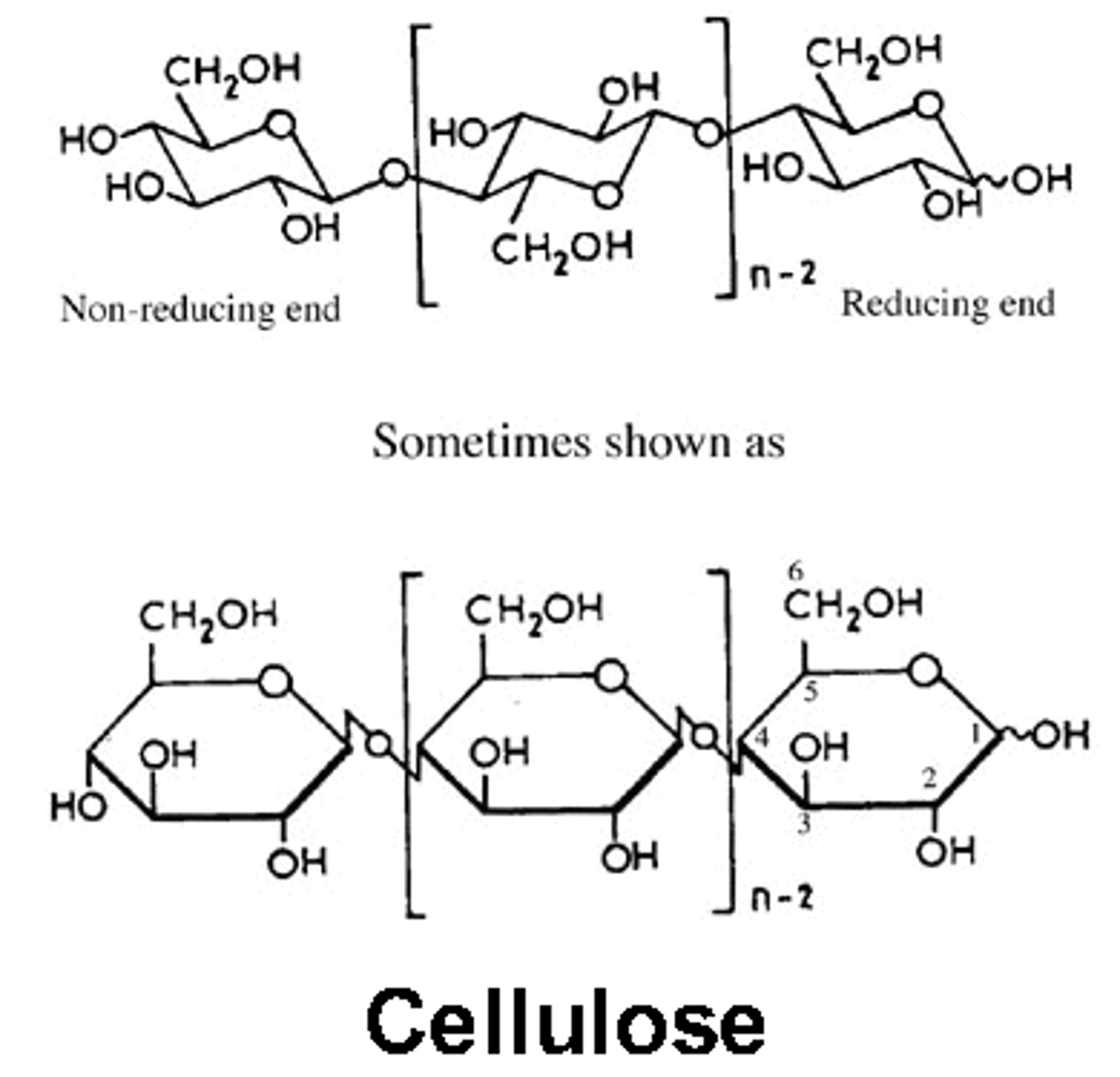
A polymer composed of repeating units of β-1,4 glucose by glycosidic linkage
-40% of carbon in plants is cellulose
-Most abundant naturally occuring organic susbtance
-1.3 x 10⁹ tons regenerated annually
-One tree generates 14g of cellulose daily
Structure of cellulose
Linear polysaccharide
-Chains form tightly packed microfibrils through extensive hydrogen bonding (H-bonding gives strength!)
-Highly ordered crystalline regions provide strength whilst amorphous regions add flexibility
Properties of cellulose
-High tensile strength (stronger than many synthetic fibres)
-Insoluble in water and most solvents
-Biodegradable and renewable
-Exhibits hydrophilicity but will maintain structural integrity when hydrated (i.e. can interact with water but won't dissolve)
-Excellent thermal stability and low coefficient of thermal expansion (won't expand under heat)
Extraction of cellulose
Extracted from woodfibre
-Wood gets chipped and cooked to separate cellulose and lignin
-Cellulose is then bleached
Applications of cellulose
-90% of cotton fibre is made from cellulose
-Paper produced by pressing together moist cellulose fibres then drying into flexibile sheets
Modifying cellulose
Cellulose can be reacted with to produce new polymers with new properties
-Hydroxyl groups turned into ethers or esters
-Disrupts H-bonding network between sugars -> makes polymers less crystalline
Not all hydroxyl groups will react (difficult to get them all to)
Hydroxyethyl cellulose synthesis
Cellulose --(ethylene glycol, NaOH, 70°C)-- deprotonated product --H⁺ workup--> hydroxy ethyl cellulose
-OH deprotonated and attacks epoxide to form alcohol side chains
Hydroxyethyl cellulose applications
-Used as a thickener in pharmaceutical tablets
-Used in shampoos, conditioners and liquid soaps to improve texture and spreadability
Disrupting H-bonding network between sugars makes polymer more water soluble
Acetyl cellulose synthesis
Cellulose + acetic anhydride --(H₂SO₄, 30°C)--> cellulose acetate
-Hydroxyl of glucose ring attacks carbonyl C nucleophilically
-One half of anhydride leaves whilst OH forms carbonyl bond to form cellulose actetate
Acetyl cellulose applications
Acetyl cellulose used for its strength and transparency
-Used in textiles for clothes linings and draperies
-Used as transparent sheets and packaging films
Acetyl cellulose remains water insoluble but is thermoplastic and film-forming
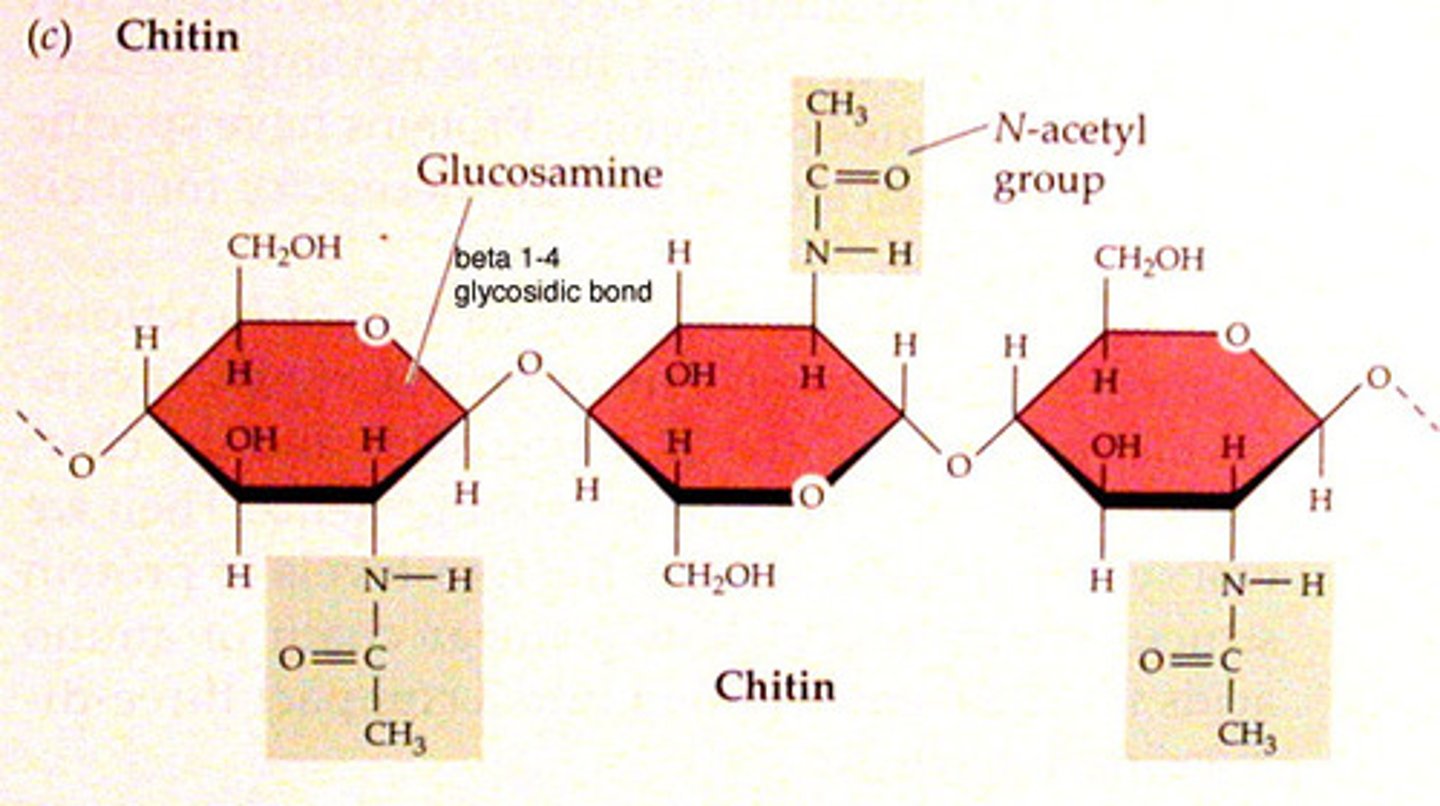
Chitin
Linear polymer of N-acetylglucosamine (glucose with amine on 2 position)
-2nd most abundant natural polymer
-Used as cell walls in fungi and exoskeletons of crustaceans
Chitosan
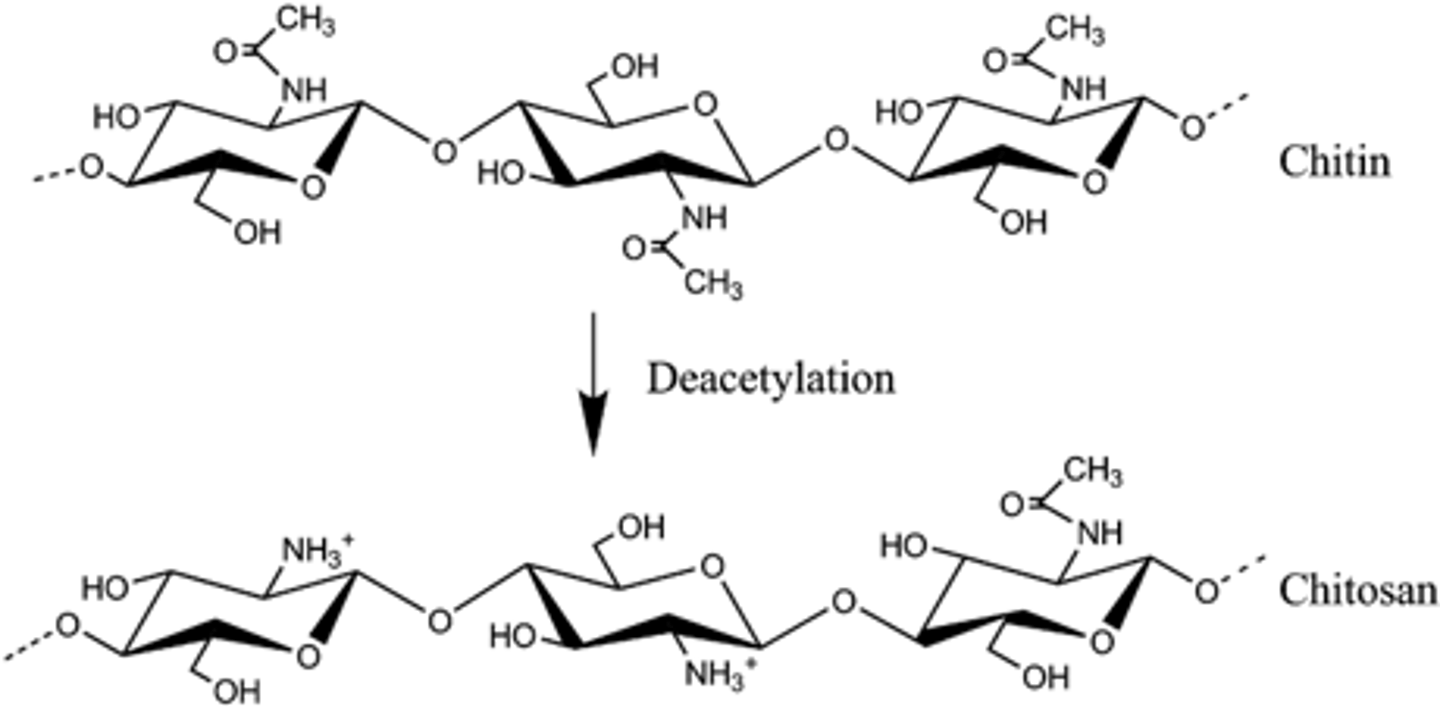
Chitin that is partially deacetylated
Chitosan properties
-Cationic polyamine with relatively low pKa
-Adheres to negatively charged surfaces and can chelate transition metals
-Amino and hydroxyl groups can be selectively modified
-Can form a hydrogel with pH adjustment
Chitosan synthesis from food waste
Made from partial deacetylation of chitin
1) Decalcification using dilute HCl
2) Deproteination using dilute NaOH
3) Decolourisation using 0.5% KMnO₄ and oxalic acid
4) Deacetylation using conc. NaOH
Chitosan applications
-Used as an adhesive in plasters
-A thousand times thinner than plastic wrap so can be used to treat injuries to soft organs (such as lungs)
-Breaks down naturally after healing and becomes invisible within a month
Starch
-Made from amylose (glucose but different linkage)
-Used by nature to store energy
-Less chain packing than cellulose so more flexible, more water soluble, degrades more easily
-Less crystalline than cellulose as less H-bonding
-Used as a thickening agent
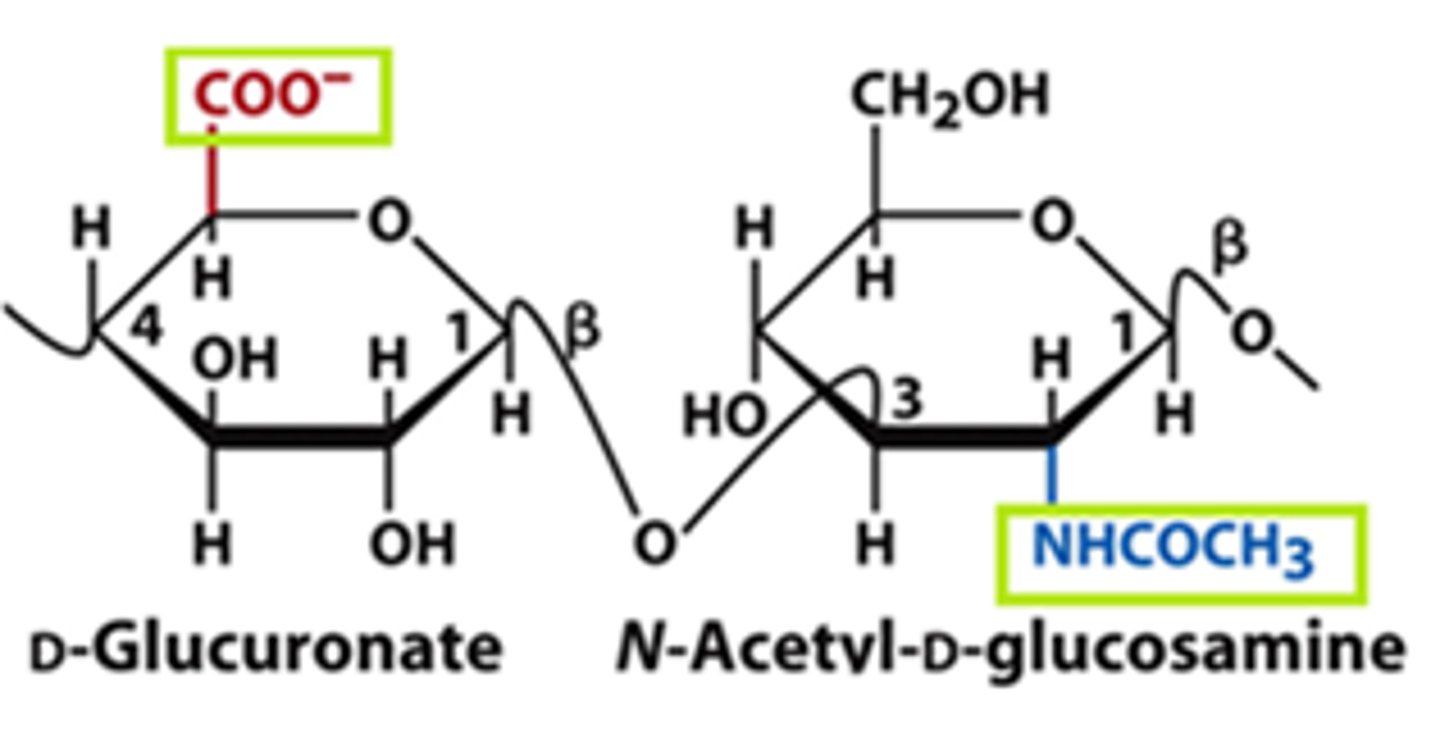
Hyaluronic acid
-Found naturally in animal tissue (but also made industrially)
-Produced by microbial fermentation
-Can retain up to 1000 times its own weight (so can hold many materials)
-Used extensively in cosmetic industry