Ch 6 Endocrine System
 Call Kai
 Learn
Learn Practice Test
 Spaced Repetition
 Match
Match Flashcards
 Knowt Play
1/104

There's no tags or description
Looks like no tags are added yet.
Name | Mastery | Learn | Test | Matching | Spaced | Call with Kai | Chat |
|---|
No analytics yet
Send a link to your students to track their progress
105 Terms
lipolysis
The breakdown and utilization of fat for energy.
enzyme
A substance in the body that causes a specific reaction or change.
glands
Organs that release substances into the bloodstream (such as hormones) or other surface of the body.
hormone
Chemical messenger released from a gland that travels to cells to activate a specific function.
target (receptor) cell
Cell that receives a message from a hormone or enzyme. Target cells exert an action after being stimulated or activated.
endocrine
Hormone secreting
The endocrine system
A body system that produces hormones to regulate many body functions.
main functions of the endocrine system
Controls mood, growth and development, tissue function, and metabolism
They help:
Trigger muscle contraction
Stimulate fat breakdown (lipolysis) and protein use
Activate enzymes
Regulate growth and metabolism
Control the body's physical and emotional response to stress (like exercise or injury)
What do hormones from the endocrine system do?
how hormones affect exercise
They help the body respond to exercise by regulating muscle contraction, energy use, metabolism, and stress responses.
Hormone-Specific Receptors
Proteins on target cells that bind only to a specific hormone, allowing it to produce its intended effect.
hormone-binding (transport) proteins
Proteins in the bloodstream that bind to hormones, protecting them, transporting them, and controlling how much hormone is available to target cells.
hormone binding
The process by which a hormone binds to its specific receptor and carries out its intended action.
endocrine system
regulates multiple bodily functions to stabilize the body’s internal environment, much like a thermostat regulates the temperature in a room.
host organs
aka glands
hypothalamus
A gland located in the brain that communicates with the pituitary gland.
pineal gland
A small gland in the brain that secretes the hormone melatonin, which helps regulate sleep cycles.
pancreas
An organ with numerous functions, including the production of insulin, glucagon, and digestive juices.
thyroid gland
An endocrine gland, located in the anterior neck, responsible for the secretion of many hormones, including thyroxin and calcitonin.
pituitary gland
An endocrine gland that controls the secretion of many hormones, including growth hormone.
adrenal gland
A gland, located just above the kidneys, responsible for the secretion of catecholamines and cortisol.
reproductive glands
glands, such as the ovaries or testes, that serve sex-specific functions.
anterior, intermediate, and posterior
sections of the pituitary gland
liver and stomach
where hormones are secreted
hypothalamus and pituitary gland
Much of the control of hormonal activity ultimately rests with the (master glands)
endocrine and nervous system
which two systems are linked by hormones?
insulin
A hormone secreted by the pancreas that is responsible for glucose metabolism.
glucagon
A hormone secreted by the pancreas that regulates blood glucose and functions opposite to insulin.
substrates
Intermediate forms of nutrients used in metabolic reactions to create adenosine triphosphate.
glycogen
Glucose that is deposited and stored in bodily tissues, such as the liver and muscle cells; the storage form of carbohydrate.
carbs
make up the primary energy source during vigorous exercise and are human body’s key source of energy
inhibit performance
too little of blood glucose levels
potentially damage the vascular system
too much of blood glucose levels
substrates
fat, carbs, etc.
small intestine
After consuming a meal, glucose enters the blood at the
a rise in blood glucose levels
when glucose within the blood enters the small intestine, this causes
pancreas
The rise of glucose triggers this; releasing insulin into the bloodstream
insulin
binds to receptors on the surface of muscle, liver, and fat cells, facilitating the uptake of glucose from the bloodstream into these cells
drop of blood glucose levels
the net result of glycogen
insulin
causes cells in the liver, muscle, and fat tissue to take up glucose from the blood
glucagon
primarily works to raise blood glucose levels by triggering the release of glycogen stores from the liver
the body will begin to exhibit lower blood glucose levels.
Hours after a meal, or as a result of a combination of normal metabolic processes and physical activity, this happens:
the drops in circulating blood glucose levels triggers the release of
glucagon from the pancreas
glucose uptake by the body’s cells will also increase
As activity levels increase
insulin to transport glucose into the cells, essentially lowering insulin resistance
Evidence suggests that exercise helps muscle cells increase their ability to use
noninsulin-mediated mechanisms
The body's ability to take glucose into cells without insulin, such as during exercise when muscles can absorb glucose on their own.
growth hormone
An anabolic hormone produced by the pituitary gland that is responsible for growth and development.
catecholamines
Hormones produced by the adrenal glands that are part of the stress response known as the fight-or-flight response.
adrenal gland medulla
Inner portion of the adrenal gland that releases epinephrine (adrenaline) and norepinephrine (noradrenaline) to activate the fight-or-flight response. Increases heart rate, blood glucose, blood flow to muscles, airway opening, and fat breakdown.
adrenal gland cortex
Outer portion of the adrenal gland that releases cortisol, aldosterone, and small amounts of androgens. Helps regulate metabolism, blood pressure, electrolyte balance, and the body's long-term response to stress.
medulla
immediate stress
cortex
chronic stress
immediately
how long does it take for the adrenal glands to produce epinephrine for exercise?
catabolic
Metabolic process that breaks down molecules into smaller units used for energy.
gluconeogenesis
The formation of glucose from noncarbohydrate sources (proteins and fats).
overtraining
Excessive frequency, volume, or intensity of training, resulting in reduction of performance, which is also caused by a lack of proper rest and recovery.
testosterone
A hormone producing secondary male sex characteristics.
anabolic
Metabolic process that synthesizes smaller molecules into larger units used for building and repairing tissues.
cortisol
typically referred to as a catabolic hormone; Under times of stress, such as exercise, this is secreted by the adrenal cortex and serves to maintain energy supply through the breakdown of fats and protein.
cortisol
Evidence suggests that low blood glucose and poor sleep may stimulate an increase in; normally elevated early in the morning with declining levels throughout the day and into early hours of sleep.
When sleep time is reduced
cortisol levels are elevated in early evening
testosterone
can increase in response to high-intensity interval training or strength training with sufficient overload, whereby large muscle masses are trained, and shorter rest periods are incorporated; 10x more in men than women
estrogen
produced primarily in the ovaries in the female, with small amounts produced in the adrenal glands in males. responsible for breast development and regulation of the menstrual cycle
estrogen
has an influence on fat deposition around the hips, buttocks, and thighs
training larger muscles
Acute hormone secretions also seem to be influenced to a greater degree when
higher
the healthiest the male, the levels of testosterone are
hypothalamus
The pathway for testosterone-stimulating muscle growth and recovery begins at the
thyroid gland
located in the anterior neck region and releases hormones into the bloodstream that control numerous functions in almost every organ in the body
insulin-like growth factors (IGF)
Anabolic hormone produced by the liver, which is responsible for growth and development.
mechano-growth factor
A unique characteristic of IGF is that is it also synthesized (made) and stored in muscles and tendons; released in response to the overload of a muscle or tendon, which, in part, plays a role in growth, repair, and recover
increase local IGF secretion of the muscles being overloaded
Evidence suggests that an emphasis on the eccentric (lowering or decelerating) phase of an exercise in which a weight is slowly returned back to the starting position will
bmr
The amount of energy required to maintain the body at rest; thyroid hormones are responsible for this
calcitonin
Thyroid hormone that helps the body use calcium properly to aid with maintaining bone mineral density.
Effects of Increased Time Under Tension (TUT)
Slower resistance training repetitions (more time under tension) increase growth hormone, testosterone, and epinephrine compared to faster repetitions.
glucose intolerance
A condition that results in elevated blood glucose levels; can be a result of inadequate sleep
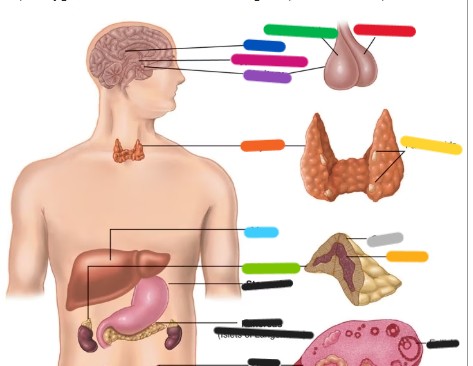
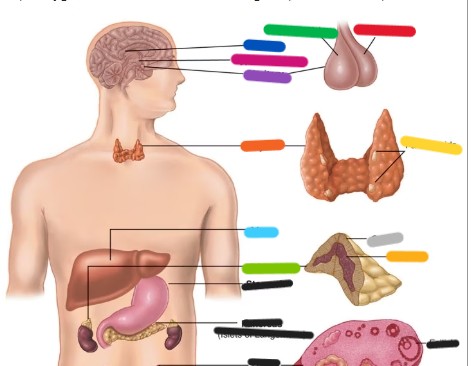
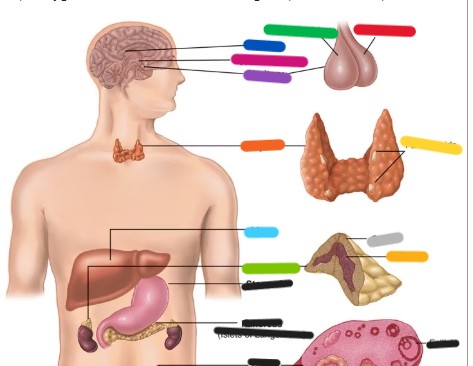
posterior lobe
dark green
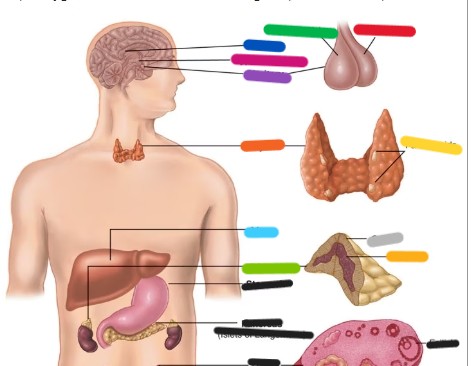
anterior lobe
red
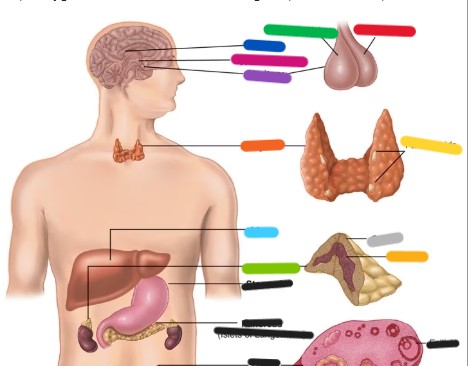
pineal gland
blue
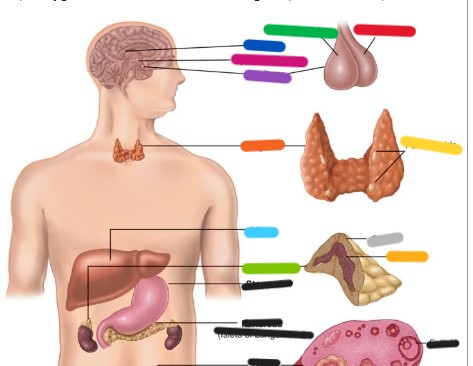
hypothalamus
pink
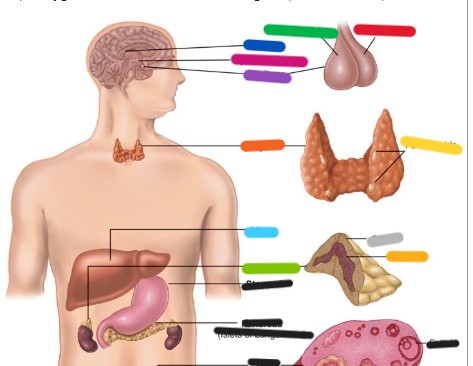
pituitary
light purple
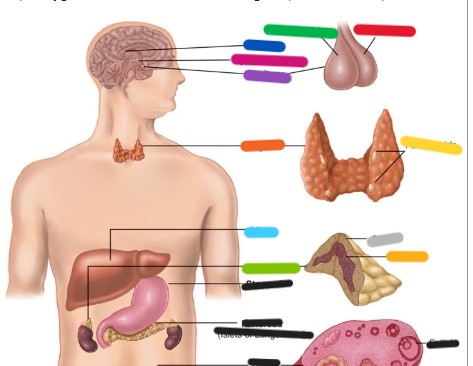
thyroid
orange
parathyroid
yellow
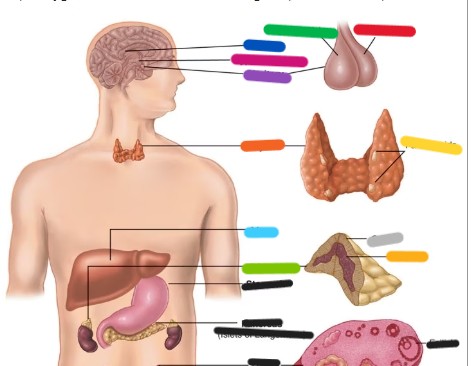
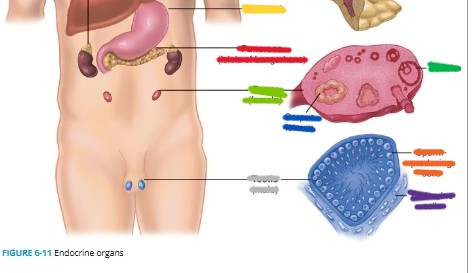
liver
light blue
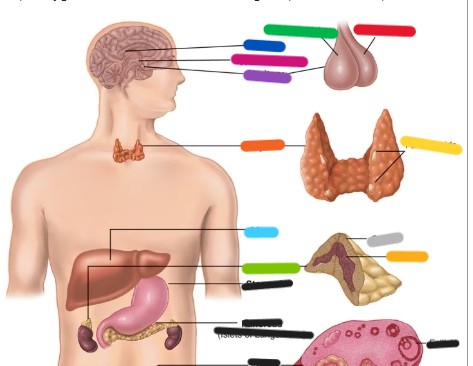
adrenal
light green
cortex
gray
medulla
yellow orange
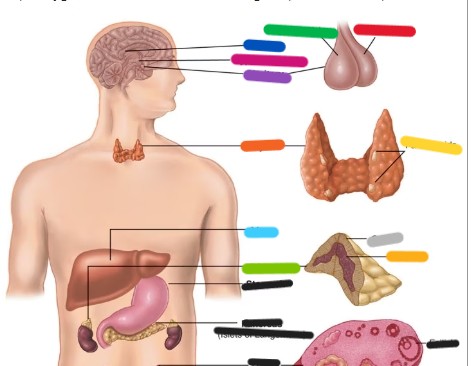
stomach
yellow
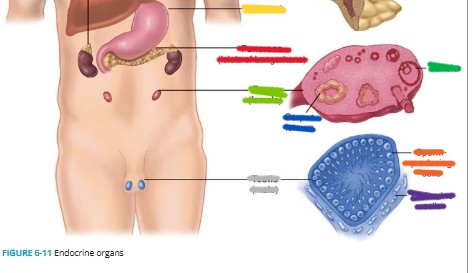
pancreas
red
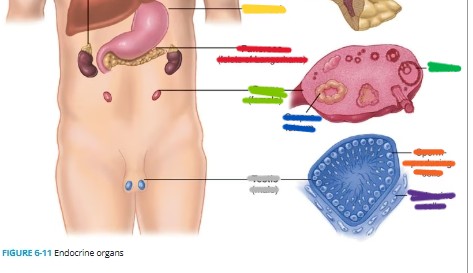
follicle
dark green
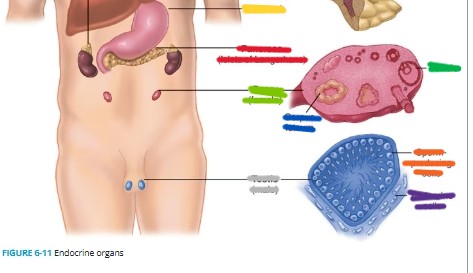
ovary
light green
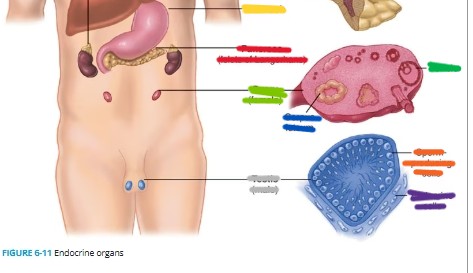
corpus luteum
blue
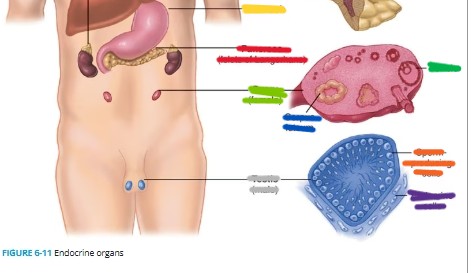
sperm-producing cells
orange
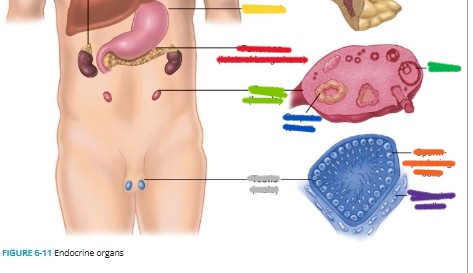
endocrine cells
purple
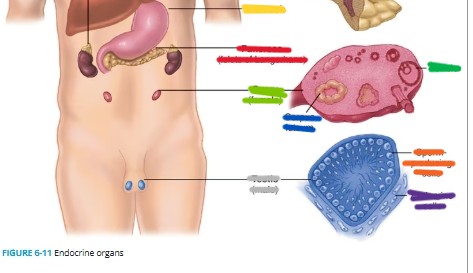
testis
gray
meal is consumed
Insulin response to elevated blood sugar step 1
glucose enters the blood, raising blood glucose levels
Insulin response to elevated blood sugar step 2
pancreas releases insulin in response to elevated glucode levels
Insulin response to elevated blood sugar step 3
insulin binds to glucose in the blood
Insulin response to elevated blood sugar step 4
insulin escorts glucose to muscle fat and liver cells to be be used as energy
Insulin response to elevated blood sugar step 5
blood glucose levels drop
Insulin response to elevated blood sugar step 6