The Periodic Table (C8)
 Call Kai
 Learn
Learn Practice Test
 Spaced Repetition
 Match
Match Flashcards
 Knowt Play
1/22

Earn XP
Description and Tags
Chemistry IGCSE: C8.1 Arrangement of elements C8.2 Group I properties C8.3 Group VII properties C8.4 Transition elements C8.5 Noble gases
Name | Mastery | Learn | Test | Matching | Spaced | Call with Kai | Chat |
|---|
No analytics yet
Send a link to your students to track their progress
23 Terms
What is the Periodic Table?
A table containing every element that we have found naturally or made synthetically and it is organized by atomic number
What is the atomic number?
Total number of protons found in an element
What is the atomic mass?
Total number of protons + neutrons in an element
What are the groups in the periodic table?
The columns, elements in same group have similar chemical properties because they have same amount of valence electrons
What are the periods in the periodic table?
The rows, determines number of shells
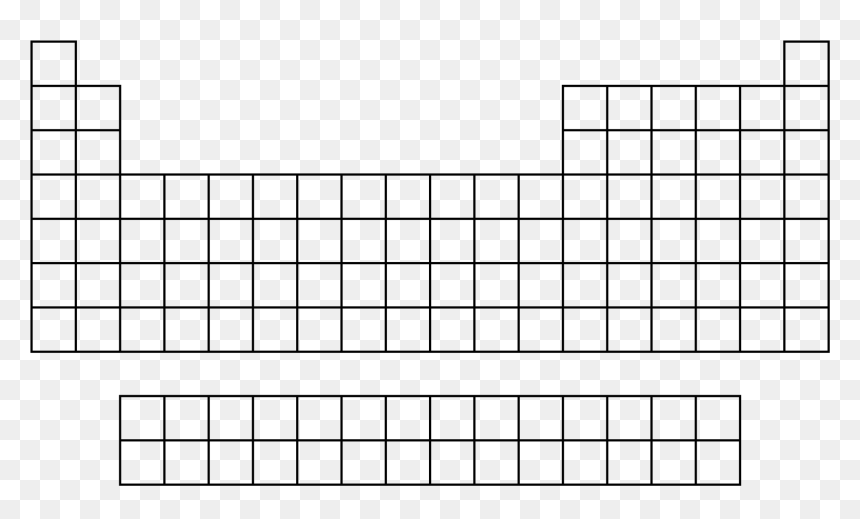
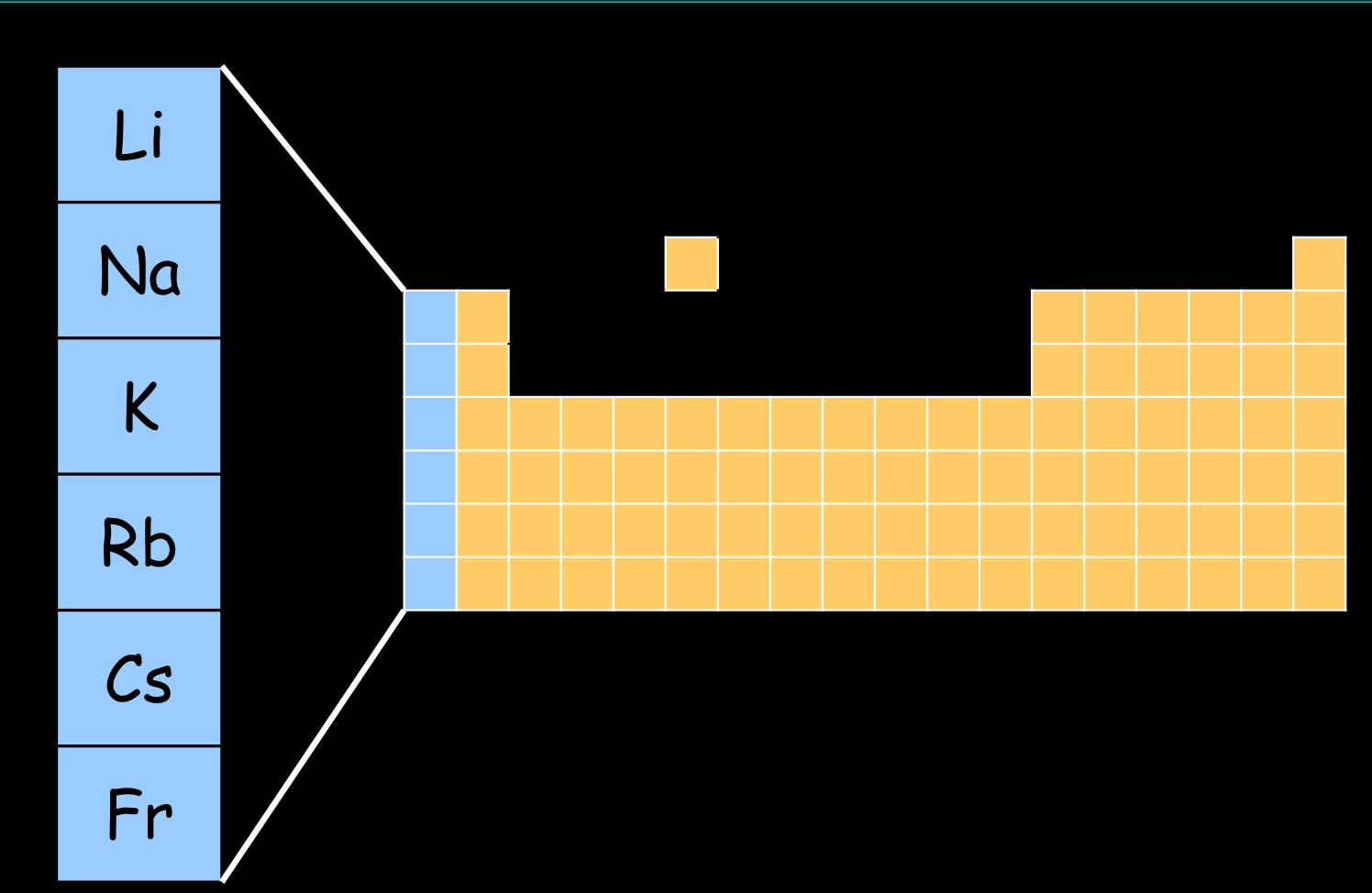
Signal where the group 1 elements (alkali metals) are located in this periodic table
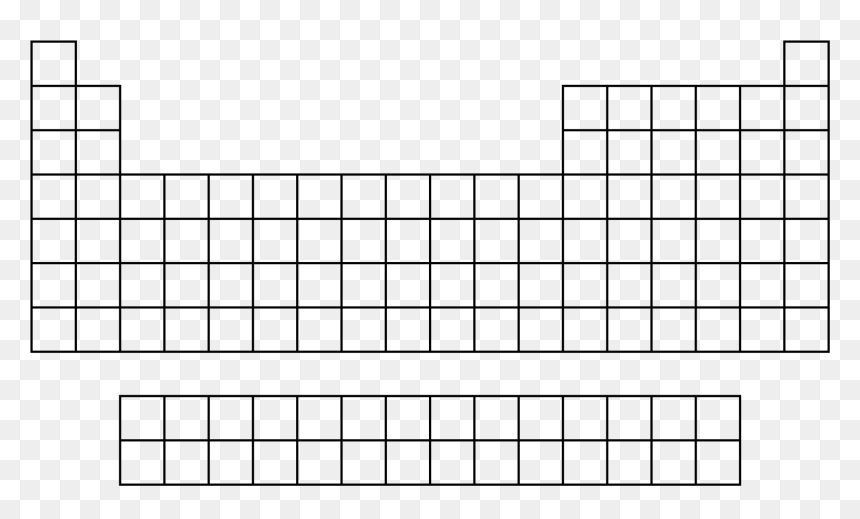
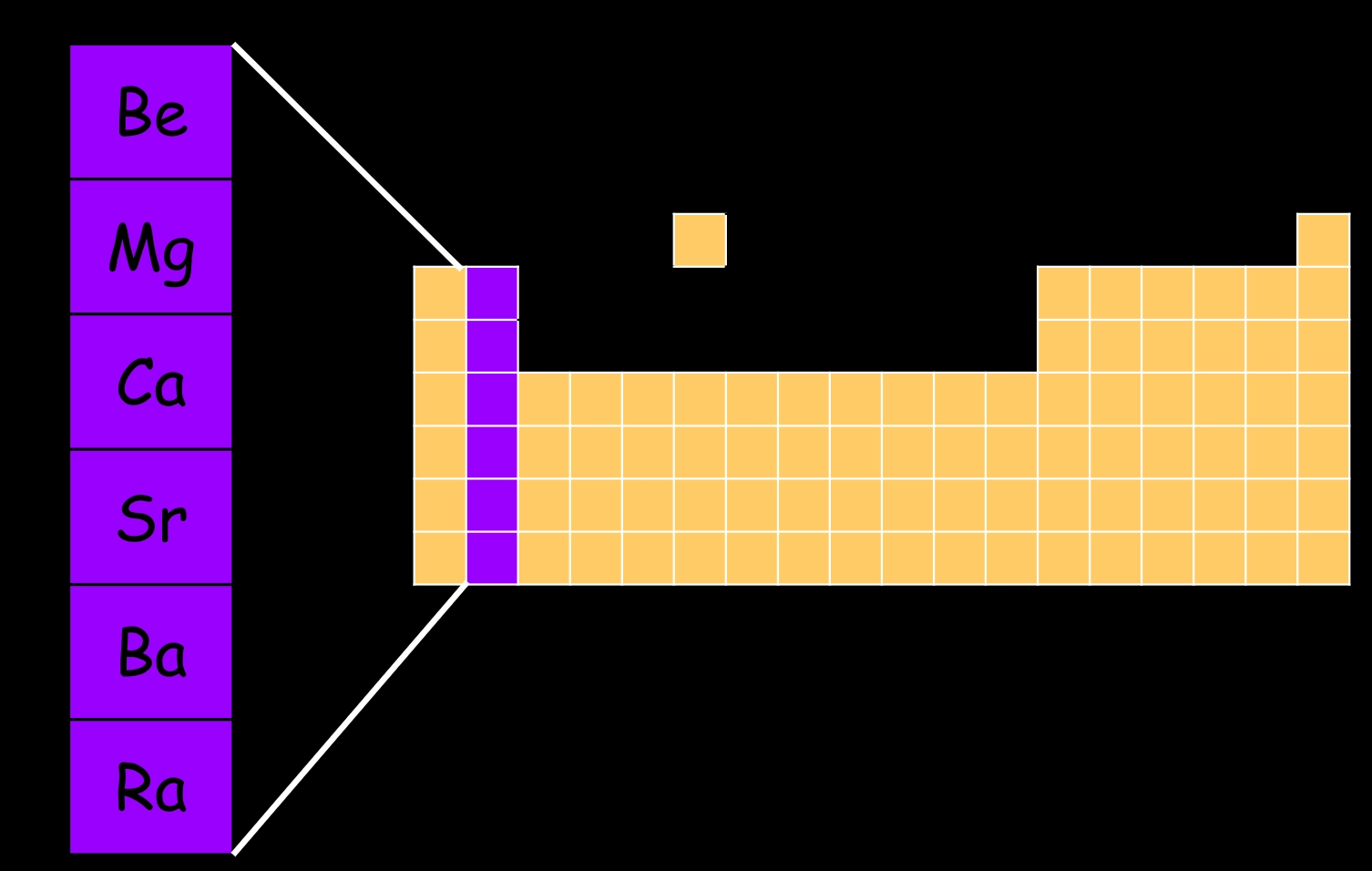
Signal where the group 2 elements (alkaline earth metals) are located in this periodic table
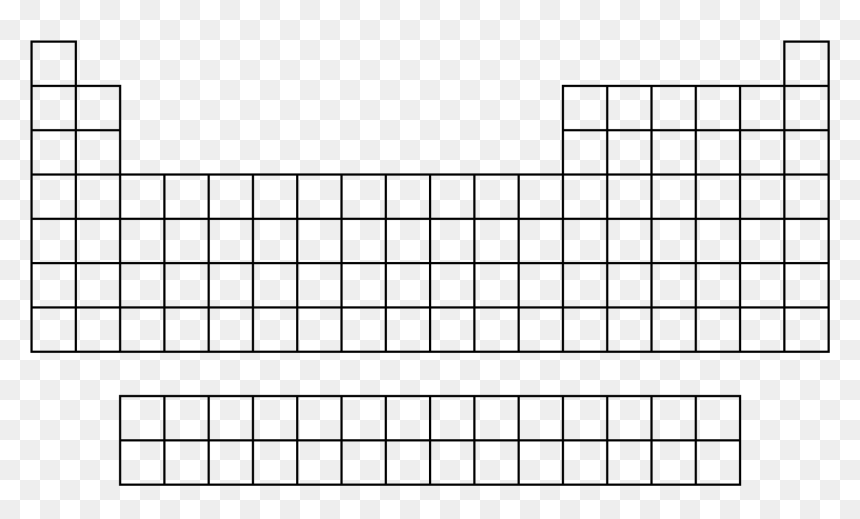
Signal where the group 7 elements (halogens) are located in this periodic table

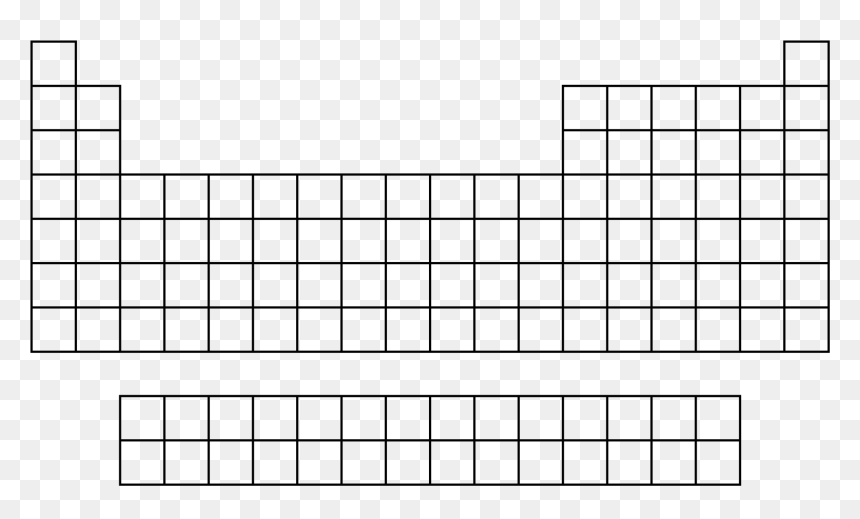
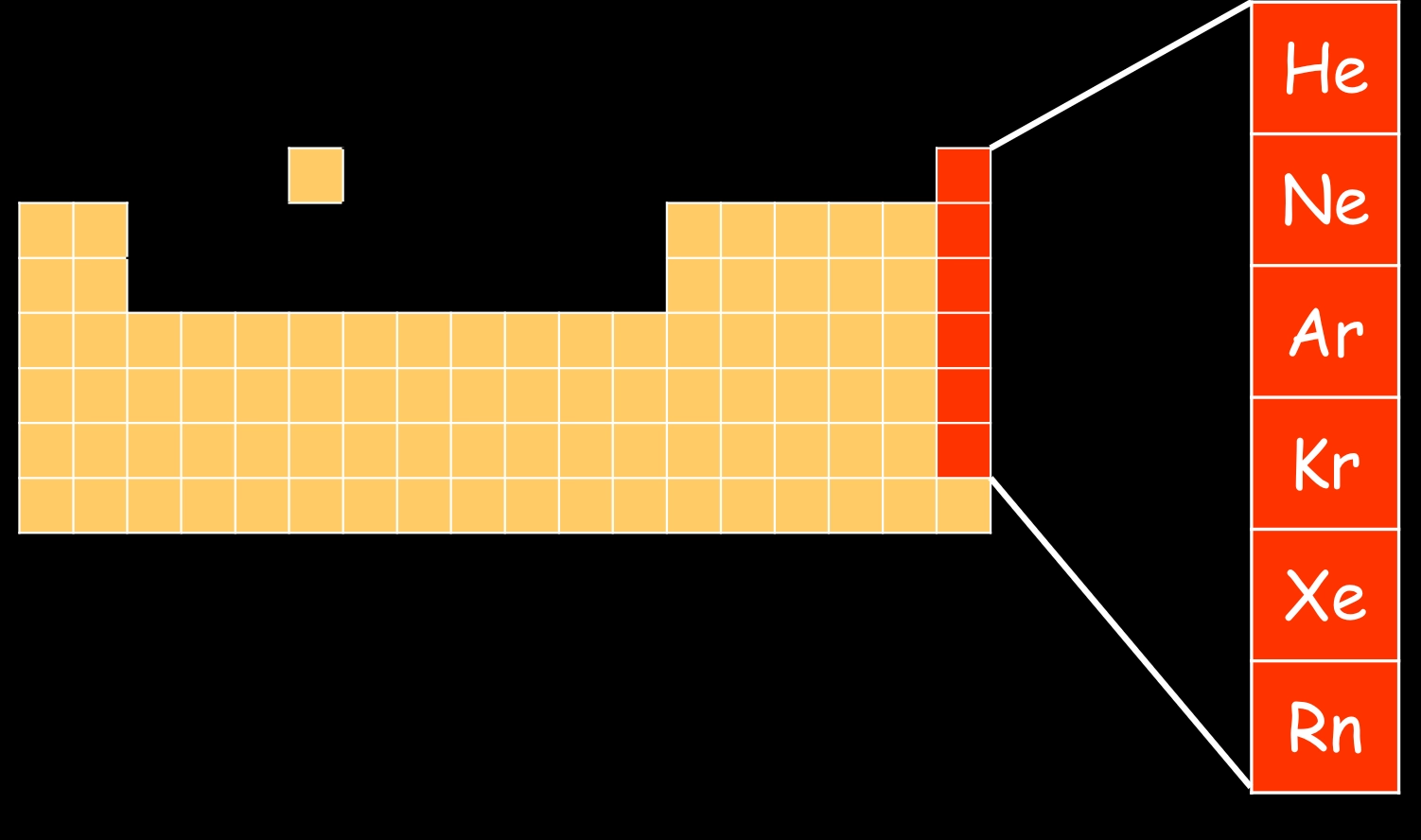
Signal where the group 8 elements (noble gases) are located in this periodic table
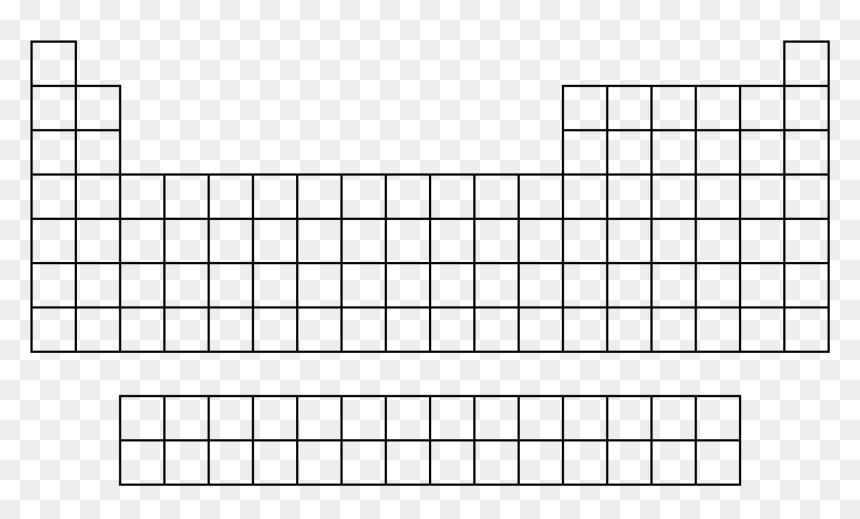
Signal where the transition metals are located in this periodic table

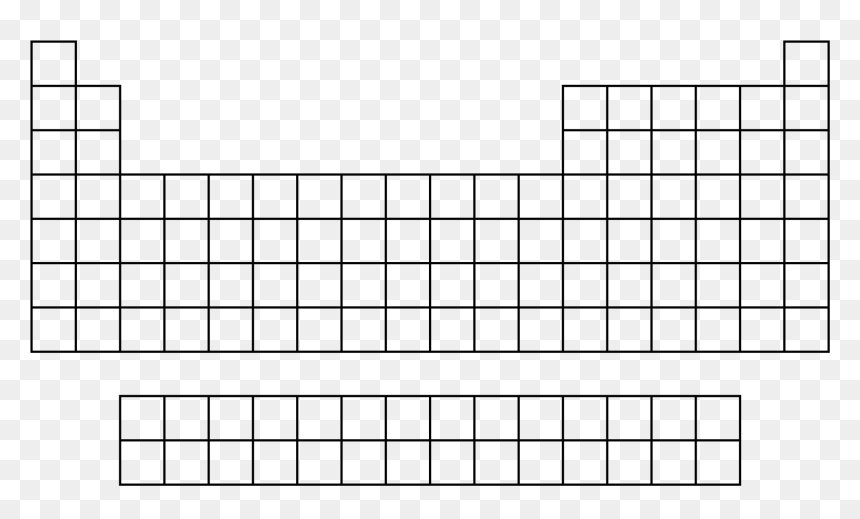
Signal where the metals and the non-metals are located in this periodic table

What are the trend of the metals in the periodic table?
Large atomic radius
Conduct heat and electricity
Have a range of metling point values
Malleable
Shiny
What are the trend of the non-metals in the periodic table?
Smaller atomic radius
Don’t conduct electricity
Generally, low melting point values
Brittle
Dull
Which non-metals can conduct heat and electricity, respectively?
Graphite (form of carbon) and diamond (Au)
What properties do metalloids have?
Some properties of metals and some properties of non-metals
What are group 1 elements known as, and what are their charges/valence shell electron?
The alkali metals, 1 electron in valence shell (1+ charge - loses 1 electron)
What are group 2 elements known as, and what are their charges/valence shell electrons?
The alkaline earth metals, 2 electrons in valence shell (2+ charge - loses 2 electrons)
What are group 7 elements known as, and what are their charges/valence shell electrons?
The halogens, 7 electrons in valence shell (1- charge - gains 1 electron)
What are group 8 elements known as, and what are their charges/valence shell electrons?
The noble gases, 8 electrons in valence shell (balanced)
What are the characteristics of the transition elements?
Good conductors of electricity and thermal energy
Hard, strong, and lustrous
Have high densities: atoms have high mass and are tightly packed together in a metallic lattice
Have high melting points, except for mercury, which is liquid at room temp
Form ions with different charges
Useful as catalysts: can easily give and accept electrons
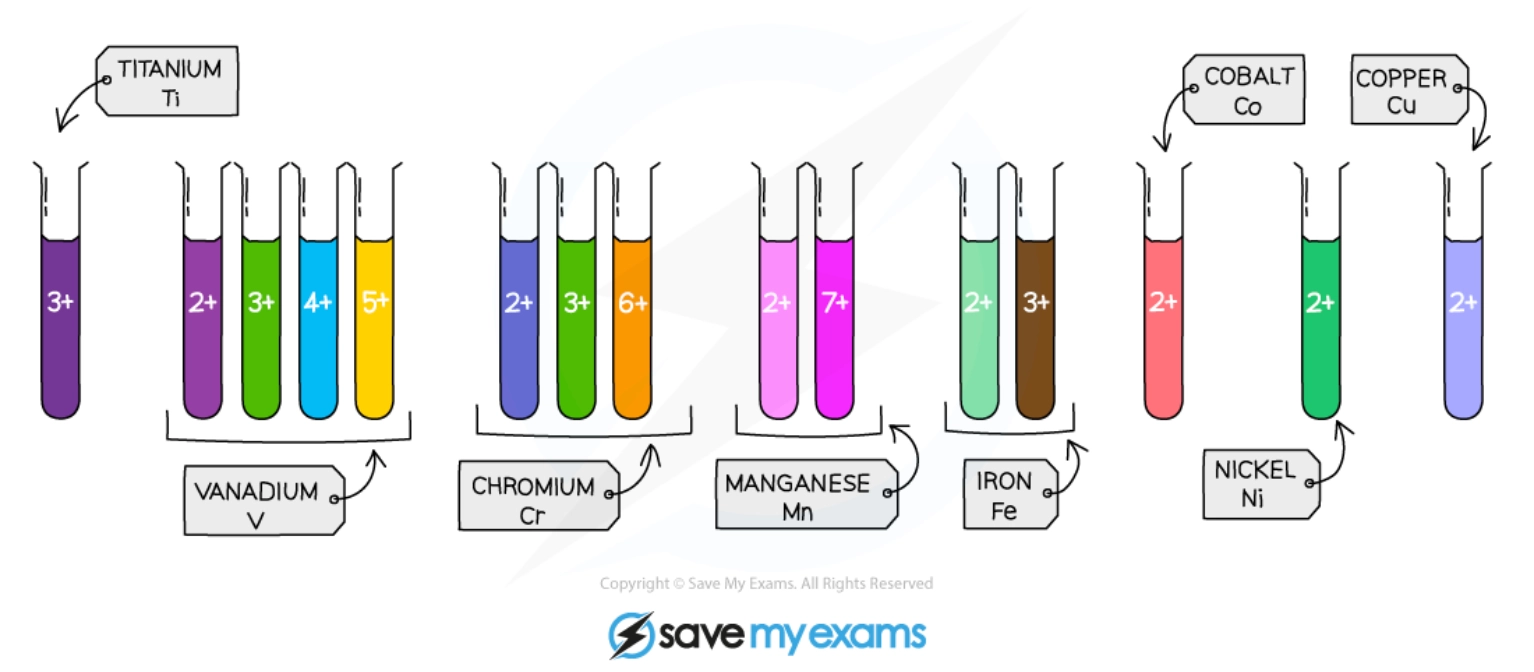
Form colored compounds
What colored compounds do the transition elements form?
Describe the noble gases
Non-metals
Monoatomic
Unreactive/inert
Colourless
Low melting and boiling points
Why are the noble gases inert?
Because they have a full outer shell, they don’t need to gain or lose electrons, as they are stable, and they don’t easily form bonds with other elements