ch 12-2 Saturn rings and moons
 Call Kai
 Learn
Learn Practice Test
 Spaced Repetition
 Match
Match Flashcards
 Knowt Play
1/60

There's no tags or description
Looks like no tags are added yet.
Name | Mastery | Learn | Test | Matching | Spaced | Call with Kai | Chat |
|---|
No analytics yet
Send a link to your students to track their progress
61 Terms
saturn’s spectacular ring system
has an extraordinarily large and complex ring system, which was visible even to the first telescope
282,000 km from planet
10 m thick
thought to be secondary objects
overview of the Ring System
consists of main rings and faint outer rings
billions of dust like particles from tiny to large
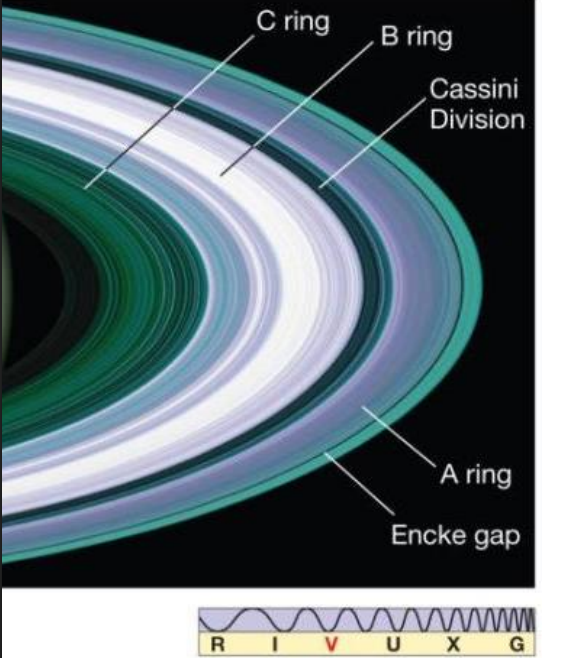
what are the main rings?
A, B, C
Cassini division (rings composed of rings between A&B)
largest and most visible
ordered by discovery
B is the brightest
CBA is actual order in closeness
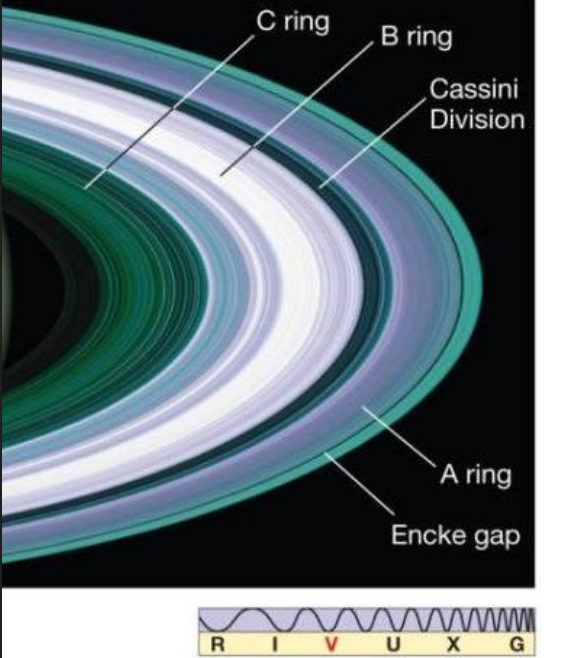
what are the faint outer rings?
D, E, F, G
what is the ring particles range in size?
form fractions of a millimeter of tens of meters
what is the ring composition?
water ice—like snowballs
trace: rocky metallic material (colour variation)
high reflectivity
how do particles travel?
travel at different speeds and collide and break down into smaller pieces and then fall into atm.
for any given planet and any given moon…
the critical distance inside of which the moon is destroyed is known as tidal stability limit or Roche limit
What is the Roche Limit?
The closest distance a moon can orbit a planet without being torn apart by tidal forces.
Why can't large moons exist inside the Roche Limit?
The planet's tidal forces become stronger than the moon's self-gravity and pull it apart.
Why are most Jovian rings found inside the Roche Limit?
Material inside the Roche Limit cannot form a large moon and instead remains as ring particles.
How can a ring system form?
A moon that moves within the Roche Limit can be torn apart, producing ring material.
zone that is too close to the planet for moon formation…
bc of tidal forces would overcome gravity and tear it apart
what did voyager probes show?
Saturn’s rings to be much more complex than originally thought
composed of thousands of ringlets
spokes
shepherds moons
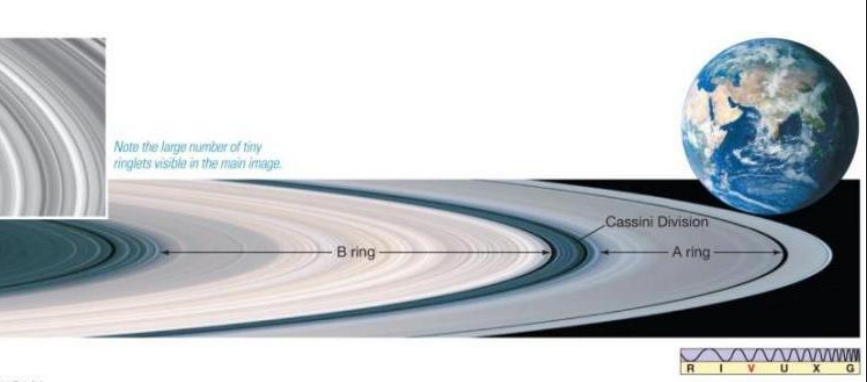
ringlets are not actually separated from one another by empty space
instead rings contain concentric regions of alternating high and low concentration of ring particles
what is the pattern of Saturn’s ring?
spiral density waves
narrow gaps kept clear by action of small moonlets embedded in them
list the rings from closest to farthest
D, C, B, Cassini Division, A, F, G, E
F ring
narrow and dynamic
kinked and clumpy due to gravitational interaction with Shepard Moon
G ring
further from F
lots of micro-dust
E ring
outermost
far beyond orbit of moon titan
lots of micro ice and dust
why is F ring considered the strangest ring?
it appears to have braids and kinks → dense core
Shepherded by Ephesus and Pandora → channels and snowballs of ice
2 small dark satellites
Prometheus and Pandora
orbit around F ring
produce braid
what else did Voyager find?
radial “spokes” that formed and then dissipated; this probably happens frequently
freshly formed spokes revolve same rotation of magnetic field and interior of Saturn → tiny dust electrically charged
spokes apperance
sharp, narrow, suggest short formation times
what is the unofficial theory of spokes?
think caused by small particles suspended by ring plane and electromagnetic forces responsible for features
What causes divisions (gaps) in Saturn's rings?
Gravitational resonances with Saturn's moons.
What is orbital resonance?
A situation where two objects have orbital periods related by a simple ratio, causing repeated gravitational interactions.
How do resonances create gaps in rings?
Repeated gravitational tugs from moons disturb ring particles and remove them from certain orbits.
What moon is associated with the Cassini Division?
Mimas.
What causes the Cassini Division in Saturn's rings?
A 2:1 orbital resonance between ring particles and Saturn's moon Mimas.
mimas = 1 orbit
ring particle = 2 orbits
what is a “Shepherd” moon?
defines outer edge of Ring A through gravitational interactions
moon pulls on ring particles to?
prevent them from dispersing outward by orbiting out
nudge stray particles back into ring
ring formation: details of formation are unknown
probably too active to have lasted since birth of solar system
not all rings may be the same age
either must be continually replenished or are the result of a catastrophic event
what are Saturn’s many moods appear to be made of?
water ice
in addition to the small moons, Saturn has
6 medium-sixed moons (Mimas, Enceladus, Tethys, Dione, Rhea, and Iapetus)
1 large moon (Titan), almost as large as Jupiter Ganymede
3 groups of Saturn’s moon
“small” moons - irregularly shaped ice
“medium” moons - spherical bodies - clues of past and present
“large” moon - Titan
Titans atmosphere
thicker and denser than Earth’s; mostly nitrogen 95% and argon
only moon with substation atm.
50% denser than Earth
what does Titans thick atmosphere impact?
makes surface impossible to see
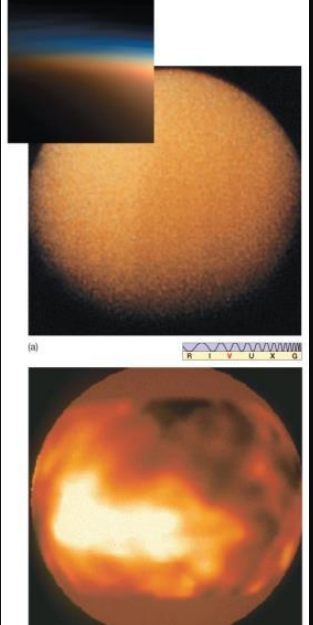
characteristics of Titan’s atmosphere
unique, chemically complex due to trace chemicals
Nitrogen, Methane, Hydrocarbon
organic rich environment
more extended than Earth because low gravity
thick and dense
unseen surface covered in organic material settled from clouds
low surface temperatures = thick atm.
weak gravitational pull
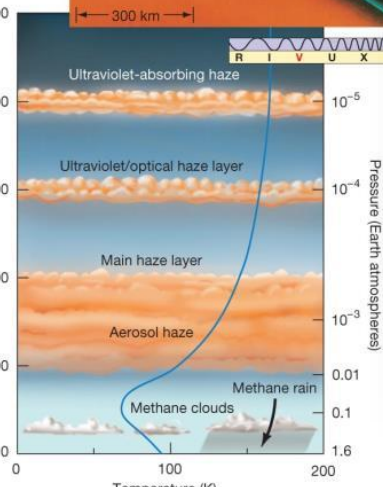
Cassini Huygens observations
some surface features are visible in infrared image\not possible to see in visible spectrum
dense rich Nitrogen atm.
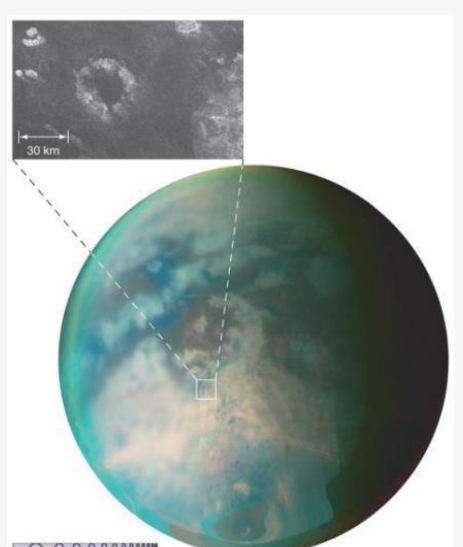
what surface features are seen on Cassini?
internal liquid ocean beneath surface → H2O and Ammonia
has lakes and liquid methane
replenished from rain
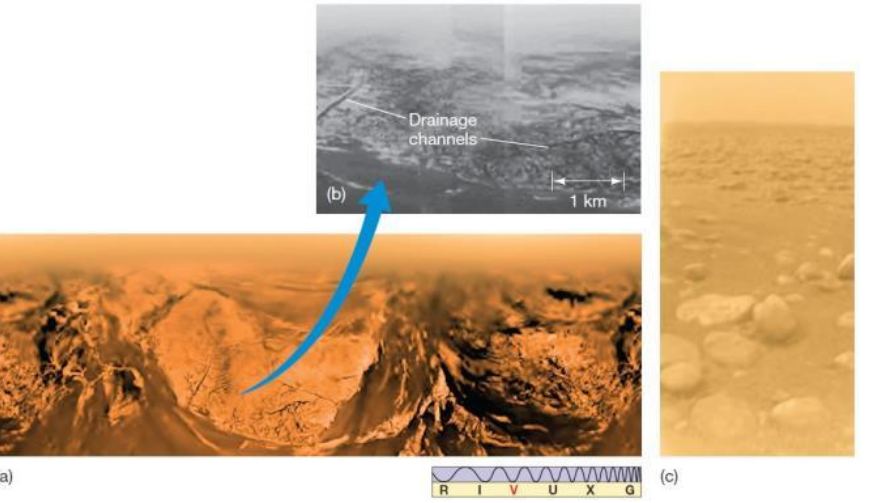
Huygens spacecraft landed on Titan
confirmed presence of liquid ethane in lakes
methane rain feed lakes
revealed ice pebbles, icey plains, river like drainage channels
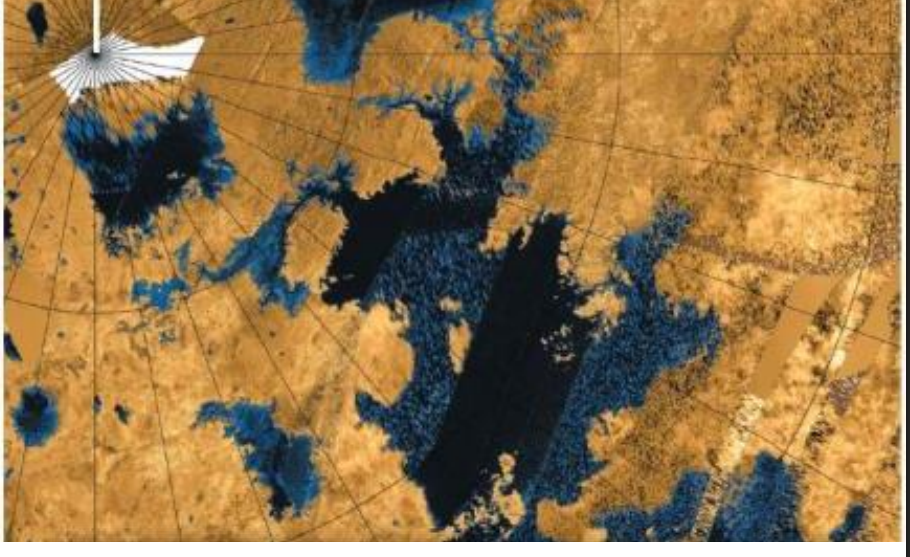
lakes on Titan
Cassini detected dark reflective smooth regions thought to be lakes
Northern latitudes (liquid methane and ethane)
back to radar
smooth surface
Titan’s interior: “Water World”
based on measurements made by Cassini and Huygens, this is the current bets understanding as to what the interior of Titan looks like
highly differentiated ocean world
thick icey outer crust
subsurface liquid ocean
rocky core
inner may be slushy water instead of open sea
what are Saturn’s Mid-sized moons?
Mimas
Enceladus
Tethys
Dione
Iapetus
Rhea
orbit between 3 and 9 planetary radii from Saturn
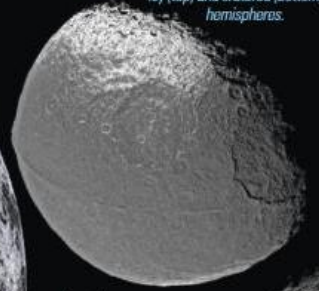
Iapetus
extreme 2 tone coloration
2 km equatorial ridge
orbits 59 radii away from Saturn
Mimas
Hershel crater
“inner icey moons”
intermediate sized
orbit between ring system and Titan
heavily cratered
water ice
Enceladus
active geysers
heat and potentially habitable
Tethys
large canyon system
Dione
tectonic features
potential subsurface ocean
Rhea
largest of group
brightest, heavily cratered
weak ring system
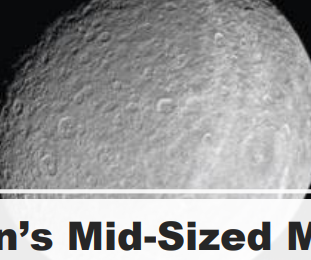
all mid-sized moons are tidally locked
heave “leading” and “trailing” surfaces
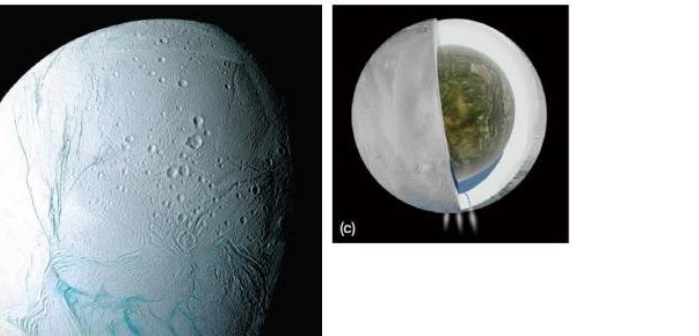
enceladus
surface seems oddly youthful
inset shows icy jets
large ocean believed to exist under the ice
white and reflective surface with water ice
heavily cratered Northern region
tectonic deformed younger southern
small
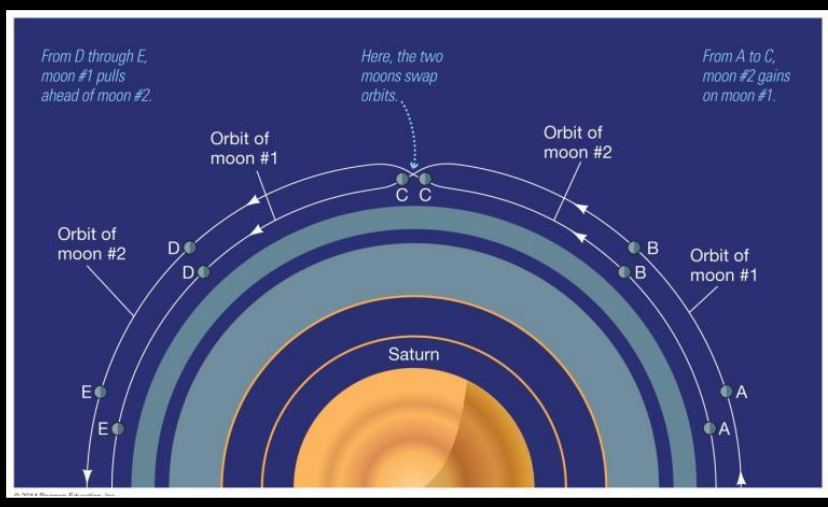
Janus and Epimetheus share a single orbit
irregularly shape
unique gravitational dance every 4 years
swap positions to avoid collision
one moves to higher, slower orbit and the other drops lower to faster orbit
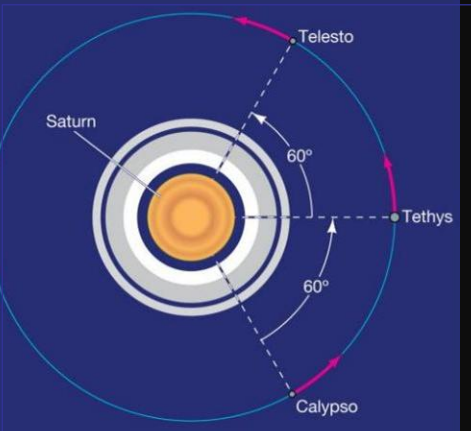
telesto and calypso
two more are at the same Lagrangian points of Saturn’s moon Tethys (trojan moons, 60° behind)
stable gravitational positions
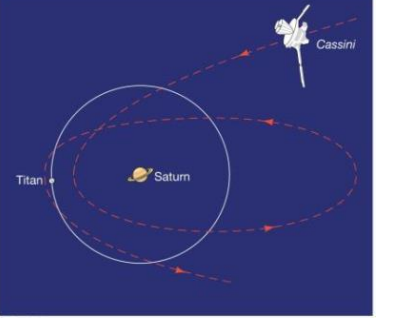
what did the Cassini spacecraft use to make multiple close passes around Saturn’s moons?
gravitational slingshots
precise orbits are decided on the fly
Saturn and Jupiter rotate
differentially and is significantly flattened
saturn generates its own heat through?
helium raindrops
interactions with medium and small moons determine?
ring structure
the rings are entirely within the?
Roche limit, where larger bodies would be torn apart by tidal forces
several of he small moons share orbits with?
either each other or with larger moons