advanced micro exam #1
 Call Kai
 Learn
Learn Practice Test
 Spaced Repetition
 Match
Match Flashcards
 Knowt Play
1/62

There's no tags or description
Looks like no tags are added yet.
Name | Mastery | Learn | Test | Matching | Spaced | Call with Kai | Chat |
|---|
No analytics yet
Send a link to your students to track their progress
63 Terms
what are 3 foods we wouldn’t have without fermentation?
beer, cheese, kombucha
microorganisms that cause disease are called?
pathogens
what are two examples of prokaryotic organisms?
Escherichia coli (E. coli)
Staphylococcus aureus (S. aureus)
what type of eukaryotic microbe is photosynthetic?
algae
what kind of pathogen is acellular?
virus
what’s the name of unicellular fungi?
yeast
in binomial nomenclature, an organism’s scientific name includes its
genus and species
prokaryotic vs. eukaryotic cell
prokaryotic:
no nucleus
bacteria and archaea
eukaryotic:
nucleus
fungi, helmiths, protists
*need to know difference to be able to target bacteria and issues w/o hurting our own cells

what are the two major types of prokaryotic organims?
bacteria and archaea
arranage from small to large —> bacterial cell, plant cell, virus, protein
protein>virus>bacterial cell>plant cell
from broades to narrowest, what are the 9 levels of organisms
domain, kingdom, phylum, class, order, family, genus, species, strain

what’s the term for comma-shaped bacteria?
vibrio
which bacterial structures are important for adherence to surfaces?
fimbrae and capsules
what are bacterial cell walls composed of?
peptidoglycan
what eukaryotic organelles are derived from endosymbiosis with bacteria, and what bacteria did these organelles come from?
mitochondria (from alphaproteobacteria) and chloroplasts (plastids) from cyanobacteria
which type of nutrient uptake involves the engulfment of small dissolved molecules into vesicles?
pinocytosis
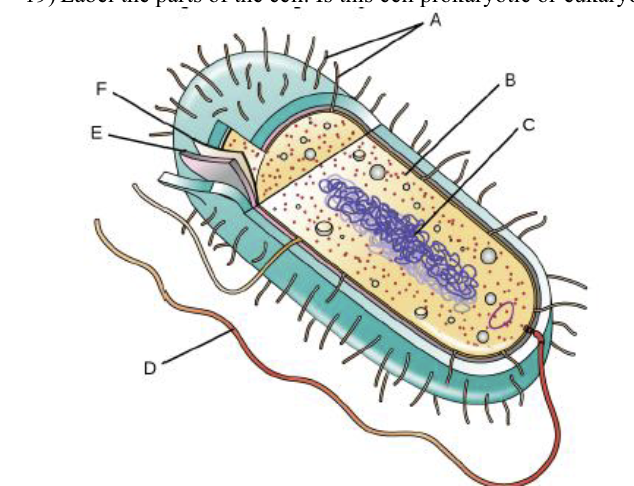
label the parts of ths prokaryotic cell
a. fimbrae
b. cytoplasm
c. nucleiod
d. flagellum
e. cell wall
f. plasma membrane

label the parts of the eukaryotic cell
a. plasma membrane
b. nucleus
c. nucleolus
d. mitochondria
e. centrioles
f. endoplasmic reticulum
what are unicellular, prokaryotic microorganisms that differ from bacteria in their genetics, biochemistry, and ecology ?
archaea
what is germ theory?
bacterial or viral organisms (pathogens/germs) can invade the body, causing specific diseases —> casuative agents of diseases
importance: limiting disease transmission, preventing diseases, and targeting microbial replication to treat the disease
what is evidence that supports the endosymbiotic theory?
endosymbiotic theory: mitochondria and chloroplasts originated from free-living prokaryotic cells that were engulfed by a large host cell
the structure of mitochondria and chloroplasts is similar to bacteria
mitochondria and chloroplasts have double membranes
which domains are prokaryotic?
bacteria and archaea
what can we infer about conditions on Earth billions of years ago based on deeply branching bacteria and archaea?
it was hot, high UV exposure, no oxygen (anaerobic)
what is a bacterial endospore?
structure formed in the cell of the bacteria to protect/help them from harsh environments
hard to control —> they live for thousands of years and can withstand harsh chemicals
gram positive vs. gram negative cells
gram-positive cells: thick peptidoglycan cell wall
—> purple; exterior of the cell membrane
gram-negative cells: thin peptidoglycan cell wall
—> pink; between two membranes
what features of the class Alphaproteobacteria are relevant to the endosymbiosis event that led to the mitochondria?
double-membraned structure
intracellular parasites in host cellsl
what microorganism is the causative agent of stomach ulcers?
Helicobacter pylori (H. pylori)
what two genera are both low G+C gram-positive spore-formers that contain several species of lethal pathogens?
Clostridium and Bacillus
what domain of life contains no known pathogenic or parasitic organisms?
archaea
bacteria vs. eukaryotes
bacteria:
ribosome - 70S (overall coefficient size)
location - nucleiod
cell wall - peptidoglycan
structure produced during harsh conditions: endospore
eukaryotic:
ribosome - 80S (overall coefficient size)
location - nucleus
cell wall - cellulose (or chitin)
structure produced during harsh conditions - cyst
what is the totality of forms of prokaryotes (particularly bacteria) living in certain region of the human body (mouth, throat, eye, etc.) is called?
the microbiota of the region
what are the types of symbiotic relationships?
mutualism —> benefitted, benefitted
amensalism —> harmed, unaffected
commensalism —> benefitted, unaffected
neutralism —> unaffected, unaffected
parasitism —> benefitted, harmed

coliforms vs. noncoliforms
coliforms: ferment lactose completely (produces gas and acid)
noncoliforms: fermet lactose incompletely or not at all
*both contains several species of intestinal pathogens (E. coli - coliform that contains strains of instinal pathogens as well)
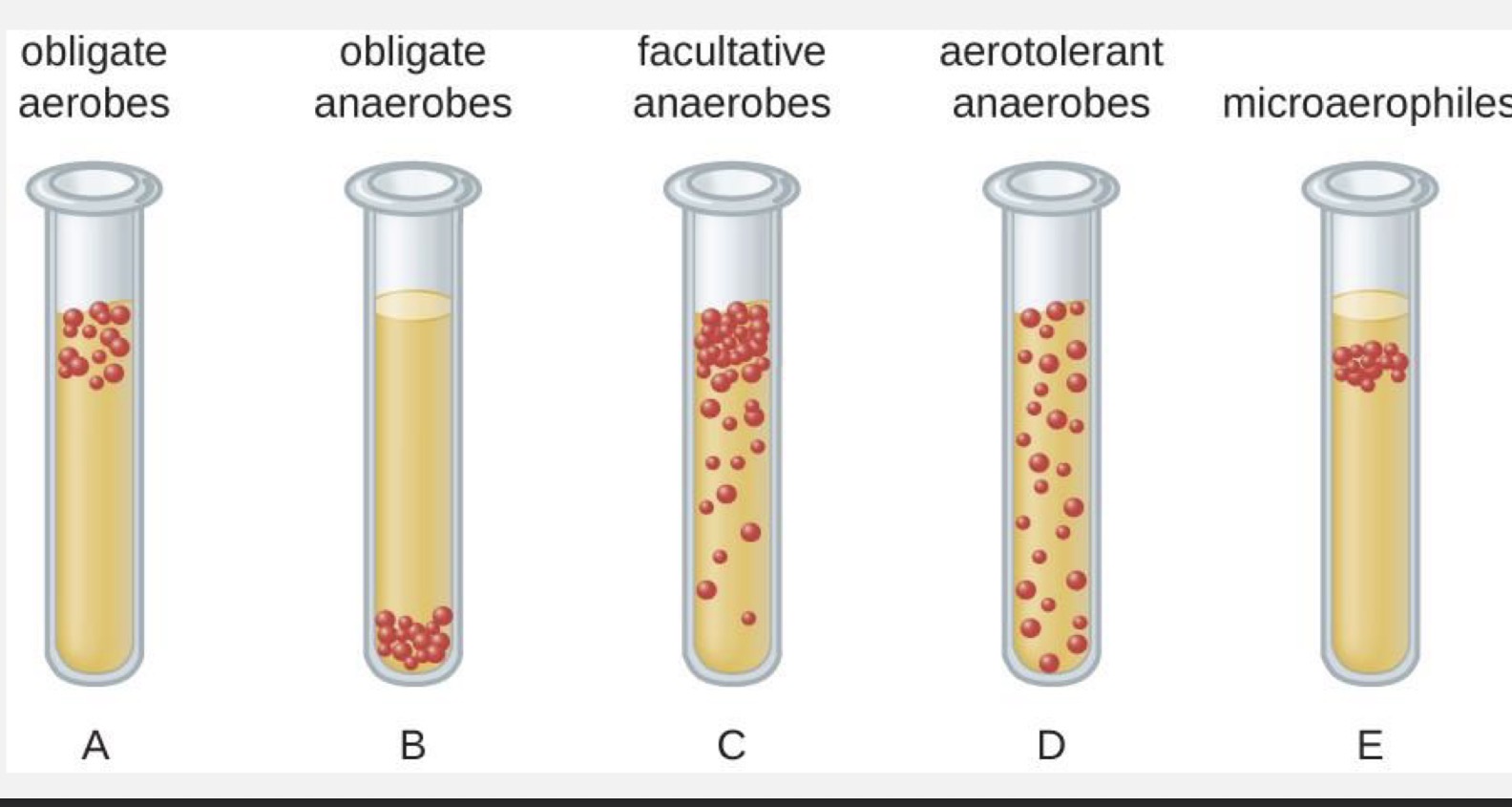
what are the oxygens levels in each test tube?
obligate aerobes —> top
obligate anaerobes —> bottom
faculative anaerobes —> clumped at top and spread down
aerotolerant anaerobes —> spread out from top to bottom
microaerophiles —> small clump a little bit from the top
which domain does not include prokaryotes?
eukarya
whikch protist is a concern because of its ability to contaminate water supplies and cause diarrheal illness
Giardia
why are some fungi proven to be medically useful?
because they can be used to produce antibiotics
which species is the most common cause of human yeast infections?
Candida albicans
what are the 3 structures that can be used by protozoa for locomotion?
cilia, flagella, and pseudopods
what disease is caused by apicomplexans, leads to hundreds of thousands of human deaths per year, and is best prevented through use of a mosquito net?
malaria
why is it harder to treat diseases caused by eukaryotes compared to diseases caused by bacteria?
eukaryotes have a similar cell biology to humans
—> makes it hard to find treatment that wouldn’t hurt human’s cells
why are mold spores so dangerous?
because they are airborne → enter lungs and colonize
what effect might a toxoplasmosis infection have?
change in personality and birth defects
what are the components of a virus that are extended from the envelope for attachment?
spikes
what is the virus that infects a bacterium?
bacteriophage
what viral life cycle leads to the complete destruction of the host cell?
the lytic life cycle
virulent phages use the lytic life cycle
what treatments exist for a prion infection?
none
what infectious agent does not have nucleic acid?
prions
what’s the enzyme from HIV that can make a copy of DNA from RNA called?
reverse transcriptase
what does an animal cell look like?
this>

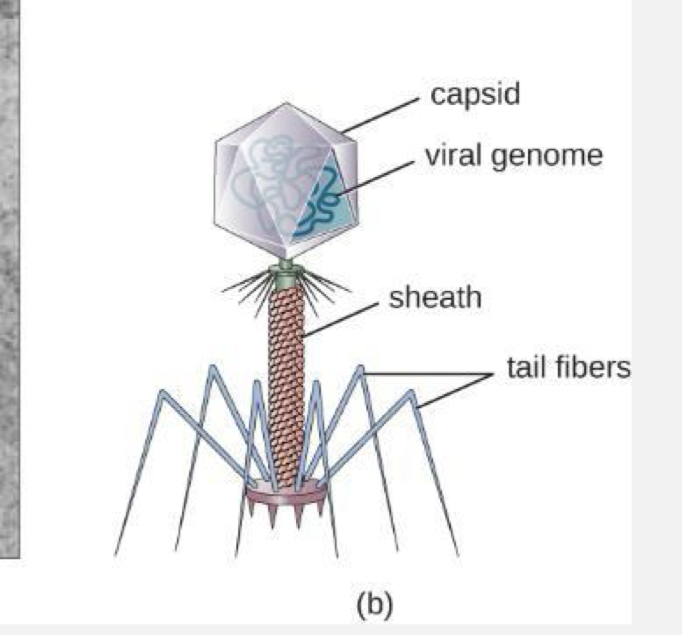
label the bacteriophage
a. capsid
b. viral genome
c. sheath
d. tail fibers

what are the 5 stages of a bacteriophage infection?
a. attachment
b. penetration
c. biosynthesis
d. maturation
e. lysis

general vs. specialized transduction
generalized transduction: a random piece of host DNA is picked up with viral DNA during the assembly step of the lytic cycle
specialized transduction: prophage is excised, and virus takes DNA near where the prophage was on the bacterial chromosome
—> occurs at the end of lysogenic cycle (induction)
what disease symptoms are observed in animals infected with prions?
brain damage, dementia, loss of motor coordination, and death
lytic vs. lysogenic cycle
lytic cycle: leads to death of the host
lysogenic cycle: leads to the presence of a prophage inside the host chromosome
what do phycologists study?
algae
what are the three domains of life?
bacteria, archaea, and eukarya
what domain of life includes helmets?
eukarya
what does LUCA stand for?
Last
Universal
Common
Ancestor
(single-celled organisms from which all life on earth today descends)
what is biolgical evidence of what earth was like when it began to emerge?
deeply branching bacteria and archaea
what is the group of photosynthetic bacteria that caused mass extinction due to oxygen production and was involved in the endosymbiosis event that orginally led to the chloroplast?
cynobacteria
what is the broad category of organisms that steal the host’s nutrients/resources and damage the host through starvation?
parasites