exam 3 pt 6 (population ecology -> trade off)
 Studied by 0 people
 Call Kai
 Learn
Learn Practice Test
 Spaced Repetition
 Match
Match Flashcards
 Knowt Play
1/17

There's no tags or description
Looks like no tags are added yet.
Name | Mastery | Learn | Test | Matching | Spaced |
|---|
No study sessions yet.
18 Terms
population ecology
study of populations in relation to environment, including environmental influences on..
A) density
B) distribution
C) age structure
D) population size
population
a group of individuals of a single species living in the same area
density
the number of individuals per unit area or volume
dispersion
the pattern of spacing among individuals within boundaries of the population
what factors change population density/population size?
A) immigration
B) emigration
C) birth rate
D) death rate
immigration
influx of new individuals from other areas
emigration
the movement of individuals out of a population
what are the patterns of dispersion?
A) clumped
→ individuals aggregate in patches influenced by resource availability + behavior
B) uniform
→ individuals are evenly distributed; may be influenced by social interactions such as territoriality
C) random
→ individual’s position is dependent on others’; occurs in the absence of strong attractions or repulsions
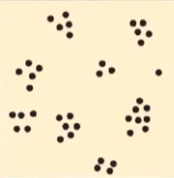
what distribution is this?
clumped
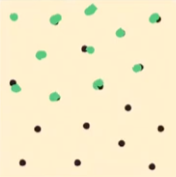
what distribution is this?
uniform

what distribution is this?
random
survivorship curve
graphic way of representing the data in a life table
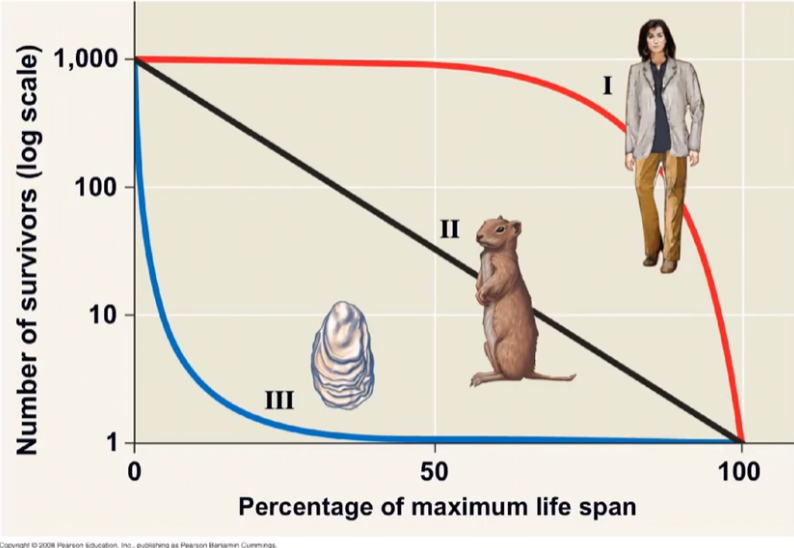
what are the types of survivorship curves?
A) type 1
→ high survivability of young-middle aged; increased death in old age
B) type 2
→ at any age, the organism has an equal probability of surviving
C) type 3
→ high probability of death in youth; increased probability of old age
semelparity (big-bang reproduction)
reproduce once and die
iteroparity
repeated reproduction
unpredictable environments favor what kind of reproduction?
semelparity
dependable environments favor what kind of reproduction?
iteroparity
survival vs. reproduction trade off
organisms cannot devote the same amount of energy to survival and reproduction
→ they have to make a trade… either reproduce a lot, and have little energy to survive; or survive and have a little energy to reproduce