Science Inquiry
 Call Kai
 Learn
Learn Practice Test
 Spaced Repetition
 Match
Match Flashcards
 Knowt Play
1/76

There's no tags or description
Looks like no tags are added yet.
Name | Mastery | Learn | Test | Matching | Spaced | Call with Kai | Chat |
|---|
No analytics yet
Send a link to your students to track their progress
77 Terms
Validity
Validity refers to the degree to which a research study measures what it claims to measure.
Internal Validity
•Internal validity: how well the study controls for other factors that could influence the results
External validity
•External validity: how well the findings can be applied to similar individuals in a different setting
•Researchers can increase validity by:
•Controlling extraneous variables
•random allocation of participants
•use of a placebo
•single-blind and double-blind procedures
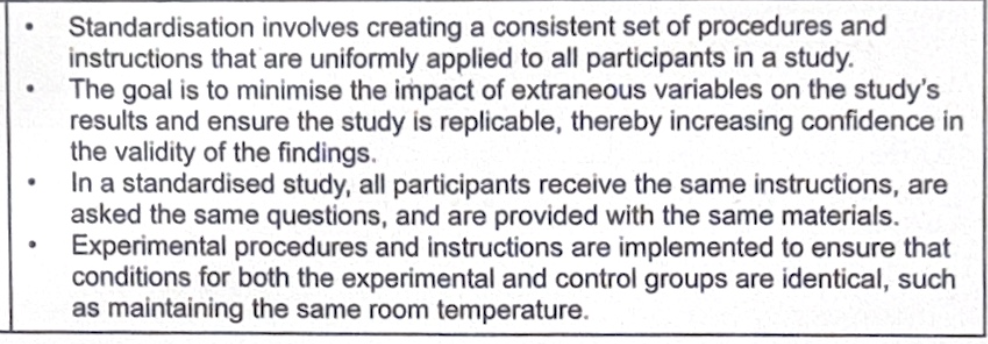
•Using standardised procedures.
Reliability
•Reliability refers to the consistency of a research study's results.
•The extent to which one would have the same result if the same measure were to be given to the same person again under the same circumstances.
•You can test reliability through repetition (completing more trials).
•Researchers can increase reliability by using standardised procedures.
Test-retest reliability
•Assesses the extent to which results from an assessment tool are similar when administered to the same participants at two different times. E.g. IQ Test, mood rating scale
Interrater reliability
•The extent to which different researchers administering the same assessment tool obtain similar results.
Generalisability
•Generalisability refers to the extent to which a research study's findings can be applied to the population.
•Researchers can increase generalisability by:
•using a representative sample of the population
•conducting research in real-world settings
•Generalisability is always limited to some degree, and researchers must be cautious about overgeneralising their findings.
Convenience Sampling
participants were recruited from a location that is easily accessible to the researchers
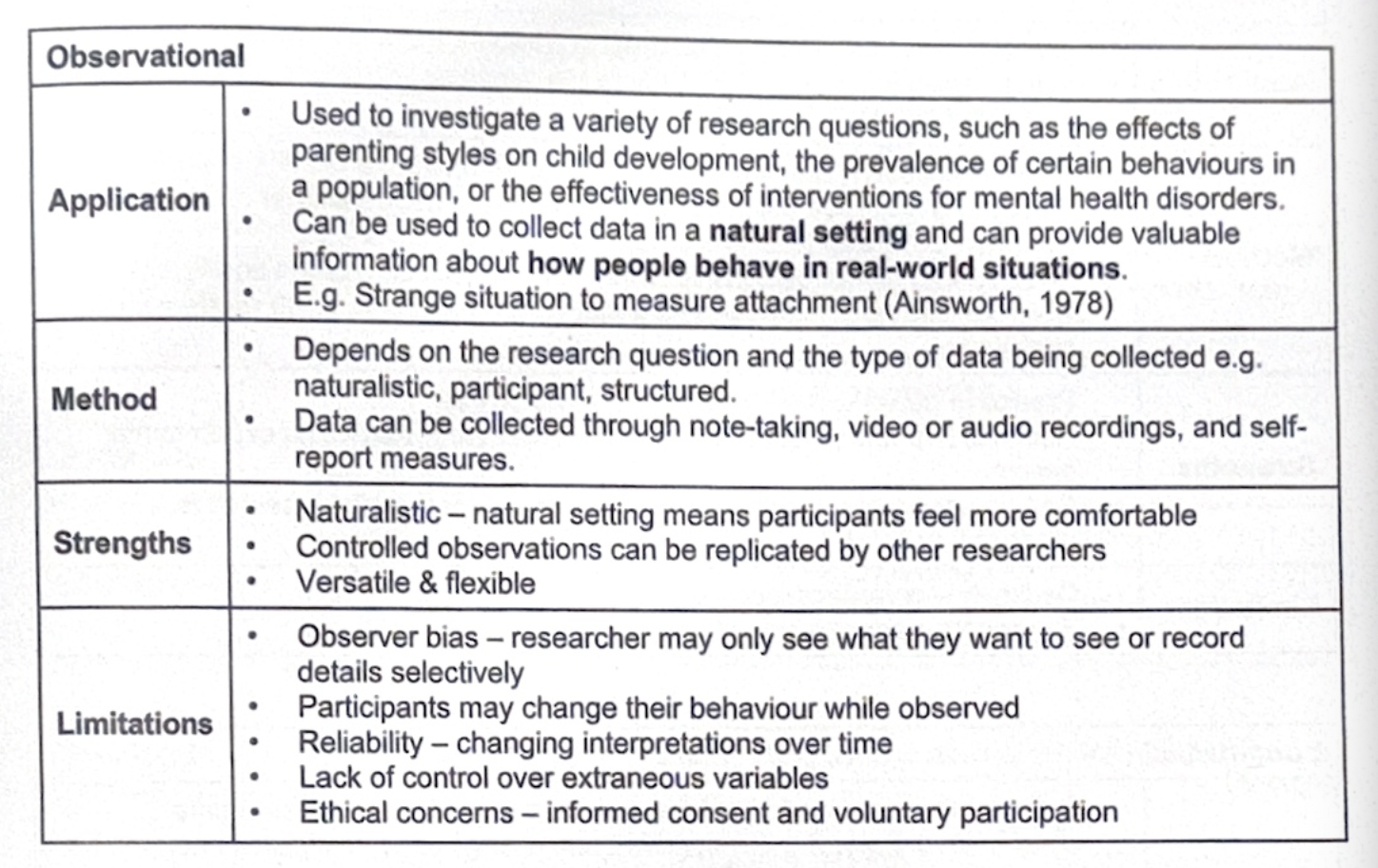
Design applied to an observational study:
researcher Observes the subject
in their normal environment
•Without intervention
Directional hypothesis requirements:
Population
IV
DV
Prediction
Control group
provide a baseline for comparison with the experimental group
not exposed to the IV
to determine if the IV had an impact on the DV
Stratified Sampling Strength and limitation
Strength: highly representative of the target population
Limitation: Demographic data is time consuming + difficult to collect
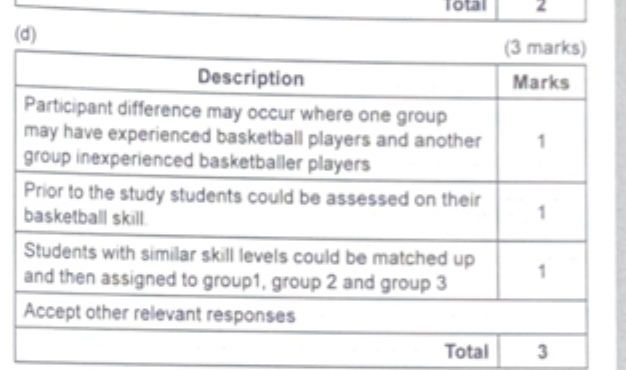
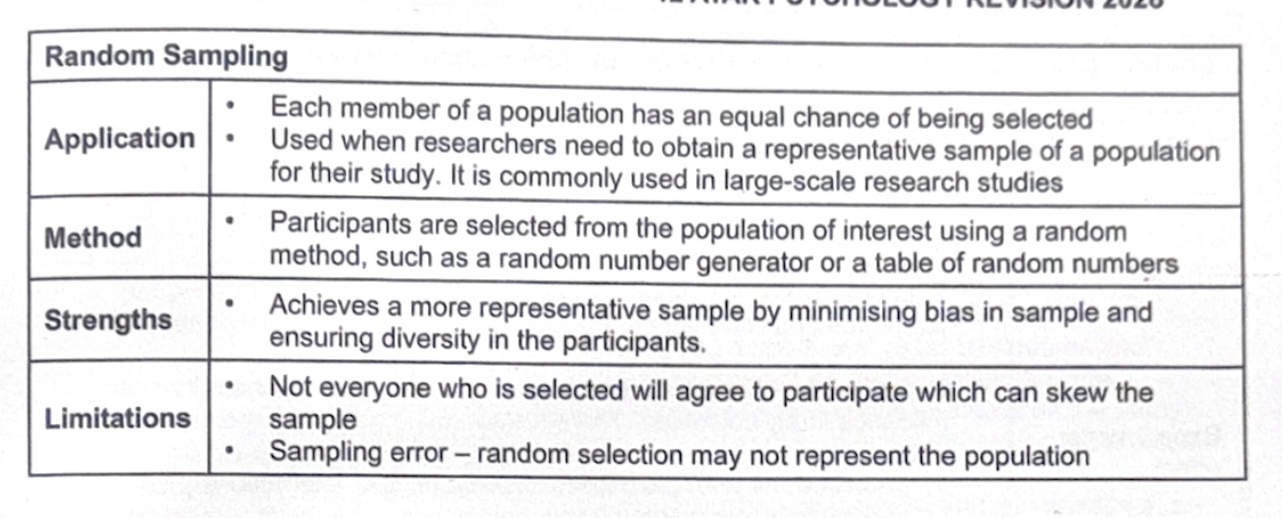
Distinguish between random sampling and random allocation
Random Sampling is where all members of a population have an equal chance of being Selected to participate in a study
Random allocation is where members of a sample have a equal chance of being assigned to the experimental or control condition
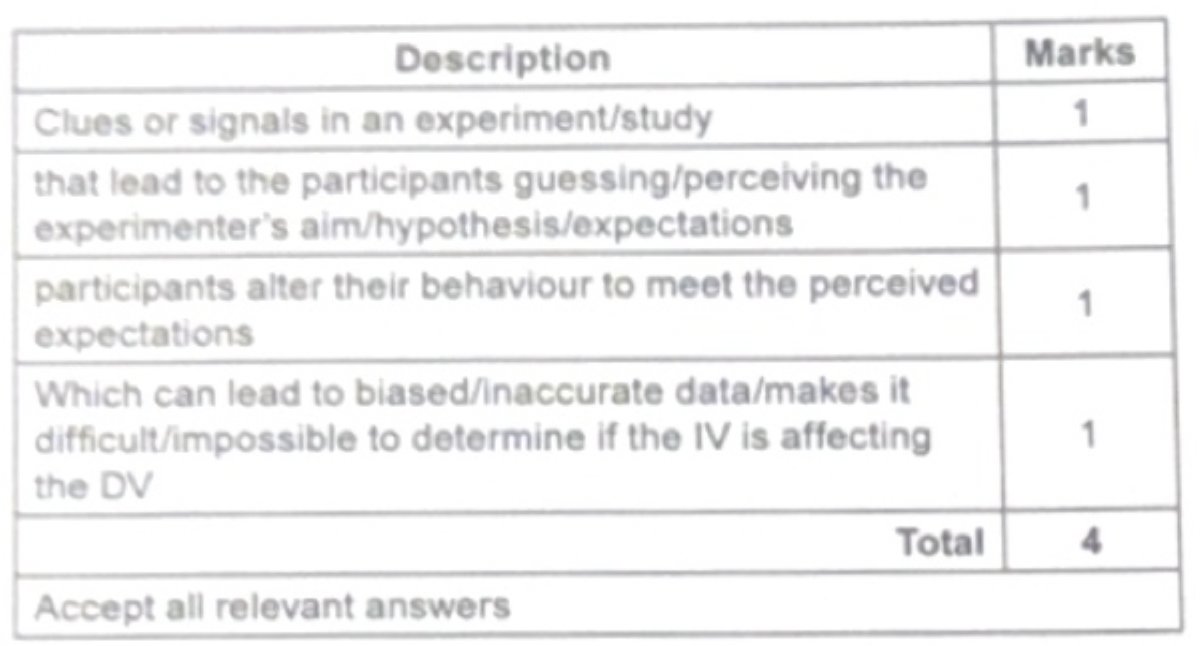
Define demand characteristics and describe how they could confound the results of an experiment
clues or signals in an experiment that lead to the participant guessing
participant alter their behaviour to meet the perceived expectations which can lead to biased, impossible to determine if the IV is affecting DV
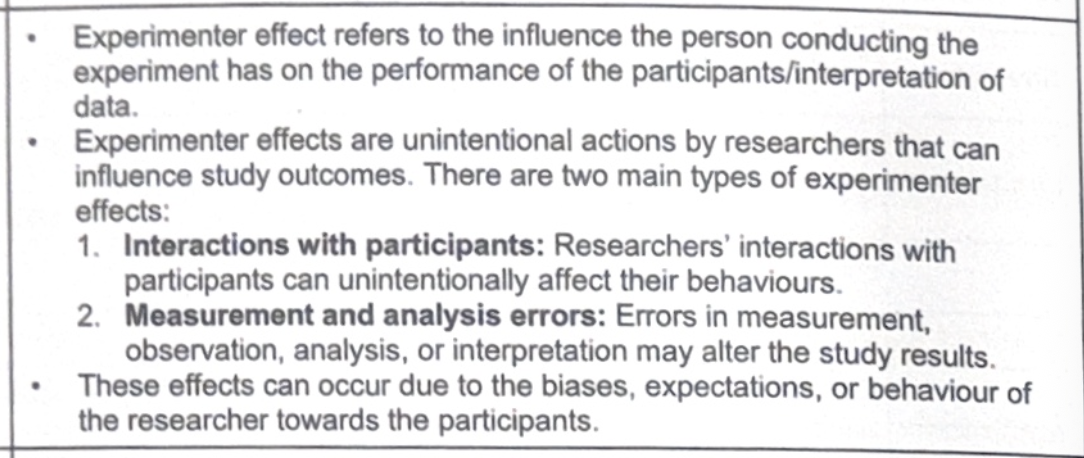
Explain the term ‘experimenter effect’

Two ways that the student could improve the design of her design of her study to reduce the chance of errors due to experimenter effect

confidentiality is an important ethical consideration for research in psychology. Describe confidentiality as it applies to psychological research
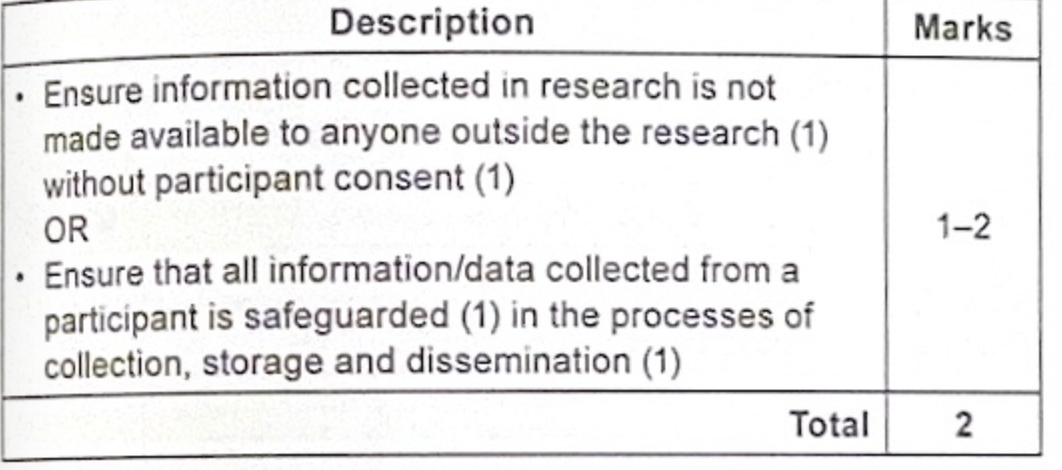
List three roles of an ethics committee for psychological research

State four pieces of information needed to be provided to participants for informed consent

contrast the ethical guidelines of privacy and confidentiality

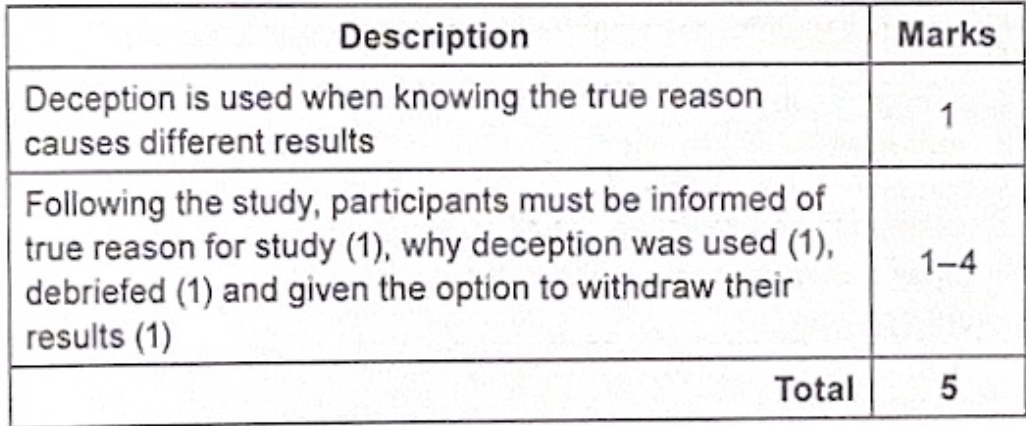
outline when deception is used in research and list 4 consequences that need to occur following the research if deception is used



































Directional and Non directional hypothesis = Hypothesis














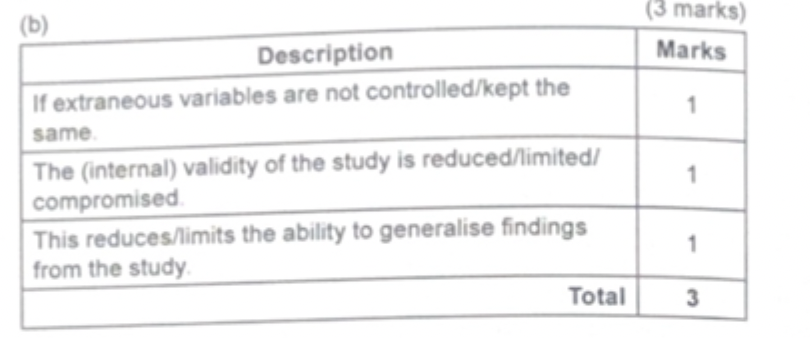
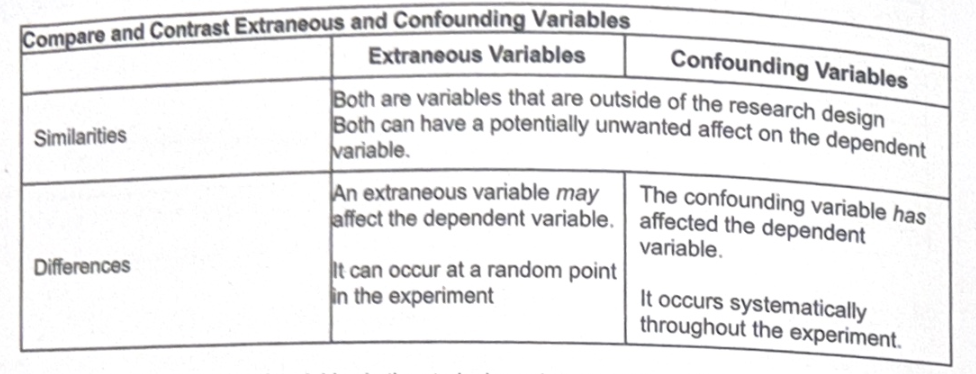
Sources and effects of extraneous variables and confounding variables






-



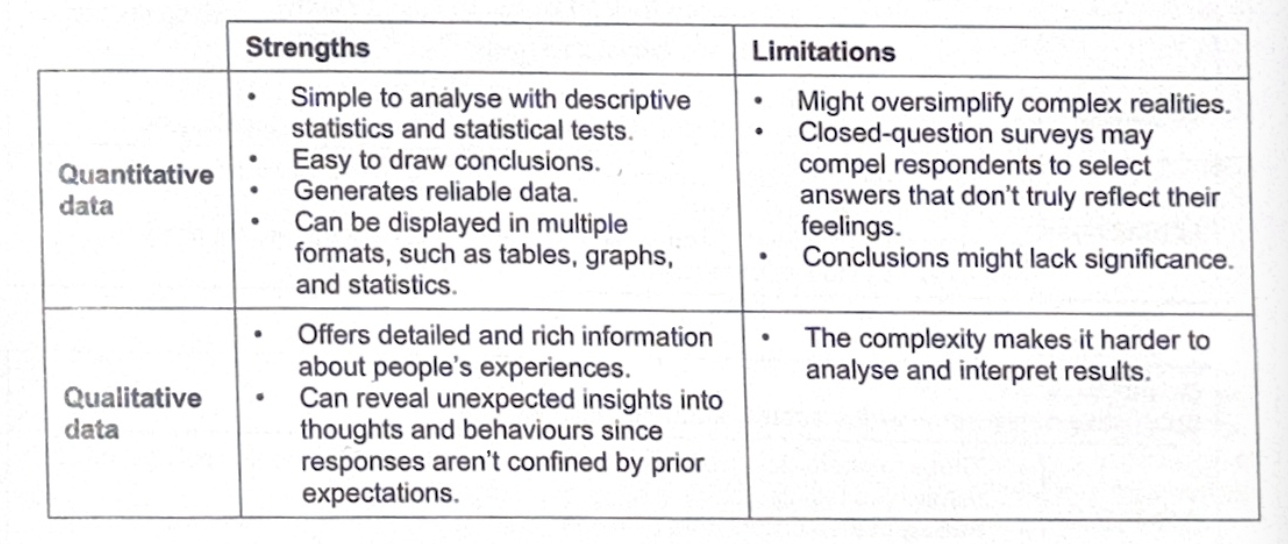
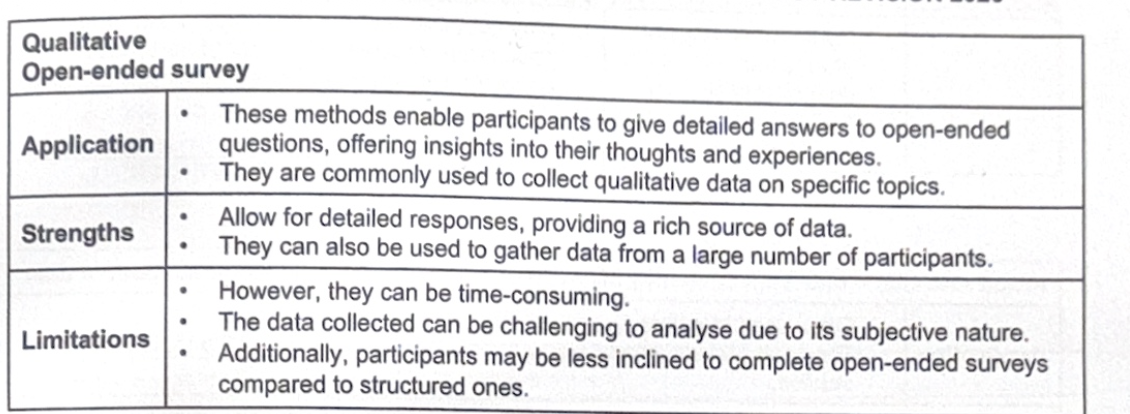
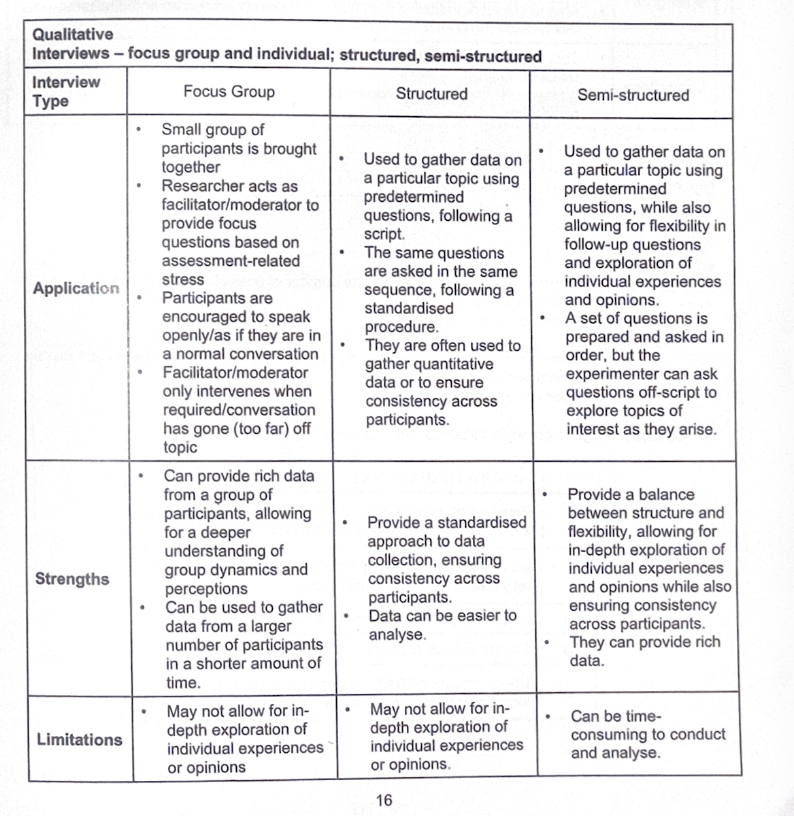
Quantitative and Qualitative Data