Science of Vision - MST1

0.0(0)
Studied by 0 people
call kaiCall Kai
Locked
learnLearn
examPractice Test
spaced repetitionSpaced Repetition
heart puzzleMatch
flashcardsFlashcards
GameKnowt Play
Card Sorting

1/223

encourage image

There's no tags or description

Looks like no tags are added yet.

Last updated 1:07 AM on 9/4/26
Name
Mastery
Learn
Test
Matching
Spaced
Call with Kai
Chat

No analytics yet

Send a link to your students to track their progress

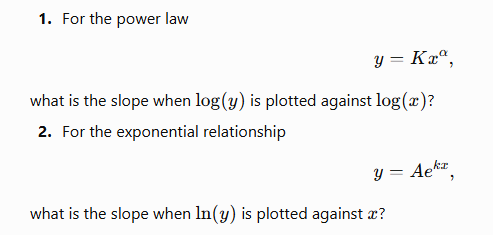
224 Terms

1
New cards

What does psychophysics measure directly?

Physical stimuli and observable responses; perception is inferred.

2
New cards

What is the relationship between threshold and sensitivity?

Sensitivity = 1/threshold. A lower threshold means higher sensitivity.

3
New cards

What is the difference between an absolute threshold and a difference threshold?

An absolute threshold is the minimum detectable stimulus. A difference threshold is the minimum noticeable difference between stimuli, also called the JND.

4
New cards

What is the difference between detection, discrimination and recognition?

Detection asks whether something is present; discrimination asks whether stimuli differ; recognition asks what the stimulus is.

5
New cards

What are the three classical psychophysical methods?

Method of Constant Stimuli, Method of Limits and Method of Adjustment.

6
New cards

How does the Method of Constant Stimuli work?

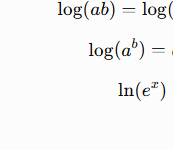
A fixed set of stimulus values spanning below to above threshold is presented repeatedly in random order.

7
New cards

How is threshold identified using the Method of Constant Stimuli in a yes/no detection task?

It is the stimulus value producing 50% yes responses on the psychometric function.

8
New cards

What is the main advantage and disadvantage of the Method of Constant Stimuli?

It is highly accurate and precise, but inefficient and vulnerable to guessing and criterion bias.

9
New cards

How is threshold calculated using the Method of Limits?

It is the mean of the transition points from ascending and descending runs.

10
New cards

What are the two characteristic biases of the Method of Limits?

Anticipation bias and habituation or perseveration bias.

11
New cards

How does the Method of Adjustment work?

The observer directly controls the stimulus until it meets a stated criterion. The average of repeated settings estimates the threshold or point of subjective equality, depending on the task.

12
New cards

What is a staircase procedure?

The stimulus direction reverses according to the observer’s response, keeping stimulus values close to threshold.

13
New cards

What are the four sources of threshold variability?

Stimulus fluctuations, neural variability, attention or alertness and psychological bias.

14
New cards

What is a hit?

The stimulus is present and the observer responds yes.

15
New cards

What is a miss?

The stimulus is present and the observer responds no.

16
New cards

What is a false alarm?

The stimulus is absent and the observer responds yes.

17
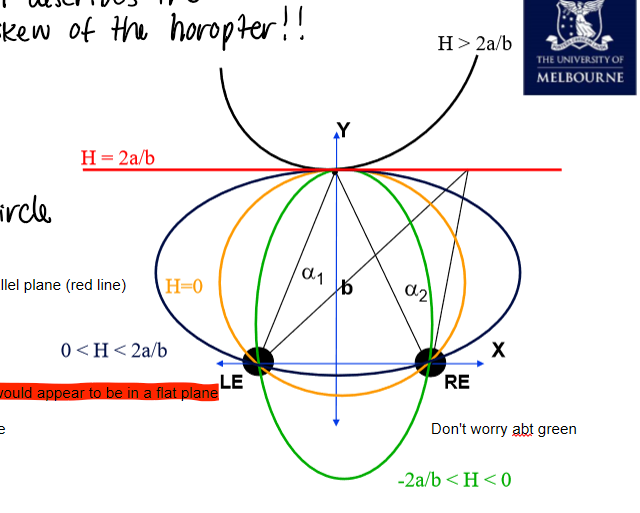
New cards

What is a correct rejection?

The stimulus is absent and the observer responds no.

18
New cards

What happens when an observer adopts a liberal criterion?

They produce more yes responses, resulting in more hits and more false alarms.

19
New cards

What happens when an observer adopts a conservative criterion?

They produce fewer yes responses, resulting in more misses and more correct rejections.

20
New cards

What are the axes of an ROC curve?

False-alarm rate is plotted on the x-axis and hit rate on the y-axis.

21
New cards

What does movement along the same ROC curve represent?

A change in decision criterion while underlying discriminability remains constant.

22
New cards

What does a larger d' mean?

Greater separation between the signal-plus-noise and noise distributions, meaning better stimulus discriminability.

23
New cards

What is the chance-performance level in a two-alternative forced-choice procedure?

50%.

24
New cards

How does two-alternative forced choice help control bias?

It makes the guessing rate known and reduces unrestricted yes/no response bias, although other biases may remain.

25
New cards

What is Stevens’ Power Law?

psi = K × phi^alpha, where psi is sensory magnitude, phi is stimulus magnitude, K is a scaling constant and alpha is the exponent.

26
New cards

What does alpha represent in Stevens’ Power Law?

It determines whether sensory magnitude changes compressively, linearly or acceleratively with stimulus magnitude.

27
New cards

What is the slope of a log-log plot of Stevens’ Power Law?

Alpha.

28
New cards
What are the three broad classes of depth cues?
Monocular pictorial, proprioceptive or oculomotor, and binocular cues.
29
New cards
What does motion parallax indicate?
During observer motion, near objects move faster across the retina than distant objects.
30
New cards
What are the main oculomotor depth cues?
Accommodation and convergence.
31
New cards
What is the horopter?
The locus of points imaged on corresponding retinal points for a given fixation.
32
New cards
What is binocular disparity?
The difference between the retinal locations or visual angles of an object in the two eyes.
33
New cards
What is stereopsis?
The percept of relative depth produced from binocular disparity.
34
New cards

Where is an object with crossed disparity? Where does this fall on the retina?

In front of the fixation plane; its images fall on the temporal retinae.

35
New cards
Where is an object with uncrossed disparity?
Behind the fixation plane; its images fall on the nasal retinae.
36
New cards
What is Panum’s fusional area?
The region around the horopter where small disparities can be fused into single vision.
37
New cards
What happens when disparity exceeds the fusion limits?
Diplopia occurs: crossed diplopia for objects that are too near and uncrossed diplopia for objects that are too far.
38
New cards
What is the typical stereothreshold under good conditions?
Approximately 10–20 seconds of arc.
39
New cards
How does the Method of Limits measure stereoacuity?
Depth is changed until a difference appears or disappears, and the transition settings are averaged.
40
New cards
How does the Method of Constant Stimuli measure stereoacuity?
Fixed disparities are presented in random order and a psychometric function is fitted to the observer’s depth judgements.
41
New cards
How does the physical depth threshold scale with viewing distance?
It increases approximately with viewing distance squared: Δd ∝ d².
42
New cards
What is the difference between quantitative and qualitative stereopsis?
Quantitative stereopsis provides fine, sustained depth judgements near fixation; qualitative stereopsis provides coarse, transient near-versus-far information.
43
New cards
What is a random-dot stereogram?
A pair of random-dot images containing a disparity-defined region that becomes visible after binocular fusion.
44
New cards
What do random-dot stereograms demonstrate?
Binocular disparity alone can generate form and depth without monocular contours.
45
New cards
What is the binocular correspondence problem?
The problem of determining which features in the left-eye image match features in the right-eye image.
46
New cards
Why is global correlation needed in random-dot stereograms?
Local matching permits many false dot pairings; global coherence identifies the consistent surface.
47
New cards
What is a disparity-selective neuron?
A binocular neuron that responds maximally to a particular crossed, zero or uncrossed disparity.
48
New cards
What factors worsen stereoacuity?
Defocus, low contrast, unsuitable spatial frequency, low luminance and poor binocular matching.
49
New cards
What role does area MT have in stereopsis?
It contains organised disparity-related activity linked to perceived stereoscopic depth.
50
New cards

5 conditions that affect stereoacuity

  1. refractive defocus

  2. contrast and spatial frequency

  3. luminance/adaptation

  4. exposure duration

  5. fusion and correspondence


51
New cards
<p>what are these logs reduced </p>

what are these logs reduced

knowt flashcard image
52
New cards
<p>What is the slope when each relationship is transformed into a straight-line graph?</p><ul><li><p>reduce them then tell meh </p></li></ul><p></p>

What is the slope when each relationship is transformed into a straight-line graph?

  • reduce them then tell meh


log(y) = logK + a logX


ln(y)=ln(A)+kx

<p><strong>log(y) = logK + a logX</strong></p><p></p><p>ln(y)=ln(A)+kx</p>
53
New cards
What disparity and retinal locations are produced by objects in front of versus behind fixation?

An object in front of fixation produces crossed disparity and images on the temporal retinae.

An object behind fixation produces uncrossed disparity and images on the nasal retinae.

54
New cards
What is the Vieth–Müller circle?
The theoretical horizontal horopter formed by the circle passing through the fixation point and the nodal points of both eyes.
55
New cards
What three simplifying assumptions produce the Vieth–Müller circle?

Angular symmetry of corresponding points

geometrically spherical eyes

coincidence of each eye’s centre of rotation, nodal point and geometric centre.

56
New cards
How does angular symmetry differ between the Vieth–Müller circle and the empirical horopter?

The Vieth–Müller model assumes α₁ = α₂ for corresponding points.

Real nasal–temporal asymmetry means corresponding points can have α₁ ≠ α₂, causing the empirical horopter to deviate from the Vieth–Müller circle.

57
New cards
If α₁ does not equal α₂, can the retinal points still be corresponding points?
Yes. Corresponding means that they produce the same perceived visual direction. Equal angular eccentricity is an additional idealised assumption of the Vieth–Müller model.
58
New cards
Why is the empirical horopter generally different from the Vieth–Müller circle?
Real corresponding points are not perfectly angularly symmetrical, and real eyes do not satisfy the model’s simplified geometric assumptions.
59
New cards
What is Panum’s fusional area?
The region surrounding the horopter within which small non-zero binocular disparities can still be fused into single vision.
60
New cards
Is the boundary of Panum’s fusional area perfectly sharp?
No. It is probabilistic because perception varies, so the change from single to double vision is a threshold phenomenon rather than one perfectly fixed disparity.
61
New cards

How does Panum’s fusional area change with retinal eccentricity? Approximate width (in seconds of arc) at fovea and 5 degrees eccentricity

It widens toward the periphery. Its approximate width is 15 minutes of arc at the fovea and 60 minutes of arc at 5 degrees eccentricity.


The fovea has finer spatial and disparity sensitivity, so smaller disparities can be detected more precisely. Therefore, a smaller disparity is sufficient to reach the fusion limit.

62
New cards

How does measuring Panum’s fusional area link to visual psychophysics? What is the stimulus and what is the threshold?

Retinal disparity is the stimulus and the observer’s report of single versus double vision is the response. The fusion boundary is therefore measured as a probabilistic threshold.
63
New cards

How does the Nonius method work, and what does it measure?

Each eye sees a different half of a target. The observer adjusts the depth until the two halves appear aligned in the same visual direction. This maps the locus of corresponding retinal points.
64
New cards

What does the nonius method measure?

Measures the locus of corresponding points.

Nonius method cannot measure PFA cause the eyes can’t fuse the 2 images


The two eyes receive complementary target halves rather than matching complete images to fuse. The observer judges alignment and equal visual direction, not the transition between single and double vision.

65
New cards
What are the main strength and limitation of the Nonius method?
It directly and conceptually simply tests equal subjective visual direction. However, it requires accurate masking and alignment, and the measurements vary within and between observers.
66
New cards

How does the haplopic method work, and what does it measure?

The observer reports the transitions between single and double vision as binocular targets move through depth. This maps the area of single binocular vision, which is Panum’s fusional area.
67
New cards
How is the horopter estimated using the haplopic method?
The near and far fusion boundaries are measured, and their midpoint is used to estimate the horopter.
68
New cards
What assumption is required when estimating the horopter using the haplopic method?
Panum’s fusional area is assumed to be symmetrical around the horopter, allowing its midpoint to represent the horopter.
69
New cards

How does the apparent fronto-parallel plane method work, and what does it measure?

The observer adjusts several rods until they appear to lie with fixation in one flat fronto-parallel depth plane.

Their physical positions estimate the locus of zero functional disparity.

<p>The observer adjusts several rods until they appear to lie with fixation in one flat fronto-parallel depth plane. </p><p>Their physical positions estimate the locus of <strong>zero functional disparity.</strong></p>
70
New cards
What are the strengths of the apparent fronto-parallel plane method?
It is widely used, involves a relatively natural perceptual task and is useful for testing distortions caused by aniseikonia.
71
New cards
What are the limitations of the apparent fronto-parallel plane method?

It is indirect and becomes difficult beyond approximately 12–15 degrees eccentricity.

At close distances, accommodation, proximity cues and optical aberrations can confound the result.

72
New cards
Which empirical horopter method is particularly useful for testing distortions caused by aniseikonia?
The apparent fronto-parallel plane method.
73
New cards
What does the minimum stereo-threshold method locate?

It locates positions with the finest stereoscopic discrimination, which should be nearest the horopter.


It reuses the psychophysical concept of a threshold by identifying where the smallest depth or disparity difference can be discriminated.

74
New cards
What does the zero-vergence method identify?
Positions that produce no motor fusional vergence response, providing an objective estimate of the horopter.
75
New cards
What is the key difference among the Nonius, haplopic and apparent fronto-parallel plane methods?
Nonius tests equal visual direction, haplopic testing maps the single-to-double fusion boundaries of Panum’s area, and AFPP tests whether several targets appear to occupy one flat depth plane.
76
New cards
Which methods depend on corresponding retinal points, and which explicitly measures Panum’s fusional tolerance?
The horopter definition, Nonius method and AFPP method depend on corresponding points. The haplopic method explicitly measures Panum’s fusional tolerance.
77
New cards
How does empirical horopter shape generally change with viewing distance?
At near distances it is concave toward the observer, at an intermediate distance it approaches the objective fronto-parallel plane, and at far distances it becomes convex toward the observer.
78
New cards
What is the Hering–Hillebrand deviation, and what principally explains it?
The empirical horopter is generally flatter than the Vieth–Müller circle. This is principally explained by nasal–temporal asymmetry in corresponding retinal points, meaning α₁ ≠ α₂.
79
New cards
At approximately 40 cm, how does the empirical horopter usually compare with the Vieth–Müller circle and the objective fronto-parallel plane?
It is typically flatter, or less curved, than the Vieth–Müller circle and lies between that circle and the objective fronto-parallel plane.
80
New cards
What two major factors can change the shape of the empirical horopter?
Viewing or observation distance and asymmetric magnification between the eyes, called aniseikonia.
81
New cards
Does a change in the measured empirical horopter with observation distance necessarily mean corresponding retinal points have changed?
No. The measurement can change because of eye rotation centres, accommodation, proximity cues, close-distance aberrations and size or depth cues without the neural correspondence map changing.
82
New cards
Does distance-dependent variation in the empirical horopter prove that corresponding points are not neurologically hardwired?
No. Corresponding retinal mapping may remain stable while the functional or perceptual measurement of the horopter changes.
83
New cards
What are the axes of an Ogle graph?

The y-axis is R (skew) and the x-axis is based on the visual angle/eccentricity in one eye

84
New cards
How does aniseikonia affect the physical empirical horopter?

Unequal left-eye and right-eye image magnification changes the spatial positions required to stimulate corresponding points, producing a skewed horopter.


No changes to horopter curvature (because Ro and tan(a2)) go up equally in both eyes so they stay the same idk

85
New cards
What is R in Ogle’s analysis?
R = tan(α₂) ÷ tan(α₁). It is the local relative retinal magnification ratio, where α₁ and α₂ are the corresponding visual angles in the two eyes.
86
New cards
Which Ogle variable represents curvature, and which represents skewness?
H represents curvature and is the slope. R₀ represents skewness and is the y-intercept.
87
New cards
What does R₀ = 1 mean?
There is no left–right skewness or magnification asymmetry at fixation, so the horopter is symmetrical.
88
New cards
How does changing observation distance affect H and R₀?

It changes H, the slope and curvature parameter.

R₀, the y-intercept and skewness parameter, remains approximately unchanged.

89
New cards
How does uniform aniseikonia affect H and R₀?
It changes R₀, the y-intercept and skewness parameter. H, the slope and curvature parameter, remains approximately unchanged.
90
New cards
What is the abathic condition?
The fixation distance at which the empirical horopter coincides with the objective fronto-parallel plane, meaning the physical horizontal horopter is straight or flat.
91
New cards
What equation defines the abathic condition, and what do its variables mean?

H = 2a/b, or equivalently b = 2a ÷ H.

H is the Ogle slope and curvature parameter

2a is the interocular distance between the nodal points and is approximately the interpupillary distance

b is the fixation or observation distance.

92
New cards
If 2a = 6 cm and H = 0.12, what is the abathic fixation distance?
b = 2a ÷ H = 6 ÷ 0.12 = 50 cm.
93
New cards
Assuming R₀ = 1, what physical horopter is produced when H = 0?
The Vieth–Müller circle, for which α₁ = α₂. The Ogle graph is horizontal, but the physical horopter is curved.
94
New cards
Assuming R₀ = 1, what physical horopter is produced when 0 < H < 2a ÷ b?
The horopter lies between the Vieth–Müller circle and the objective fronto-parallel plane. It is flatter than the Vieth–Müller circle but has not yet become physically flat.
95
New cards
Assuming R₀ = 1, what physical horopter is produced when H = 2a ÷ b?
The horopter coincides with the objective fronto-parallel plane. This is the abathic condition.
96
New cards
Assuming R₀ = 1, what physical horopter is produced when H > 2a ÷ b?

The horopter is convex toward the observer.
<p>The horopter is <strong>convex </strong>toward the observer.</p>
97
New cards
If H represents curvature, why does H = 0 not mean that the physical horopter is flat?
H is the slope or curvature parameter in Ogle’s transformed coordinates, not ordinary geometric curvature. H = 0 produces a horizontal Ogle graph but corresponds to the physically curved Vieth–Müller circle.
98
New cards
An observer’s Ogle graph is a horizontal line at R = 1. What are H and R₀, and is the physical horopter flat, curved or skewed?
H = 0 because the line has zero slope, and R₀ = 1 because its y-intercept is 1. The physical horopter is the curved Vieth–Müller circle and is symmetrical, not skewed.
99
New cards
Does a physically flat horopter produce a horizontal Ogle graph?
No. A physically flat horopter occurs at the abathic condition, H = 2a ÷ b, so its Ogle graph has a non-zero slope. A horizontal Ogle graph occurs at H = 0 and represents the curved Vieth–Müller circle.
100
New cards

if 2a = 6.2 and H=0.124 what would the horopter looks like at:

  • 40 cm

  • 50 cm

  • 70 cm


  • 70cm = 0.088 < 0.124 - concave toward the observer (between VM circle and OFPP) (0<H<2a/b)

  • 50cm = OFPP (H = 2a/b)

  • 40cm = 0.155 > 0.124 - convex away from observer (H>2a/b)