BI276 Lab exam
 Call Kai
 Learn
Learn Practice Test
 Spaced Repetition
 Match
Match Flashcards
 Knowt Play
1/229

There's no tags or description
Looks like no tags are added yet.
Name | Mastery | Learn | Test | Matching | Spaced | Call with Kai | Chat |
|---|
No analytics yet
Send a link to your students to track their progress
230 Terms
Aseptic Technique
A procedure performed under sterile conditions, where the conditions require the absence of microorganisms
Sterilization
The process that completely destroys all microbial life, including spores, which achieves a sterile environment
processes of sterilization
can be achieved by heat, irradiation, chemicals, in this lab, we use bunsen burner.
What does the bunsen burner do?
creates a pocket of hot air which pushes particles 30cm form the circumference of the burner
process of aseptic technique
1. run loop through flame (tip of the inner bright blue flame)
2. let it cool for 15 seconds
3. use the loop
4.run through flame
Inoculating loop
instrument used to pick up and transfer a small sample (inoculum) of bacteria
Why do we stain bacteria?
to increase contrast between specimen and background
what are stains?
organic compounds that bind cellular components
which dyes bind bacterial cells?
basic positively charged dyes
why do basic dyes bind bacteria?
bacterial surfaces are negatively charged
what goves bacteria a negative charge
teichoic acids, phospholipids, lipopolysaccharides
what's simple staining?
applying one dye to bacteria
morphological characteristics of bacteria
bacteria can be analyzed based upon their size, shape and arrangement, which can then lead to identification of their genus/species of microorganism being observed
how do bacterial cells compare in size to eukaryotic cells?
bacterial cells are much smaller than eukaryotic cells
What eukaryotic organelles are similar in size to bacteria?
bacteria can be roughly same size as mitochondria and chloroplasts
typical size range of bacteria?
Most bacteria are approximately 0.5-5 μm in length.
largest bacteria?
Thiomargarita namibiensis (750 micrometers)
what determines the shape of a bacterial cell?
determined by its cell wall
3 most common bacterial shapes?
cocci (spherical), spirilla (spiral), bacilli (rod-shaped)
what are cocci bacteria? give an example
spherical-shaped bacteria, such as Staphylococcus aureus.
What are spirilla bacteria? Give an example.
Spirilla are spiral-shaped bacteria, such as Helicobacter pylori.
What are bacilli bacteria? Give an example.
Bacilli are cylindrical or rod-shaped bacteria, such as Escherichia coli (E. coli).
what is a bacterial smear?
a thin layer of bacteria placed on a slide for staining
Which would be the proper amount of time required for methylene blue dye to remain on the bacterial smear during a simple stain?
1.5 to 2 minutes
Why must bacterial cells be mounted and fixed before staining?
To attach cells to the slide and prevent them from washing away during staining.
Why is a smear fixed to the slide?
To permanently attach bacteria to the glass surface.
How is heat fixing done?
Passing the slide briefly through a Bunsen burner flame.
what does heat fixing do to bacterial cells?
Causes the cells to become attached to the slide.
How are bacteria added to a slide?
sterilize the loop, drop of water placed onto slide, sterilize loop, pick up colony, place onto slide, sterilize loop.
Why must the loop be sterilized and cooled before use?
To prevent contamination and avoid killing the bacteria.
Why should the smear be thin?
Thin smears dry faster and allow bacteria to be seen clearly.
What happens after the smear is completely air-dried?
The smear is heat-fixed by passing it through a flame.
staining procedure
after heat fixing, place slides on staining holder across bucket, cover smear with methylene blue for 2 mins, wash off stain with water by tilting slide, dump water in stain bucket, observe stain under microscope
when is immersion oil used?
only with 100x objective lens
bacterium
single organism
colony
a clonal population of bacteria that has arisen from a single parent cell
what are 3 ways to differentiate bacteria?
colour, size and light transmission
transparent
if you can clearly see ruler lines through colony
translucent
if you can see the colour of the ruler but isn't clear
opaque
if you cannot see marks on ruler
what are ways that bacteria differs from all eukaryotic organisms
1. bacteria lacks a cytoskeleton and a nucleus, divide by binary fission
2. DNA molecules within a bacteria are often circular and only posses a single copy of their genome, making them haploid
3. bacteria lack membrane-bound organelles such as mitochondria, Golgi apparatus and chloroplasts
What are hyphae?
Threadlike fungal structures that can contain multiple cells connected by pores.
what are fungi that grow as single cells called?
yeasts
fungi that grow as a network of multicellular filaments with individual filaments is called?
mycelia, hyphae.
Why are fungal spores important in microbiology labs?
Environmental spores are a major cause of contamination.
What gives fungal colonies a dry, powdery appearance?
Pigmented spores.
How is fungal colony size measured?
By measuring the colony diameter with a ruler under the Petri dish.
whole colony
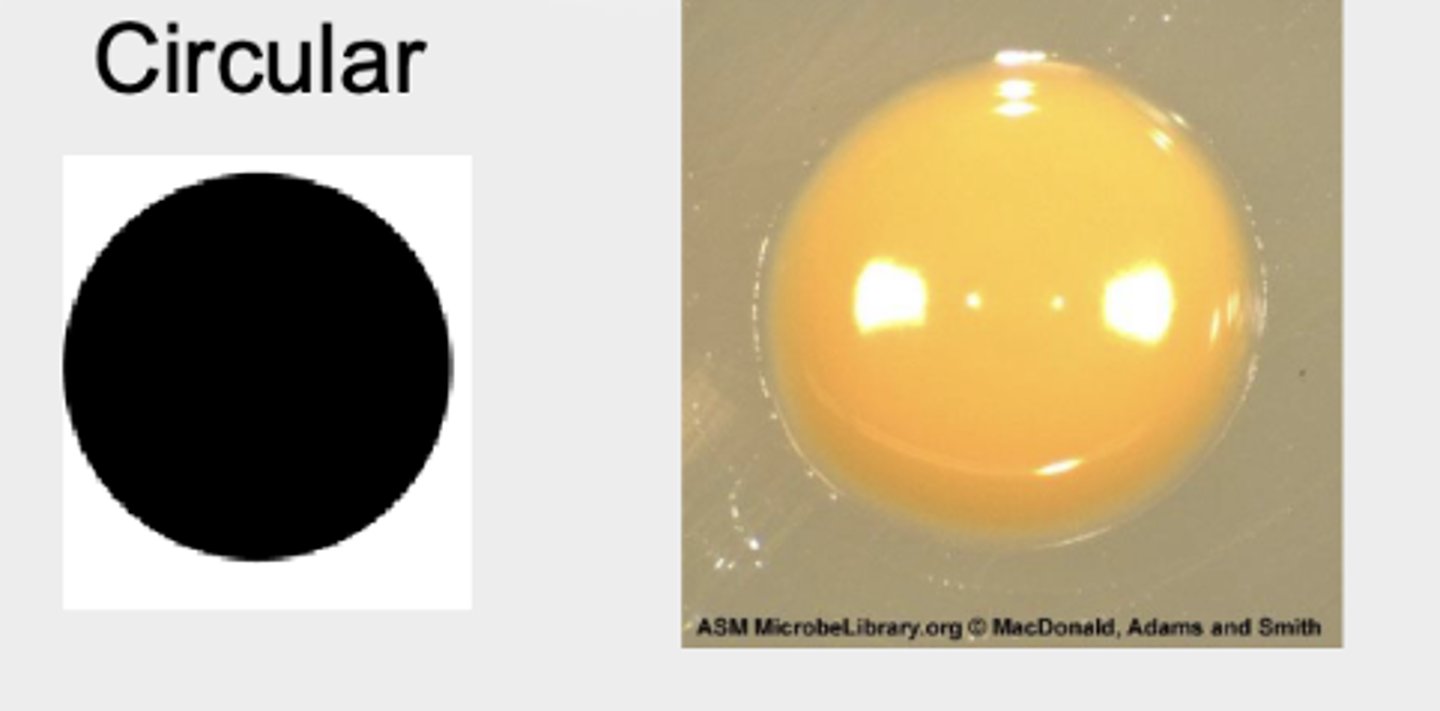
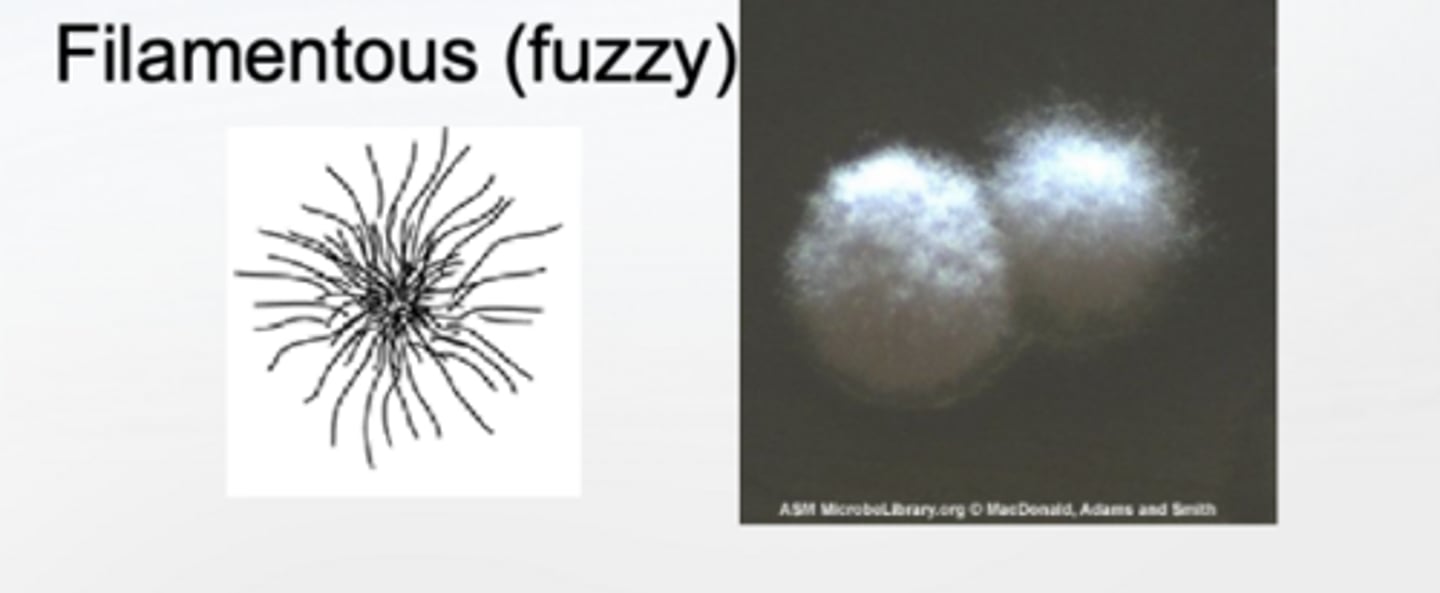
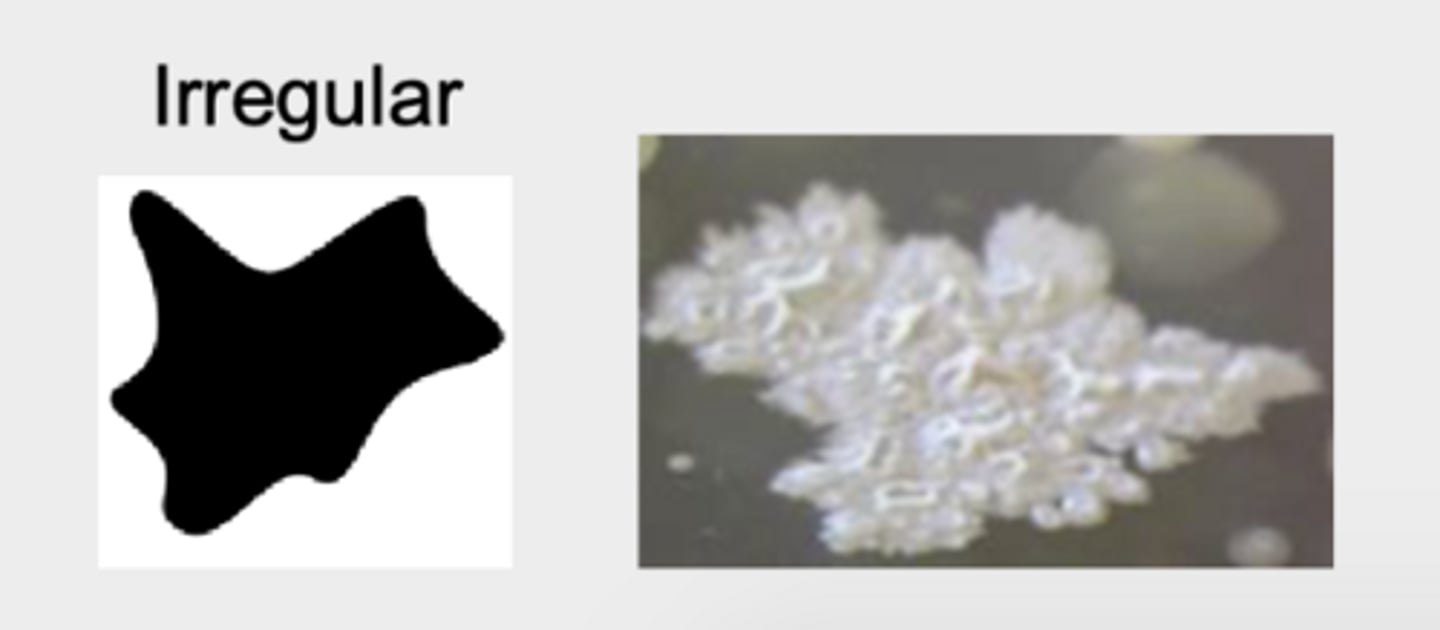
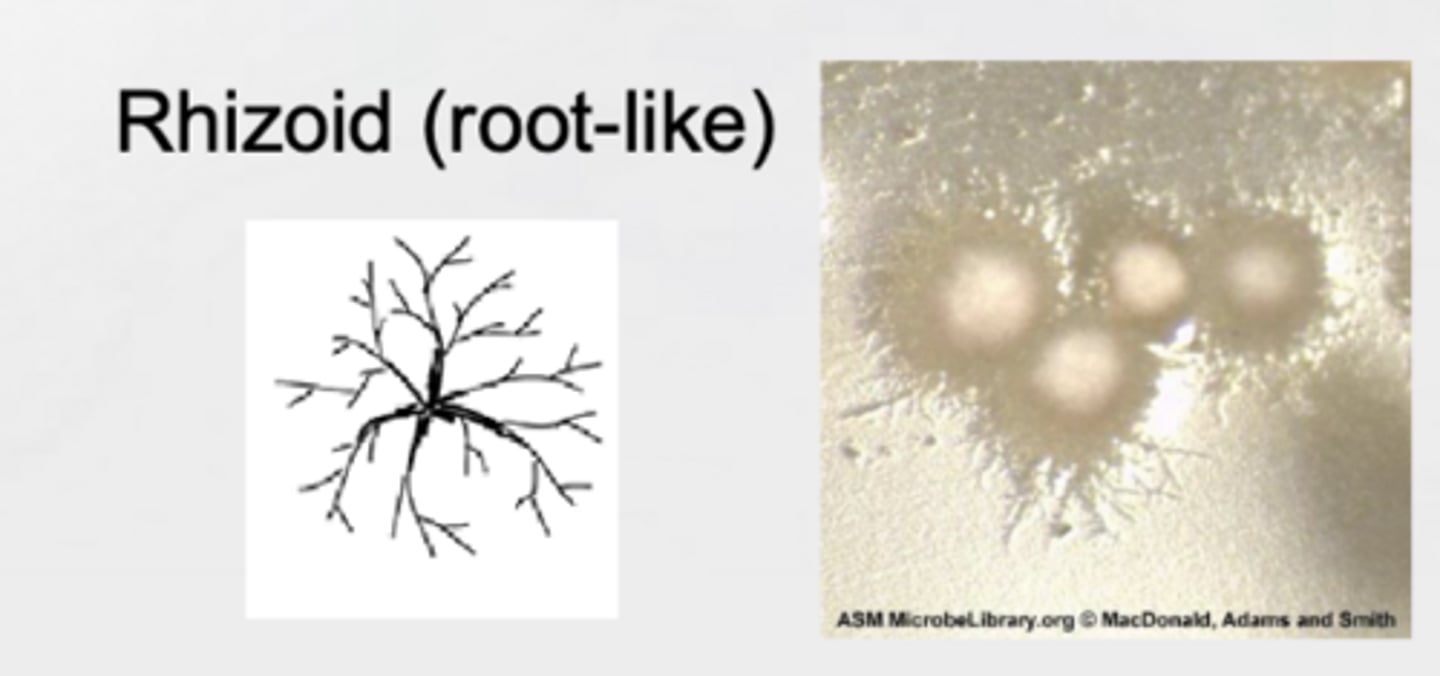
shape of a colony also known as its form, which include circular, filamentous, irregular and rhizoid
What is a circular colony form?
A colony with an unbroken, smooth edge.
What is a filamentous colony form?
A threadlike colony with spreading growth.
What is an irregular colony form?
A colony with an indented edge.
What is a rhizoid colony form?
A rootlike colony with spreading growth.
Colony edge
the appearance of outer edge of the colony, which can be described as: curled, entire, filamentous, liable, undulate
What is a curled colony edge?
A ringed appearance around the colony.
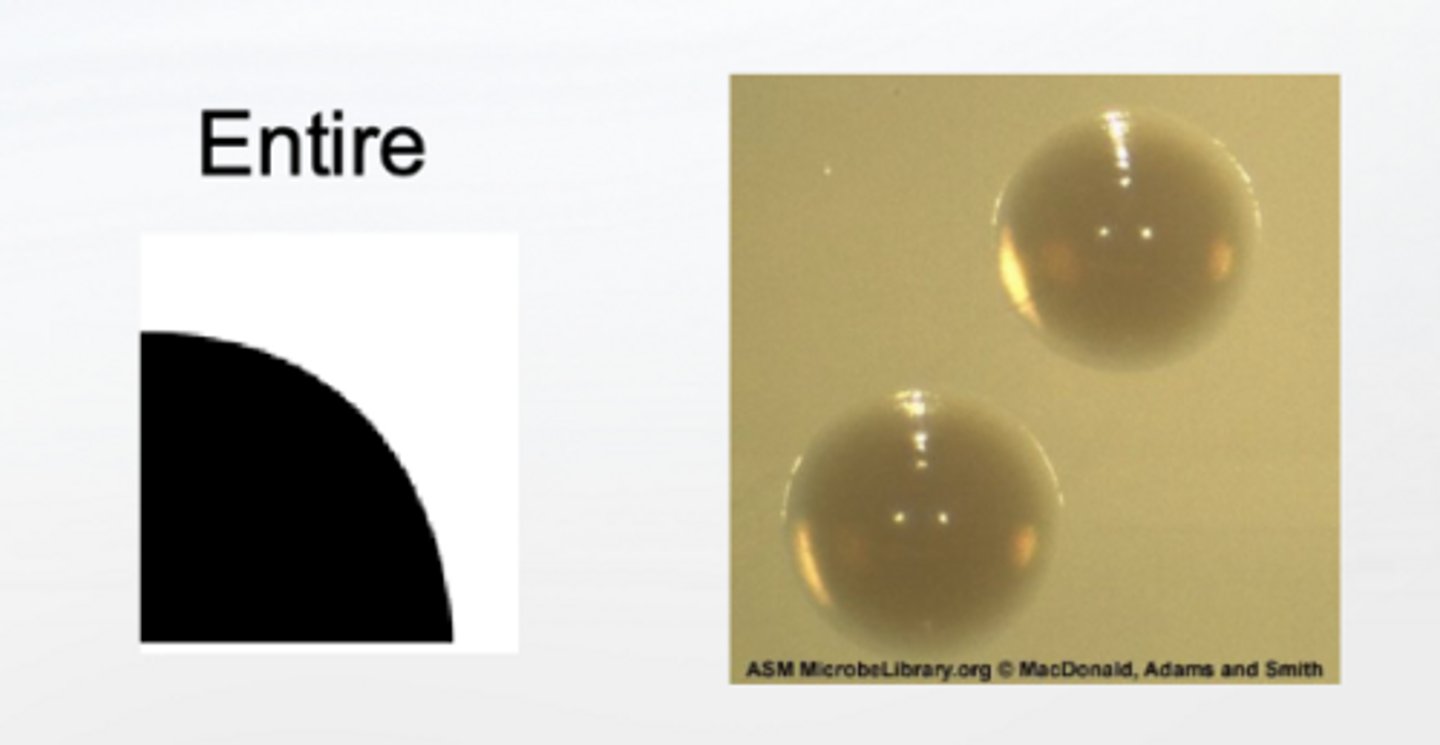
What is an entire colony edge?
A smooth, even, sharply defined edge.
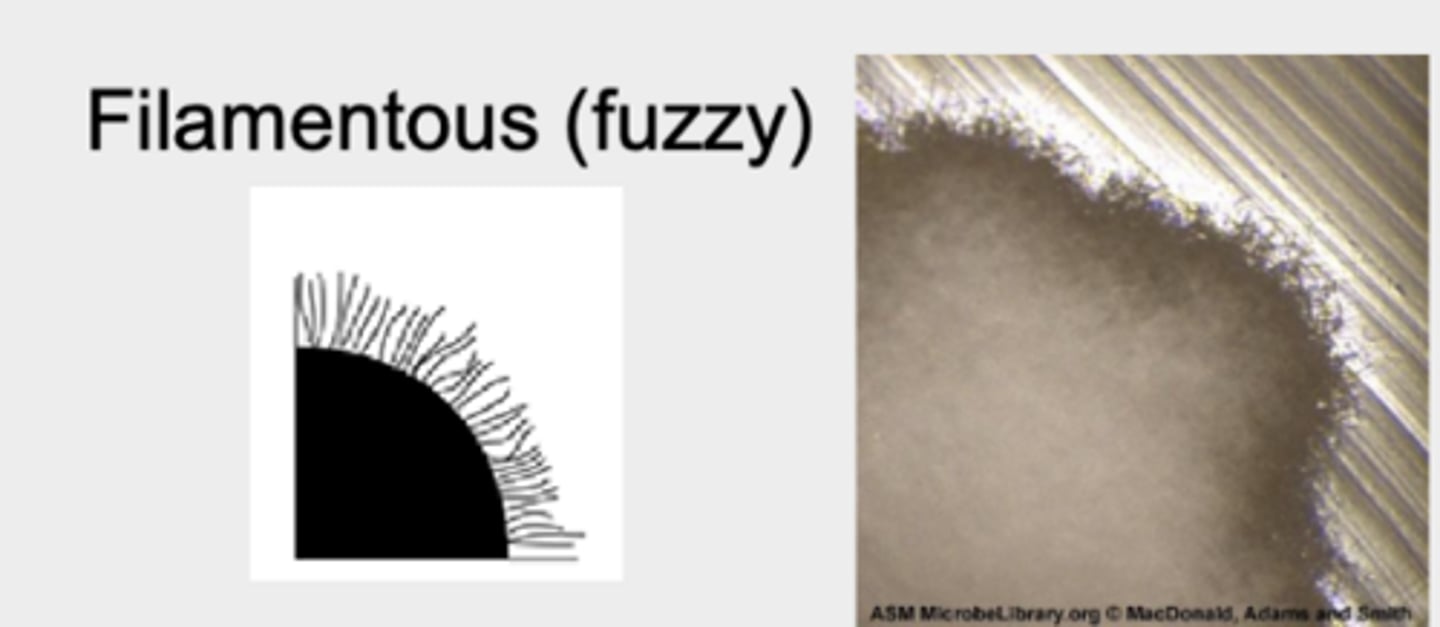
What is a filamentous colony edge?
A threadlike, spreading edge.
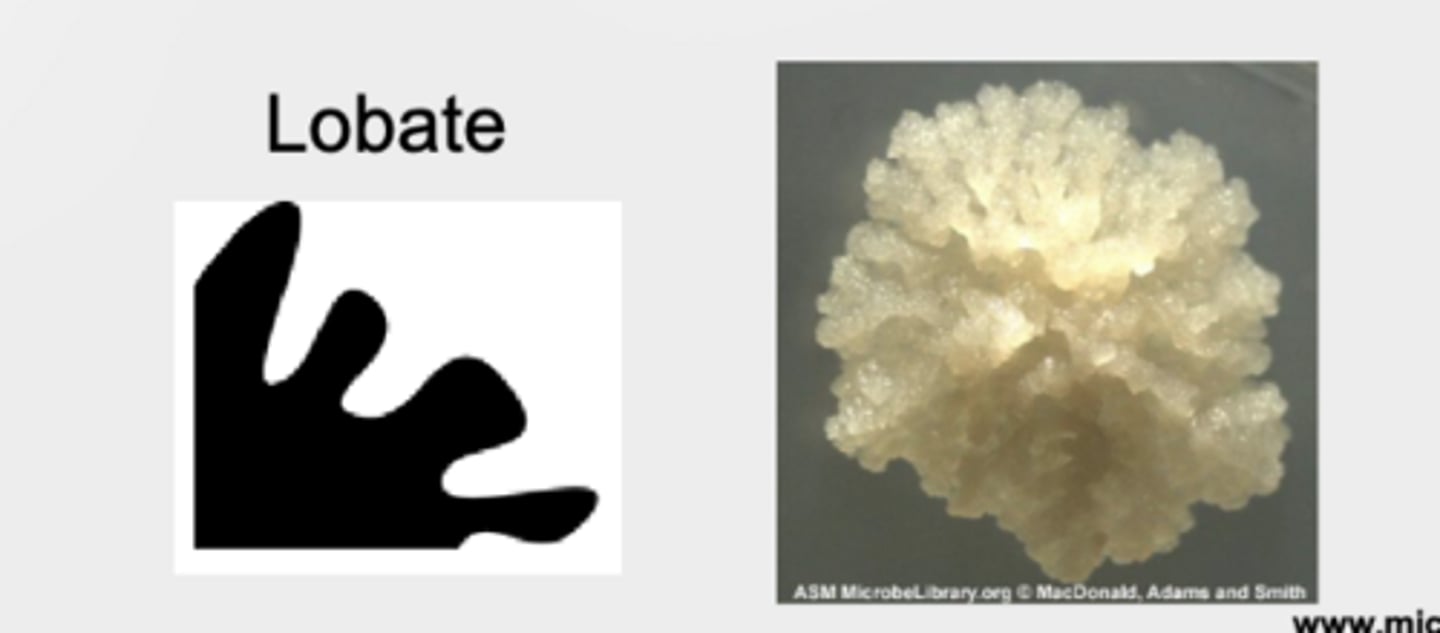
What is a lobate colony edge?
An edge with large indentations.
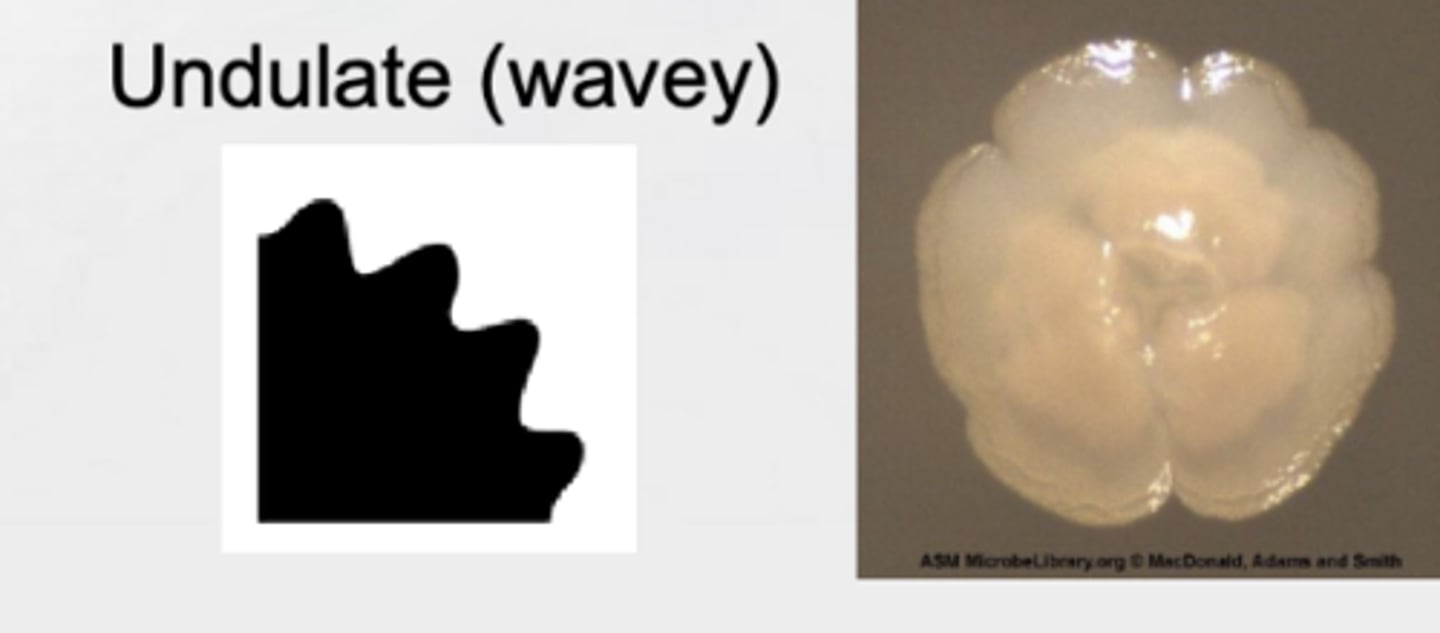
What is an undulate colony edge?
A wavy colony edge.
What does colony elevation describe?
How raised the colony is above the agar surface.
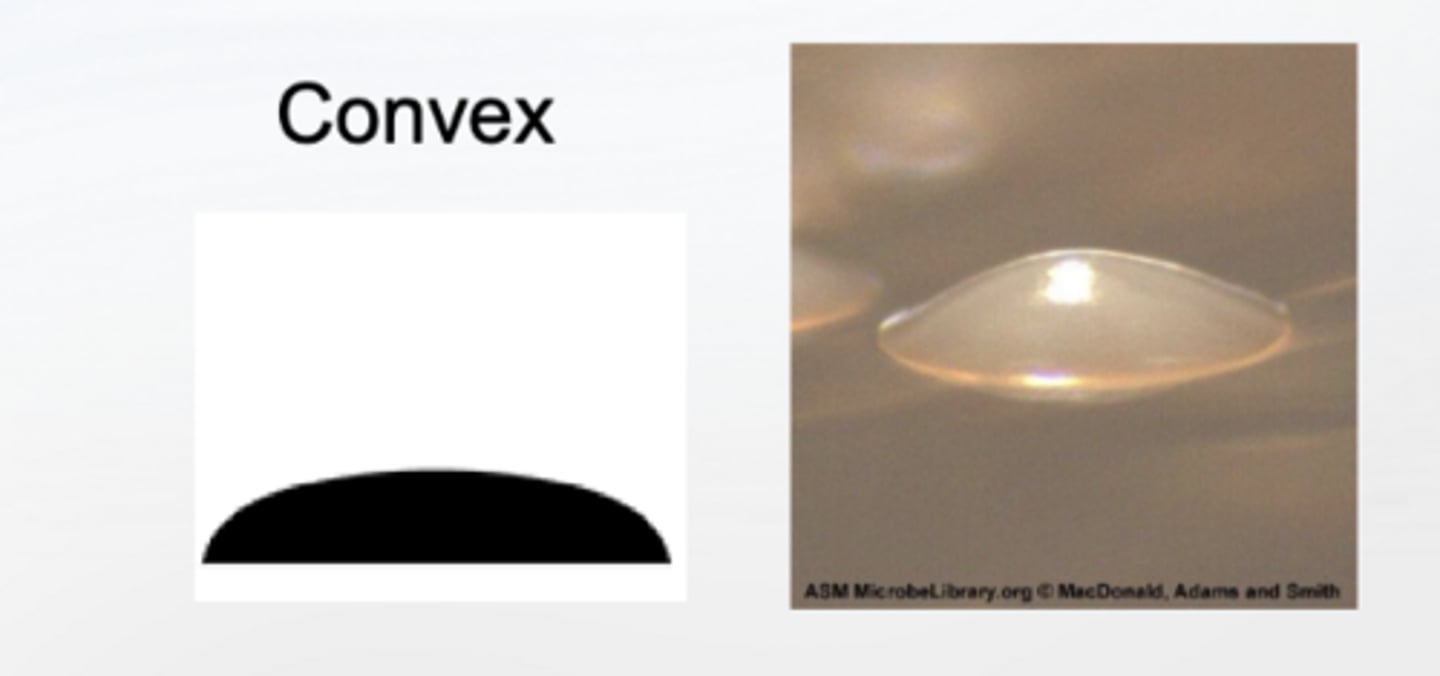
What is a convex colony elevation?
Dome-shaped growth.
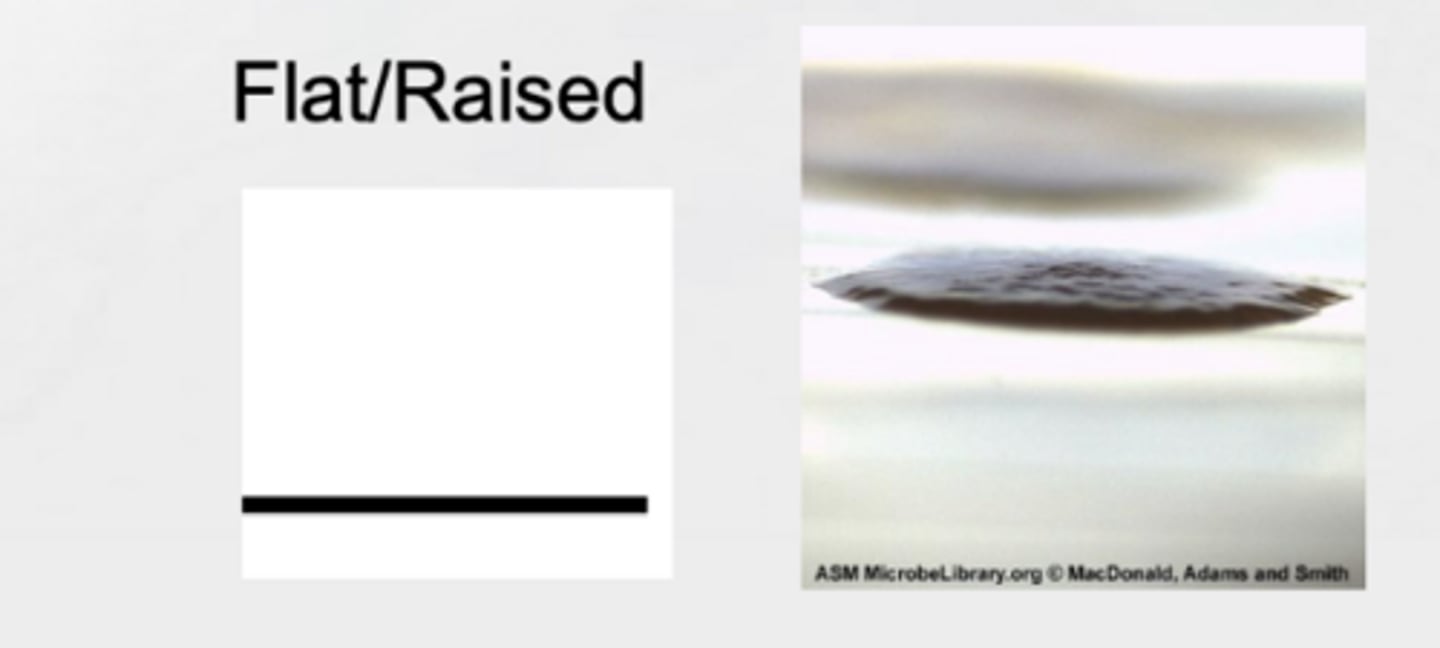
What is a flat colony elevation?
Growth with no noticeable elevation
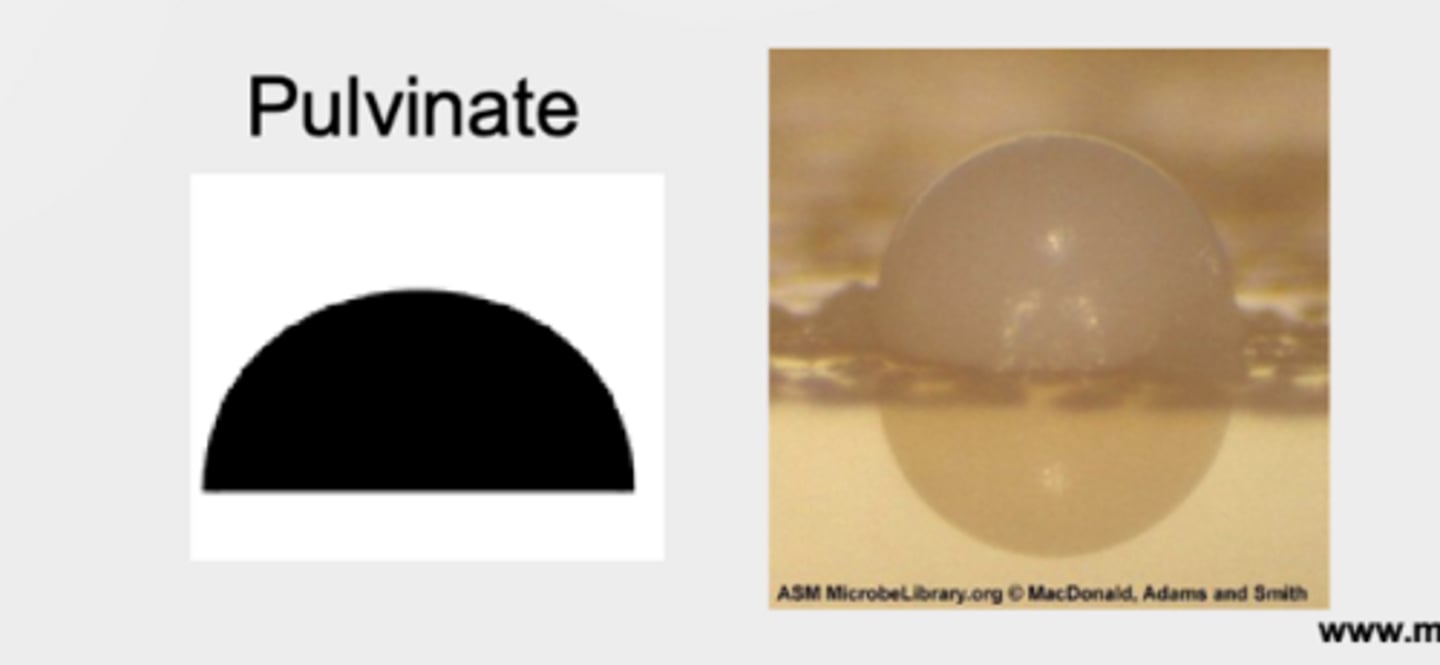
What is a pulvinate colony elevation?
A highly raised colony.
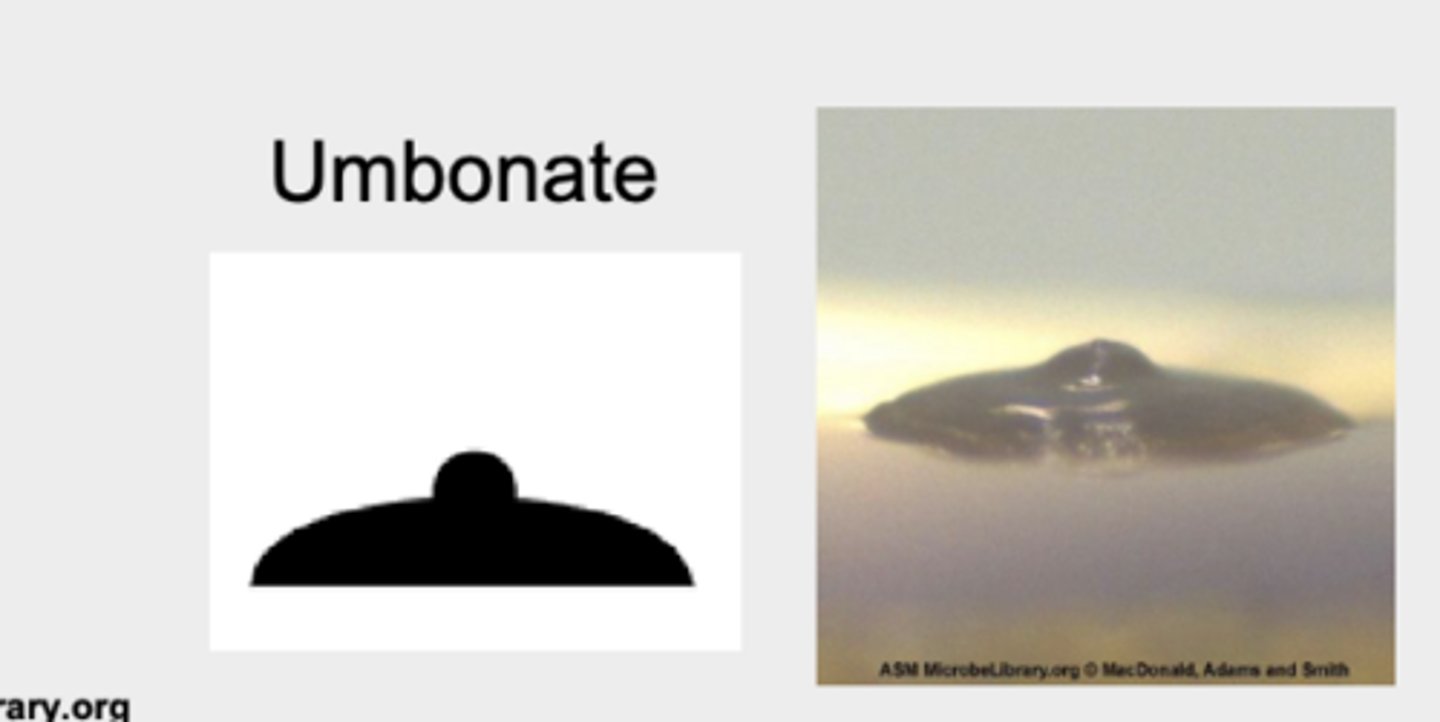
What is an umbonate colony elevation?
A raised colony with a convex center.
bacterial cultures
bacillus megaterium, Enterobacter cloacae, Providencia rettgeri, Pseudomonas chloraphis, Serratia marcescens
Fungal cultures
Penicillium notatum, Saccharomyces bayanus
Differential staining
using specific stains to distinguish different types of cell.
What type of stain is gram staining?
differential stain
What items are used during gram staining?
Crystal violet, Gram's iodine, Ethanol, Safranin
Gram stain
A staining method that distinguishes between two different kinds of bacterial cell walls (gram negative and gram positive)
Gram staining procedure
1. apply smear to glass slide (water drop, sterilize, bacteria smear, sterilize, heat fix)
2. apply crystal violet which stains all bacteria purple, leave on for 1 minute
3. rinse with water at a tilt until clear
4. apply grams iodine (mordant) to slide, leave on for 1 minute
5. rinse with water at a tilt until clear
6. apply ethanol (decolourizer) at a tilt for 2-3 seconds until clear
7. rinse with water at tilt until clear
8. apply safranin (counterstain) to to slide for 1 min
9. rinse with water
10. observe under 10x, 40x and 100x (with immersion oil)
why do we opt for a thicker smear for gram staining?
the thicker the smear, can lead to cells being underdecolourized, the harder it is to see
Gram negative
cell wall contains less to none peptidoglycan, so cell walls are thin and absorb the stain as pink/red. they also have an extra lipid bilayer called LPS which can act as a deadly endotoxin.
gram positive
thick peptidoglycan wall, absorbs the crystal violet and stains purple. these cells lack the extra outer lipid bilayer membrane
Why is aseptic technique important in microbiology?
Microorganisms are found everywhere (air, surfaces, hands), so aseptic technique keeps unwanted microbes out of cultures.
What is subculturing?
The transfer of microorganisms from an older, existing culture to a fresh growth medium. (moving bacteria to a new home)
ex: transferring e.coli culture to a new agar plate by streak plating
why do microbiologists subculture bacteria?
To maintain cultures, examine morphology, determine purity, count viable organisms, and identify pathogens.
how are forceps or metal spreaders sterilized if they cannot directly be heated?
dipped in alcohol and briefly passed through a flame
How does the streak plate method work?
spreads bacteria across an agar plate, diluting cells until individual cells are separated (isolates a single type of bacteria from a source that contains many)
Why are all bacteria in one colony genetically identical?
Because they are descendants (clones) of one original bacterial cell.
Pure culture
contains only one species or strain
How do you obtain a pure culture using the streak plate method?
Isolate a single colony and transfer it to fresh media.
Why is the streak plate method useful for mixed samples like soil?
It separates different bacterial species into isolated colonies for study.
What medium is commonly used for streak plating?
agar plate
What happens to a single bacterial cell after streak plating and incubation?
It reproduces many times to form a visible colony.
What does "isolated colony" mean?
A colony that is separated from all other colonies on the agar plate.
Streak Plating Procedure
1. sterilize loop, scoop a small portion of single colony of bacteria
2. place the loop at 45 degrees to the agar surface, gently but rapidly drag loop back and forth across quad 1
3. sterilize, turn Petri dish 90 degrees, drag bacteria from quad 1
4. sterilize, turn Petri dish 90 degrees, drag bacteria from quad 2
5. sterilize, turn Petri dish 90 degrees, drag bacteria from quad 3.
6. invert and incubate plates
Micropipettors
precision instruments employed to measure volumes of liquids in the microliter to milliliter range
parts of a micropipettor
1. plunger
2. ejector button
3. volume adjustment ring
4. volume display
5. tip ejector collar
6. tip cone
What is the purpose of spread plating?
To determine the number of viable (living) bacteria in a sample.
spread plating
A technique where a measured amount (aliquot) of bacterial sample is spread evenly across the surface of an agar plate.
What tool is used to spread bacteria during spread plating?
A bent glass rod called a "hockey stick."
CFU
colony forming unit
What is a Colony Forming Unit (CFU)?
A viable bacterial cell (or group of cells) capable of forming one visible colony.
What assumption is made when counting colonies?
Each colony originated from one viable bacterial cell (one CFU).
Why can't spread plating detect every living bacterium?
Some bacteria require special nutrients or conditions and cannot grow on standard agar.
VBNC
viable but not culturable, Living bacteria that cannot be grown using conventional laboratory culture methods.
Why are dilutions performed before spread plating?
To reduce the number of bacteria so colonies can be accurately counted.
Why can't bacteria usually be counted directly?
They are microscopic and often present in very large numbers.
What colony range is considered countable?
30-300 colonies per plate
Why are plates with more than 300 colonies not used?
Colonies may merge, making accurate counting impossible.