OChem units 6 and 7 (important info)
 Call Kai
 Learn
Learn Practice Test
 Spaced Repetition
 Match
Match Flashcards
 Knowt Play
1/46

There's no tags or description
Looks like no tags are added yet.
Name | Mastery | Learn | Test | Matching | Spaced | Call with Kai | Chat |
|---|
No analytics yet
Send a link to your students to track their progress
47 Terms
radio waves in NMR change what of H1
the nuclear spins
On the H-spectrum 1-1.5
C sp3 carbonized (not attached to any electronegative atoms)
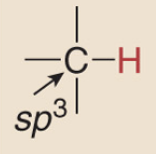
1.5 - 2.5
sp2-C (double bonded to a Z ike C, O, N) next to a sp3 Carbon
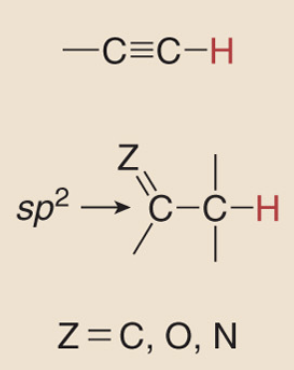
2.5 - 4.5
sp3-carbon attached to a halogen (F, Br, I) or N, O
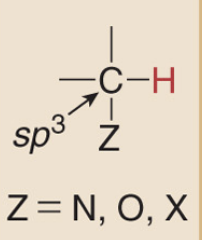
4.5 - 6.5
sp2 carbon alkene
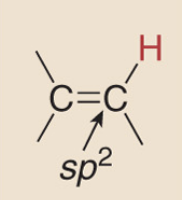
6.5 - 8
aromatic compound
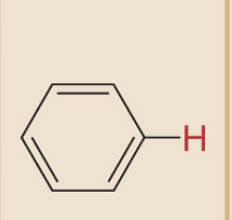
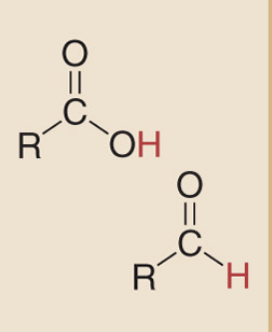
9 - 12
Carboxyllic acid (stump) or Aldehyde (sharp)
Degrees of Unsaturation
(2C + 2 + N - X - H)/2
(leaving groups and why?) Cl-, I-, Br-
Good leaving groups because they’re weak bases that are stable with the negativity
H2O (good or bad leaving group?)
good
F- (Good or bad leaving group?)
bad (because its a relatively good base)
OH- (good or bad leaving group?)
excellent base, can’t stay stable as a negative ion
NH2- (good or bad leaving group?)
bad
H- (good or bad leaving groups?)
good base so weak leaving group
What’s the most important for SN2 reactions
whether the anti-bond can align with the nucleophile; if there’s bulky groups on the alpha carbon, its difficult to align with the antibond
Which hybridization doesn’t do SN2
tertiary (three groups that are not leaving groups or hydrogens; aka. R-groups)
Which solvent is the best SN2
polar Aprotic
What’s the most important for SN1 reactions?
stability of the carbocation; the carbocation has to be geometrically flat to accommodate a front and a back attack (this means it also needs an unhybridized p-ortibal for the positive to go into)
which one can’t do SN1 reactions
primary carbon, because that would make a very unstable carbocation. BUT if that primary carbon can share its positivity with the molecule through resonance then that be more stable than a tertiary carbon
Which solvent is the best for SN1 reactions?
polar protic
Weak nucleophile (neutral) SN2 or SN1?
SN1
Strong nucleophile (negative charge) SN2 or SN1?
SN2
What kind of reagent do we need for E2?
Strong BASES (pKa of conjugate acids being greater than 11)
Reaction rate (SN2/E2?)
3 > 2 > 1
E2 (SN2 does NOT like tertiary)
Zaitsev Rule
Most stable Alkene (most substituted alkene more groups on the alkene)
Hofman product
least sterically hindered (least substituted alkene)
pka Acid: HI Base: I-
-10
pka Acid: HBr Base: Br-
-9
pka Acid: HCl Base: Cl-
-7
pka Acid: H3O+ Base: H2O
-2
pka Acid: HF Base: F-
3
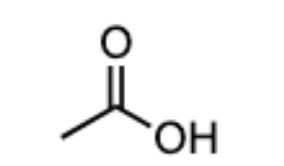
pka Acid: Carboxyllic Acid Base: deprotonated
5
pka Acid: HN3 Base: N3-
5
pka Acid: H2S Base: HS-
7
pka Acid: HCN Base: CN-
9
pka Acid: aromatic ring + alcohol Base: aromatic ring + O-
10
pka Acid: H2O Base: OH-
16
pka Acid: MeOH Base: MeO-
16
Hydrogen attached to an Alkyne pka
25
H2 pKa
35
Acid: NH3 Base: NH2- pka
38
Alkene pka
44
Acid CH4 Base CH3- pka
50
Which Mechanism? Leaving grouping attached to a Methyl
SN2 only
Which Mechanism? Primary carbon leaving carbon
Strong Nucleophile/Base: SN2
Bulky Nucleo: E2
Which Mechanism? Secondary carbon leaving carbon
Strong base: E2
Strong nucleophile: SN2
Weak nu/base: SN1/E1
Which Mechanism? Tertiary carbon attached to a leaving group
SN2 IMPOSSIBLE
Strong base E2
Weak nu/base SN1/E1