Cell Bio- Lecture #3 (Skin & Glands)
 Call Kai
 Learn
Learn Practice Test
 Spaced Repetition
 Match
Match Flashcards
 Knowt Play
1/52

There's no tags or description
Looks like no tags are added yet.
Name | Mastery | Learn | Test | Matching | Spaced | Call with Kai | Chat |
|---|
No analytics yet
Send a link to your students to track their progress
53 Terms

Integument
Made up of 2 parts: the cutaneous membrane (skin) and accessory structures (hair, nails, glands)

Cutaneous membrane
The skin; composed of the epidermis + dermis layers
Epidermis
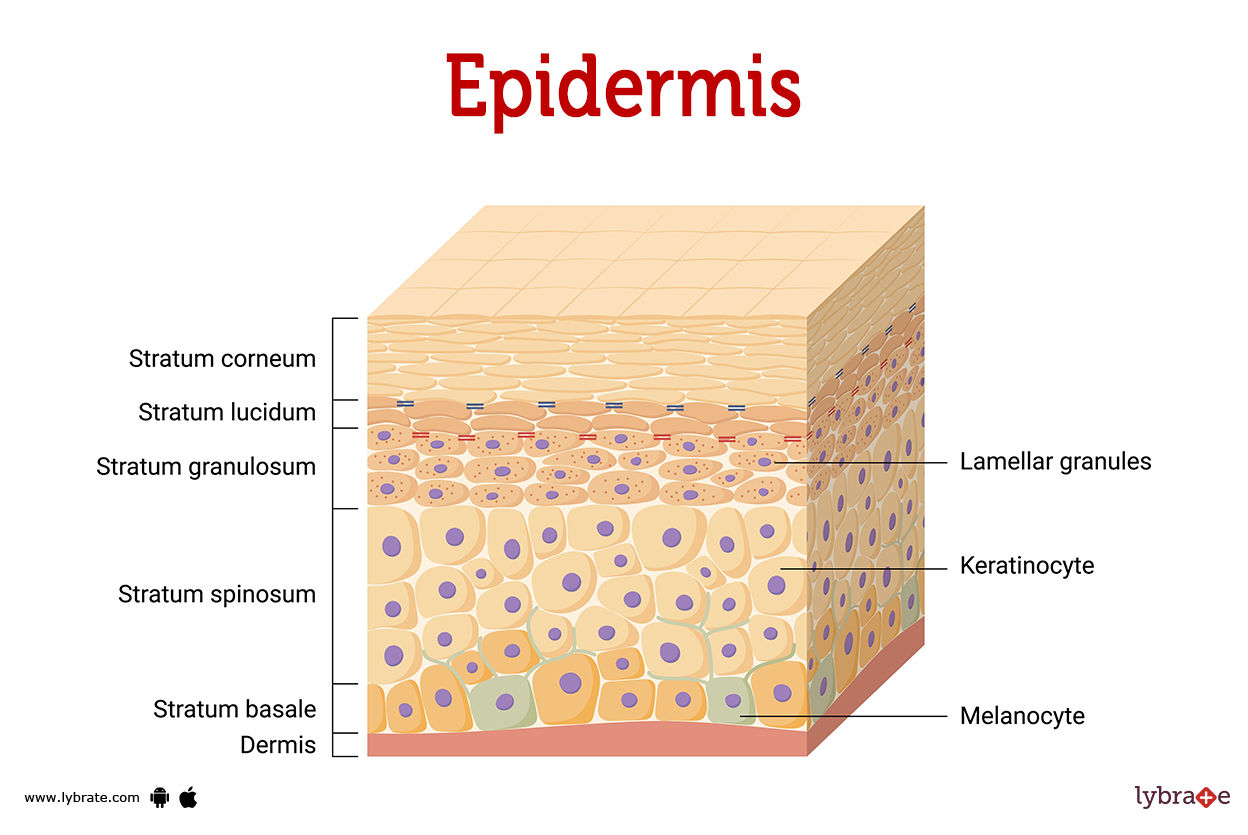
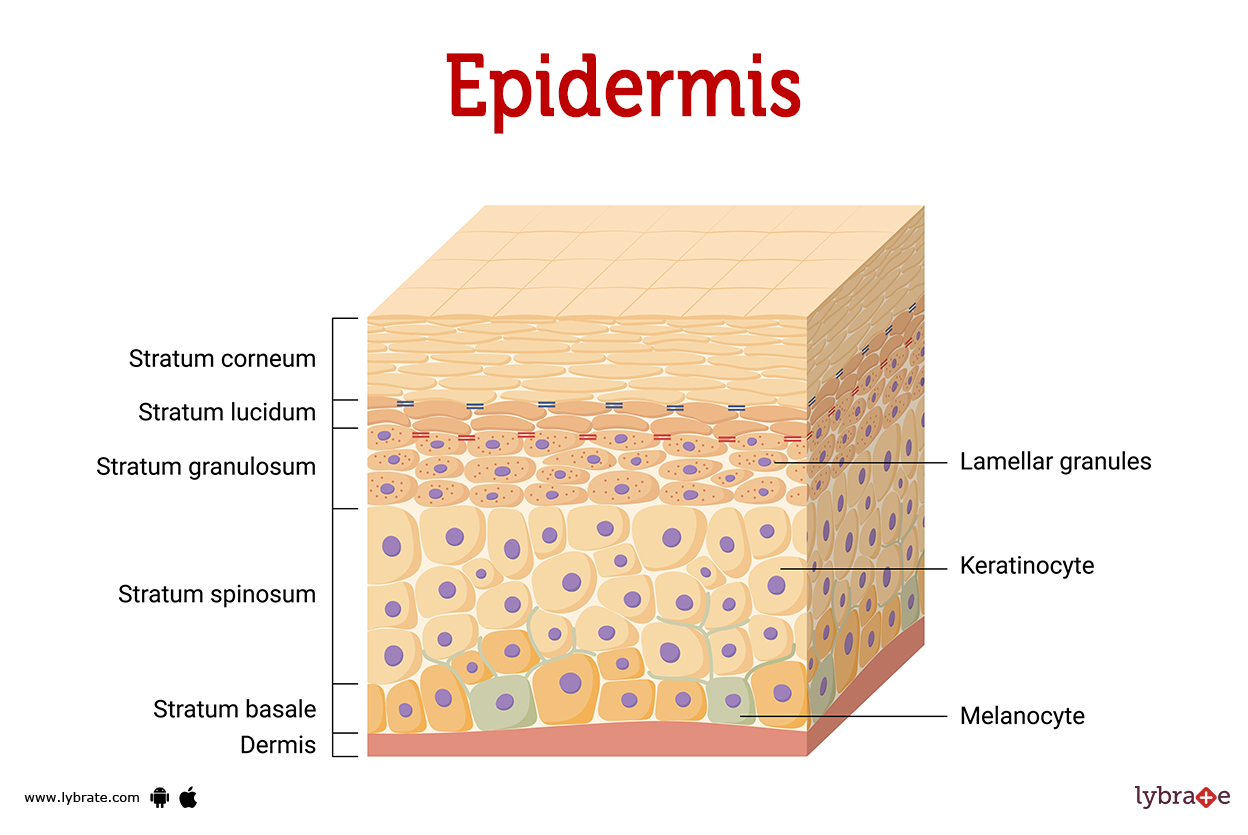
Composed of stratified squamous epithelium; avascular

Dermis
Located between epidermis and subcutaneous layer; anchors epidermal accessory structures
Accessory Structures
Hair, nails, and glands; begin in the dermis and extend through the epidermis
Epidermal ridges
Attached to the dermal papillae; increased surface area improves adhesive strength

Dermal papillae
Structures the epidermal ridges attach to
Keratinocytes
The most abundant cells in the epidermis; produce large amounts of keratin
Keratin
Water-repellent protein produced by keratinocytes that protects from abrasion
Melanocytes
Cells that produce melanin and export it to keratinocytes
Thin Skin
Covers most of the body; has 4 layers of keratinocytes
Thick Skin
Covers the palms of the hands and soles of the feet; has 5 layers
Strata
The 4 (or 5) layers of the epidermis, from basal lamina to surface
Stratum germinativum (basale)
Contains stem cells, melanocytes, and sensory cells in hairless skin

Stratum spinosum
Keratinocytes attach to each other with desmosomes; contains immune cells

Stratum granulosum
Cell division ends, keratin production increases, cells dehydrate & die
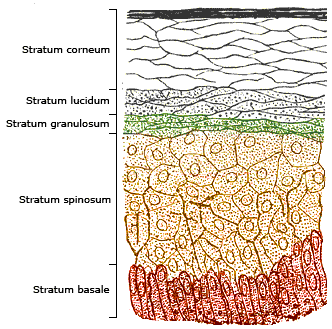
Stratum lucidum
Flattened & densely packed keratinocytes with no organelles left (only in thick skin)

Stratum corneum
Surface of the skin; keratinized, interlocked, water-resistant, dead cells, shed after ~2 weeks
Pigments
Along with circulation, influences skin color
Circulation
Along with pigments, influences skin color
Carotene
Orange-yellow pigment found in many vegetables; accumulates in epidermal cells, protects against UV, convertible to vitamin A
Melanin
Pigment (pheomelanin or eumelanin) produced by melanocytes in stratum germinativum; protects against UV

Melanosomes
Transport vesicles in which melanin is stored
Dendrites
Structures via which melanosomes are transferred from melanocytes to keratinocytes
Cyanosis
Bluish skin tint caused by severe reduction in blood flow or oxygenation
Albinism
Inability to produce melanin; results in higher risk for cancer & burns
ABCD
Mnemonic for melanoma warning signs: Asymmetry, Border irregular, Color mottled, Diameter (>5mm is bad)
Jaundice
Bile pigments accumulate in blood due to liver dysfunction; skin & eyes take on a yellow color
Addison's disease
Disease of the pituitary gland causing skin darkening due to increased ACTH secretion
Vitiligo
Loss of melanocytes, causing loss of pigment on patches of skin

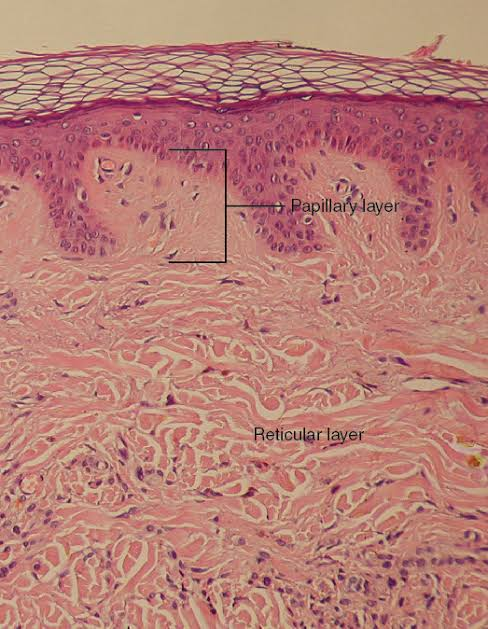
Papillary layer
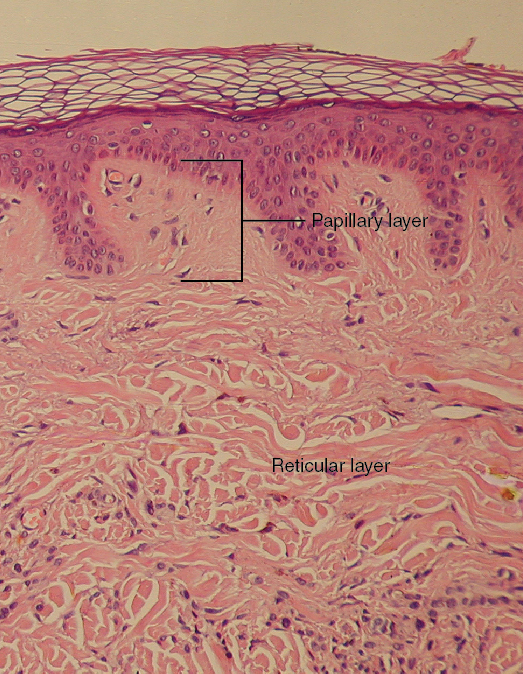
Outer layer of the dermis; areolar tissue containing small capillaries, lymphatics, sensory neuron processes
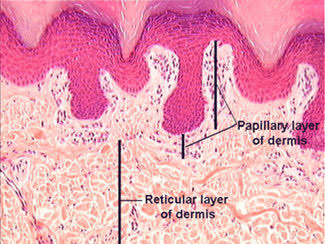

Reticular layer
Deep layer of the dermis; dense irregular connective tissue with large blood vessels, lymph vessels, nerve fibers
Striae
Stretch marks; result of stretching skin past elastin's tolerance limits
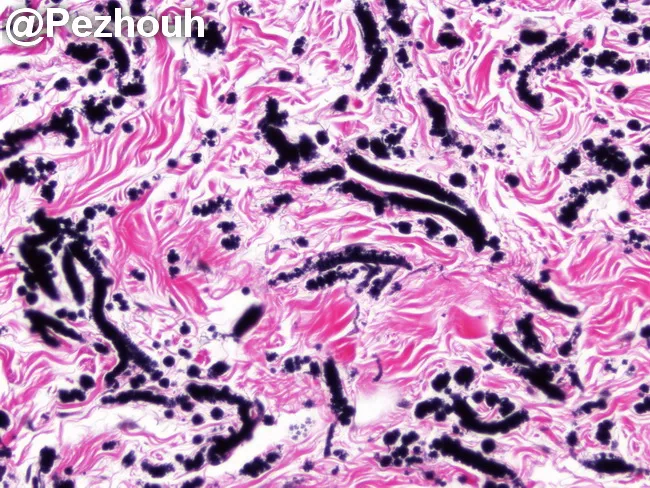
Verhoeff stain
Stain used to make elastin fibers more clearly visible (black)

Shaft
Upper part of hair
Root
Lower part of hair, attached to the integument
Arrector pili
Involuntary smooth muscle that causes hairs to stand up
Sebaceous glands
Oil glands that lubricate hair and control bacteria; holocrine glands secreting onto hair follicles
Hair bulb
Where germinal cells grow hair, and melanocytes provide pigment
Trichrome
A type of stain used in histology
Nail body
Visible portion of the nail; covers the nail bed
Nail root
Hidden site of germination (nail production)
Exocrine
Glands that secrete via ducts onto an external epithelial surface
Endocrine
Glands that secrete into the interstitial fluid/bloodstream
Merocrine
Secretion via vesicular exocytosis
Apocrine
Secretion where the cell sheds part of itself filled with vesicles
Holocrine
Secretion where the cell fills with vesicles and then bursts, killing the cell
Sebum
Oily mixture secreted by sebaceous glands; lubricates, waterproofs, inhibits bacteria
Sebaceous follicles
Secrete directly onto the skin (not associated with hair); contain lipids
Eccrine (Sweat glands)
Sweat glands that secrete on the surface of skin to cool skin and excrete water/electrolytes via merocrine secretion
Apocrine (sweat glands)
Sweat glands in armpits, areolae, near anus; begin function in puberty, secrete into hair follicles
Mammary glands
Modified apocrine sweat glands that produce milk (combination of apocrine & merocrine secretion)
Ceruminous glands
Produce cerumen (earwax); protect the eardrum