Human Anatomy & Physiology
 Call Kai
 Learn
Learn Practice Test
 Spaced Repetition
 Match
Match Flashcards
 Knowt Play
1/77

Earn XP
Description and Tags
Final Exam
Name | Mastery | Learn | Test | Matching | Spaced | Call with Kai | Chat |
|---|
No analytics yet
Send a link to your students to track their progress
78 Terms
On what bone is the mandibular fossa found?
a. mandible
b. maxilla
c. temporal
d. sphenoid
temporal
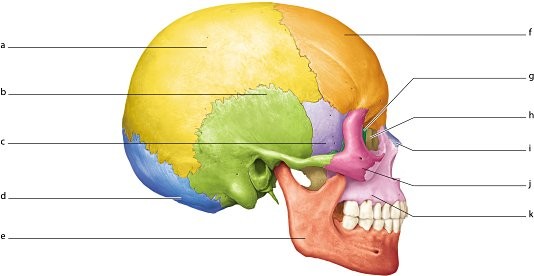
What bone is labeled “c”?
a. sphenoid
b. zygomatic
c. parietal
d. temporal
sphenoid
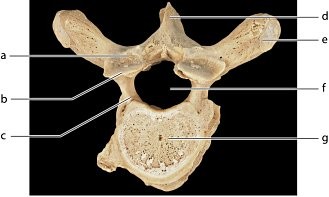
Identify the bone marking labeled “c.”
a. costal facet
b. spinous process
c. lamina
d. pedicle
pedicle
Which of the following bone features is correctly matched with the bone on which it is found?
a. greater tuberosity - tibia
b. ulnar notch - ulna
c. lateral malleolus - tibia
d. lesser trochanter - femur
lesser trochanter - femur
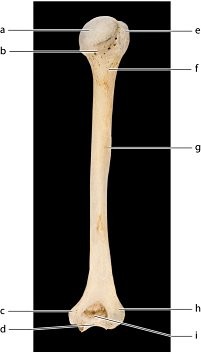
Identify the bone feature labeled “c.”
a. greater tubercle
b. head
c. medial epicondyle
d. anatomical neck
medial epicondyle
Which bone has a radial notch?
a. clavicle
b. humerus
c. ulna
d. radius
ulna
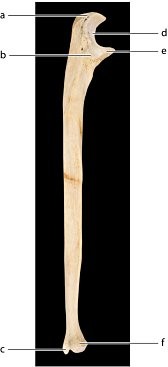
Identify the bone feature labeled “c.”
a. radial notch
b. styloid process
c. head
d. coracoid process
styloid process
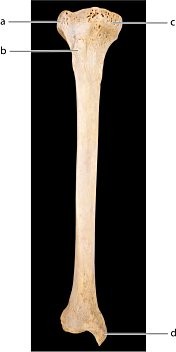
Identify the bone feature labeled “d.”
a. articular surface
b. anterior crest
c. medial malleolus
d. lateral malleolus
medial malleolus
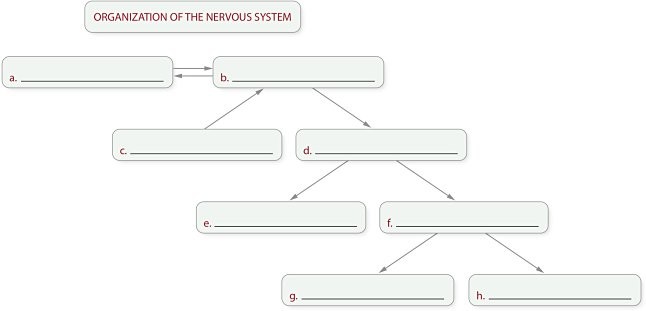
When completing a chart showing the organization of the nervous system, which term should be written in box “c”?
a. PNS
b. CNS
c. sensory (afferent) division
d. motor (efferent) division
sensory (afferent) division
Which cranial nerve extends into the ventral body cavity and innervates many of the visceral organs?
a. accessory
b. vagus
c. trigeminal
d. saphenous
vagus
What structure acts as a gateway for sensory impulses before they reach the cerebral cortex?
a. hypothalamus
b. corpus callosum
c. cerebellum
d. thalamus
thalamus
The epidermis of the skin serves as a barrier to mechanical stresses and protects us from microorganisms. What tissue do you think forms the epidermis?
a. pseudostratified columnar epithelium
b. stratified squamous epithelium
c. simple squamous epithelium
d. simple columnar epithelium
stratified squamous epithelium
Why are eyelashes shorter than terminal hairs on the scalp?
a. The growth stage of an eyelash is shorter.
b. Hormones in the eyebrow follicle turn off growth after it has reached a predetermined length.
c. The vascular supply of the eyebrow follicle is much less than that of the hair follicle on the scalp.
d. Eyelashes grow slower than terminal hairs.
The growth stage of an eyelash is shorter.
Which statement best describes primary bone?
a. Primary bone contains abundant osteocytes and little inorganic matrix.
b. Primary bone has regularly arranged parallel bundles of collagen fibers for strength.
c. Primary bone is stronger than secondary bone since it contains many lamellae.
d. Primary bone contains a higher percentage of inorganic matrix than secondary bone.
Primary bone contains abundant osteocytes and little inorganic matrix.
Which would NOT be found in the organic matrix of bone?
a. hydroxyapatite crystals
b. collagen fibers
c. osteocalcin
d. glycoproteins
hydroxyapatite crystals
Where can pronation and supination occur?
a. atlantoaxial joint
b. proximal radioulnar joint of the forearm
c. thumb or first capometacarpal joint
d. mandible and maxilla
proximal radioulnar joint of the forearm
Which ligament of the coxal joint supports the inferior aspect of the joint?
a. ischiofemoral ligament
b. pubofemoral ligament
c. ligament of the head of the femur
d. iliofemoral ligament
pubofemoral ligament
In the knee joint, the medial meniscus is:
a. fibrocartilage
b. dense regular collagenous connective tissue
c. hyaline cartilage
d. elastic cartilage
fibrocartilage
Which type of angular movement moves a body part away from the midline of the body or another reference point?
a. abduction
b. flexion
c. plantar flexion
d. adduction
abduction
Which of the following is an example of a synchondrosis?
a. an intervertebral disc situated between the vertebrae of the spinal column
b. an epiphyseal plate found between the shaft (diaphysis) and the end (epiphysis) of a long bone
c. the pubic symphysis and the two surrounding pubic bones of the pelvic girdle
d. the coronal suture situated between the frontal bone and parietal bone
an epiphyseal plate found between the shaft (diaphysis) and the end (epiphysis) of a long bone
Synchondroses unite bones with _____ while symphyses unite bones with _____.
a. dense regular collagenous tissue; elastic cartilage
b. hyaline cartilage; fibrocartilage
c. elastic cartilage; fibrocartilage
d. fibrocartilage; hyaline cartilage
hyaline cartilage; fibrocartilage
Type I fibers lack:
a. mitochondria
b. speed
c. myoglobin
d. a blood supply
speed
A fascicle
a. is a surrounded by endomysium
b. is a bundle of collagen fibers
c. is only found in smooth muscle
d. is surrounded by perimysium
is surrounded by perimysium
What does the depolarization of the transverse tubules (T-tubules) promote?
a. entry of sodium ions into the muscle fiber through voltage-gated sodium ion channels
b. binding of acetylcholine to ligand-gated sodium ion channels
c. release of calcium from the sarcoplasmic reticulum
d. release of acetylcholine from vesicles in the motor neuron into the synaptic cleft
release of calcium from the sarcoplasmic reticulum
During muscle contraction, myosin crossbridges bind to active sites on:
a. troponin
b. tropomyosin
c. actin
d. T-tubules
actin
Which of the following wraps around and surrounds an individual skeletal muscle fiber?
a. perimysium
b. epimysium
c. sarcoplasmic reticulum
d. endomysium
endomysium
Between the start of the latent period and the start of the contraction period, there is a time interval during which the muscle cannot respond to another stimulus. This brief period is known as the:
a. action potential
b. relaxation period
c. refractory period
d. tension period
refractory period
Deep inward extensions of the sarcolemma form a tunnel-like network inside the muscle cell known as:
a. myofilaments
b. transverse tubules (T-tubules)
c. myofibrils
d. the sarcoplasmic reticulum
transverse tubules (T-tubules)
The central region of the A band that lacks thin filaments is the:
a. H zone
b. Z disc
c. I band
d. sarcomere
H zone
Which of the following promotes the depolarization stage?
a. closure of voltage-gated sodium ion channels
b. hydrolysis of ATP
c. opening of voltage-gated potassium ion channels and potassium ions exit the cell
d. opening of voltage-gated sodium ion channels and sodium ions enter the cell
opening of voltage-gated sodium ion channels and sodium ions enter the cell
Latrotoxin, produced by the poisonous black widow spider, increase the release of acetylcholine. How do muscle cells respond?
a. Muscle cells will become paralyzed when excess acetylcholine exists.
b. Muscle cells will experience fused or complete tetanus when excess acetylcholine exists.
c. Muscle cells will twitch irregularly when excess acetylcholine exists.
d. Muscle cells will experience a longer latent period when excess acetylcholine exists.
Muscle cells will experience fused or complete tetanus when excess acetylcholine exists.
The fastest muscle contraction would be produced by a:
a. type III fiber
b. type IIa fiber
c. type IIx fiber
d. type I fiber
type IIa fiber?
What part of the neuron is a process that can generate and conduct action potentials?
a. cell body
b. axon
c. dendrite
d. neurofibril
axon
The neuron that receives neurotransmitters from another neuron is called:
a. an oligodendrocyte
b. the postsynaptic neuron
c. a neurolemmocyte
d. the presynaptic neuron
the postsynaptic neuron
If a resting axon increases its permeability to sodium ions:
a. the membrane potential will repolarize
b. the influx of sodium ions will increase and the membrane will depolarize
c. the outward movement of sodium ions will decrease
d. the membrane potential will hyperpolarize
the influx of sodium ions will increase and the membrane will depolarize
The presence of a synaptic cleft between cells is characteristic of:
a. electric synapse
b. chemical synapse
c. both chemical and electrical synapses
d. neither chemical nor electrical synapses
chemical synapse
Saltatory conduction occurs:
a. when myelin sheaths are absent
b. when myelin sheaths are present
c. in gray matter
d. when threshold has not yet been reached
when myelin sheaths are present
Which of the following is controlled by the somatic motor division?
a. cardiac muscle
b. glands
c. skeletal muscle
d. smooth muscle
skeletal muscle
Which neuropeptide neurotransmitter is released from fibers transmitting sensory information about pain and temperature?
a. substance P
b. endorphin
c. neuropeptide Y
d. opioids
substance P
What membrane potential must generally be met in order to achieve threshold?
a. -85 mV
b. -70 mV
c. -55 mV
d. -30 mV
-55 mV
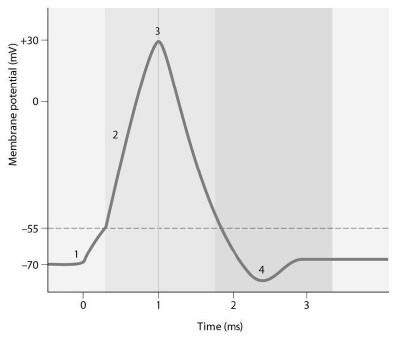
Which area on the graph shows when the neuron is in the relative refractory period?
a. 1
b. 2
c. 3
d. 4
4
Neurotransmitters that bind ionotropic receptors control:
a. the movement of ions into or out of the postsynaptic neuron
b. the activation of G-proteins inside the postsynaptic neuron
c. the formation of a second messenger inside the postsynaptic neuron
d. some metabolic process inside the postsynaptic neuron
the movement of ions into or our of the postsynaptic neuron
Which of the following is an effect of myelination?
a. Myelination increases the speed of conduction of action potentials.
b. Myelination increases the volume of cerebrospinal fluid in circulation.
c. Myelination increases the rate at which phagocytosis occurs in the brain.
d. Myelination increases the rate of mitosis in damaged neurons.
Myelination increases the speed of conduction of action potentials.
The influx of positive charges makes the membrane potential more positive and is known as:
a. hyperpolarization
b. depolarization
c. repolarization
d. polarization
depolarization
In what dura mater fold is the superior sagittal sinus located?
a. falx cerebri
b. tentorium cerebelli
c. tentorium cerebri
d. falx cerebelli
falx cerebri
The neurotransmitter orexin plays a role in:
a. the regulation of metabolism
b. the promotion of sleepiness
c. body temperature regulation
d. the promotion of wakefulness
the promotion of wakefulness
What part of the cerebral cortex is responsible for personality, the creation of an awareness of self, and the ability to recognize appropriate behavior?
a. Wernicke’s area
b. prefrontal cortex
c. parietal association cortex
d. temporal association cortex
prefrontal cortex
Which description best matches the location of white matter?
a. In both the brain and spinal cord, white matter is superficial.
b. In both the brain and spinal cord, which matter is deep.
c. In the spinal cord, white matter is deep while cerebral white matter is superficial.
d. In the spinal cord, white matter is superficial while cerebral white matter is deep.
In the spinal cord, white matter is superficial while cerebral white matter is deep.
Tactile sensation does NOT refer to:
a. light touch
b. crude touch
c. two-point discrimination
d. vibration
crude touch
What provides a link between the nervous system and the endocrine system?
a. hypothalamus
b. thalamus
c. cerebellum
d. pons
hypothalamus
What is NOT part of the diencephalon?
a. hypothalamus
b. epithalamus
c. thalamus
d. medulla oblongata
medulla oblongata
An injury to the spinal cord is not possible below the:
a. second thoracic vertebra
b. second lumbar vertebra
c. fourth cervical vertebra
d. ninth thoracic vertebra
second lumbar vertebra
What part of the brain is the “boss” of the autonomic nervous system (ANS)?
a. basal nuclei
b. pons
c. thalamus
d. hypothalamus
hypothalamus
What is situated inferior to the conus medullaris of the spinal cord?
a. lumbar enlargement
b. cauda equina
c. cervical enlargement
d. posterior median sulcus
cauda equina
Which brain nucleus serves as the body’s “master clock”?
a. caudate nucleus
b. basal nucleus
c. lentiform nucleus
d. suprachiasmatic nucleus
suprachiasmatic nucleus
What part of the motor pathway inhibits inappropriate movements?
a. primary motor cortex
b. basal nuclei
c. cerebellum
d. occipital lobe
basal nuclei
An epidural, or spinal anesthesia, is administered into the CSF flow around the spinal cord. Into what space is this medication injected?
a. subarachnoid space
b. epidural space
c. subdural space
d. dural sinus
epidural space
The primary motor cortex of the right cerebral hemisphere:
a. controls the motor activity on the left side of the body
b. receives and processes sensory input
c. integrates senses from multiple different sources
d. controls the motor activity on the right side of the body
controls the motor activity on the left side of the body
Detection of stimuli is a responsibility of the _____ while perception of the stimuli is a responsibility of the _____.
a. CNS; PNS
b. upper motor neuron; lower motor neuron
c. second-order neuron; first-order neuron
d. PNS; CNS
PNS; CNS
What part of the nervous system integrates and interprets information from PNS sensory neurons?
a. central nervous system (CNS)
b. sensory (afferent) division
c. somatic nervous system (SNS)
d. visceral motor division, or autonomic nervous system (ANS)
central nervous system (CNS)
The anterior root and posterior root fuse to form a(n):
a. anterior horn
b. posterior horn
c. posterior (dorsal) root ganglion
d. spinal nerve
spinal nerve
The posterior cord of the brachial plexus terminates as which nerves?
a. radial and ulnar
b. ulnar and median
c. axillary and musculocutaneous
d. axillary and radial
axillary and radial
What is NOT true of muscle spindles?
a. Muscle spindles are receptors for the stretch reflex.
b. The contractile poles of intrafusal fibers within muscle spindles are innervated by 𝛾-motor neurons.
c. Muscle spindles are found within tendons.
d. Muscle spindles are embedded within extrafusal muscle fibers.
Muscle spindles are found within tendons.
A test known as two-point discrimination threshold measures:
a. the type of sensory neuron serving a region of skin
b. the type of mechanoreceptor being stimulated
c. the amount of pressure we can sustain before feeling pain
d. the relative size of receptive fields
the relative size of receptive fields
Determine the polysynaptic reflex from this list of examples.
a. jaw-jerk reflex
b. patellar (knee-jerk) reflex
c. simple stretch reflex
d. flexion (withdrawal) reflex
flexion (withdrawal) reflex
The geniculate ganglion is one of several ganglia that house cell bodies of the sensory root of the:
a. vagus nerve (X)
b. glossopharyngeal nerve (IX)
c. trigeminal nerve (V)
d. facial nerve (VII)
facial nerve (VII)
A typical somatic sensory neuron is classified as a:
a. first-order neuron
b. second-order neuron
c. third-order neuron
d. lower neuron
first-order neuron
Autonomic motor neurons do NOT innervate:
a. skeletal muscle cells
b. smooth muscle cells
c. cardiac muscle cells
d. glands
skeletal muscle cells
Where does the cell body of the preganglionic neuron originate?
a. central nervous system (CNS)
b. postganglionic neuron
c. target cell
d. peripheral nervous system (PNS)
central nervous system (CNS)
To increase sweat production from sweat glands, acetylcholine binds:
a. muscarinic receptors
b. beta receptors
c. adrenergic receptors
d. nicotinic receptors
muscarinic receptors
If a drug is administered to block the heart’s adrenergic receptors, how is heart rate affected during exercise?
a. The drug has no effect on heart rate during exercise.
b. Heart rate will increase in response to the drug.
c. Heart rate will be unable to increase in response to exercise.
d. The heart will stop beating.
Heart rate will be unable to increase in response to exercise.
Nicotinic and muscarinic receptors are classified as:
a. beta receptors
b. adrenergic receptors
c. cholinergic receptors
d. alpha receptors
cholinergic receptors
What receptor hyperpolarizes the axon terminal to slow or cancel the action potential when norepinephrine binds?
a. ⍺2 receptor
b. ⍺1 receptor
c. β3 receptor
d. β2 receptor
⍺2 receptor
Receptors that bind acetylcholine are known as:
a. beta
b. adrenergic
c. cholinergic
d. alpha
cholinergic
Where are the ganglia of the parasympathetic nervous system located?
a. close to the spinal cord
b. near the cells or organ being innervated by parasympathetic postganglionic neurons
c. near the parasympathetic preganglionic neuron
d. close to the brain
near the cells or organ being innervated by parasympathetic postganglionic neurons
What neurotransmitter is released by both preganglionic and postganglionic parasympathetic neurons at their synapses?
a. acetylcholine
b. both epinephrine and norepinephrine
c. epinephrine
d. norepinephrine
acetylcholine
Receptors that bind norepinephrine and epinephrine are known as:
a. adrenergic
b. cholinergic
c. muscarinic
d. nicotinic
adrenergic
Which drug binds receptors on the smooth muscle of airways and causes bronchodilation?
a. ⍺2-agonist
b. β2-agonist
c. beta-blocker (antagonist)
d. ⍺1-blocker (antagonist)
β2-agonist