Information Literacy: ENG 1001: Types of Plagiarism and How to Avoid Them
 Call Kai
 Learn
Learn Practice Test
 Spaced Repetition
 Match
Match Flashcards
1/22

There's no tags or description
Looks like no tags are added yet.
Name | Mastery | Learn | Test | Matching | Spaced | Call with Kai | Chat |
|---|
No analytics yet
Send a link to your students to track their progress
23 Terms
Ethical Use of Information
Using data, words, and ideas in a way that is honest, fair, and respectful of the people who created them

Plagiarism
Verbatim quotation without a proper citation

Plagiarism
Using the exact words from a source without proper acknowledgement

Plagiarism
There are different types of plagiarism

Copy/ Paste
Cutting and pasting text without clear acknowledgement or information copied from the Internet without correct references

Patchwork plagiarism
This applies to either a single source or to multiple sources mixed together. This is sometimes called mosaic or patchwork plagiarism.

Incorrect Paraphrasing
Using someone else's argument structure or simply changing a few words without properly citing the source for information that is not common knowledge

Collusion
Students working together in an unauthorized way to produce an assignment lacking proper credit

Inaccurate citation
Not following the bibliographic style and examples given by your professor, your academic department or the citation style association

Assignments written by professional agencies or generative A.I.
Work you submit for an assignment, but you did not create it on your own

Auto-plagiarism
Reusing previous assignments for a different course without prior consent from your instructor
AUBG Academic Integrity Policy
Refer to the Academic Catalogue

How should you start writing for an assignment?
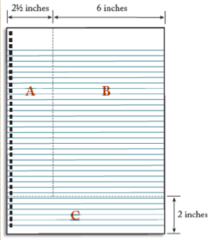
Start by writing what you know about a subject. Look for outside sources of information after you have already written as much as you can about the topic from your own knowledge. Outside sources should function to support your originial arguments.

How should you take notes to avoid plagiarism?
Mark a source right away and where it comes from in your notes. Add it to your bibliography at the same time. For more information, please visit: https://aubg.libguides.com/c.php?g=730210&p=5328174
What should you do, if you bring outside work into your assignment?
Mention the owner's/creator's work at the point where it is used in your own assignment and then add it to your bibliography.

The Two Parts of Bibliographic Citations
In-text (you show some of the details) and a list of references at the end of an assignment (you show all of the details).

What are the three most common bibliographic citation styles?
Modern Language Association (MLA), American Psychology Association (APA), and Chicago

MLA (Modern Language Association) Format - Works Cited
The Modern Language Association (MLA) style is commonly used in the humanities, such as literature and language studies. It uses an Author - Page system for in-text citations. MLA uses an author-page system for in-text citations. If the author's name is mentioned in the sentence, only the page number is included in parentheses.
Examples:
Book:
Works Cited List: Orwell, George. Nineteen Eighty-Four. Harcourt, 1949.
In-text: (Orwell 3).
Journal Article:
Works Cited List: Tversky, Amos, and Daniel Kahneman. 'Judgment under Uncertainty: Heuristics and Biases.' Science, vol. 185, no. 4157, 1974, pp. 1124-1131.
In-text: (Tversky and Kahneman 1125).

APA 7th Edition - References
The American Psychological Association (APA) style is primarily used in the social sciences, such as psychology and education. It uses an Author - Date system for in-text citations (e.g., Smith, 2010)
APA utilizes an author-date system. Page numbers are required for direct quotes but optional for paraphrasing.
Examples:
Book:
Reference: Orwell, G. (1949). Nineteen eighty-four. Harcourt. In-text: (Orwell, 1949, p. 3). Journal Article - Tversky, A., & Kahneman, D. (1974). Judgment under uncertainty: Heuristics and biases. Science, 185(4157), 1124-1131.
In-text: (Tversky & Kahneman, 1974).

Chicago Style - Bibliography
The Chicago Manual of Style is often used in history and the arts. It commonly uses a Notes and Bibliography system where sources are cited in footnotes and listed in a final bibliography
Chicago's Notes and Bibliography system uses superscript numbers in the text corresponding to footnotes. Each entry is detailed with publication information.
Examples:
Book:
Bibliography: Orwell, George. Nineteen Eighty-Four. New York: Harcourt, 1949. Footnote: 1. George Orwell, Nineteen Eighty-Four (New York: Harcourt, 1949).

Where should you go to learn more about citations?
Panitza Library Website > Subject Guides > Citation Styles

How can I manage citations easily?
By using a citation management platform such as Zotero.

When in doubt...
https://www.aubg.edu/panitza-library/
