6.1 Introduction to the Atmosphere
 Call Kai
 Learn
Learn Practice Test
 Spaced Repetition
 Match
Match Flashcards
 Knowt Play
1/16

There's no tags or description
Looks like no tags are added yet.
Name | Mastery | Learn | Test | Matching | Spaced | Call with Kai | Chat |
|---|
No analytics yet
Send a link to your students to track their progress
17 Terms
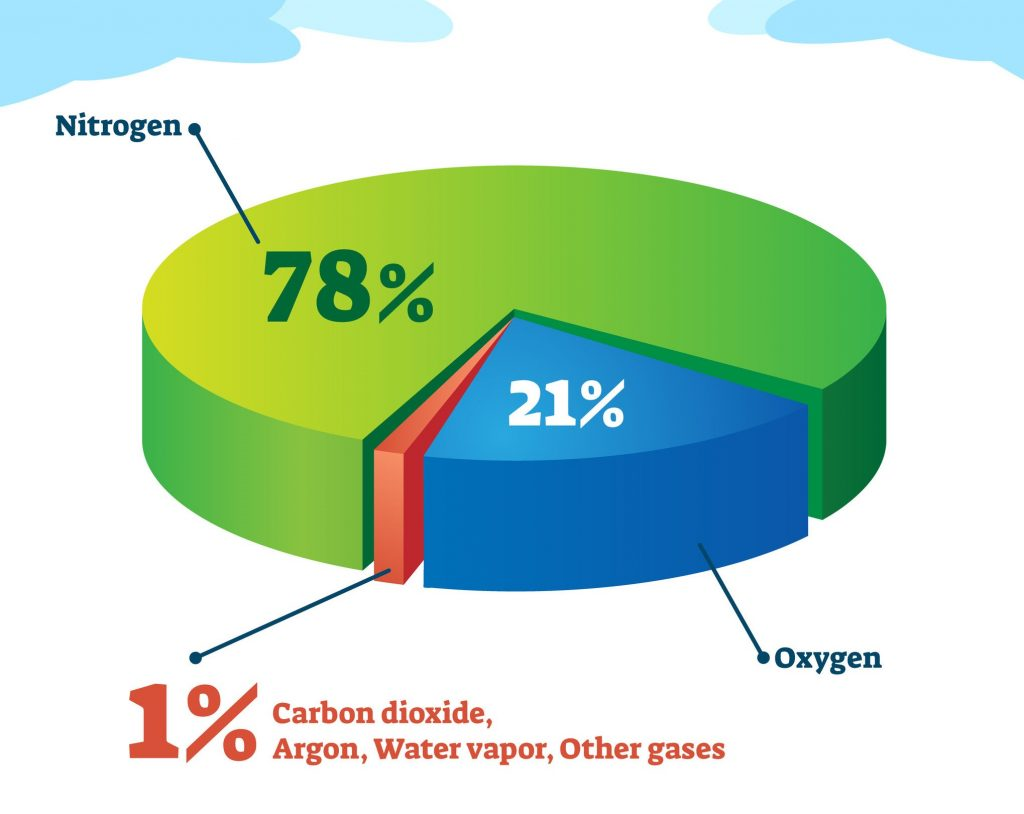
composition of the atmosphere
nitrogen - 78%
oxygen - 21%
argon - 0.9%
carbon dioxide - 0.04%
water vapour ~0-2%
carbon dioxide necessity
photosynthesis - plants need CO2 to make oxygen in order to survive
greenhouse effect - traps heat within the atmosphere, warming earth
oxygen necessity
respiration - in order for all living organisms to live
combustion - without oxygen, combustion and burning would not be able to take place
nitrogen necessity
rapid burning - prevents rapid burning at the earths surface through diluting oxygen
nutrients - provides living organisms with nutrients in order to grow and survive
atmospheric stratification
the formation of distinct layers in the atmosphere based on temperature, density, and composition changes at different altitudes
atmospheric layers
troposphere - lowest layer, weather (clouds, precipitation, and gas mixing) occur here
stratosphere - 10 to 50km, contains the ozone layer which absorbs and blocks most UV radiation from the sun
mesosphere - 50 to 80km, coldest layer, highest clouds appear here.
thermosphere - 80 to 700km, hot due to direct solar radiation, low gas density
exosphere - 700 to 1,000km, outermost boundary, air thins out.
importance of the inner layers (troposphere and stratosphere)
regulates climate and supports life on earth
in the troposphere, chemical reactions occur that impact air quality and climate
in the stratosphere, chemical reactions involving ozone maintain the ozone layer and protect living organisms from UV
differential heating
the uneven absorption of solar radiation across the Earth's surface, primarily caused by the planet's curved, spherical shape.
earths energy budget
the balance between the energy Earth receives from the Sun and the energy it radiates back into space. most energy comes from solar radiation and some of that is reflected from earths surface (albedo), the rest is absorbed and turned into heat. earth also releases the absorbed energy back into space.
differential heating explanation
The equator receives more direct sunlight because the sun's rays hit it at a high angle, concentrating the energy in a small area.
The poles are curved surfaces, so the sun's rays hit the same amount of energy spread over a larger area
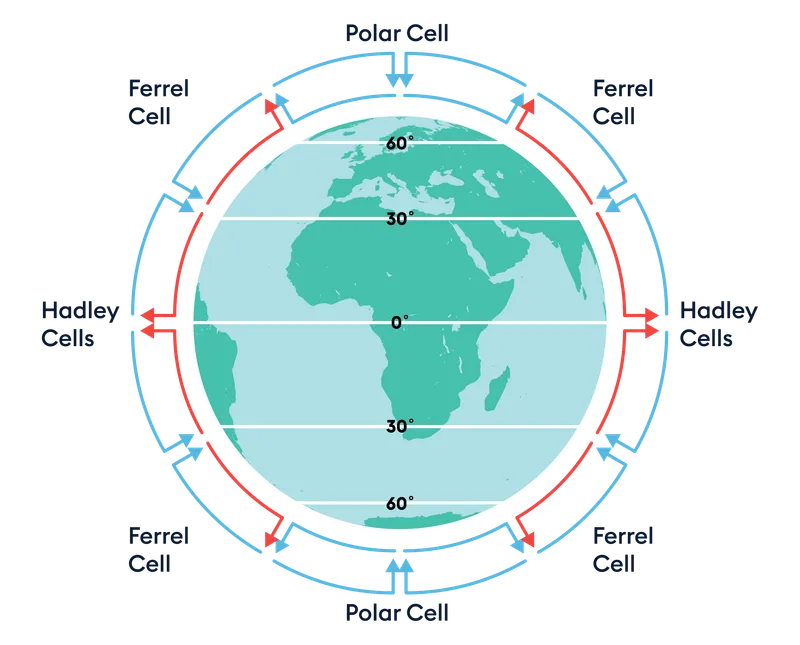
tri-cellular model
Earth redistributes heat from the equator to the poles using three distinct thermal and dynamic circulation cells in each hemisphere: the Hadley, Ferrel, and Polar cells which are all pressure cells. In these pressure cells, hot air rises and cooler air sinks through the process of convection
Hadley cells - Warm air rises at the equator to form a low-pressure belt with heavy rain. Air cools and sinks at 30° latitude to create high-pressure zones and dry deserts.
Ferrel cells - Surface air moves poleward from 30° high pressure to 60° low pressure, deflected by the Coriolis effect into westerlies. Warm and cold air masses clash here, creating unstable weather.
Polar cells - Cold, dense air sinks at the poles to create high pressure. Surface air flows toward 60° latitude, warming and rising at the polar low-pressure belt. Upper-level air returns to the pole and sinks.
wind formation
Air always moves from areas of higher pressure to lower pressure and this movement of air generates wind. This pressure difference is because the Sun heats the Earth's surface unevenly
pressure cell distribution
as the sun heats the earths surface, air expands and begins to rise, and surface pressure lowers
the air risen increases atmospheric pressure, making it denser
because its denser, it sinks, lowering the atmospheric pressure
once it sinks the surface pressure rises again
this process repeats over and over again
influence on terrestrial biomes
Near the equator, rising warm air leads to high rainfall and high temperatures
This creates tropical rainforests and savannas (within the Hadley cell)
Mid-latitudes experience varying weather because of warm and cold air, resulting in temperate climates with moderate precipitation
This creates temperate forests and grasslands
High latitudes, influenced by descending cold air, have low temperatures and limited precipitation
This creates polar deserts and tundra