Oral Language + Writing
 Call Kai
 Learn
Learn Practice Test
 Spaced Repetition
 Match
Match Flashcards
 Knowt Play
1/55

Earn XP
Description and Tags
Module 8 & 9
Name | Mastery | Learn | Test | Matching | Spaced | Call with Kai | Chat |
|---|
No analytics yet
Send a link to your students to track their progress
56 Terms
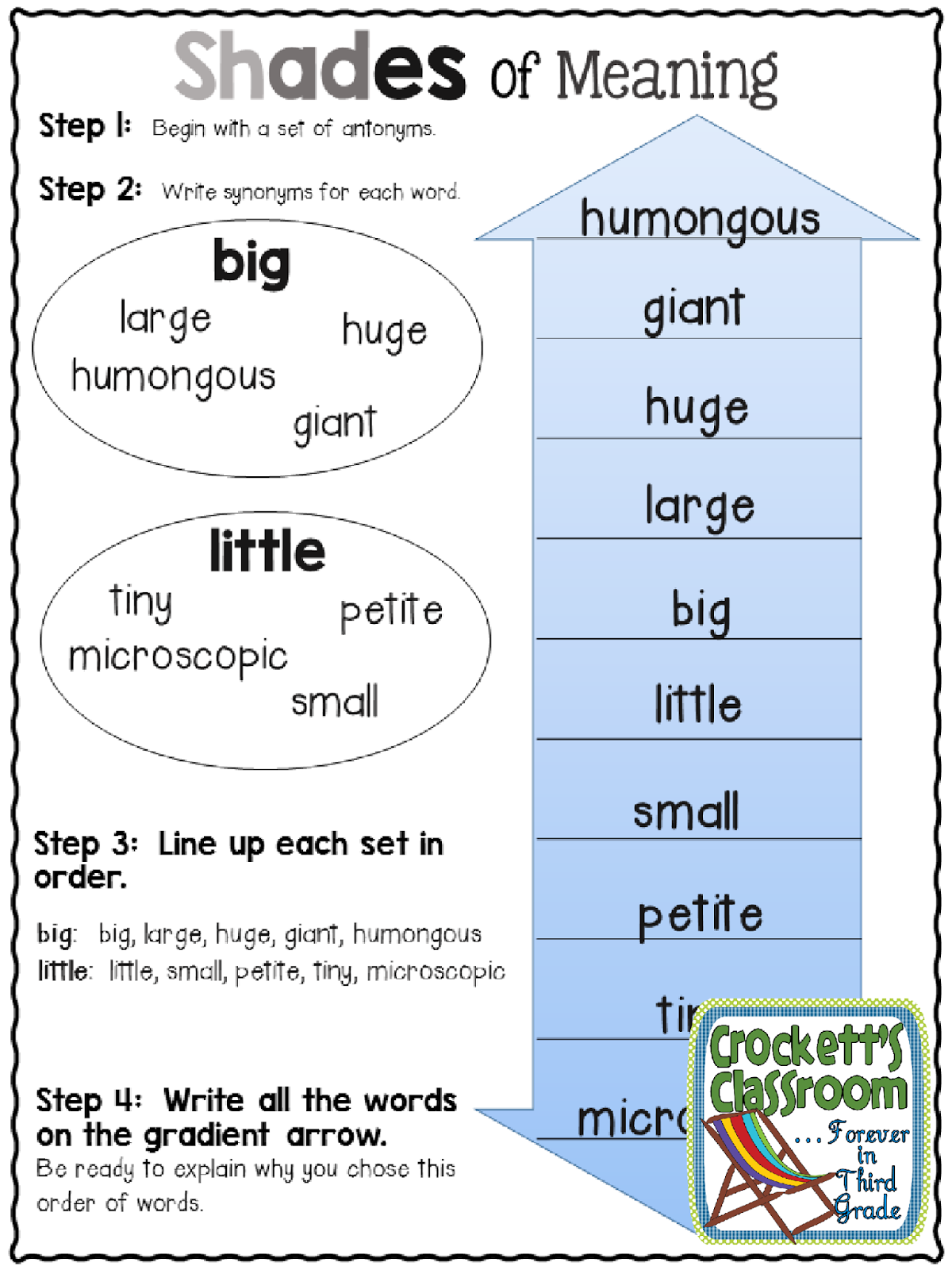
Semantic gradients are tools for what?
improving vocabulary
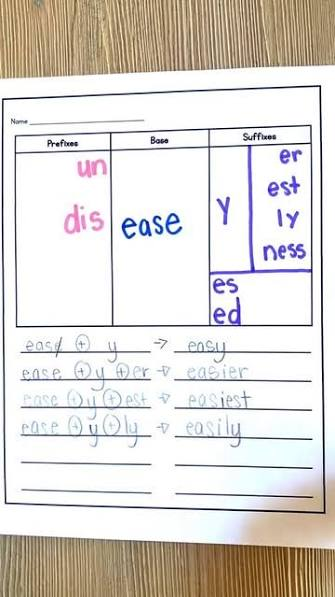
Word Matrixes are tools for what?
multisyllabic words
Children can learn vocabulary indirectly. Give 2 examples on how.
Independent Reading
Communication
Children can learn vocabulary directly. Give 2 examples on how.
Repeated exposure
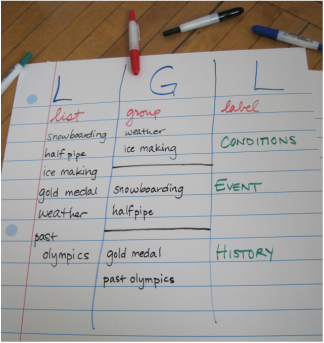
List-Group Label
_____ Literacy
Comprehend, evaluate, and create
Posters, Presentations
Consider design purpose
Visual
_____ Literacy
Communication, skimming
Books, newspaper, podcast
Media
_____ Literacy
Comprehend different representation of data
How to draw conclusions
Polls, Math Graphing
Data
_____ Literacy
Common scenarios for appropriate practice
Money
Realistic Sources
Financial
_____ Literacy
"Which source is the best?”
Define purpose of each type of media
Tech
_____ Literacy
Locate and analyze information
Consider bias & personal dictionary
Ability to comprehend information
Inform
There are how many types of learning styles?
4
T/F - Children need to learn all 26 words before beginning real word instruction.
F. Start with same CVC patterns
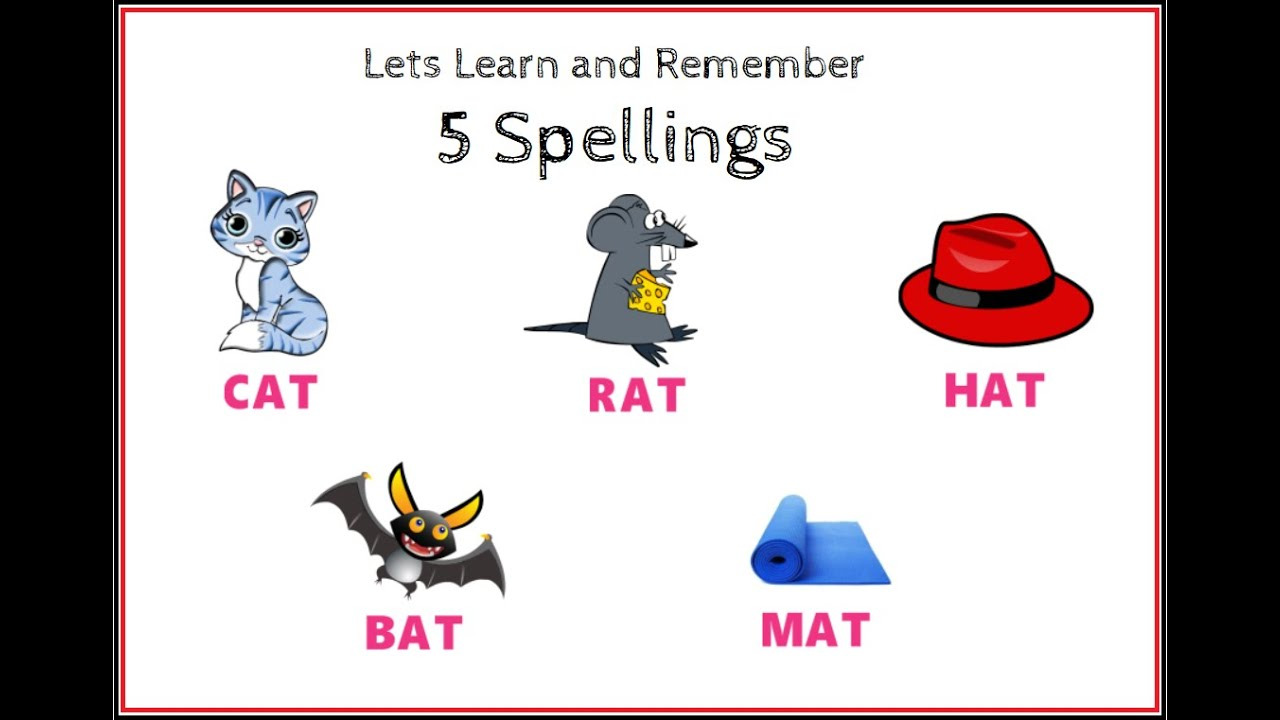
Instructional strategy for teaching CVC words (2)
Elkonin Boxes
Repetition and scaffolding
What type of language develops first?
Listening
Teaching vocabulary words is important. What is one ESSENTIAL factor you need to remember when teaching?
Know the meaning of words
Dysgraphia
challenges with writing
A child holds their pencil incorrectly and is struggling to generate and write sentences. Why?
Cognitive demand on smaller tasks
A child consistently fills a page with random strings of letters whenever asked to write a story. This behavior suggests the child understands that ________.
print carries meaning
What sound topic is this?
logical phonetic spelling
invented spelling (Mk = milk)
Salient and Beginning Sounds
The most prominent sound said in a word. For example, B for baby since lips come together twice.
Salient Sound
Children who are writing with salient sounds are beginning to develop the _______ and ______.
alphabetic principle
letter-sound correspondence
How to encourage through the drawing and scribbling stage?
Point out letters in everyday language
______ and “write.”
Ask to tell about drawings
How to encourage through the letters and letter-like stage?
Initial Blends (isolation of first sounds)
Stretch Sounds (Invented spelling)
_____
Sorts
Sort the following instructional strategy for into Salient (S) and Beginning (B) + Ending Sounds
Sort CVC words (cap,cat and hat, bat)
Enunciate sounds
S - en
B - cvc
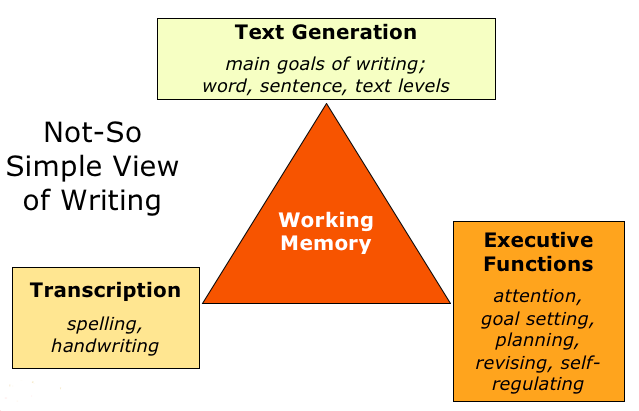
Transcription, Executive Function, and Text Generation and _____ all connect to the key idea that makes writing successful.
working memory
Title -
Improves fine motor skills
Random string of letters used
Gradually move to writing left to right
Scribbling
What number and category does this belong in?
“able to explain to others what the message means, but adults can’t read it”
Scribbling
Title -
Form letters correctly
Invented letters (salient sounds)
Improving Directionality (L-R, U,D)
Emergent
Title -
Spell some hfw
Spell words conventionally, few mistakes
Reread and edit work
Transitional
What number and category does this belong in?
“focus more on writing craft and be able to provide constructive feedback”
Fluent
Strategies for teaching the writing process
Model
Conference and provide feedback
Rubrics and self-evaluations
______
______
examples vs. non-examples
authentic tasks
A 5-month-old makes long vowel-like sounds such as "oooo" and "ahhh" when interacting with caregivers. Which stage of language development is this?
Cooing
A baby is producing mostly vowel sounds but no repeated consonant-vowel combinations. Should you expect babbling yet?
No, this is the cooing stage
A 9-month-old repeatedly says "babababa" and "dadadada" but is not using these sounds to label people or objects. What stage is this?
Babbling
A teacher hears an infant saying "mamama." Does this automatically mean the child understands that "mama" refers to their mother?
No, babbling sounds are often produced w/o specific meaning.
Cooing Age
4-6mo
Babbling Age
4mo - 1 year
One-Word age
1yr-2yr
Telegraph age
2-3 years
A toddler points to a cup and says, "Juice!" What language stage is this?
One-word
A child says "Dog!" whenever they see the family pet. What does this suggest about their language development?
A single word communities a entire message
A 2½-year-old says, "Mommy go work." What stage is this?
Telegraph
Which sentence best represents telegraphic speech?
A. "I would like some juice please."
B. "Me want juice."
C. "Juice."
B misses articles
A student recently arrived from another country. During class, they rarely speak but consistently follow along by watching classmates and responding with gestures. Which stage of second-language acquisition are they likely in?
Preproduction
Preproduction: A teacher asks, "Can you point to the triangle?" The student points correctly but does not answer verbally. Is this appropriate for their stage?
Yes, they use gestures and often point rather than talk
Which question is most appropriate for a student in Early Production?
A. Explain why the character changed.
B. What happened first, second, and third?
C. What color is the car?
C
Short answers
An ELL student says, "Yesterday I went to the store with mom." Which stage best fits, why?
Speech Emergence, simple sentences
T/F - In intermediate proficency stage, a student is comfortable speaking but struggles with complex academic vocabulary.
F
speech emergence
A student explains, "The main character changed because she learned to trust her friends," with only occasional grammar mistakes. Which stage is this?
Interm Prof
Speak complex sentences, comprehend most of what they hear
Interm Prof
What is an important factor that determines if an ELL child has reached advanced fluency?
Understands and uses academic vocabulary with minimal support
Which of the following is an example of a language delay and disorder?
Expressive
teacher writes while students help compose.
Shared Writing
teacher and students take turns writing.
Interactive Writing
They know that print is made of symbols that resemble letters, but they aren't yet matching sounds to letters. Often called the emergent stage of writing.
Letters and Letter Like Forms