Financial Accounting
 Call Kai
 Learn
Learn Practice Test
 Spaced Repetition
 Match
Match Flashcards
 Knowt Play
1/117

There's no tags or description
Looks like no tags are added yet.
Name | Mastery | Learn | Test | Matching | Spaced | Call with Kai |
|---|
No analytics yet
Send a link to your students to track their progress
118 Terms
Definition Accounting
Business transactions that capture and monitor flows of funds and payments, in terms of amount and value
Financial accounting: purpose
external communication
Financial accounting: requirement
mandatory
Financial accounting: stakeholders
external
Financial accounting: regulations
German Commercial Code (GCC)/International Financial Reporting Standards (IFRS)
Financial accounting: period
annual
Financial accounting: enforcement
auditors, regulators
Financial accounting: focus
past economic situation
Financial accounting: scope
company
Financial accounting: areas
financial statement (balance sheet, income statement, etc.)
functions of accounting
documentation
payments (taxes and dividends)
information
documentation function
chronological, systematical and complete recording of business transactions
protection against legal suits
information function
inform stakeholders of the financial status
analysis of financial value; annual profit/loss comparing income and expenses
focus on financial items, no sustainability aspects
internal stakeholder
employees, board of directors, top management
external stakeholders
investors, banks, customers, suppliers, NGOs, government
payment function
annual profit is used to calculate dividends and tax payments
inventory
list of assets and debts
stocktaking
determination of assets and debts
§ 1, 2, 3, 6, GCC
every trader must determine his/her assets and debts at the founding of his/her company and by the end of every accounting period (one year)
§ 242 GCC
all traders must calculate their assets and debts by the start and end of every accounting period in the balance sheet
equity
total assets - total debts = equity stock
assets
structured by liquidity
non current assets (e.g. properties, buildings, machinery)
current assets (e.g. raw materials, supplies, goods)
liquidity status
ratio of current and non current assets
high ratio of current assets preferred
debts
structured by maturity
long-term debts (e.g. bank credit)
short-term debts (e.g. supplier debts)
higher ratio of long-term debts preferred
long-/short-term = more/less than one year
structure inventory
A. Assets
I. Non current assets
II. Current assets
Total Assets
B. Debts
I. Long-term debts
II. Short-term debts
Total debts
C. Equity
opening balance
assets and debts at the start of accounting period
closing balance
assets and debts at the end of accounting period
principle of balanced equity
closing balance year 0 = opening balance year 1
structure balance sheet
left side: assets
A. Non current assets
I. intangible assets (e.g. license, data purchase)
II. property, plant and equipment
III. financial assets
B. Current assets
I. Goods
II. Recievables (e.g. pending payments)
III. Shares
IV. Cash/cash equivalents
Total assets
right side: capital
A. equity
B. Debts
I. long-term debts
II. short-term debts
Total capital
balance sheets must ALWAYS be balanced
Assets = …
capital
non current assets + current assets
Capital =
assets
equity + debt capital
application of funds = …
source of funds
non current + current assets = …
equity + debt capital
assets
equity = …
assets - debt capital
annual profit or loss
calculated by the comparison of equity stocks:
equity stock by the end of the period
(-) initial equity stock at the beginning of the period
(+/-) private drawings/deposits
= annual profit or loss
income statement
collect all expenses and revenues during the business year as changes of equity stock
downsides of the balance sheet
always outdated
source of annual profit/loss is unknown
revenue
total amount of income generated by the sale of goods and services related to the primary business operations
→ increase of equity stock
expenses
total amount of outflow of mone or any form of fortune as payment for an item, service, or other category of costs
→ decrease of equity stock
calculation annual profit/loss via the income statement
total revenues - total expenses = annual profit/loss
balance sheet + income statement = …
financial statement
income statement: total cost method
comparison of revenues and total production expenses for all produced units
recongnize changes in inventory: initial & final stock of finished and unfinished products
cost-type-oriented structure of expenses
preferred by small- to medium-sized firms
income statement: cost of sales method
comparison of revenues and expenses of goods sold
product-oriented structure of expenses
demands more resources
preferred by large firms
income statement (total cost method): structure
(+ / -) increase/decrease of inventories
(-) material expenses
(-) staff expenses
(-) other operating expenses
(+ / -) financial profit/expenses
= annual profit/loss
income statement (total cost method): changes in inventory
increase (amount produced > amount sold): credit side of income statement account; revenue
decrease (amount produced < amount sold): debit side of income statement account; expense)
income statement (cost of sales method): structure
(-) Expenses
(+ / -) Financial profit/loss
= annual profit/loss
Questions for booking transactions
Which accounts are affected
Are stock accounts or profit & loss accounts affected?
Which account increase or decrease?
On which account(s) do I debit and credit?
debit side in transaction posting
left
credit side in transaction posting
right
stock accounts
further structured in asset accounts and liability accounts
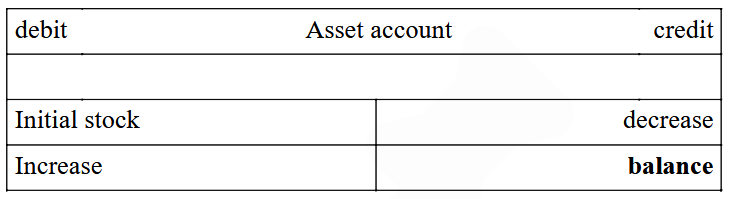
structure asset account
structure liability account
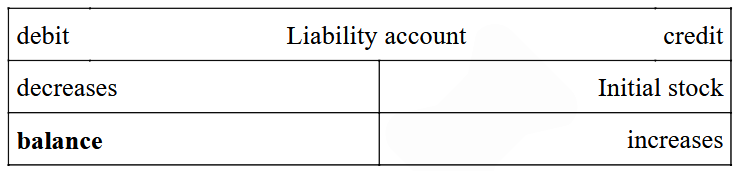
initial stock + increases - decreases =
final stock (balance)
single posting
business transaction affects exactly two accounts
composed posting
business transactions affects more than two accounts
example: deposit of 1000€ from bank account to cash account
cash debit 1000€; bank credit 1000€
changes in equity (categorization)
do not affect income:
private account
private drawing
private deposit
affect income:
income statement account
expenses
revenues
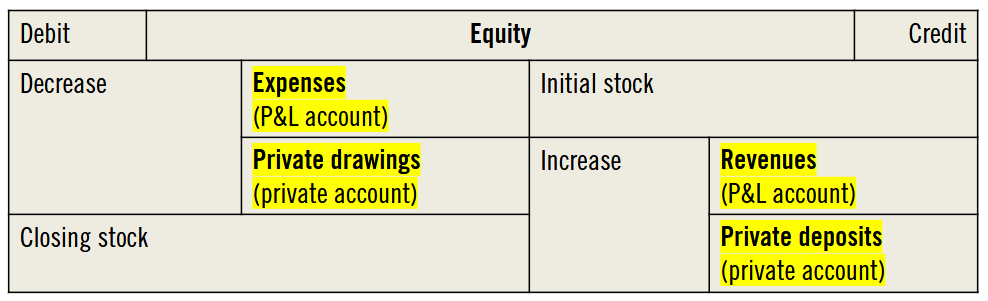
definition expenses
decrease stock of equity
outflows, uses of assets, incurring of liabilities from delivering goods or services
show on the debit side of the income statement account
definition revenues
increase stock of equity
total amount of income generated by sales of products and services
show on the credit side of the income statement account
structure equity account
structure expense account

structure revenue account

equity account with annual profit
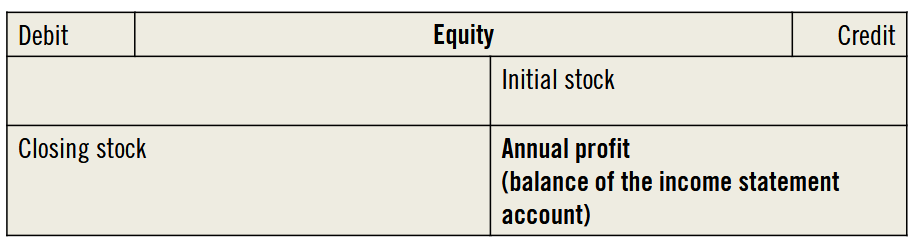
equity account with annual loss
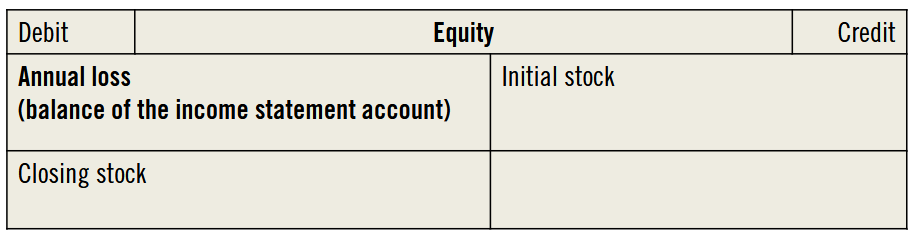
private transactions …
never affect income
must be recorded seperately
private drawings …
decrease equity stock (debit side equity account)
private deposits …
increase equity stock (credit side equity account)
asset swap
balance sheet total remains constant
change in the structure of the assets
example: goods purchase via cash
capital swap
unchanging balance sheet total
change in the structure of equity and/or debt capital
example: conversion of a short-term liability into a long-term liability
balance sheet extension
increase of assets and capital of the same amount
example: goods purchase on credit
balance sheet contraction
decrease of assets and capital of the same amount
example: paying a trade payable account via bank transfer
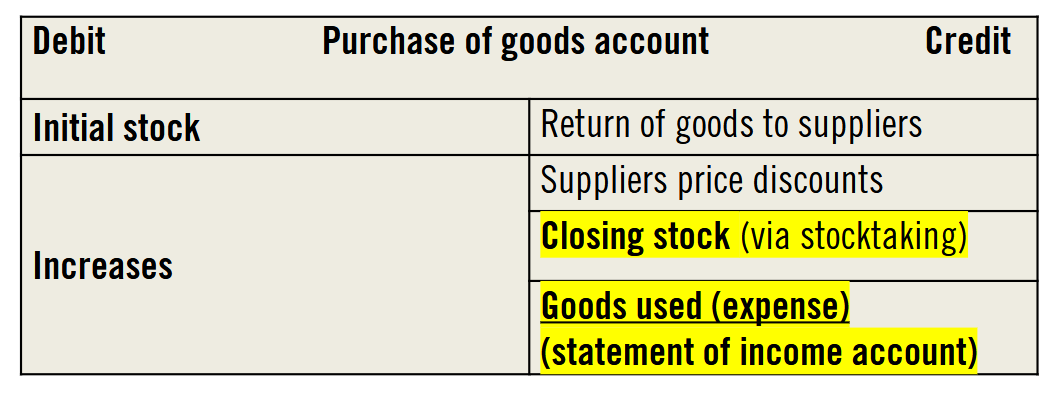
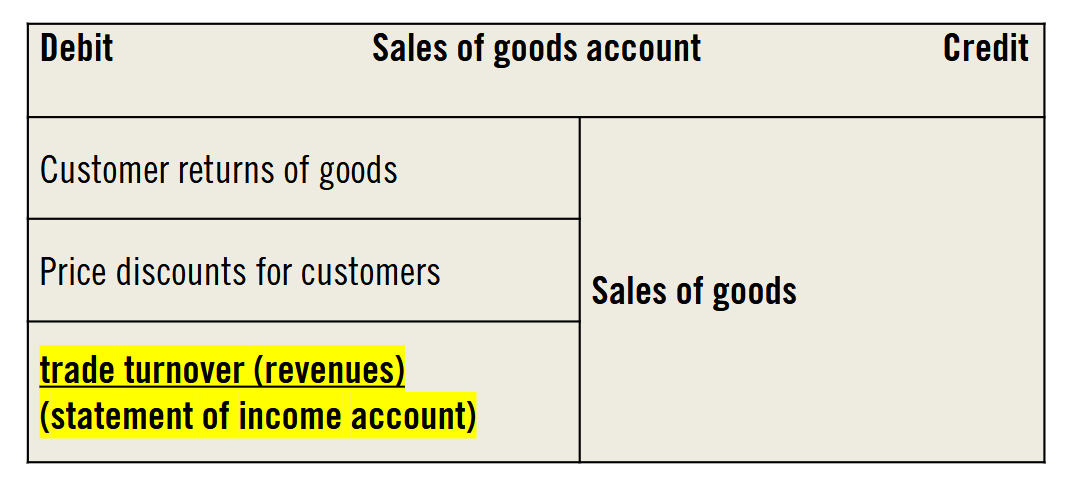
goods account is structured into …
purchase account
sales account
structure purchase of goods account
= asset account
structure sales of goods account
= profit and loss account
gross method
close purchase and sales account directly through the statement of income account
goods used and trade turnover are unbalanced in the statement of income account for better readability of profitability
value added tax (VAT)
= consumption tax
only the consumer pays it
only paid when additional value is created
VAT > input tax
payment charged on the debit side of the VAT account
debt to tax authorities
VAT < input tax
input tax account contains a balance on the credit side
recievable from tax authorities
liability account increases…
on the credit side
asset account increases…
on the debit side
types of stock account
liability account
asset account
types of profit & loss account
revenue account (increase on credit side)
expense account (increase on debit side)
cash discount
deduction from the gross invoice amount for payment within a specific period of time
incentives for early payments
advances from demand
supplier recieves a payment in advance: liability to the customer (+VAT)
advances to supply
customer holds a claim against the supplier amouting to the advance: recievables from the supplier (+input tax)
wage
recieved by workers, based on worked hours/produced quantities
salary
recieved by employees, independent from hours/quantities
compulsory social security expenses
50/50 between employer and employee
pension
health
unemployment
nursing care
casualty insurance
social security expenses employer
compulsory social security expenses
voluntary social security expenses (e.g. wedding/birth benefits)
expenses for pensions
employer withholds … from salary payments
wage tax
church tax
solidarity tax
employee contribution to social security
gross wages and salaries are posted …
on the debit side of the expense account “wages and salaries”
retained tax reductions are posted…
on the credit side of the liability account “charges still to be paid”
transferred by the 10. of the following month
employer contribution to social security is posted…
in the expense account “social security expenses”
raw materials
main component of production (e.g. wood)
asset account
supplies
minor component of production (e.g. glue)
asset account
consumables
supporting role for production (e.g. electricity)
asset account
consumption of materials are posted…
in the according expense account
amortization of assets
spreading the initial cost of an asset over its estimated useful life
depreciation by …
time or performance
use most appropriate method
stay consistent over following periods and for similar assets