15/24: Sleep
 Call Kai
 Learn
Learn Practice Test
 Spaced Repetition
 Match
Match Flashcards
 Knowt Play
1/18

There's no tags or description
Looks like no tags are added yet.
Name | Mastery | Learn | Test | Matching | Spaced | Call with Kai | Chat |
|---|
No analytics yet
Send a link to your students to track their progress
19 Terms
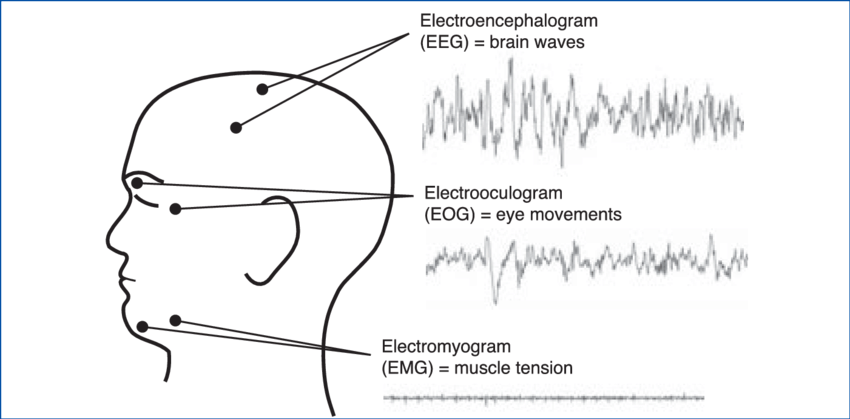
electrophysiological measurements of sleep
Electroencephalogram (EEG) → electrodes placed on scalp, measures brain activity
Electromyogram (EMG) → electrodes placed on chin, measures muscle activity
Electro-oculogram (EOG) → electrodes placed near eyes, measures eye movements
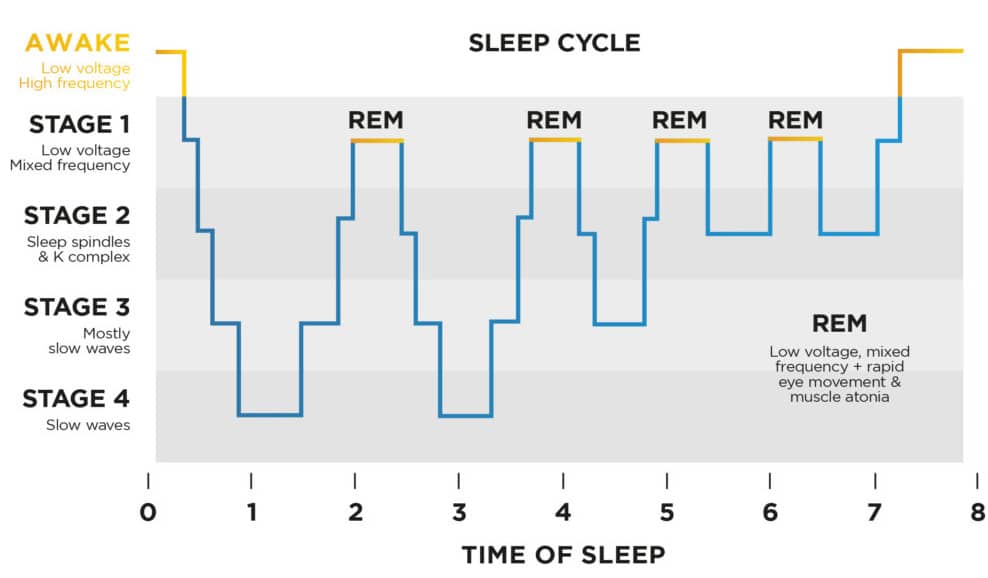
sleep cycle
→ depicted by EEG signals of sleep-related neural activity, in 4 stages:
Beta waves → 13-30 Hz
Prominently occurs during aroused states
Desynchronous activity → high frequency, low amplitude oscillations (periods)
Alpha waves → 8-13 Hz
Prominently occurs during relaxed state
Theta waves → 4-8 Hz
Prominently occurs during earlier stages of sleep
Intermittently occurs in drowsy states
Delta waves → = <4 Hz
Prominently occurs during deepest stages of sleep
Synchronous activity → low frequency, high amplitude oscillations (periods)
rapid eye movement sleep
REM sleep, paradoxical sleep → place to escape reality
Characteristics:
Rapid eye movements
Dreaming
Desynchronized EEG activity (similar to beta waves)
Muscle paralysis (besides from some sleep twitches)
↑ Cerebral blood blow
↑ Oxygen consumption
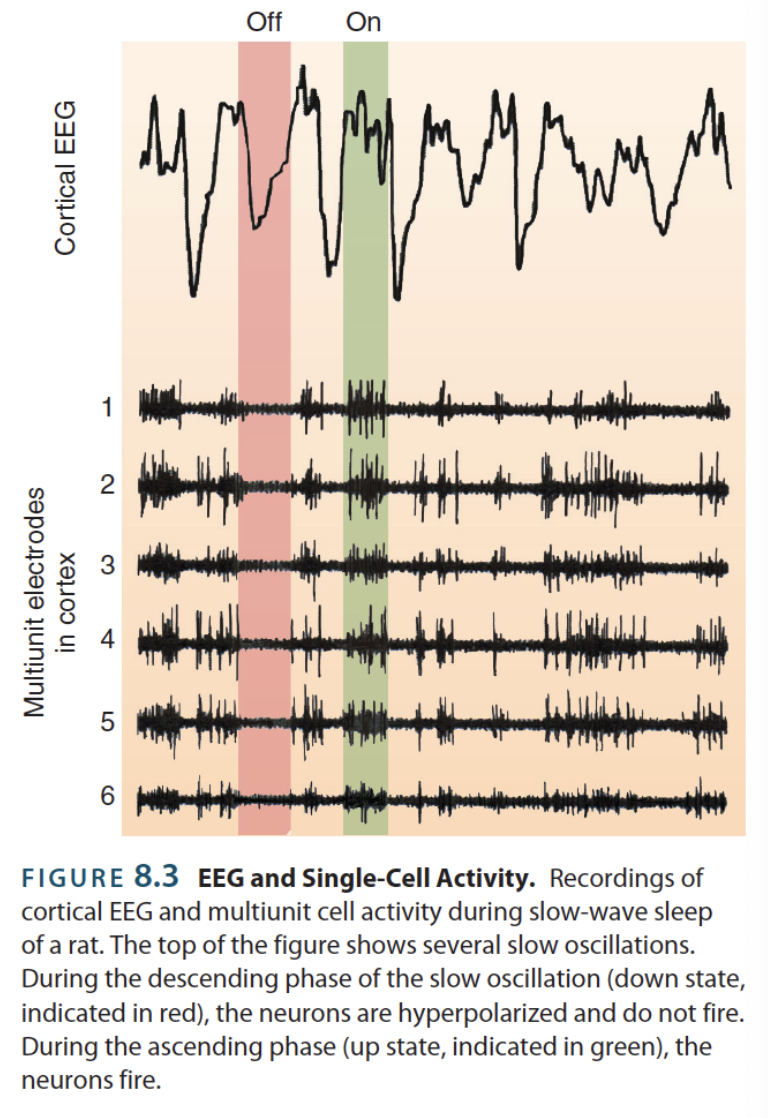
slow-wave sleep
deep sleep → stage 3/4, non-rem sleep, corresponding to neural waves with low frequency and low amplitude oscillations
Reflects synchronized burst patterns of APs in brain nuclei
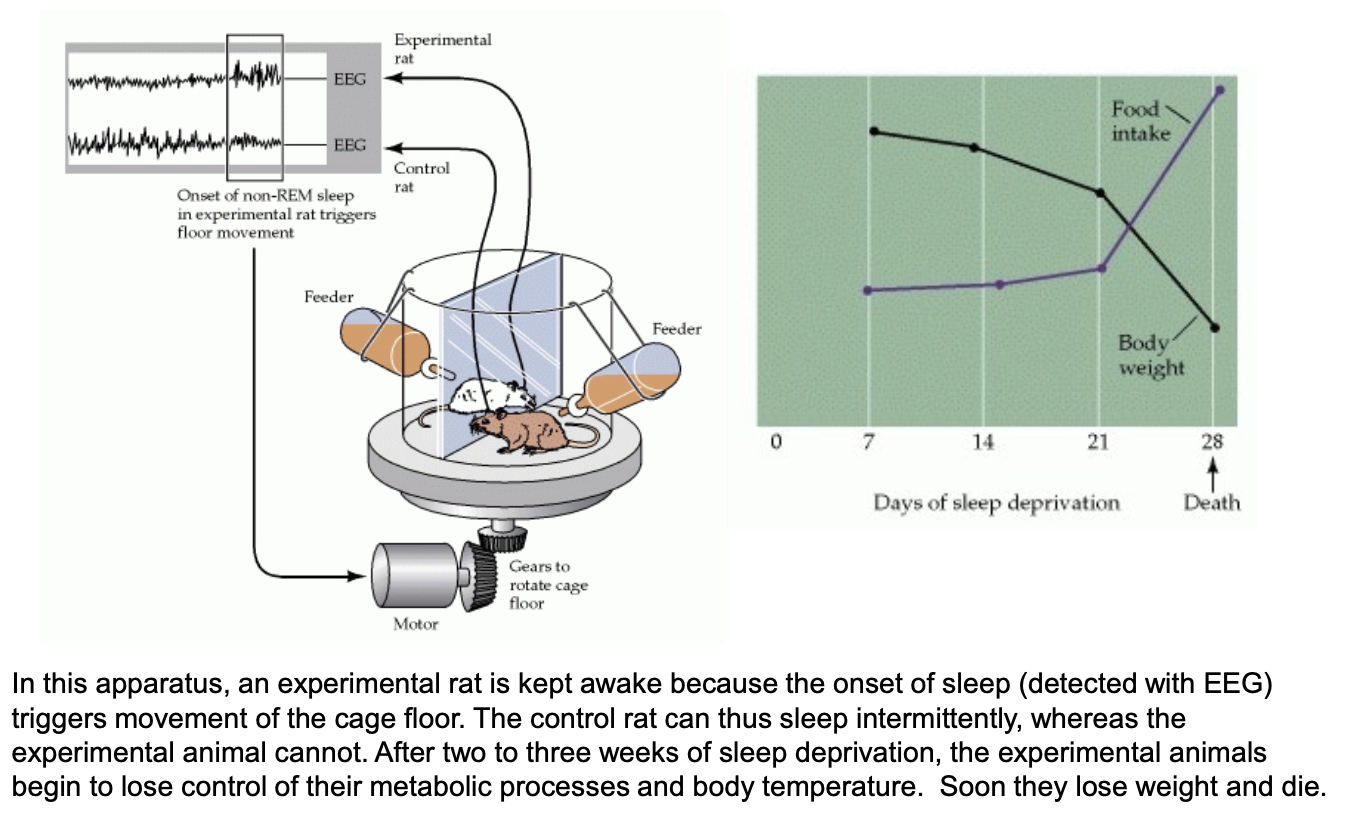
sleep deprivation studies
WHY IS IT ALWAYS RODENTS T _ T
Originally Revealed muscular atonia effect of REM
Sleep loss leads to: Death. Or any other negative symptom you can imagine, sooner or later. Too lazy to write them all cmon now…
Takeaway: Don’t enable chronic sleep loss. Avoid microsleeps, sleep disruptions, or sleep “debts” to maintain proper health — prioritize sleep hygiene.
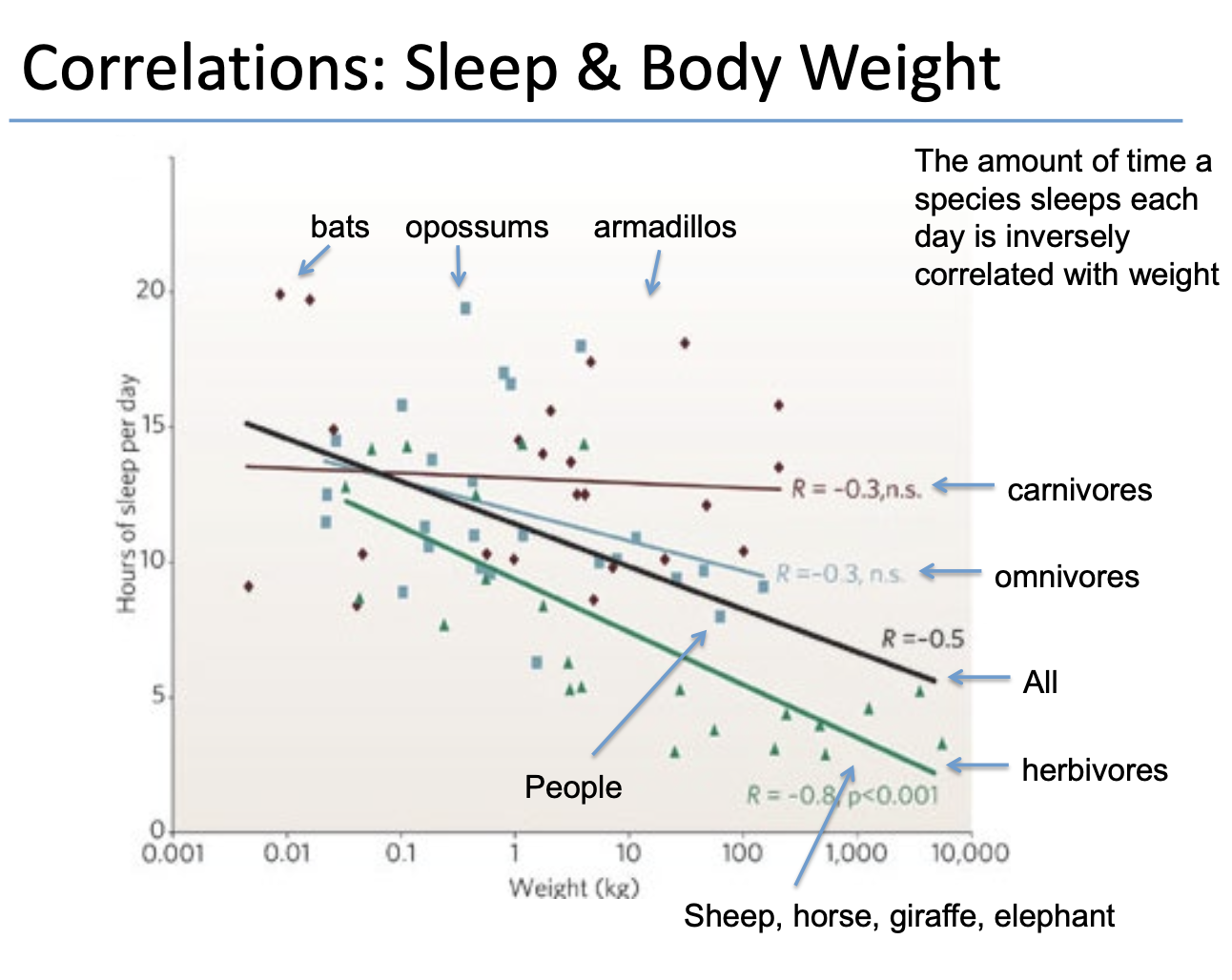
animal sleep
→ varies from humans, but seemingly a universal process (i.e., all animals may sleep)
Variations:
Duration (amount of sleep)
Length of sleep cycles
Ratio of REM:NREM
Status of predation
Predators → indulge in longer, uninterrupted sleep
Prey → sleep more often, but for shorter
Body weight requirements
Notable variation examples:
Humans
Adults → ~7-hour periods (25% REM, 75% NREM)
Newborns → ~16-hour periods (50% REM, 50% NREM)
Dolphins → “sleep” between 2 cerebral hemispheres (i.e., one can be awake while the other rests)
sleep metabolism
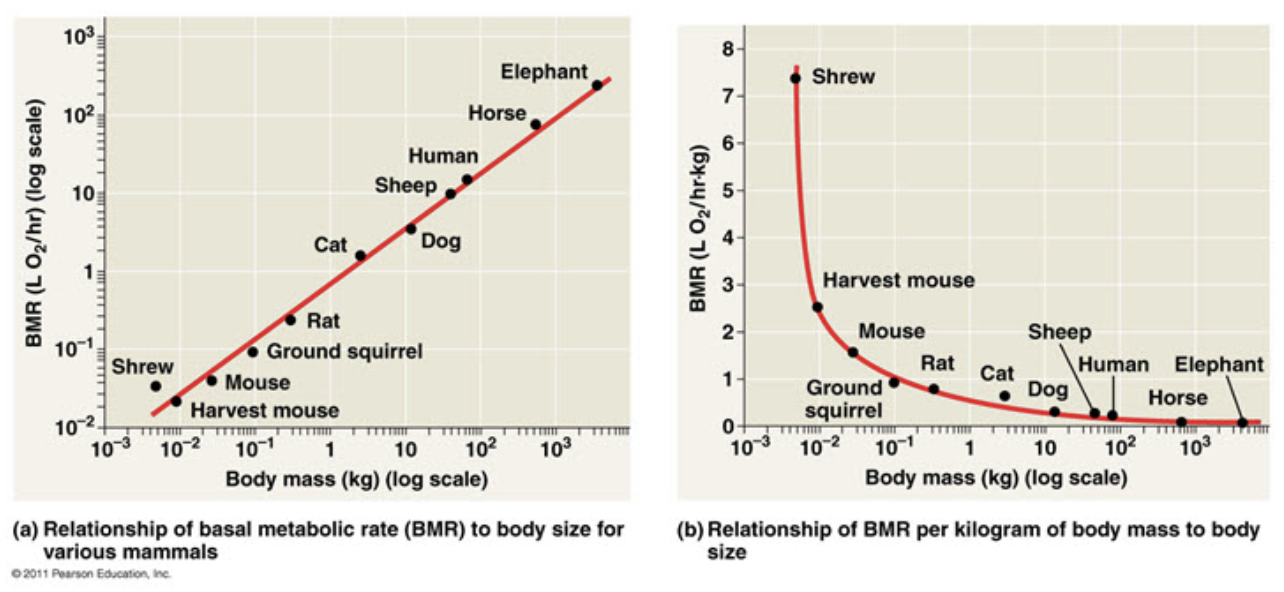
→ considered relationships revealed from animal sleep studies
Characteristics of larger, more complex animals:
↑ Basal (overall) metabolic rate = ↑ Body mass
BUT
↑ Body mass = ↓ Metabolic rate per kg (cellular units)
THEREFORE
↓ Metabolic rate per kg (cellular units) = ↓ Heart rate = ↑ Life span
+
↑ Length of sleep cycles (restoration)
Hypothesized to be related to economies of scale related to heat (energy) savings and nutrient-waste distribution networks
main theories for animal sleep
Recover from physical or mental exhaustion (energy maintenance)
Theoretically, this represents the tendency to have an equal ratio between energy-expensive activity and sleep recovery, but this isn’t particularly reliable;
(Lack of) empirical evidence:
Sudden changes in activity don’t correlate with amount of sleep
Caloric difference between sedentary state and sleeping for the same amount of time is negligible (~110 calories)
Brain processing (improve cognition - learning & memory)
Subconscious period give the brain the opportunity to reorganize data and archive memories, which isn’t always done efficiently while awake (synaptic modifications and inter-/intracellular processing does occur in sleep)
Empirical evidence: Amount of slow-wave + REM sleep correlates w/ improved cognition
Waste removal
Based on the understanding that amount of sleep often correlates with body size
Sleep gives the critical opportunity to do efficient metabolic processes
Empirical evidence:
[ Proteins ] in the brain ↓ from sleep but not wakefulness
Glial cells (astrocytes) seems to lose water weight and shrink, ↑ interstitial space/extracellular solution + ↑ CSF diffusion
Adaptation of bigger animals (who may benefit from economy of scale)
![<ol><li><p><strong>Recover from physical or mental exhaustion (energy maintenance)</strong></p><ul><li><p>Theoretically, this represents the tendency to have an equal ratio between energy-expensive activity and sleep recovery, but this isn’t particularly reliable;</p></li><li><p><u>(Lack of) empirical evidence</u>: </p><ul><li><p>Sudden changes in activity don’t correlate with amount of sleep</p></li><li><p>Caloric difference between sedentary state and sleeping for the same amount of time is negligible (~110 calories)</p></li></ul></li></ul><p></p></li><li><p><strong>Brain processing (improve cognition - learning & memory)</strong></p><ul><li><p>Subconscious period give the brain the opportunity to reorganize data and archive memories, which isn’t always done efficiently while awake (synaptic modifications and inter-/intracellular processing does occur in sleep)</p></li><li><p><u>Empirical evidence</u>: Amount of slow-wave + REM sleep correlates w/ improved cognition</p><p></p></li></ul></li><li><p><strong>Waste removal</strong></p><ul><li><p>Based on the understanding that amount of sleep often correlates with body size</p></li><li><p>Sleep gives the critical opportunity to do efficient metabolic processes</p></li><li><p><u>Empirical evidence</u>:</p><ul><li><p>[ Proteins ] in the brain ↓ from sleep but not wakefulness</p></li><li><p>Glial cells (astrocytes) seems to lose water weight and shrink, ↑ interstitial space/extracellular solution + ↑ CSF diffusion</p><ul><li><p>Adaptation of bigger animals (who may benefit from economy of scale)</p></li></ul></li></ul></li></ul></li></ol><p></p>](https://knowt-user-attachments.s3.amazonaws.com/5fa6039c-8613-4447-ba95-c5ca638db9d2.png)
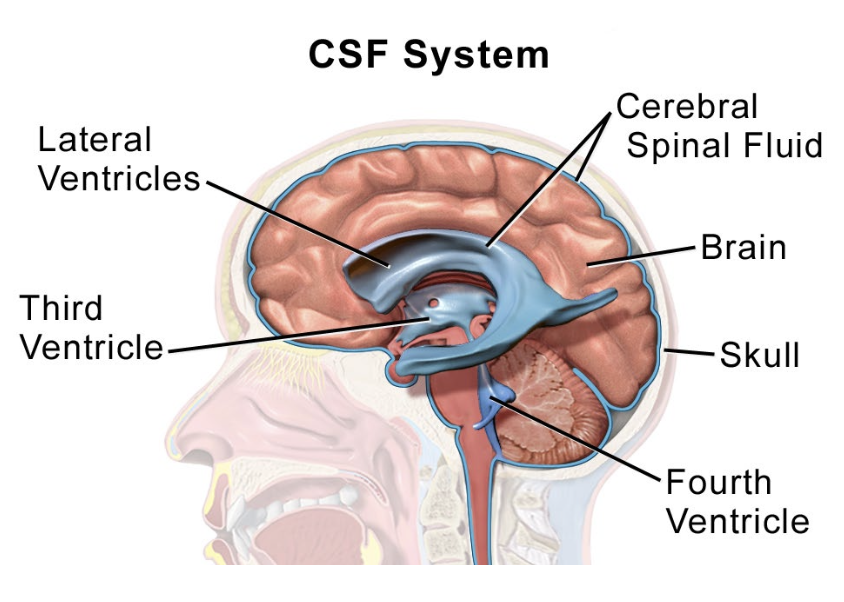
glymphatic system
→ refers to the process of cerebrospinal fluid (CSF) diffusing in the brain and becoming the extracellular solution that surrounds nervous cells (neurons) that ALSO clears neuronal waste products from the interstitial space
Supposedly pops off during sleep : D
Specialized from the lymphatic system, which clears away cellular waste from all other somatic cells
circadian rhythms
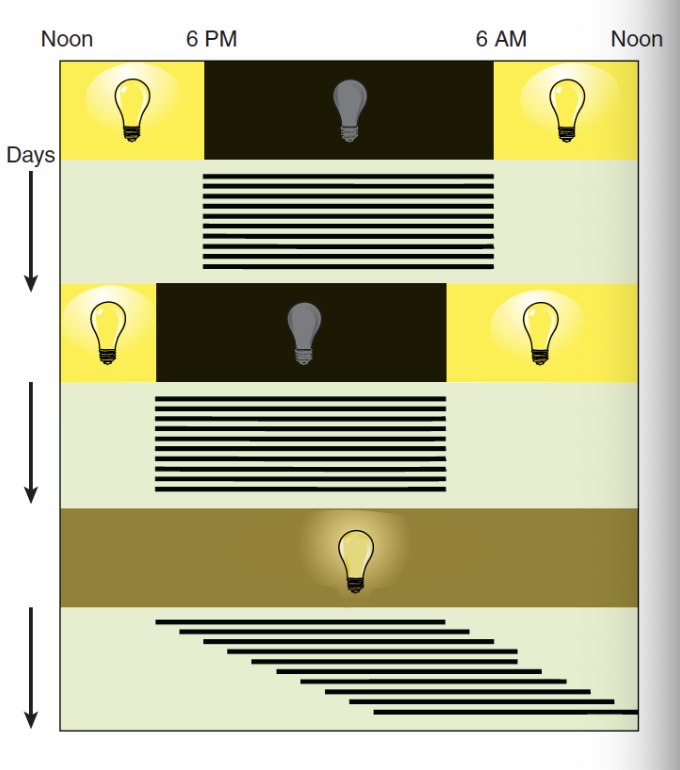
→ behavioural and physiological changes that function on a 24-hour cycle; sleep-wake cycle
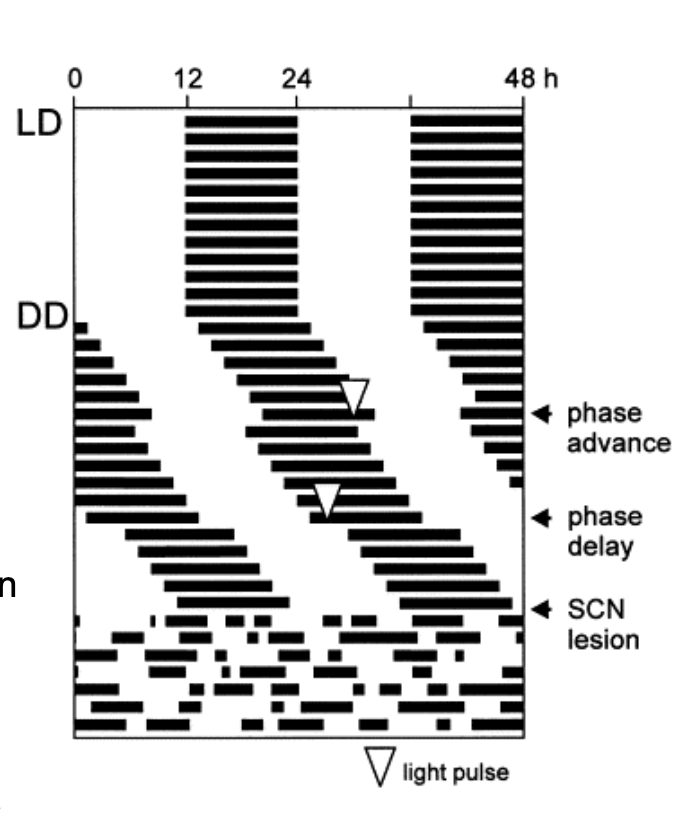
Controlled by internal biological clocks that are normally adjusted to daily variation in light levels (but still able to function in the absence of these light levels)
However, continuous lack of variation in light levels can significantly skew the cycle
suprachiasmatic nucleus
SCN → body’s master clock; part of the hypothalamus that regulates circadian rhythms
Lesioning results in dramatic alterations to circadian rhythms
ex. Sleep-wake hormonal secretions
ex. Sleep cycles
biological clocks
→ refers to the 2 interlocked negative feedback loops operating SCN neurons:
Advanced sleep phase syndrome → mutation of the per2 gene, causing a 4-hour advance
Delayed sleep phase syndrome → mutation of the per3 gene, causing a 4-hour delay
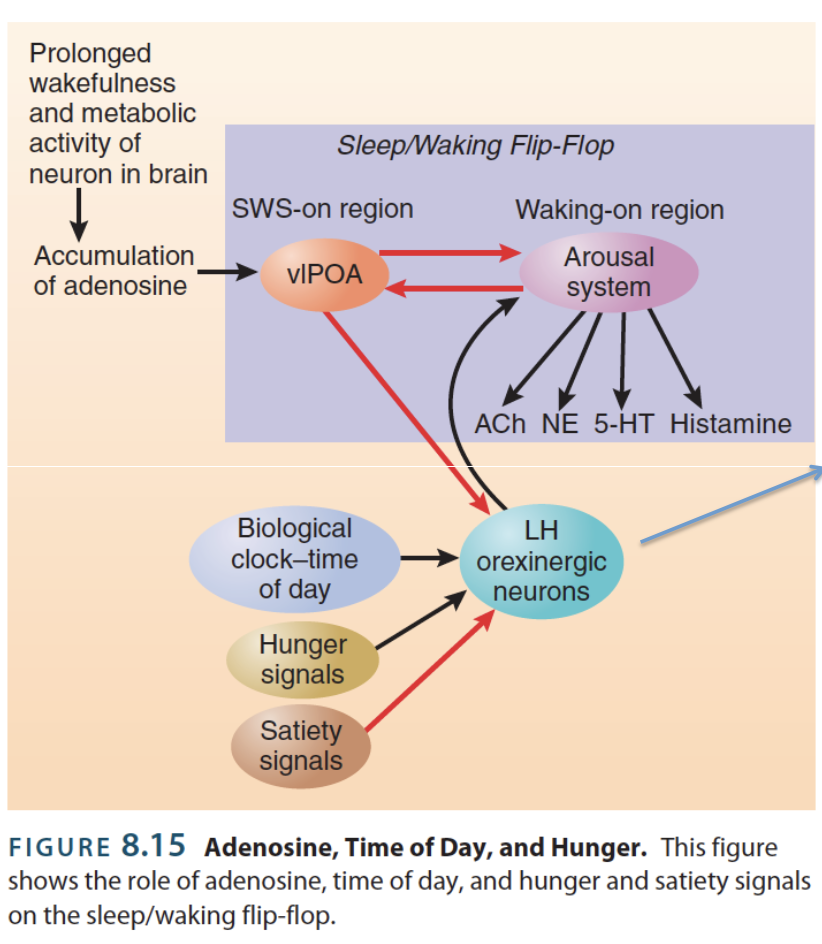
sleep-promoting molecule hypothesis
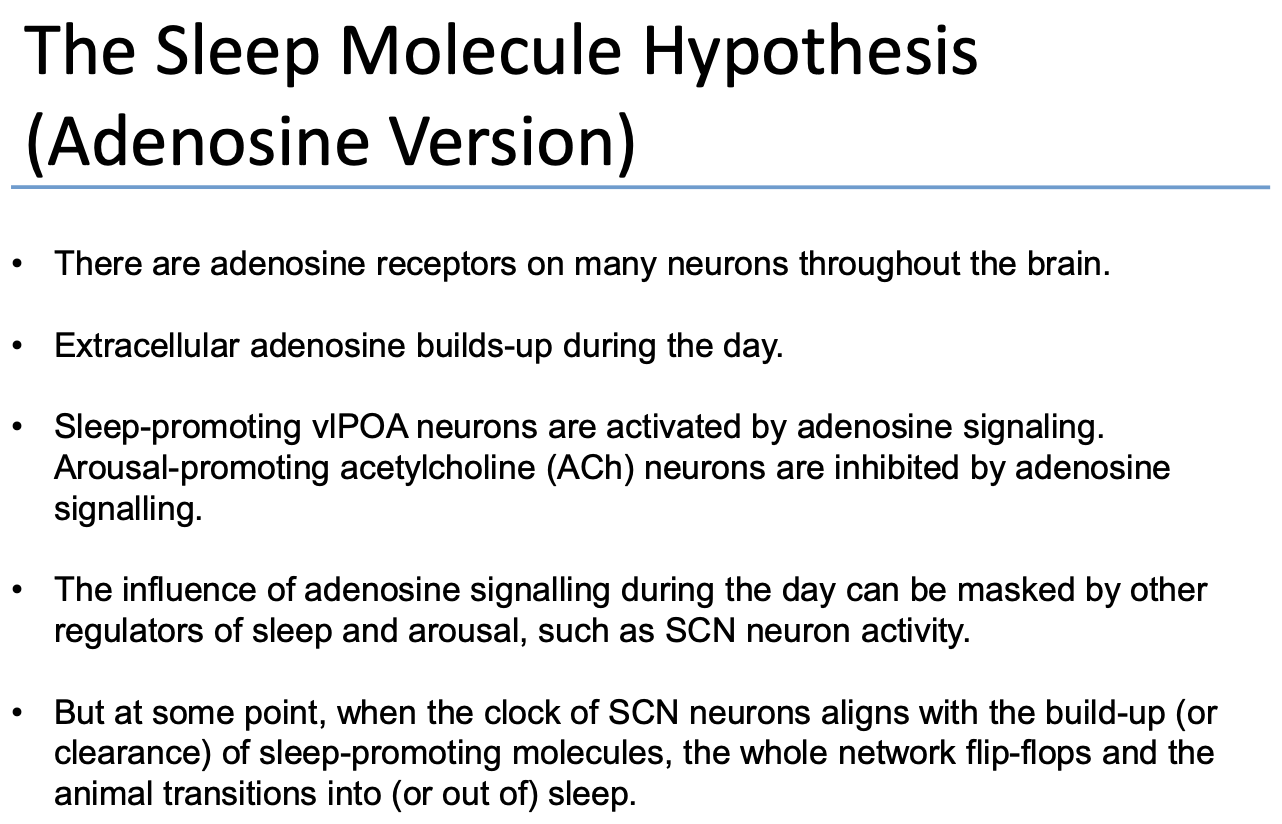
→ consistent with the waste removal theory of sleep — molecules promote drowsiness and sleep at ↑ [ ]
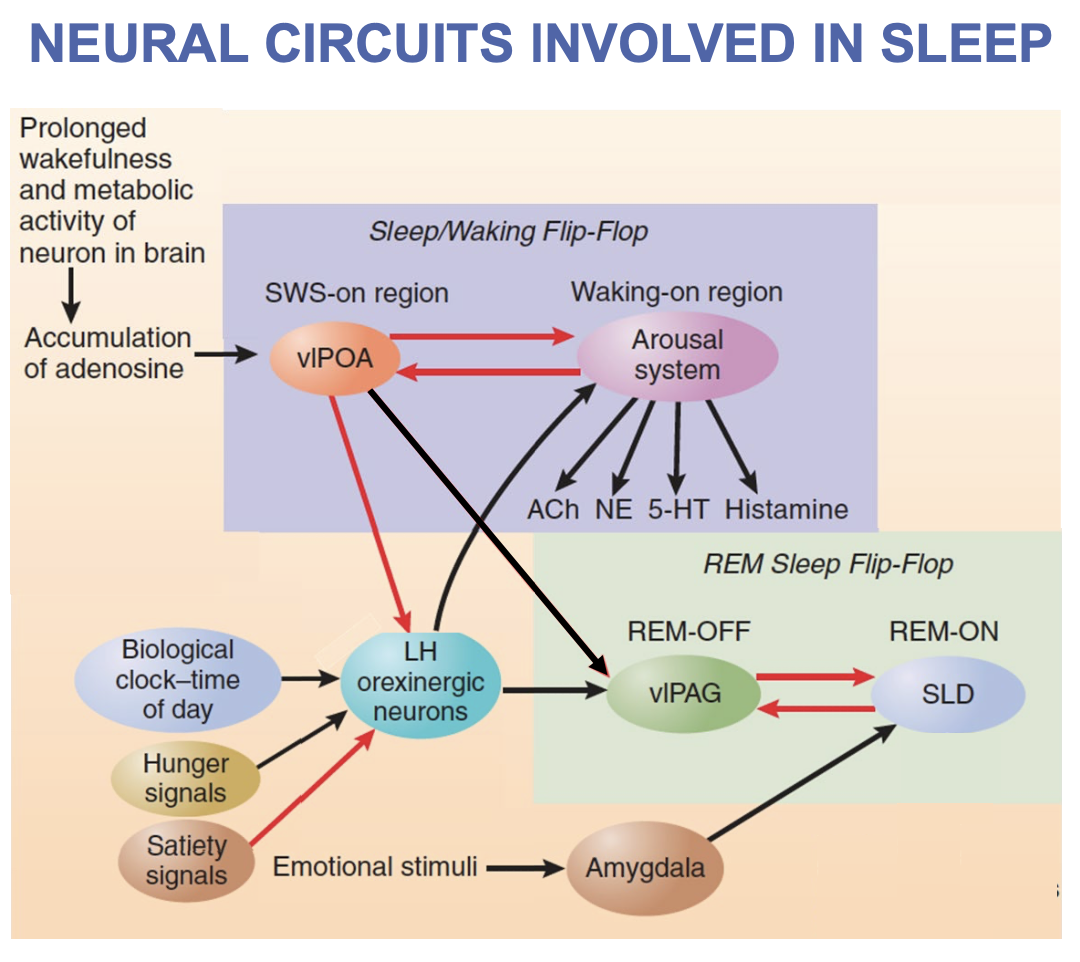
[ Adenosine molecules (part of ATP) ] ↑ during waking hours + accumulate w/ sleep deprivation
Drowsiness and sleep quality (duration & depth) are strongly modulated by adenosine receptor signaling
Finding: Adenosine is 1 of many sleep-promoting molecules (whose cumulative effect of occurs after some duration of wakefulness)
Caffeine is an agonist that combats this effect
wake-promoting molecules
→ display ↑ activity during periods of arousal, alertness, and wakefullness (therefore ↓ activity during sleep)
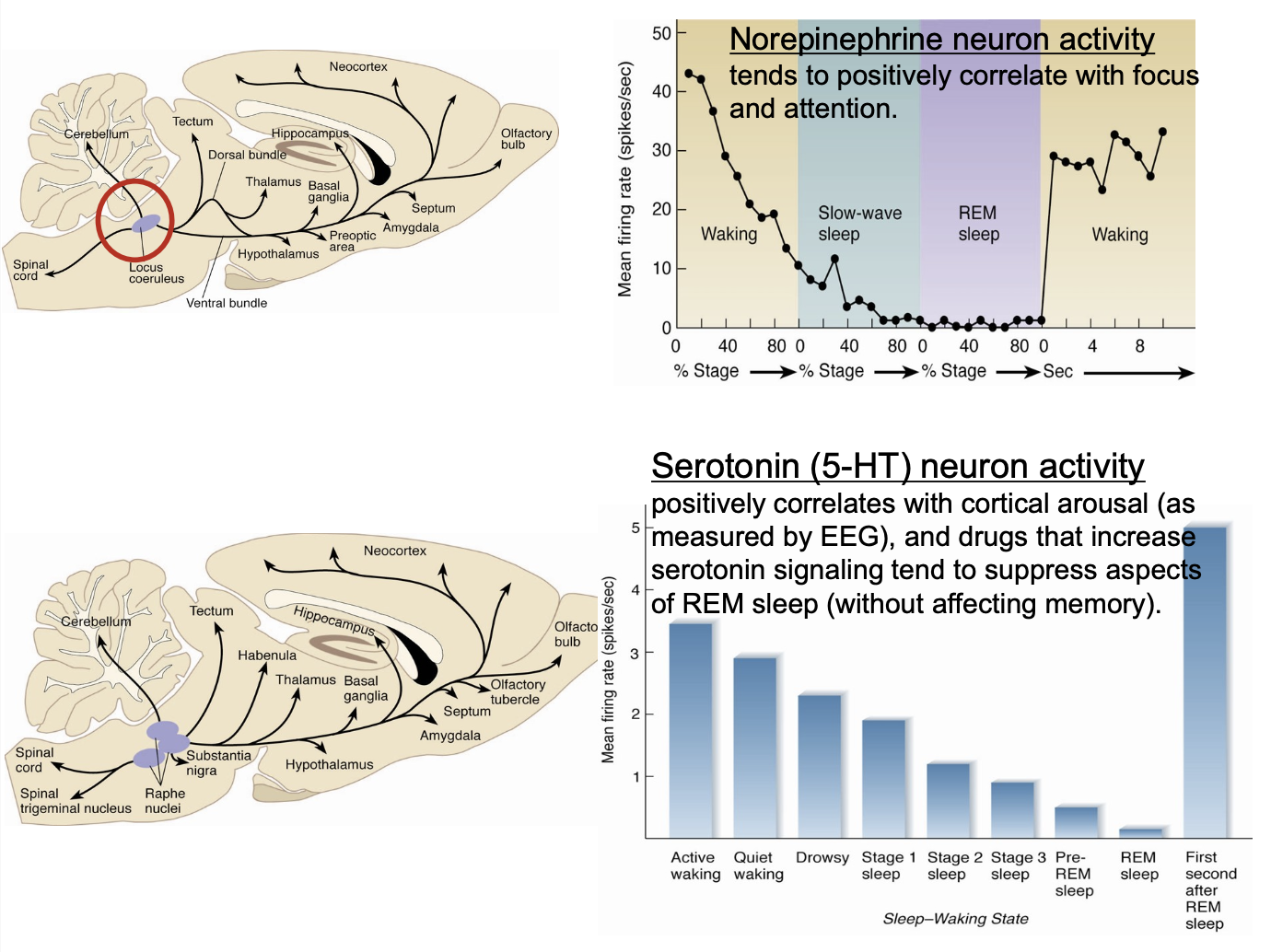
Acetylcholine
Hindbrain:
Serotonin (from raphe nuclei)
Norepinephrine (from locus coeruleus)
Hypothalamic:
Orexin
Histamine
ventral lateral preoptic area
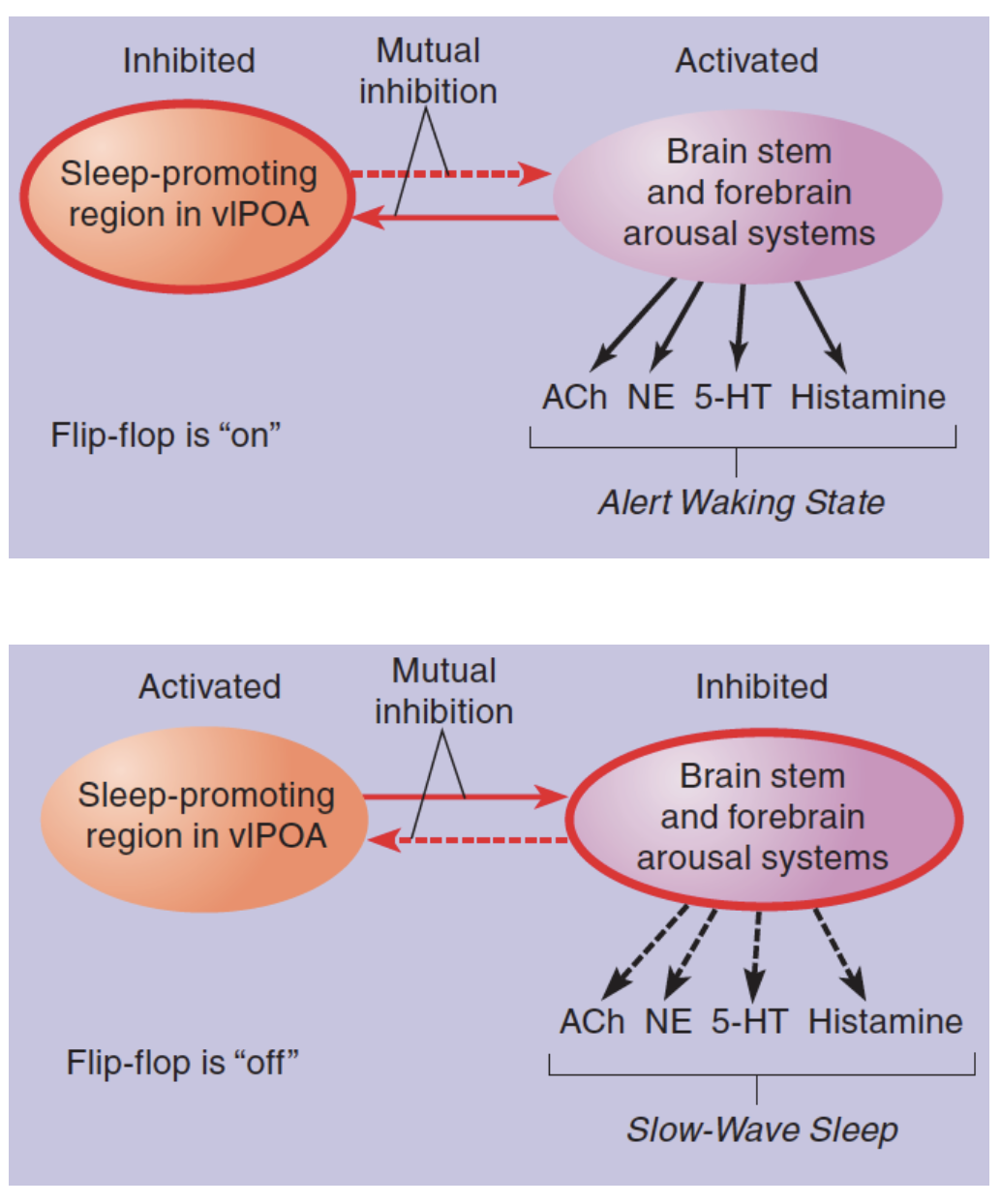
vlPOA → associated neurons inhibit wake-promoting neurons, promoting sleep
Sleep-wake flip-flop circuit → characterized by reciprocal inhibition (area receiving inhibitory input comes from the same region it’s inhibiting), such that both regions cannot be active at the same time + the transition is fast
In English: There’s biological/physiological grounding for the reason you can’t be awake and asleep at the same time + why you properly wake up or fall asleep almost instantly
Direct interventions:
Electrical stimulation can facilitate drowsiness and perhaps sleep
Lesions suppress sleep and cause insomnia
orexin
hypocretin → peptide produced by neurons in the lateral hypothalamus (LH) which promotes wakefulness
Conscious motivation to remain awake will activate associated neurons;
Most forms of narcolepsy associated to a lackthereof
Autoimmune destruction usually occurs in adolescence or young adulthood
narcolepsy
→ rare sleep disorder characterized by periods of excessive daytime sleepiness and/or irresistible urges to sleep
Significant symptoms:
Sleep paralysis → paralysis associated to REM (or the lighter stages of sleep)
Often accompanied by vivid, dream-like hallucinations
Cataplexy → complete muscle paralysis occurring in wake
Often precipitated by strong emotional reactions or sudden physical effort
insomnia
→ characterized by difficulty falling asleep after going to bed and/or after awakening during the night — being ass at sleeping
Affects 25% of population occasionally, 9% chronically
Extreme versions (leading to death):
Fatal familial → involves progressive worsening leading to hallucinations, delirium, confusion, etc.
Sporadic fatal → associated with progressive neurodegeneration around the thalamus, hypothalamus, and/or brainstem
non-REM parasomnias
→ characterized by the brain’s confusion with transitioning between sleeping and waking states
Sleep- “activities” (-walking, -talking, -groaning, -crying, -eating, -masturbating, -teeth grinding, etc.)
Tend to be prevalent in youth
Episodes can last seconds or much longer
State of activity can be induced (due to biological or pharmacological means)
REM-sleep behaviour disorder → neurological disorder in which the person does not become paralyzed during REM sleep, thus, they can act out their dreams
Appears to have some issue w/ neurodegeneration disorders or some genetic component
Sleep terrors → characterized by overwhelming feelings of terror upon waking
Panic, screaming, bodily harm, and/or rash actions are common symptoms
Patients usually have little-to-no recollection of the experience after it passes (they usually find out from someone else)
Prevalent in PTSD patients