BIO 226 - case study samples (CH 22)
 Call Kai
 Learn
Learn Practice Test
 Spaced Repetition
 Match
Match Flashcards
 Knowt Play
1/23

There's no tags or description
Looks like no tags are added yet.
Name | Mastery | Learn | Test | Matching | Spaced | Call with Kai | Chat |
|---|
No analytics yet
Send a link to your students to track their progress
24 Terms
A worker in a day-care center in eastern North Dakota becomes ill with fever, rash, headache, and abdominal pain. The patient has a precipitous clinical decline and dies on the first day of hospitalization. Diagnosis is confirmed by Gram staining of cerebrospinal fluid. What disease is causing this?
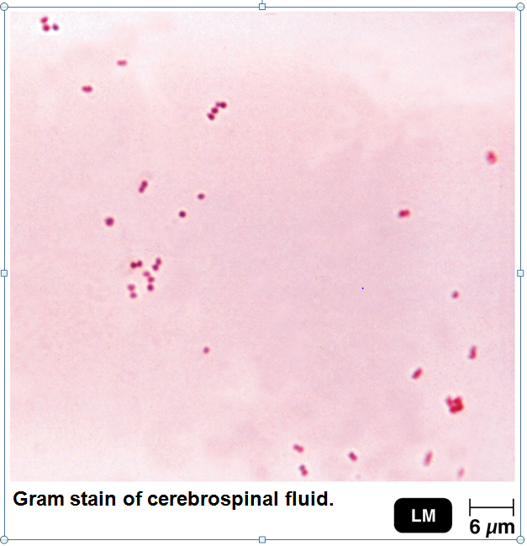
Meningococcal meningitis
A 58-year old lawyer, Peter, presents in the emergency room with his jaw feeling weird, a headache, irritability, generalized muscle pain and uncontrollable back spasms. He has become very restless and worried because he has had the back spasms all through his court case that afternoon and they became extremely painful. In his history, the lawyer states that he has a very busy practice. He is on medication for high blood pressure (beta blocker) and has mild asthma. He injured himself about 10 days earlier, puncturing his left arm from an old barn nail. The wound has produced moderate quantities of pus, but he has it wrapped up. When asked, he said he was immunized to everything as a kid. The wound was sampled for microscopic examination and showed Gram positive rods. The back appears to have very tight contractions and spasms. The patient is in obvious agonizing pain.
What is your diagnosis here? (Disease and causative agent name)
Tetanus
clostridium tetani
A 42-year-old male presented to the emergency department with a 24-hour history of progressive blurred vision, double vision (diplopia), drooping eyelids (ptosis), and difficulty swallowing (dysphagia), followed by descending symmetrical muscle weakness in the upper extremities and severe dry mouth. The patient attended a family gathering two days prior and consumed home-canned green beans. Other family members who did not eat the green beans remained asymptomatic.
What is your diagnosis here? (Disease and causative agent name)
Botulism
Clostridium botulinum
A 9-wek-old infant presents with a 10-day history of constipation followed by sudden difficulty breastfeeding, weak cry, and loss of suck and gag reflexes. Developed sluggish pupillary light reflexes and a symmetric, descending flaccid paralysis (weakness moving downward from the head). Lived near a farm construction area with potential exposure to environmental dust spores; no honey ingestion was reported.
What is your diagnosis here? (Disease and causative agent name)
Botulism
clostridium botulinum
A 60-year-old male (or adult patient) presenting with longstanding, progressive, erythematous, or hypopigmented skin plaques on the extremities and trunk. Last travel reported 13 years ago. Reported loss of heat sensation on affected patches of skin and enlarged/bulging peripheral nerves on arms.
What is your diagnosis here? (Disease and causative agent name)
Leprosy
mycobacterium leprae
A 54-year-old male landscaper from Florida presents with progressive, widespread, painless erythematous (red) patches, papules, and coalescing nodules on the extremities, face, and trunk, accompanied by symmetric peripheral sensory loss and nerve thickening. The only travel he can recall is moving residences from Texas over a decade ago.
What is your diagnosis here? (Disease and causative agent name)
Leprosy
mycobacterium leprae
A 14-moth-old male presents with a two-day history of high fever, irritability, poor feeding, and recurrent vomiting, followed by lethargy and a stiff neck. Upon physical examination showing positive Kernig and Brudzinski signs, bulging anterior fontanelle. There is an included history of incomplete routine immunizations. The gram stain from the lab shows gram-negative coccobacilli.
What is your diagnosis here? (Disease and causative agent name)
Hib meningitis
haemophilus influenza type b
A 58-year-old man presents to the emergency department with a three-day history of worsening throbbing headache, high fever (39.2°C), and acute confusion.Severe headache, high fever, neck stiffness (meningismus), and lethargy. Recent episode of acute otitis media (middle ear infection) two weeks prior, which resolved without antibiotics. No history of pneumococcal vaccination. Positive Kernig’s and Brudzinski’s signs, indicating meningeal irritation. Oriented only to person, not to time or place. Lumbar puncture was preformed and sent to the lab, showing a gram stain with gram-positive lancet-shaped diplococci.
What is your diagnosis here? (Disease and causative agent name)
Pneumococcal meningitis
streptococcus pneumoniae
An 8-week-old female infant presents with limpness, sudden onset of pallor (pale skin), recurrent vomiting, fever, and peripheral cyanosis ("blue feet" indicating poor perfusion or vascular compromise). Colony smears on blood agar indicate gram-positive cocci
What is your diagnosis here? (Disease and causative agent name)
Group B streptococci
streptococcus agalactiae
A 19-year-old college freshman living in a crowded dormitory develops a sudden high fever, severe headache, stiff neck, nausea, and vomiting. Within several hours, the patient becomes confused and develops a rapidly spreading red-purple rash across the extremities. A CSF sample demonstrates Gram-negative diplococci.
What is your diagnosis here? (Disease and causative agent name)
Meningococcal meningitis
Neisseria meningitidis
A 72-year-old man develops fever, headache, stiff neck, nausea, and altered mental status. CSF Gram staining reveals Gram-positive diplococci that are alpha-hemolytic on blood agar. The physician notes that this is currently one of the most common and severe forms of bacterial meningitis.
What is your diagnosis here? (Disease and causative agent name)
Pneumococcal meningitis
streptococcus pneumoniae
A 3-month-old infant is brought to the hospital with high fever, lethargy, poor feeding, and difficulty breathing. The infant becomes floppy and unresponsive. The parents report that the pregnancy and delivery were uncomplicated, but the mother had not been screened for a certain bacterial infection during pregnancy.
The organism is a Gram-positive, catalase-negative coccus and is a major cause of meningitis and sepsis in newborns
What is your diagnosis here? (Disease and causative agent name)
Group B streptococcus
streptococcus agalactiae
A 7-year-old child develops sudden fever, headache, stiff neck, vomiting, and sensitivity to light. The child rapidly progresses to seizures and coma. CSF Gram stain reveals Gram-negative coccobacilli.
The physician asks whether the child has received the routine childhood vaccine that protects against this organism.
What is your diagnosis here? (Disease and causative agent name)
Hib meningitis
Haemophilus influenza type B
A 68-year-old man develops headache, fever, stiff neck, confusion, and nausea several weeks after initially experiencing respiratory symptoms. He reports that he frequently cleans an old chicken coop and has extensive exposure to bird droppings.
The organism is a yeast acquired by inhalation and is capable of spreading from the lungs to the CNS. There is no person-to-person transmission
What is your diagnosis here? (Disease and causative agent name)
Cryptococcus
cryptococcus spp.
A previously healthy 17-year-old goes swimming in a warm freshwater lake during the summer. About one week later, they develop severe headache, fever, nausea, vomiting, and stiff neck. Within another day, the patient develops confusion, hallucinations, seizures, and loss of balance. The disease progresses extremely rapidly.
Testing reveals motile amoebic trophozoites in CSF.
What is your diagnosis here? (Disease and causative agent name)
PAM (primary amebic meningoencephalitis)
naegleria fowleri
A 45-year-old immunocompromised patient develops a slowly progressive neurological illness. Over several weeks, the patient develops headache, fever, confusion, seizures, weakness, and problems with speech and vision. Imaging reveals lesions in the brain.
The patient reports having recently developed several breaks in the skin while working outdoors around soil and freshwater
What is your diagnosis here? (Disease and causative agent name)
GAE (granulomatous amebic encephalitis)
Acanthameoba + balamuthia
A 34-year-old man steps on a rusty nail while working outside. He cleans the wound but does not seek medical attention. About a week later, he develops painful muscle stiffness beginning with lockjaw. His facial muscles contract into a characteristic grin, and eventually he develops severe muscle spasms that interfere with breathing.
The causative organism is an endospore-forming, obligate anaerobic Gram-positive rod.
What is your diagnosis here? (Disease and causative agent name)
Tetanus
clostridium tetani
A family eats home-canned vegetables that were improperly preserved. Approximately 36 hours later, several family members develop nausea followed by blurred/double vision, drooping eyelids, difficulty swallowing, and progressive descending muscle weakness. None of them has a fever.
One patient eventually develops respiratory failure.
What is your diagnosis here? (Disease and causative agent name)
Botulism
clostridium botulinum
A 4-month-old infant is brought to the hospital with constipation, poor feeding, lethargy, weak muscle tone, and difficulty controlling their head. The parents report that they recently began giving the infant small amounts of honey for what sounded like a hoarse cough.
The physician suspects that the organism has colonized the infant's intestines because the infant's normal intestinal flora is not yet well established.
What is your diagnosis here? (Disease and causative agent name)
Botulism
clostridium botulinum
A 9-year-old child develops fever, sore throat, headache, nausea, and stiff neck. Over the next several days, the child develops severe muscle pain and sudden flaccid paralysis of the limbs. The child also has difficulty swallowing and breathing.
The physician explains that the pathogen can enter the CNS and destroy motor cells, although fewer than 1% of infections progress to paralysis.
What is your diagnosis here? (Disease and causative agent name)
Polio
poliovirus
A 26-year-old man is bitten on the hand by a bat. He cleans the wound but does not receive post-exposure treatment. About six weeks later, he develops muscle spasms involving the mouth and pharynx and becomes extremely agitated and excitable. When offered water, he develops severe difficulty swallowing and appears terrified of drinking.
What is your diagnosis here? (Disease and causative agent name)
Rabies
Lyssavirus
A 40-year-old traveler returns from sub-Saharan Africa. Several weeks earlier, he was bitten by an insect while traveling. The bite initially developed into a chancre. Months later, he begins experiencing weight loss, personality changes, progressive confusion, and an unusual pattern of daytime sleepiness with nighttime sleep disturbances.
The disease has now invaded the CNS.
What is your diagnosis here? (Disease and causative agent name)
African trypanosomiasis
trypanosoma brucei gambiense
A 63-year-old man develops rapidly progressive dementia. Over several months, he develops involuntary movements, sudden shock-like muscle jerks, difficulty walking, slurred speech, difficulty swallowing, and eventually becomes bedridden. He progresses to coma and dies approximately one year after symptom onset.
The disease is associated with abnormal PrPSc proteins rather than a conventional bacterium, virus, fungus, or protozoan.
What is your diagnosis here? (Disease and causative agent name)
CJD
prion PrPSc
A 76-year-old man living in the northeastern United States develops fever, headache, chills, and confusion during the summer. He had spent considerable time outdoors and reports numerous mosquito bites. His condition worsens and he develops encephalitis and paralysis resembling poliomyelitis.
The suspected pathogen is an RNA virus maintained primarily in birds and transmitted biologically by mosquitoes.
What is your diagnosis here? (Disease and causative agent name)
west nile virus (arboviral encephalitis)
orthoflavivirus (RNA)