Cognitive Psych (quiz 1)
 Call Kai
 Learn
Learn Practice Test
 Spaced Repetition
 Match
Match Flashcards
 Knowt Play
1/35

There's no tags or description
Looks like no tags are added yet.
Name | Mastery | Learn | Test | Matching | Spaced | Call with Kai | Chat |
|---|
No analytics yet
Send a link to your students to track their progress
36 Terms
Attention
Focused, Selective, Multitasking, and Limited to resources or capacity
Multiple levels and types of memory storage
(STM, LTM, semantic, episodic, procdeural) and the interactions between the different levels to generate learning, reasoning, problem solving, and intelligence
Automatic Processing
Information is processed without awareness and does not require a demanding amount of attention (allows ppl to go into auto-pilot)
Conscious processing
Information is deliberately processed with the use of awareness and requires a demanding amount of attention (occurs in stages that take time such as math)
Information processing approach
Cognition and learning emerge from the coordinated operation of active mental processes within a multi-component memory system
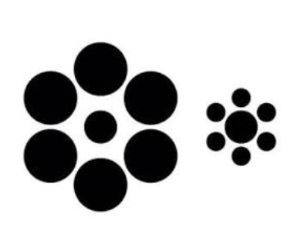
Bottom-up processes
processing of information that is driven by the available and immediate information from the environment

Top-down processes
processing of information that is driven by background knowledge, pre-conceptions and expectation

Global processing information
Looking in the bigger picture rather than its individual components

Local level of processing information
Focused, Detailed, focused on the individual parts, elements, or fine details that make up the whole.
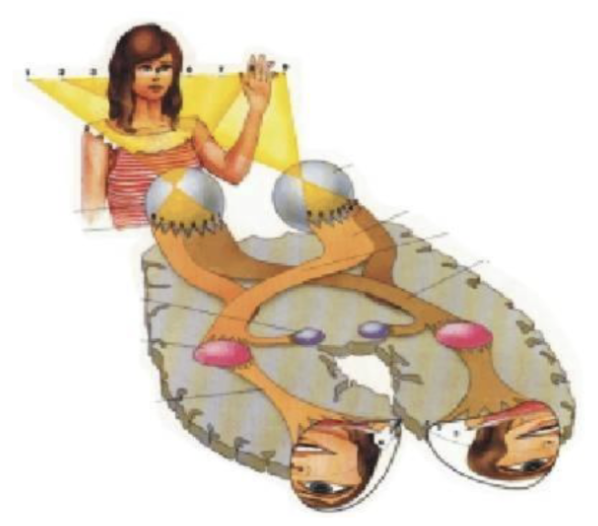
Parallel processing of information
multiple cognitive processes can co-occur at the same time. This helps promote cognitive efficiency and emerges through the activation of multiple brain regions or through extensive practice.
Functional Level (why we began the action)
What is the goal of the computations? (The function/purpose of the cognitive processes. Information inputs and behavioral outputs of the system.
Algorithm and computational level (storing the memory)
What are the representations of storing inputs, and the steps and rules that transforms inputs into outputs? (The cognitive processes such as memory and attention)
Hardware level (why we began the action)
How is the algorithm and computation implemented? (The parts of the brain that processes memory and attention)
Reaction time (RT)
The time elapsed when a stimulus is presented and the person’s response to the stimulus (measured in milliseconds)
Reading times
the time needed to read through a sentence or a passage
Verbal Protocols
A description and analysis of a participant’s verbalizations of their thinking processes during reasoning or problem-solving. (inner monologe)
Preference method
involves the ability of a stimulus to be chosen by a participant given an available competitive stimulus
(given an option: which one are you choosing (no right or wrong answer; Such as Cow + milk: cow makes milk, and Cow + Horse: they are both four legged mammals)
Accuracy Measures
The number and type of errors a participant makes.
(ex. How many items a participant correctly recalled? Which items were omitted? What type of information is recalled?)
Priming
A process where an initially presented stimulus might influence some later cognitive process
Ex: You are shown a word (prime) such as kitchen. When the anagram (target), which are jumbled words appear, KNIS, write out the correct unscrambled word: SINK. That is the influence of the presented stimulus
Neurocognition
Interface between the cognitive processes and the regions of the brain responsible for a given cognitive process.
Localization of function
Specific areas of the brain perform specific functions. Makes processing of information more efficient.
Contralaterality
The receptor and control centers for one side of the body are in the opposite hemisphere of the brain.
Hemispheric Specialization
Different brain functions tend to rely more heavily on one hemisphere or the other.
(Ex. The left hemisphere controls most language functions and the right hemisphere handles most visuo-spatial processing for most right-handed people.)
Cognitive Neuropsychology
researchers study the behaviors and high level processes (attention, memory, language) of patients with unique brain damage in different contexts, or with different stimuli.
Cognitive neuroscience
researchers perform experimental manipulation of stimuli presented to human participants and then observe the parts of the brain that gain a boost in physiological activity.
Subtraction method
baseline activity for a specific task is recorded (control stimulus), neural activity for an experimental task is recorded (experimental stimulus). Subtract the brain activity during baseline task from the experimental task.
Ex. have a person look at a certain thing and record the brain activity, then allow them to close their eyes and record the brain activity again for comparison, which eliminates which regions are stronger than others to identify which region was most active during that experiment.
Electroencephalogram (EEG
Use electrodes placed on the scalp to measure brain electrical activities. Used to diagnose epilepsy.
Event-related potential (ERP)
an averaged measurement of EEG’s that is directly the result of a thought or perception experienced by a participant. This highlights the specific timing involved in a cognitive process, but it can only approximate the location of the brain activity.
Positron-emission tomography (PET) scan
Metabolism of glucose (via mild radioactive isotope marker (2 deoxyglucose) and a special scanner)
Functional magnetic resonance imaging (fMRI)
Scanner measures the oxygenated bloodflow in the areas of the brain.
Transcranial magnetic stimulation (TMS):
using a powerful magnetic field to inactivate patches of neurons
Occipital lobes
processing of visual information
Parietal lobes
Integrates information from the world. It contains the somatosensory cortex that receives information about pain, touch, pressure and temperature from the body. It also processes spatial representation
Temporal lobes
processing of auditory(hearing) information, memory, perception, and emotion
Frontal lobes
contains the motor cortex and premotor cortex that initiate voluntary muscle movement. Also the involved in short-term memory and speech production
Prefrontal cortex (of the Frontal lobe)
this serves in advanced planning, self-control, short-term-working memory, impulse control and other higher order cognitive functions. It coordinates the activity of various parts of the brain.