CRAT test 1-5
 Call Kai
 Learn
Learn Practice Test
 Spaced Repetition
 Match
Match Flashcards
 Knowt Play
1/146

There's no tags or description
Looks like no tags are added yet.
Name | Mastery | Learn | Test | Matching | Spaced | Call with Kai | Chat |
|---|
No analytics yet
Send a link to your students to track their progress
147 Terms
10/T5
Which of the following might be considered predisposing factors for junctional rhythms?
Diabetes mellitus
Lupus erythematosus
Liver failure
All of the above
All of above
Diabetes
SA node fails due to nerve or blood vessel damaged.
Lupus erythematosus
Lupus myocarditis
Liver Failure
Bile Acid Toxicity
11/T5
With an EKG, the voltage may be considered which of the following?
Deflected
Indirect
Negative
Posterior
Negative
X deflected(歪める、反らせる): it describes the physical movement of the wave line on the paper, not the voltage type itself.
15/T5
Alternating current interference can be caused by all of the following except?
Crossed lead wires
Improper grounding
Too little electrode gel
Other electrical equipment
Too little electrode gel
“all of the following except”
Alternating Current Interference = AC interference
19/T5
The major therapeutic goal in treating atrial fibrillation is which of the following?
Stop the erratic atrial impulses
Reduce ventricular rate below 80 bpm
Increase ventricular rate above 80 bpm
Reduce atrial impulse to below 100 bpm
Reduce Ventricular rate below 80 bpm
28/T5
A pacemaker stimulation of the atria and then the lower portion of the right ventricle in a sequence is known as which of the following?
Atriobiventricular pacing
Inherent rhythm
Pacing spike
Atrioventricular sequential pacing
Atrioventricular sequential pacing
=AV Synchronous Pacing
=Dual-Chamber Pacing
DDD (Dual-chamber paced, sensed, response) is the most common and versatile mode used for this purpose.
32/T5
Which of the following pacemaker complications leads to competition between the intrinsic electronic pacemakers?
Malsensing
Loss of capture
Undersensing
Oversensing
Undersensing
Undersensing:
Intrinsic beats occur,
The pacer misfires,
The mis-timed pacing spike accidentally lands on the T wave
=> R-on-T phenomenon
34/T5
Which of the following is similar to lead V1 on the 12 lead ECG?
MCL1
aVF
MCL6
aVR
MCL1
36/T5
Which of the following would be considered one of the grievance categories?
Expedited
Over extended
Irregular
Obtuse
Expedite
The Grievance Categories
Standard
Extended
Expedite (most serious urgent case)
37/T5
If sinus arrhythmia suddenly develops in patients taking which of the following medications, the practitioner should be notified immediately?
Morphine sulfate
Aspirin
Digoxin
Lithium
Digoxin
Because of the narrow therapeutic index
Digoxin is used for Afib, Aflutter, and CHF.
39/T5
Atrial tachycardia can occur in patients with normal hearts and is generally related to which of the following?
Excessive exercise
Excessive use of alcohol
Excessive use of stimulants
Excessive insomnia
Excessive use of stimulants
Because stimulants are the direct effect on heart cellular mechanisms, especially in a normal heart.
41/T5
Which pacemaker malfunction causes the device to deliver a pacing stimulus during the heart’s relaxation (repolarization) phase, risking induction of dangerous arrhythmia?
Loss of capture
Undersensing
Oversensing
Battery depletion causing reduced device output
Undersensing
45/T5
The patient has spontaneous atrial activity leading the VVI pacemaker to not synchronize the ventricular activity with it. What can develop?
Myocardial infarction
Asystole
Bradycardia
Tricuspid regurgitation
Tricuspid regurgitation
=leaky heart valve condition, blood flow backward every beat.
50/T5
The stages of the cardiac cycle consists of all but which of the following?
Ventricular ejection
Ventricular systole
Atrial systole
Ventricular filling
Ventricular systole
Atrial Systole
Isovolumetric Contraction
Ventricular Ejection
Isovolumetric Relaxation
Ventricular Filling
54/T5
If there is waveform interference on an EKG, which of the following might be seen?
Bumpy pattern
Straight lines
No extra wave
None of the above
Bumpy pattern
“interference”
59/T5
On a standard ECG, a flattened baseline with missing or numerous erratic P wave most likely indicates which rhythm?
Atrial fibrillation
Multifocal atrial tachycardia
Ventricular flutter
Hyperkalemia
Atrial fibrillation
“missing or numerous erratic P wave”
61/T5
In a 12 lead ECG, which of the following is the number of limb leads there are?
7
6
5
3
6
Limb leads: I, II, III, aVR, aVL, aVF
63/T5
The right and left coronary arteries begin as a single branch off the ascending aorta from the area known as which of the following?
His Bundle
The triangle of Einthoven’s
The cardiac triangle
Sinuses of Valsalva
Sinuses of Valsalva
= at just above the aortic valve,
= three aortic sinuses,
= ensuring the openings into the coronary arteries are not obstructed by the open aortic valve
68/T5
Complication from failure to capture could include all of the following except?
Increased stimulation threshold because of such things as medications and/or electrolyte imbalance.
A fracture of the pacing lead wire
Liver failure
Perforation of the myocardium by a lead wire
Liver failure
“except”
79/T5
The ability of the heart muscle to contract after it receives the electrical impulse is which of the following?
Contractility
Excitability
Elasticity
conductivity
Contractility
Excitability
The electrical response
“Flipping light switch”
The cell generates an action potential when stimulated.
Contractility
The mechanical response
“The bulb ligting up“
The cell turns the electrical excitement into physical force.
a
80/T5
During which phase of the cardiac cycle do the aortic and pulmonic valves open to allow the ventricles to expel blood?
Isovolumetric ventricular depolarization
Ventricular filling
Atrial systole
Ventricular ejection
Ventricular ejection
“expel blood” and “ejection“
P=Atrial Contraction
QRS=Isovolumetric Contraction
ST segment=Ventricular Ejection
T=Isovolumetric Relaxation
TP segment=Ventricular Filling
82/T5
Which of the following is not one of the causes of temporary atrioventricular blocks?
Myocardial infarction
Cardiomyopathy
Acute myocarditis
Cardiac Surgery
Cardiomyopathy
Cardiomyopathy = Conditions of heart muscle can’t pump. Myocardium gets stiffen, enlarge, thicken.
Cause of AV block
Myocardial Infarction
Acute myocarditis
Cardiac Surgery
85/T5
Purkinje fibers end in minuscule filaments that directly depolarize which of the following?
Endocardium
Ventricular myocytes
Bundle branches
Epicardium
Ventricular myocytes
89/T5
Of the following, which would not be indicative of ventricular fibrillation?
No waves will be seen
Waves would be seen with every other complex
The QRS will be more than 120 ms
The rate will be 100-250
Waves would be seen with every other complex
“would not“
〇 No waves
〇 QRS is >0.12
〇 HR 100-250
94/T5
Of the following, which would not be considered potential causes of cardiac arrhythmias?
Injuries
Heart disease
Elevated glucose
Electrolyte imbalances
Elevated glucose
7/T1
All but which of the following symptoms might accompany chest pain?
Nausea/vomiting
Abdominal pain
Dizziness
Sweating
Abdominal Pain
6/T1
When ECG technician is making entries in the patient’s medical records regarding their ECG, which of the following would not be included?
The patient’s medical history
The identification of the patient
Diagnostic test result
The height and weight of the patient
The height and weight of the patient
8/T1
High-voltage artifact potentials are generally interpreted by the monitor as QRS complexes and activate the high-rate alarm in a monitoring problem known as which of the following?
Muscle tremor alarm
False high-rate alarm
Telemetry-related interference
False low-rate alarm
False high-rate alarm
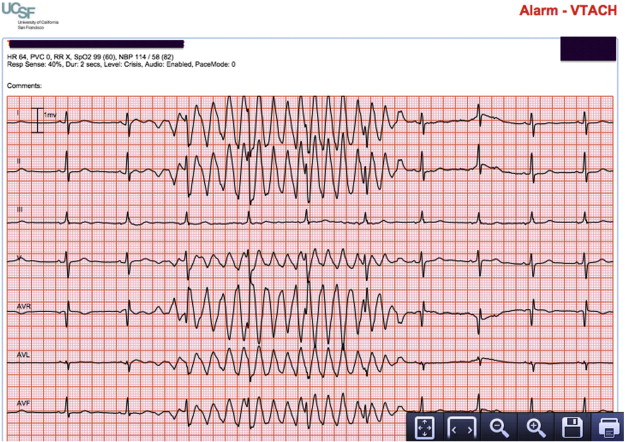
11/T1
Which artifact filter setting is commonly used to reduce artifact due to muscle tremor and slight patient movement?
40 Hz
60 Hz
80 Hz
100 Hz
40 Hz
13/T1
An accurate word that the technician can use in place of electrodes to keep from instilling fear in the adult patient would be which of the following?
Plug
Stickers
Sensors
Recorders
Sensors
17/T1
When a compensatory pause does not occur, the premature ventricular contraction is called which of the following?
Uniform
Diminished
Interpolated
Aberrant
Interpolated
Reason 1. The ectopic impulse is generated and clears out quickly enough that the heart's natural pacemaker (the SA node) isn't reset.
Reason 2 The electrical signal travels in a way that allows the next normal sinus beat to arrive exactly on time
20/T1
Which of the following is the weight of the human heart?
6-11 oz
8-12 oz
10-15 oz
12-17 oz
8-12 oz
23/T1
If a EKG is ordered STAT, when should it be performed?
in 6 hours
In the morning
In 2 hours
ASAP
ASAP

Which of the following is represented in the above rhythm strip?
Sinus tachycardia
Atrial tachycardia
Ventricular tachycardia
Asystole
Sinus tachycardia
Atrial tachycardia usually presents with
Abnormal P wave: often the morphology of the p wave differs from that seen in sinus rhythm
Irregular or regular rhythm: Depending on the mechanism, the rhythm can be either regular or irregular
Variable PR interval: The PR interval may vary and is not necessarily normal
27/T1
Atrial tachycardia is characterized by which of the following?
Extended QRS complex
Three or more successive ectopic atrial beats at a rate of >100 bpm
Normal sinus P wave
Three or more successive ectopic atrial beats at a rate of 250 to 300 bpm
Three or more successive ectopic atrial beats at a rate of >100 bpm
29/T1
As a result of bradycardia, which of the following tends to diminish?
Vagal stimulation
Automaticity
Metabolic demands
Oxygenation
Automaticity
33/T1
Which of the following acts as an safety mechanism to protect the heart from ventricular standstill?
Premature ventricular contractions
Idioventricular rhythm
Torsades de pointe
Asystole
Idioventricular rhythm
38/T1
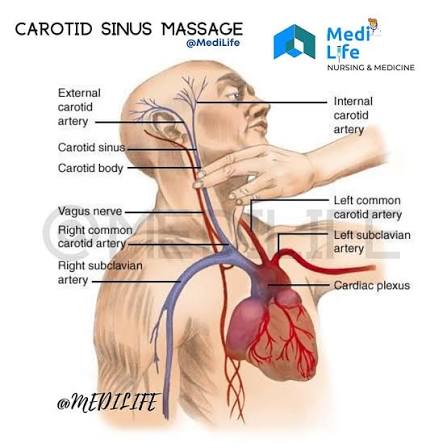
A maneuver to purposely activate the baroreceptors in the carotid arteries to slow a rapid heart rate is known as which of the following?
Carotid sinus massage
Carotid sinus activation
Carotid receptor massage
Carotid receptor activation
Carotid Sinus massage
36/T1
Telemetry cardiac monitoring is generally employed in which of the following units?
Rehabilitation
Medical-Surgical
Emergency
Intensive care
Medical-surgical
41/T1
ECG lead II produces a positive deflection, and the positive electrode should be placed on which of the following?
Right leg
Left leg
Right arm
Left arm
Left leg
42/T1
How many different types of atrial tachycardia are there?
One
Two
Three
Four
Three
Atrial Tachycardia with Block
A specific heart rhythm where the upper heart chambers (atria) beat rapidly (150–250 bpm), but the AV node acts as a safety filter, preventing every electrical impulse from reaching the ventricles
Multifocal Atrial Tachycardia
Paroxysmal Atrial Tachycardia
43/T1
An arrhythmia that has a PR interval of less than 0.12 second originated where in the heart?
SA node
Atria
Ventricles
AV junction
AV junction
47/T1
In the Pacemaker codes, the first letter represents which of the following?
The heart chamber in which the pacemaker senses the intrinsic activity
The pacemakers response to the intrinsic electrical activity it senses in the atrium or ventricle
The heart chamber being paced
Rate modulation
The heart chamber being paced
52/T1
The typical dosage of Atropine that is administered to the patient that is experiencing symptomatic bradycardia would be considered which of the following?
0.01 mg
0.5 mg
10mg
5 g
0.5 mg
53/T1
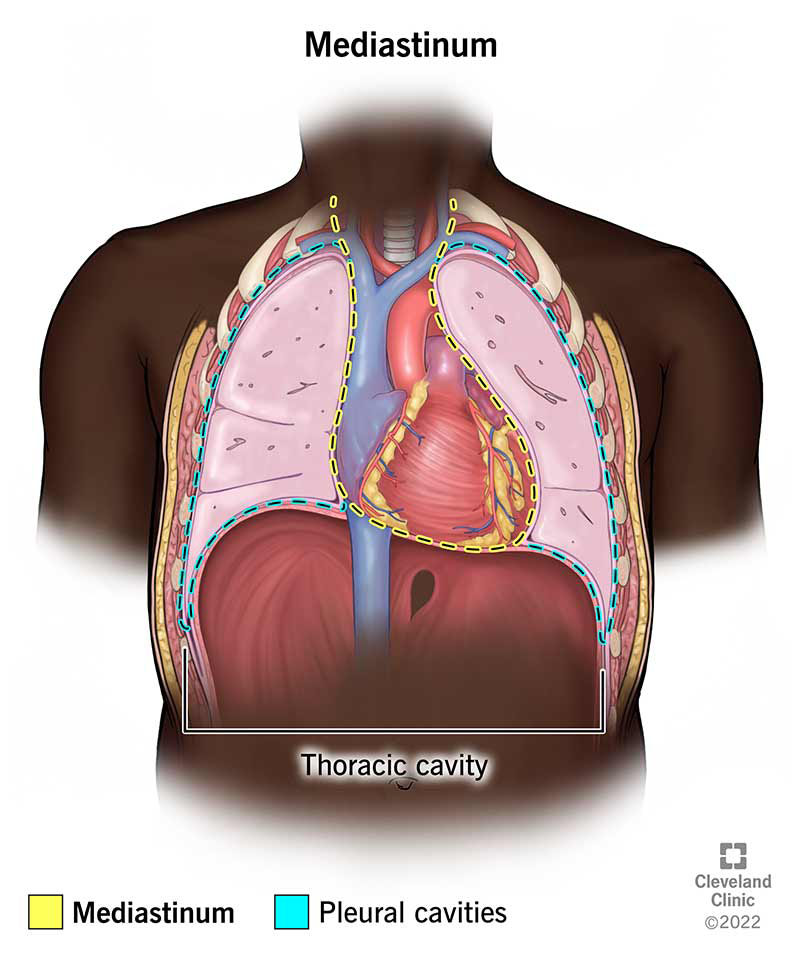
The space which is between the lungs that contain the heart would be considered the ____?
Myocardium
Epicardium
Mediastinum
Pericardium
Mediastinum
56/T1
Which of the following is not one of the common causes of junctional escape?
Vagal stimulation
Sick sinus syndrome
Digoxin toxicity
Stroke
Stroke
Common causes of junctional rhythm
Sick sinus syndrome
Vagal stimulation
Electrolyte imbalances
Digoxin toxicity
MI
Rheumatic heart disease
58/T1
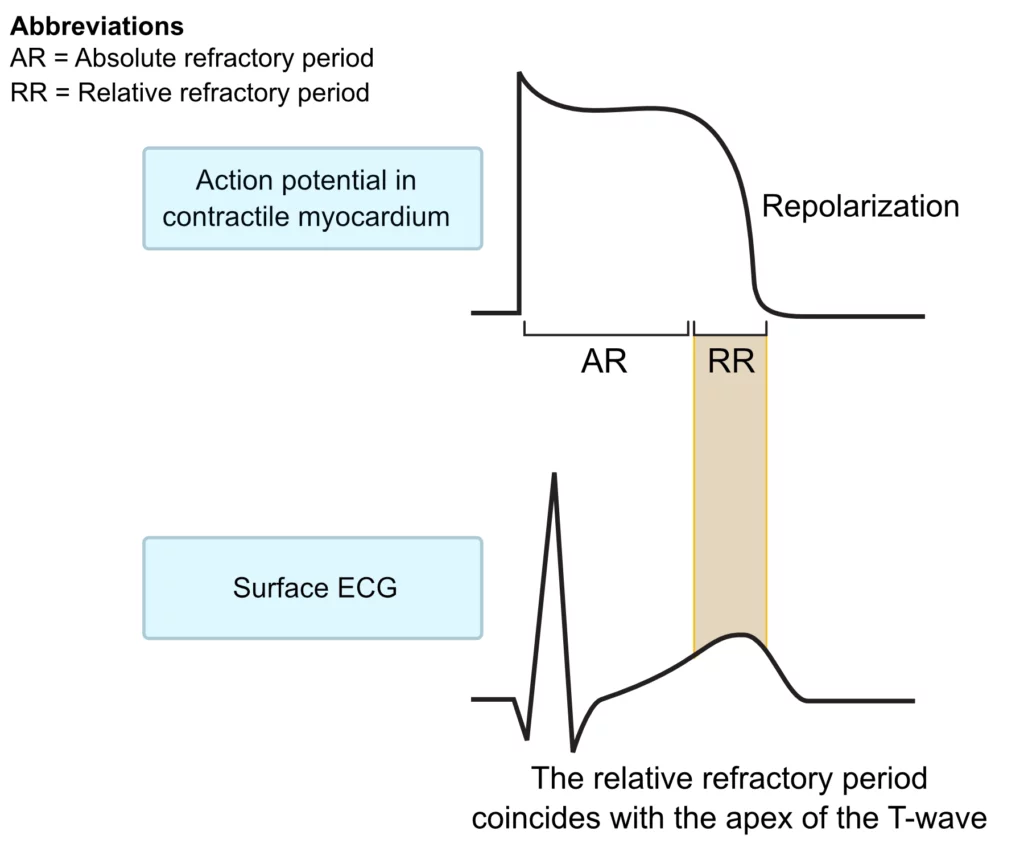
The T wave’s peak represents which of the following?
Relative refractory period of ventricular repolarization
End of ventricular depolarization
End of ventricular conduction
Presence of myocardial infarction or ischemia
Relative refractory period of ventricular repolarization
62/T1
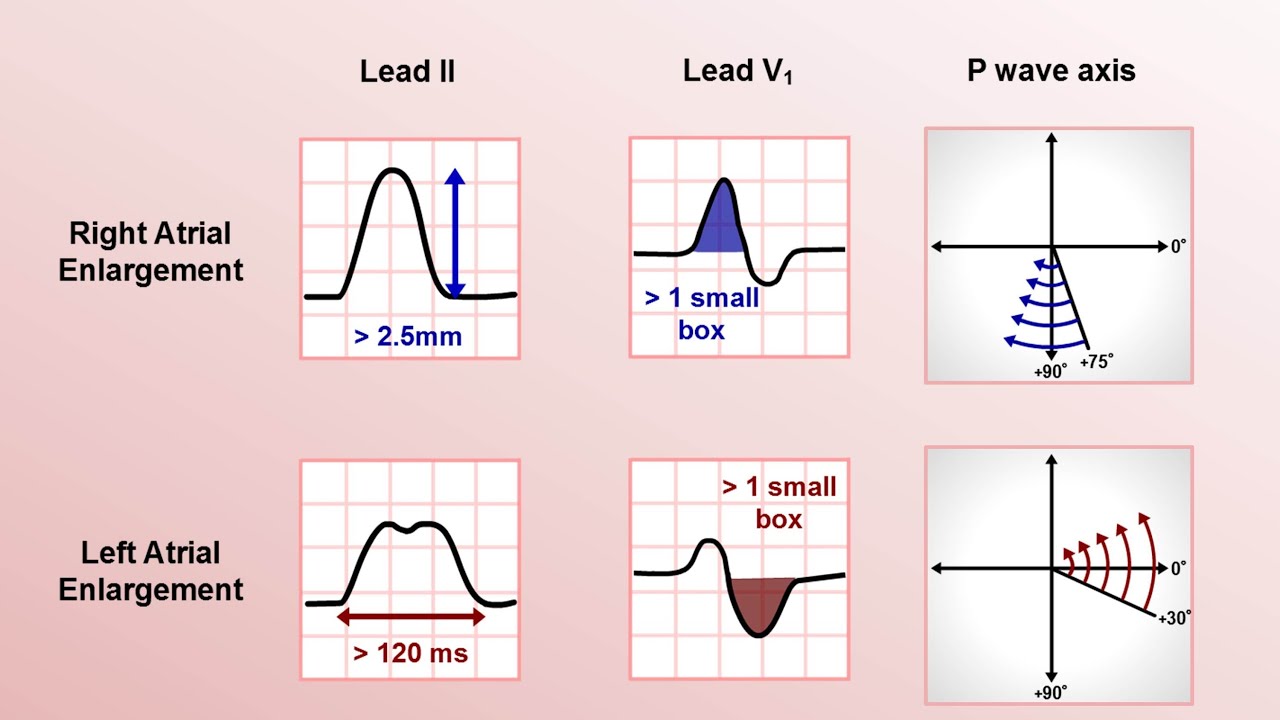
If a P wave has an amplitude of> 2.5 mm in lead II or >1.5 mm in V1, which of the following may be indicated?
Left atrial enlargement
Retrograde atrial depolarization
Right atrial enlargement
Reverse or retrograde conduction
Right atrial enlargement
64/T1
When measuring ventricular regularity on a 12-lead ECG and R waves are absent or not clearly visible, which point is preferred for measuring successive ventricular cycles?
P wave peak (atrial depolarization)
Q wave onset (initial downward deflection of the QRS)
S wave nadir (deepest negative deflection of QRS)
J point (junction of the QRS complex and the ST segment)
S wave nadir
(deepest negative deflection of the QRS)
Q onset can be useful if it’s consistently sharp, but initial deflections may be slurred or variable;
S wave nadir is generally a more reproducible ventricular marker when R is absent
74/T1
Which of the following do atrial arrhythmias result from?
Impulses that originate outside the SA node
Impulses that originate from the SA node
Ventricular conditions
Atrial conditions
Impulses which originate outside the SA node
77/T1
Which of the following is mainly caused by an irritable spot or focus that happens outside of the SA node?
Sinus arrest
SA block
Sinus bradycardia
Premature atrial contractions
Premature atrial contractions
PAC usually caused by an irritable spot.
79/T1
When determining the patient’s heart rate when evaluating a cardiac rhythm strip, if the rhythm is regular, the technician counts the number of large boxes in an RR interval and then divides that number into 300. Which of the following rules would this be considered?
Rule of 30 seconds
Rule of 300
Rule of 3000'
No rule
Rule of 300
80/T1
Abnormal waves on an electrocardiogram might include all of the following except?
Osborn waves
PRI
Delta wave
Epsilon waves
PRI
85/T1
Is the sequence method of calculating atrial rate, the technician must memorize a series of numbers to assign to which of the following?
P waves that peak on heavy black lines
P waves that peak below heavy black lines
The heavy black lines between P waves
The light black lines between P waves
The heavy black lines between P waves
86/T1
Two sets of chemicals in the sympathetic nervous system that are highly influenced by this system include which of the following?
Acetylcholine and baroreceptors
Norepinephrine and epinephrine
Calcium and potassium
Sodium and calcium
Norepinephrine and epinephrine
(naw-reh-puh-NEH-fruhn)
Primary chemicals driving the sympathetic nervous system and the acute “fight-or-flight” stress response.
90/T1
During repolarization, which of the following ventricular myocytes charges must recover in order to be depolarized again?
Resting positive charge
Active negative charge
Resting negative charge
Active positive charge
Resting negative charge
93/T1
Saying words correctly would be considered ____ and speaking clearly would be considered ____?
Pronunciation / enunciation
Enunciation / pronunciation
Enunciation / formally
Speaking / enunciation
Pronunciation / Enunciation
A requisition for an ECG procedure must include the reason for the exam and all of the following except?
Patient identification information
Patient vital signs
Patient medications
Patient weight and height
Patient weight and height
98/T1
Of the following, which would be considered the appropriate term for an individual that helps the patient seek information and resources?
Nurse aide
Nurse practitioner
Nurse manager
Patient advocate
Patient advocate
1/T2
A straight line resembling asystole on the monitor is generally caused by which of the following?
Loose electrode
Loss of rhythm
Patient movement
Electrical interference
Loose electrode
4/T2
Predisposing factors for the development of PVC’s should include al of the following except?
Normal potassium and magnesium
Hypokalemia
Digoxin toxicity
Caffeine
Normal potassium and magnesium
6/T2
In regards to the Glasgow coma scoring system, if the patient opens their eyes to pain, is confused, and move to localized pain, which of the following would be considered the correct score?
6
15
11
12
11
7/T2
Communication is not only verbal, the healthcare provider also communicates through all of the following except?
Facial expressions
Visulally
Tone of voice
Silence
Visually
11/T2
Which of the following is commonly triggered by ineffective contact between the patient’s skin and the electrode-leadwire system?
False low-rate alarm
Muscle tremors
False high-rate alarm
Telemetry monitoring
False alarm high-rate alarm
12/T2
If an impulse from outside pathway other than the bundle of His causes depolarization of the ventricles, it can cause which of the following?
Junctional tachycardia
Accelerated junctional rhythm
Ventricular arrhythmias
Junctional arrhythmias
Ventricular arrhythmia
14/T2
Of the following, which would not be considered a resource option for patient education?
Video
Group classes
Watching another patient have the procedure
Podcasts
Watching another patient have the procedure
15/T2
Which of the following is common cause of Wandering Atrial Pacemaker?
Increased Vagal Tone
Digoxin toxicity
Diabetes mellitus
Lupus erythematosus
Increased vagal tone
(e.x., during sleep, in athletes, with pulmonary disease)
16/T2
Simply stretching the outer layer of the skin can produce which of the following?
Large baseline shifts
Electrical signals
Asystole
Tachycardia
Electrical signals
20/T2
Which of the following can cause the atria and ventricles to beat out of sync due to longer-than-normal conduction?
Retrograde conduction
Re-entry events
Compensatory beat
Ectopy
Retrograde conduction
Retrograde conduction (VentriculoAtrial conduction):backward electrical direction of travel
The backward movement of electrical signals in the heart, traveling from the ventricles or the node back up into the atria.
This triggers inverted retrograde P waves on an ECG and can lead to arrhythmias like pacemaker-medicated tachycardia.
Retrograde conduction is a feature of a junctional rhythm
21/T2
In left bundle branch block the QRS complex is greater than 012 second because the ventricles are activated in which of the following ways?
Simltaneously
Sequentially
Spontaneously
Segmentally
Sequentially
Right ventricle first, then the left
25/T2
Sick sinus syndrome’s prognosis is considered worse if atrial fibrillation occurs due to the possibility of which of the following?
Thromboembolic complications
Prolonged pauses
Syncope
Sinus arrest
Thromboembolic complications
SSSS > A fib > Clots
29/T2
Which of the following shows the electrical changes in a myocardial cell during the depolarization-repolarization cycle?
Conduction system
Impulse pathway
Action potential curve
Myocardial change chart
Action potential curve
Action Potential Curve: A graph illustrating the rapid changes in voltage across a cell membrane over time.
33/T2
AAI pacemaker s are not used in which of the following conditions?
Sinus bradycardia
Atrial standstill
AV block
Sick sinus syndrome
34/T2
On a rhythm strip, a ventricular arrhythmia will be missing which of the following?
P wave
Q wave
R wave
S wave
P wave
35/T2
An electronic record of a patient’s health information that is created and maintained by a single healthcare provider or organization and is used for care during one or more encounters is best described as which of the following?
Electronic medical record
Electronic health record
Personal health record
Health information exchange
Electronic Medical Record
37/T2
Which type of sinoatrial block involves a regular rhythm with pauses until a whole PQRST complex is blocked?
First degree
Second degree type I
Second degree type II
Third degree
Second degree type II
39/T2
Which type of lead wire should be attached prior to the electrode being placed on the patient’s chest?
Clip-on
Contact
Snap-on
Twist-on
Snap-on
43/T2
Which of the following is the most common cause of junctional tachycardia?
Congenital disease in children
Posterior or inferior wall myocardial infarction or ischemia
Digoxin toxicity
Swelling of the AV junction following heart surgery
Digoxin Toxicity
44/T2
Which of the following is not a condition that can disrupt electrolyte shifts?
Metabolic acidosis
Hypoxia
Myocarditis
Depressant drug intoxication
Depressant drug intoxication
Metabolic acidosis >acid buildup
Hypoxia >acid-base disturbance
Myocarditis >inflammation of muscle alter electrolytes management
38/T2
Which of the following is NOT a cause of temporary AV block?
Cardiomyopathy
Myocardial infarction
Cardiac surgery
Calcium channel blockers
Cardiomyopathy
Cause of AV block
Digoxin
Myocardial Infarction
Cardiac surgery
Calcium channel blockers
46/T2
Which of the following is NOT a cause of permanent AV block?
Congenital abnormalities
Digoxin toxicity
Myocardial Infarction
Cardiomyopathy
Digoxin toxicity
51/T2
The NB should only be employed when absolutely necessary for which of the following reasons?
It requires patient movement during the exam
The filter reduces interference
The filter will distort the ECG reading
The filter increases interference
The filter will distort the ECG reading
distort=alter contaminate
The option "the filter reduces interference" is incorrect because it describes what the filter does, not the reason to restrict its use.
78/T2
During diastole, when the ventricles relax, it allows for which of the following to occur?
Pushes blood out of the ventricles
Pushes the blood out of the superior vena cava
Allows the atria to create space for receiving more blood
None of the above
Allows to the atria to create space for receiving more blood
81/T2
Which of the following is not typically one of the cause of ventricular fibrillation?
Myocardial infarction
Angina
Myocardial ischemia
Underlying heart disease
Angina
84/T2
In the QRS complex, which of the following is represented by the S wave?
Conduction of the electrical impulse through both ventricles
Conduction of the electrical impulse down the interventricular septum
Conduction of the electrical impulse to the left ventricle
The end of ventricular depolarization and the beginning of ventricular repolarization
Conduction of the electrical impulse through both ventricles
Q wave: interventricular septum.
R wave: Ventricular apex and large main walls
S wave: Basal regions of both ventricles
90/T2
The intrinsic firing rate of the Bundle of His would be considered which of the following?
70-85 bpm
40-60 bpm
60-80 bpm
20-45 bpm
40-60 bpm
60-80 bpm = SA node
40-60 bpm = AV node & Bundle of His
20-40 bpm = Purkinje Fibers
98/T2
When the technologist tells the patient the details in the form of what will happen, when, and why it is being done, it is considered which of the following types of teaching?
Factual
Compliant
Necessary
Nondescriptive
Factural
4/T3
If a patient is experiencing sinus bradycardia and is symptomatic, which of the following would this rhythm not be the cause of?
Chest pain
Shortness of breath
Diarrhea
Hypotension
Diarrhea
symptoms NOT caused by Sinus Brady
5/T3
Which of the following will cause the baseline to have an uneven, coarsely jagged appearance that obscures the waveforms on the ECG?
Telemetry monitoring
Wandering baseline
Electrical interference
Muscle tremors
Muscle tremors
(somatic tremors)
coarsely jagged(粗くギザギザした)
obscures (不明瞭な)
6/T3
Of the following, which would not be considered a potential cause for a patient to experience breathlessness?
Severe pulmonary edema
Cardiac arrhythmias
Osteoporosis
Pericarditis
Osteoporosis
Osteoporosis: a condition that cause bones to become weak and brittle
11/T3
Which of the following would be considered concurrent with the end of ventricular systole?
T wave
R wave
Q wave
S wave
T wave
QRS is V-depolarization (signal to contract)
Mechanical functions=Ventricular systole
The end of ventricular systole coincides with the beginning of ventricular repolarization, which is marked by the T wave.
Thus, the T wave occurs concurrently(同時に) with the end of ventricular systole.
14/T3
Which of the following controls increases or decreases the size of the EKG tracing on the rhythm paper?
LCD display
Standardization
Speed
Gain
Gain.
It’s about height
20/T3 [ ECG Fundamentals ]
What is unique about the T wave on a rhythm strip with ventricular tachycardia?
Missing from the waveform
Inverted from normal
Opposite direction from QRS complex
Nothing
Opposite direction from QRS complex
21/T3 [ ECG Fundamentals ]
Vagal maneuvers and medications, such as which of the following, can be employed to slow the heart rate in symptomatic junctional tachycardia patients?
Adenosine
Amiodarone
Digoxin
Verapamil
Adenosine
22/T3
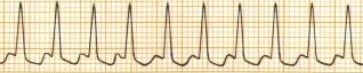
Rhythm strip (HR 200, Regular, No P)
Asystole
Atrial flutter
Atrial tachycardia
Atrial fibrillation
Atrial Tachycardia
It’s not A-flutter 1:1 because
Presence of P waves (with intervals)
HR is too slow. Atrial Tachycardia should be 100-250bpm. Aflutter 1:1 should be 250-350 bpm
They are not Flutter wave
It’s not A fib RVR, because
Regularity
presence of P wave (with interval)
have’s P wave, not flutter wave.
24/T3 [ ECG Fundamentals ]
When sinus arrhythmia is related to respiration, there will be which of the following with inspiration?
Increase in heart rate
Decrease in heart rate
Regularity in heart rate
Pause in heart rate
Increase in heart rate
(inspiration=inhale » inhale increase heart rate)
26/T3 [ ECG Fundamentals ]
The time between the end of depolarization and repolarization of the ventricles would be considered which of the following?
PR interval
QT interval
PP segment
ST segment
ST segment
27/T3 [ ECG Fundamentals ]
Sinus tachycardia can worsen myocardial ischemia by increasing the heart’s demand for which of the following?
Oxygen
Electrical impulse
Blood
Rest
Oxygen
Heart muscle works harder
More oxygen needed
but can’t get it because HR too fast, so cell begin to die
28/T3
Third-degree AV block is most commonly classified as which of following?
Drug-induced (caused by medication)
Surgery-induced (resulting from surgery or procedural injury)
Congenital (Present at birth)
Acquired degenerative or disease-related (due to progressive conduction)
Acquired degenerative or disease-related
(They all can be cause)
30/T3
Premature Atrial Contractions are rarely dangerous but in a patient with which of the following conditions, they can serve as an early sign of heart failure or electrolyte imbalance?
Nonconductor premature atrial contractions
Hypoxia
Acute myocardial infarction
Pulmonary disease
Acute myocardial infarction
PAC on MI can trigger R-on-T phenomenon, lead to V tach.
On ECG, “Sinus rhythm with acute ST-elevation and frequent PAC”
33/T3 [ ECG Fundamentals ]
Asystole must be confirmed in more than one lead due to the fact that it closely resembles which of the following?
Fine ventricular fibirillation
Sinus pause
AV block
Artiact
Fine ventricular fibrillation
because its visual similarity to Asystole