Exercise Physiology
 Call Kai
 Learn
Learn Practice Test
 Spaced Repetition
 Match
Match Flashcards
 Knowt Play
1/99

There's no tags or description
Looks like no tags are added yet.
Name | Mastery | Learn | Test | Matching | Spaced | Call with Kai | Chat |
|---|
No analytics yet
Send a link to your students to track their progress
100 Terms

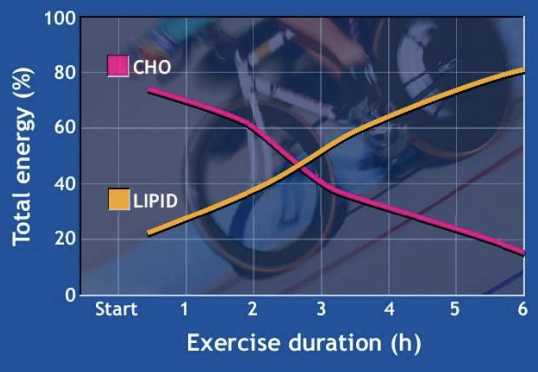
Describe what this graph is showing
The effects of exercise duration on energy expenditure
over time, the types of energy used is altered (more free fatty acids used at 240 than 40, while more intramuscular glycogen lipid and protein is used at 40 than 240)
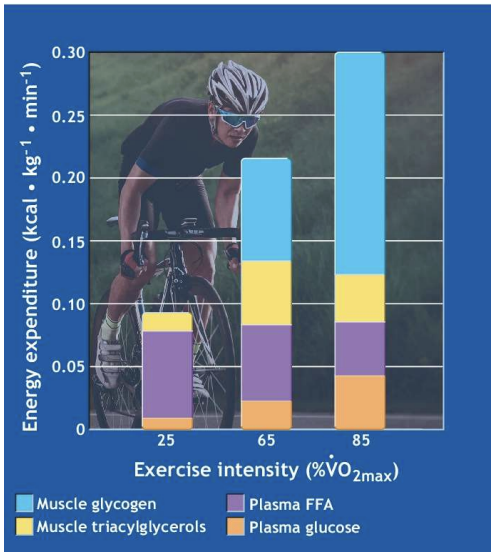
describe what this graph is showing
effects of exercise intensity (VO2max) on energy expenditure
as exercise intensity increases, the body relies more on muscle glycogen for energy (vs at lower intensities, like 25%, it relies more on plasma FFA)
what are the macronutrients that are used as fuel for exercise?
carbs, fats, and proteins
types of carbohydrates?
monosaccharides- basic unit of carb (glucose, fructose, and galactose)
disaccharides- 2-10 monosaccharides bonded (sucrose, lactose, and maltose)
glucose + fructose = sucrose, glucose + galactose = lactose, glucose + glucose = maltose
polysaccharides- three to thousands of monosaccharides (starch and fiber)
what are simple (neutral fats) known as?
triacylglycerols (triglycerides)
what are the two types of fats
saturated fats (no double bonds) - solid at room temp
unsaturated fats (one or more double bonds) - liquid at room temperature → oils
what is the function of proteins (amino acids)?
supply the body with muscle structure and function (not as much for energy)
what are the types of amino acids?
essential amino acids (need to consume in diet, don’t synthesize in body)
nonessential amino acids (synthesize in body)
what are the types of proteins
complete proteins (contains both nonessential and essential amino acids → eggs, animal products, chia seeds, soy)
incomplete proteins (don’t have all essential amino acids → vegetables; reason for pairing up foods like rice and beans in order to complete the aa’s)
what type of bonds link amino acids?
peptide bonds:
dipeptide → 2 amino acids linked by 1 peptide bond
tripeptide → 3 amino acids linked by 2 peptide bonds
polypeptide → many amino acids linked together
protein → one or more folded polypeptide chains that perform a specific function
what are the three pathways for carbs after absorption in the body?
energy for cellular metabolism
storage as glycogen in liver and muscle
conversion to triacylglycerol for later energy use
what is the role of carbs in the body?
energy fuel during intense exercise → energy derived from breakdown of blood borne glucose and muscle glycogen
carbs are the body’s preferred fuel source during high-intensity exercise (carbs broken down into glucose → circulate blood and taken up by working muscles + glycogen - muscle storage of carbs → broken down into glucose and used to make ATP for mm contraction)
protein sparer → help preserve tissue protein
when body has enough carbs available, it doesn’t have to rely on protein for energy, and saves it to be used for building / repairing tissues
metabolic primer/ketosis preventer → primer for lipid oxidation
carbs help body efficiently use fat for energy and prevent excessive ketone production → carbs help ‘prime’ the pathway that allows fat to be burned efficiently
central nervous system fuel → primary fuel for the brain and other nerve tissues
brain + CNS rely on glucose for fuel source
what is the role of lipids in the body?
energy source and reserve
carries large quantities of energy per unit weight
transports and stores easily
provides an available energy resource
protect vital organs (brain, heart, liver)
thermal insulation
vitamin carrier and hunger suppressor
how much body mass do proteins constitute?
12-15% of body mass
what are the three main sources of body protein?
blood plasma, visceral (abdominal) tissue, muscle
what is the role of proteins in the body?
major building blocks for synthesizing tissue components like enzymes, hair, skin, and nails
what are important sources of cabs in the body
plasma glucose, muscle and liver glycogen, and conversion of other nutrients into glucose
what is glycogenesis
glucose → glycogen
what is glycogenolysis
glycogen → glucose
what is gluconeogenesis
non-carb nutrients (protein or other) → glucose
what is the primary source of energy for PA?
carbs
carbs vs lipids energy uptake
carbs generate 6% more energy than lipid per liter of oxygen uptake
what is the effect of high intensity exercise on carb vs lipid usage?
1 hr - decreases liver glycogen by 55%
2 hr almost depletes liver + muscle glycogen
what is the effect of moderate intensity exercise on carb vs lipid usage?
glycogen is the primary source in initial 20 minutes, then a mix of glycogen and lipid
what is the effect of low intensity exercise on carb vs lipid usage?
lipid is the main source with glycogen and glucose depleting over time
what are the limitations that glycogen depletion causes?
it severely limits short duration exercise performance and long duration endurance — ‘hitting the wall’

what are important sources of fat in the body for energy?
plasma fatty acids and stored triacylglycerol (triglycerides)
what is lipogenesis
creation (storage) of fatty acids (ex: glucose → fat)
what is lipolysis
breakdown of triglyceride into individual fatty acids
what percent of energy do lipids supply during PA?
30-80%
what is the primary energy source used for light moderate exercise?
intramuscular triacylglycerols and fatty acids
how does the body begin to rely more on carbs/lipids as exercise intensity varies?
light-moderate: primarily lipids
moderate: both supply equal amounts
long duration: shift to fat as primary fuel as glycogen becomes depleted
when would protein be used for energy?
protein is not a primary source of energy unless in a glycogen depleted state
what spares muscle protein from being broken down?
carbs
anabolic process
synthesis or build up of new materials
catabolic process
breakdown of materials into new materials for energy
positive nitrogen balance
nitrogen intake exceeds nitrogen excretion → new tissues are synthesized (anabolic process for muscle synthesis)
negative nitrogen balance
nitrogen intake is less than nitrogen excretion → protein broken down for energy (catabolic process for muscle loss)
what results in the use of protein for a source of energy?
prolonged exercise and glycogen depletion
what is an example of protein being used to help maintain blood glucose levels?
alanine: amino acid that can be produced by working muscle → sent to liver to be converted to glucose by gluconeogenesis → helps maintain blood glucose during exercise
what is bioenergetics?
our bodies simultaneously breaking down and building up macronutrients (CHO, fat, and protein) for energy and use depending on need
what is energy?
the capacity to do work → dynamic state related to change
what is the total energy of a system ?
potential energy + kinetic energy
what is potential energy?
relates to structure or position
potential energy is stored, and has the potential to be released and used later (like fats and carbs → when body needs energy, it breaks down these molecules and release the energy stored in their chemical bonds)
what is kinetic energy?
relates to energy of motion with release of heat
muscles using energy to produce movement
what is the first law of thermodynamics
energy can neither be created nor destroyed, but transforms from one form to another without being depleted during the transfer process
what is the relationship between biologic work and energy transfer?
as biologic work increases, energy transfer increases
how is biologic work expressed?
mechanical measurements: Joules (J) or newton meters (N*m)
what needs to happen for biologic work to occur?
a change needs to take place. (like movement/displacement)
if pushing on a wall, no mechanical work occurs because there is no displacement; if pushing a box five feet, mechanical work has occurred due to position change
what is bioenergetics?
flow and energy exchange within a living system
example: energy transfer of macronutrients into useable forms of energy in the body
what are the types of reactions?
endergonic: stores energy
exergonic: releases energy
types of biologic work in humans
chemical- biosynthesis of cellular molecules
mechanical- muscle contraction
transport- transfer of substances among cells
how do we quantify work in humans?
newtons, joules, kilojoulse
equation for work?
work = force x distance
what is an example of energy interconversion?
cellular respiration (exergonic process)
what is an exergonic process?
macronutrient stored energy transfers in the form of ATP
used for the mechanical work of muscle contraction, and chemical work of glycogen, triacylgerol, and protein synthesis
what are enzymes
proteins that speed up chemical reactions in the body
what are coenzymes
non protein organic substances that facilitate enzyme action by binding a substrate to a specific enzyme
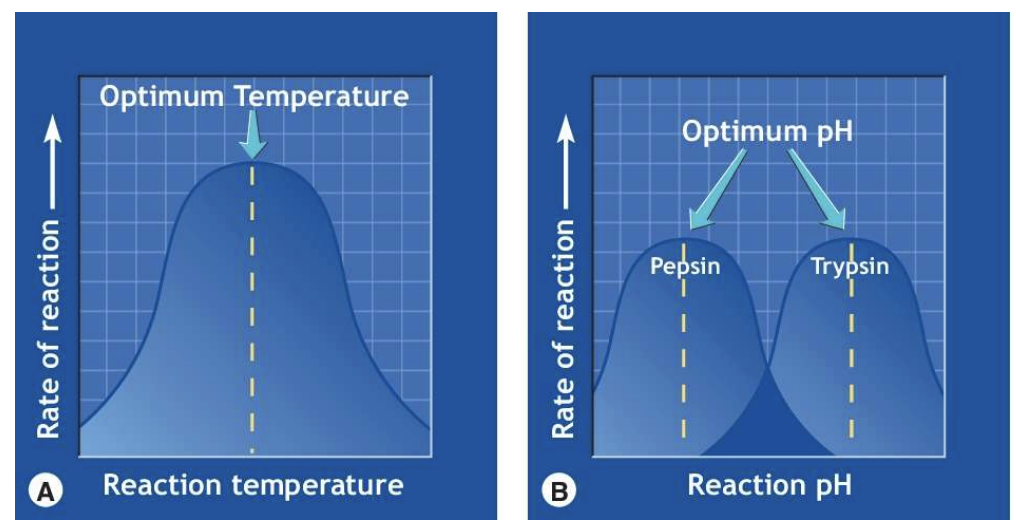
effects of temp and pH on enzyme action turnover rate
enzymes operate at an optimal temp and pH
optimal temp for enzymatic rxns = 98.6 F
optimal pH = 7.4
but varies, for instance, pepsin is found at lower pH (high acidity in stomach), and trypsin is found at higher (more basic in intestine)
enzyme action
enzyme turns on when substrate binds to active site (lock and key)
because there is a specific enzyme for a specific substrate, all unique chemical rxns in the body have a unique enzyme
enzyme inhibition
some substances inhibit enzyme activity to slow the rxn rate
competitive inhibition
substances can bind to enzyme’s active site to prevent enzyme activation
non competitive inhibitors
bind to an enzyme at a site other than the active site to change the enzymes structure and ability to catalyze the rxm
some drugs used to treat cancer, depression, and acquired immunodeficiency syndrome are noncompetitive enzyme inhibitors
oxidation reaction
electron loss → reactions that transfer oxygen, hydrogen atoms, or electrons
reduction reaction
electron gain → reactions that allow atoms to grain electrons
oxidations - reduction reactions (redox rxns)
always occur together - coupled
example- hydrogen traveling down a system until it can be put to use (in something like ATP)
energy metabolism is?
generating biological energy (ATP) from macronutrients
what does ATP do?
energy currency → gives us energy for any kind of action in cells
how does ATP release energy?
ATP + H2O → (release a P via ATPase) → ADP + P + 7.3 kcal/mol
what does ATP help power?
digestion, nerve transmission, muscle action, circulation, tissue synthesis
how does ATP release energy?
ATP + H2O → (release a P via ATPase) → ADP + P + 7.3 kcal/mol (energy)
ATP recycling in macronutrient breakdown
body stores 80 to 100 g of ATP in normal resting conditions, enough stored energy to power 2 to 3 seconds of maximal energy
what is a phosphorylation reaction?
chemical reaction that adds a phosphate group to another molecule
what type of reactions require ATP
anabolism (endergonic rxn)
what type of reactions release ATP
catabolism (exergonic rxn)
how is ATP produced?
aerobic (oxidative phosphorylation) and anaerobic (Substrate level phosphorylation)
aerobic (oxidative phosphylation)
occurs in mitochondria, requires oxygen, occurs at slower speed, and produces lots of ATP
main fuel is carbs and fats
anaerobic (substrate level phosphorylation)
ATP produced by directly transferring a phosphate group from a high energy substrate to ADP; occurs in cytosol, faster, no O2 required, smaller ATP yield
how much ATP is stored in body at a given time?
80-100grams, about 2-3 seconds worth
this is why ATP regeneration is so important!
phosphocreatine (PCr)
cells store 4-6x more phosphocreatine than ATP
phosphocreatine = creatine + phosphate
phosphate can be transferred to DP to rapidly remake ATP (via creatine phosphokinase)
this happens very quickly and provides for about 10 seconds of maximal activity
this is substrate level phosphorylation
what is glycolysis
after ATP + phosphocreatine stores, body leans on glycolysis
breakdown of glucose into pyruvate
pyruvate is turned into lactate in the cytosol (for intense exercise and immediate ATP)
pyruvate is put through the krebs cycle during low/moderate exercise (mitochondria)
produces lactate (lactic acid) unless oxygen is present
anaerobic respiration ATP levels
generates about 5% of total ATP
(not alot but can be done very quickly → useful for sprinting / short bursts)
what types of exercise can anaerobic account for ?
sprinting at the end of an endurance run
50-100m swim sprint
100-200m running sprint
power based sports like gymnastics
aerobic respiration
oxidation (breakdown of carbs, fats, proteins → where most of our energy is generated)
90% of ATP synthesis occurs through oxidative phosphorylation
electron transport allows for ATP phosphorylation; requires oxygen as the final electron acceptor
three stages lead to release and energy conservation by cells for biologic work:
stage 1: digestion, absorption, and assimilation of relatively large food macromolecules into smaller subunits
stage 2: degrades amino acids, glucose, and fatty acid and glycerol units into acetyl-CoA
stage 3: acetyl-CoA degrades to CO2 and H2O with considerable ATP production
what are the six fuel sources that supply substrate for ATP formation?
triacylgycerol and glycogen molecules stored within muscle cells
blood glucose derived from liver glycogen
free fatty acids derived from triacylgerols in the liver and adipocytes
intramuscular and liver derived carbon skeletons of amino acids
anerobic rxns in the initial phase of glucose breakdown
PCr phosphorylates ADP under enzyme control (creatine kinase)
how do we increase PCr in muscle?
training:
increasing muscle size can increase PCr availability
improved oxidative capacity may increase ability to resynthesize PCr more quickly (typically takes 30 sec)
diet
PCr is found in animal proteins (including fish)
diets including animal protein can acquire creatine in this way, but this is not the case for vegetarian / vegan diets
dietary supplementation
creatine monohydrate
CHO metabolism
CHO is the only macronutrient that can be metabolized anaerobicaly
CHO supplies 1/3 of total energy during light and moderate PA
CHO metabolism must occur in order for fats to be broken down for energy
aerobic CHO metabolism occurs more quickly than fatty acid breakdown
glycogen depletion can cause reduction in exercise power
central nervous system requires constant CHO supply to function properly
rapid glycolysis
substrate level phosphorylation
quick source of energy, but not enough to sustain for long duration
final product is lactate
slow glycolysis
substrate level phosphorylation + oxidative phosphorylation
couples with citric acid cycle and electron transport chain
final product (glycolysis specific) is pyruvate
describe how glucose is phosphorylated to be converted to energy
‘priming the pump,’ and 2 ATP are invested to be used to phosphorylate glucose (spending ATP to be able to start making ATP)
PFK (phosphofructokinase) → enzyme that controls how much glucose is pushed through glycolysis (rate limiting enzyme)
more PFK activity → glycolysis speeds up; less PFK activity → glycolysis slows down
what are the final net products of rapid glycolysis - anaerobic metabolism
2 pyruvate, 2 ATP, 2 NADH
glycogenolysis
skips glucose energy investment, goes straight from glycogen
1 less ATP required → net 3 ATP from glycolysis instead