Microbiology Ch. 12 - Control of Microorganisms (Antimicrobials)
 Call Kai
 Learn
Learn Practice Test
 Spaced Repetition
 Match
Match Flashcards
 Knowt Play
1/63

Earn XP
Description and Tags
Exam 1
Name | Mastery | Learn | Test | Matching | Spaced | Call with Kai | Chat |
|---|
No analytics yet
Send a link to your students to track their progress
64 Terms
salvarsan
magic bullet
discovered by ehrlich and sahachiro hata
effective against syphilis spirochete
selective toxicity
means that a drug should harm the pathogen but not the host
toxic dose: concentration causing harm to the host
therapeutic host: concentration eliminating pathogens in the host
formulates the chemotherapeutic index
prontosil
red dye found to inhibit some gram-positive bacterial species
penicillin
alexander fleming’s discovery ushered in the era of antibiotics
penicillium mold produces a substance that kills gram-positive bacteria and some gram-negative bacteria
beta-lactam group because they include a beta-lactam ring with a variable side group
interfere with cell wall synthesis in rapidly growing cells, causing the cell to burst
synthetic agents
made in pharmaceutical lab
antibiotics
products of or derived from living microorganisms
semisynthetic drugs
include synthetic and antibiotic elements
broad spectrum drugs
affect many taxonomic groups

narrow spectrum drugs
affect only a few pathogens
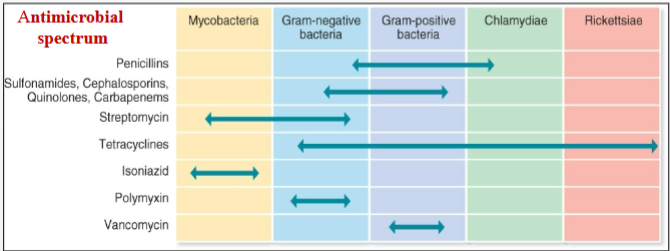
antibiotics for inhibition of translation
aminoglycosides, chloramphenicol, tetracyclines, macrolides, clindamycin, streptogramins, oxazolidinones
antibiotics for inhibition of nucleic acid synthesis
DNA replication quinolones, RNA transcription rifampin
antibiotics for block cell wall synthesis
penicillins, cephalosporins, vancomycin, bacitracin, carbapenems
antibiotics for DNA precursor synthesis
sulfonamides
antibiotics for membrane injury
polymyxin b
sulfanilamide
target specific metabolic reactions
compete essential folic acid components for binding sites in a bacterial enzyme
prevent nucleic acid synthesis and DNA replication

isoniazid
interferes with cell wall synthesis in species of mycobacterium
enzymes involved in cell wall synthesis
aminopeptidases and carboxypeptidase
beta-lactam antibiotics target…
bacterial cell wall synthesis

natural penicillins include…
penicillin g and penicillin v
semisynthetic penicillins include…
ampicillin and amoxicillin (broader-spectrum)
MRSA
methicillin-resistant staphylococcus aureus
resistant to semisynthetic penicillin and natural penicillin
co-drugs
beta-lactamase inhibitors that have been developed to work synergistically with penicillin
cephalosporins
beta-lactam antibiotic for inhibiting cell wall synthesis
used in cases of penicillin resistance by the pathogen or penicillin allergy by the patient
newest ones are better against gram-negative bacteria than gram-positve bacteria
carbapenems
beta-lactam antibiotic for inhibiting cell wall synthesis
highly resistant to beta-lactamase enzymes
used as last resort
prescribed in combination to prevent premature degradation by the kidneys
monobactams
beta-lactam antibiotic for inhibiting cell wall synthesis
effective only against aerobic gram-positive bacteria like neisseria, pseudomonas, etc.
currently the only commercially available monobactam is aztreonam
side effects like skin rash and abnormal liver functions
no cross-hypersensitivity reactions with penicillin, but like other penicillins, can trigger seizures in patients with a history of seizures
glycopeptide antibiotics
inhibit bacterial cell wall synthesis
vancomycin
effective against gram-positive bacteria such as staphylococci
side effects like damage to the ears and kidneys
used a last resort
treats MRSA
polypeptide antibiotics affect…
cell membrane
have an unacceptable therapeutic window for internal use because they cause renal failure and respiratory paralysis
used topically
bacitracin
interferes with the transport of cell wall precursors through the membrane
used topically
polymyxins
increases membrane permeability of gram-negative rods
polymyxin e is used against many superbugs
polymyxin b and bacitracin are combined to make polysporin
daptomycin
bactericidal against gram-positive bacteria only
proven in vitro membrane disruption activity against enterococci, staphylococci, streptococci, and corynebacterial
antibiotics that affect protein synthesis
aminoglycosides, tetracyclines, glycylcyline, chloramphenicol, macrolides, lincosamides, streptogramins, and oxazolidinones
aminoglycosides
attach to bacterial 30S ribosomes, blocking transcription
streptomycin
generally prescribed as a co-drug for treatment of antibiotic-susceptible cases of tuberculosis
gentamicin, tobramycin, and amikacin
used against gram-negative infections in the urinary tract
neomycin
used for intestinal infections and as an ointment
kanamycin
used against gram-negative bacteria in wound tissue
tetracyclines
broad-spectrum antibiotic that targets the attachment of tRNA to the 30S subunit
have benzene ring formation
can destroy intestinal microbiota and cause staining of teeth and stunted bones
doxycycline is used for infections of gram-negative bacteria, including syphilis, gonorrhea, and pneumococcal pneumonia
glycylcycline
tigecycline is a broad-spectrum drug similar to tetracycline administered intravenously
macrolides
bind to the 50S subunit and inhibit elongation of polypeptides
antibiotic macrolides include erythromycin (used against gram-positive bacteria), azithromycin, clarithromycin, dirithromycin, roxithromycin, telithromycin
chloramphenicol
used against wide variety of bacteria, and some rickettsiea and fungi
reserved for serious infections like meningitis, cholera, typhoid and typhus fevers, and rocky mountain spotted fever
side effects include aplastic anemia (bone marrow doesn’t produce enough new cells), gray syndrome (found in babies, limpness, cyanosis, low bp, low body temperature, etc.)
lincosamides
block tRNA binding to the 50S subunit
clindamycin is a semisynthetic drug used against penicillin-resistant bacteria
pseudomembranous colitis can occur is microbiota are killed, allowing cdif to flourish
streptogramins
cyclic peptide that interferes with translation on the 50S subunit
broadly effective against gram-positive bacteria
oxazolidinones
prevents peptide bond formation
effective against gram-positive bacteria, including MRSA\
used as last resort
rifamin
interferes with RNA synthesis by binding to the bacterial RNA polymerase
effective against tb, leprosy, and meningitis
can cause liver damage
quinolones
block DNA synthesis in bacteria
include ciprofloxacin, ophthalmic, levofloxacin, lomefloxacin, moxifloxacin, norfloxacin, ofloxacin, sparfloxacin, trovafloxacin, gatifloxacin, cinoxacin, nalidixic acid
tube dilution method
uses a series of tubes with different concentrations of an antibiotic to determine the lowest concentration of the antibiotic that is effective (MIC, minimum inhibitory concentration)
etest
determines MIC using an antibiotic-infused strip placed on an agar plate
measure zone of inhbition

disk diffusion method (kirby-bauer)
involved different antibiotics diffusing from paper disks on a bacterial confluent growth
measure zone of inhbition

antibiograms
used by clinicians to assess local susceptibility rates as an aid in selecting empiric antibiotic therapy and in monitoring resistance trends
antivirals
interfere with viral replication
virus attachment and penetration used to fight HIV and viruses cannot infect if they cannot invade cells
genome replication
used to fight HIV and herpes
prematurely terminates DNA synthesis or inhibits viral DNA polymerase
assembly and release
used to fight HIV and the flu
protease inhibitors inhibit viral assembly, and neuraminidase inhibitors prevent release
antifungals
cause membrane damage
because fungal pathogen metabolism is similar to the metabolic activity of human cells, drugs affecting fungal cells also have mild to severe toxic affects on the patient
antiparasitic
goal is to eradicate the parasite
aminoquinolines
antimalarial drugs that accumulate in parasitized red blood cells to interfere with the parasite’s ability to break down and digest hemoglobin
artemisin
destroys malarial parasites by releasing free radicals in red blood cells
anthelminthic agents
target nondividing helminths
praziquantel
changes membrane permeability
uses contraction and paralysis in the parasite
used for flukes and tapeworms
mebendazole
inhibits nutrient uptake in worms in the host intestine
prevents ATP synthesis
used for larval and adult nematodes and cestodes invading the intestine
avermectins
affects the nervous system
causes paralysis
used against a wide variety of roundworms
antibiotic drug resistance
mutations: spontaneous changes in genetic material
horizontal gene transfer: from donor cells, including transformation, transduction, conjugation
antibiotic resistance protection stages
antibiotic hydrolysis, antibiotic modification, membrane modification, target modification, and metabolic pathway alteration
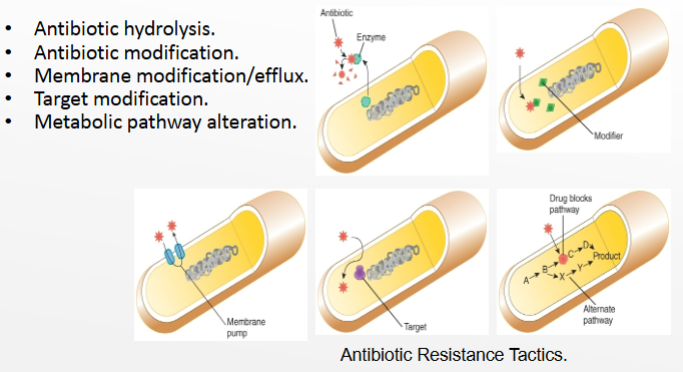
antibiotic resistance is caused by…
improper or excessive use of antibiotics, like prescription abuse, misuse, misuse by healthcare organizations, and antibiotics in animal feed