Lung Staging
 Call Kai
 Learn
Learn Practice Test
 Spaced Repetition
 Match
Match Flashcards
 Knowt Play
1/85

There's no tags or description
Looks like no tags are added yet.
Name | Mastery | Learn | Test | Matching | Spaced | Call with Kai | Chat |
|---|
No analytics yet
Send a link to your students to track their progress
86 Terms
Which primary lung tumors are staged using the AJCC TNM system?
Non-small cell lung carcinoma (NSCLC)
Squamous cell carcinoma — Central
Adenocarcinoma — Peripheral
Small cell carcinoma → Central, mets early
Pulmonary carcinoid tumors → Central endobronchial mass
Which lung cancer is usually central?
Squamous cell carcinoma
Small cell carcinoma
Which lung cancer is usually peripheral?
Adenocarcinoma
Which lung cancer usually presents as a central endobronchial mass?
Carcinoid tumor
Which lung cancer frequently metastasizes early and is therefore often not treated surgically?
Small cell carcinoma
Which pulmonary procedures are commonly received for lung cancer staging?
Wedge resection
Segmentectomy
Lobectomy
Bilobectomy
Pneumonectomy
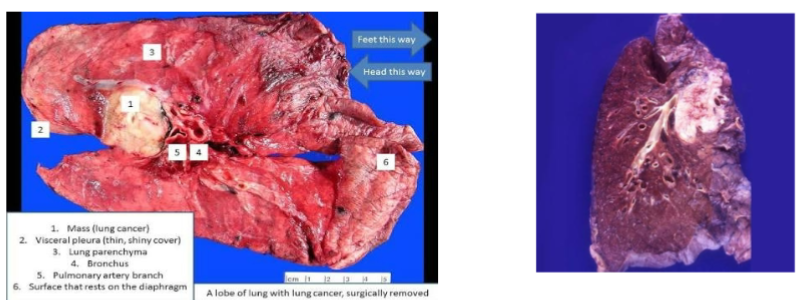
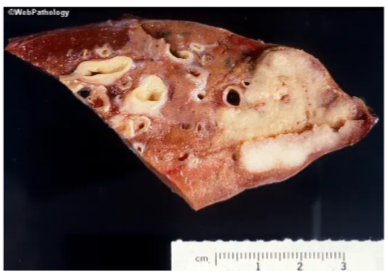
What gross findings should always be documented for lung cancer staging?
Specimen type
Tumor location
Tumor focality
Greatest tumor dimension
Visceral pleural invasion
Lymph node status
Margin status
Which tumor measurement is used for AJCC T staging?
Greatest single dimension of the invasive tumor
Which pleural finding directly affects T stage?
Visceral pleural invasion
What is pT1mi?
Minimally invasive lepidic pattern ≤ 5 mm
Lepidic predominant
What is pTis?
Carcinoma in situ
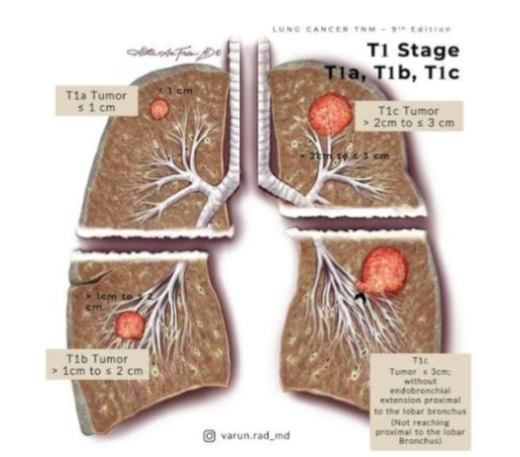
What is pT1?
Tumor ≤3 cm
Surrounded by lung or visceral pleura, without invasion proximal to the lobar bronchu
What are the T1 subdivisions?
T1a: ≤1 cm
T1b: >1–2 cm
T1c: >2–3 cm
What is pT2?
Tumor >3–5 cm
OR a tumor with any of the following:
Visceral pleural invasion
Main bronchus involvement (not involving the carina)
Atelectasis or obstructive pneumonitis extending to the hilum
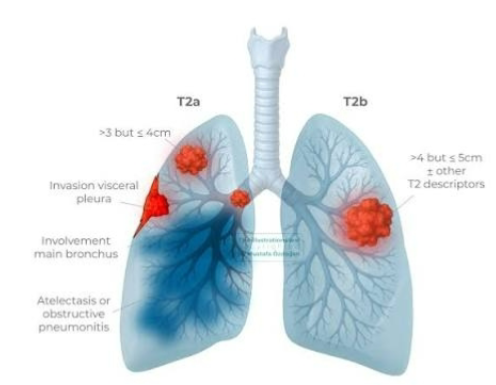
What are the T2 subdivisions?
T2a: >3–4 cm OR visceral pleura/central invasion
T2b: >4–5 cm
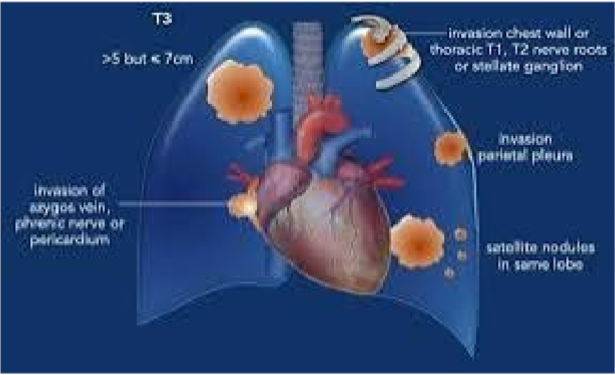
What is pT3?
>5-7 cm
OR invading:
Chest wall
Thoracic T1, T2 nerve roots
Stellate ganglion
Phrenic nerve, azygos vein
Parietal pleura
Pericardium
OR separate tumor nodule(s) in the same lobe
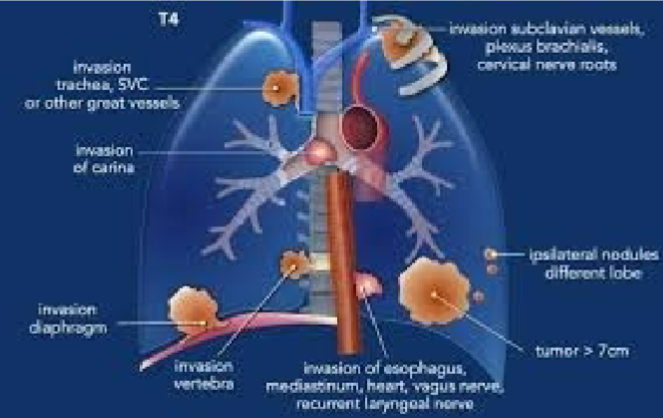
What are pT4?
>7 cm
OR invading:
Diaphragm
Mediastinum
Heart
Vagus nerve
Great vessels
SVC
Trachea
Recurrent laryngeal nerve
Esophagus
Vertebral body
Carina
Subclavian vessels, plexus brachialis, cervical nerve roots
OR separate tumor nodule(s) in a different ipsilateral lobe
Which bronchial landmark automatically makes a tumor T4 if invaded?
Carina
A 0.8 cm adenocarcinoma confined to the lung. T stage?
T1a
A 1.8 cm adenocarcinoma. T stage?
T1b
A 2.8 cm peripheral adenocarcinoma. T stage?
T1c
A 3.6 cm squamous cell carcinoma, but without invasion. T stage?
T2a
A 4.7 cm adenocarcinoma. T stage?
T2b
A 2.2 cm tumor with visceral pleural invasion. T stage?
T2 (visceral pleural invasion upstages the tumor regardless of size)
A 6.2 cm tumor confined to the lung. T stage?
T3
A 3 cm tumor invading the chest wall. T stage?
T3
A 3 cm tumor invading the phrenic nerve. T stage?
T3
A 3 cm tumor with another tumor nodule in the same lobe. T stage?
T3
An 8.5 cm tumor confined to the lung. T stage?
T4
A 2 cm tumor invading the carina. T stage?
T4
A 4 cm tumor invading the heart. T stage?
T4
A 2 cm tumor invading the esophagus. T stage?
T4
A tumor with a second nodule in a different ipsilateral lobe. T stage?
T4
What is pN0?
No regional lymph node metastasis.
What is pN1?
Mets in ipsilateral:
Peribronchial
Hilar
Intrapulmonary
What is pN2?
Mets in ipsilateral:
Mediastinal
Subcarinal
What is pN3?
Mets in:
Contralateral mediastinal
Hilar
Ipsilateral
Contralateral scalene
Supraclavicular nodes
What is pM1?
Distant mets
What is pM1a?
Any of the following:
Contralateral lung nodule
Pleural/Pericardial dissemination
Pleural nodules
Pericardial nodules
Malignant pleural effusion
Malignant pericardial effusion
Metastasis identified in ipsilateral hilar lymph nodes. N stage?
N1
Metastasis in intrapulmonary nodes. N stage?
N1
Metastasis in ipsilateral mediastinal nodes. N stage?
N2
Metastasis in subcarinal nodes. N stage?
N2
Metastasis in contralateral mediastinal nodes. N stage?
N3
Metastasis in supraclavicular nodes. N stage?
N3
What is M0?
No distant metastasis
What is M1b?
One single extrathoracic lesion (metastasis outside the thorax)
What are the M1c subcategories?
M1c1 — Multiple lesions, 1 organ system
M1c2 — Multiple lesions, >1 organ systems
Separate tumor nodule in the opposite lung. M stage?
M1a
Malignant pleural effusion. M stage?
M1a
Pericardial tumor nodules. M stage?
M1a
Single adrenal metastasis. M stage?
M1b
Liver and bone metastases. M stage?
M1c
T1a N0 M0 — Stage?
Stage IA1
T1b N0 M0 — Stage?
Stage IA2
T1c N0 M0 — Stage?
Stage IA3
T1a-c N1 M0 — Stage?
Stage IIA
T1a-c N2a M0 — Stage?
Stage IIB
T1a-c N3 M0 — Stage?
Stage IIIB
T2a N0 M0 — Stage?
Stage IB
T2a N1 M0 — Stage?
Stage IIB
T2a N2a M0 — Stage?
Stage IIIA
T2a N3 M0 — Stage?
Stage IIIB
T2b N0 M0 — Stage?
Stage IIA
T2b N1 M0 — Stage?
Stage IIB
T2b N2a M0 — Stage?
Stage IIIA
T2b N2b M0 — Stage?
Stage IIIB
T2b N3 M0 — Stage?
Stage IIIB
T3 N0 M0 — Stage?
Stage IIB
T3 N1 M0 — Stage?
Stage IIIA
T3 N2a M0 — Stage?
Stage IIIA
T3 N2b M0 — Stage?
Stage IIIB
T3 N3 M0 — Stage?
Stage IIIC
T4 N0 M0 — Stage?
Stage IIIA
T4 N1 M0 — Stage?
Stage IIIA
T4 N2a-b M0 — Stage?
Stage IIIB
T4 N3 M0 — Stage?
Stage IIIC
Any T N0 M0 — Stage?
Stage III disease (specific subgroup depends on T category)
Any T Any N M1a — Stage?
Stage IVA
Any T Any N M1b — Stage?
Stage IVA
Any T Any N M1c1 — Stage?
Stage IVB
Any T Any N M1c2 — Stage?
Stage IVB
Which pulmonary resection provides the most complete pathologic staging?
Pneumonectomy
Which pulmonary procedure is most commonly performed for a small peripheral pulmonary nodule?
Wedge resection
T1a-c N2b M0 — Stage?
Stage IIIA
T2a N2b M0 — Stage?
Stage IIIB