Photo History Notes
 Call Kai
 Learn
Learn Practice Test
 Spaced Repetition
 Match
Match Flashcards
 Knowt Play
1/78

There's no tags or description
Looks like no tags are added yet.
Name | Mastery | Learn | Test | Matching | Spaced | Call with Kai | Chat |
|---|
No analytics yet
Send a link to your students to track their progress
79 Terms
Niepce
First Photographer, worked with Daguerre

First Photograph
“View from Window at Le Gras,” 1826 by Niepce
Daguerre
Inventor of Daguerreotype

Daguerreotype
“Boulevard du Temple, Paris,” 1838 by Daguerre

First Daguerreotype
“Still Life,” 1837 by Daguerre
Talbot
Inventor of the Calotype

Calotype
“Trafalgar Square, London” 1843 by Talbot

Calotype, First Staged Image
“Self-Portrait as a Drowned Man, 1840 by Bayard
Daguerreotype
Made of metal, One of a kind, sharp and clear, shorter exposure
Calotype (Positive and Negatives)
Softer/Diffused image, longer exposure times, multiple copies, on paper

Cyanotype, from book “British Algae”
“Cystoseira Granulata,” 1843 by Atkins
Cornelius
First selfie, one of the first American photo studios
Democratization of Image Production
Constructing own identity, cheaper and readily available

Daguerreotype
“Ralph Waldo Emerson,” 1857 by Hawes and Southworth
Brady
First to open photo gallery, did Lincoln’s 1860 portrait, documented Civil War, sent photographers into battlefields, negatives sent to NY Studio to develop

Albumen silver print
“Abraham Lincoln,” 1860 by Brady
Washington
One of the first commercially successful black photographers pre-Civil War, portraits of African Americans and prominent white sitters

Daguerreotype
“John Brown,” 1847 by Washington
Ball
African American portrait photographer who supported abolition and challenged slavery through images
Post-Mortem Daguerreotypes
A controversial style of photography often considered morbid
Collodion
Glass plate with ionized collodion, a wet plate process
Photogenic Drawing
Placing object directly on paper, then exposing package to light, invented by Talbot
Waxed Paper Negative
Invented by Le Gray in 1851, prepared in advance with longer exposure time, was made sharper with reduced paper texture with wax

The Pencil of Nature
Produced by Talbot, 1844-46, first book relating to prints and photographs

Calotype, From “Pencil of Nature”
“The Open Door,” 1844 by Talbot
Albumen Paper
Developed in 1850 by Blanquert, used egg whites which led to yellow undertones

Albumen Print
“The Chimney Sweeps” 1852 by Negre
Le Gray
Was commissioned to record monuments of France, water in his works moved too much and blended together

Waxed Paper Negative
“Château de Chenonceau,” 1851 by Le Gray
Carte-de-visite (process)
Invented by Disderi, albumen print glued on paper, utilized eight exposures from 4 lens camera, inexpensive, commonly exchanged on birthdays and holidays

Carte-de-visite
“Prince Lobkowitz,” 1858 by Disderi
Hill and Adamson
Led to first fusion of art and calotype

Daguerreotype, First war photo
“Mexican-American War,” 1847

Daguerreotype, First action news picture
“Fire in the Ames Mill, Oswego, NY,” 1853 by Barnard
Stereoscope
a device for viewing a stereoscopic pair of separate images, depicting left-eye and right-eye views of the same scene, as a single three-dimensional image
Nadar
Owner of largest photo studio. pioneer of aerial photography, first to develop flash, and curator of celebrity portraits

Albumen silver print
“Sarah Bernhardt,” 1865 by Nadar

Albumen silver print
“Catacombs of Paris,” 1862 by Nadar

Modern print from glass negative
“The Sewers of Paris,” 1864 by Nadar
Fenton
Close relationship with royal family, was sent to depict lives of soldiers

Calotype
“Valley of The Shadow of Death,” 1855 by Fenton
Beato
First to document unglamorous sides of war, worked on sterioscopic albums of China and Japan
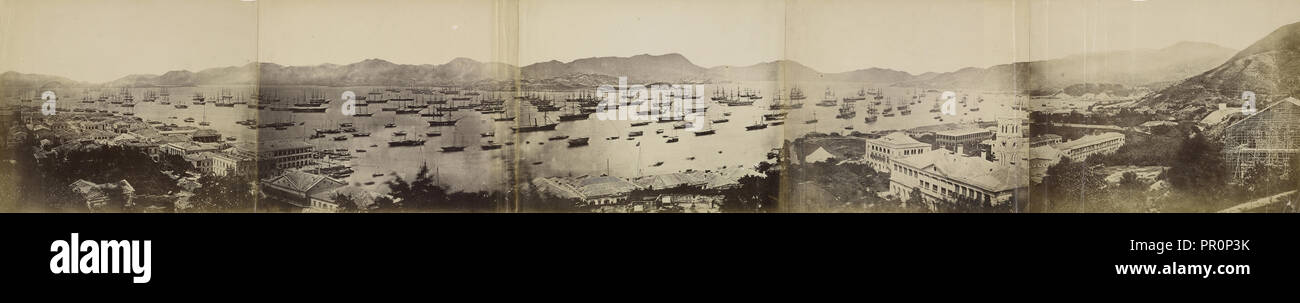
Six Albumen Prints
“Panorama of Hong Kong, Showing the Fleet for the North China Expedition,” 1860 by Beato

Albumen Print
“Dr. Alexander Keith,” 1843 by Adamson and Hill
Gardner
Prominent civil war photographer, used to work under Brady until leaving to start own business

Wet collodion print
“Home of a Rebel Sharpshooter,” 1863 by Gardner
Rejilander
Italian-trained photographer who famously used combination prints to build elaborate, staged, painting-like scenes

Combination Print, 30 negatives
“The Two Ways of Life,” 1857 by Rejilander
Collage
Physical pieces assembled together
Combination Print
Multiple photographic exposures combined into one print

Combination Albumen Print, 5 negatives
“Fading Away,” 1858 by Robinson
Cameron
Known for Soft-focus, expressive portraits of eminent Victorians and allegorical/literary studies, believed artistic vision was more important than technical precision

Albumen Silver Print
“Mrs. Herbert Duckworth,” 1867 by Cameron
Du Camp
Realism works in Egypt influenced European and Western preservationists

Calotype
“Hypètre d’Athor,” 1850 by Du Camp

Albumen Print
“Pantheon, Rome,” 1880 by Alinari
Salzmann
Specialized in Jerusalem Photography

Albumen Print
“The pools of the baths of St.Mary’s,” 1854 by Salzmann
Manifest Destiny
American Justification for Colonialism and expansion
American Transcendentalism
A philisophical movement that believes in the inherent goodness of man and nature
Russell
Railway photographer which collaborated with the ideas of “bringing progress” through expanding capitalism

Albumen Print
“Meeting of the Rails,” 1869 by Russell
O’Sullivan
Pioneer of War photography, produced iconic landscapes of the American West, helped shape visual identity of American frontier and bring settlers
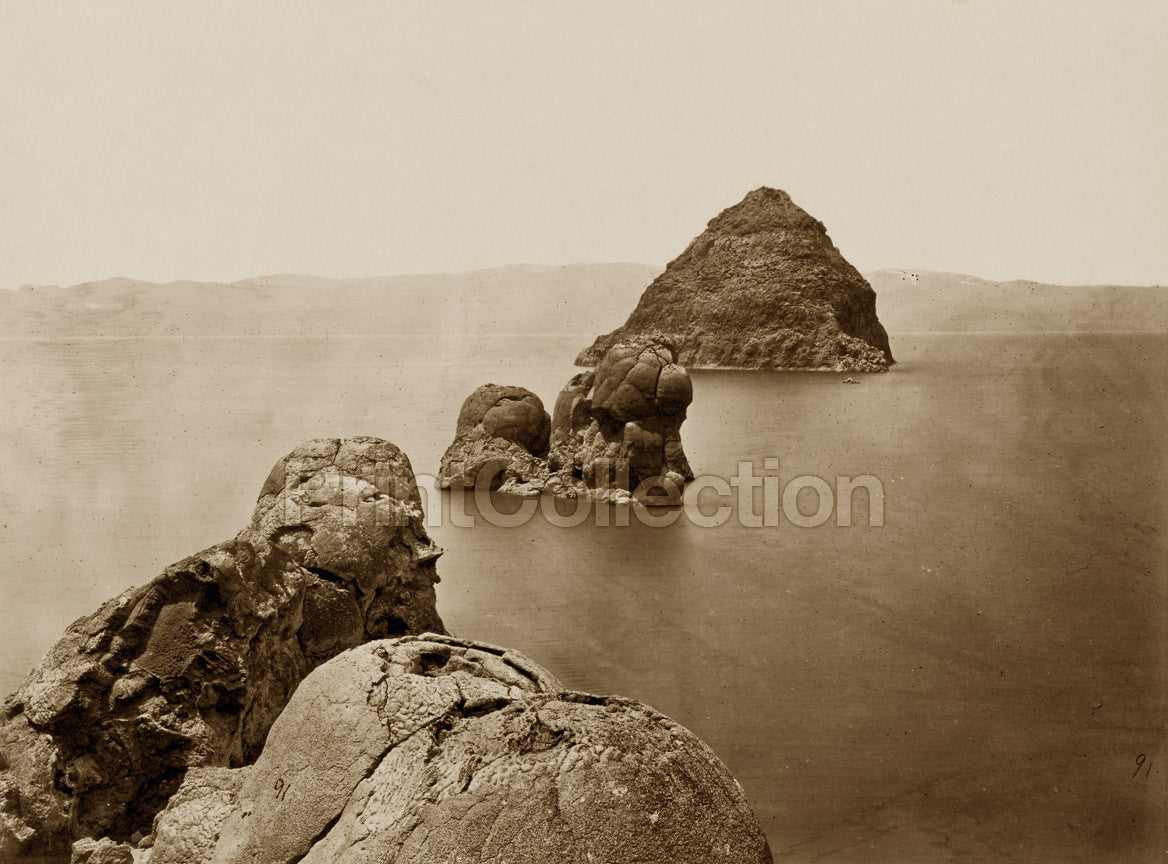
Albumen Print
“Pyramid and Tufa Domes,” 1878 by O’Sullivan
Watkins
Photographed Yosemite Valley extensively, pictures helped influence U.S. Cogress to declare Yosemite a National Park

Albumen Print
“Ancient Ruins in the Cañon de Chelly,” 1873 by O’Sullivan

Albumen Print
“Cascade, Nevada Falls, Yosemite,” 1865 by Watkins
Jackson
Famous for images of Yellowstone and American West, photos helped create Yellowstone National Park, popularized beauty of frontier

Albumen Print
“Holy Cross,” 1870s by Jackson

Albumen Print
“From the “Best General View,” Mariposa Trail,” 1865 by Watkins
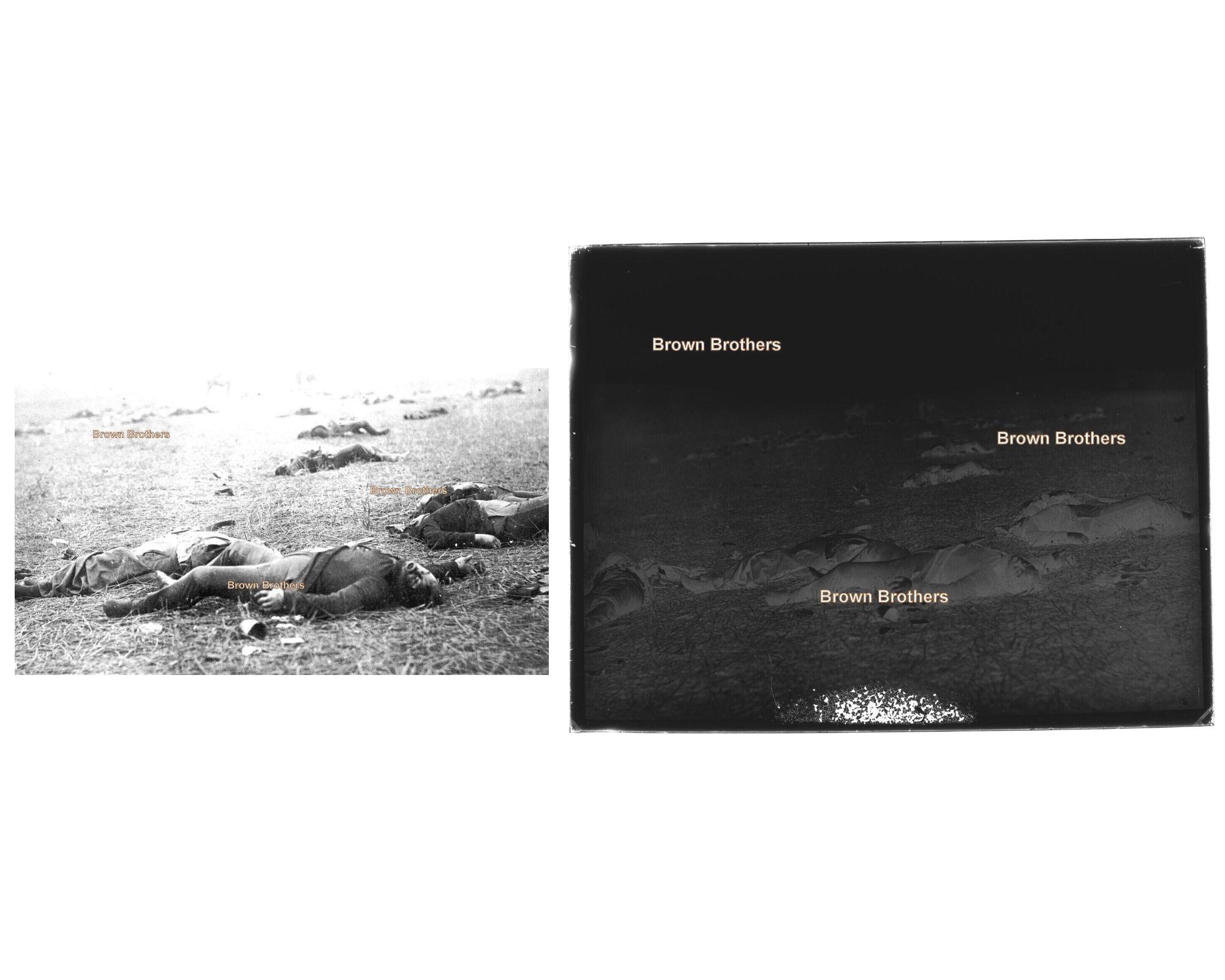
Stereoscope, Negative by O’Sullivan
“The Harvest of Death",1863 by Gardner
Curtis
Commissioned by JP Morgan to document Native American Living

Photogravure Print
“Rush Gatherer,” 1910 by Curtis
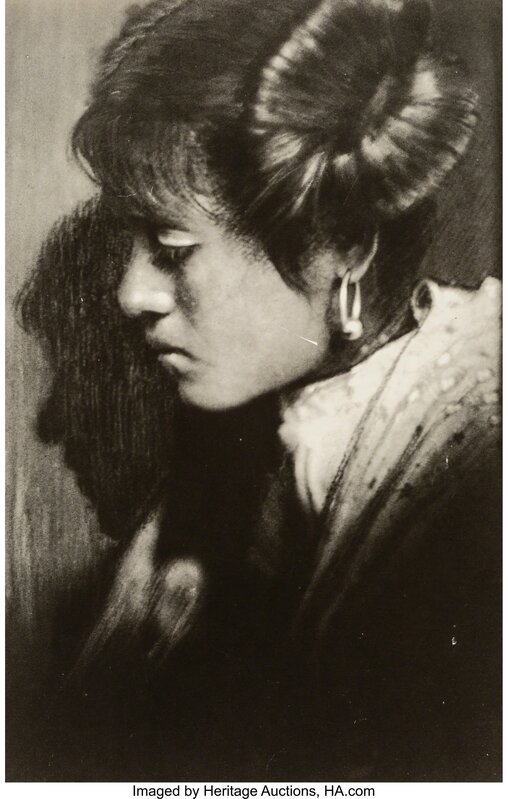
Gelatin Silver Print
“Hopi Maiden,” 1905 by Curtis
Muybridge
Pioneer of motion studies and sequential photographs, was originally commissioned to settle a bet on whether all four hooves of horse leave ground

Albumen Print
“Animal Locomotion, Horse in Motion,” 1872
Marey
Pioneer of Chronophotography, techniques used to capture motion on single image, eventually led to inspiring inventors of cinema
1888 Kodak Camera
Invented by Eastman, brought affordabe, hand-held, mass-market “snapshot” photography to the general public

Gelatin silver print
“Movements in Pole Vaulting,” 1850 by Marey