avian git
 Call Kai
 Learn
Learn Practice Test
 Spaced Repetition
 Match
Match Flashcards
 Knowt Play
1/13

There's no tags or description
Looks like no tags are added yet.
Name | Mastery | Learn | Test | Matching | Spaced | Call with Kai | Chat |
|---|
No analytics yet
Send a link to your students to track their progress
14 Terms
pregastric system
how is mechanical disruption of food achieved
how is oesophageal peristalisis achieved
what do most birds have
what happens to food being swallowed
do not masticate so mechanical disruption of food is accomplished by beak and gizzard
esophagus is large in diameter
esophageal peristalsis is aided in most birds by extension of the neck
most birds have a crop which varies from a simple expansion of the esophagus to one or two esophageal pouches
depending on the state of contraction food being swallowed is diverted into the crop then later propelled into the stomach by waves of peristalsis in the crop
stomach
2 parts
shapes
separation
function
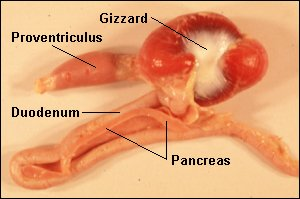
have a glandular stomach or proventriculus and a muscular stomach or gizzard
gizzard is disk shaped, very muscular and in many birds contain small stones that facilitate grinding of foodstuffs
one of the gizzards two orifices recieves ingesta from the proventriculus and the other empties into the duodenum
a cycle of contractions involving 2 stomachs force feed back and forth between two grinding it and increasing exposure to digestive enzymes
also periodic retropulsion of duodenal contents back into the stomach
final type of motility is seen in regurgitation of pellets of bone, hair and feathers from the stomach of raptors
proventriculus is where digstion is initiated and ts epithelium contains tubular glands which secrete mucous and gastric glands secrete hydrochloric acd and pepsin
the gizzard mechanically massages and grinds food to reduce its size and increase surface area, and is the location of action of HCl and pepsin
gizzars is consisted of 2 pairs of smooth muscles arranged n disticnt bands that both originate and terminate ofn a circular tendon which provide mixing and grinding actions during contraction
these muscles have a high myoglobin concentration
interior lining of the gizzard contain deep tubular glands that prodce protein rich secretion that hardens into rods which forms the cuticle linng
pyloric fold separates the gizzard from the small intestine
small intestine
what is the intestine surrounded by and what does this do?
duodenum, jejunum, ileum
proximal small intestine recieves bile from the liver and digestive enzymes from pancreas and absoptive epithelial cells are decorated with essentially the same battery of enzymes and transporters as in mammals
intestine is surrounded by inner circular and outer longitudual muscle layers which mix the digesta and propel
large intestine
what serves as the common opening of the digestive, reproductive and urinary system and what happens here?
where does antiperistalsis originate
how many ceca
short colon and typically a pair of ceca
short villi extend into the lumen of the colon
cloaca is an expanded tubular structure that serves as the common opening of the digestive, reproductive and urinary systems which opens to the outside of the bird as the vent
absorption of water and electrolytes
antiperistalisis that originates in the cloaca is a prominent pattern of motility in the avian colon and has been suggested to assist not only in filling the ceca but to flush urine from the cloaca into the large gut for absorption of water
in some species ceca are important sites for fermentation
adaptations for diet
ridges in tomia of their beak for slicing the hull
dexterous tongue for manipulating seed and diposing the hull
overview
mouth
esophagus
crop
proventriculs
ventriculus/gizard
intestine
ceca
rectum
cloaca
beak
has a keratin sheath growing from the upper and lower mandible which forms the beak
subtle changes occur as food types change
the outer edges, the tomia are sharp to facilitate cutting seed coats
oral cavity
what is the anterior part roofed with and what does it contain
what do granivorous species have
anterior part of the oral cavity is roofed with a hard palate whch in finches, canaries, budgerigas and cokatiels contains 2 ridges that facilitate removal of shell from seeds before consumptin
granivorous species have well developed tubular salivary glands scattered in groups around the lower oral cavity, tongue and pharynx
where are most taste buds located
palate and posterior tongue
palatal taste buds are usually located in regions where the epithelium is soft and glandular- typically near the salivary glands
tongue , oral cavity and beak have a rich supply of touch recepters
esophagus
where does it extend into and where does it terminate
in the budgerier where is it relative to the trachea
what happens in what layer
adaptations through…
epithelium
what does it widen into
extends down the neck into the thoracic cavity and terminates in the proventriculus
in the budgerigar the esophagus is dorsal to the trachea in the anterior region of the neck and then runs along the right side
peristaltic contraction of inner cicruclar and outer longitudnal muscles in the tunica muscularis propels food poseriorly through
is expandible to aid in swallowing large bits of food through a series of longitudinal folds which is encriched with mucou glands
epithelial lining is thik and cornified
in many species the esophagus widens into a crop beore entering the thoracic cavity
some granivorous spcies do not have a true crop ut have a very expandable esophageal pouch
stomach
glandular (proventriculus) and musclar (gizzard)
proventriculus is where stion is initiated and ts epithelium contains tubular glands which secrete mucous and gastric glands secrete hydrochloric acd and pepsin
the gizzard mechanically massages and grinds fod t reduce its size and increase surface area, and is the location of action of HCl and pepsin
gizzars is consisted of 2 pairs of smooth muscles arranged n disticnt bands that both originate and terminate ofn a circular tendon which provide mixing and grinding actions during contraction
these muscles have a high myoglobin concentration
interior lining of the gizzard contain deep tubular glands that prodce portein rich secretion w=that hardens into rods which forms the cuticle linng
pyloric fold separates the gizzard from thesmall inttetine
rectum- where does it extend between
extends between the ileocecal junction and the cloaca
cloaca- what empties here
terminal chamber into which the digestive tract and urogenital ducts empty