BIO 204
 Call Kai
 Learn
Learn Practice Test
 Spaced Repetition
 Match
Match Flashcards
 Knowt Play
1/46

There's no tags or description
Looks like no tags are added yet.
Name | Mastery | Learn | Test | Matching | Spaced | Call with Kai | Chat |
|---|
No analytics yet
Send a link to your students to track their progress
47 Terms
What is an atom?
The smallest unit of an element that still behaves and interacts like such element
What is a molecule?
two or more types of atoms bonded together
What are the parts of an atom? Draw and label.
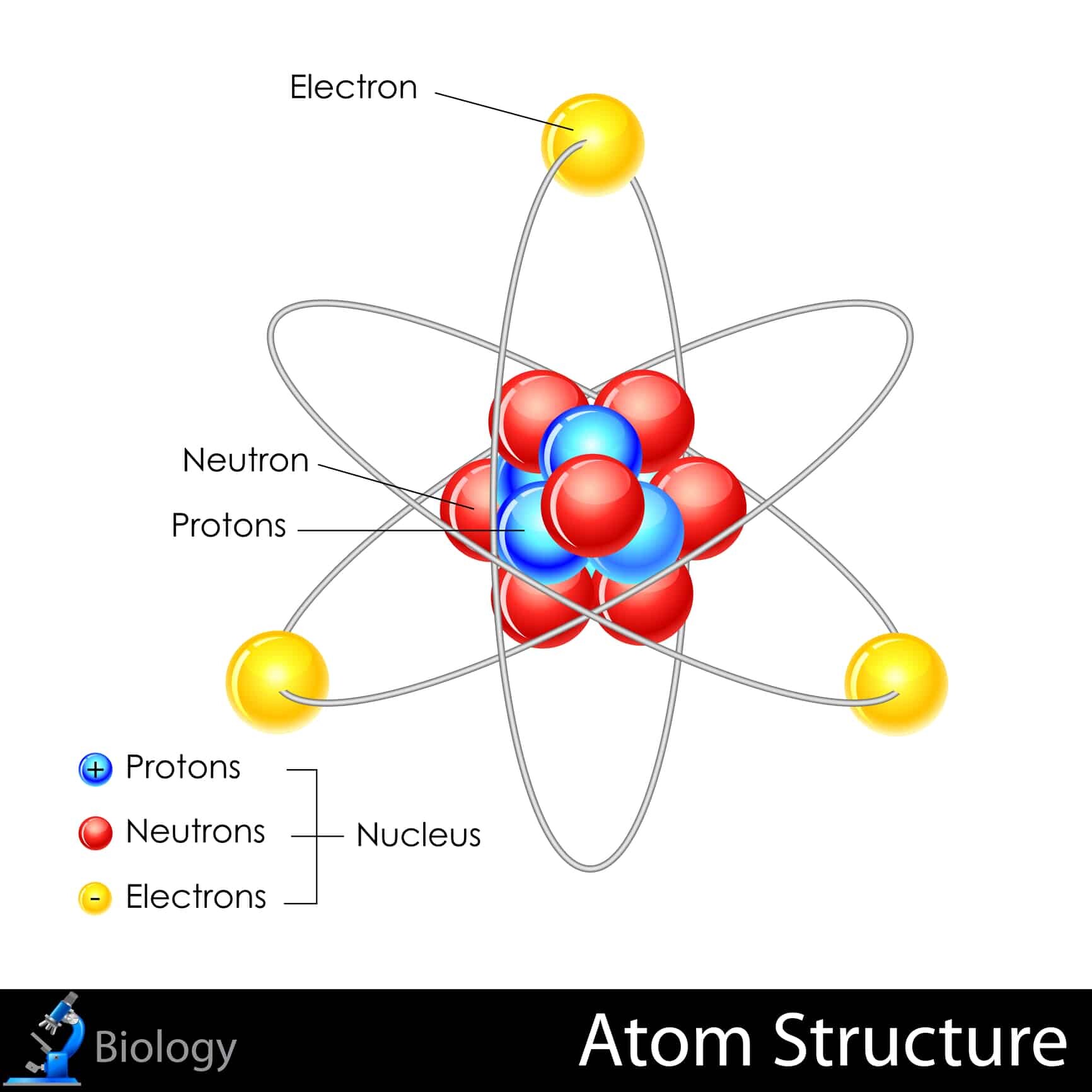
What is the weight of
a proton
a neutron
an electron
Proton - 1 atomic mass unit (amu)
Neutron - 1 atomic mass unit (amu)
Electron - nearly massless compared to the weight of the protons and neutrons
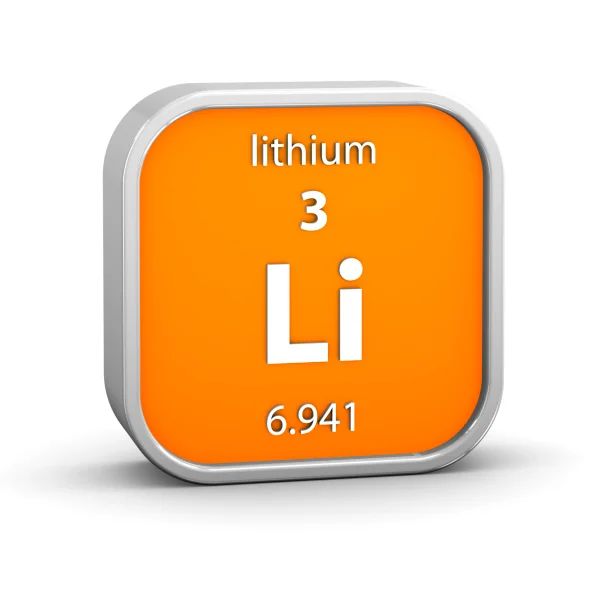
Label and explain each part of the picture
3 - atomic number (also number of protons)
Li - element symbol
6.941 - atomic mass number (the average mass of the element and its various isotopes)
What is an isotope?
A version of an element that has the same number of protons and electrons, but either less than or more than the standard number
Why is atomic mass not just a whole number (since mass is measured in AMU, and protons and neutrons make up the mass of an atom and weigh 1 AMU)?
It is the average mass of the element and its isotopes. It is calculated based off of how common each isotope is in nature, so it is multiplying the mass of each natural isotope by its fractional abundance.
What is a valence electron?
The electron(s) on the outermost shell of an atom.

How many electrons are held in each shell of an atom (in terms of biology, 3rd shell is not exact)?
1st shell - two electrons max
2nd shell - 8 electrons max
3rd shell (has 3 sub-shells) - the first two sub shells hold 2 and 6 (8 total) max
For neutral elements, how do you find the number of electrons?
The number of protons (atomic number)
What are two important characteristics about noble gasses when relating to their electrons and interactions?
All electron shells are full
They do not form bonds with other atoms
What are the two fundamental “desires” of an atom? How do they fill these desires?
They want to fill their outer shell
They want to be neutral
by bonding!
What happens to the electrons of atoms in a covalent bond?
the bonded atoms share their electrons to fill their shells
What happens to the electrons of atoms in an ionic bond?
the bonded atoms either give up their electrons or gain electrons from the other atom
What is the new valence electron shell for the atom that gave up their atom(s) during ionic bonding?
The closest, filled shell becomes the new valence shell.
For example, if an atom gave up the electrons on their third shell, the second shell becomes the new valence electron shell.

How can you use the periodic table of elements to find the number of valence electrons for an atom?
For columns 1 and 2, the column number is equal to the number of valence electrons
For columns 13-18, the column number minus 10 is equal to the number of valence electrons
For other columns, this trick does not work and you must perform electron configuration
What are the three kinda of subatomic particles?
protons
neutrons
electrons
What determines each element’s particular chemical behavior?
the number of its subatomic particles
Why are neutrons essential for atoms?
they allow multiple protons to exist in the nucleus and prevent them from repelling against each other because each proton sticks to the attractive neutron
How many protons and neutrons are in hydrogen? Why?
only one proton, no neutrons
since there is no other proton in the nucleus to repel hydrogen’s proton, no neutron is needed
Describe the movement of the different subatomic particles in the nucleus.
proton - still, in the nucleus
neutron - still, in the nucleus
electron - moving rapidly around the nucleus
What is the group of the most stable and “happy” elements called? What makes them stable?
Noble gasses
All of their electron shells are filled, so they are balanced and have no cravings for electrons
Are the noble gasses important for living processes?
Not really
Chlorine has 7 electrons on its third shell, so how “hungry” for electrons is chlorine?
VERY hungry, the most
Lithium and sodium have 1 valence electron, so how hungry are they for electrons? What is the fastest path to getting them stable?
Not hungry
To stabilize, it is easier for them to lose one electron
Carbon has 4 valence electrons, so which is the best path for this element to stabilize? What does this make carbon good for?
it can lose or gain 4 electrons just as easily, both are good
it is an ideal element for carrying on chemical reactions
Based off of the annotated periodic table from the beginning of the semester, from memory, annotate a periodic table describing which side is hungry for electrons, ready to give up electrons, which are ambivalent, and which are stable.
Look to BIO 204 journal pg. 5
What is another element that is “electron neutral”, similar to carbon?
Hydrogen
it just needs one electron, but also only has one electron
so, gaining or losing an electron would make it stable
What is a covalent bond?
a bond between two or more atoms where electrons are shared to fill both of the electron shells and make the atoms more stable
When two oxygen atoms bond together, how many electrons are shared? What is this type of bond called?
four electrons are shared
double bond

Which elements does SPONCH stand for?
Sulfur
Phosphorus
Oxygen
Nitrogen
Carbon
Hydrogen
What is the preferred number of covalent bonds for each element in SPONCH?
Sulfur - 2
Phosphorus - 5
Oxygen - 2
Nitrogen - 3
Carbon - 4
Hydrogen - 1
Think of SPONCH 252(like my student id)341
252341
What type of force is a covalent bond? Describe its strength in relation to other bond types.
Intramolecular force
Very strong compared to other bond types
What happens to an atom when it gains an extra electron? What type of molecule is this called (it is now a molecule because gaining an electron is a result of bonding)?
It becomes negatively charged
It is now an ion
What happens to atoms like lithium when they lose their electron? What do we call this molecule now?
it becomes positively charged
it is also an ion now
What happens when a “hungry” atom and an atom that is more ready to give up an atom form a covalent bond? Why? What does this create?
the sharing of electrons is uneven
electrons spend longer around the more “hungry” atom
it creates a partial charge
What do we call molecules with charge separation?
polar molecules
What does it mean that water is maximally polar? What unique ability does this give the molecule?
it has the largest separation of charges
it is the “universal solvent” and can dissolve more molecules than any other liquid
What do δ⁺ and δ− indicate? In a water molecule, which would be on the oxygen side and which would be on the helium side?
partially positive and partially negative
the δ− would be on the oxygen side
the δ+ would be on the hydrogen side
Why is it particularly helpful that living cells are 70% water?
a very wide range of chemicals can be used and absorbed
What quality of water make it attracted to itself?
its polarity/partial charge (the δ+ side/H side is attracted to the δ− side/O side)
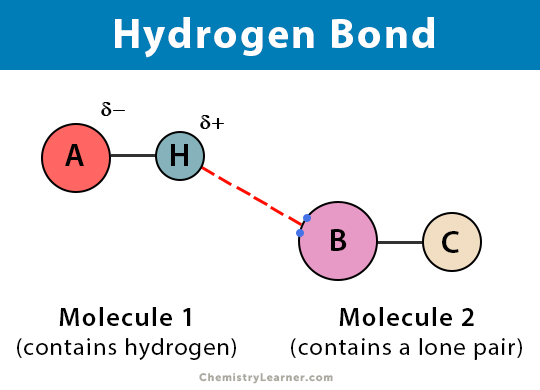
What are the weakest intermolecular interactions called? Describe the interaction?
hydrogen bonds
the partially positive part of a molecule/ion (hydrogen is usually the partially positive part) is attracted to the partially negative part of another molecule/ion
What are the five unusual properties of water?
Heat capacity - the hydrogen bonds between water molecules store heat energy
Hydrogen bonds between water are more separate in the solid form, so ice is less dense and thus floats
It takes a lot of heat energy to break the bonds between multiple water molecules, so evaporation makes the surrounding atmosphere cooler (think of dry heat vs. humid heat)
Cohesion - water molecules stay together strongly in the face of forces like gravity and wind
Polarity - water molecules are attracted to the opposite charges on other water molecules
What does it mean when a molecule is non-polar? Do atoms in a non-polar molecule have the same or different level of “craving” for electrons?
it has no charge and no separation of charges
they have equal affinity for electrons (eg. two hydrogen atoms or a carbon and a hydrogen atom
What combination of carbon and hydrogen have “electron hoarding” leading to a partial electric charge?
none!
Much of life consists of bonds between which two elements? Why is this?
carbon and hydrogen
all combinations are non-polar and have no separation of charges
What is a consequence of being non-polar? (Why grease doesn’t wash away with water)
water cannot dissolve it