9.2 Action Potential Organiser
 Call Kai
 Learn
Learn Practice Test
 Spaced Repetition
 Match
Match Flashcards
 Knowt Play
1/6

There's no tags or description
Looks like no tags are added yet.
Name | Mastery | Learn | Test | Matching | Spaced | Call with Kai | Chat |
|---|
No analytics yet
Send a link to your students to track their progress
7 Terms
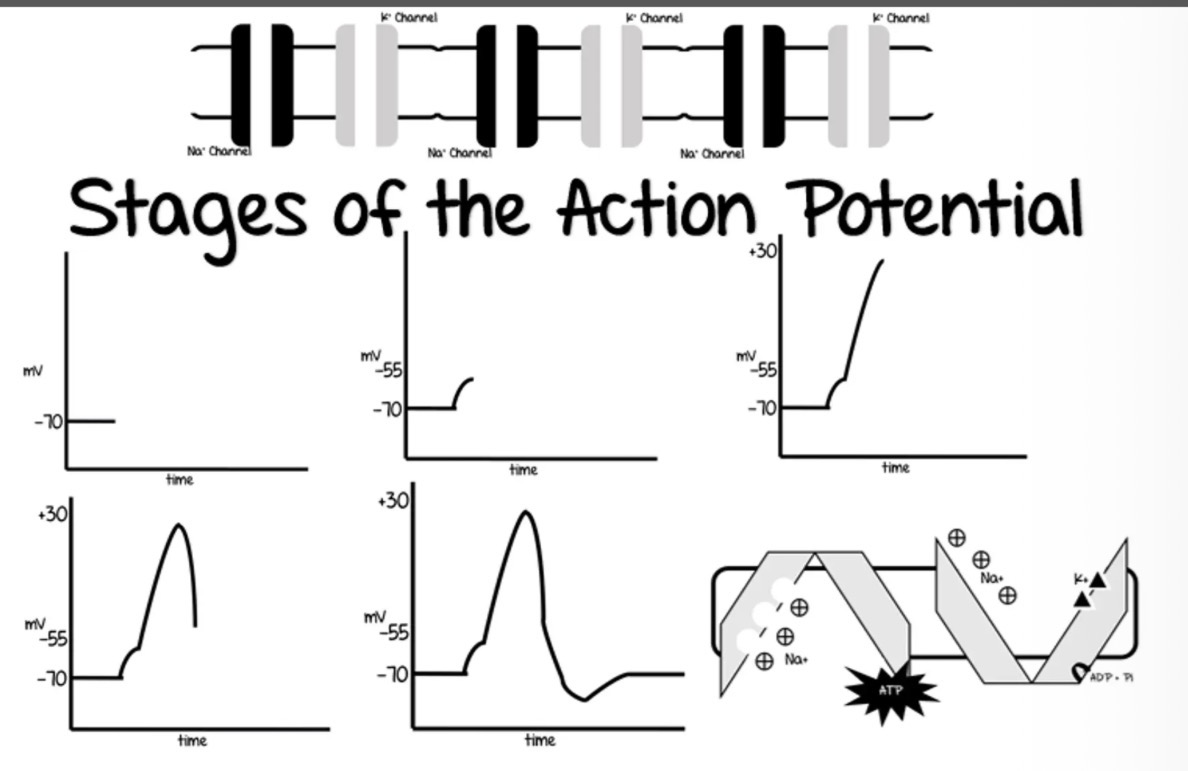
Stages of the Action Potential
Stage 1: resting
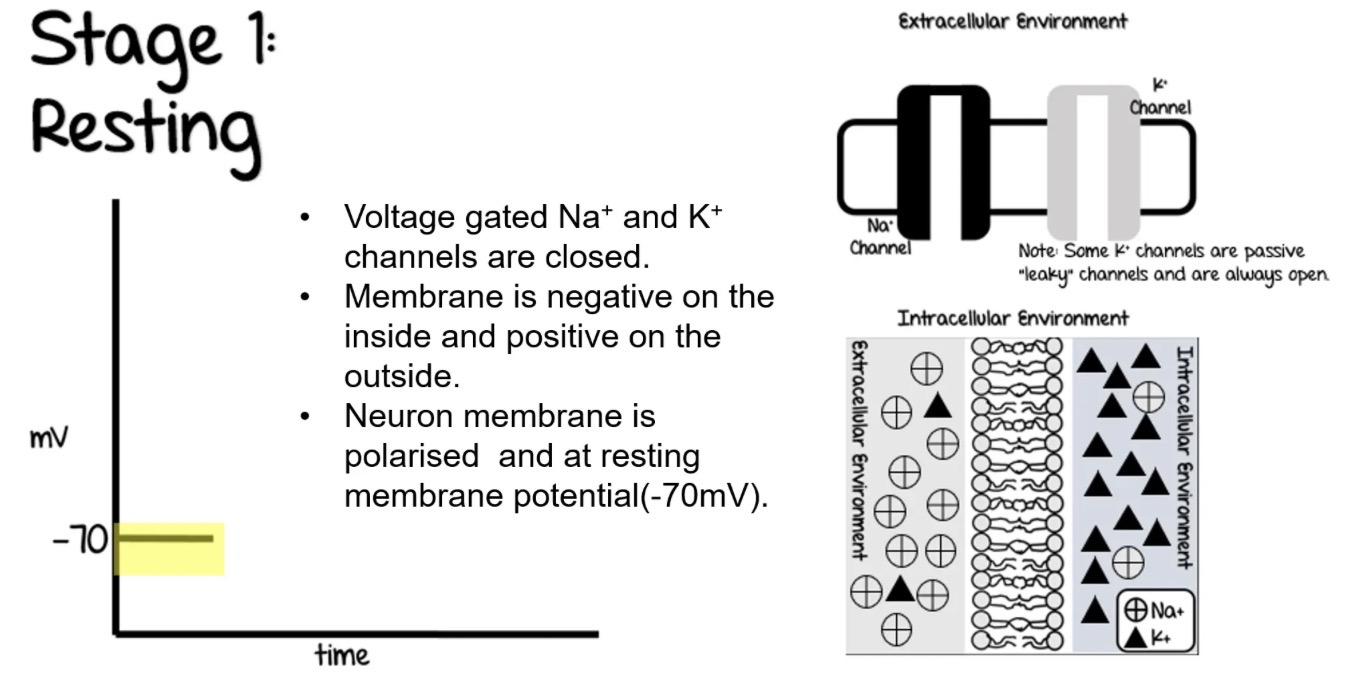
Voltage gated Na+ and K+ channels are closed.
Membrane is negative on the inside and positive on the outside.
Neuron membrane is polarised and at resting membrane potential(-70mV).
Stage 2: Stimulus → Threshold
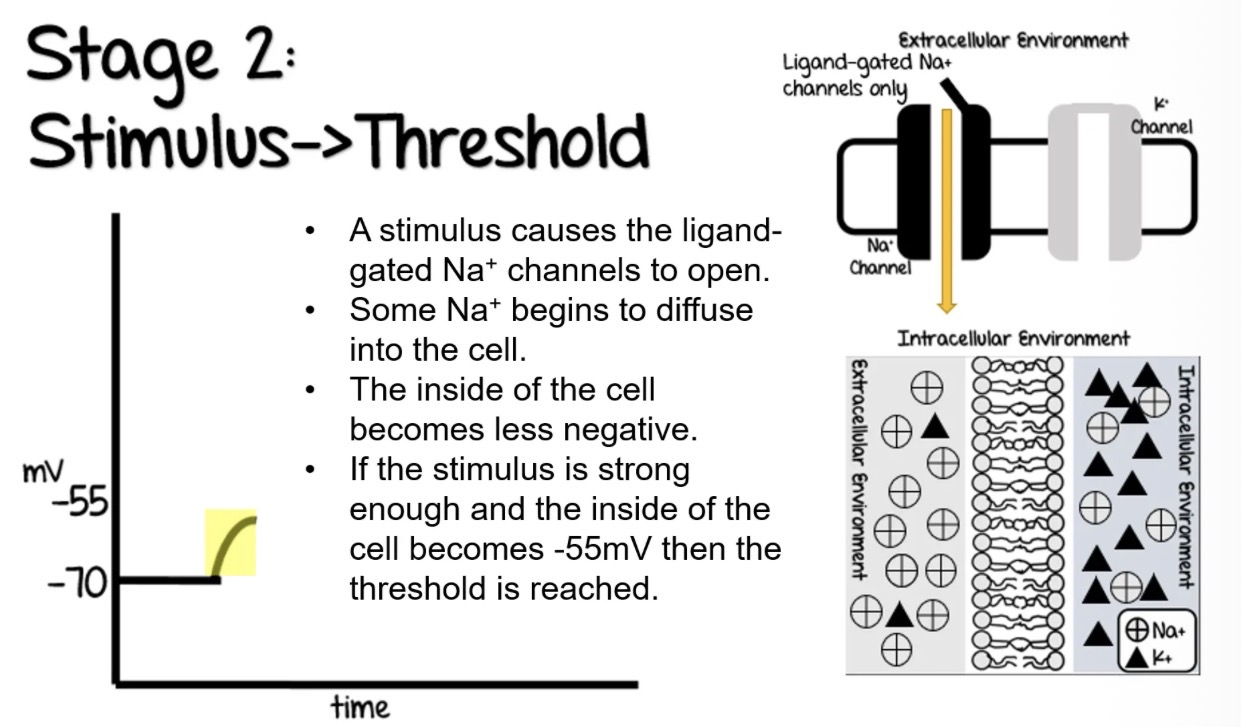
A stimulus causes the ligand-gated Na+ channels to open.
Some Na+ begins to diffuse into the cell.
The inside of the cell becomes less negative.
If the stimulus is strong enough and the inside of the cell becomes -55mV then the threshold is reached.
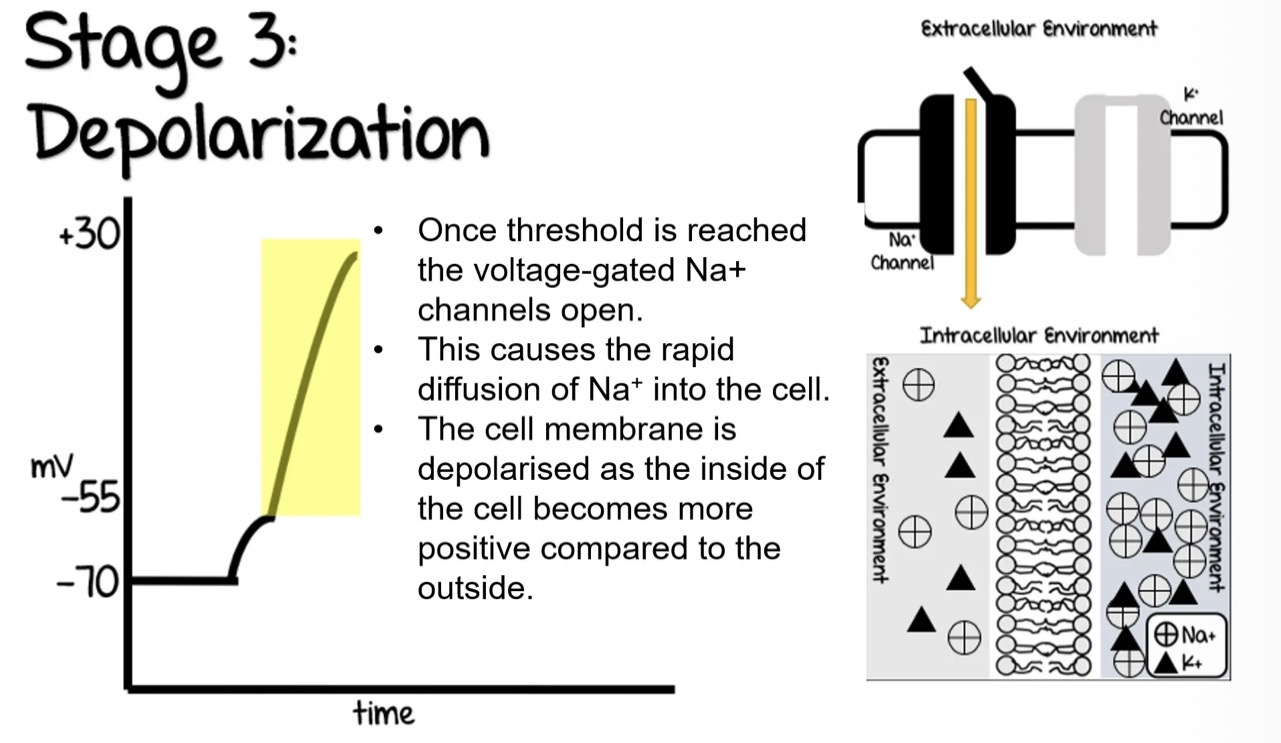
stage 3: depolarisation
Once threshold is reached the voltage-gated Nat channels open.
This causes the rapid diffusion of Nat into the cell.
The cell membrane is depolarised as the inside of the cell becomes more positive compared to the outside.
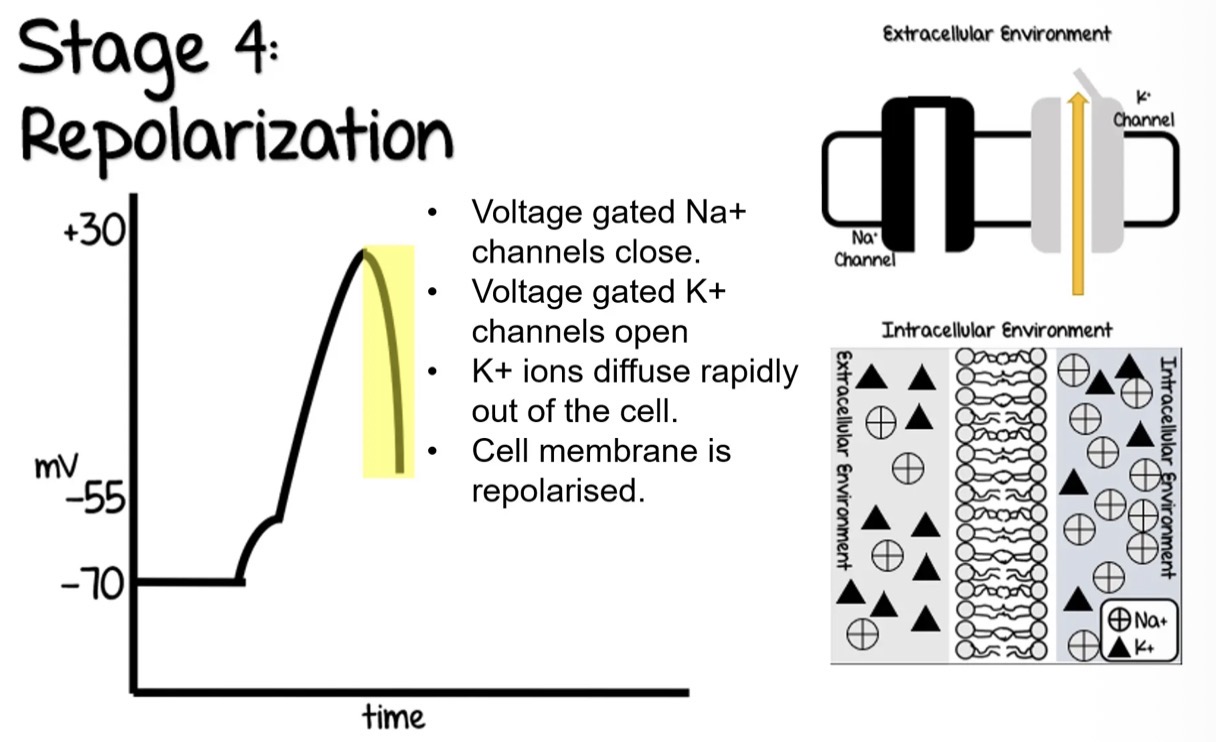
Stage 4: Depolarisation
Voltage gated Na+ channels close.
Voltage gated K+ channels open
K+ ions diffuse rapidly out of the cell.
Cell membrane is repolarised.
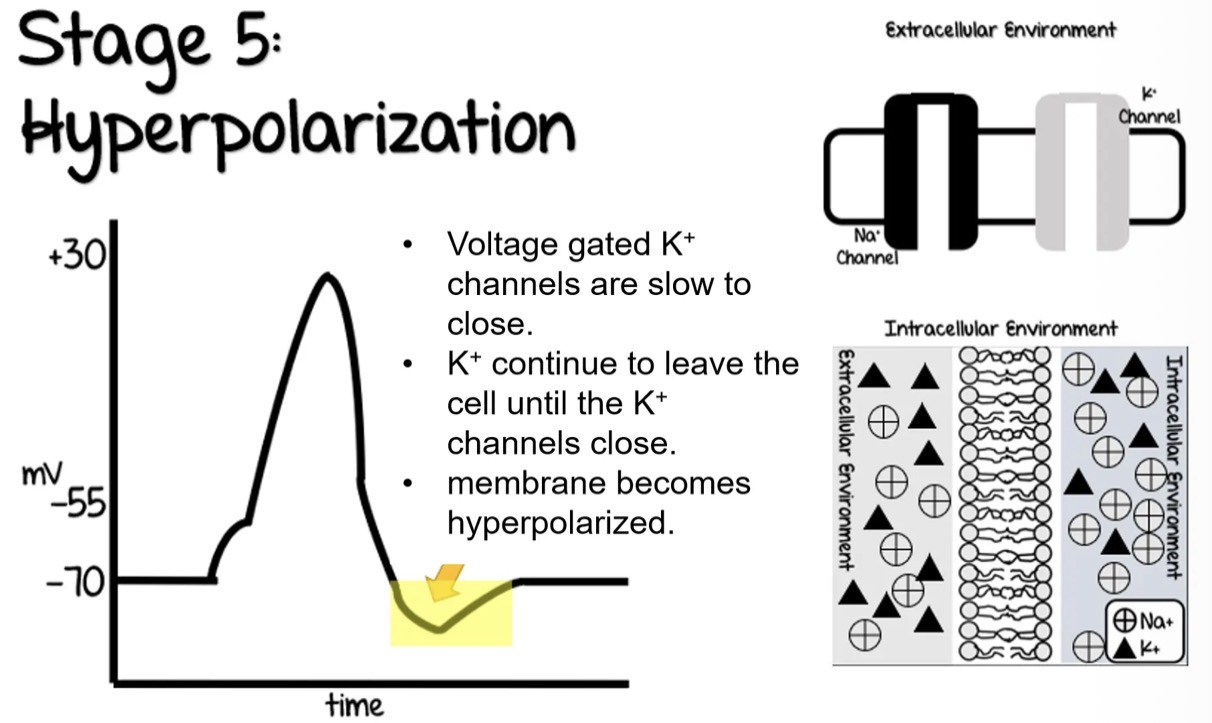
Stage 5: Hyperpolarisation
Voltage gated K+ channels are slow to close.
K+ continue to leave the cell until the K+ channels close.
membrane becomes hyperpolarized.
Stage 6: Resting
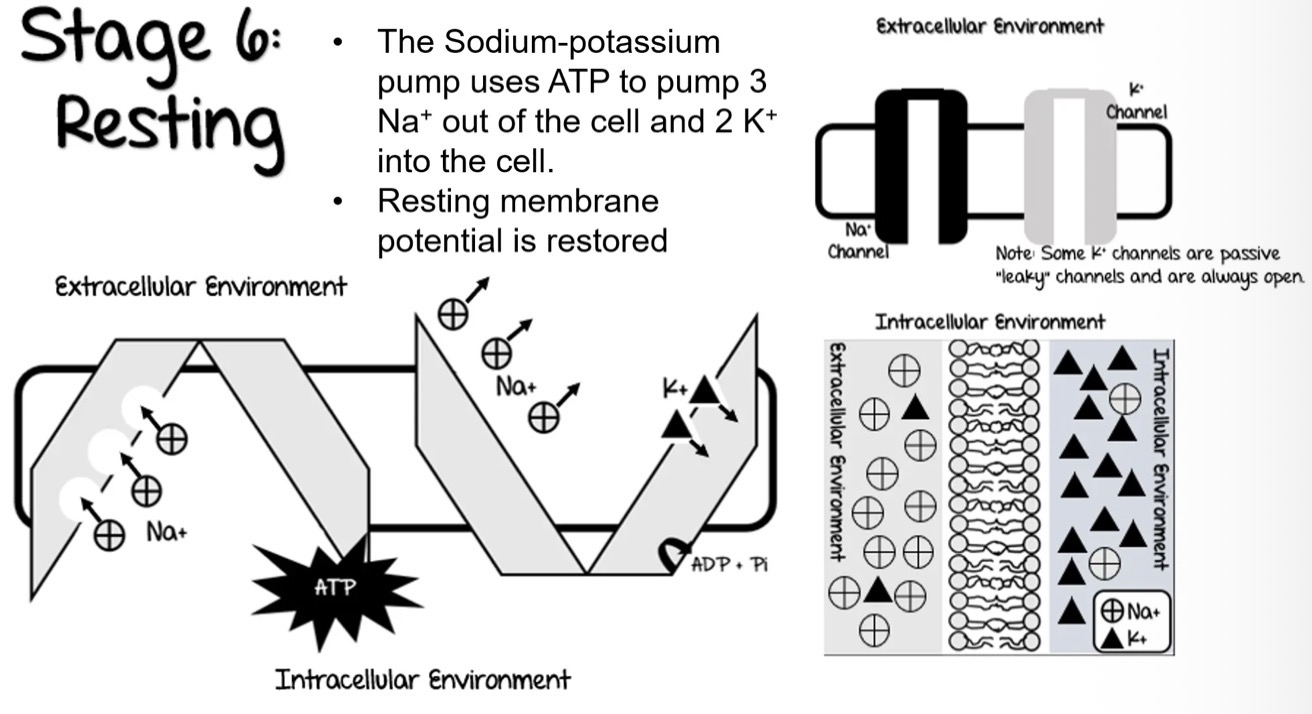
The Sodium-potassium pump uses ATP to pump 3 Na+ out of the cell and 2 K+ into the cell.
Resting membrane potential is restored