Bio final benchmark
 Call Kai
 Learn
Learn Practice Test
 Spaced Repetition
 Match
Match Flashcards
 Knowt Play
1/46

There's no tags or description
Looks like no tags are added yet.
Name | Mastery | Learn | Test | Matching | Spaced | Call with Kai | Chat |
|---|
No analytics yet
Send a link to your students to track their progress
47 Terms
What is homoeostasis
any self-regulating process by which a biological system maintains internal stability while adjusting to changing external conditions
What is a negative feedback loop?
a self-regulating system in which the output of a process acts to counteract or reduce the initial change. Instead of meaning something is "bad," the term "negative" simply means the system works to oppose a stimulus. These loops are essential for creating stability and maintaining balance
What is the function of the kidneys?
they remove waste and toxins via urine, balance body fluids and electrolytes, regulate blood pressure, stimulate red blood cell production, and maintain bone health
What Element does the Kidneys remove?
They primarily remove nitrogen (as urea), which is a toxic waste created when your body breaks down proteins. They also filter out creatinine (muscle waste) and extra minerals like sodium, potassium, and phosphorus
What is the pathway O2 in the Respiratory
System?
Nasal cavity, Pharynx, Larynx, Trachea, Bronchi, Bronchioles, Alveoli, Capillaries.
How does O2 get into the blood stream?
Oxygen gets into the blood through a passive process called diffusion, which takes place in the lungs. It moves from areas of high concentration to areas of low concentration without requiring any energy
What gas leaves the blood into the lungs
Carbon dioxide is the gas that leaves the blood and enters the lungs
What blood part carries CO2?
blood plasma
What Blood Part Carries O2?
red blood cells/ erythrocytes
What is the pathway food takes starting with the
Mouth
Mouth, pharynx, esophagus, stomach, small intestine, large intestine, rectum, anu
Which Enzyme is used in each location to digest
which Macromolecule
carbohydrates in the mouth - salivary amylase breaks down large starch into smaller sugars. proteins in the stomach - Pepsin breaks large proteins into smaller chains of amino acids. Lipids in the mouth and stomach Lingual lipase and gastric lipase start breaking down fats. nucelic acids in the small intestine - Nucleases from the pancreas break nucleic acids into individual building blocks called nucleotides
What is the relative pH of the stomach compared
to the mouth
the mouth has a higher ph than the stomach
What is the function of the Immune System?
defends the body against harmful pathogens (bacteria, viruses, fungi), toxins, and abnormal cells like cancer. It distinguishes the body's healthy tissues from foreign invaders and remembers past threats to provide long-lasting protection
Which system works together when you are too
hot
the integumentary system and circulatory system work together to cool your body by sweating and increasing blood flow to the skin.
Which system works together when you are too
cold
When you are too cold, the muscular system and circulatory system work together by shivering and reducing blood flow to the skin to conserve heat.
What is peristalsis ? and where would it be
performed
Peristalsis is the series of wave-like muscle contractions that move food through the digestive tract. It is performed in the digestive system, especially in the esophagus, stomach, and intestines.
What is smooth muscle and where would it be
found
Smooth muscle is involuntary muscle that works automatically to move substances through the body. It is found in organs such as the stomach, intestines, and blood vessels.
What is Mitosis
Mitosis is the process in which one cell divides to produce two identical daughter cells.
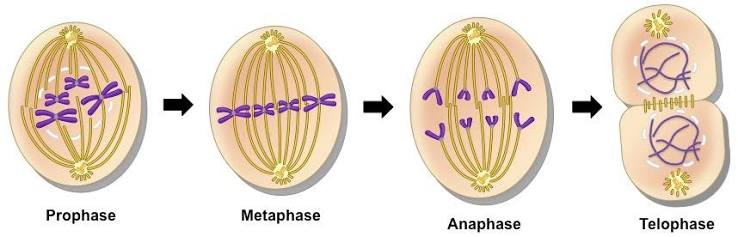
What are the Stages of Mitosis?
Prophase – chromosomes become visible. Metaphase – chromosomes line up in the middle of the cell. Anaphase – chromosomes separate and move apart. Telophase – new nuclei form around the chromosomes. Cytokinesis – the cell splits into two daughter cells.
What are hormones?
Hormones are chemical messengers made by glands that travel through the blood to control body functions such as growth, metabolism, and reproduction.
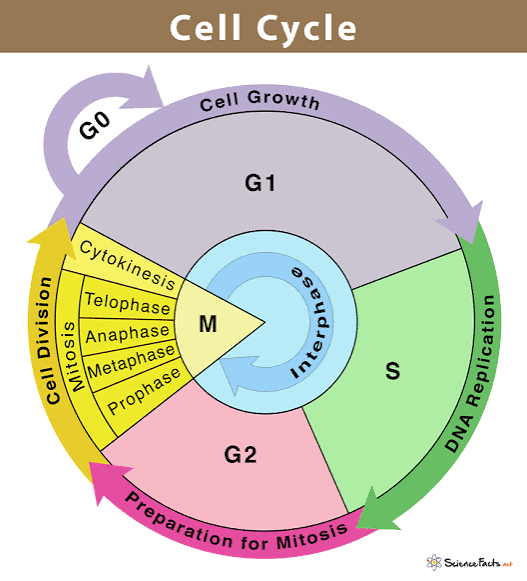
What is the Cell Cycle?
The cell cycle is the series of stages a cell goes through as it grows, copies its DNA, and divides to form two new cells.
what happens during the cell cycle
During G1 phase, the cell grows and carries out normal functions. In S phase, the cell copies its DNA so each new cell will have a full set of genetic information. During G2 phase, the cell grows more and checks for mistakes before dividing. In M phase (mitosis + cytokinesis), the nucleus divides and then the cell splits into two identical daughter cells.
The G0 phase is a resting stage where a cell leaves the cell cycle and stops dividing. It can either stay permanently in this state (like nerve cells) or temporarily pause to focus on its normal functions.
Does Mitosis make identical copies or genetically
unique cells?
Mitosis makes two identical copies (genetically identical daughter cells).
What happens in the G0 Phase?
The G0 phase is when a cell leaves the cell cycle and stops dividing, often to carry out its normal functions.
what are the four chambers of the heart
The four chambers of the heart are the right atrium, right ventricle, left atrium, and left ventricle.
Which two proteins are used in a muscle contraction?
The two proteins used in muscle contraction are actin and myosin
What are the four bases of DNA
Adenine, Thymine, Cytosine, Guanine
Which base pairs with Adenine?
Thymine
Which base pairs with Cytosine?
Guanine
What does DNA stand for?
Deoxyribonucleic Acid
What is the correct order of mitosis?
Prophase → Metaphase → Anaphase → Telophase
what happens during prophase
the cell prepares to separate its genetic material. Loose chromatin condenses into visible, X-shaped chromosomes, the nuclear envelope breaks down, the nucleolus disappears, and the mitotic spindle begins to form to move the chromosomes
what happens during metaphase
chromosomes line up in the middle of the cell
what happens during anaphase
paired chromosomes are separated and pulled toward opposite poles of the cell
what happens during telephase
the separated chromosomes reach the opposite poles of the cell and begin to unwind. Two new nuclear membranes form around each set of DNA, and the cell prepares to physically split into two daughter cells.
Why do cells undergo mitosis?
Growth, repair, and replacement of old or damaged cells.
Which body system fights diseases?
immune system
Which body system carries oxygen and nutrients through the body?
circulatory system
Which body system includes the brain and spinal cord?
nervous system
Which body system includes bones?
skeletal system
Which body system includes muscles?
muscular system
A bat gets an infection. Which body system would help fight it?
immune system
A bat breaks a wing bone. Which body system would repair the damage?
skeletal system
What does the circulatory system transport
oxygen and nutrients.
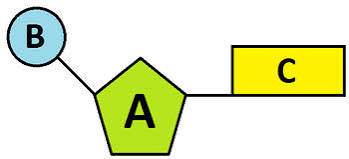
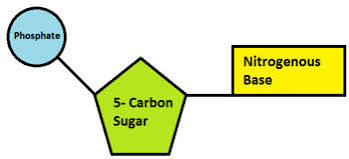
lable nucleotide
what does Helicase, Polymerase, Ligase do
Helicase acts like a zipper. It unwinds the DNA double helix by unzipping the two strands so they can be read.
Polymerase acts like a printer or builder. It moves along the open DNA strand and builds a matching new strand using free-floating letters (nucleotides).
Ligase acts like glue. It seals up any tiny breaks or gaps left in the new DNA strand, locking everything together
whats the difference between covalent bonds and hydrogen bonds?
Covalent bonds hold the "backbone" of a DNA or RNA strand together.
Hydrogen bonds hold the two strands of the DNA double helix together.