PHLEB CHP 6 - Pediatric Draws and Capillary Blood Collection
 Call Kai
 Learn
Learn Practice Test
 Spaced Repetition
 Match
Match Flashcards
 Knowt Play
1/22

There's no tags or description
Looks like no tags are added yet.
Name | Mastery | Learn | Test | Matching | Spaced | Call with Kai | Chat |
|---|
No analytics yet
Send a link to your students to track their progress
23 Terms
For pediatric blood draws…
use a butterfly need with a 23G and small pediatric tubes.
APE
A - Approach
P - Position
E - Equipment
Pediatric draw amounts:
Removing no more than 1% to 5% of infants total blood volume within a 24-hour period.
Dermal puncture
Capillary blood collection by puncturing the skin.
Capillary collection techniques:
Finger sticks for children and adults
Heel sticks for infants (birth-2 years old)
Lancets
Small, sharp medical device used to puncture the skin to obtain small capillary blood samples.
Methods for capillary collection:
Microcollection tube
Microhematocrit tube
Point-of-Care Testing (POCT) device
Blood Spot Collection Card
Microhematocrit tubes
Thin glass/plastic tube that draws blood through capillary action (gravity).
Must be 2/3 full.
Point-of-Care Testing (POCT) devices
Use test strips to test blood for immediate results about blood glucose, cholesterol, etc.
Point-of-Care Testing: Refers to medical diagnostic tests performed at or near patient’s location to provide rapid results.
Blood Spot Collection Cards
Use to collect samples from newborns for screening and laboratory testing.
Cards have printed circles that guide where blood from infant’s heel should be placed.
Heel Sticks
Capillary draws for infants 1-2 years old.
Using a lancet on plantar surface, in the outside heel area. Either area between big toe to heel, or area between 4th and pinky toe to heel.
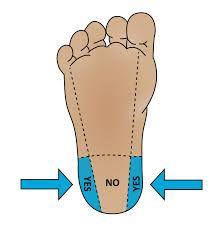
Puncture depth for infants:
Preterm infants: 0.85mm
Full-term infants: 2.0mm
Neonates
0-28 days old newborns
Newborn Screening (NBS)
Performed on neonates with a blood spot collection card to enable early detection of certain health conditions.
Bilirubin
Substance produced when red blood cells break down and can accumulate in infants due to the liver’s immature ability to process and excrete it.
When collecting a bilirubin specimen…
Avoid exposure to light.
Use amber-colored microcollection tubes or clear tube covered with foil.
Transported in a dark specimen bag.
PKU
Genetic disorder that causes phenylalanine (building block of protein) to accumulate to dangerous levels.
PKU test must be collected within 72 hours after birth.
Galactosemia (GALT)
Rare disorder caused by a deficiency of the enzyme that converts galactose into glucose.
Finger Sticks
Using a lancet on the middle or ring finger on the fleshy sides.
Hemolyze
To break down red blood cells, causing them to release their contents.
Hemostasis
Physiological process that stops bleeding after the injury (clotting process).
Clotting/Hemostasis process:
Vasoconstriction
Vessel narrows, decreasing blood flow
Platelet Plug Formation
Platelets stick to damaged endothelium, then gather together to form temporary plug in aggregation.
Coagulation
Platelet plug is reinforced by a stable fibrin clot.
Clot Retraction and Fibrinolysis
Clot shrinks to bring wound edges together.
Breaks and removes blood clot.
After activating a lancet on a capillary collection…
you must wipe away the first drop of blood with gauze (due to interstitial fluid).
Do not wipe with alcohol, can cause hemolyze or contamination.