3. lymphatic system
 Call Kai
 Learn
Learn Practice Test
 Spaced Repetition
 Match
Match Flashcards
 Knowt Play
1/21

There's no tags or description
Looks like no tags are added yet.
Name | Mastery | Learn | Test | Matching | Spaced | Call with Kai | Chat |
|---|
No analytics yet
Send a link to your students to track their progress
22 Terms
primary lymphatic organs + tissues
prod lymphocytes, which are immunocompetent cells, fundamental in adaptive/ acquired immunity
secondary lymphatic organs and tissues
sites where mature lymphocytes (+ other immune cells) agglomerate and participate in immune response
(become active + defend organ against pathogens)
lymphatic system (process)
primary lymphatic organs + tissues
secondary lymphatic organs + tissues
lymphatic vessels

lymphatic system (image)
fluid = lymph

sentinel lymph nodes
first nodes draining and filtering lymph from cancer
sentinel node biopsies useful for cancer staging and therapy planning
lymphadenopathy
inflammation of nodes actively responding to primary local infection, autoimmune condition/ malignancy
swollen superficial nodes can be easily palpable (visible)
(adeno = gland)
lymphedema
accumulation of fluid in interstitial spaces due to impaired lymphatic system
(edema = extra fluid)
lymphatic capillaries
closed ended, > lumen than blood capillaries
present in almost all vascularised tissues and organs of body

lacteals
lymphatic capillaries present in core of villi of small intestines
lymph formation
increased interstitial p
extremities of endothelial cells pushed inward
momentaneous formation of pores
interstitial fluid, large molecules and cells enter lumen of lymphatic capillary
pores close (valvular function)
(occurs in blood capillaries)

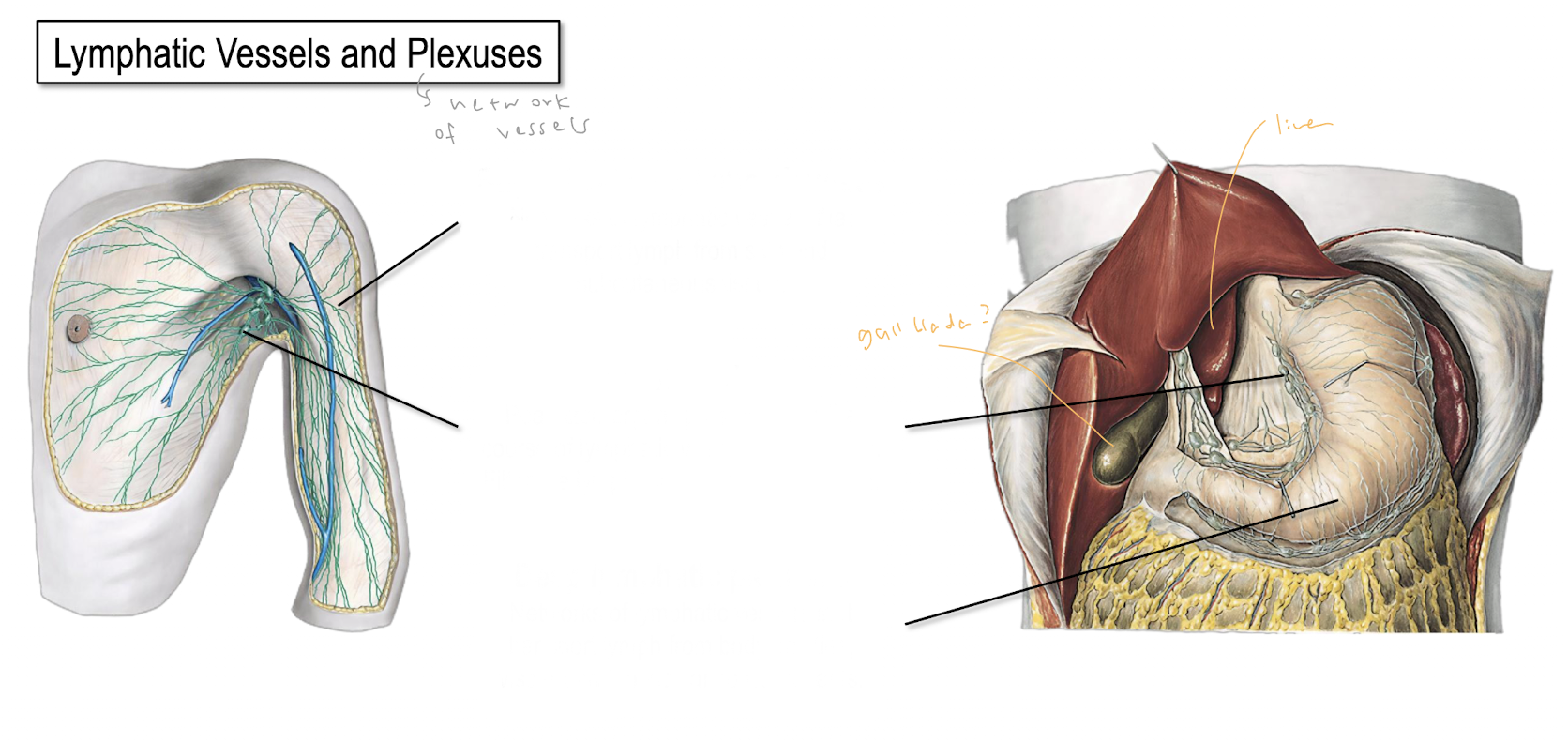
lymphatic vessels and plexuses structure
(plexuses = network of vessels)

lymphatic vessels and plexuses
lymph drained by capillaries transported by lymphatic vessels that form plexuses
mov of lymph facilitated by action of
smooth muscle in walls of lymphatic vessels
valves (promote unidirectional flow)
respiratory pump
muscular pump
vascular pump
lymphatic vessels merge to form larger and terminal lymphatic trunks and ducts that tribute lymph to brachiocephalic veins (venous circulation)

lymphatic trunks and ducts

lymphatic trunks and ducts +veins

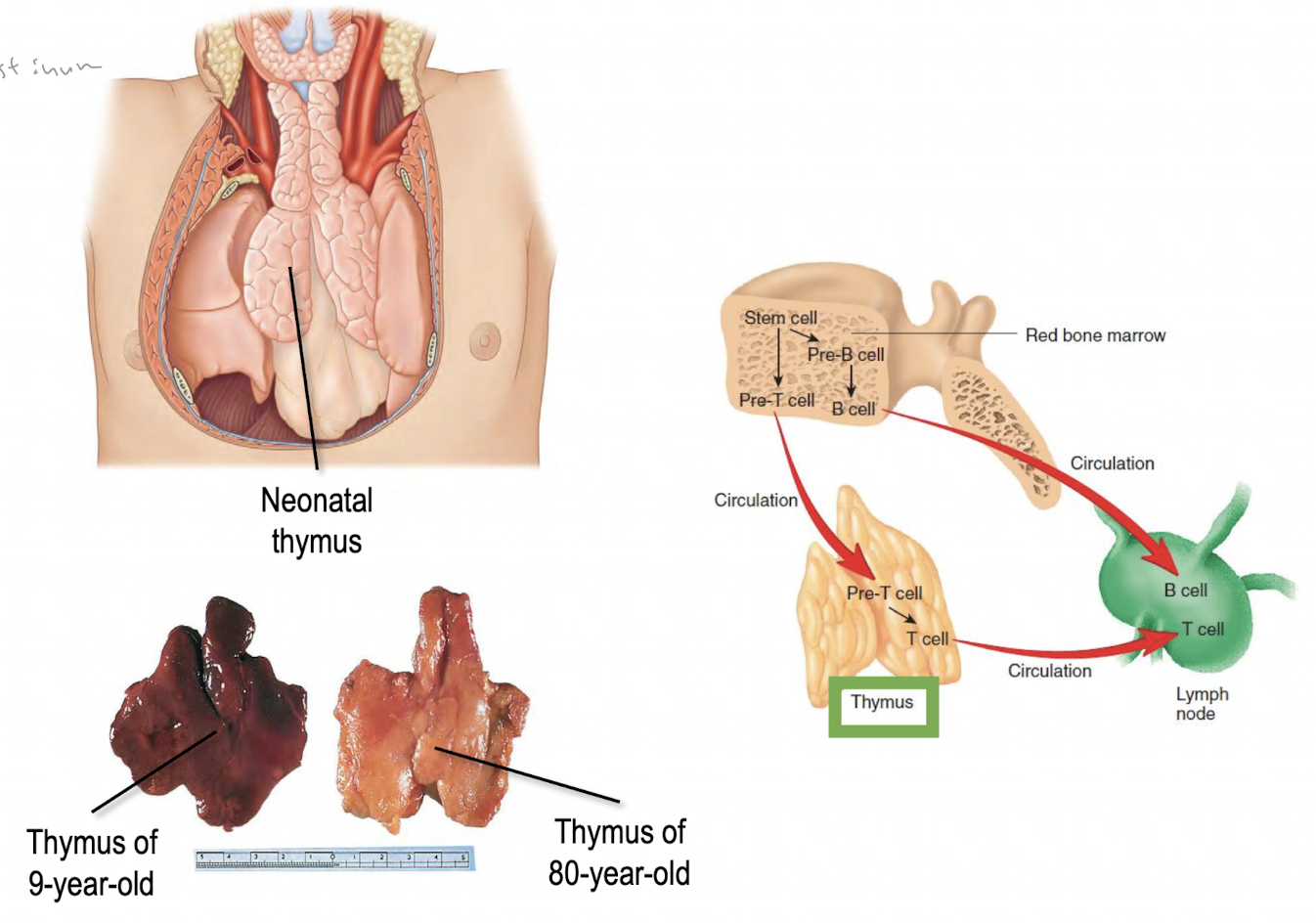
primary lymphatic organs
thymus + bone marrow
lymphocytes formed
red boen marrow
specialised connective tissue (hematopoietic tissue) present inside bones
generate blood cells, incl. immature lymphocytes
b-cells = lymphocytes that mature in rbm
ageing → substitution of rbm with yellow bone marrow (adipose tissue)

thymus
soft bilobed (divided into 2 lobes) organ in mediastinum, anterior to pericardium and posterior to sternum
t-cells = lymphocytes that mature in thymus
ageing → considerable fibrofatty degeneration of thymus
(substituted with fat = immune function decrease)
secondary lymphatic organs
spleen
lymph node
MALT
spleen
encapsulated solid organ in superior left quadrant of abdomen
prenatally, spleen (+liver + rbm) = site of hematopoiesis (create new blood cells + platelets)
postnatally
becomes haemopoietic in certain pathological conditions
destroys defective rbc
responds to pathogens in blood
functions as blood reservoir

lymph node
pea-sized encapsulated organ present along path of lymphatic vessels
filters lymph before returned to venous circulations
(~600 lymph nodes in body that tend to form large clusters in diff regions of body, especially. adjacent to major blood vessels

mucosa-associated lymphatic tissue (MALT)
agglomerations of non-encapsulated lymphoid tissue found adjacent to mucosa that lines hollow organs of respiratory, gastrointestinal, urinary and reproductive tracts
tonsils (Waldeyer’s ring) in mucosa of pharynx
Peter’s patches in mucosa of small intestine
lymphoid follicles in mucosa of large intestine, particularly in vermiform appendix
prevent pathogens from invading internal environment