thoracic skeleton (ribs & sternum)
 Studied by 0 people
 Call Kai
 Learn
Learn Practice Test
 Spaced Repetition
 Match
Match Flashcards
 Knowt Play
1/27

There's no tags or description
Looks like no tags are added yet.
Name | Mastery | Learn | Test | Matching | Spaced |
|---|
No study sessions yet.
28 Terms
what are the 3 parts of the thoracic skeleton?
thoracic vertebrae
ribs & costal cartilages
sternum
features of the thorax
cranial small thoracic inlet
middle bony thorax
caudal wide thoracic outlet
features of the bony thorax
cranial thoracic cavity
caudal intra-thoracic abdominal cavity
features of thoracic inlet
manubrium & first thoracic vertebrae/pair of ribs
passageway for esophagus & trachea
passageway for arteries & veins to head, neck & forelimbs
features of thoracic outlet
xiphoid process, last thoracic vertebrae & pair of ribs, & costal arch
closed by diaphragm
features of the rib
paired structures of "ribbons of bone"
articulate with 2 successive vertebrae
bony dorsal part (head, tubercle, neck, body)
cartilaginous ventral part
costochondral junction
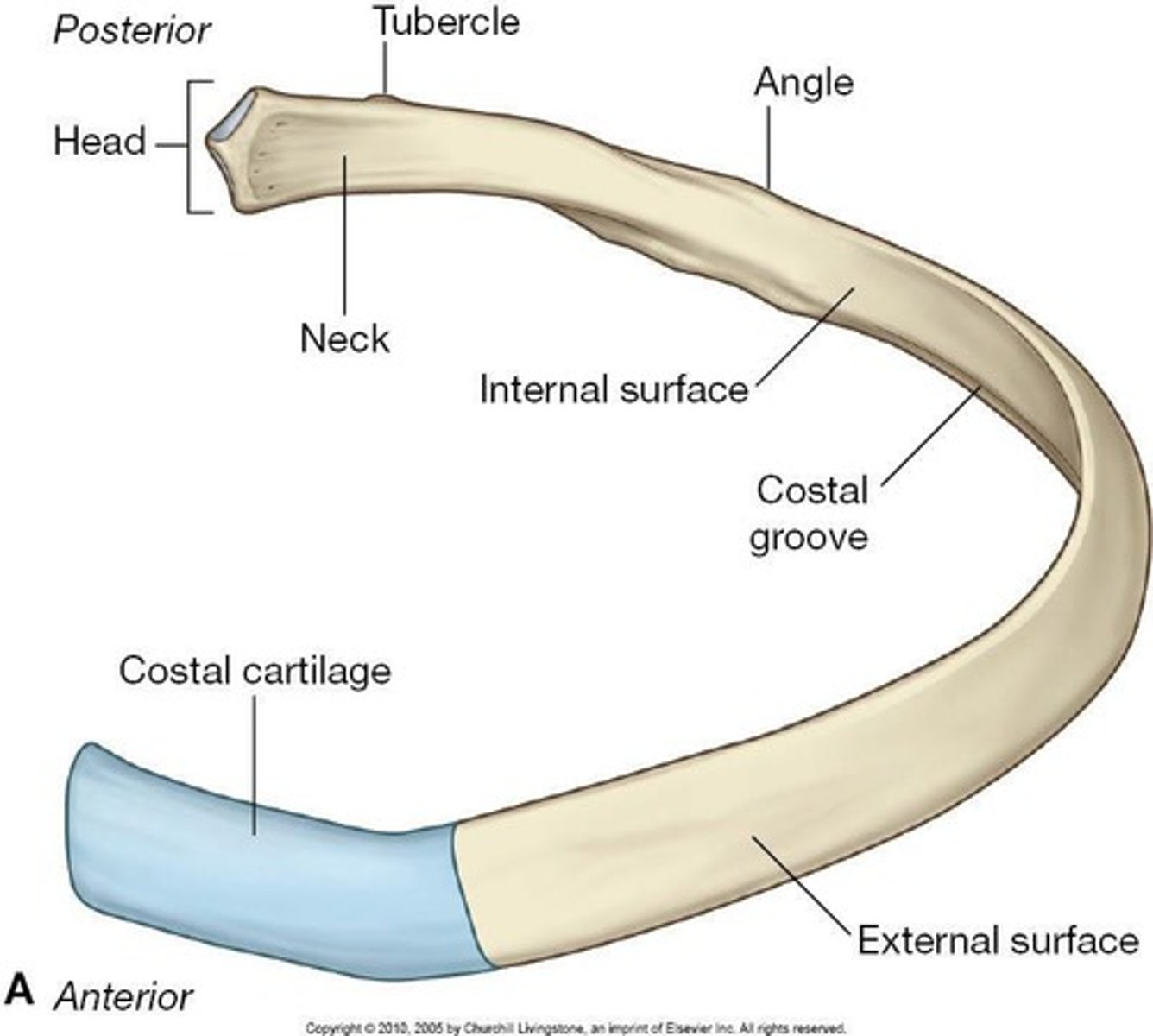
What is the costochondral junction?
end of the rib where the bony body meets the costal cartilage
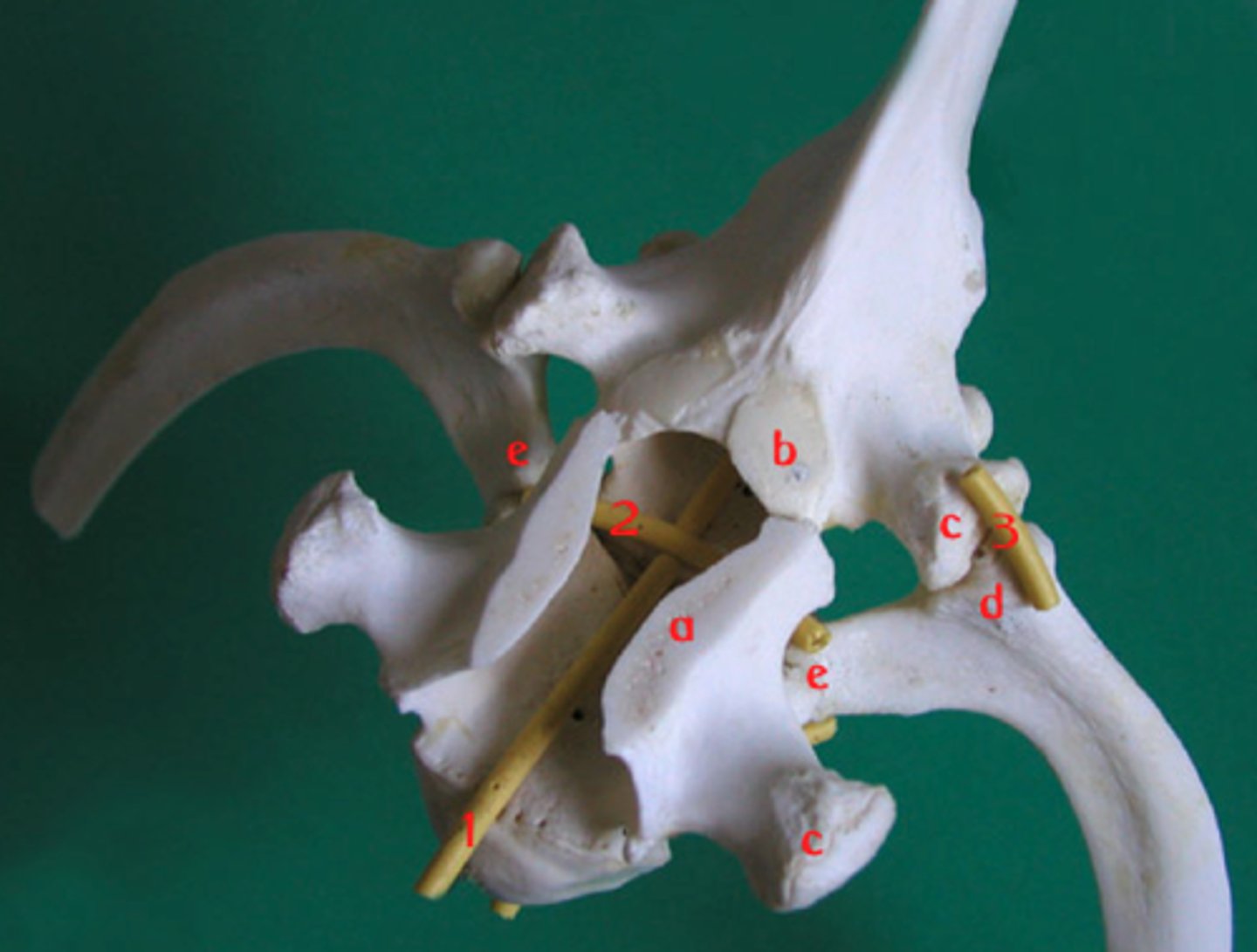
how does a rib articulate with thoracic vertebrae?
head- articulates with the socket between the two adjacent vertebrae
tubercle- articulates with the articular surface of the caudal vertebrae

what structures create the socket for rib head articulation?
cranial costal fovea
caudal costal fovea
intervertebral disc
what is the costo-central joint?
synovial joint between rib head & body of adjacent thoracic vertebrae
allows adduction & abduction during respiration
changes width of thoracic cavity
what is the costo-transverse joint?
synovial joint between rib tubercle and transverse process of thoracic vertebrae
features of the intercapital ligament
attaches the non-articular part of rib heads to each other in a pair
passes through intervertebral foramen & floor of vertebral canal
runs below dorsal longitudinal ligament & spinal cord
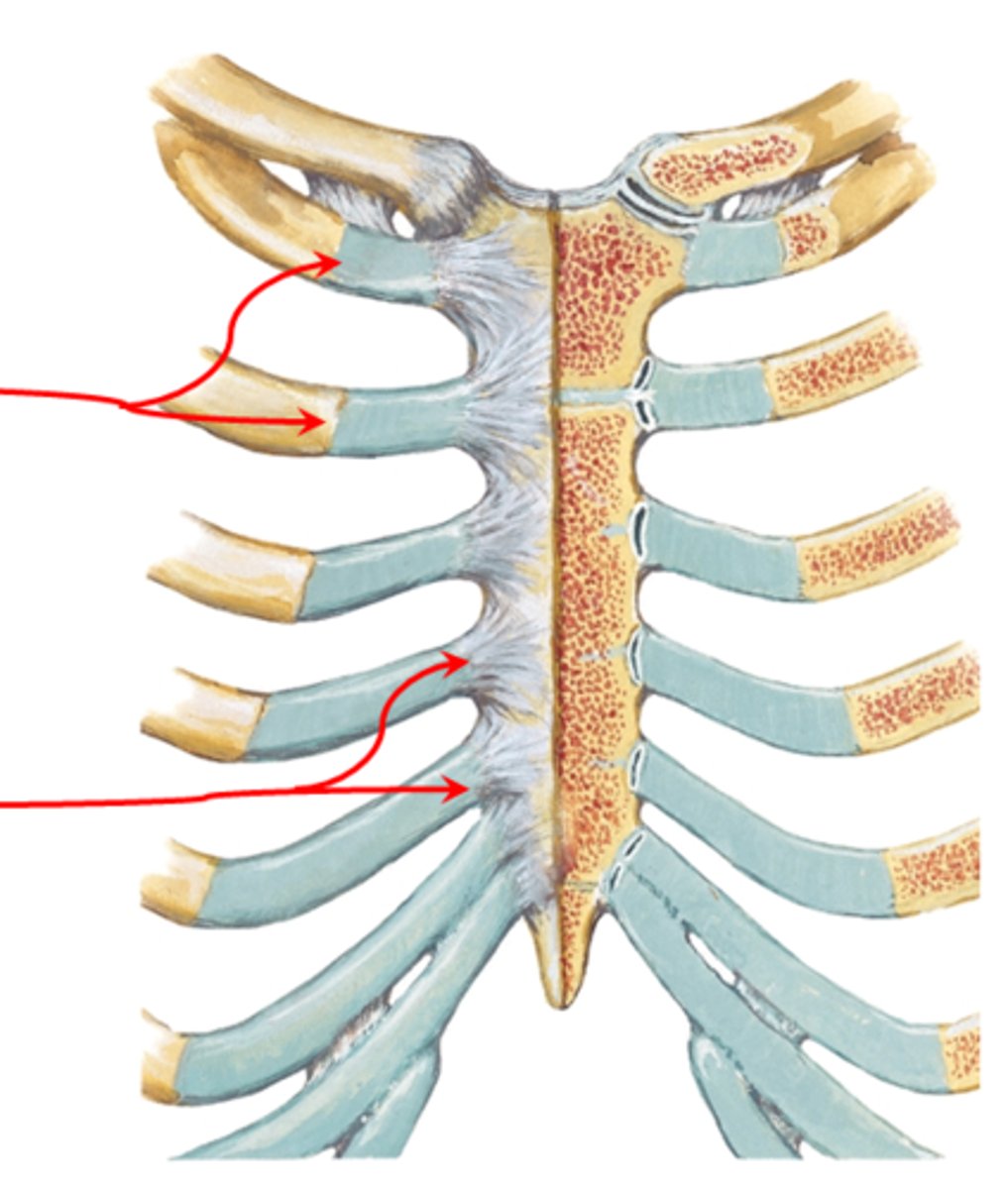
features of a true (sternal) rib
articulate directly with sternum via costal cartilage
vertical synovial costo-sternal joint
forward & backward movement
(first 9 pairs or ribs in canine)
features of a false (asternal) rib
attaches indirectly to sternum via other ribs & costal cartilage
greater degree of adduction & abduction
(10-12th pairs of ribs in canine)
features of a floating rib
costal cartilage is not attached to the sternum
end freely in abdominal musculature
(last pair/13th of ribs in canine)
features of cranial end of ribcage
protect heart & lungs- flat rib body
free front limb movement- flat rib body
restricted rib movement- large distance between rib head & tubercle
stable muscle attachment
features of caudal end of ribcage
less rigidly anchored- indirectly attached to sternum
greater movement- small distance between rib head & tubercle
adduction & abduction at costo-central joints
what is the sternum?
median unpaired segmented bone that forms the thorax floor & allows some flexibility
what are sternebrae?
bony segments that make up the sternum united by intersternebral fibrocartilage joints
how does an avian sternum differ?
it is a single unsegmented bone for attachment of major flight muscles
what is the manubrium?
the first sternebra
articulates with the first pair of ribs
(palpable in canine)
what is the xiphoid process?
the last sternebra
HORSES
how many pairs of ribs?
how many sternal ribs?
how many asternal ribs?
how many sternebrae?
18
8
10
7
RUMINANTS
how many pairs of ribs?
how many sternal ribs?
how many asternal ribs?
how many sternebrae?
18
8
5
7
PIGS
how many pairs of ribs?
how many sternal ribs?
how many asternal ribs?
how many sternebrae?
14
7
7
6
DOGS & CATS
how many pairs of ribs?
how many sternal ribs?
how many asternal ribs?
how many sternebrae?
13
9
4
8
what do the 2nd-9th ribs articulate with?
the intersternebral fibrocartilage between the sternebrae
what is the costal arch?
the costal cartilages of the 10-12th ribs uniting with each other
(palpable in canine)