Chapter 2 The Cell Structure and Function
 Call Kai
 Learn
Learn Practice Test
 Spaced Repetition
 Match
Match Flashcards
 Knowt Play
1/83

There's no tags or description
Looks like no tags are added yet.
Name | Mastery | Learn | Test | Matching | Spaced | Call with Kai | Chat |
|---|
No analytics yet
Send a link to your students to track their progress
84 Terms
atom
Smallest particle of an element

molecule
A group of atoms bonded together
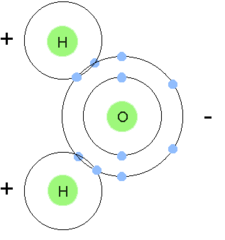
covalent bond
A chemical bond formed when two atoms share electrons
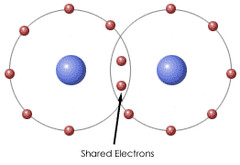
nonpolar covalent bond
a covalent bond in which the electrons are shared equally by the two atoms

polar covalent bond
A covalent bond in which electrons are not shared equally

hydrogen bond
Attraction between a slightly positive hydrogen atom and a slightly negative atom.

ions
positively and negatively charged atoms

anion
A negatively charged ion
cation
A positively charged ion

ionic bond
Formed when one or more electrons are transferred from one atom to another

electrolytes
minerals that help maintain the body's fluid balance

hydrophobic
nonpolar molecules that repel water molecules

hydrophilic
molecules forming ionic or a hydrogen bond with the water molecule

solution
A homogeneous mixture of two or more substances
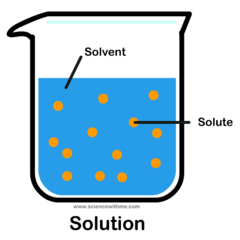
solute
A substance that is dissolved in a solution.

solvent
In a solution, the substance in which the solute dissolves.

one molar solution
one mole of solute dissolved in water to make 1 liter of solution

acid
A substance that increases the hydrogen ion concentration of a solution.
base
A substance that decreases the hydrogen ion concentration in a solution.
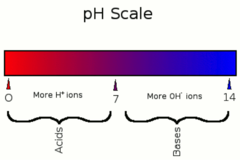
pH
quantitative measure of the acidity or basicity of aqueous or other liquid solutions

buffer
compound that prevents sharp, sudden changes in pH

biomolecules
any of numerous substances that are produced by cells and living organisms, e.g., carbohydrates, lipids, proteins, nucleic acids, etc.

carbohydrates
the starches and sugars present in foods

monosaccharides
Single sugar molecules:
glucose, fructose, galactose

disaccharides
carbohydrates that are made up of two monosaccharides

polysaccharides
Carbohydrates that are made up of more than two monosaccharides

glycogen
a multibranched polysaccharide of glucose that serves as a form of energy storage in animals, fungi, and bacteria

lipids
Energy-rich organic compounds, such as fats, oils, and waxes, that are made of carbon, hydrogen, and oxygen.

triglycerides
an energy-rich compound made up of a single molecule of glycerol and three molecules of fatty acid.

saturated fatty acid
a type of fatty acid that lacks unsaturated linkages between carbon atoms

unsaturated fatty acid
A fatty acid possessing one or more double bonds between the carbons in the hydrocarbon tail

monounsaturated fatty acid
a fatty acid whose molecular structure includes only one double carbon bond

polyunsaturated fatty acid
a fatty acid containing two or more carbon-carbon double bonds

trans fatty acid
an unsaturated fatty acid in which the hydrogen atoms are on the opposite sides of the double bond

phospholipids
phospholipids, also known as phosphatides, are a class of lipids whose molecule has a hydrophilic "head" containing a phosphate group, and two hydrophobic "tails" derived from fatty acids, joined by a glycerol molecule

amphipathic
having both a hydrophilic region and a hydrophobic region

phospholipid bilayer
a thin polar membrane made of two layers of lipid molecules. These membranes are flat sheets that form a continuous barrier around all cells.

micelle
A small particle formed by aggregates of molecules with both polar and nonpolar segments (e.g., soap); the polar ends of these molecules point outward toward a polar solvent (e.g., water) while the non-polar ends will point inward toward a nonpolar solute (dirt/oil/grease). This allows the nonpolar substance to be washed away by the polar substance.

eicosanoids
biologically active compounds that regulate body functions

arachidonic acid
an omega-6 polyunsaturated fatty acid with 20 carbons and four double bonds; present in small amounts in meat and other animal products and synthesized in the body from linoleic acid.

steroids
lipids characterized by a carbon skeleton consisting of four fused rings

cholesterol
A lipid that forms an essential component of animal cell membranes and acts as a precursor molecule for the synthesis of other biologically important steroids.

bile salts
cholesterol derivatives that function in fat emulsification and absorption

steroid hormones
hormones secreted by the adrenal cortex

proteins
structural support by acting as enzymes, carriers, or hormones

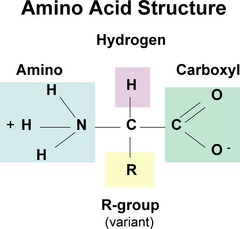
amino acids
building blocks of proteins

peptide bond
The chemical bond that forms between the carboxyl group of one amino acid and the amino group of another amino acid

primary structure
sequence of amino acids

secondary structure
The second level of protein structure; the regular local patterns of coils or folds of a polypeptide chain.

alpha helix
a spiral shape constituting one form of the secondary structure of proteins, arising from a specific hydrogen-bonding structure.

beta pleated sheet
sheet-like secondary structure of proteins

tertiary structure
The third level of protein structure; the overall, three-dimensional shape of a polypeptide due to interactions of the R groups of the amino acids making up the chain.

R groups
groups that give different amino acids different properties

quaternary structure
The fourth level of protein structure; the shape resulting from the association of two or more polypeptide subunits.

nucleotides
building blocks of nucleic acids
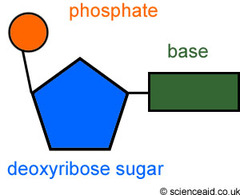
nucleic acids
naturally occurring chemical compounds that serve as the primary information-carrying molecules in cells (DNA and RNA)
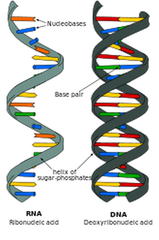
DNA
deoxyribonucleic acid, a self-replicating material present in nearly all living organisms as the main constituent of chromosomes. It is the carrier of genetic information.

RNA
ribonucleic acid: molecule essential in various biological roles in coding, decoding, regulation and expression of genes

ATP
(adenosine triphosphate) main energy source that cells use for most of their work

plasma membrane
the membrane at the boundary of every cell that acts as a selective barrier, thereby regulating the cell's chemical composition.

nucleus
A part of the cell containing DNA and RNA and responsible for growth and reproduction

cytoplasm
A jellylike fluid inside the cell in which the organelles are suspended

nucleolus
found inside the nucleus and produces ribosomes

ribosomes
site of protein synthesis

rough endoplasmic reticulum
an endomembrane system covered with ribosomes where many proteins for transport are assembled.

smooth endoplasmic reticulum
an endomembrane system where lipids are synthesized, calcium levels are regulated, and toxic substances are broken down.

Golgi apparatus
a system of membranes that modifies and packages proteins for export by the cell

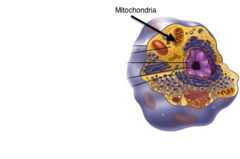
mitochondria
an organelle found in large numbers in most cells, in which the biochemical processes of respiration and energy production occur.
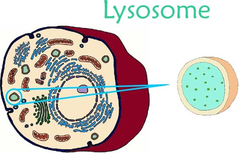
lysosomes
an organelle containing digestive enzymes
peroxisomes
break down fatty acids and produce hydrogen peroxide

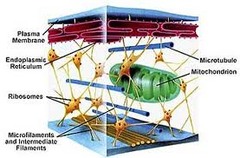
cytosceleton
a network of proteins that is constantly changing to meet the need of a cell
selectively permeable
a property of cell membranes that allows some substances to pass through, while others cannot

fluid mosaic model
model that describes the arrangement and movement of the molecules that make up a cell membrane

integral membrane proteins
proteins that are at least partially embedded in the plasma membrane

transmembrane proteins
integral proteins that span the membrane.

peripheral membrane proteins
proteins associated with but not embedded within the plasma membrane

glycoproteins
proteins that have carbohydrates covalently bonded to them

glycolipids
a lipid with one or more covalently attached carbohydrates

glycocalyx
the external surface of a plasma membrane that is important for cell-to-cell communication

tight junctions
a specialized connection of two adjacent animal cell membranes such that the space usually lying between them is absent
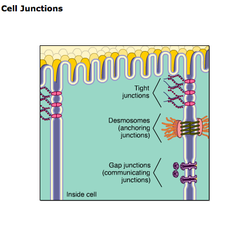
desmosomes
anchoring junctions that prevents cells subjected to mechanical stress from being pulled apart; button like thickenings of adjacent plasma membranes connected by fine protein filaments

gap junctions
(communicating junctions) provide cytoplasmic channels between adjacent cells

transcription
(genetics) the organic process whereby the DNA sequence in a gene is copied into mRNA

translation
Process by which mRNA is decoded and a protein is produced
